Forum Replies Created
-
AuthorPosts
-
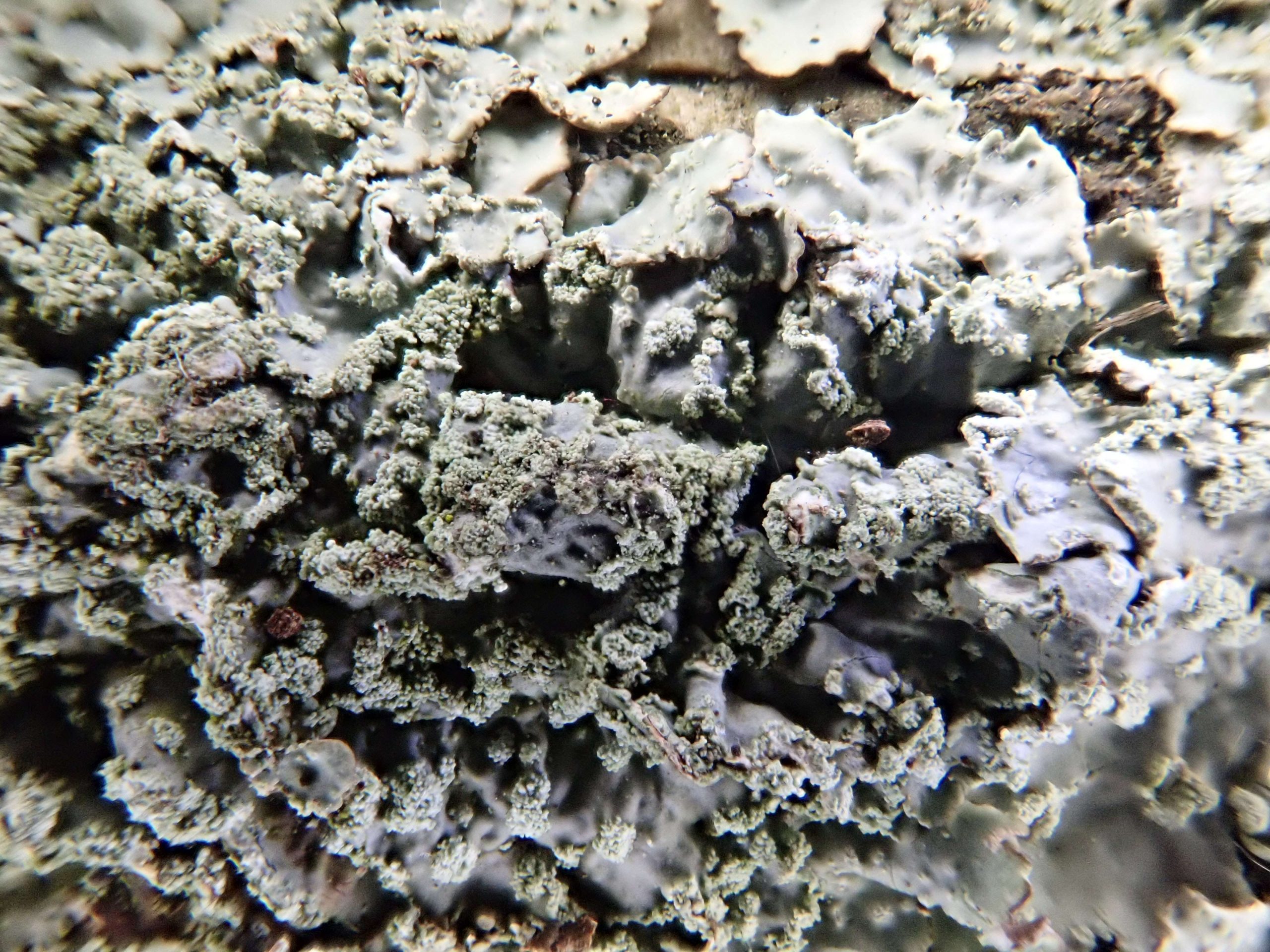
Probably Cladonia rangiformis. Cladonia rangiferina is mainly a lichen of upland Scotland. It would be helpful if you could give the locality more accurately plese as the site could be worth a visit. Brownfield sites are disappearing rapidly in Essex. January 24, 2025 at 10:00 pm in reply to: Parmelia saxatilis sens. lat. with unusual flattened isidia #46457Anthony, Can you remember whether the specimen was attached to a branch off the ground or on a branch lying on the ground? I have noticed that when some foliose lichens are on the ground (i.e. not in their normal emvironment) they start sprouting lobules. I have an example from Essex, a specimen of Punctelia subrudecta (possibly jeckeri)on a branch that had been on the ground for a while. I was very puzzled by the tiny lobules that appeared to be arising from the soralia. It was only after I had seen other examples and realised that this is a reaction to the damp ground conditions encouraging exuberant growth that I now recognise this phenomenon. With the wet summer of 2024 this might happen to lichens in their normal positions.
You may well have an interesting species in the Parmelia saxatilis agg., even if it was lying on the ground and sprouting lobules, I only raise this as a possibility.
John Skinner
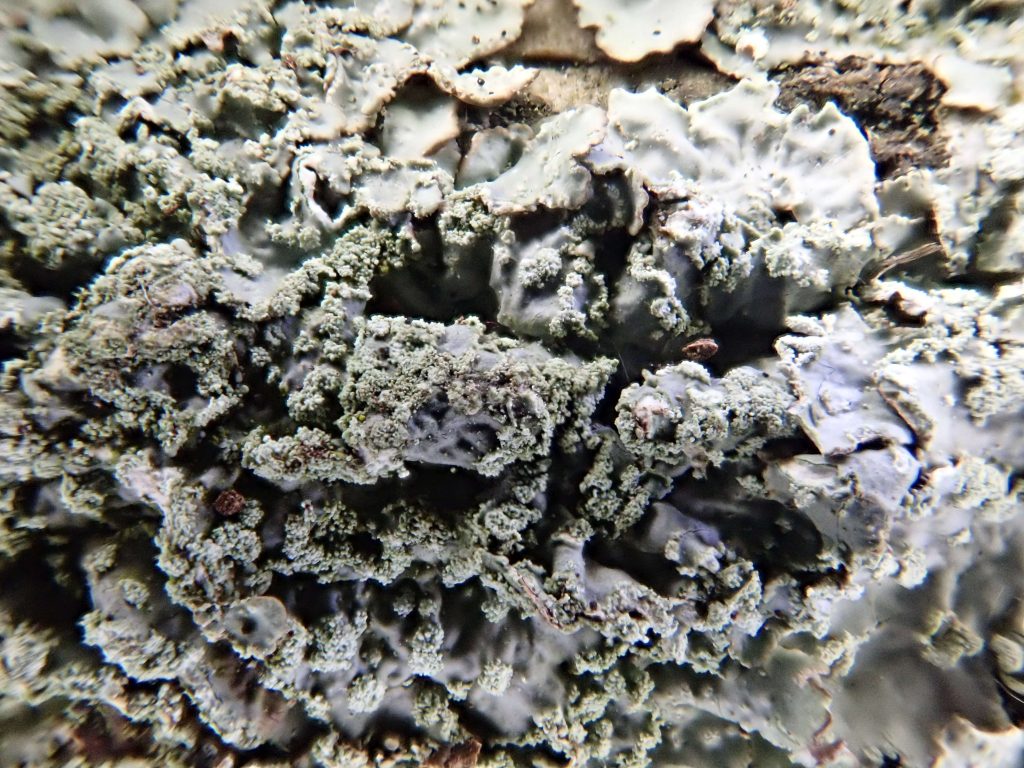
[attachment=0]P1112145.JPG[/attachment] I apologise for leading people astray,carried away by my enthusiasm. It is interesting however that much Hyperphyscia here in West Down, Devon, shows these very wide overlappiong lobes. Typical narrow-lobed H. adglutinata is also present. Whether that is significant or not, the fact remains that H. lucida has been recorded in Britain so it is worth continuing to look out for it. I agree with Calolaca microthallina. C. britannica does have marginal lobes but they are tiny, very narrow and finger-like, not wide like this, and of course it does develop mounds of isidia. C. arcis has blastidia and the habitat here is wrong. It certainly looks like helicopis to me with its black apothecia and the habitat is good. I have just found it on the Essex coast on flints in a seawall (soon to be replaced) of a muddy creek. [img][/img] I don’t think this is Ramalina calicaris which, in my experience, is more deeply channelled and generally skinnier in apearance. I suspect that the slightly swollen lobes and the apothecia suggest R. fastigiata. In Lichenologist50(4);425-438 (2018), Zahradnikova et al address this question, using DNA sequencing on many examples of F.pusilla and F. lightfootii. They concluded that ‘even though some morphotypes appeared distinct and could be assigned to one of the two species with some degree of certainty, the use of DNA sequencing is recommended for their identification’. If only there were ways of getting work like this done without having to ask favours of the small number of people who have access to the facilities. Thank you both for your advice, it really has helped.
-
AuthorPosts