- This topic is empty.
-
AuthorPosts
-
January 8, 2025 at 6:05 pm #32979
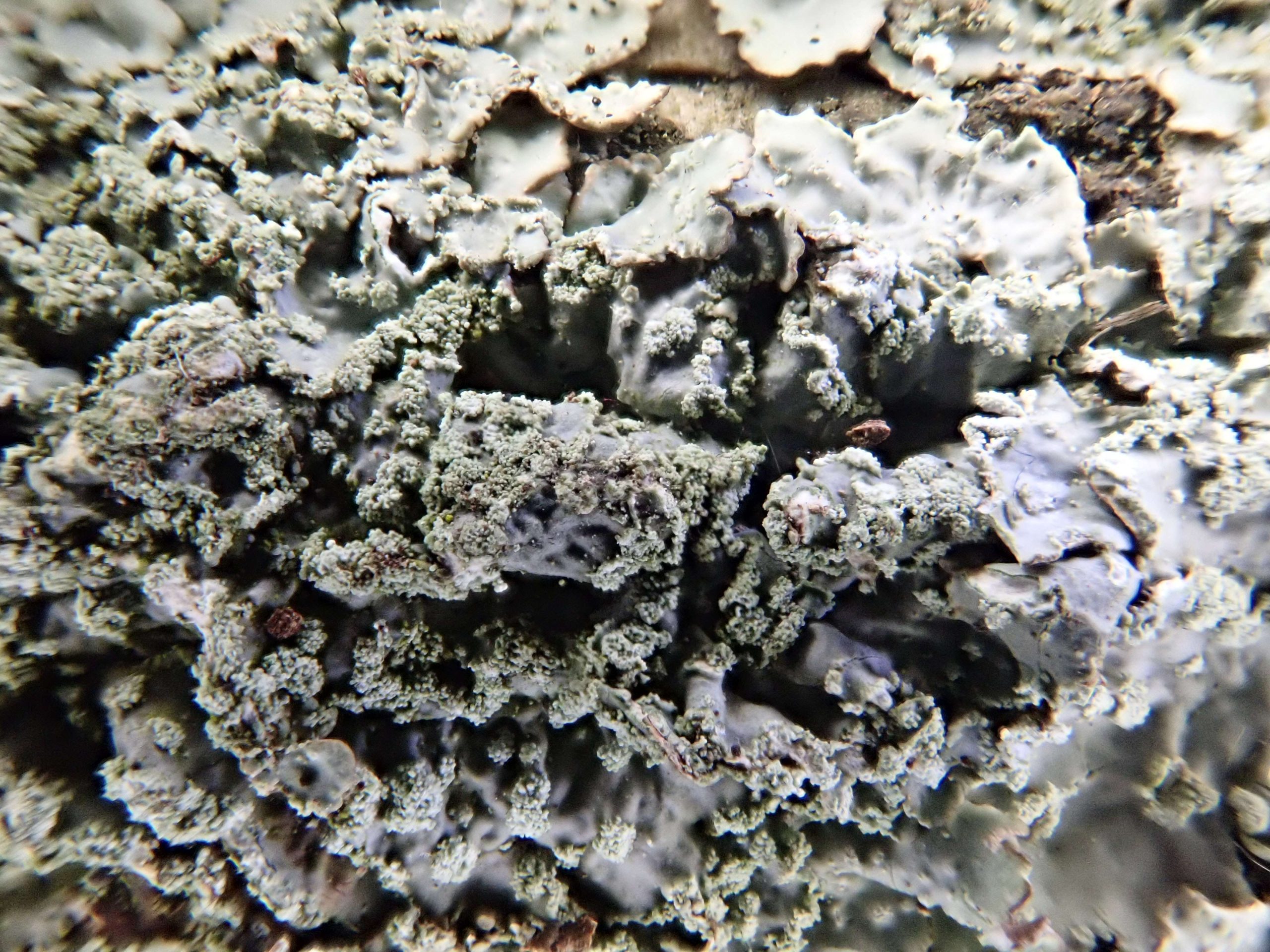
Thought it worth sharing this unusual specimen of Parmelia saxatilissens. lat. on a Quercus twig from Ringsfield, TM48/VC25 East Suffolk. I suppose it’s unusual first of all in that it hails from East Anglia, where the species is much less common (though not unknown from that hectad, which has four records dating from 1960 to 2017). But it seems unusual also because some of its isidia are flattened or spatulate — more like phyllidia than isidia. LGBI3 advises against trying to separate the three species in the
P. saxatilissens. lat. group on morphological features. At the same time, ITALIC suggests that there are some differences in isidia shape, with P. ernstiaein particular featuring cylindrical to flattened isidia. And this specimen seems similar to a specimen identified as P. ernstiaeon Alain’s Lichens Marins website. [list]- Link to ITALIC on
P. ernstiae: https://italic.units.it/index.php?procedure=taxonpage&num=1579 ” class=”bbcode_url”> https://italic.units.it/index.php?procedure=taxonpage&num=1579 [/list] [list]- Link to Lichens Marins on
P. ernstiae: https://www.lichensmaritimes.org/index.php?task=fiche&lichen=504 ” class=”bbcode_url”> https://www.lichensmaritimes.org/index.php?task=fiche&lichen=504 [/list] I don’t intend to record this specimen with the BLS as anything but
P. saxatilissens. lat. — but I wonder if there would be any reason to follow ITALIC and Lichens Marins in suspecting that it might be P. ernstiae? Or if anyone might like to have a closer look at it? The twig was in my ‘to be analysed’ box for a bit, sadly — it’s about three months old and dry, so I’m unsure how useful it would be for DNA analysis.
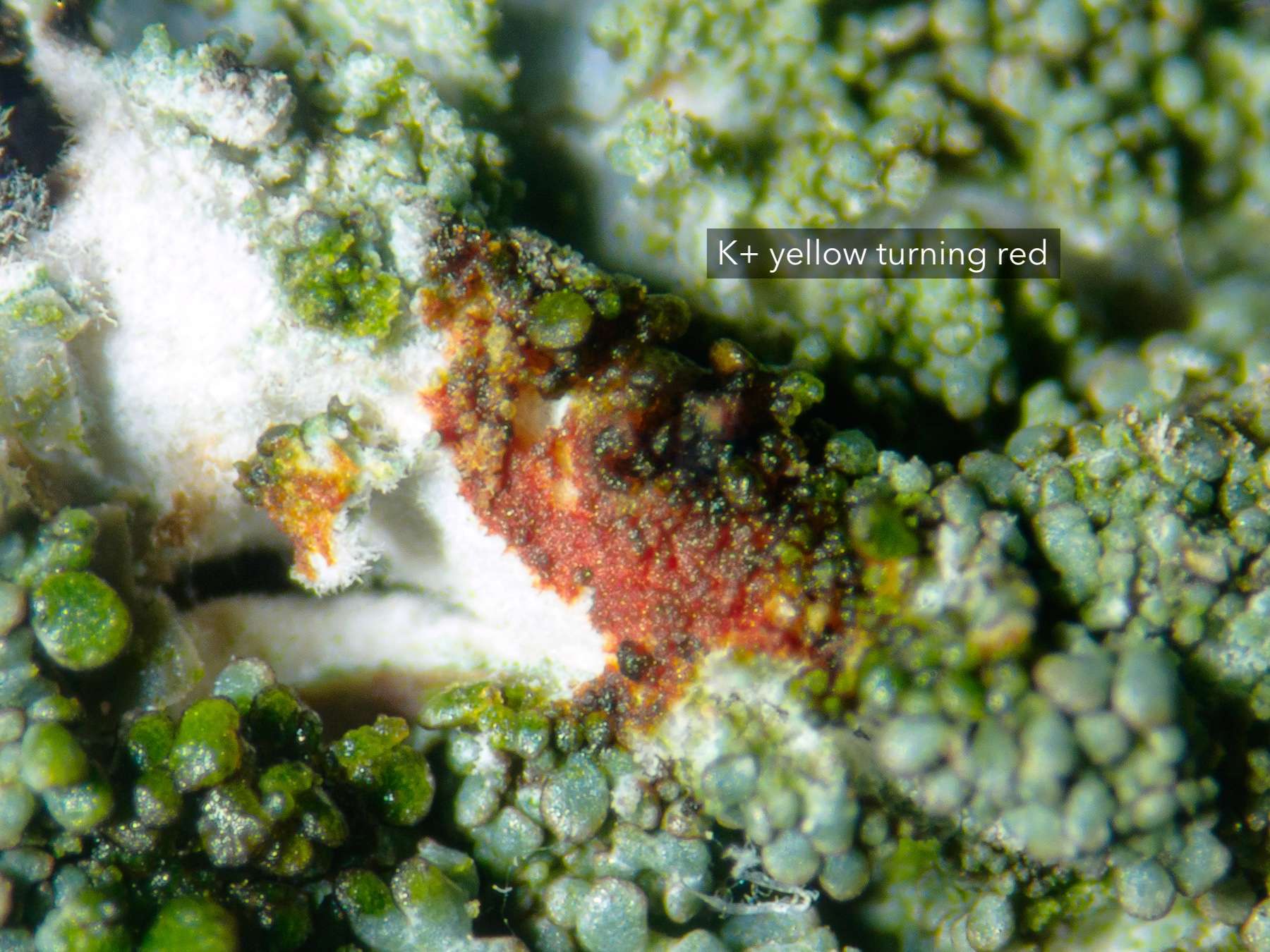
Some photos of the specimen below, with corroborating spot-tests.

[attachment=9]Parmelia saxatilis sens lat 20241009-A01 Ringsfield.jpg[/attachment] 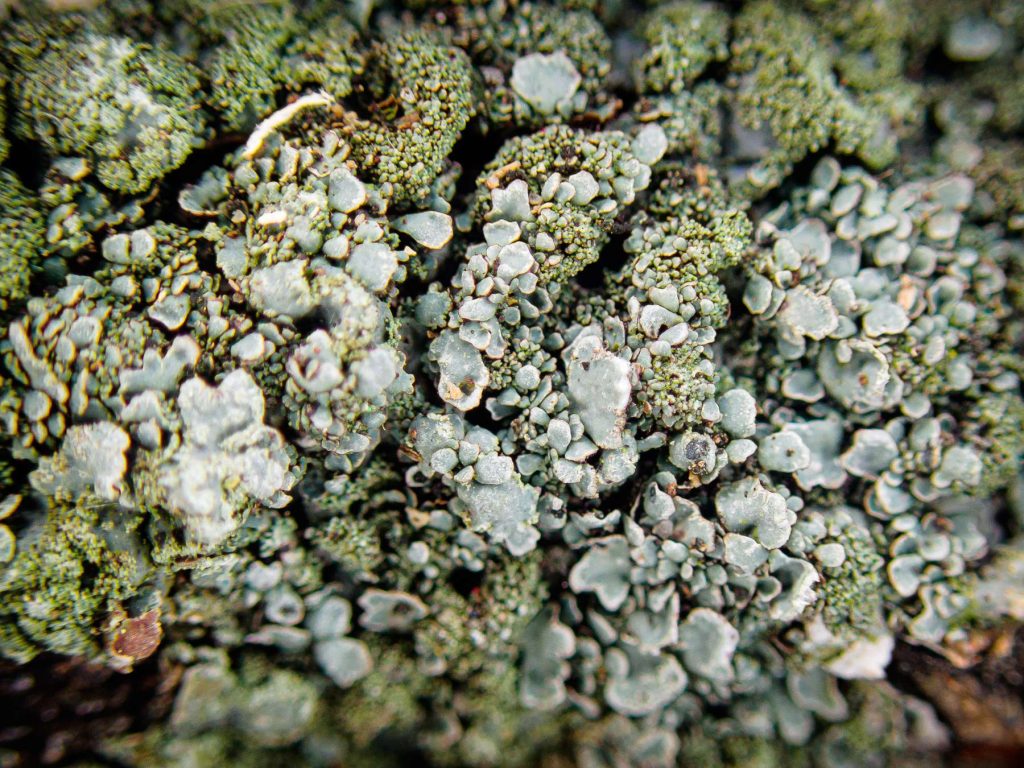
[attachment=8]Parmelia saxatilis sens lat 20241009-A02 Ringsfield.jpg[/attachment] 
[attachment=7]Parmelia saxatilis sens lat 20241009-A03 Ringsfield.jpg[/attachment] 
[attachment=6]Parmelia saxatilis sens lat 20241009-A04 Ringsfield.jpg[/attachment] 
[attachment=5]Parmelia saxatilis sens lat 20241009-A05 Ringsfield.jpg[/attachment] 
[attachment=4]Parmelia saxatilis sens lat 20241009-A06 Ringsfield.jpg[/attachment] 
[attachment=3]Parmelia saxatilis sens lat 20241009-A07 Ringsfield.jpg[/attachment] 
[attachment=2]Parmelia saxatilis sens lat 20241009-A08 Ringsfield.jpg[/attachment] 
[attachment=1]Parmelia saxatilis sens lat 20241009-A09 Ringsfield.jpg[/attachment] 
[attachment=0]Parmelia saxatilis sens lat 20241009-A10 Ringsfield.jpg[/attachment] Many thanks,
Anthony
January 9, 2025 at 9:24 am #46454Anthony It would need sequencing to say anything much, but I would think this morph is the result of stress from too much ammonia. Also worth using UV on the medulla, the majority of both
Parmelia saxatiliss. str. and Parmelia ernstiaehave UV bright violet fluorescence from the medulla, while the majority of Parmelia serranadoes not (±lobaric acid). There are exceptions, but detecting a lot of UV- Parmelia saxatiliss. lat. in a site would suggest that Parmelia serranais present. In my area of operations (southern England & Wales) actually 100% of Parmelia saxatiliss. lat. I have looked (a lot) have had a bright violet fluorescence from the medulla. It is possible that Parmelia serranais a bit northern in Britain anyway, if I remember right, Alan Orange did not find it (or it was rare) when sequencing Welsh specimens. Neil
January 9, 2025 at 1:57 pm #46455Dear Neil — Many thanks for your helpful reply. Good to have the steer towards pollution stress. The hectad is intensely agricultural, with poultry farms in the wider area, so ammonia levels would presumably be high.
It’s also good to know that not much more could be said without sequencing. If anyone who has that capacity would like to give it a go, I’m happy to send a sample.
I tried your suggested UV test, but I didn’t observe any bright violet fluorescence in the medulla. Considering the exceptions you mention, and perhaps also the unusual or stressed state of the specimen, I’m sure very little can be read into that.
Thanks again,
Anthony
January 10, 2025 at 11:11 am #46456Dear Neil — Something I forgot to mention. You and Paul might already be aware, but it seems there might be typos in the list of spot-test reactions for
P. saxatilissens. lat. in the LGBI3 Parmeliaceae volume. As it stands, the list reads: Quote:…medulla C–, K+ orange, KC+ orange, Pd+ orange, UV+ violet-blue or UV–…
But presumably it should read as follows?
Quote:…medulla C–, K+ yellow turning red, KC-, Pd+ orange, UV+ violet-blue or UV–…
Thanks again for your help with my specimen.
Best,
Anthony
January 24, 2025 at 10:00 pm #46457Anthony, Can you remember whether the specimen was attached to a branch off the ground or on a branch lying on the ground? I have noticed that when some foliose lichens are on the ground (i.e. not in their normal emvironment) they start sprouting lobules. I have an example from Essex, a specimen of Punctelia subrudecta (possibly jeckeri)on a branch that had been on the ground for a while. I was very puzzled by the tiny lobules that appeared to be arising from the soralia. It was only after I had seen other examples and realised that this is a reaction to the damp ground conditions encouraging exuberant growth that I now recognise this phenomenon. With the wet summer of 2024 this might happen to lichens in their normal positions.
You may well have an interesting species in the Parmelia saxatilis agg., even if it was lying on the ground and sprouting lobules, I only raise this as a possibility.
John Skinner
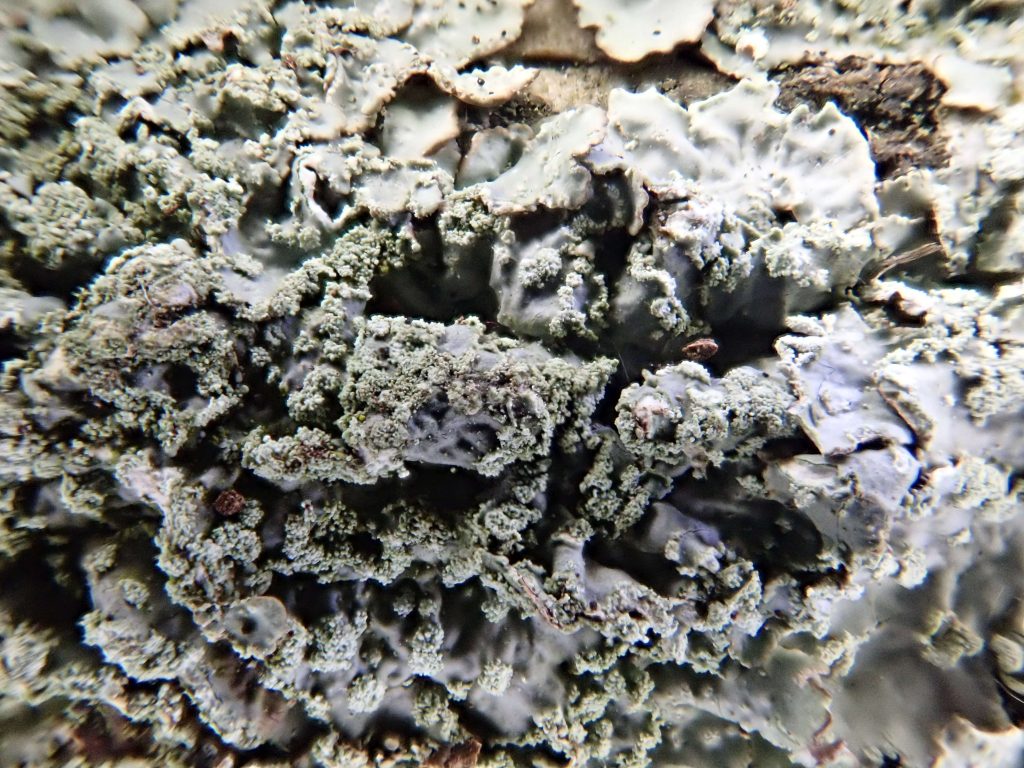
[attachment=0]P1112145.JPG[/attachment] January 25, 2025 at 12:04 pm #46458Dear John — Many thanks for your reply. An intriguing possibility. The lichen was indeed on a windblown twig. I’m unsure how long it might have been on the ground. My young daughter found it in a playing field, and brought it home as a little gift for me.
The twig was otherwise unremarkable, and it supported the usual nitrophilic lichens:
Lecidella elaeochroma, Physcia tenella, Xanthoria parietina. It’s unlikely that I’d have bothered to pick it up myself. You can imagine my surprise when I found Parmelia saxatilissens. lat. on it! It’s interesting that you’ve observed similar lobules on
Punctelia. Perhaps the phenomenon is confined to the Parmeliaceae. I haven’t noticed any other sorediate species, for instance in the Physciaceae, sprouting lobules even when on twigs clearly laying about for a long time. As Neil mentions above, without DNA sequencing it will be impossible to say if the specimen is
Parmelia ernstiae, for which flattened isidia might not be so strange. There’s also the question of ammonia stress, in addition to the hydration stress you suggest. Perhaps the shape of the isidia was somewhat overdetermined! Thanks very much — I’ll certainly be looking for this phenomenon again with Parmeliaceae on windblown twigs.
Best,
Anthony
- Link to ITALIC on
-
AuthorPosts




- You must be logged in to reply to this topic.