
Forum Replies Created
-
AuthorPosts
-
very impressive photos. How come all the pretty rusts are found in other people’s part of the world! Yes – not a rust……. as Chris said – it is a bit too early for the rust on Butterbur can’t compete with the ‘rust of the day’ items already entered on the blog! Spent 4 hours yesterday at the Botanic Garden and only found 4 rusts (not very pretty ones so no photo!). Adam – worth noting if the rust is on Arum with black blotches on the leaf or on Arum without black blotches on the leaf – please keep records if you can. I agree with Chris – it’s not a rust but haven’t a clue what it is so bow to Chris’s greater judgement You can separate the two species by looking at all the spore stages I – III but it is a pain because you have to look at spore wall thickness and spore ornamentation in stages I & II. Telia can be formed from July onwards depending on what sort of weather we have. Teliospores are much easier to sort out. Looking at your pictures it looks to me as if you have the spermogonial and aecial stages of Phragmidium violaceum
Also worth noting that David Harries with his Pembrokeshire Fungus Recording Network also has regular articles on rusts in his quarterly Newsletter. Adam has apparently re-jigged the website? so I don’t know the correct link at present. Can you help me out please Adam? Thanks Chris – very interesting. I’ve only got a handful of records in total for this rust on all hosts in Carmarthenshire. I have a spare hard copy of the Red Data List of Rusts for Wales if you want one. I’ll get Adam to sort out how I can send you an email for me to get your postal address if needs be.
Hi Mike – rust on Myrrhis more common than on Cow Parsley with us. In fact, rust on Cow parsley only began to show last year for the first time in 18 years of looking for it. The solitary roadside plant of Myrrhis was always severely infected and although it was growing in the middle of hundreds of Anthriscus none of the latter were ever infected. aecidia out on Sonchus in this part of the world Chris, asper and oleraceus. Spotted yesterday in Carmarthenshire by Sam Bosanquet. late looking at this one Mark – sorry. Leek, Chives and onion rusts have been a problem for many a year and over this time people have suggested revisions but the old system is still adopted. Looks like P. allii to me. Well done. very impressive photographs – never seen the species before. Just testing out my ability to load up an image and get free p0ublicity! Link to the new Red Data List of Rusts for Wales is:=
http://www.aber.ac.uk/waxcap/downloads/Woods15-RustFungusRedDataListWales.pdf ” class=”bbcode_url”> http://www.aber.ac.uk/waxcap/downloads/Woods15-RustFungusRedDataListWales.pdf with pretty cover….. and lovely pictures (mostly taken by Debbie E)
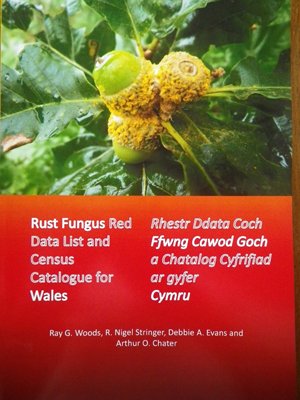
[attachment=0]IMGP0210A.jpg[/attachment] If you can get a second hand copy- Dutch Rust Fungi by Termorshuizen and Swertz (2011) is very good (equivalent to Wilson & Henderson 1966 with pictures and a few more European species and good introductory chapters. May 18, 2015 at 5:32 pm in reply to: Puccinia caricina var, ribesii-pendulae on Pendulous Sedge #33226Thanks Mark – I agree – thoroughly brilliant day on Saturday. When you quoted Martyn re successful day at Whitford – did you actually find Chrysomyxa on Pyrola? If you did -very well done, none in Carms.
If you have a photo please send on for reference or better still put it on the website.
N
PS glad you enjoyed the talk.
-
AuthorPosts
