
Forum Replies Created
-
AuthorPosts
-
roy betts wrote:
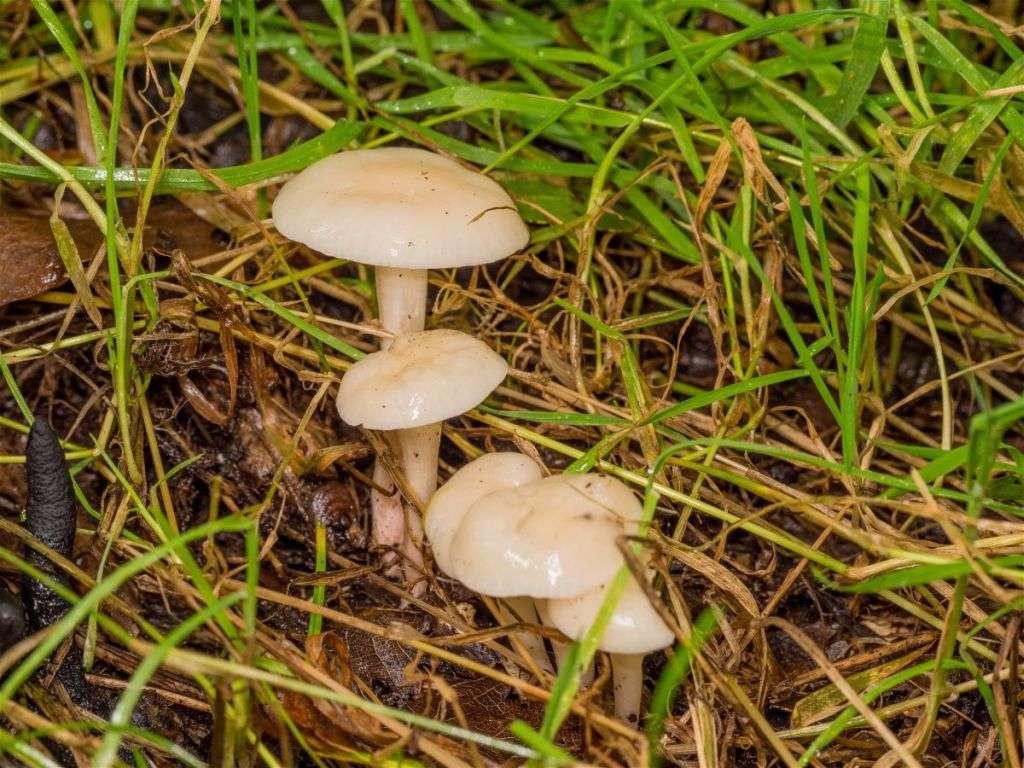
The white one with the gills:O. mucidahas a ring and grows on Beech wood. Was this attached to wood or growing on soil/litter? To me it looks like an Hygrophorus sp. (Wood Wax) – which doesn’t grow attached to wood.
There are several white species of Hygrophorus that have viscid caps like Oudemansiella.
It was growing out of the soil at the edge of a woodland, not from a hidden bit of wood, so could be wood wax as from the images I have seen, it looks more like it.
Chris Yeates wrote:
The last two show a species ofPeziza, perhaps most likely one of the so-called “complex” around P. varia. This is however a very tricky area, even with the use of a microscope – which is essential for these fungi. There is a paper here which may give some idea of the complexity: https://dash.harvard.edu/bitstream/handle/1/3153301/Pfister_PhylogeneticDiversityCore.pdf?sequence=1 ” class=”bbcode_url”> https://dash.harvard.edu/bitstream/handle/1/3153301/Pfister_PhylogeneticDiversityCore.pdf?sequence=1 regards
Chris
Thanks for the link. Seems I have a lot to learn when it comes to identifying fungi.
Thanks for the help, yes your right its fungus not fungi for single ones. I’ll remember in future. I have some more I need help to ID: Trametes versicolor? Found these all over a fallen beech tree:
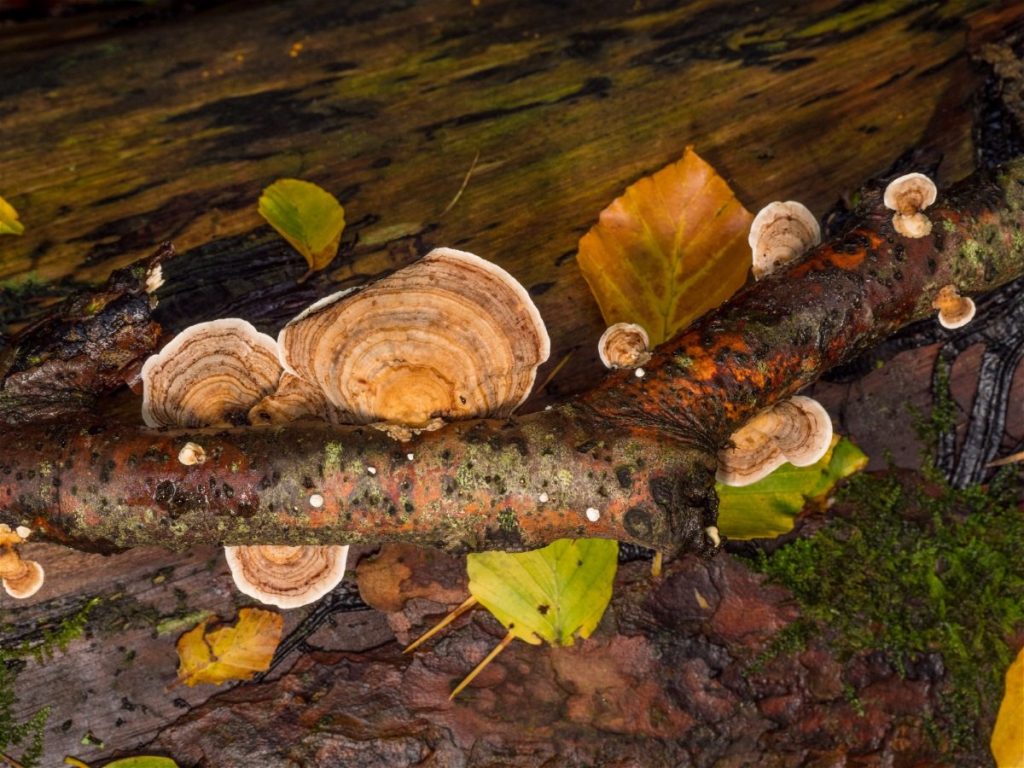
[attachment=4]Bracket Fungi on Beech.jpg[/attachment] Oudemansiella mucida?
[attachment=3]SlimeFungi1.jpg[/attachment] 
[attachment=2]SlimeFungus_Underside.jpg[/attachment] This was growing on the same fallen beech tree as the first image of the bracket fungi.

[attachment=1]JellylikeFungi.jpg[/attachment] 
[attachment=0]JellylikeFungiClose.jpg[/attachment] Ganoderma resinaceum wrote:The first one is certainly a
Ganoderma(either G. applanatumor G. australe). As for the second, from the photos given it also appears to be a Ganoderma. If it’s a living host (the beech tree), then it is very likely to be Ganoderma australe. Thanks, yes the second one was on a living beech tree.
adampembs wrote:Yeah, it’s a tough one. The gills look like they have a black deposit but there also a white deposit on the stem. This might be spores, hairs or might be mould.
I put the darker gills down to it being past its best, but Roy is usually right

The white deposit might actually be some ice. I made a slight mistake and put it in the freezer overnight before photographing it and didn’t let it thaw properly first.
adampembs wrote:“The ‘Leptonia’ or ‘Gymnopus’ is really an over-ripe Bolbitius titubans …
they go like this within the same day and used to catch me out for years
before I saw a fresh bright yellow sample side by side next to an old
specimen.” – Neil
(received by email)
Thanks for the ID. Here is the best image of the gills with spores I have. Next time I want to ID a fungi, I’ll take a spore print as well.
Lancashire Lad wrote:Hi dave,
I’d say
Armillaria– Honey Fungus (probably A.mellea). – There’s a lot around, certainly in my area, at the moment. Looks typically like this when growing on buried wood.
Regards,
Mike.
Thanks it does look like a match for it.
adampembs wrote:DaveMcC wrote:Quote:For the future, you can tell a Lactarius from the milk that exudes form the gills when cut. The name Lactarius has the same root as Lactose, Lactate Lactic acid etc.
I thought that when I found these. I did scrape the gills of one with a stick and didn’t notice any milk extruding from it.
So why did you title it as possible Lactarius species?
Based on how the fungi looked, that is what I thought it was. I’ll know next time.
Thanks Leif. October 31, 2016 at 1:34 am in reply to: Fungus Of The Day (One identified fungus only please, with species name in attachment comment and in post) #33887Shaggy Inkcap (Coprinus comatus) I found several growing under some trees beside my house. These are all the same fungi. OK, cheating slightly The second two images I took yesterday, the day after I took the first image. 
[attachment=2]ShaggyInkcap1.jpg[/attachment] 
[attachment=1]ShaggyInkcap2.jpg[/attachment] Quote:For the future, you can tell a Lactarius from the milk that exudes form the gills when cut. The name Lactarius has the same root as Lactose, Lactate Lactic acid etc.
I thought that when I found these. I did scrape the gills of one with a stick and didn’t notice any milk extruding from it.
Leif wrote:It’s not Clytocybe geotropa, but it is certainly Clitocybe geotropa. I think I’d better get back to work …
Thanks, looks good for that species.
-
AuthorPosts


