Forums › Forums › General fungi discussion › Entoloma – biting the bullet
- This topic is empty.
-
AuthorPosts
-
April 20, 2016 at 7:12 pm #37418
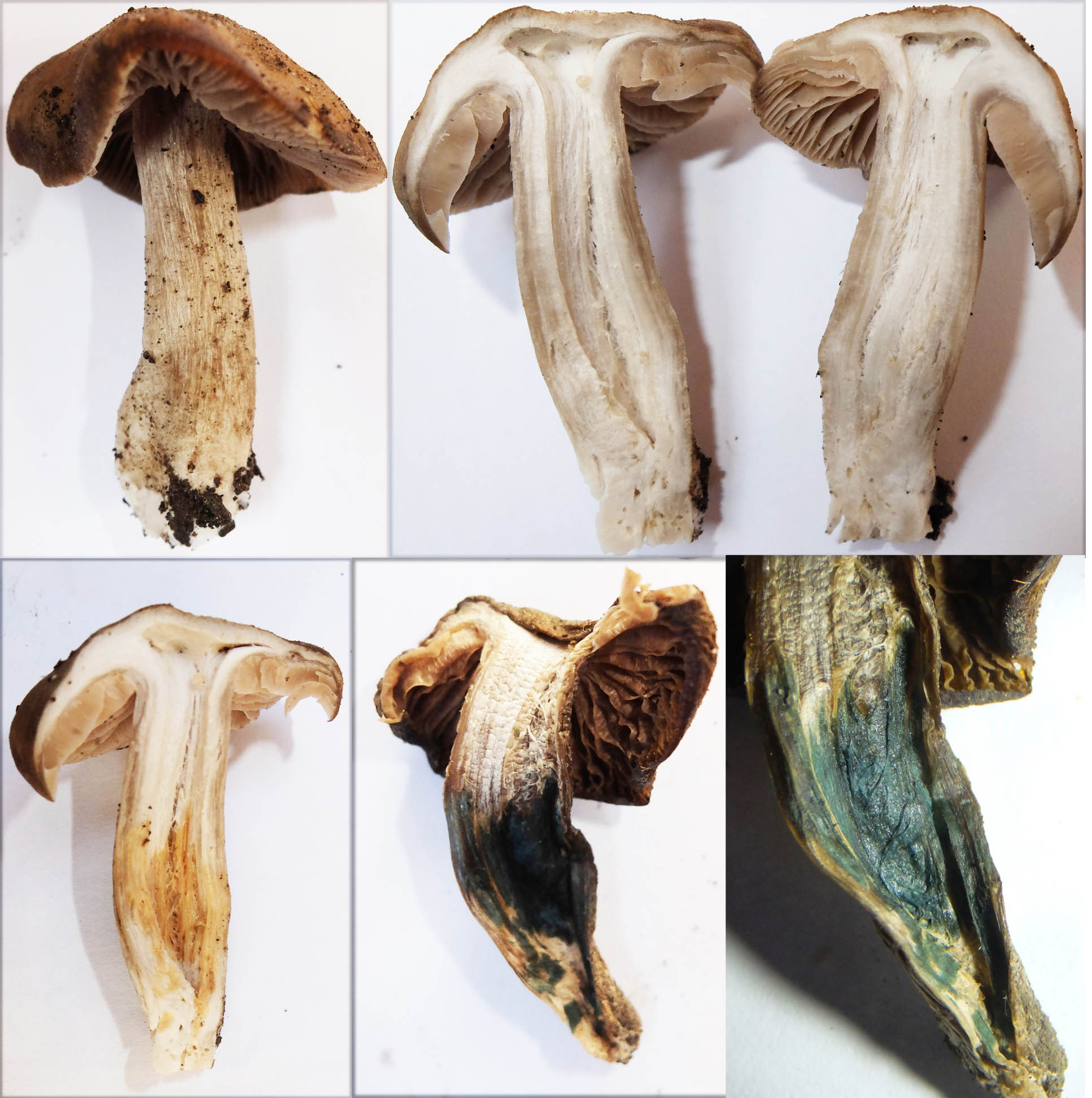
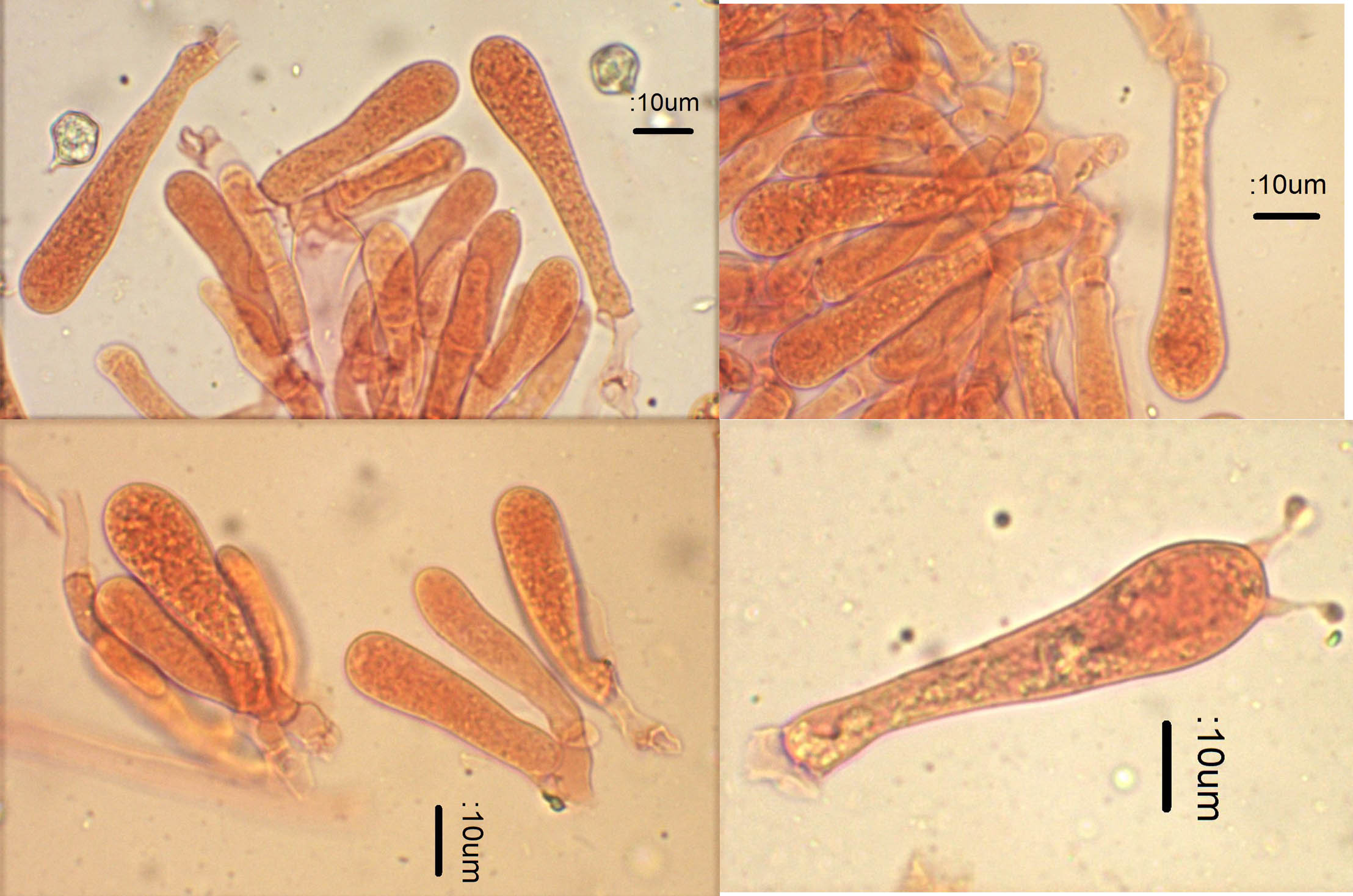
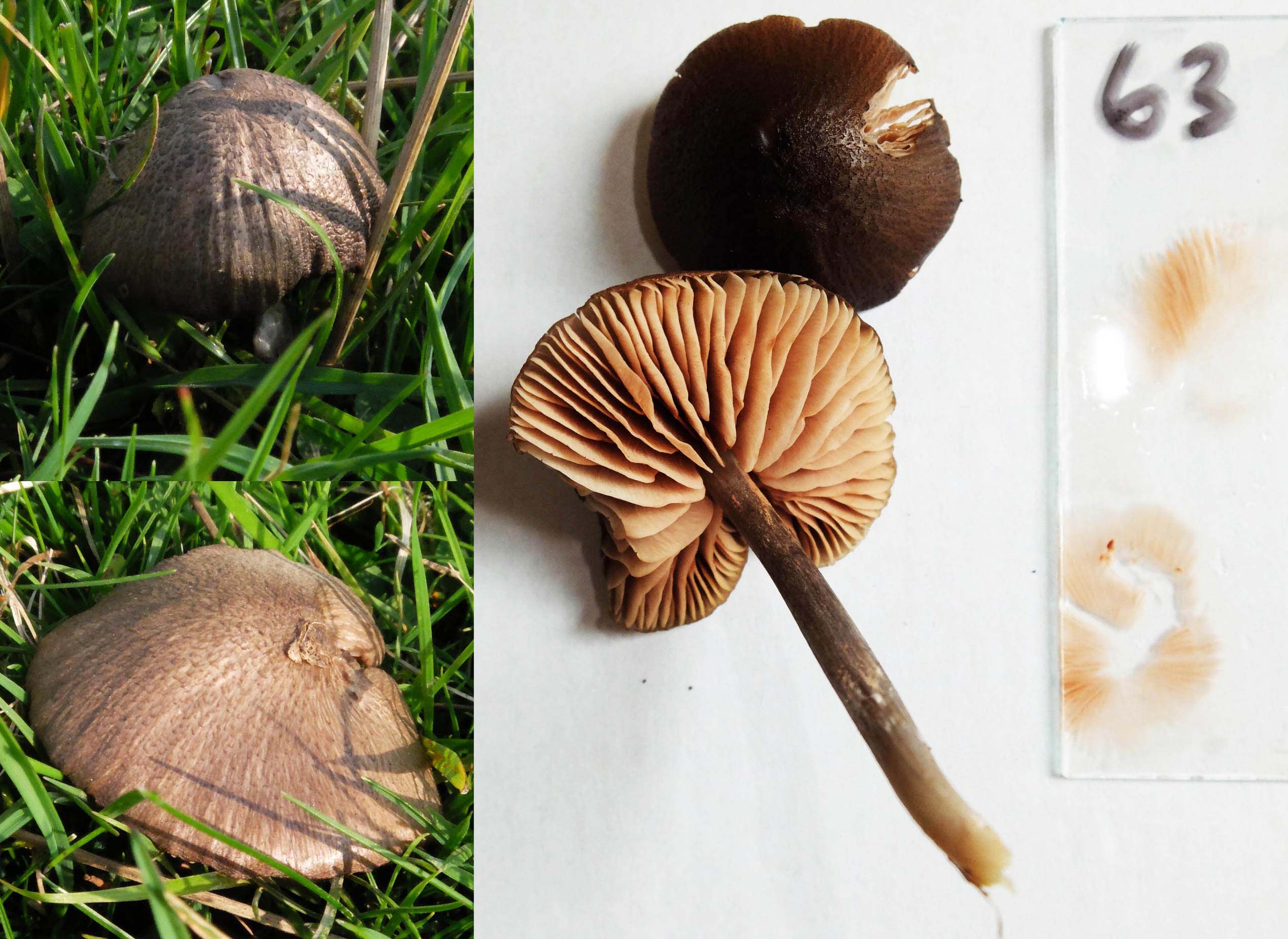
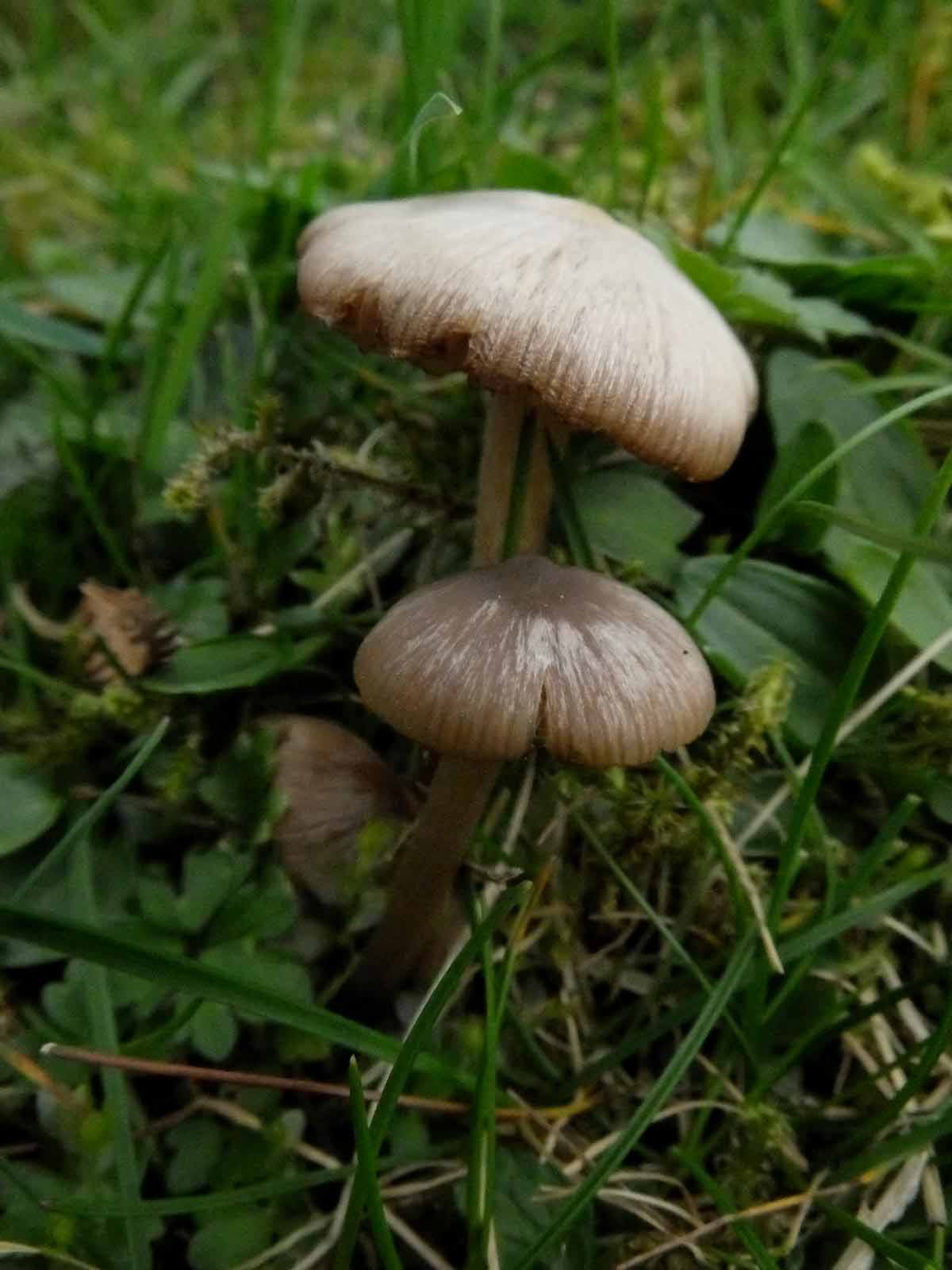
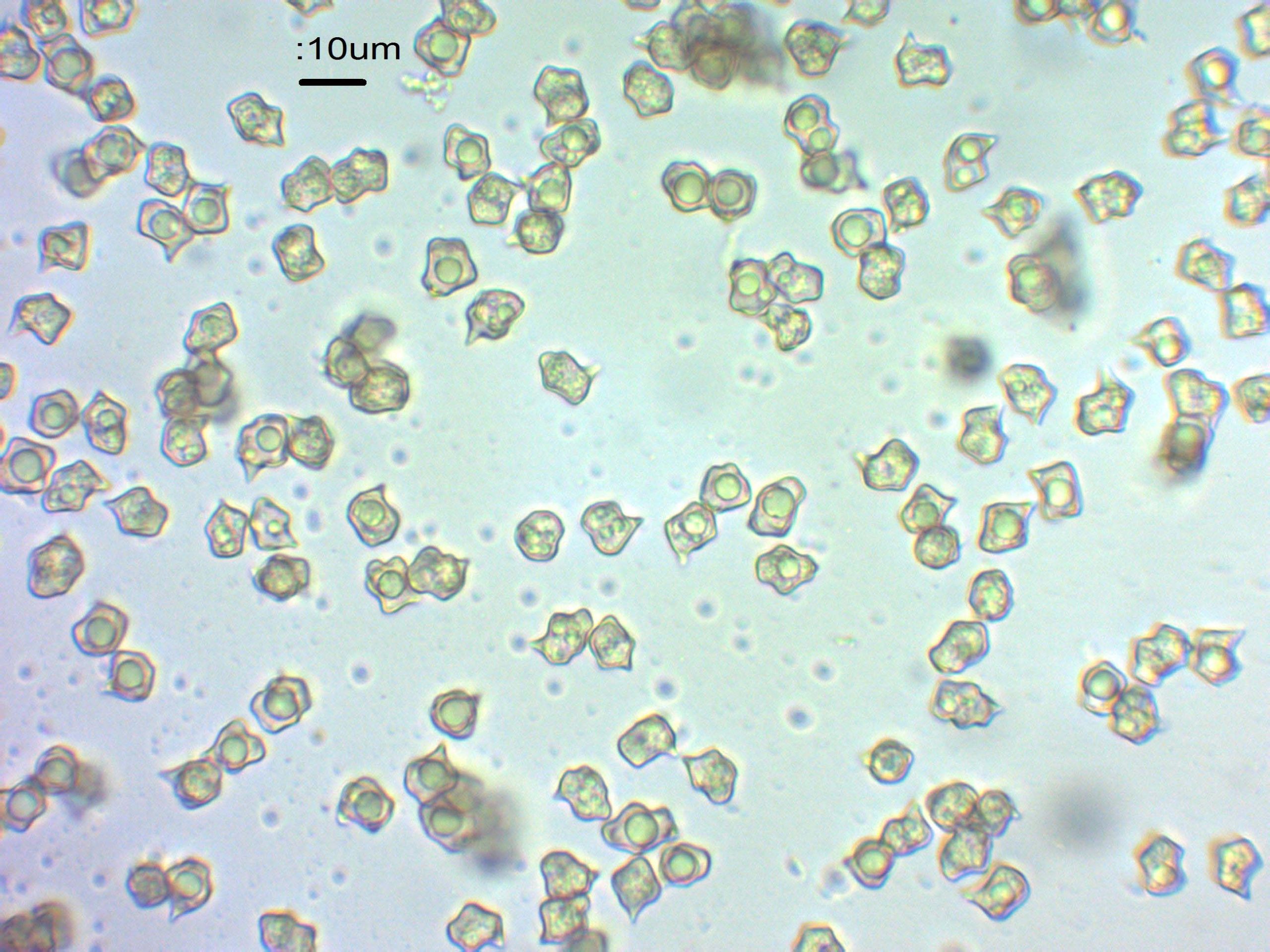
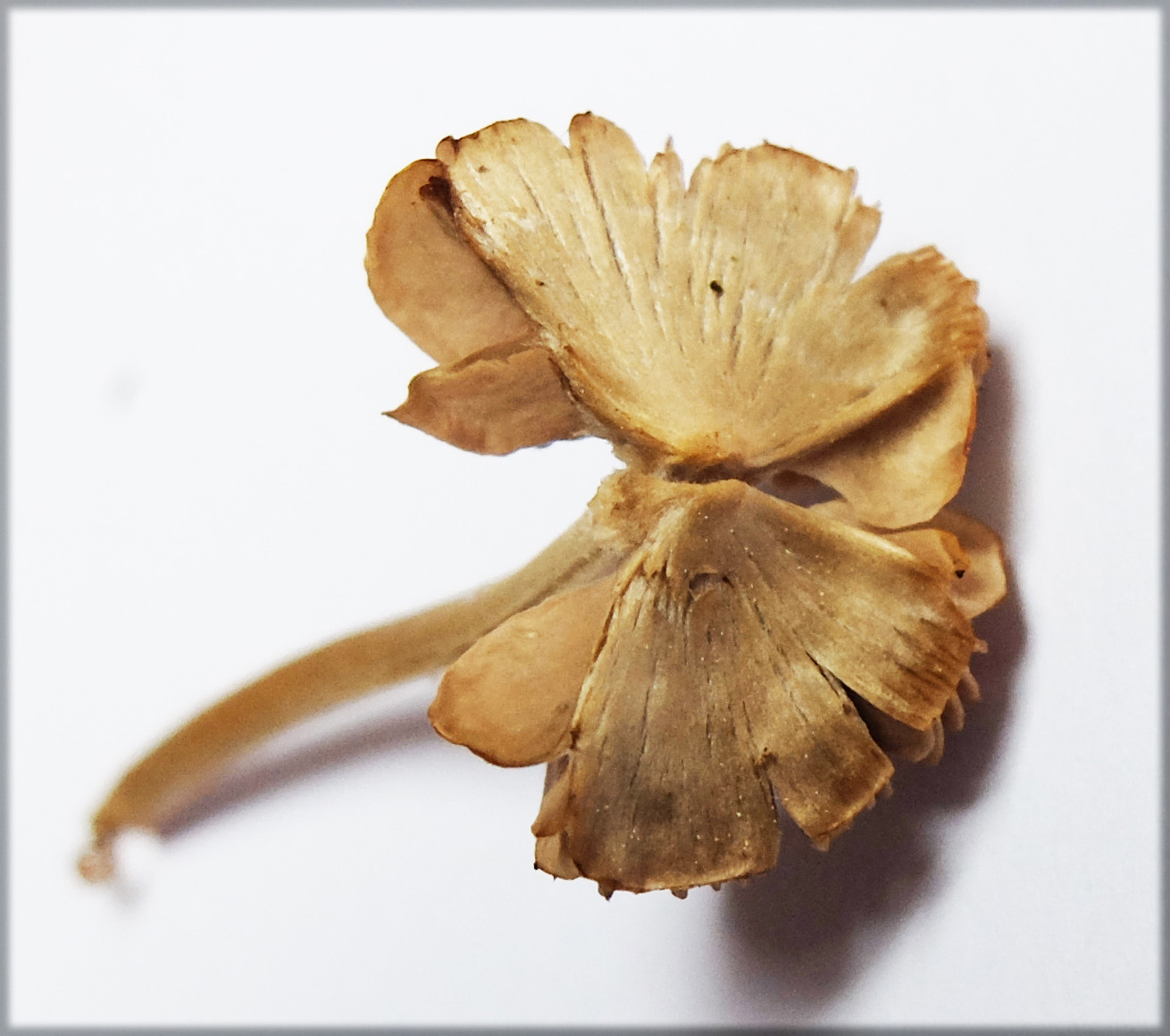
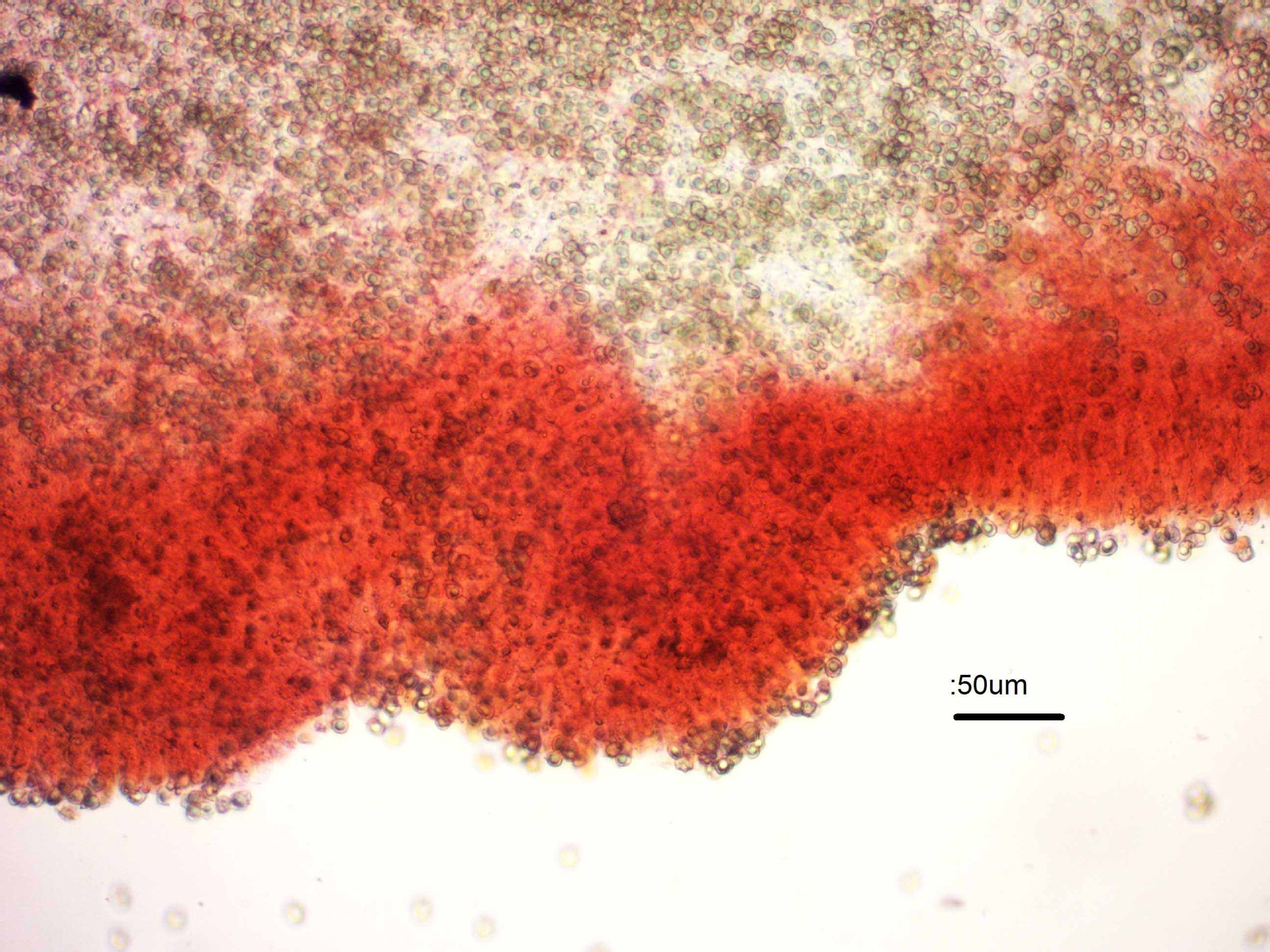
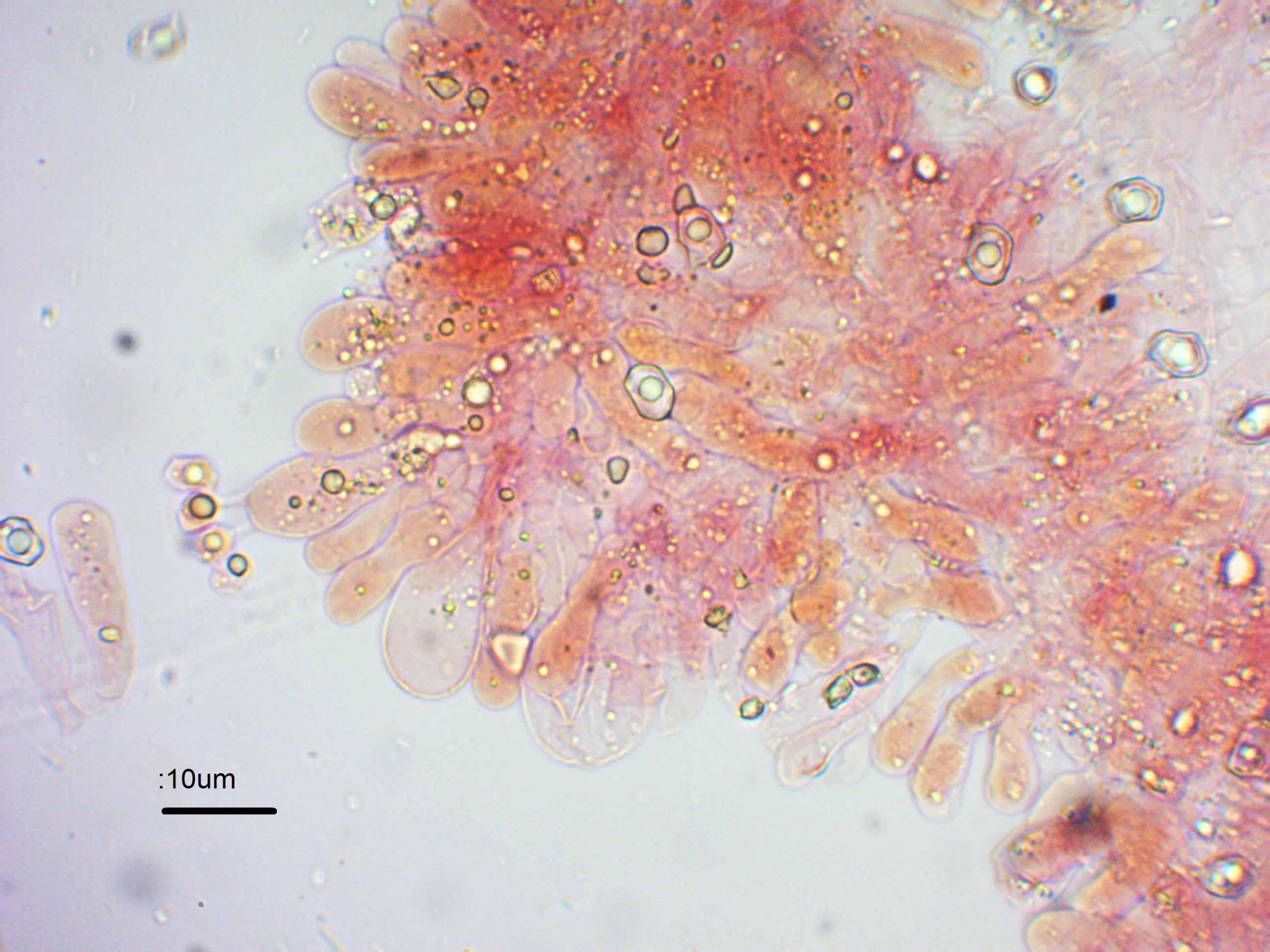
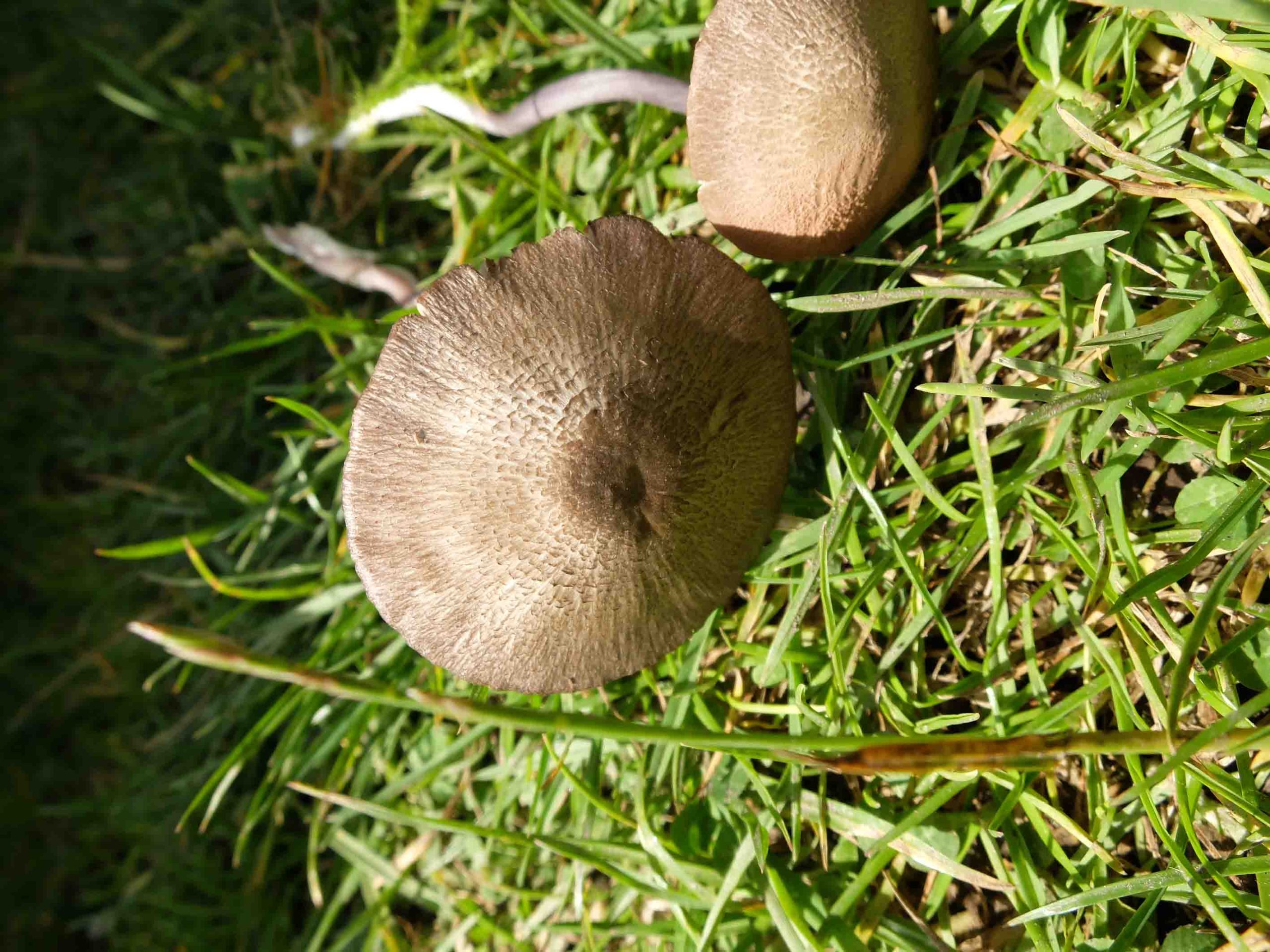
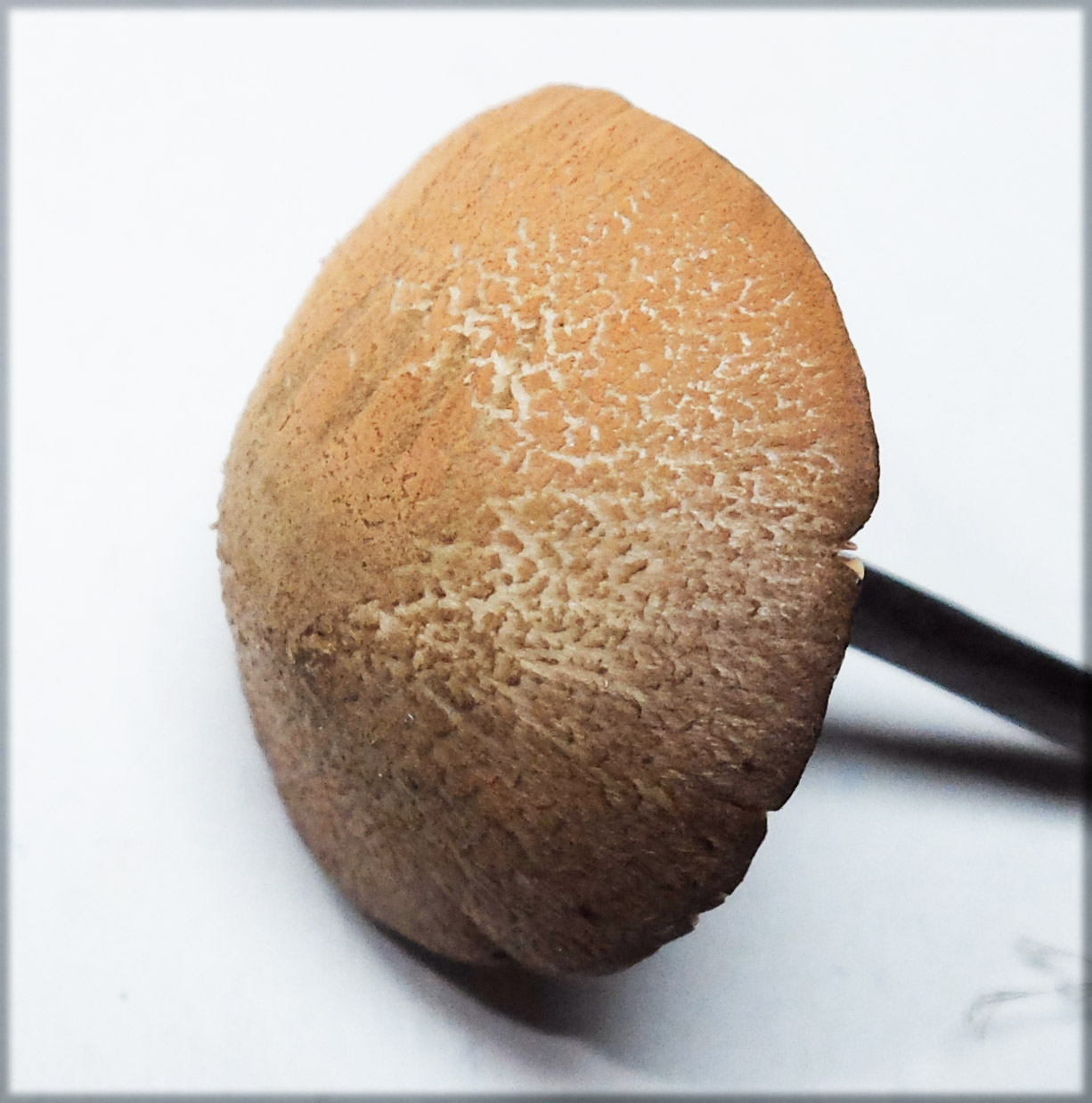
Entoloma clypeatum My wife spotted a colony of dark toadstools on an autumn raspberry bed on our allotment – I had been looking for fungi but walked straight past. They were dingy grey-brown, and rather dirty. It took 3 days to get a meagre spore print typical of Entoloma. Using Fungi of Switzerland and Noordeloos (Fungi Europaea 2004) I keyed it out as Entoloma clypeatum var. clypaeatum. The big reason for this was that it is a spring Entoloma growing with Rubus, which is in the rose family. It’s also chunky and tricholomatoid and has spores which look OK. It generally fits the description by Nordeloos: “…rather dark brown, grey brown or sepia. Stipe white to greyish, fibrillose but not fibrous. Basidia clamped.”. It also has rather short gill tramal cells.
However, Noordeloos warns us that for this section of Entoloma “species limits are not always easy and lead often to confusion, particularly with regard to E. clypeatum vs. E. aprile”. Features which are more like those set down for E. aprile are the hollow stipe, and the darl blue-green reaction to guaiac (very slow – overnight). However, Nordeloos does not rate the Guiac reaction as he sees it as varaiable and of little use.
Entoloma aprile is “frequently interpreted as a slender form of E. clypeatum” which tends to be found near Ulmus – a tree species I have not seen on our allotments. Our specimens certainly lacked the translucent striate margin of E. aprile, but they are rather old and dry.
And to complicate things, I am certain some of the basidia were 2-spored

Steve

[attachment=5]1 Field.jpg[/attachment] 
[attachment=4]2 Studio.jpg[/attachment] 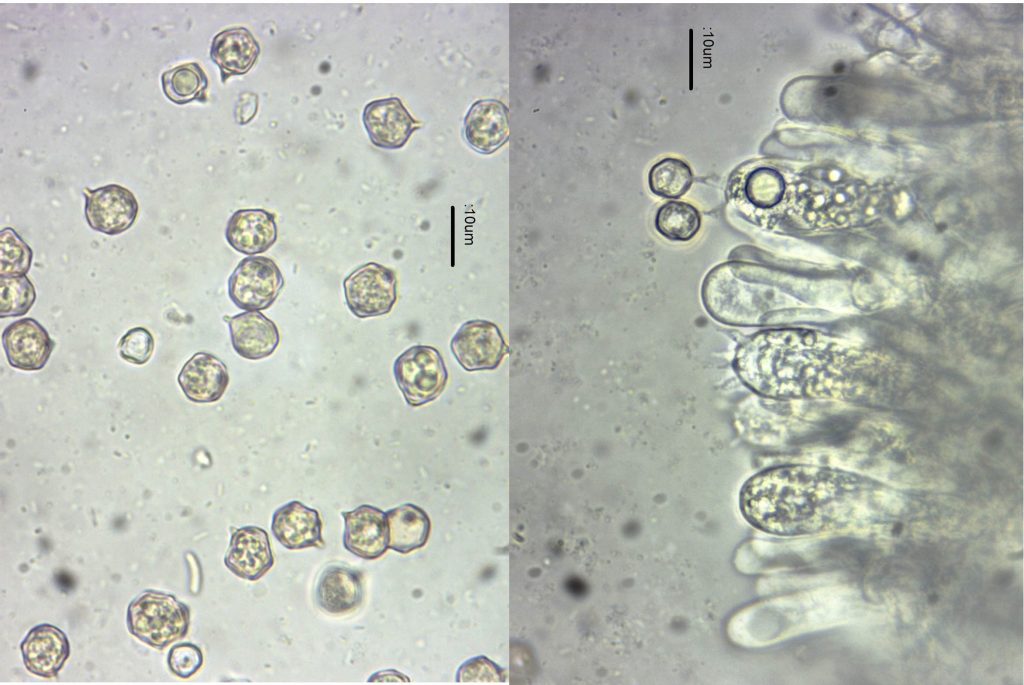
[attachment=3]3 Spores and basidia.jpg[/attachment] 
[attachment=2]4 Basidia.jpg[/attachment] 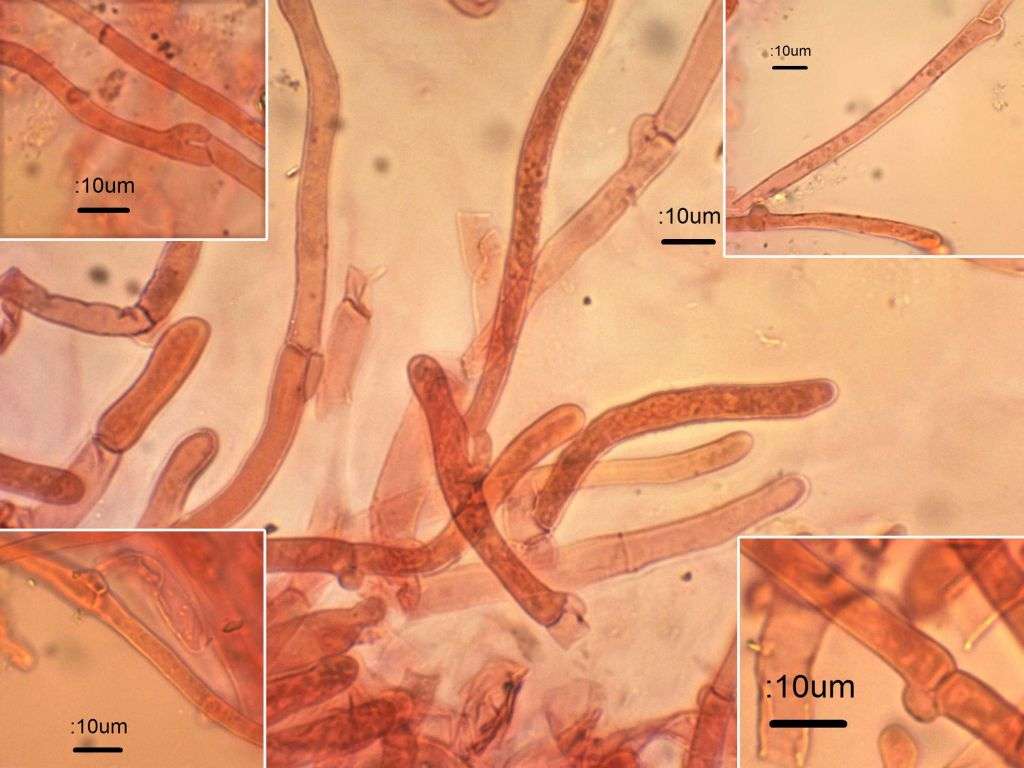
[attachment=1]5 Clamps in cap cuticle.jpg[/attachment] 
[attachment=0]6 Gill trama.jpg[/attachment] May 6, 2016 at 8:28 pm #37419The next Pinkgill we identified at Longshaw was Entoloma griseocyaneum. I struggled with this one on field character ID as there are a lot of steely blue stemmed Entolomas.
Most of our grassland fungi were identified by our grassland specialist Rob Foster, who gave this detailed description:
“It was in heathy acid grassland at the side of the path.
Relatively sturdy Entoloma cap 45mm diam, stem 50 mm diam 5mm.Cap brown, scaley/ squamulous, fibrilose/cracking radially, stem violet/slate grey fibrilose (a little flocose at top and base).Microscopy – gills fertile edge, not coloured, no cheilocystidia. Mostly spores elongate irregular hexagons typically @13×9 micron. No clamps seen.
It keys in both Vesterholt and Noordeloos to Entoloma anatinum provided you regard the cap as dark rather than pale brown and the photo in Vesterholt is quiite similar to the home photos I took showing the radial cracking of the pileus. However, there are other species in the group Anatinum, notably Entoloma griseocyaneum, in which the stem is less blue, the cap less brown, and the fruit bodies more sturdy, the photos of this in Noordeloos are quite similar to the field photos I took showing the scaly, convex caps particularly of the young fruit body. Microscopically both species are very similar, however the spores illustrated in Noordeloos are closer for E. griseocyaneum. Both species occur in grass and moss often in poor acid soils in grassland. I wonder if these are genuinely separate species. Both are considered rare in Europe,though E. griseocyaneum apparently can be rather frequently found on poorly managed grasslands, so this is probably the most probable”.
On WAB this one was considered typical of Entoloma griseocyaneum by Andreas Gminder.
Steve

[attachment=2]1 Entoloma griseocyaneum.JPG[/attachment] 
[attachment=1]2 Entoloma griseocyaneum.jpg[/attachment] 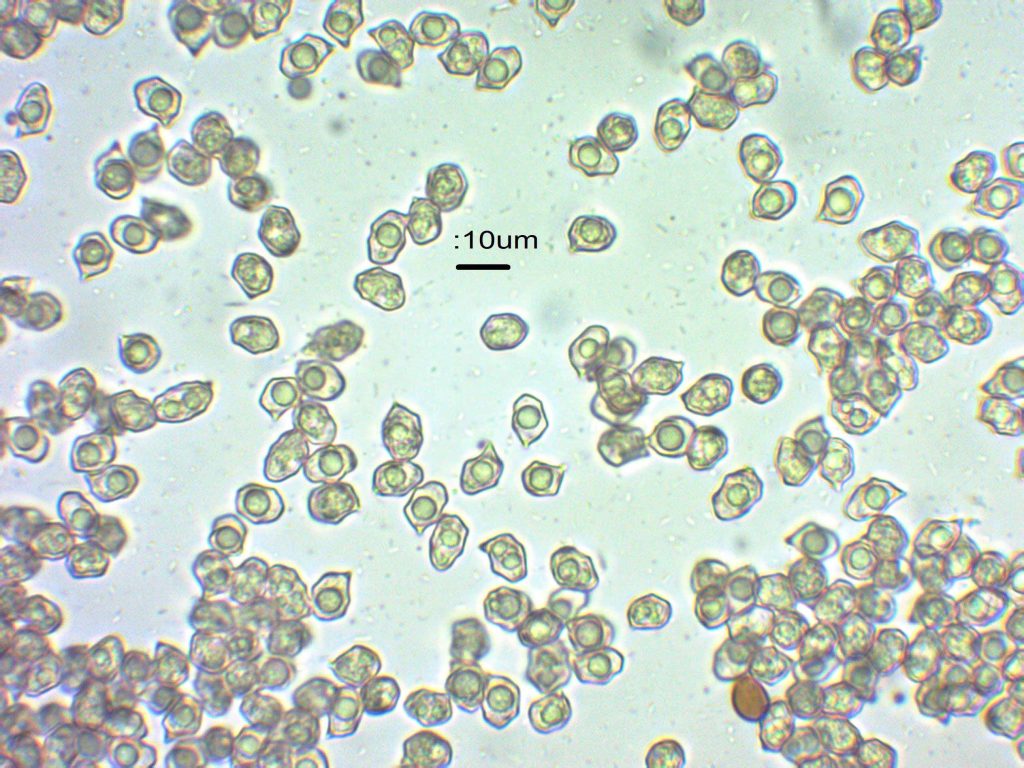
[attachment=0]3 Entoloma griseocyaneum.jpg[/attachment] May 8, 2016 at 12:22 pm #37420The Mealy Pinkgill, Entoloma prunuloides. Another “easy” Entoloma which we identified (via Rob Foster, our grassland specialist), was this one which foxed me until I poked my mirror under and saw the bright pink gills. Unfortunately 2 of the 5 records for Mealy Waxcap we got at Longshaw were bang on the route of a new bridle/cycleway, together with Pink Waxcaps and others. Another was on the Duke’s Drive, an old sheep-grazed pathway now more of a wide trackway, and with its verges threatened by conversion to a newly designated bridle/cycle route. Altogether a fantastic fungi site which we’ll be keeping an eye on. We recorded this species from field characters as it’s a speciality of Longshaw-type grasslands (I was told) and is unlikely to be one of the other big, Tricholoma-shaped whitish Pinkgills. However, I took a specimen for the herbarium just in case I have to do any microscopy in the future…
Steve

[attachment=3]1.JPG[/attachment] 
[attachment=2]2.JPG[/attachment] 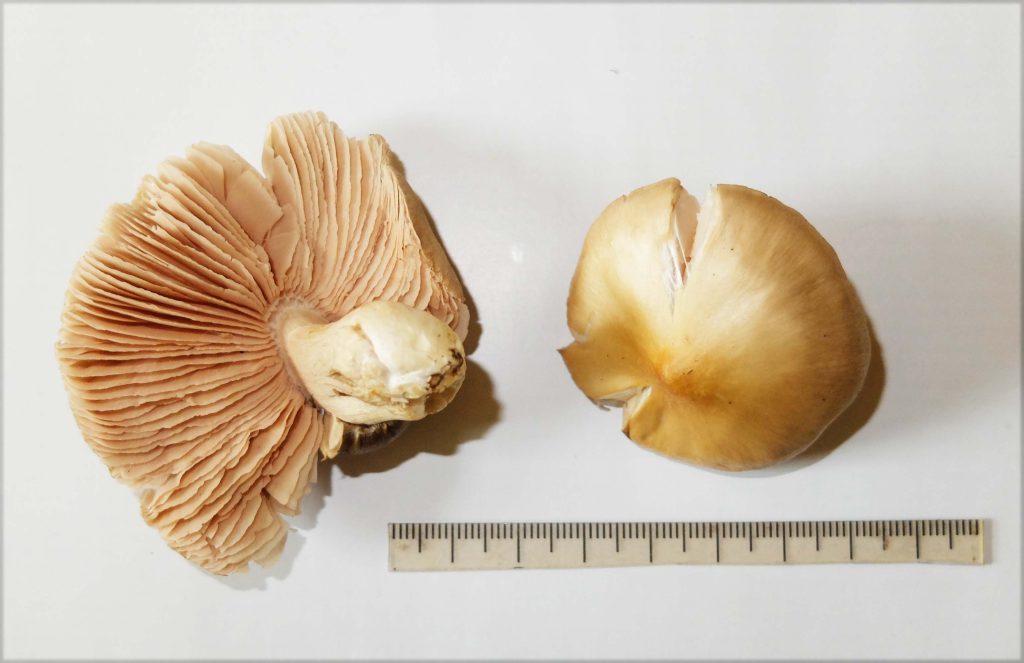
[attachment=1]3.JPG[/attachment] 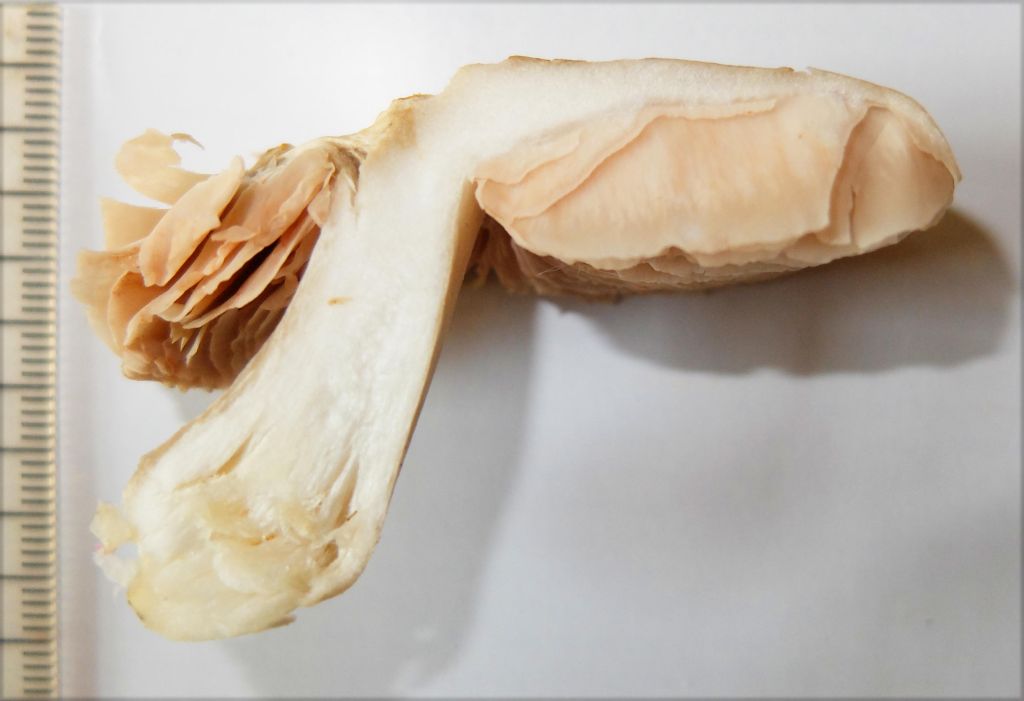
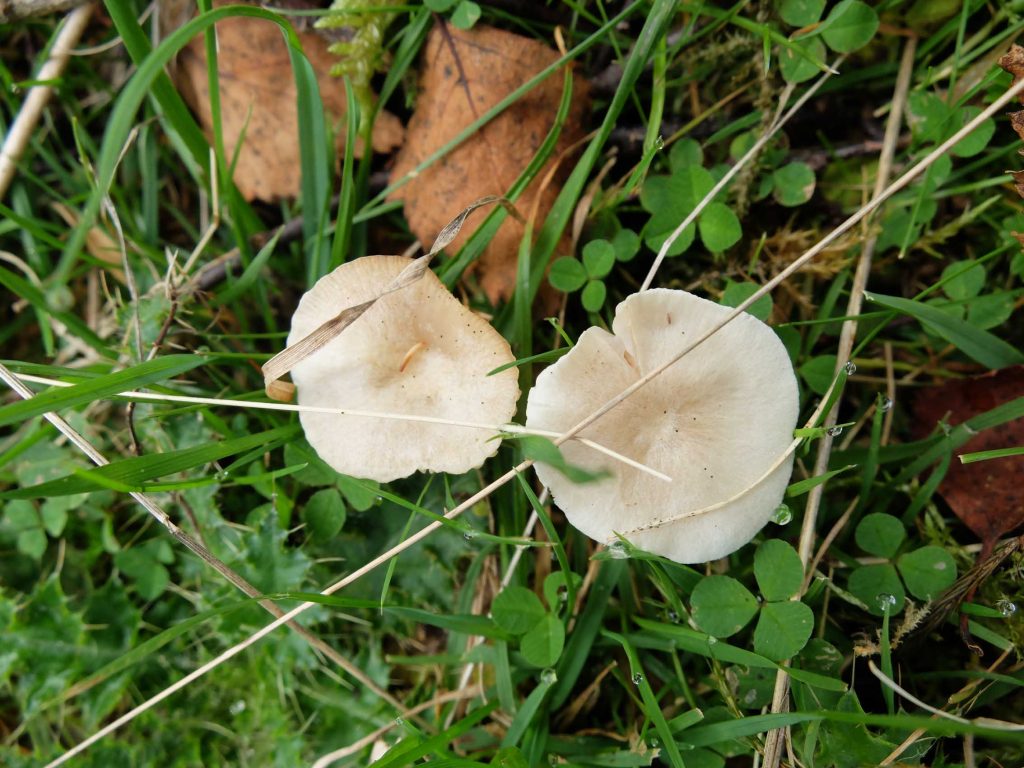
[attachment=0]4.JPG[/attachment] May 8, 2016 at 12:53 pm #37421Another “easy” one which we identified in the field at Longshaw was Entoloma sericellum – the Cream Pinkgill. Unusual white Pinkgill with pink gills – in grass – that was about it for ID. But I checked the spores quickly anyway. Steve
[attachment=5]1 Field.JPG[/attachment] 
[attachment=4]2 Field.jpg[/attachment] 
[attachment=3]3 Studio.jpg[/attachment] 
[attachment=2]4 Studio.jpg[/attachment] 
[attachment=1]5 Spore print.jpg[/attachment] 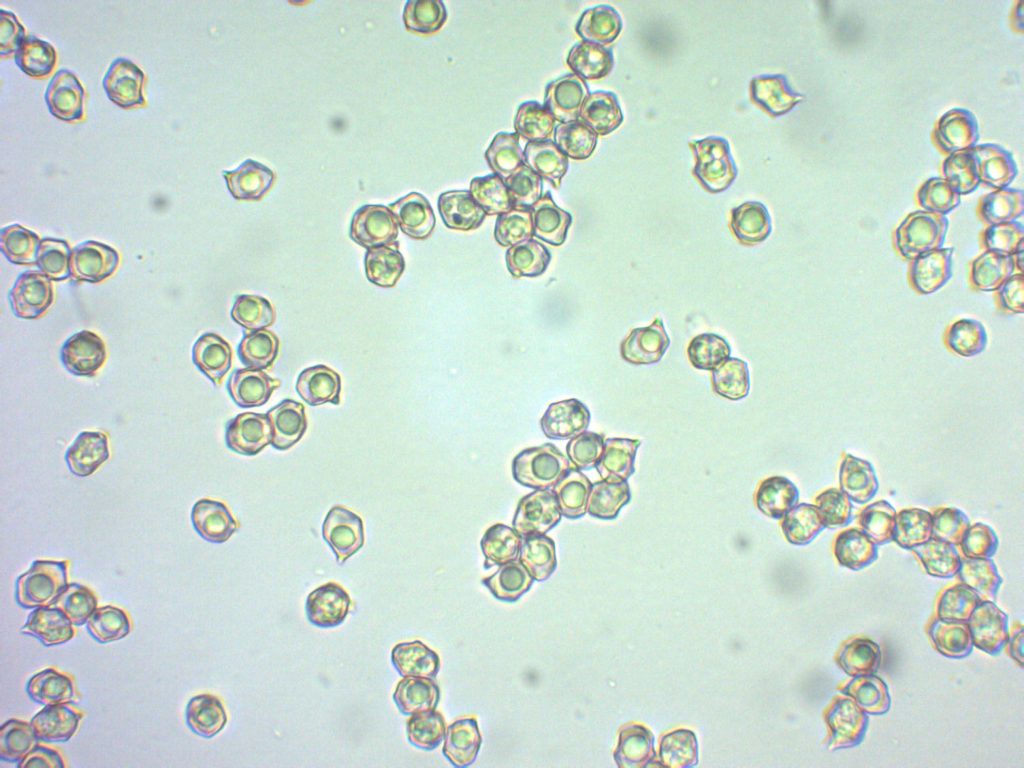
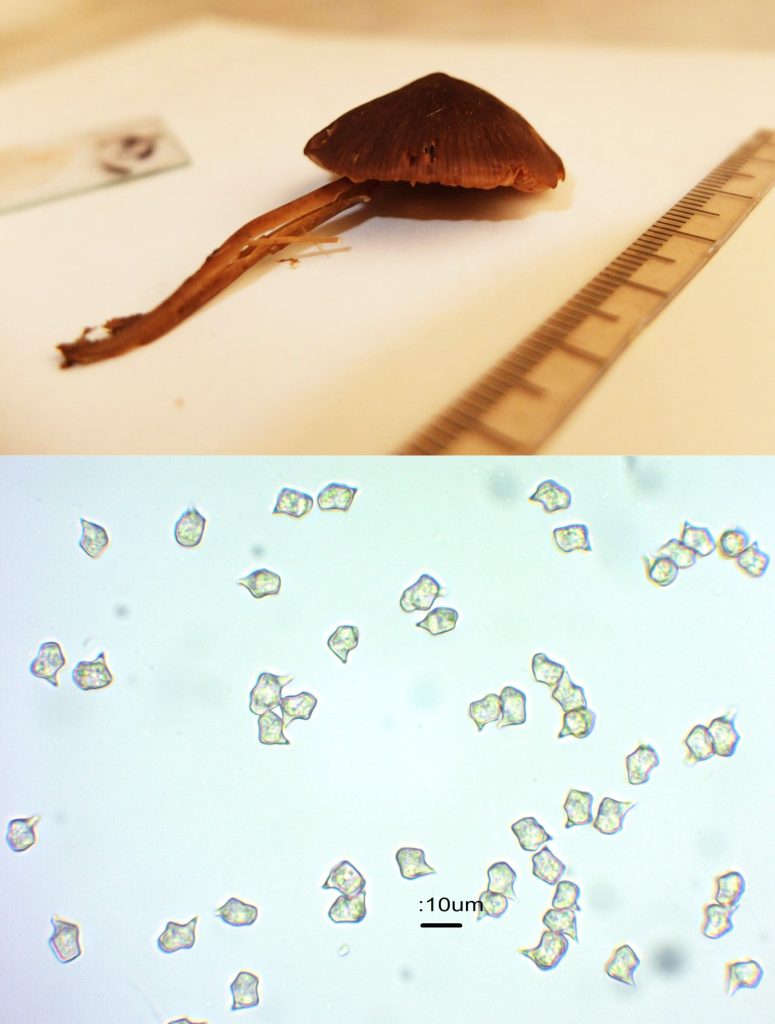
[attachment=0]6 Spores.jpg[/attachment] May 8, 2016 at 1:04 pm #37422Papillate Pinkgill – Entoloma papillatum. This Entoloma papillatum was very confidently identified in the field at Longshaw by a local grassland fungi specialist. Besides the (small) papilla on the cap, the most important diagnostic feature for him was the gills. These are brownish, even at an early stage. I personally find these papillate Entolomas rather difficult.
[attachment=1]1. – Copy.jpg[/attachment] 
[attachment=0]2. – Copy.jpg[/attachment] May 8, 2016 at 5:11 pm #37423Entoloma papillatum….continued. The brownish gills (on the field photo) are said to be a good feature of this species.
Steve
[attachment=2]13 oil.jpg[/attachment] 
[attachment=1]Field 3.jpg[/attachment] 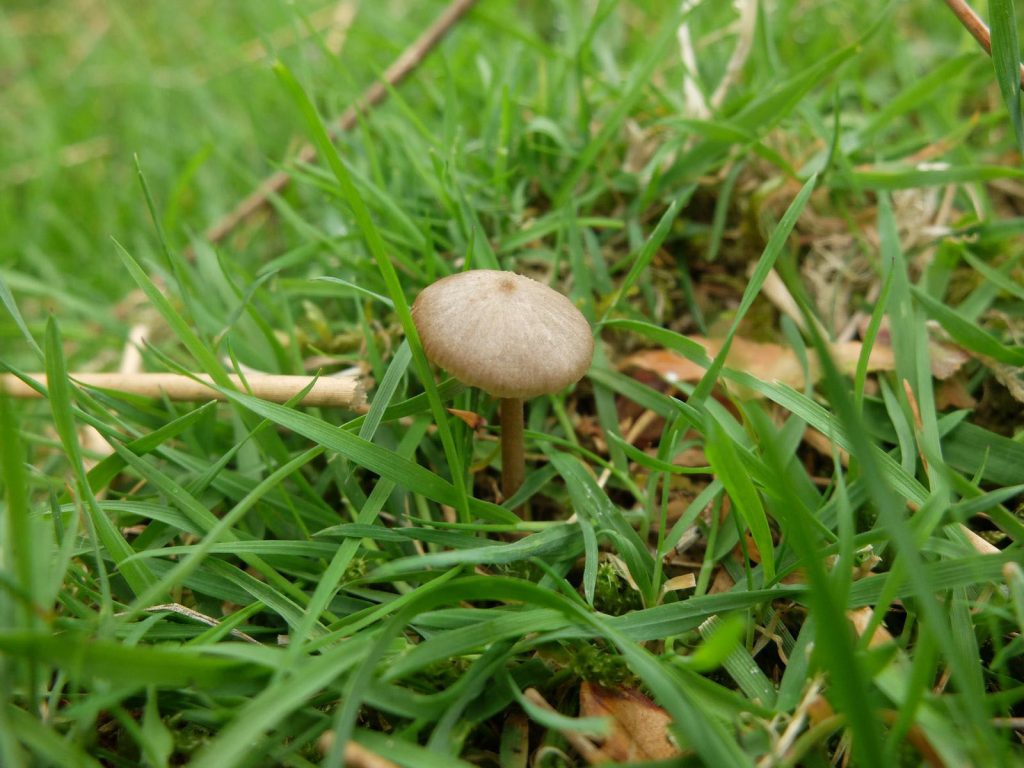
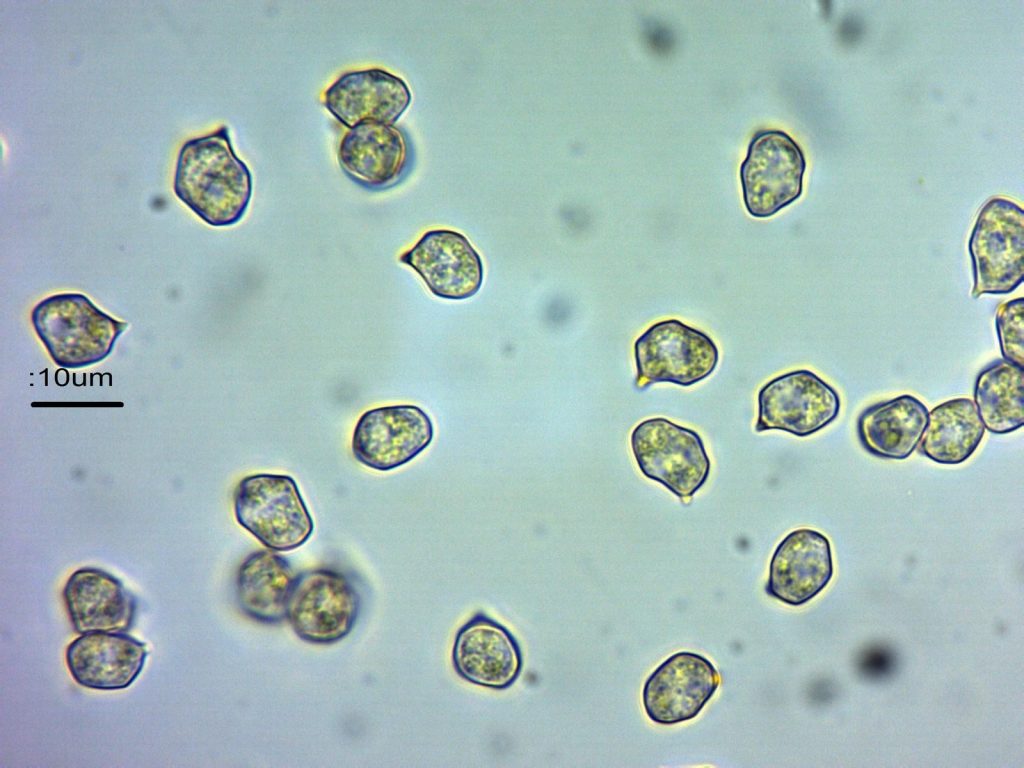
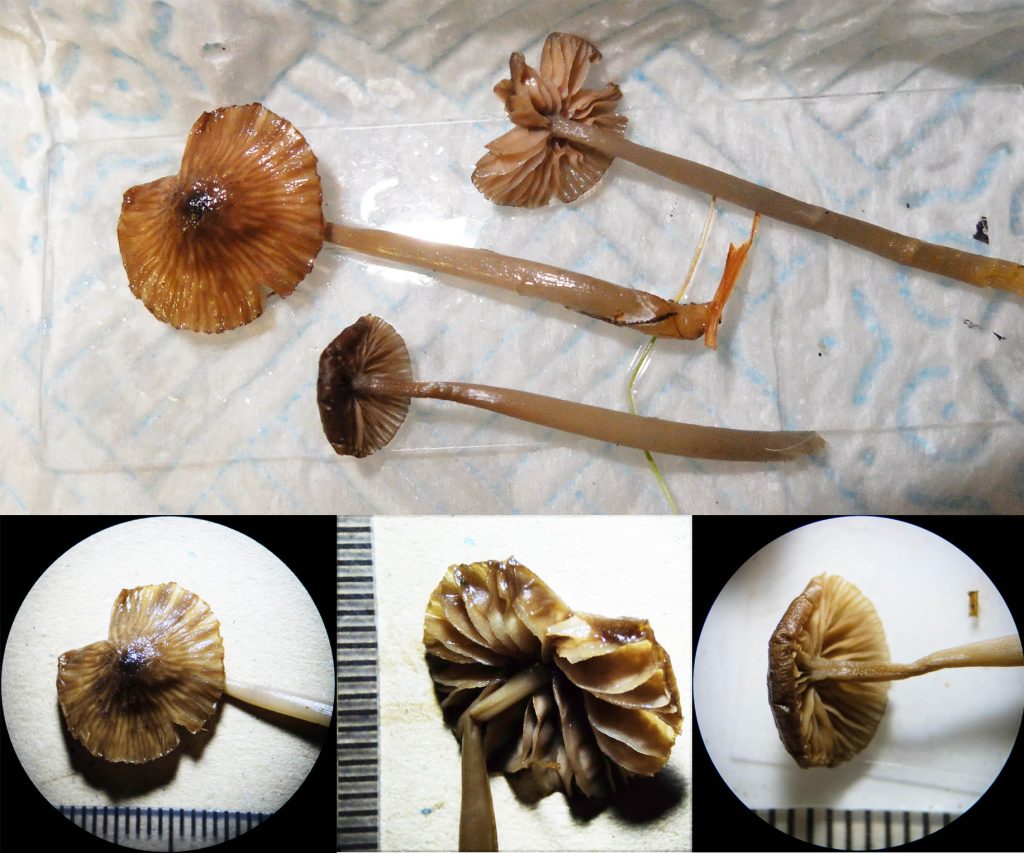
[attachment=0]Field2.jpg[/attachment] May 10, 2016 at 2:28 pm #37424Entoloma exile was named on the spot by a Longshw grassland specialist, but I wanted to check it under the scope. It was quite tiny, just 1.7 cm daimeter cap, very striate all the way to the dark umbo. The stem had olive tinges. However, the fungus was well past its prime and seething with bacteria under the microscope. I was able to check some spores, which were “oblong” 9-12 x 6-7.5 (for me, with their strikingly irregular angular outline, Entoloma spores are very hard to measure accurately). The rather slimy gills had a decurrent tooth, and were quite distant (about 23 in number). What looked very like long brown cystidia were noted, roughly 200 x 15 um.
All in all there was probably just enough left of the toadstool to put a name to it.
Steve
[attachment=3]1 Macro.jpg[/attachment] 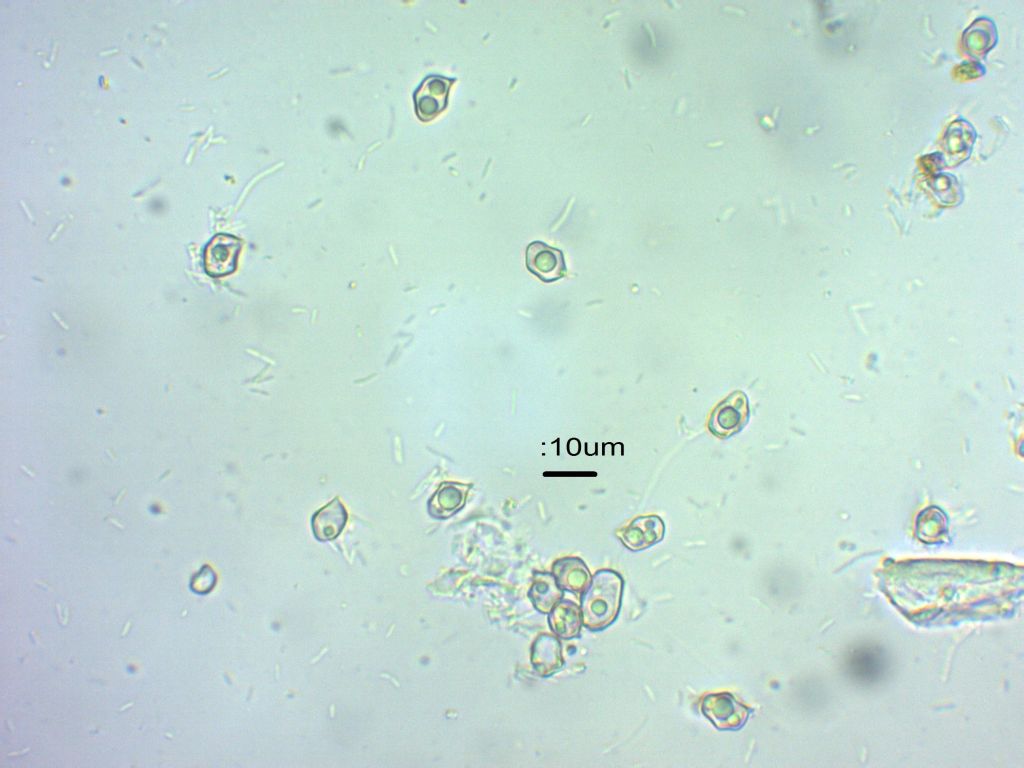
[attachment=2]2 Spores x 600 in water.jpg[/attachment] 
[attachment=1]3 Spores x 600 in water 2.jpg[/attachment] 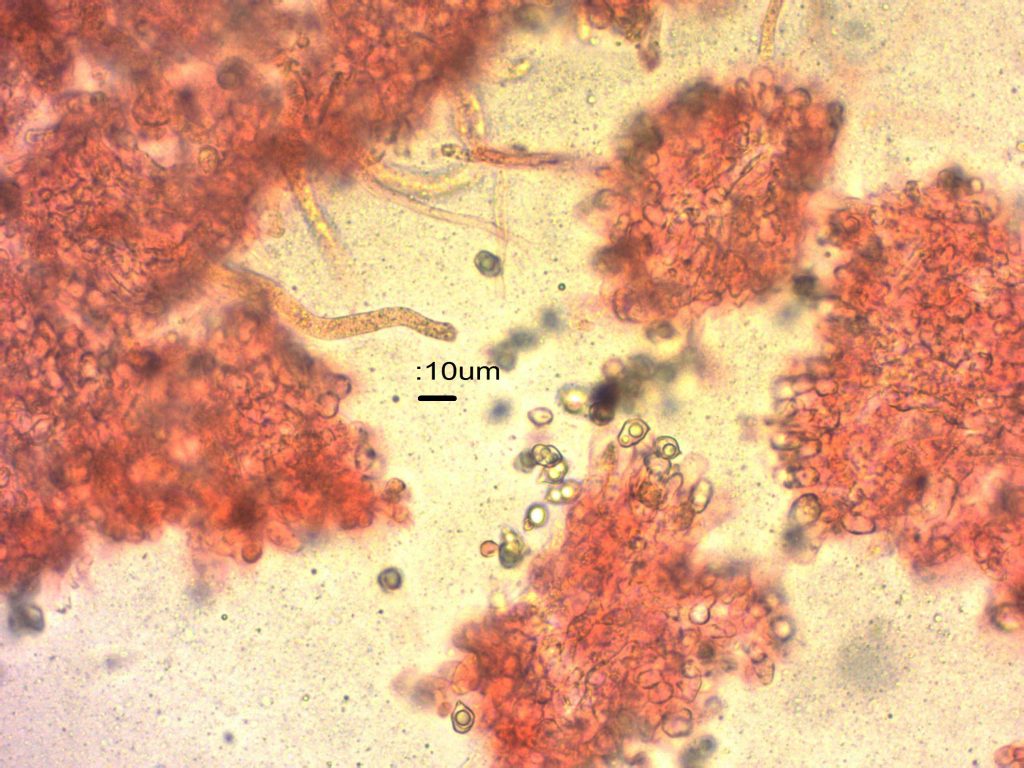
[attachment=0]4 Gill squash in Congo Red x400.jpg[/attachment] May 10, 2016 at 3:02 pm #37425Entoloma aprile perhaps? This striking Entoloma was found on 9th April 2014, in grassland not so far away fro hawthorn, but not so near either! The notes to the record read “Spores good match for E.clypeatum. Stem spirally striate. Pale “eye” to fibrillose cap (SC). Possible E. aprile/clypeatum. Not E.clypeatum (Andreas Gmeinder and Andy Overall from WAB)”
My recent find of Entoloma clypeatum growing right next to raspberry on our allotment revealed some debate about the status of Entoloma clypeatum and Entoloma aprile. Are these spring Entolomas simply variants of the same species?
Unfortunately no herbarium specimen was kept, so we are stuck with the evidence we collected ie photos and some micrographs, and brief notes.
From the field photos it’s clear from the buttercup leaves that this is quite a large Pinkgill, several inches across the cap. It’s not so distinctly Tricholomatoid as typical Entoloma clypeatum, or so shiny on the cap. Some caps had a distinct “eye” showing a hygrophanous quality. The striate stem, rather spiralled, was very striking.
Spores were approx 10-11 x 7-8, and basidia about 45 x 12.
On balance we decided to tentatively name this Entolma aprile cf. It was found in April

Steve

[attachment=4]1 Field 1.jpg[/attachment] 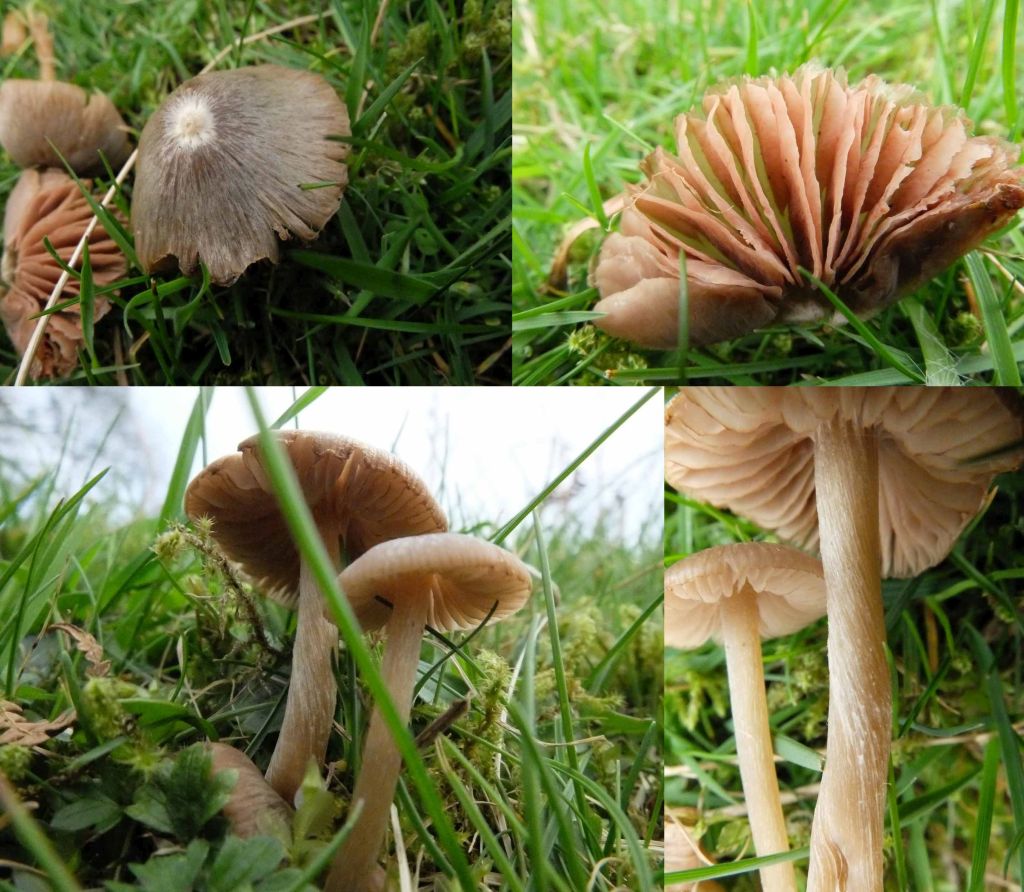
[attachment=3]2 Field 2.jpg[/attachment] 
[attachment=2]3 Spores x 600 in water.jpg[/attachment] 
[attachment=1]4 Basidia x 600.jpg[/attachment] 
[attachment=0]5 Cap cuticle x 600 in Congo Red.jpg[/attachment] May 10, 2016 at 7:01 pm #37426A nice shiny Pinkgill. But a heart-sinker 😈 .The thing which caught my eye with this Pinkgill was the beautiful shiny, silky dry cap. It was present in some numbers in small groups/clusters on a pasture which is very rich in Hygrocybe species, and has been untreated with chemicals (we assume) for at least 90 years or so since Longshaw was essentially bought by the citizens of Sheffield. That is, apart from the significant amounts of nitrogen deposited from the huge number of cars infesting the Peak District.
The toadstools had quite a pleasant smell (that’s all I recorded -smell is not a good diagnostic feature for a great many of us). The cap was ovoid to broadly umbonate, rufous on top, and paler to greyish at the edges, striate, and drying strikingly shiny. The brittle stem was somewhat bulbous, flattened, pale brown and whitened at the base, generally hollow, and with some longitudinal furrowing. All in all it was quite a chunky, Tricholomatoid toadstool, with a cap up to 3-4 cm and a stem up to 1 cm wide and 6 cm long. Apparently E. sericeum should have quite a slender stem.
The adnexed gills were medium spaced with intermediates.
Microscopically basidia seemed to be 1-4-spored, and no clamps were noted in the cap cuticle. I saw no cystidia – just the dreadful dull gill edge of a typical Entoloma. Pigment in the cap cuticle appeared to be just intracellular. The spores are a problem because they vary a lot from isodiametric to oblong: Entoloma spores are truly hopeless at times. A feature of Entoloma sericeum is isodiametric spores.
Normally I would just name any bright shiny Entoloma like this as Entoloma sericeum – the Silky Pinkgill. It’s commonly reported at Longshaw. But I am uncomfortable with how variable the descriptions seem to be in my books – Noordeloos, Fungi of Switzerland etc. In fact I got nowhere with the key in Funga Nordica and couldn’t find a good match in FOS. Perhaps Entoloma ameides is a better fit, it’s described as being shiny, with a nice smell, and my “isodiametric” spores may be just oblong ones orientated on their ends.
But anyway, it is kind of silky
Steve

[attachment=5]1 Field.JPG[/attachment] 
[attachment=4]2 Field.jpg[/attachment] 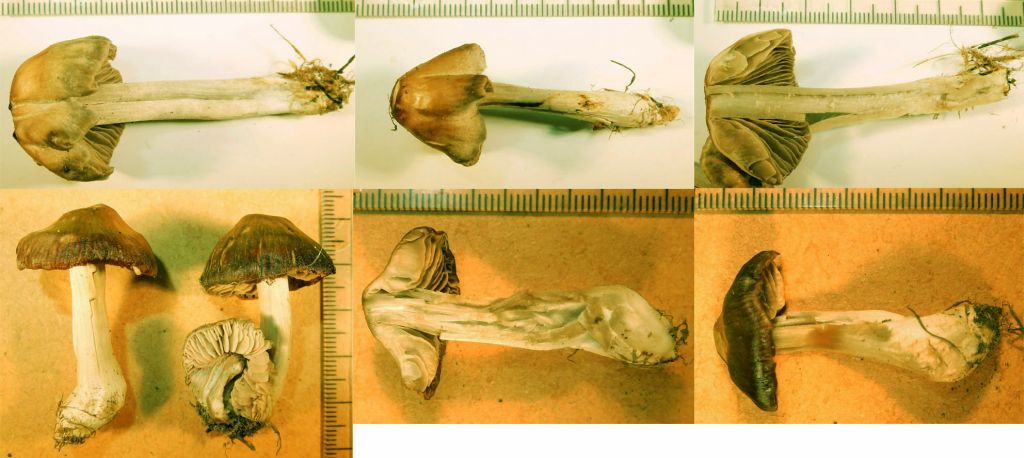
[attachment=3]3 Studio photos.jpg[/attachment] 
[attachment=2]4spores x 600 in water.jpg[/attachment] 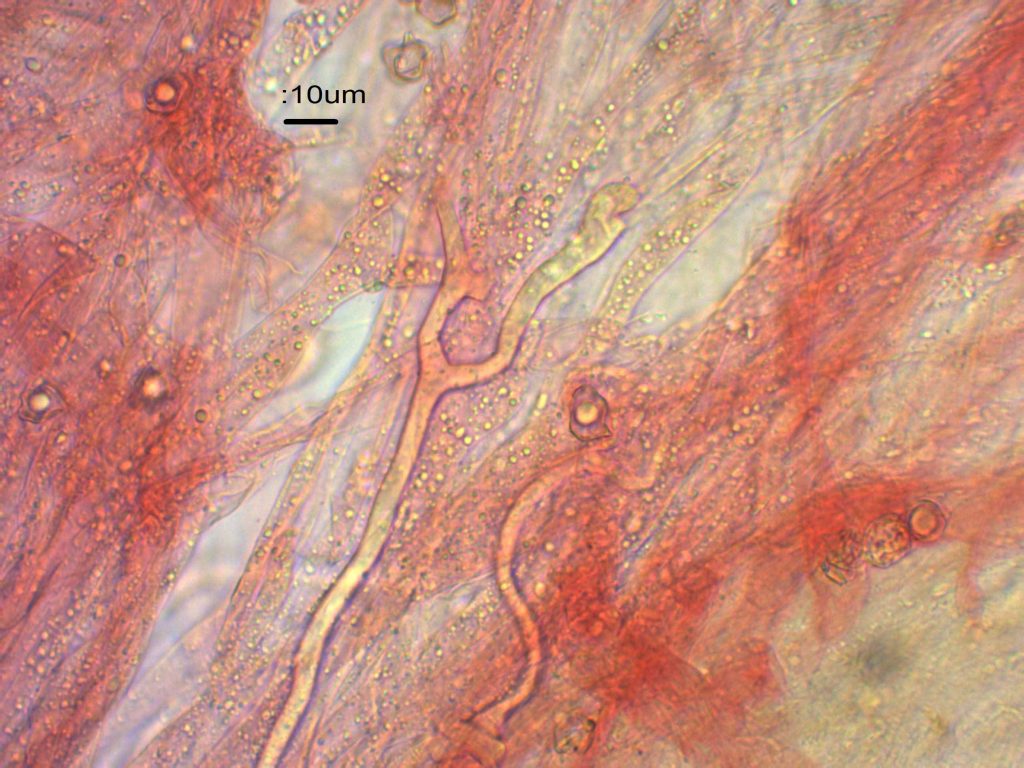
[attachment=1]5 Cap cuticle.jpg[/attachment] 
[attachment=0]6 Gill trama.jpg[/attachment] May 11, 2016 at 3:17 pm #37427Hello Steve – regarding your May posts (so far!): 6/5: definitely
E. griseocyaneumwhich is quite common on my ‘patch’. 8/5: I would call this
E. prunuloides(again frequent on my patch) although we now have E. ochreoprunuloidesto consider (know from Pembrokeshire). 8/5: yes,
E. sericellum8/5: I also find that it’s not that easy telling
papillatumfrom similar species (although if the gills are this brown it’s a good character). 10/5: although in poor condition, I would go along with
exilefor this one (it all seems to fit) 10/5: pass! – I’ve not come across
E. aprile. 10/5: I’m sure this is
E. ameides. Your top image has the very distinctive two-tone cap that I have noted in some of my 14 collections (8 from my local patch over a 20 year period). The ‘orange blossom’ smell should be a giveaway (although it’s not the only Entoloma with this smell Hello Steve – regarding your May posts (so far!):
6/5: definitely
E. griseocyaneumwhich is quite common on my ‘patch’. 8/5: I would call this
E. prunuloides(again frequent on my patch) although we now have E. ochreoprunuloidesto consider (know from Pembrokeshire). 8/5: yes,
E. sericellum8/5: I also find that it’s not that easy telling
papillatumfrom similar species (although if the gills are this brown it’s a good character). 10/5: although in poor condition, I would go along with
exilefor this one (it all seems to fit) 10/5: pass! – I’ve not come across
E. aprile. 10/5: I’m sure this is
E. ameides. Your top image has the very distinctive two-tone cap that I have noted in some of my 14 collections (8 from my local patch over a 20 year period). The ‘orange blossom’ smell should be a giveaway (although it’s not the only Entoloma with this smell
Cripes!you two are pretty impressive – perhaps I need to dip my toe into these pink waters again. I have much of the literature – and been bamboozled on numerous occasions nevertheless – one wonders how many records based solely on Phillips in the past (with its understandably limited range of species) are suspect (and I include myself in that). However backed up by this kind of
UK Fungihands-on advice I may give these another go . . . Chris
June 21, 2016 at 3:11 pm #37429Hi Roy, Many thanks for your much appreciated comments. I’m sorry to have taken so long to reply but I’ve been very unwell for 2 months.
A spring Entoloma at Longshaw was the only agaric found on a traverse of the main waxcap meadow two weeks ago. This meadow is acid pastureland which has been held by the National Trust, and its local predecessor, a Sheffield Association for the protection of local scenery, since 1927. As far as we know, it has never been treated with chemical fertiliser since then. But most of the year it is rather dismal, with little of interest apart from the small wooded areas.
This grassland Entoloma is typical of many dull brown Pinkgills, and I’m quite sure, impossible to identify from this single specimen.
However, I think it is the only Pinkgill we’ve found at Longshaw this spring.
The cap was 2.3 cm diameter, pale brown, very shiny and radially split and streaked. The hollow stem was 4cm x 3mm, paler brown, just slightly striate and lighter to the apex. The gills were very broad and notched, about two dozen in number, widely spaced.
Spores were heterodiametric and obtuse angled, about 10 x7 (how do you make sense of Entoloma spore measurements?). A typical basidium was 4-spored, about 20 x 7. No clamp connections were noted on a gill squash or in the cap cuticle. The hyphae of the cap cuticle were about 10 wide and to my eye contain intracellular pigment. In the image below I have two focus levels. But I find pigment like this almost impossible to be sure of as it is really beyond the resolving power of my scope, even under oil.
It’s not too hard to be an Entoloma expert, Chris: in the Valley of the Blind the one-eyed man is king

Cheers,
Steve

[attachment=5]1 Studio.JPG[/attachment] 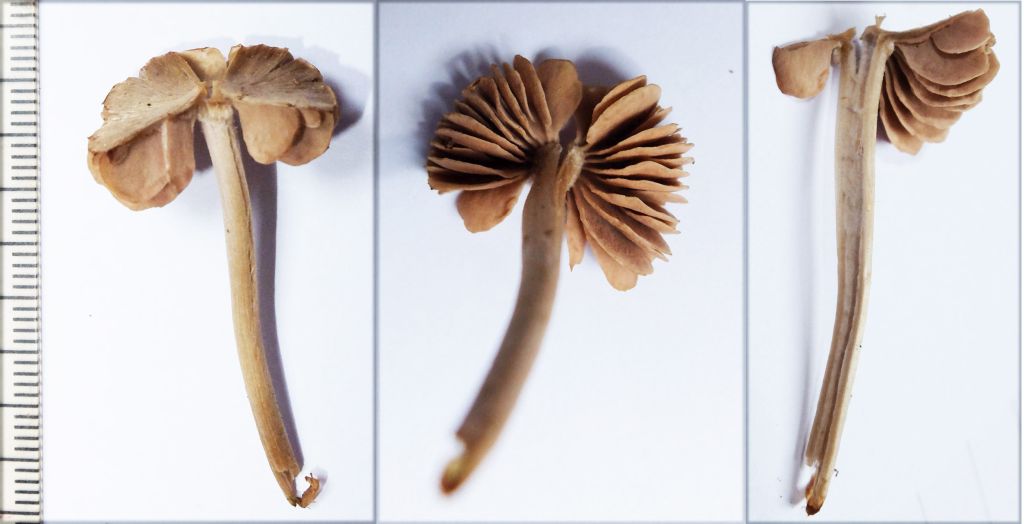
[attachment=4]2 Studio.jpg[/attachment] 
[attachment=3]3 Gill edge x200.jpg[/attachment] 
[attachment=2]4 Spores x 1000.jpg[/attachment] 
[attachment=1]5 Basidia x1000.jpg[/attachment] 
[attachment=0]6 Cap cuticle x1000.jpg[/attachment] July 2, 2016 at 9:01 am #37430Steve wrote:in the Valley of the Blind the one-eyed man is king
Great quote! Not heard it before.July 4, 2016 at 9:47 am #37431It’s based on a story by by HG Wells, Adam: “The Country of the Blind” from which this saying was derived. http://www.online-literature.com/wellshg/3/ It is a good one
Steve
July 26, 2016 at 2:28 pm #37432Rob Foster found this beautiful blue-stemmed, scaly-capped Entoloma on July 14 in sheep pasture at Longshaw. We found it twice in 2014 in September – but didn’t record it in 2015. The spores were up to almost 12 um long, they tended to agglutinate in water. We were reasonably confident of the ID. Steve

[attachment=5]1 Field collection.JPG[/attachment] 
[attachment=4]2 Field collection.JPG[/attachment] 
[attachment=3]3 Dimensions.JPG[/attachment] 
[attachment=2]4 Gills.JPG[/attachment] 
[attachment=1]5 Spores deposited on cap.JPG[/attachment] 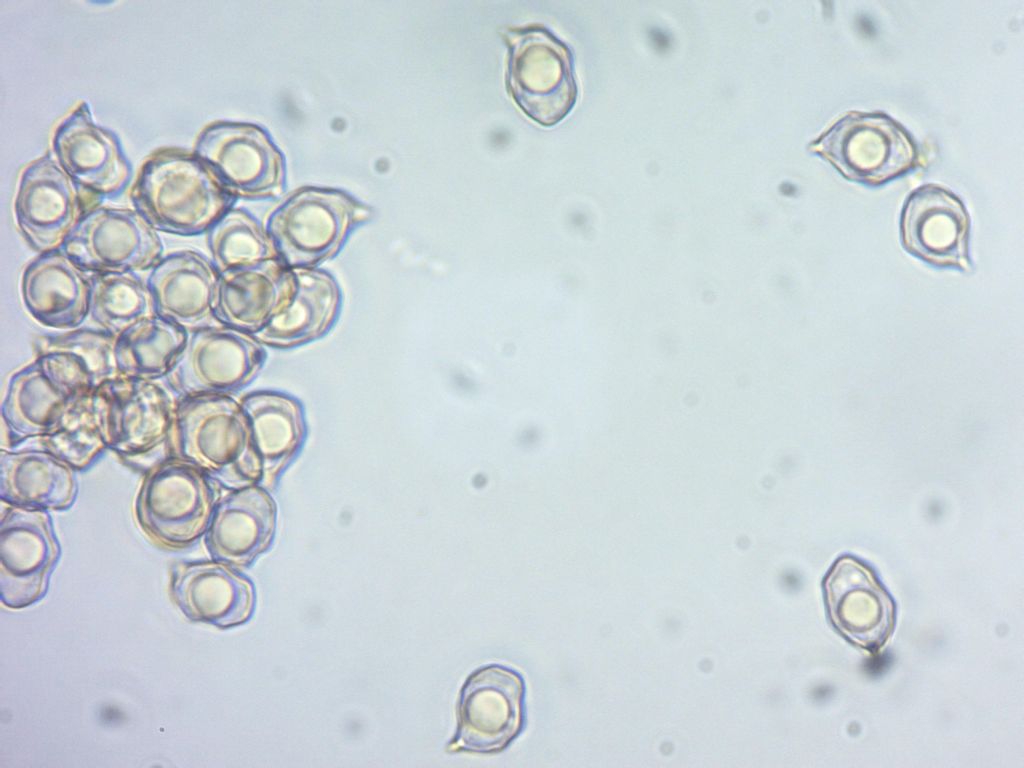
[attachment=0]6 Spores x1000.jpg[/attachment] -
AuthorPosts












- You must be logged in to reply to this topic.