- This topic is empty.
-
AuthorPosts
-
September 28, 2025 at 4:08 pm #33087
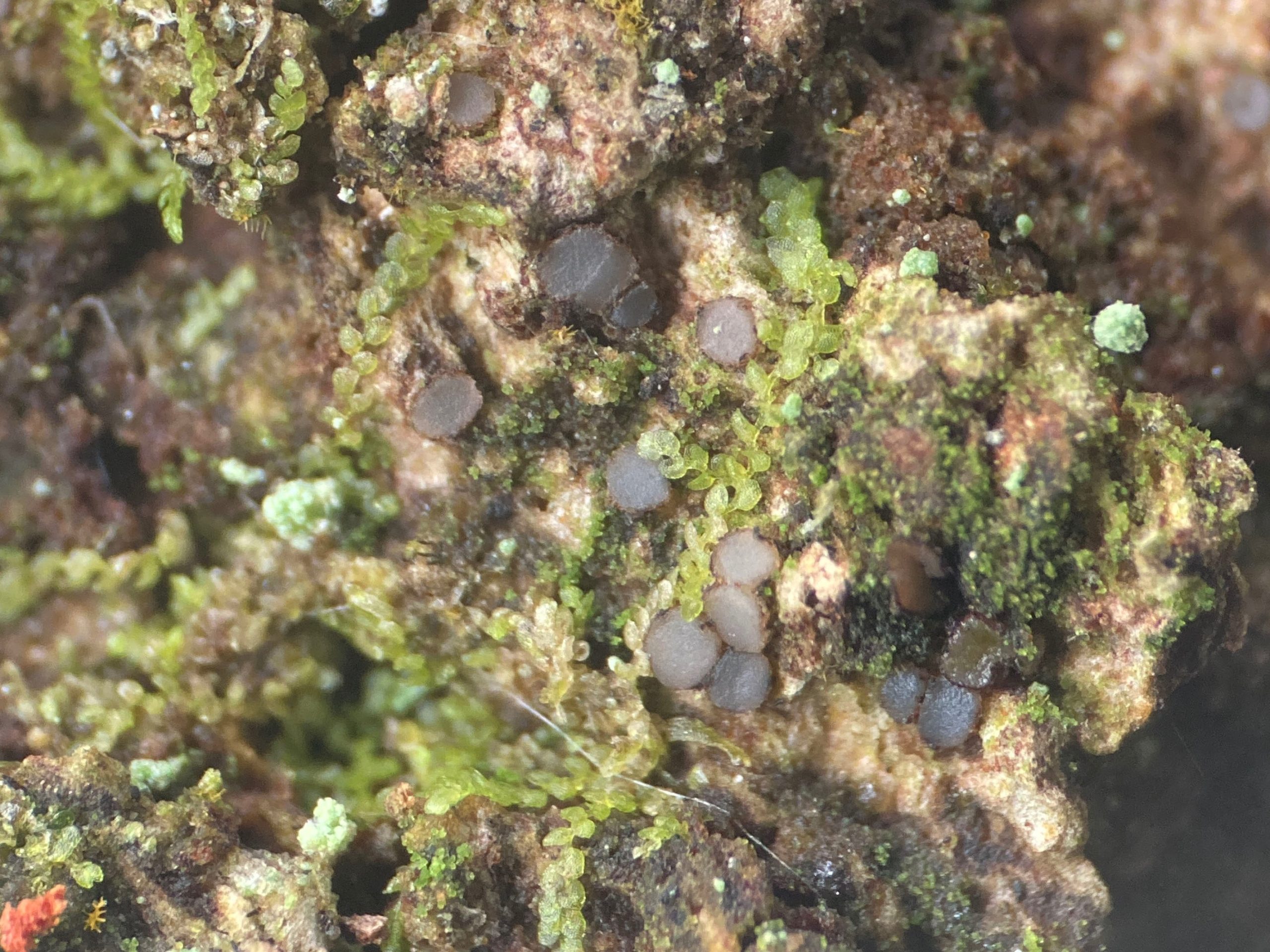
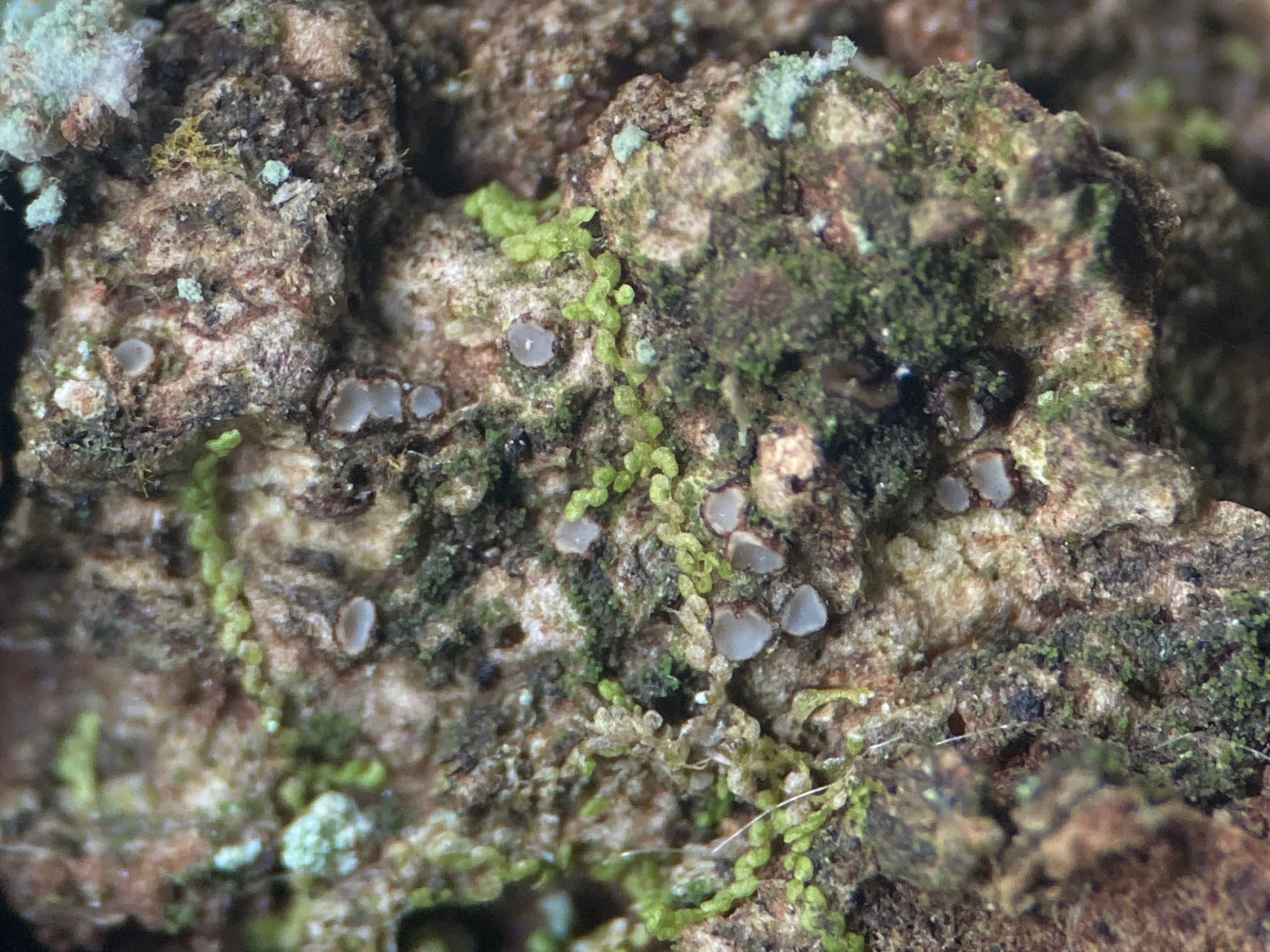
This seems to be a attractive bark fungus, collected from a young Oak with Micarea pycnidiophoraand an isidiate Micarea prasinas. lat. species in old woodland in the New Forest. In macro it looks like a Cryptodiscusspecies, with erumpent apothecia that are swollen when wet but shrunken and ulcerate when dry, but the internal features do not match. 
[attachment=5]2025-09-18-03.jpg[/attachment] 
[attachment=4]2025-09-18-09.jpg[/attachment]
Apothecia, damp above, dry below.
[attachment=3]2025-09-18-10.jpg[/attachment] 
[attachment=2]2025-09-18-11.jpg[/attachment]
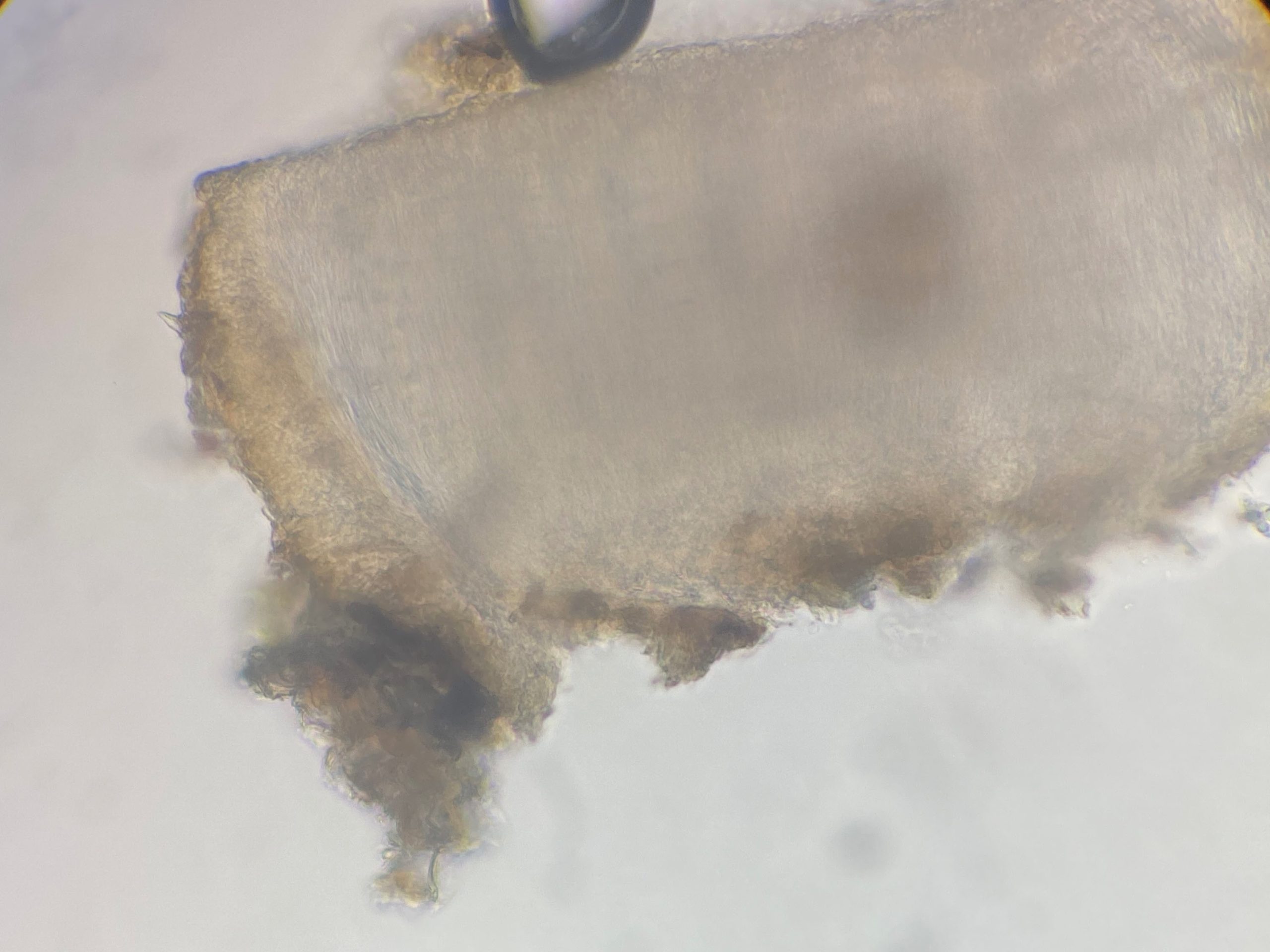
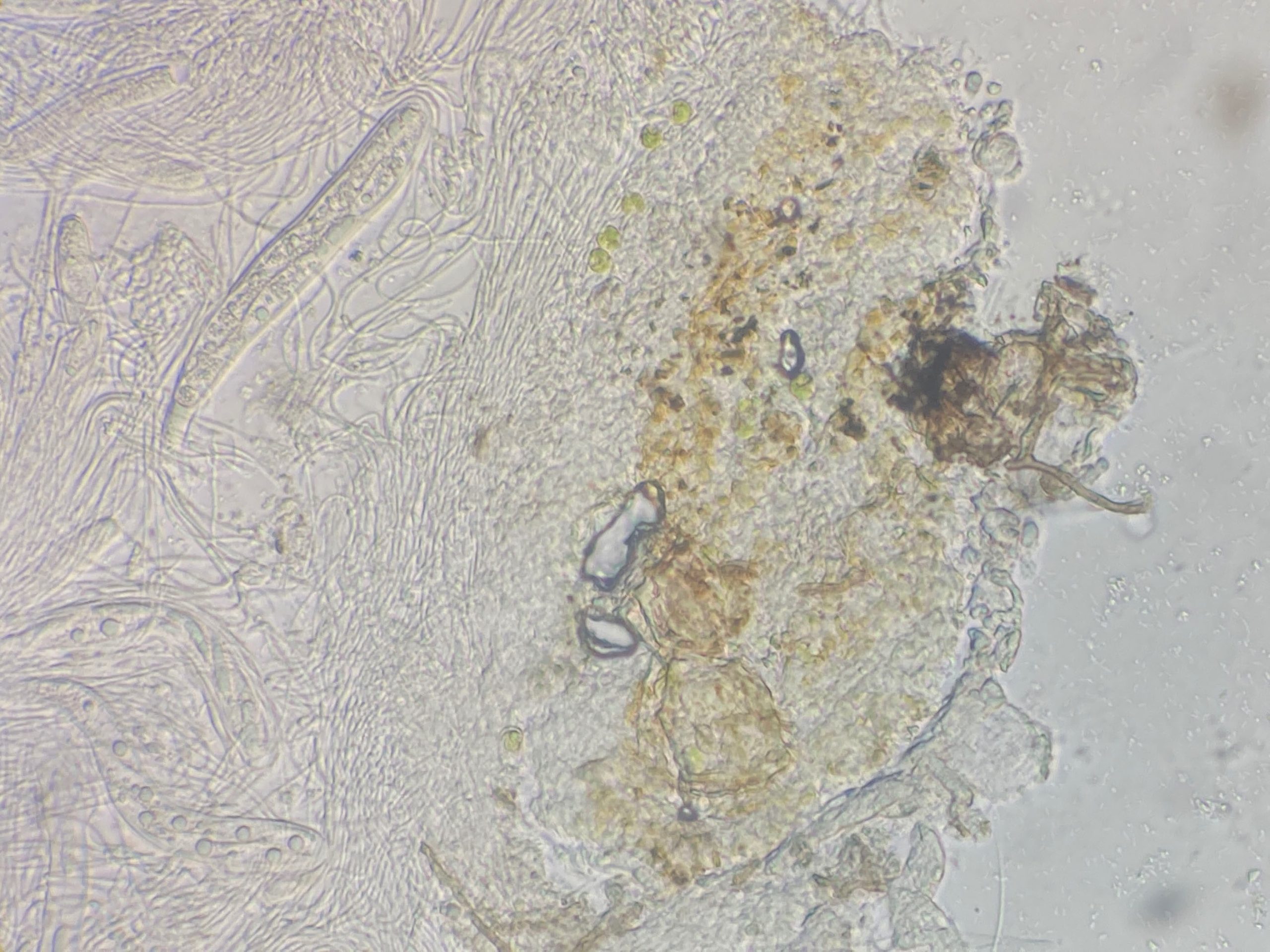
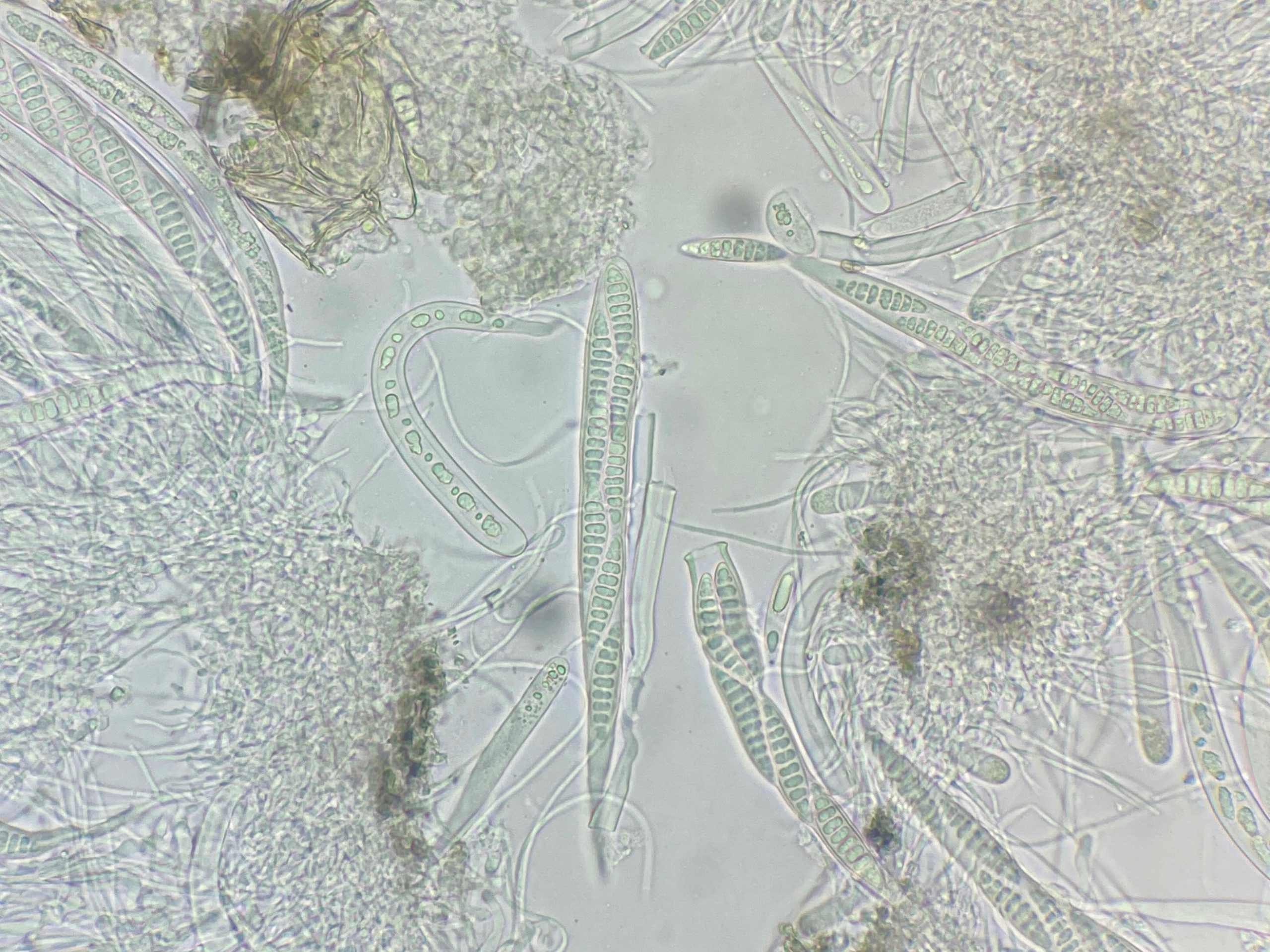
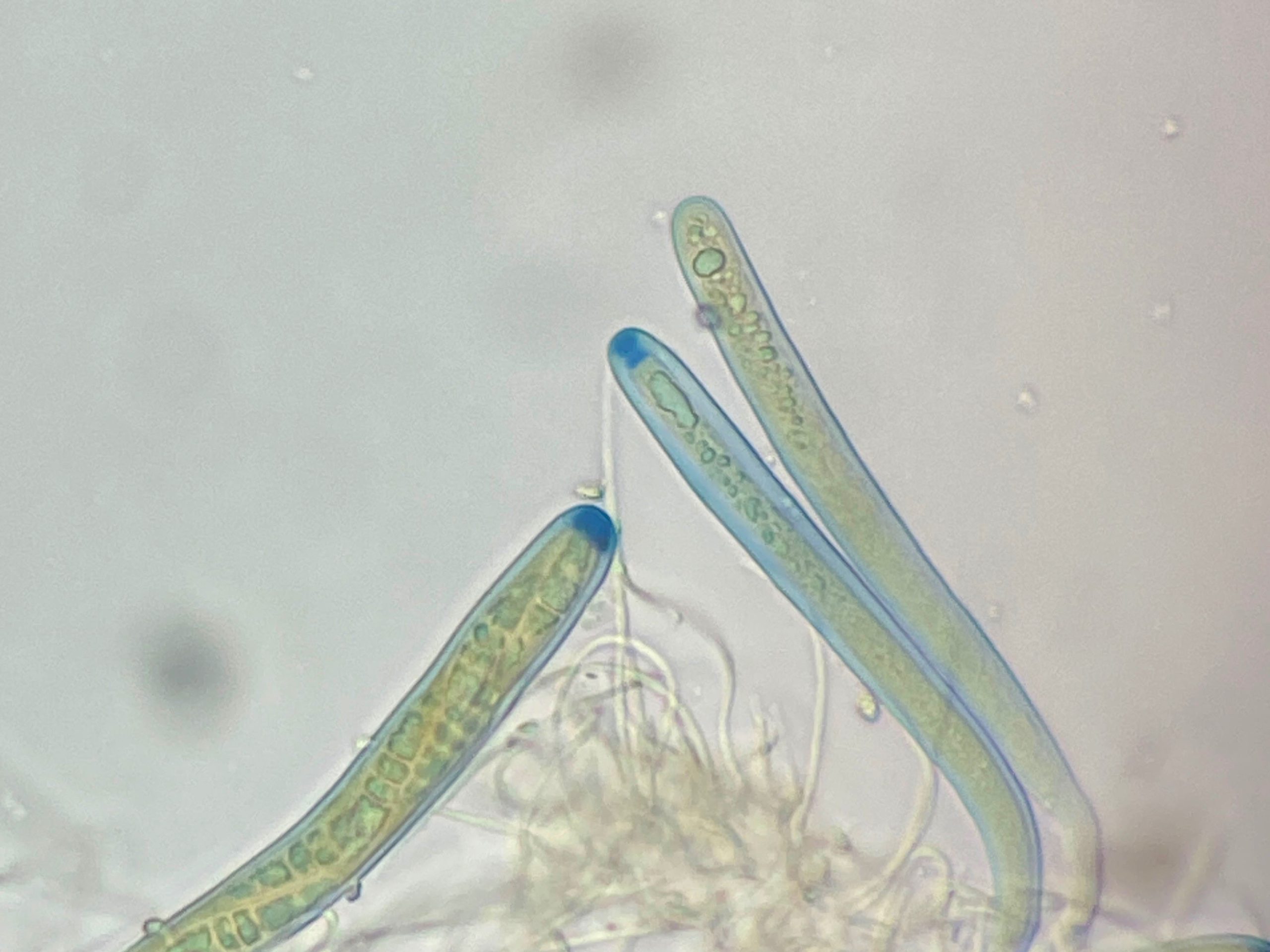
Margin, intact and in squashThe paraphyses are long and unbranched, the spores are about seven septate and 30 – 35 x 8 – 10 µm, while the ascus tips in K/I give a Catillaria-type like structure
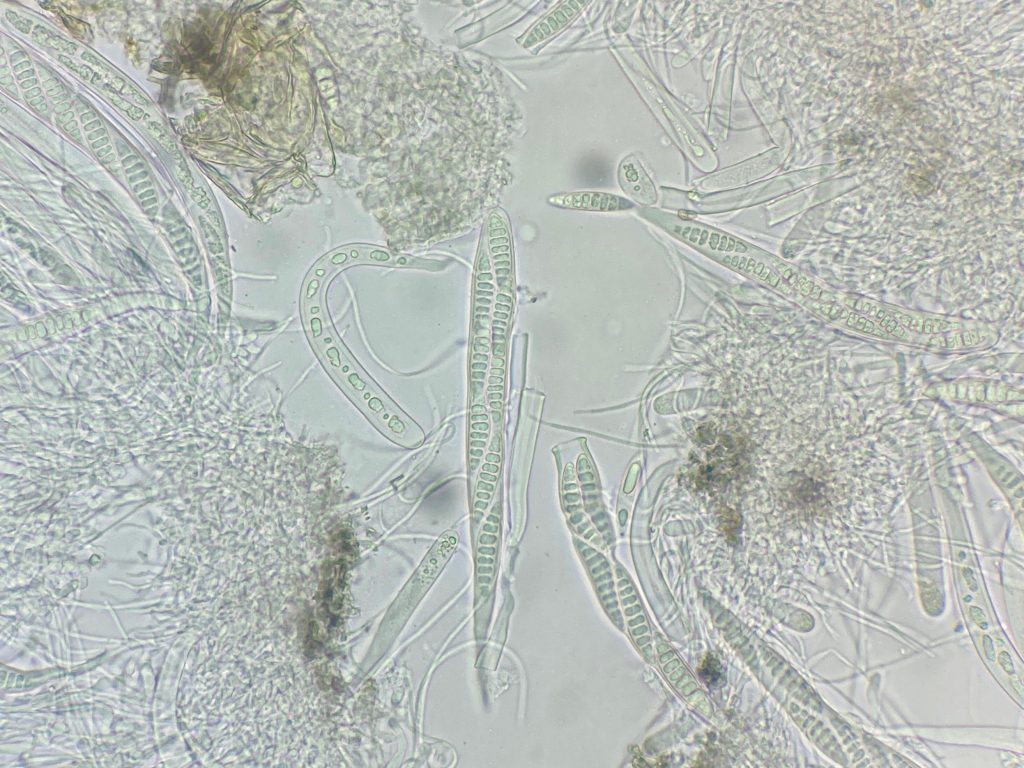
[attachment=1]2025-09-18-04.jpg[/attachment] 
[attachment=0]2025-09-18-06.jpg[/attachment]
Spores & Asci above in K/I belowAny ideas?
Neil
September 28, 2025 at 5:13 pm #46681Probably a very wild guess but might it be something like Lecanidion atratum? September 29, 2025 at 3:40 pm #46682Jenny Thanks, spores are similar but not carbonaceous and has no K/I reaction on the ascus tip, so not that.
Neil
September 29, 2025 at 4:05 pm #46683The closest I can find is Ramomarthomyces octomerus (see //doi.org/10.3390/jof10050301 – open access), but I’m not too confident. It would be worth sending the images to Jason Karekhian, I think it would interest him… Paul
September 30, 2025 at 1:42 pm #46684Paul Thanks, closer but yes probably not that, his species has branched paraphyses. I will contact him, however, it looks like this fungus is interesting!
Neil
October 1, 2025 at 1:03 pm #46685Keep us in the loop! I thought I’d seen this before, and have finally dug out some images from Quercus petraea in Bryn Engan, VC49 (SH727575).
-
AuthorPosts



- You must be logged in to reply to this topic.