Forums › Forums › Rusts, Smuts, and Mildews › Rust on yellow flowering plant
- This topic is empty.
-
AuthorPosts
-
July 5, 2015 at 3:24 pm #29504
Tried to key this out but getting nowhere. I’m sure one of you guys will know it. 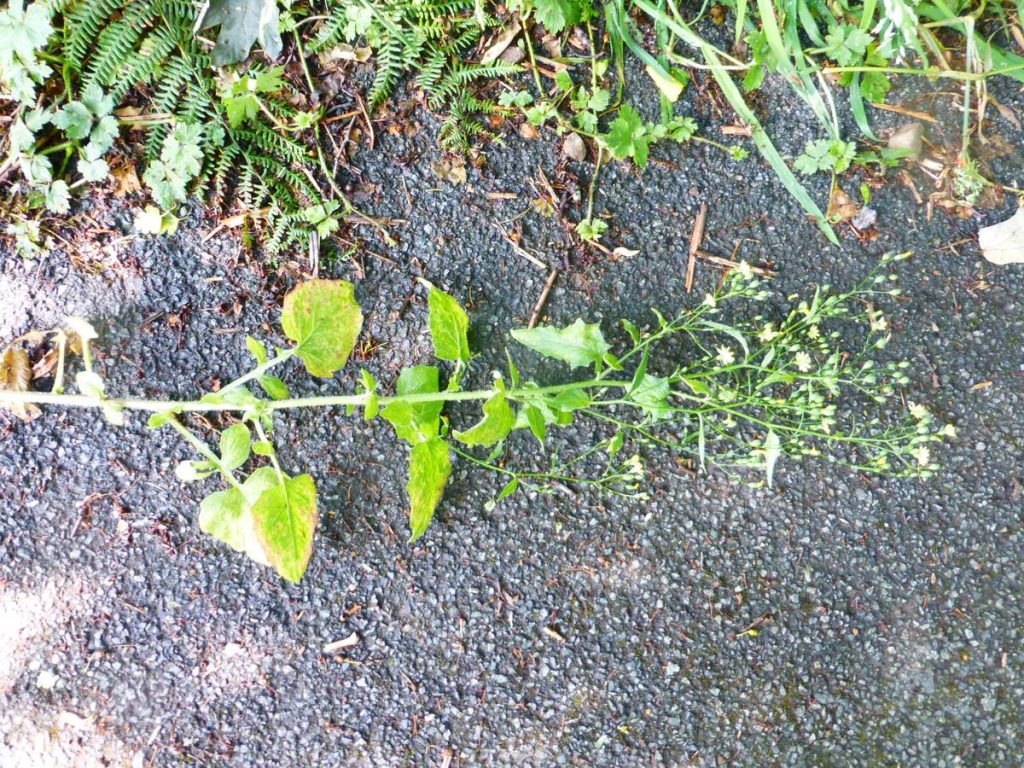
[attachment=0]P1010273-001.JPG[/attachment] 
[attachment=1]P1100589.JPG[/attachment] 
[attachment=2]P1010272-001.JPG[/attachment] July 5, 2015 at 5:04 pm #35120Hi Adam, Nipplewort –
Lapsana communis. 
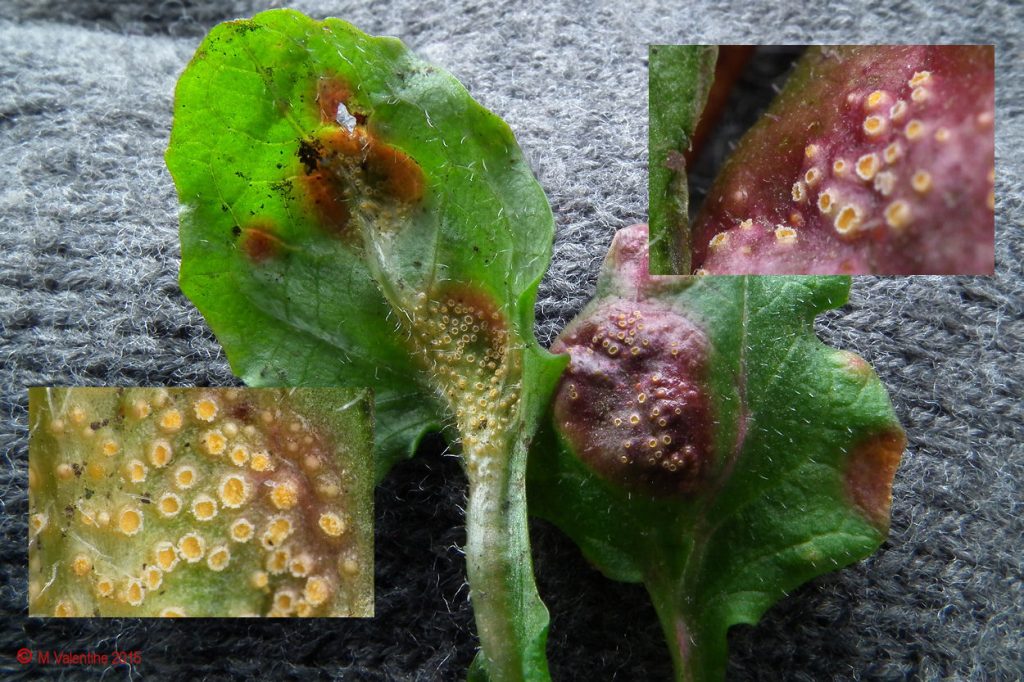
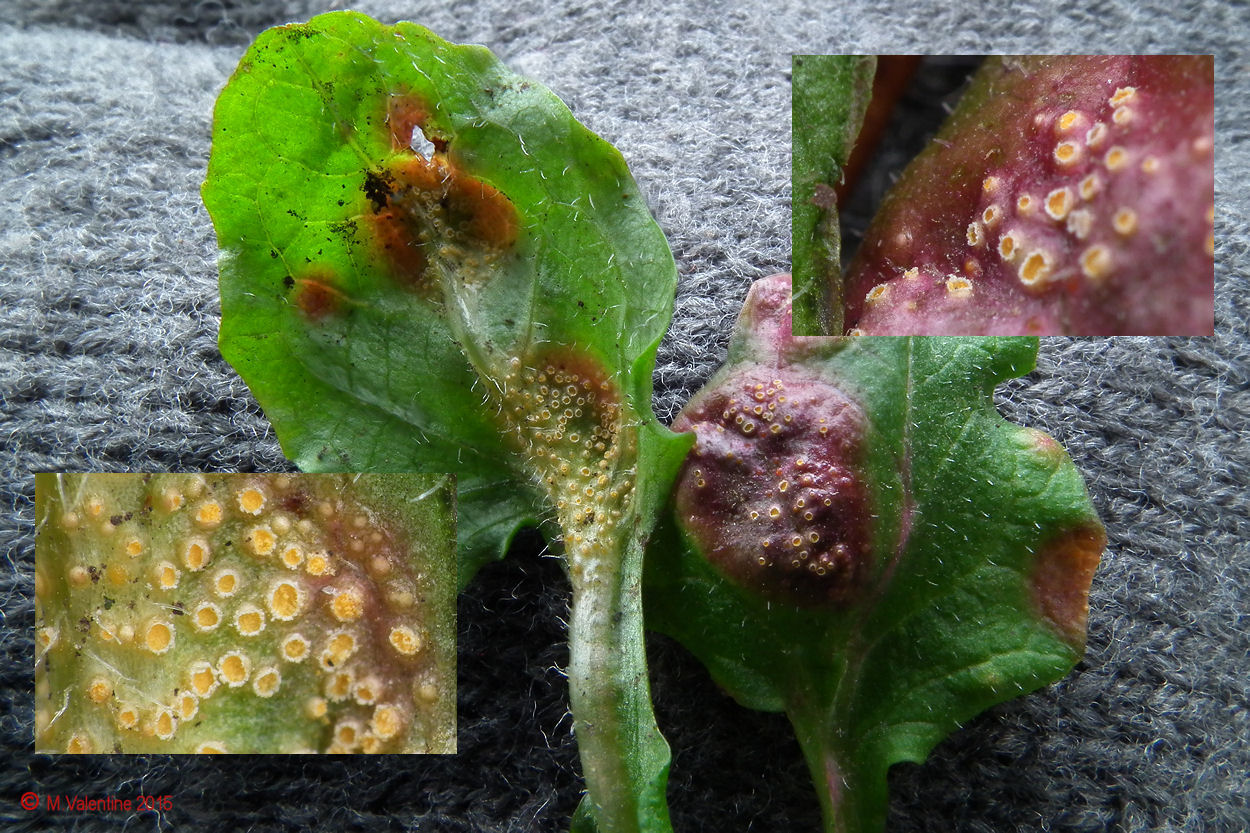
Puccinia lapsanae). Note that leaves on mature plants look very different to the early leaves.
Photo below shows stage I aecidia (Photo taken in February this year): –
Click on image to view at full size.
[attachment=0]Puccinia lapsanae-03.jpg[/attachment] Regards,
Mike.
July 5, 2015 at 5:07 pm #35121No so spectacular, but like this? 
[attachment=0]P1010269.JPG[/attachment] 
[attachment=1]P1010268.JPG[/attachment] July 5, 2015 at 5:20 pm #35122Hi Adam, I think those tiny brown spots will be the uredosori.
From Wilson & Henderson: –
Aecidia amphigenous, somewhat crowded on large, roundish, purple spots, flattish, with torn, white, refiexed peridium; aecidiospores subgloboid or ovoid, nearly smooth, orange, 16-21 x 13-17µ.
Uredosori amphigenous, very minute, round, often confluent, pulverulent, chestnut-brown; uredospores globoid to ovoid, pale brown, 17-22×15-18µ, wall delicately echinulate, with 2 equatorial pores.
Teleutosori amphigenous, minute, scattered, pulverulent, blackishbrown; teleutospores ellipsoid or ovoid, scarcely constricted, chestnut-brown, 22-33 x 17-26µ, wall very delicately echinulate, pore of upper cell almost apical, of lower equatorial, pedicels hyaline, slender, short, often oblique, Auteu-form.
On leaves and stems of
Lapsana communis, aecidia, March-May; uredo spores, April-June; teleutospores, June-September. Great Britain and Ireland, very common. Regards,
Mike.
July 5, 2015 at 5:36 pm #35123Moved topic (as it is now a rust discussion 😆 )Here are some micro shots (spores are distinctly echinulate and around 20µm diameter.)
July 5, 2015 at 5:40 pm #35124July 5, 2015 at 6:15 pm #35125While looking for pores in the spores, I came across this unusual hyphal structure 😆 July 5, 2015 at 8:05 pm #35126adampembs wrote:While looking for pores in the spores, I came across this unusual hyphal structure
😆
Hmmmm . . . . a mite unfair methinks🙄 On a serious note it’s good to see that the Cotton Blue and heating is working – do you see what I mean about not only making the pores more obvious, but also staining the point of attachment of the uredospores?
Chris
July 6, 2015 at 1:43 am #35127So the blue is the point of attachment and the pores are just unstained but easier to see? -
AuthorPosts




- You must be logged in to reply to this topic.