Forums › Forums › Rusts, Smuts, and Mildews › Puccinia circaeae on Enchanter’s Nightshade
- This topic is empty.
-
AuthorPosts
-
August 19, 2015 at 1:22 pm #29645
Found yesterday. Puccinia circaeaeteliosori/teliospores, (along with some Pucciniastrum circaeaeuredospores), on Circaea lutetiana– Enchanter’s Nightshade. Interestingly, at this particular site, many hundreds of plants were seen to be infected with the Puccinia circaeae, but there were no immediately obvious (macroscopic) signs of the
Pucciniastrum– which was present, since uredospores were found amongst the Pucciniateliospores. At another site recently visited, there were many hundreds of plants seen to be infected with
Pucciniastrum circaeae, but no signs whatsoever, (either macroscopically or microscopically), of the Puccinia circaeae. (See:- http://www.fungi.org.uk/viewtopic.php?f=9&t=400 Description of
Puccinia circaeae– from Wilson & Henderson – “British Rust Fungi” (1966): – Spermogonia unknown, aecidia and uredosori absent. Teleutosori hypophyllous, on sunken yellowish or purplish, round spots, minute, pulvinate, brown, then with a greyish bloom, scattered or circinate and at length confluent in a thick crust; teleutospores generally fusoid, rounded or conically attenuate at the apex, slightly constricted at the septum, 25-40 x 9-13µ, wall smooth, yellowish-brown or brown, up to 12µ thick at the apex; pedicels hyaline, persistent, about as long as the spore. Micro-form. On Circaea ‘alpina’, C. intermedia and C. lutetiana, August-October. Great Britain and Ireland, frequent.The sori of this species are of two different types: the first-formed are leptosporic, roundish, light brown, solitary or circinate and confluent, they become grey with the production of basidia and basidiospores; the later-formed, which appear round the others or on the stem and on the nerves of the leaves, are darker brown and never greyish. All the spores are of the same shape, but the paler leptosporic ones can germinate at once in the sorus, whereas the darker ones rest until the following spring.
The scattered orange uredosori of
Pucciniastrum circaeaeoften occur on the same leaves as the chocolate brown teleutosori of this species. Click on images to view at full size.
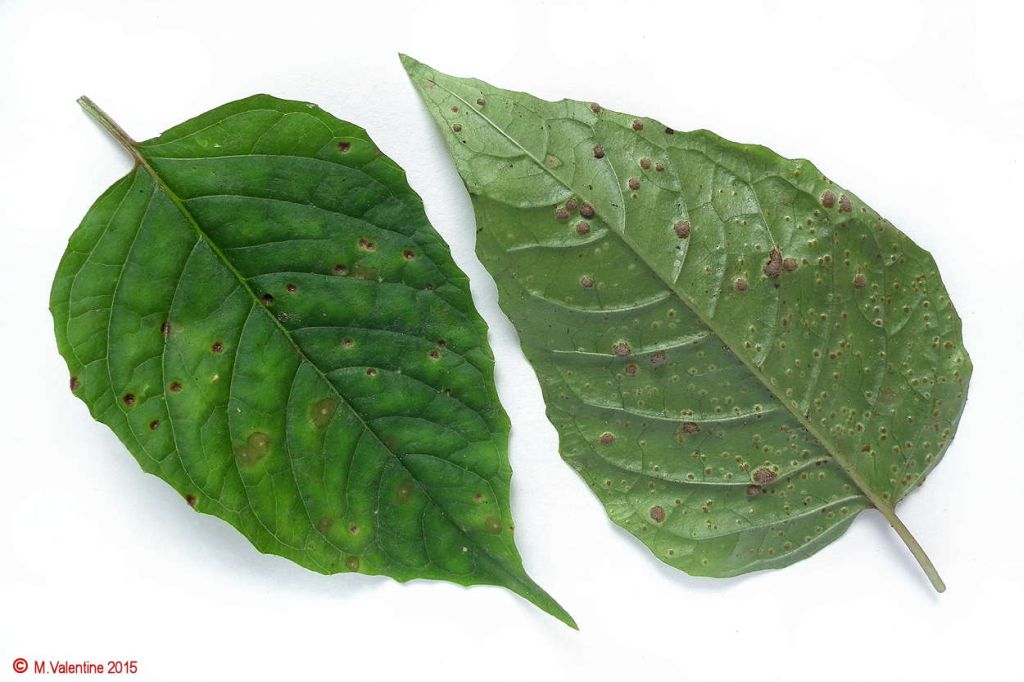
[attachment=2]Puccinia circaeae Teliosori on Circaea lutetiana leaves.jpg[/attachment] 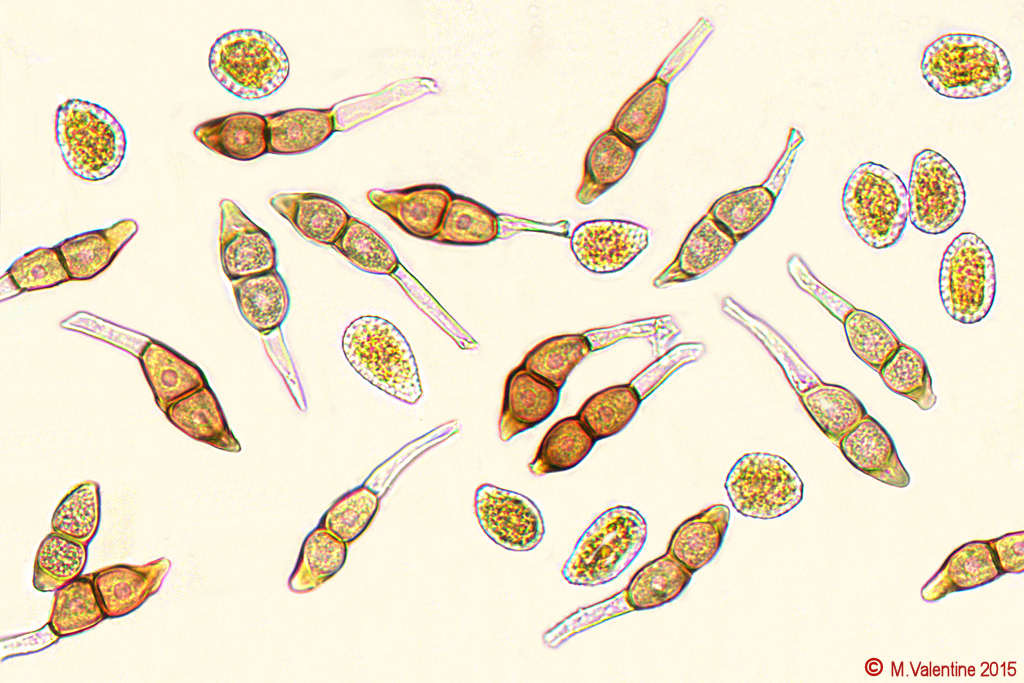
[attachment=1]Puccinia circaeae teliospores (+Pucciniastrum circaeae uredospores) x400.jpg[/attachment] 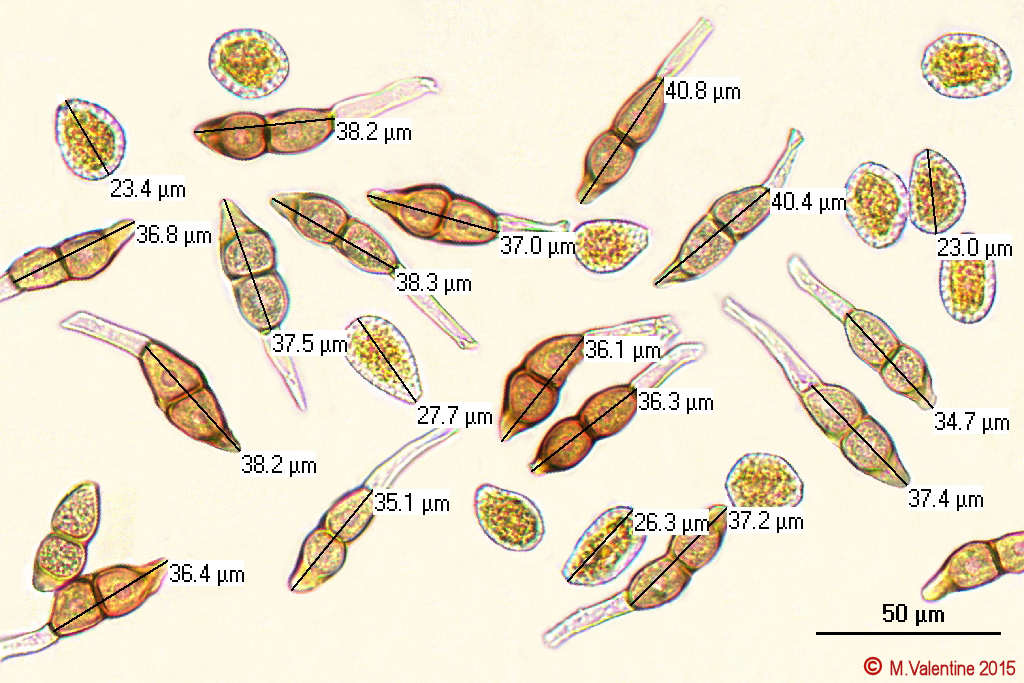
[attachment=0]Puccinia circaeae teliospores (+Pucciniastrum circaeae uredospores) x400 measured.jpg[/attachment] Regards,
Mike.
-
AuthorPosts

- You must be logged in to reply to this topic.