Forums › Forums › Fungi ID requests (post here if you aren’t sure what type of fungus you’ve found) › Poroid fungus on forest floor.
- This topic is empty.
-
AuthorPosts
-
September 21, 2015 at 9:46 am #29751
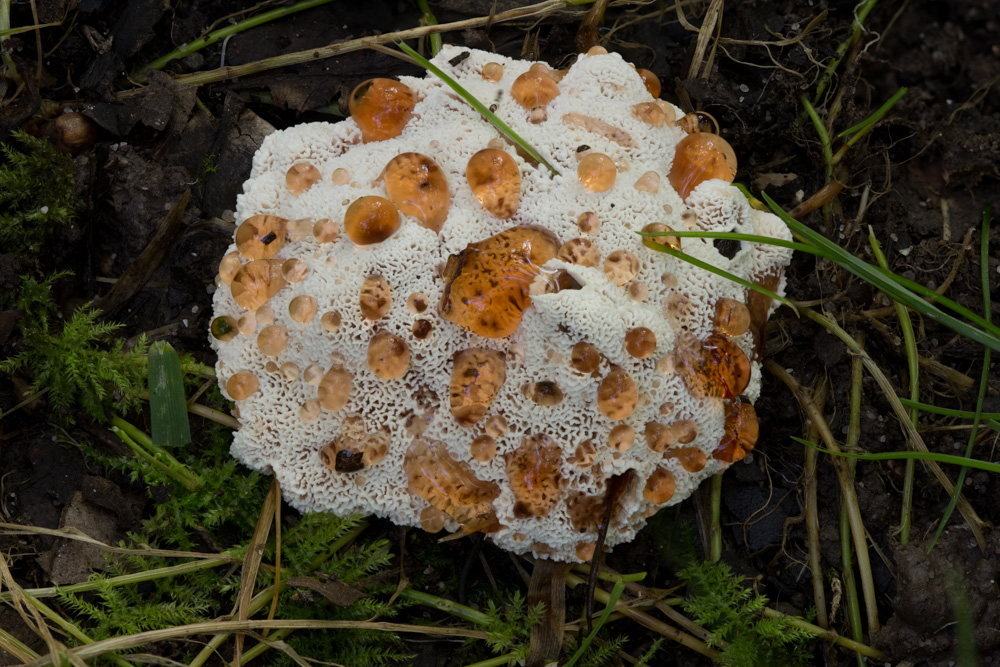
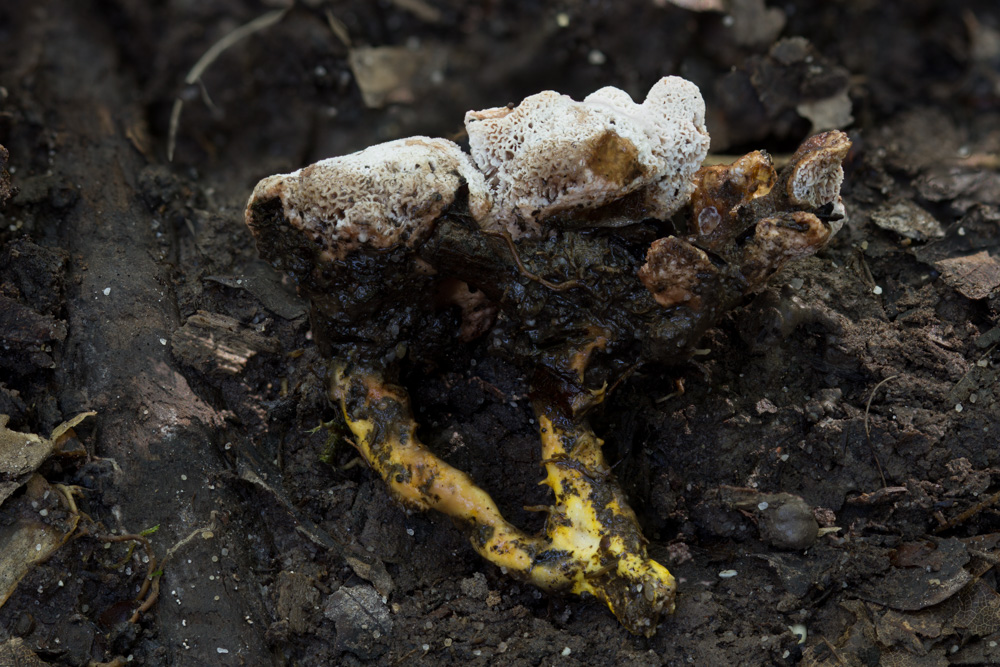
Hi, this was found on the forest floor in a Beech and Oak wood. It was around 3 cm across. At first I thought it was growing on something but it turned out to be a solid structure itself. There were four or five pieces in the area around 50cm apart. Some of the other pieces had turned brown and looked like they were starting to decay. The body was very firmly attached so I dug out one of the older bits to reveal a yellow rhizome. At first I thought the “‘root” was from some tree or plant but it turned out to be part of the fungus. I’m assuming it was attached to a tree root underground.
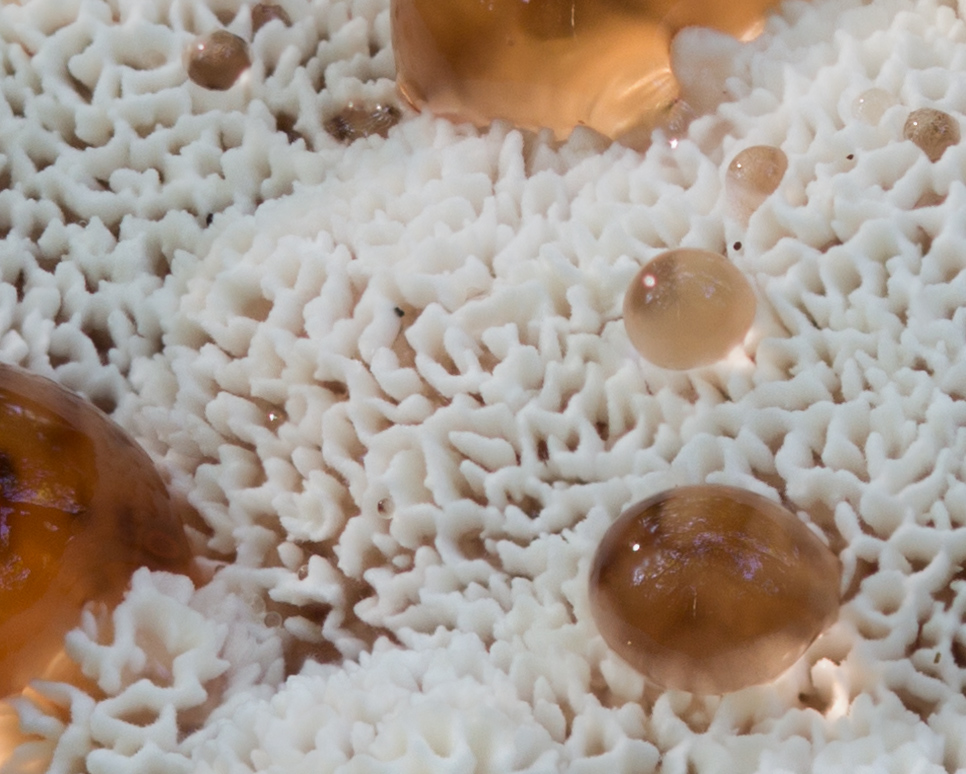
I’ve included images of the body sliced open to show the internal structure, it was tough to cut and had an unpleasant smell . Under the microscope, looking at the pore surface/tips, there were clamped hyphae and a lot of inflated elements that seemed to be produced at hyphal tips and had become free. I think I saw some spores but I hardly ever look at resupinate/bracket fungi under the scope.
Any thought appreciated, I know it’s probably something straightforward but it’s stumped me.
Dave
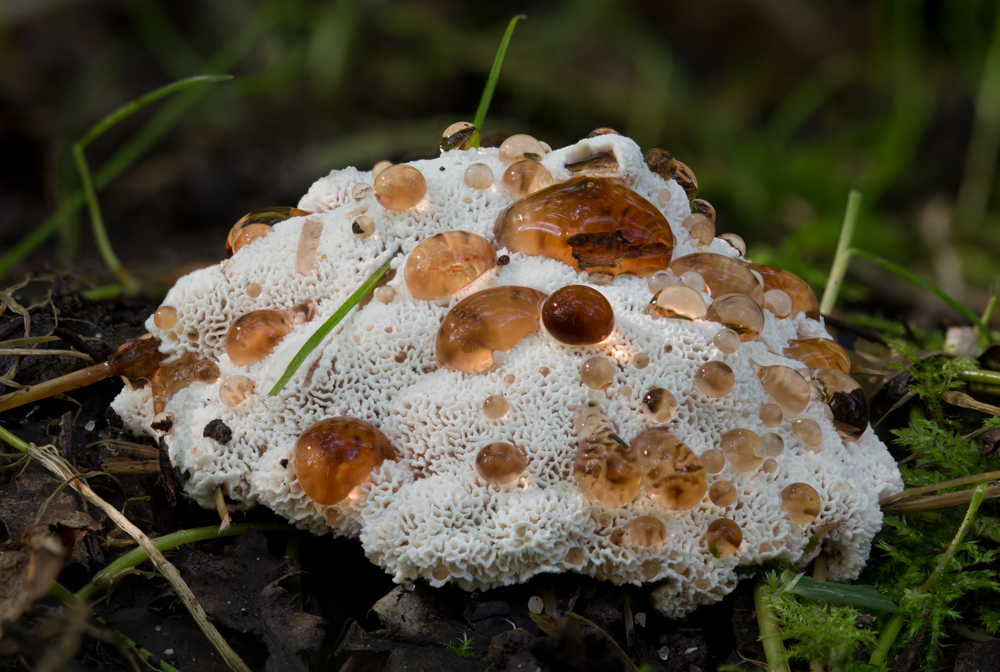
[attachment=5]poroid_fungus-2.jpg[/attachment] Top view
[attachment=4]Poroid_cc.jpg[/attachment] Pores
[attachment=3]Poroid_cc-2.jpg[/attachment] Yellow rhizome
[attachment=2]Poroid_cc-3.jpg[/attachment] 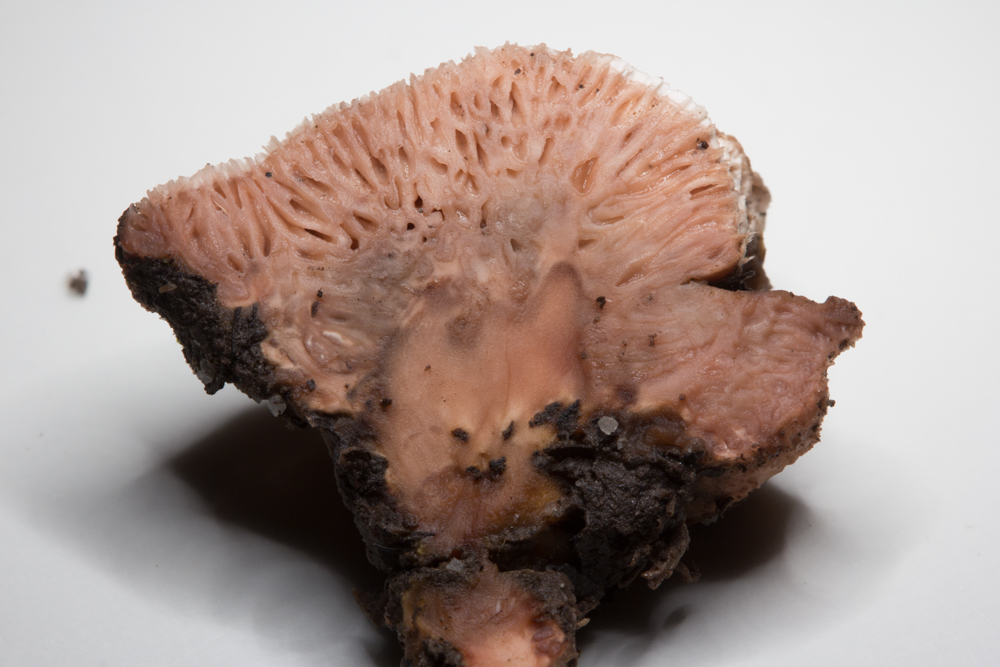
[attachment=1]Poroid_ccw-3.jpg[/attachment] 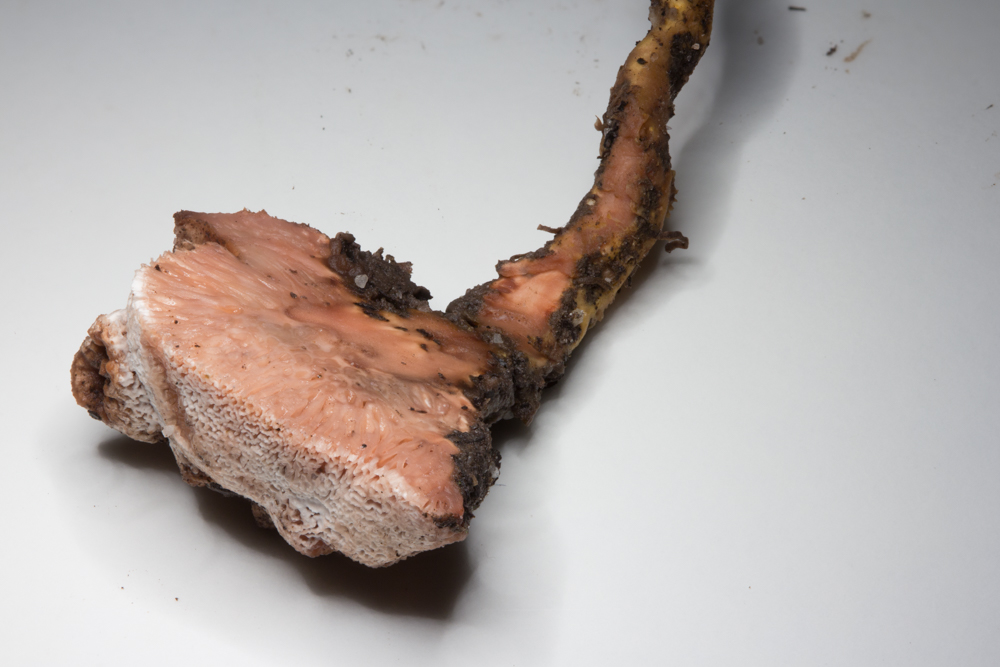
[attachment=0]Poroid_ccw-2.jpg[/attachment] September 21, 2015 at 9:54 am #36391Inflated elements. 
[attachment=0]Poroid_cc-5.jpg[/attachment] September 21, 2015 at 10:08 am #36392Hi Dave, I haven’t checked whether the microscopy would fit, but might it be early stage of
Abortiporus biennis? (Although that should be growing from buried wood. Regards,
Mike.
September 21, 2015 at 10:32 am #36393Many thanks Mike, I think you’ve nailed it. Apparently this anamorphic stage of A. biennis produces these irregular fruiting bodies some distance from the tree and connected to the roots. It used to be known as Ceriomyces terrestris and I presume that the “inflated structures” budding off are the chlamydospores.
Dave
-
AuthorPosts


- You must be logged in to reply to this topic.