Forums › Forums › Ascomycetes › Peziza? on woodchip
- This topic is empty.
-
AuthorPosts
-
June 6, 2015 at 9:58 pm #29447
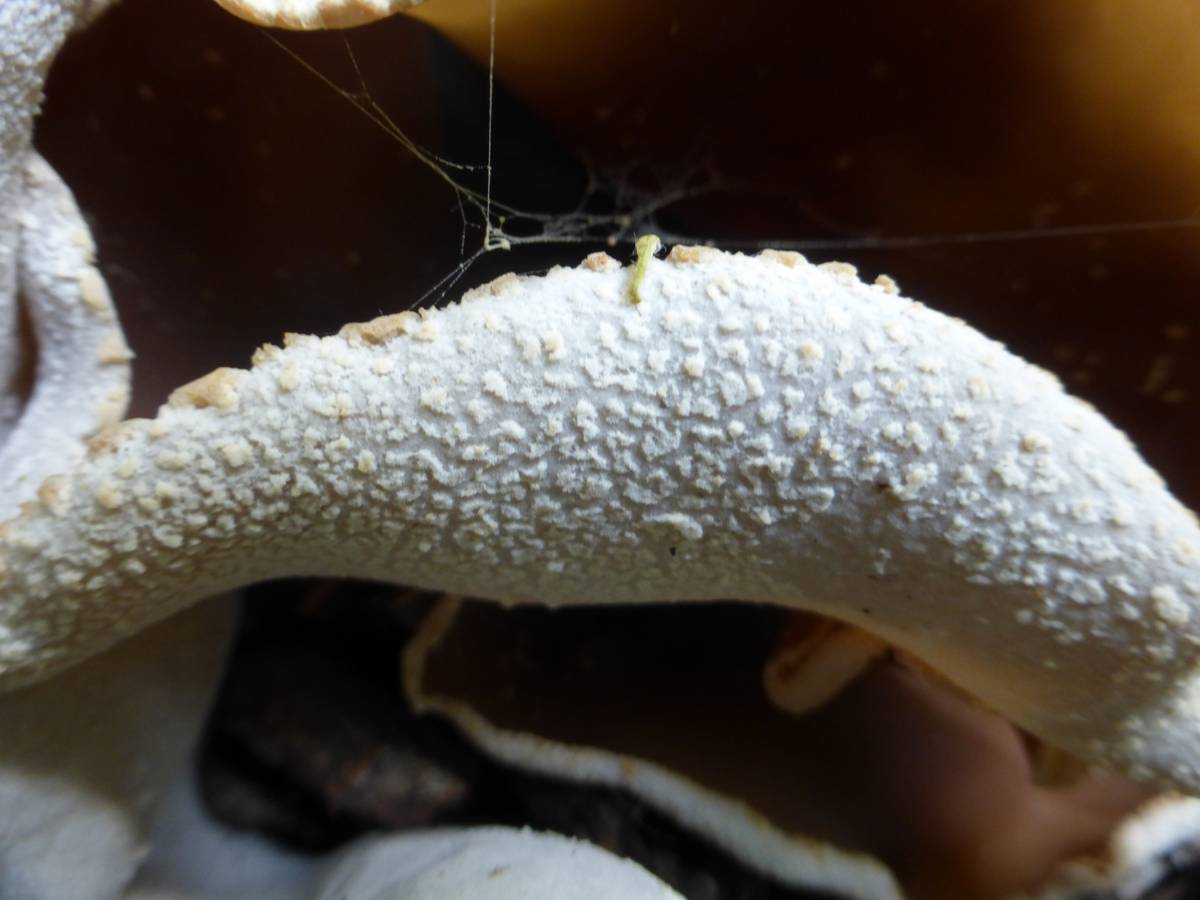
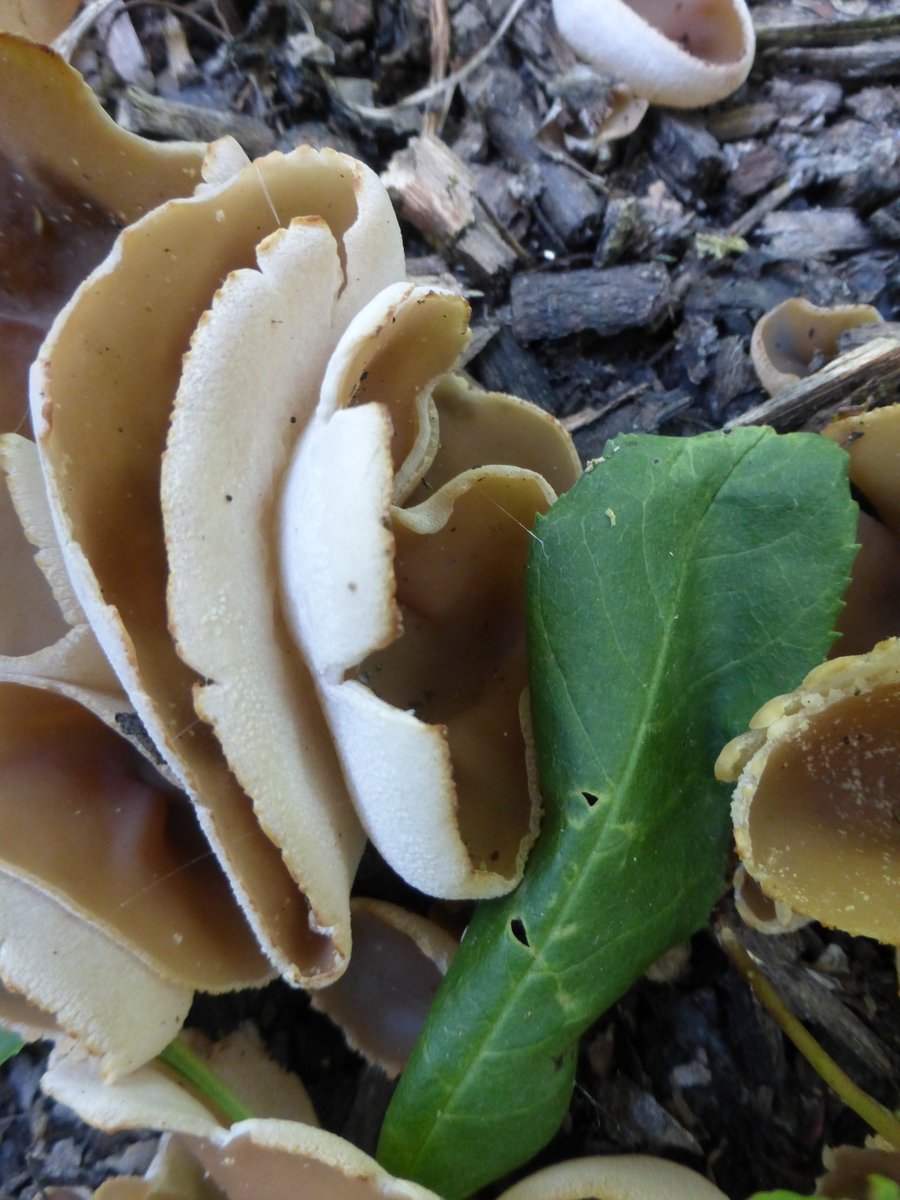
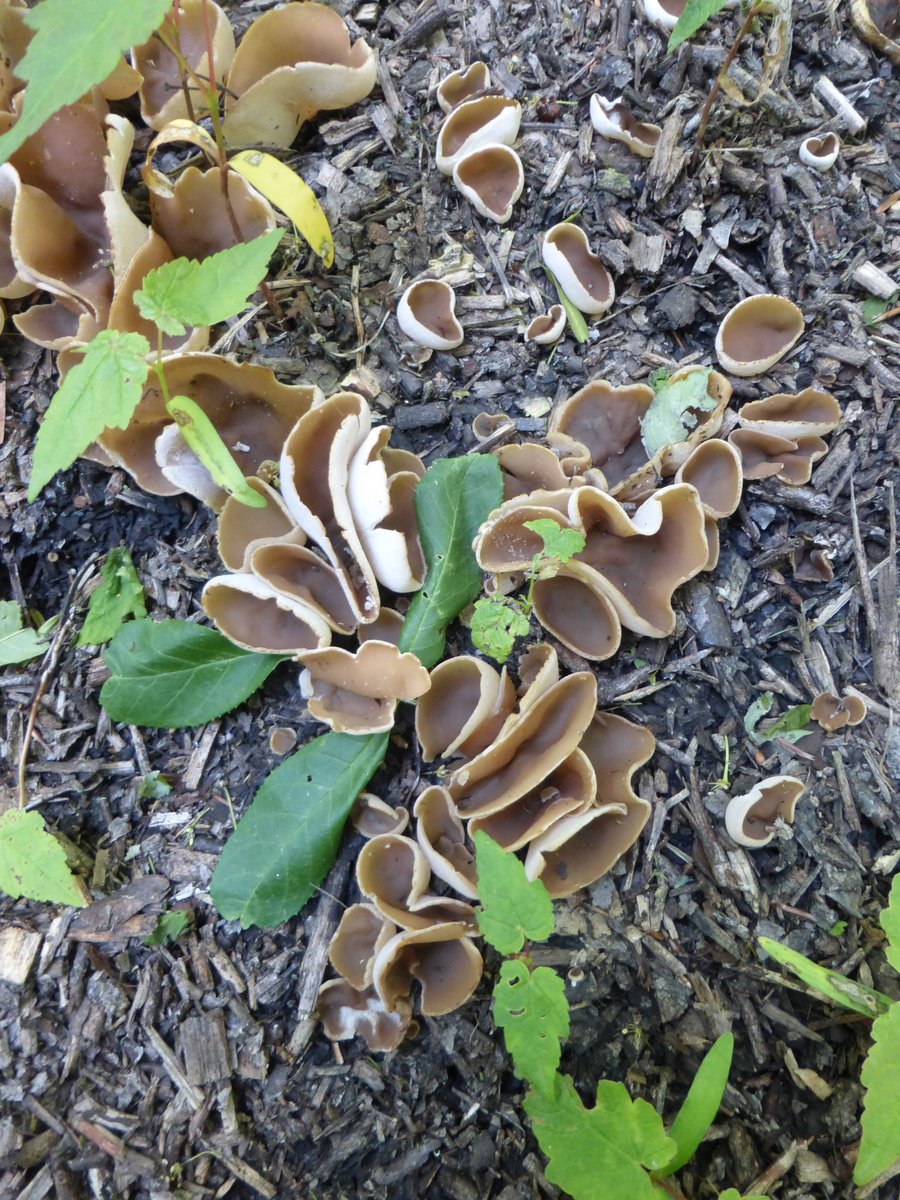
This was growing on woodchip in an area of woodland cleared of Rhodedendron, which has been chipped. I know Pezizas are tricky but it is very large ~15cm and scaly in the largest cases. Will do microscopy tomorrow if nothing yells out at anyone. 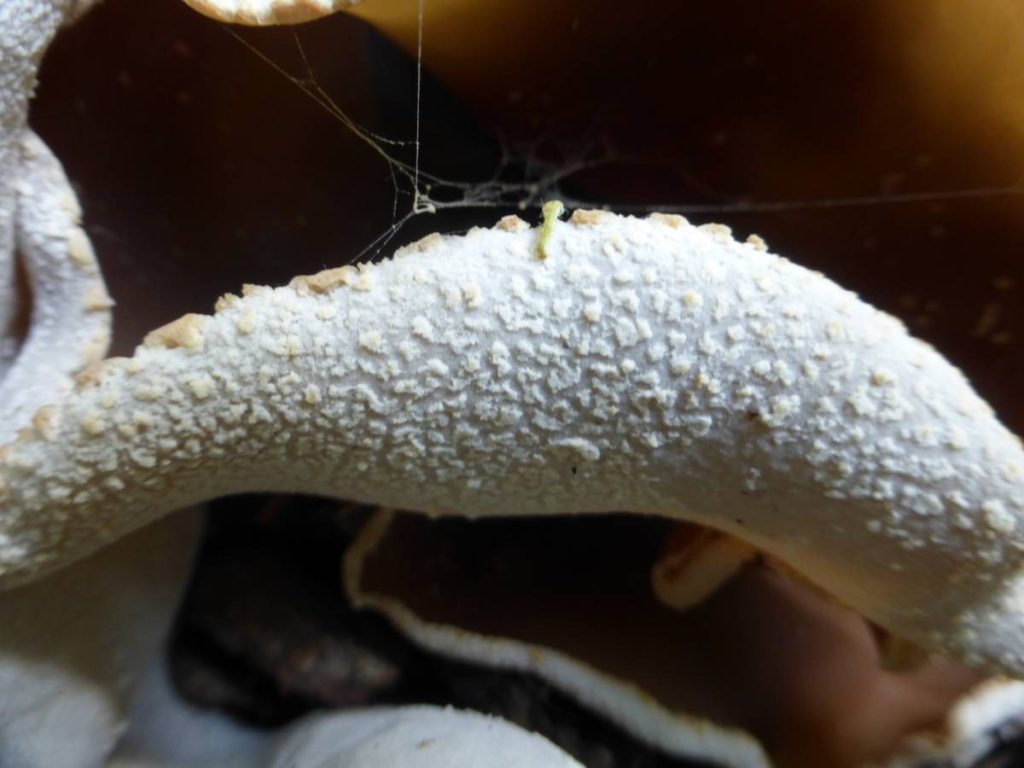
[attachment=0]P1010014.JPG[/attachment] 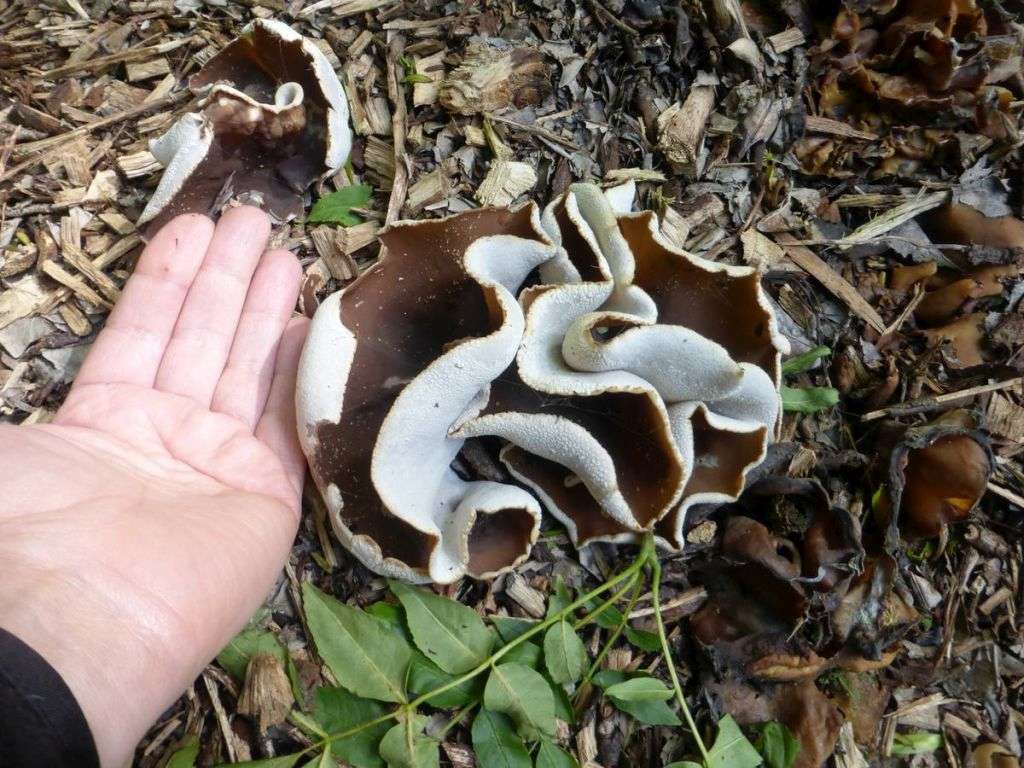
[attachment=1]P1010013.JPG[/attachment] 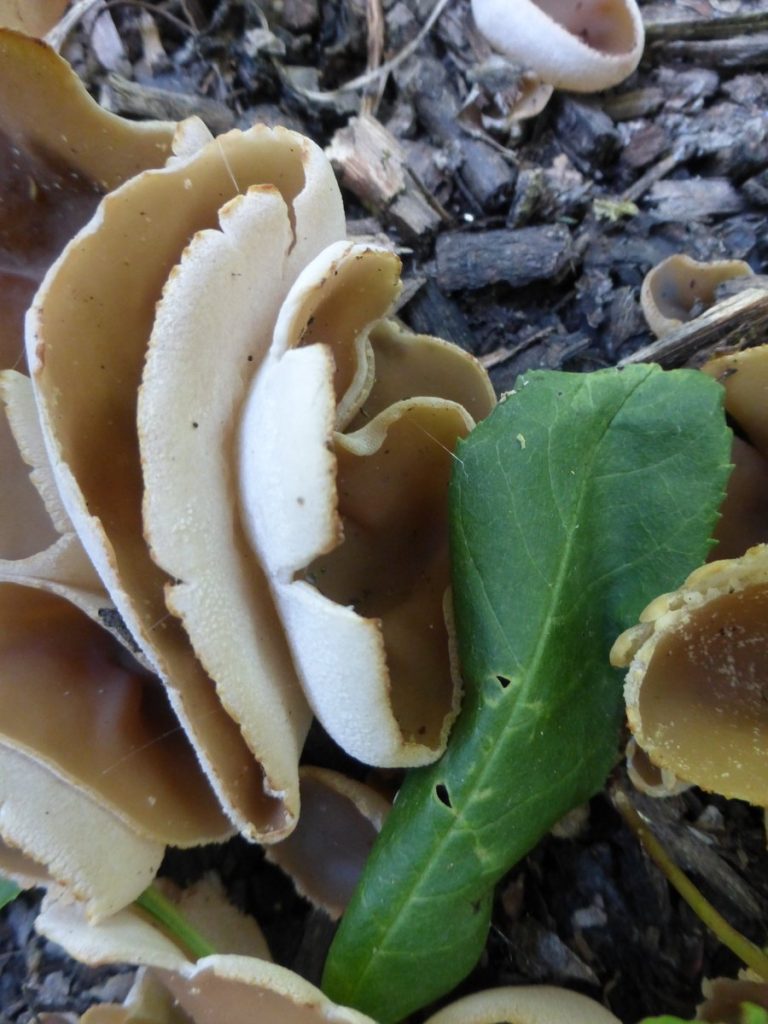
[attachment=2]P1010011.JPG[/attachment] 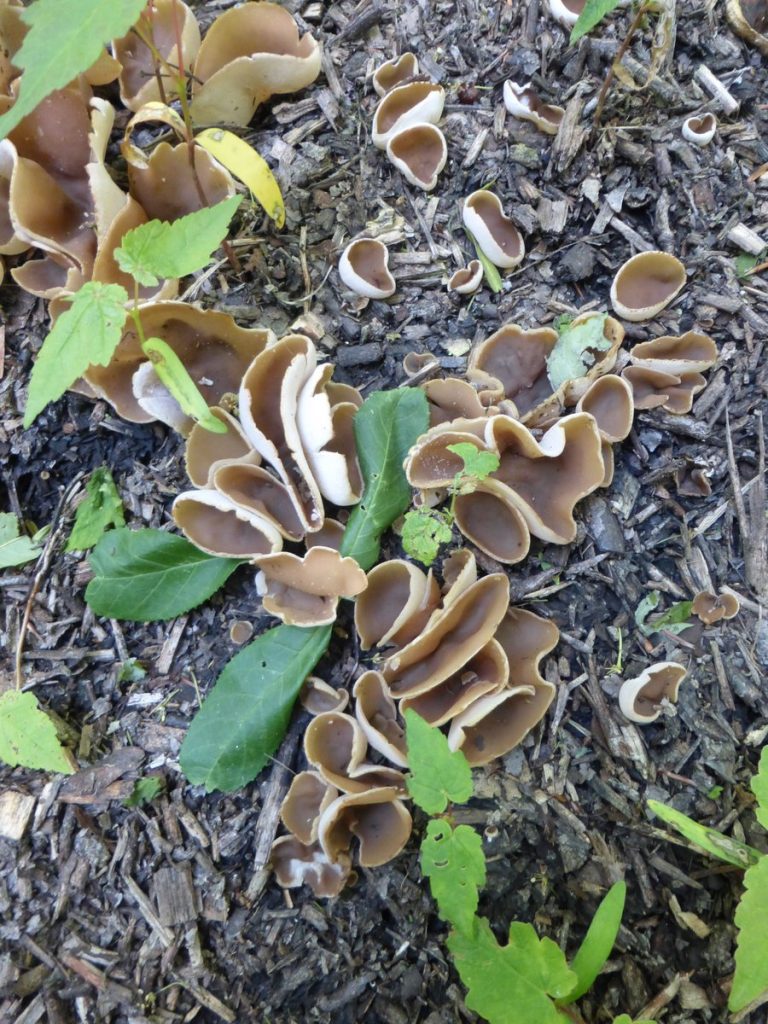
[attachment=3]P1010010.JPG[/attachment] 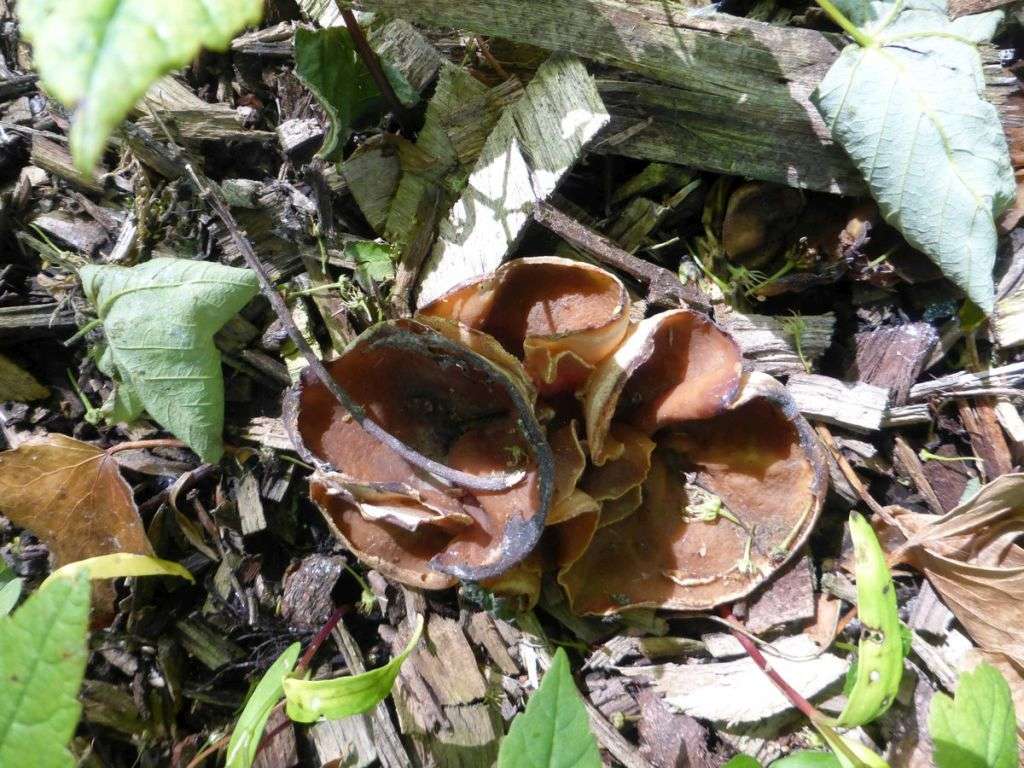
[attachment=4]P1010009.JPG[/attachment] 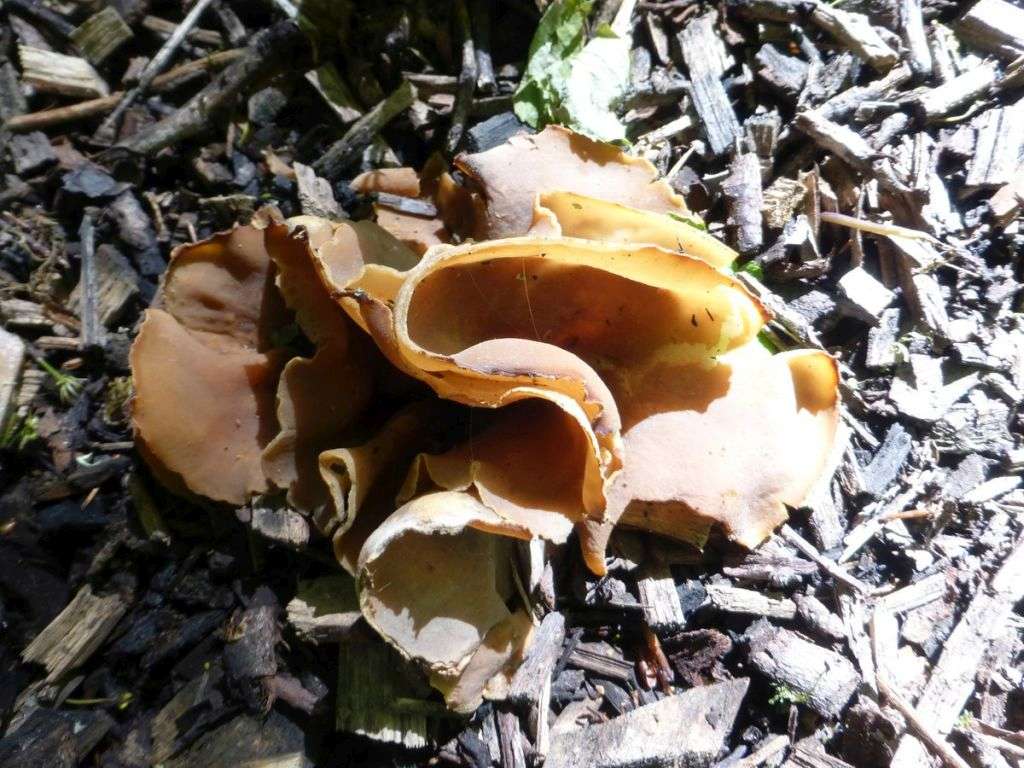
[attachment=5]P1010007.JPG[/attachment] June 7, 2015 at 9:41 am #34871They are some fine specimens! I had a go at a similar looking Peziza on woodchip recently. One of the things I failed to appreciate before I started is that you need a print of mature spores to look at – as the fine spore ornamentation is sometimes only visible when mature.
There is a key by Spooner in Field Mycology 2001, vol 2(2). I’m sure others are available. If you can’t easily get a copy, then post the specs here and I will have a look.
Cheers,
John
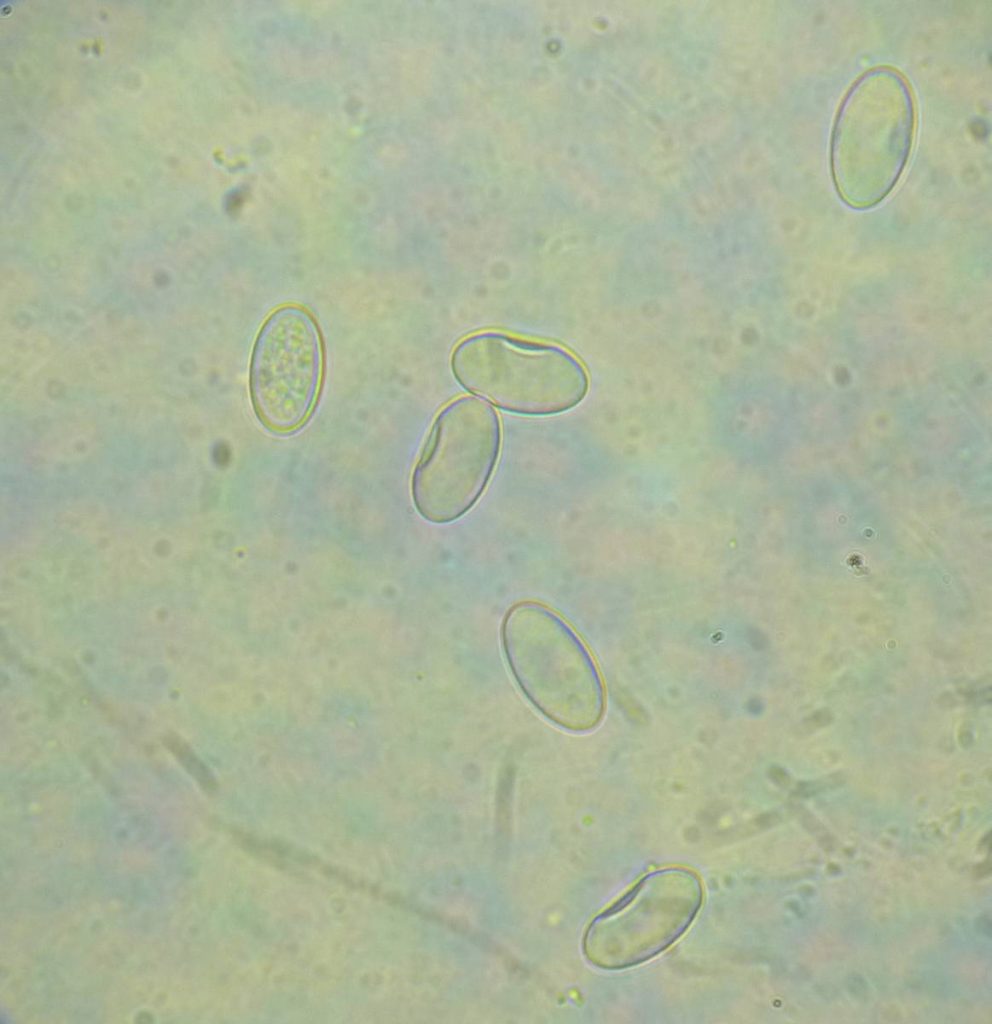
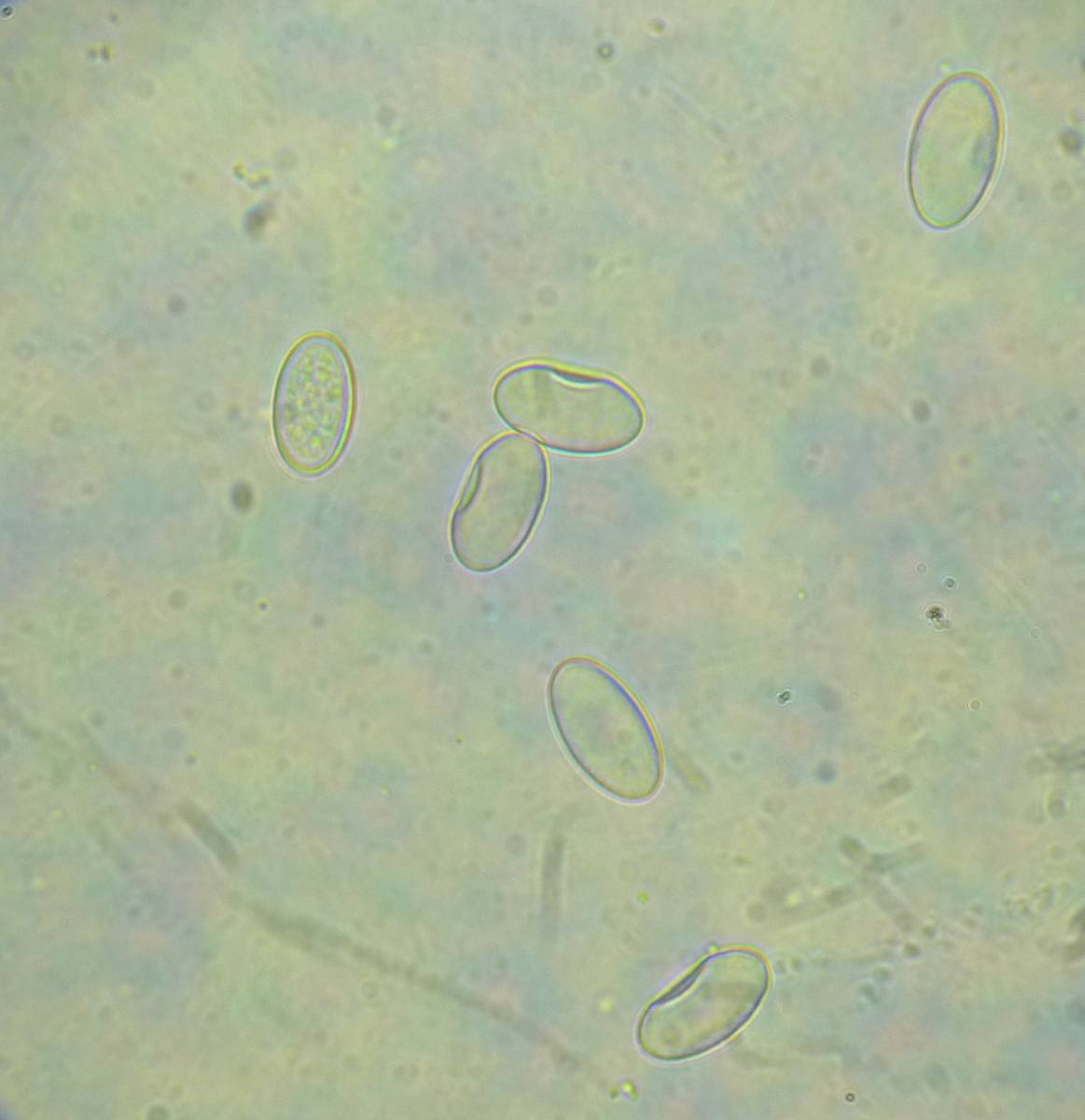
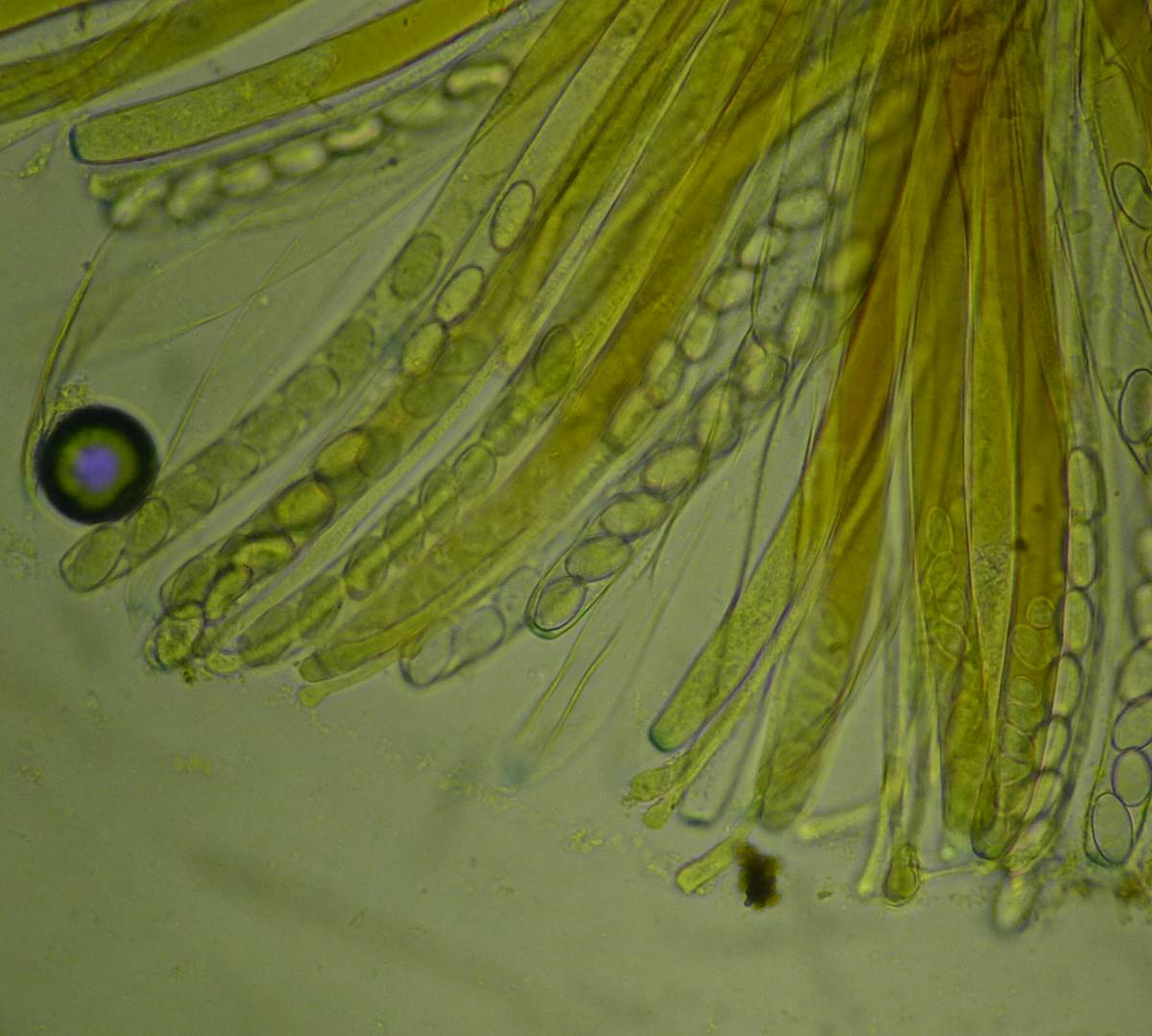
June 7, 2015 at 9:42 pm #34872Got a nice spore print! Spores, smooth, no guttules 15-18 x 9-10µ
Paraphyses with slightly inflated ends, slender and hard to see. Asci only staining blue at the very tip.
Perhaps P.micropus?
[attachment=0]P1100513.JPG[/attachment] 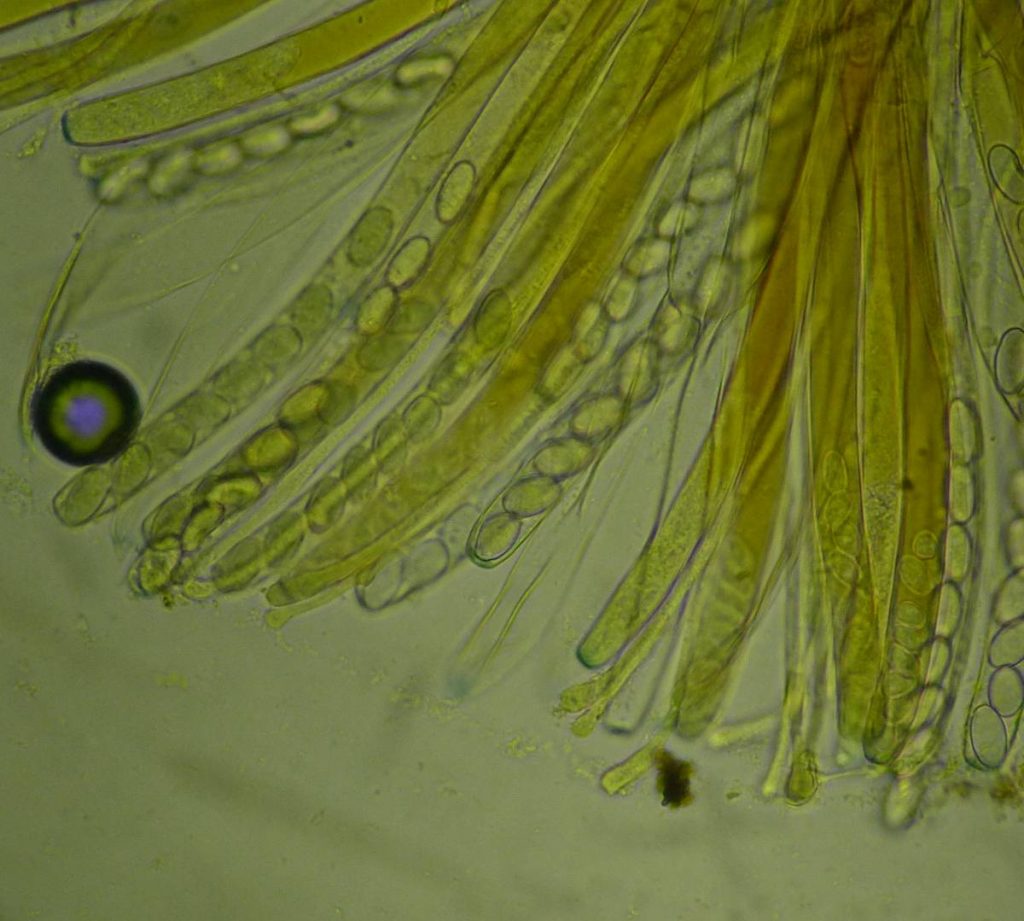
[attachment=1]P1100512-001.JPG[/attachment] June 8, 2015 at 8:02 pm #34873Hi Adam, Have you considered the possibility of having two (or even more) species? – 15cm would seem exceptionally large for
P.micropus. Those in the first couple of photos have the macroscopic look of
P.echinospora– though the micro details you provide certainly wouldn’t fit with that species. However, there are a couple of areas in the woodchip, (particularly in the third and fourth photos), that look as though there may be some old charcoal present. Was there actually any old burnt ground there? – If so, then I think that
P.echinosporacould be a contender for one of the species present. Regards,
Mike.
June 9, 2015 at 10:21 am #34874June 9, 2015 at 1:22 pm #34875Hi Adam, I’d initially thought maybe
P.variaas it fit with some of the macro pics, grows up to 15cm in size, and fits with the spore characteristics given. But I then discounted it because the paraphyses showing in your photo didn’t seem to have the relevant characteristics quoted in Fungi of Switzerland vol.1 or Peter Thompson’s book.
I’m still not completely convinced though, that you didn’t have at least two species there.


Was there any evidence of burnt ground in the area?
Did you do microscopy from samples of both the darker fruitbodies in your first two pics – and also the lighter ones in your third/fourth pics?
Regards,
Mike.
June 9, 2015 at 5:47 pm #34876Lancashire Lad wrote:Hi Adam,
I’d initially thought maybe
P.variaas it fit with some of the macro pics, grows up to 15cm in size, and fits with the spore characteristics given. But I then discounted it because the paraphyses showing in your photo didn’t seem to have the relevant characteristics quoted in Fungi of Switzerland vol.1 or Peter Thompson’s book.
I’m still not completely convinced though, that you didn’t have at least two species there.
Was there any evidence of burnt ground in the area?
Did you do microscopy from samples of both the darker fruitbodies in your first two pics – and also the lighter ones in your third/fourth pics?
Regards,
Mike.
I checked both light and dark, yes. I think it is just a case of maturity. It appears that the P.varia complex now allows for
variation of paraphyses too June 9, 2015 at 6:20 pm #34877adampembs wrote:. . .It appears that the P.varia complex now allows for
variation of paraphyses too
As Basil Brush, (for those old enough to remember Basil Brush🙄 ), would say – boom boom! -
AuthorPosts



- You must be logged in to reply to this topic.