Forums › Forums › Fungi on miscellaneous substrates (not soil or wood) › One to look out for
- This topic is empty.
-
AuthorPosts
-
October 12, 2018 at 1:50 pm #31077
Some weeks back my old Yorkshire mycological colleague Jerry Cooper https://www.landcareresearch.co.nz/about-us/our-people/jerry-cooper ” class=”bbcode_url”> https://www.landcareresearch.co.nz/about-us/our-people/jerry-cooper At one point he dived into a pile of dead leaves, had a quick look and, with a smile, handed me what I at first thought to be a myxo on a dead ivy leaf*. The latter turned out to be a leaf of
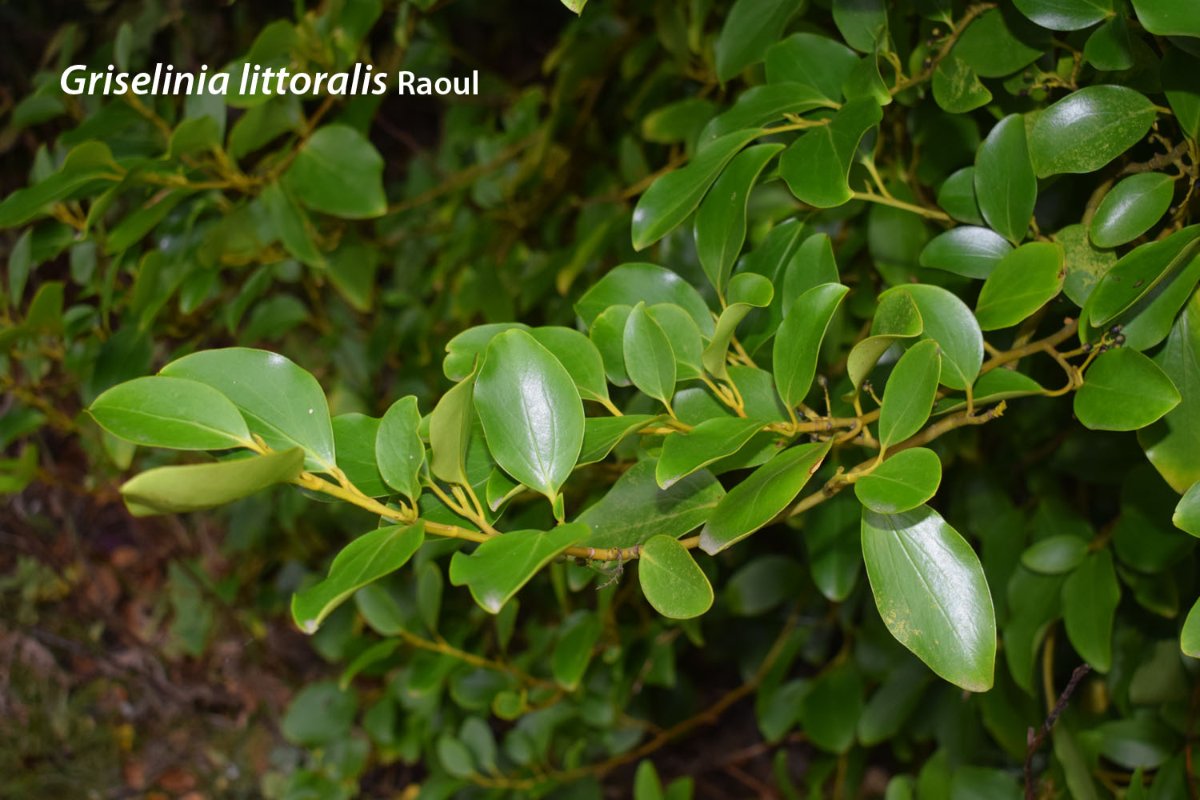
Griselinia littoralis(much planted in Scarborough), and the “myxo” was Physalacria stilboidea, a fungus Jerry of course knows well in NZ. So second (actually third – see below) UK record. Since then I’ve had a rootle around and found the fungus in several other spots in the South Cliff Gardens area, always present on dead leaves at the right state of decay. I contacted Martyn Ainsworth at Kew and he said he had also learned of another record earlier this year made by Charles Aron on Anglesey. Martyn has since gone on to find it himself, again on
Griselinia, from Woodingdean, E of Brighton. So the fungus has been found in four widely separated coastal areas, and appearsto be common wherever the host occurs. So I would encourage others to look out for it – not necessarily in coastal areas, although Griseliniadoes appear to be more frequently planted in such sites. The host is quite easy to recognise. As can be seen the fungus develops as a pale patch of fungal tissue in the centre of tiny dark brown leaf-spots. As the stipe develops it often leaves a volva-like base; the globose head appears bristly from the presence of numerous cystidia. Physalacriais the type genus of the family Physalacriaceae, which includes gilled fungi like Armillaria, Flammulinaand Strobilurus, and also resupinate fungi. More on the taxonomic stuff will follow . . . PS * The first UK find was from another seaside town, Salcombe in Devon. I wonder if the substrate, thought then to be
Hedera, might also have been Griselinia. The leaves in Scarborough were a mixture of the two, and superficially they can look similar (hence my initial mistake). A NZ host would make more sense . . . 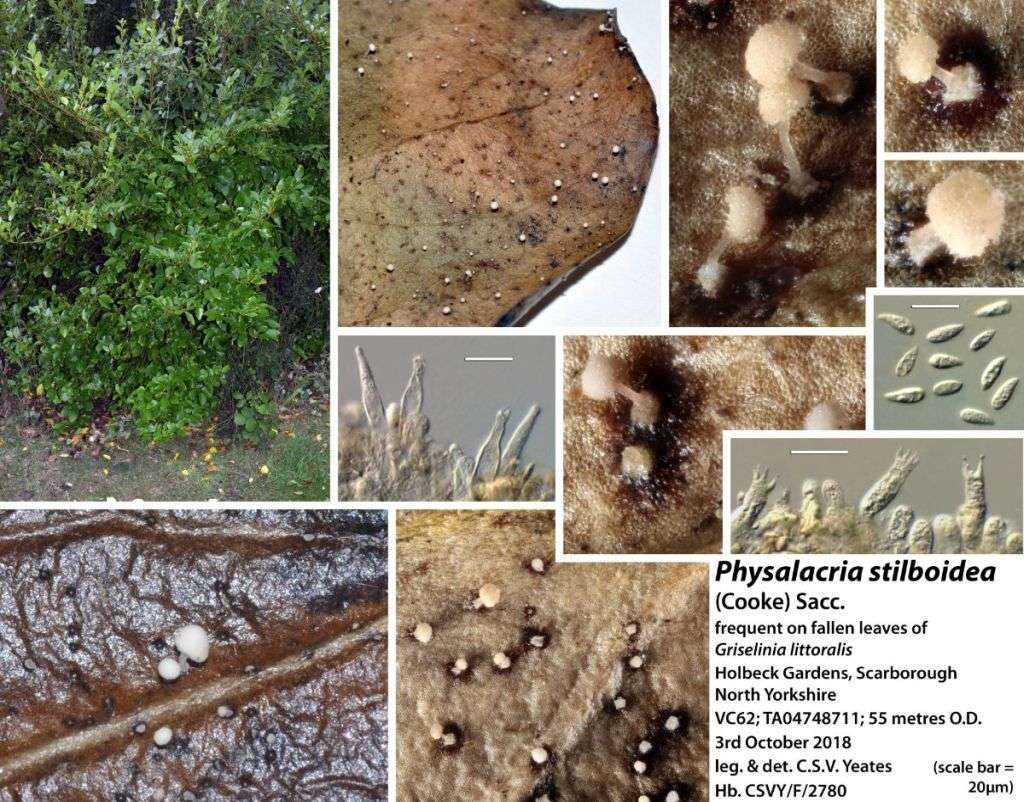
[attachment=1]Physalacria stilboidea 0a.jpg[/attachment] 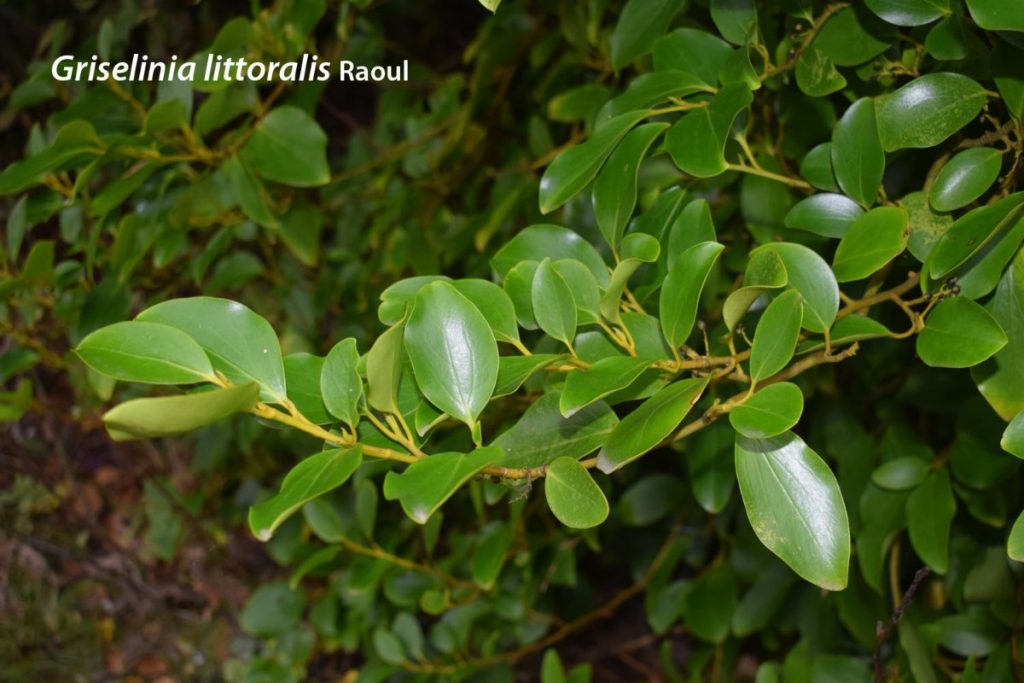
[attachment=0]DSC_0080.jpg[/attachment] October 14, 2018 at 11:27 am #41353Very interesting Chris, Griselinia is quite a common garden plant although as you say more likely to be cultivated near the coast. Having said that I used to have one in my Warwickshire garden until it decided against the winter frosts we always get ….
October 18, 2018 at 7:22 pm #41354Found it today on the Aberystwyth University Campus- haven’t taken a photo yet. Lots of Griselinia hedges around here near the coast.
Thanks for making me look for it!
October 19, 2018 at 12:48 pm #41355photos taken with my cheapo £12 digital microscope,not brilliant but OK October 19, 2018 at 6:29 pm #41356Excellent stuff Gary! Photo’s absolutely fine for identification purposes.
Cheers
Chris
December 30, 2018 at 4:45 pm #41357Went shopping at the Torquay Lidl on Newton Road this morning (location) and had a quick look in the bottom of a Griselinia hedge next to the car park and found fbs on very old wet Griselinia leaves underneath. No photo this time. Further up the road near the hospital I looked in a very manicured lower Gris hedge but didn’t find it but there was a mix of deciduous tree leaves under the hedge and they were very dry.
cheers
Gary
February 12, 2019 at 1:18 pm #41358Physalacria stilboideafound at RHS Garden Wisley on 24th Jan 2019. Is that the furthest inland it’s been found in the UK (TQ065579)? The age of leaf seemed to be critical. Not recently fallen and yellow but a tan-brown colour (so with hints of yellow) and still quite leathery in texture. Older brown leaves, and recently fallen yellow leaves, did not have fruiting bodies. February 13, 2019 at 7:06 pm #41359Fay Newbery wrote:
Physalacria stilboideafound at RHS Garden Wisley on 24th Jan 2019. Is that the furthest inland it’s been found in the UK (TQ065579)? The age of leaf seemed to be critical. Not recently fallen and yellow but a tan-brown colour (so with hints of yellow) and still quite leathery in texture. Older brown leaves, and recently fallen yellow leaves, did not have fruiting bodies.
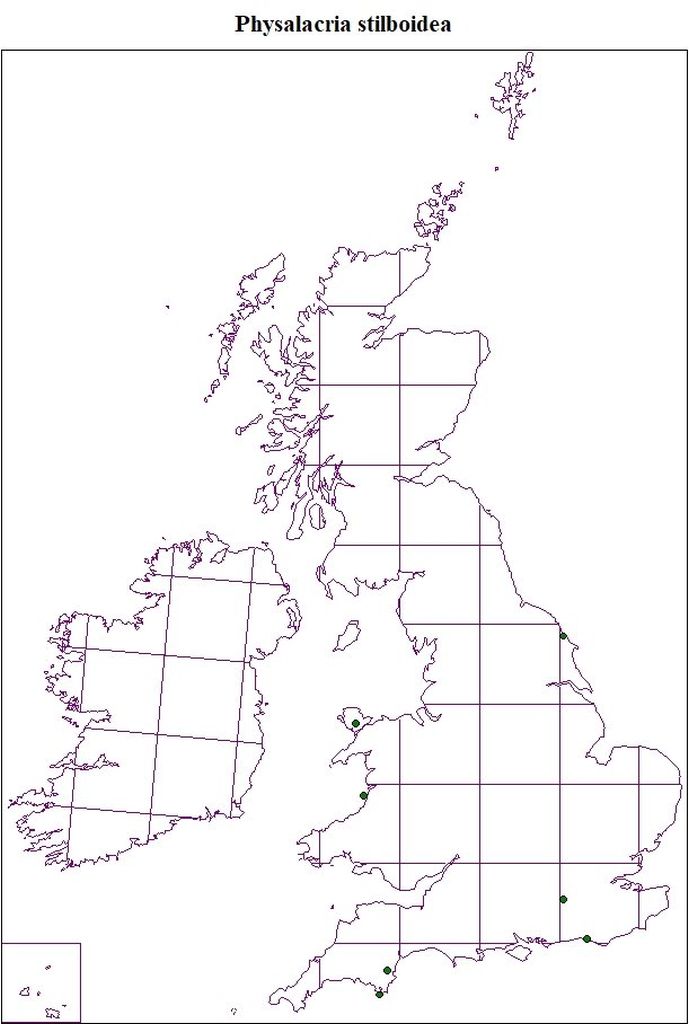
Hi FayI’ve produced a map, based on the collections of which I am aware. The dot for Anglesey is approximate, so could well have been coastal as well. So yes yours is the furthest inland, it would appear. In New Zealand it can occur inland up to 900 metres.
The name
littoralisclearly points to a coastal tendency. I suspect the occurrence of the fungus runs in parallel with that of the host – it appears that whenever people look, given the right age of fallen leaf and enough moisture, there is a strong likelihood of finding the fungus. It’s a pity the one in the Warwickshire garden mentioned above wasn’t checked before its demise! I’ve seen comments from horticulturalists that they wouldn’t recommend
Griseliniafor North Yorkshire, but Scarborough, on the coast, presumably has some microclimatic effects. I’ve seen the fungus in around half a dozen areas round the town now, some with a clear view of the sea, so they were exposed to the full force of the “Beast from the East” last year and survived. It would be interesting to know how the fungus spreads, I would suspect that it survives as an endophyte. From the RHS website it would appear that
Griselinia littoralisis propagated by semi-hardwood cuttings, so the fungus could well be moving around with the plants and we are dealing with a series of cloned populations. Here’s the map:
[attachment=0]Physalacria stilboidea.jpg[/attachment]
Best wishesChris
February 14, 2019 at 8:15 am #41360Hi Chris Although a long way north,
Griselinia littoralisis planted up here too. When this spell of foul weather has passed, I will take a look. It may be that the gales will have removed most of the litter unless I can find a shelted spot. Chris
February 14, 2019 at 1:53 pm #41361Thanks for this, Chris. February 15, 2019 at 2:57 pm #41362Now much farther north … on the first leaf I picked up 😯 Thanks for bringing this to our attention.
Chris
February 15, 2019 at 4:06 pm #41363Chris Johnson wrote:
Now much farther north … on the first leaf I picked up😯 Thanks for bringing this to our attention.
Chris
Excellent! Farther north – but climate largely ameliorated by Gulf Stream? Could I have the grid ref.? I’ll add it to the map . . .regards
Chris
February 15, 2019 at 5:50 pm #41364Chris Yeates wrote:
Chris Johnson wrote:
Now much farther north … on the first leaf I picked up😯 Thanks for bringing this to our attention.
Chris
Excellent! Farther north – but climate largely ameliorated by Gulf Stream? Could I have the grid ref.? I’ll add it to the map . . .regards
Chris
Balivanich – NF778552
Cheers, Chris
February 15, 2019 at 7:03 pm #41365Latest map: 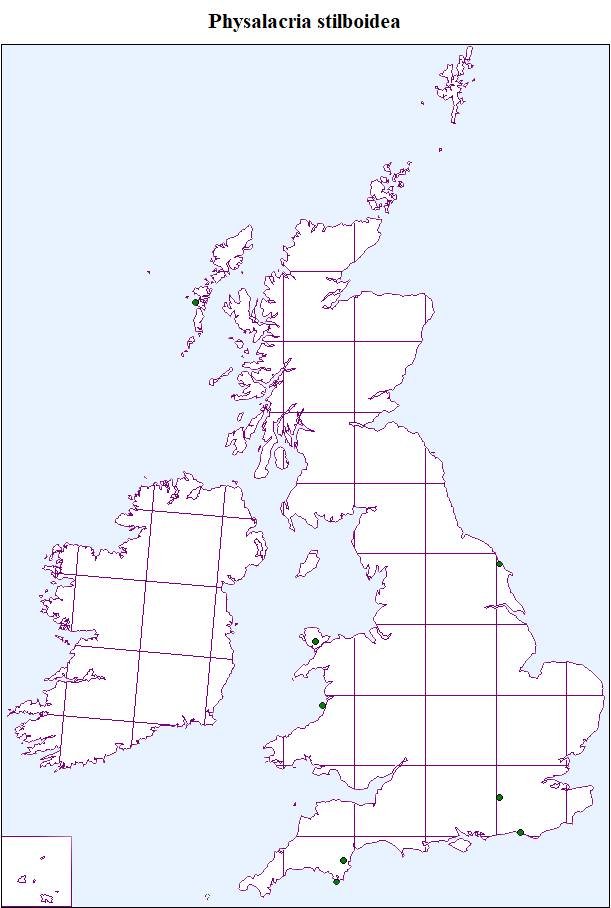
[attachment=0]Physalacria stilboidea.jpg[/attachment]
ChrisFebruary 15, 2019 at 10:22 pm #41366Hi Jerry Cooper has just drawn my attention to this overview of New Zealand Physalacriaceae: https://www.funnz.org.nz/sites/default/files/2016-MycNotes34-Physlacriaceae_1.pdf ” class=”bbcode_url”> https://www.funnz.org.nz/sites/default/files/2016-MycNotes34-Physlacriaceae_1.pdf Although it deals with a mycota literally a world away it still makes interesting reading and much is relevant to GB & I. Note the opening paragraph and the comment about some “Marasmius” spp. belonging in Physalacriaceae (i.e. placed in
Gloiocephala) – an obvious candidate would be: 
[attachment=0]Marasmius epiphylloides 0a.jpg[/attachment]
note those pileocystidia at the bottom.Chris
-
AuthorPosts



- You must be logged in to reply to this topic.