Forums › Forums › Fungi ID requests (post here if you aren’t sure what type of fungus you’ve found) › off white sp, decurrent gills
- This topic is empty.
-
AuthorPosts
-
November 11, 2015 at 7:38 am #29949
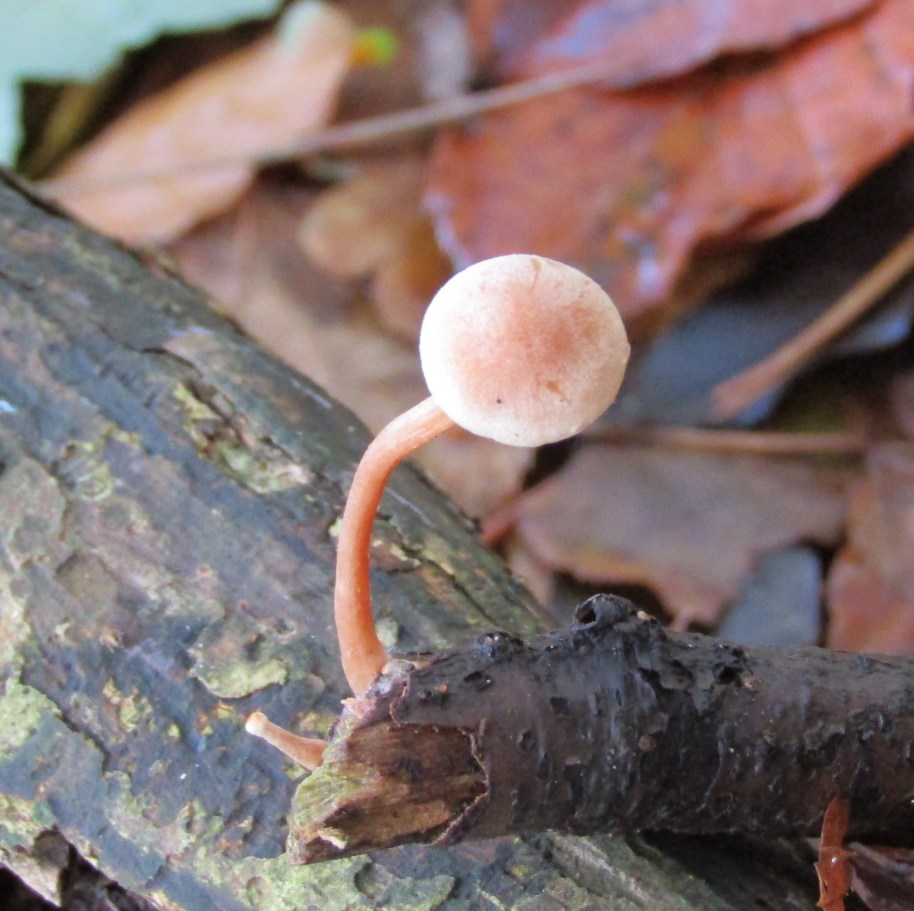
Hi all, Help with this would be appreciated
In mixed woodland – south lancashire
cap – 10mm
stem – 3mm
height 40mm
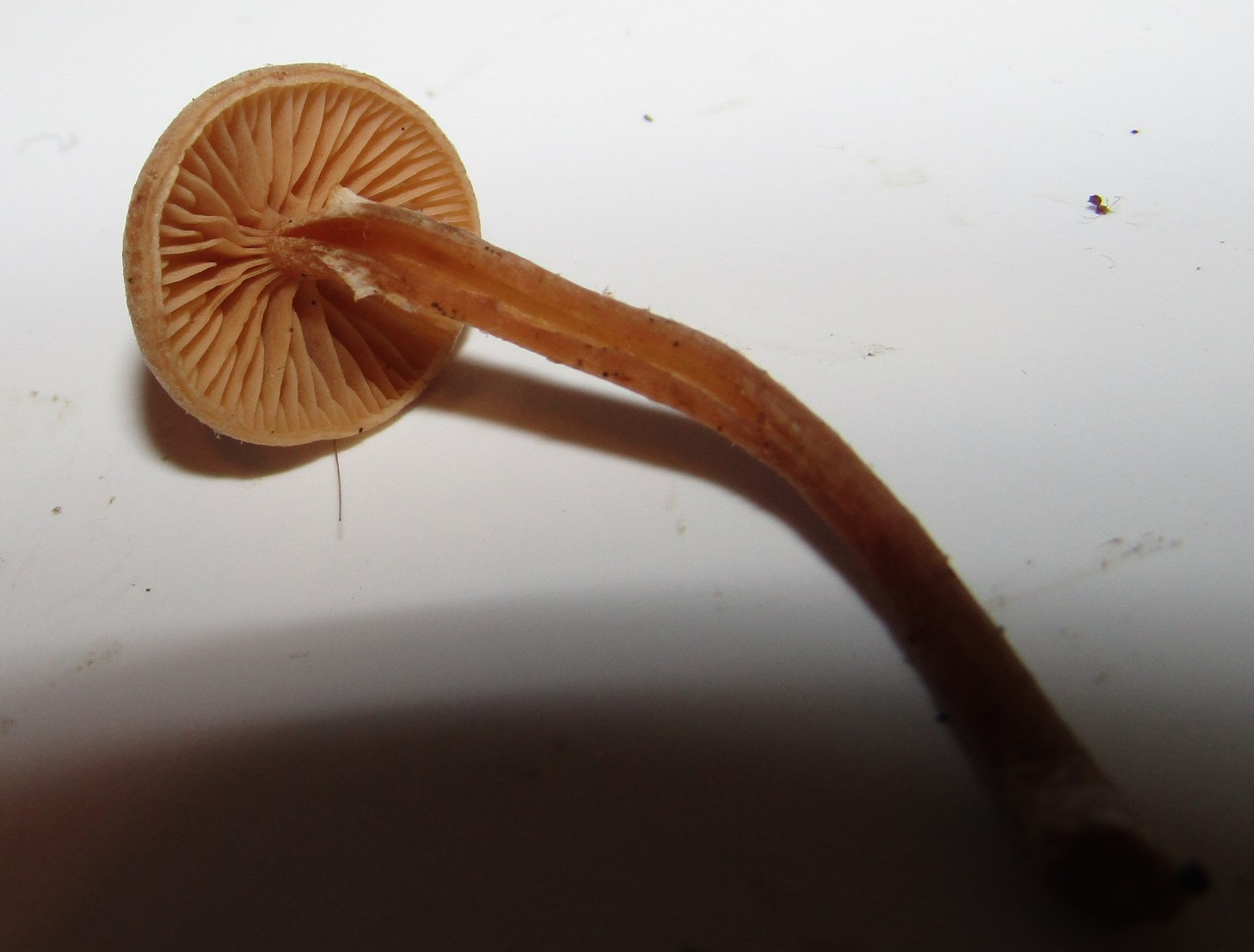
Gills slightly decurrent
Growing on a twig
Cheers,
Phil
[attachment=3]m11.JPG[/attachment] 
[attachment=2]m14.jpg[/attachment] 
[attachment=1]m13.jpg[/attachment] 
[attachment=0]m12.JPG[/attachment] November 11, 2015 at 8:18 am #37320Take a look at Tubaria furfuracea, a common small fungus on woody debris. November 11, 2015 at 9:40 am #37321ah yes, thank you – although should f.tubaria have spores that colour? November 11, 2015 at 10:14 am #37322Variously described as “Pale orange brown” or “Light to dark brown”, and “Ochre brown” in FoS. What I see on my screen is yellow brown. Is that what you saw? November 11, 2015 at 10:19 am #37323Spore print is clearly brown not “off white”  November 11, 2015 at 10:39 am #37324
yes, I think light ochre might describe the color – however I’m finding I’m making ID mistakes, because the book description of spore colours, doesn’t match the way I’d describe it – notably ‘pink’ in the case of entoloma and pluteus. – the fault is clearly mine though – not the book!
November 11, 2015 at 11:04 am #37325Philbo wrote:yes, I think light ochre might describe the color – however I’m finding I’m making ID mistakes, because the book description of spore colours, doesn’t match the way I’d describe it – notably ‘pink’ in the case of entoloma and pluteus.
– the fault is clearly mine though – not the book!
Hi Phil
It’s coming across as light ochre on my screen too.
Not an easy thing to show photographically as a simple colour-cast from the camera will give a false impression. Also, taking a print on black will give a more intense colour than on a glass slide with white paper beneath. (That’s not a suggestion that one is better than t’other, just an observation).
Chris
November 11, 2015 at 11:33 am #37326I googled “light ochre” and the images found do match. BUT do a search on a given manufacturer’s paint, and then compare online images to each other, and to the printed brochure. You might be surprised. Then compare to a sample you painted yourself, oops. Incidentally, Michael Jordan in his big book includes a spore print colour chart. And the British Fungus Flora guides come with an RBG Edinburgh sprore print chart too. I think you can buy one on its won. Spore print is in general only a guide, a starting point, unless it is very unusual. As Chris implies, take a print on a slide, you can then place it over black and white paper. Also, view the print in daylight, most house lights have a yellow cast.
November 11, 2015 at 11:38 am #37327Hi see
http://www.rbge.org.uk/about-us/publications/publications-catalogue/botanical-publications/mycological-publications ” class=”bbcode_url”> http://www.rbge.org.uk/about-us/publications/publications-catalogue/botanical-publications/mycological-publications As it says you can buy the colour chart for 50p plus p&p, or free if you buy one of the (very useful) books. Although the books are a little behind in the nomenclature and taxonomy and do not have colour photo’s they do have extremely good descriptions, comparison with lookalike species etc. – very useful combined with, say,
Funga Nordicawhere the descriptions are necessarily much more brief. If we all had the colour chart (I have) it would make understanding each others “colour words” easier. I would recommend getting two of these colour charts – by punching a small hole through the middle of each you can then place it on a toadstool cap or whatever and get the closest colour. Chris
(
edit) ha I see Leif has had similar thoughts – perhaps I should have put this on the Resources thread . . . November 11, 2015 at 2:22 pm #37328In Moser (Keys to Agarics & Boleti) he describes Tubaria as having ochre-brown spores and has them under the section ‘Cream to ochre” spore powder in the key (along with Crepidotus, Panus, Clitocybe etc.). The ‘pink’ of Entoloma/Pluteus might better be described as dark salmon or even fawn (of the RBGE colour chart). November 11, 2015 at 9:47 pm #37329Leif wrote:Incidentally, Michael Jordan in his big book includes a spore print colour chart. And the British Fungus Flora guides come with an RBG Edinburgh sprore print chart too. I think you can buy one on its won.
Michel Jordan’s book deserves more credit. Not only does it have a colour chart, but it has a rudimentary key, and good colour photos or gills, cap and stem. It also covers more species than most guidebooks.
From the colour chart in his book, of the colours available I would say it looks closest to buff (there is no yellow-brown.) However, thickness of the spore print makes a big difference and look much darker when the layer is thick enough. A common standard is to do a spore print on glass, eg a slide and scrape the spores together, then push a cover slip on top.
-
AuthorPosts




- You must be logged in to reply to this topic.