- This topic is empty.
-
AuthorPosts
-
July 10, 2023 at 10:03 pm #32630
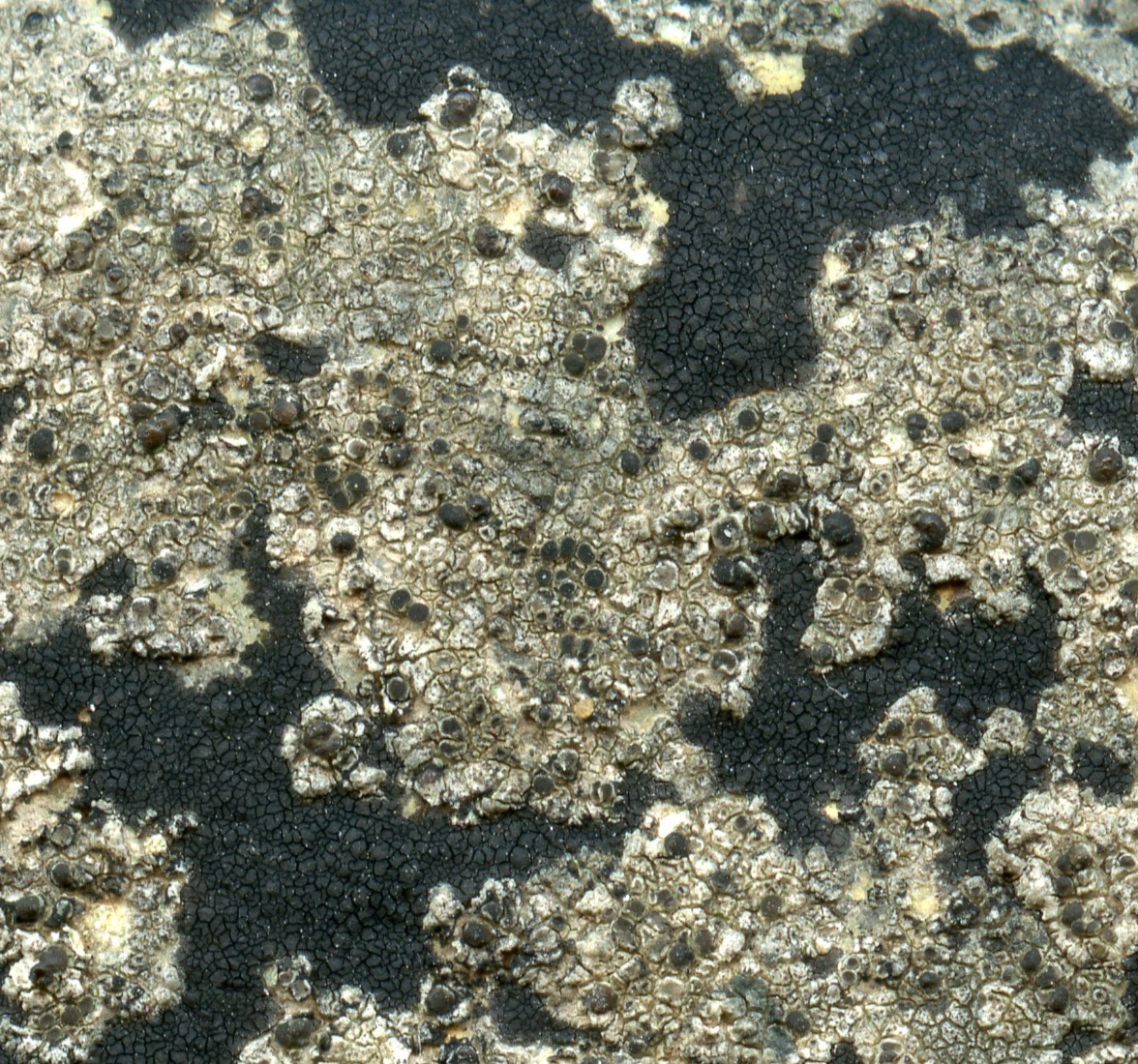
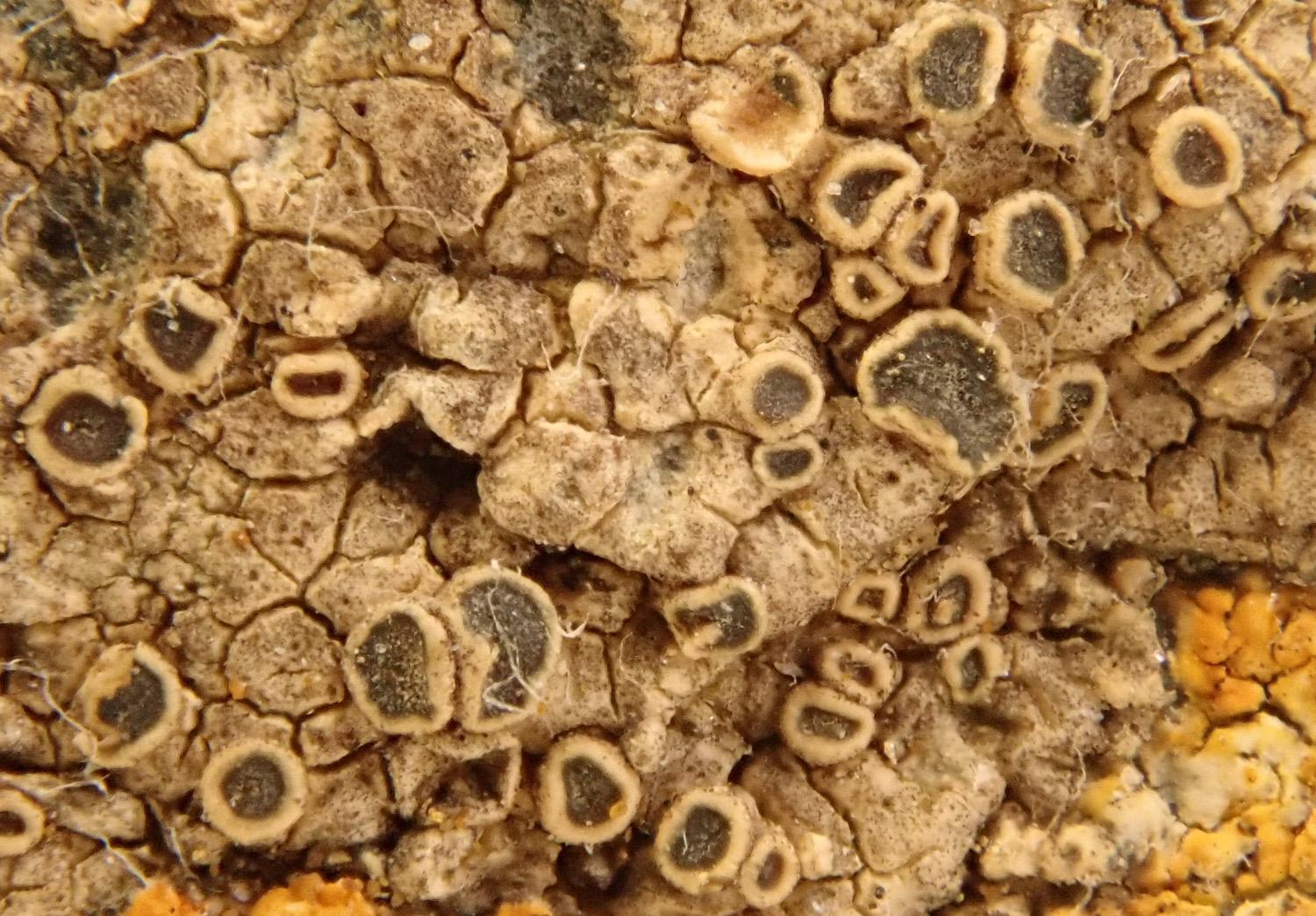
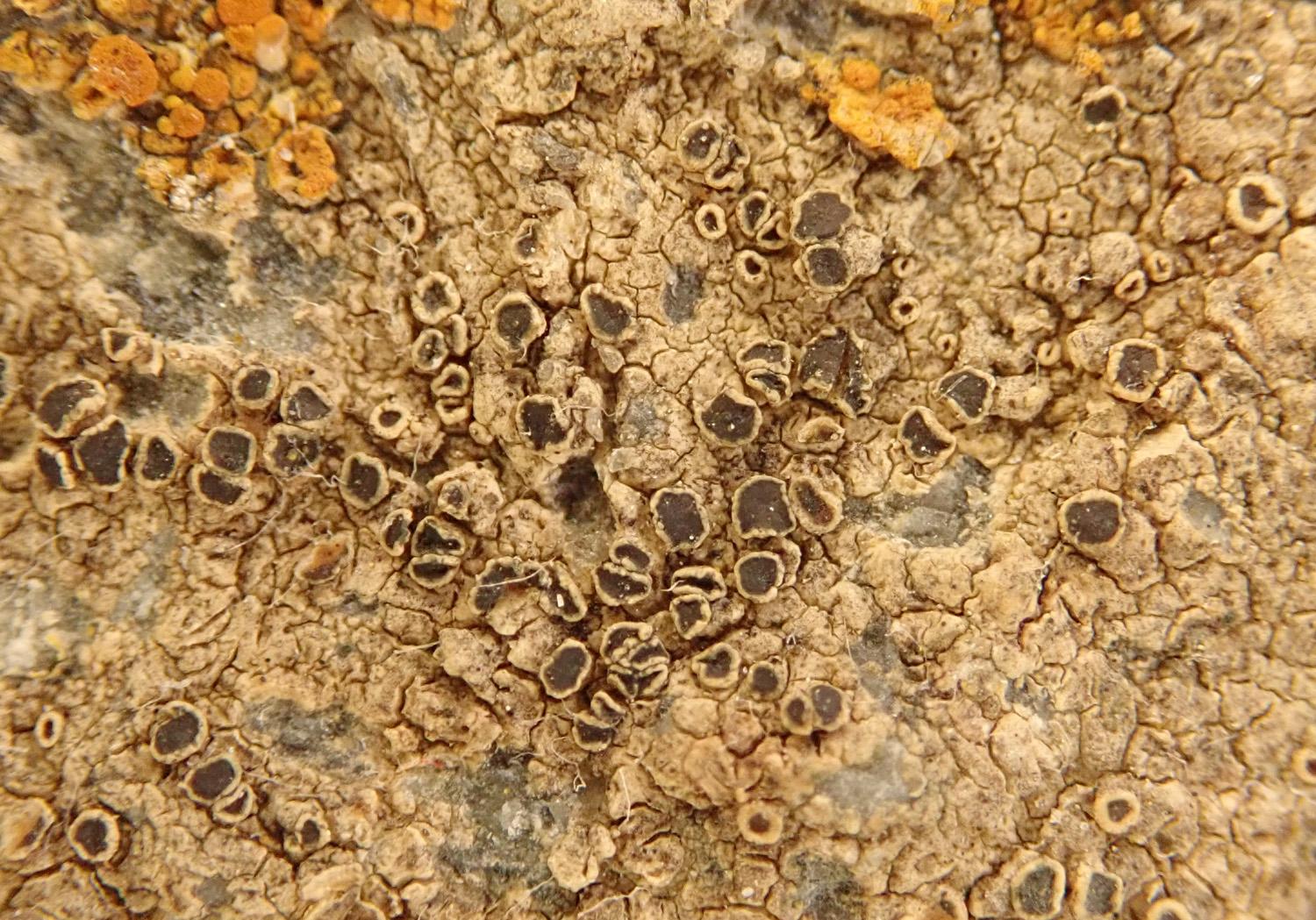
On the same sandstone boulder from a Gloucestershire saltmarsh as the possible Lecanora helicopis I posted on 10 July there is an abundance of a lecanorine species with a bright white margin that becomes flexuose in older apothecia and that is dull pink under UV. These characters would fit with Myriolecis (Lecanora) actophila, but the disc is decidedly mid-brown, and not the “finally black with a distinct green-blue tinge, not distinctly pruinose but often with a faint blue bloom when wet” as described in LGBI3, and described similarly in Dobson and various websites.
K-,C-,Pd-.
Is the UV dull pink the killer feature to nail M actophila and the colour of the disk just one of those variable things, or should I be thinking of a different species?
Juliet
July 12, 2023 at 5:47 pm #45509There are other Myriolecisthat fluoresce, so I think this might be one of those, possibly M. dispersa? A scan of Myriolecis actophilafrom Needs Ore Point, Hampshire: 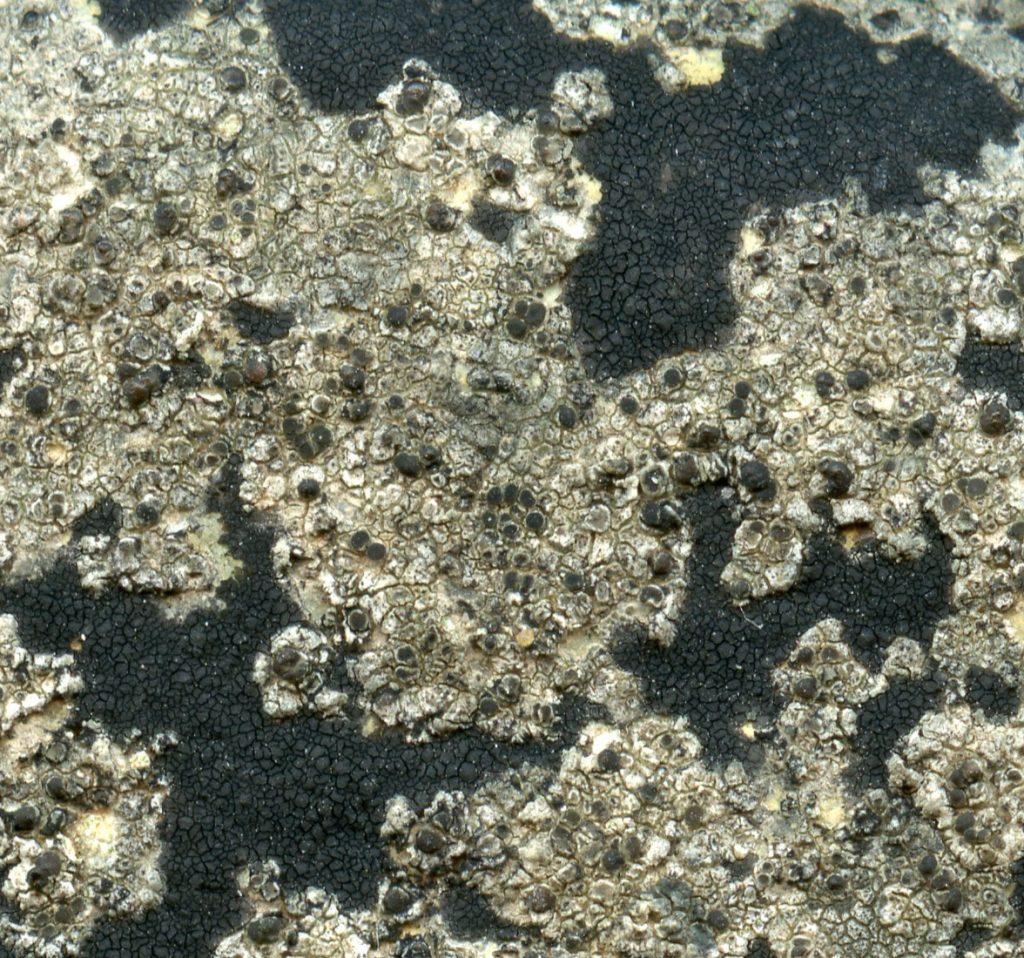
[attachment=0]Lecanora actophila + V maura.jpg[/attachment]
M. actophilawith Verrucaria mauraon flint in a tidal ephemeral pool on a shingle beech Neil
July 12, 2023 at 7:33 pm #45510The UV colour is what I’d describe as dull pink, I suppose some might describe it as pale orange, but it is definitely not yellow – which is what LGBI3 says for M dispersa (“UV– or UV± yellow”, to be precise). The saxicolous possibilities with a UV+ pink or orange reaction are rather limited, even more so when anything with a positive C, K or Pd reaction is discounted. That, together with its siliceous boulder in a saltmarsh habitat, is why I plumped for actophila, but it is nothing like your photo from Needs Ore Point, Neil, which is similar to most that I’ve seen on the net. (Though I suspect people avoid posting things that don’t fit the usual descriptions and illustrations, so the one view is reinforced.) Maybe I should spend more time looking at M dispersa, and it will eventually drop into place there because I’m misinterpreting the texts or the chemistry.
Anyway, thanks for the guidance.
Juliet
July 13, 2023 at 8:30 am #45511Juliet There are also
Myrioleciswith xanothones listed as chemicals present but no UV reaction listed, which is unlikely, most or all xanothones will fluoresce, so aways worth checking and telling the LGBI3 committee what you find Neil
July 13, 2023 at 1:42 pm #45512Juliet Having looked closely at all my herbarium specimens of M. actophila from North Devon and 2 from Portland the thallus comes out as the determining characteristic. UV reactions are very little help. The thallus is strongly developed in all the specimens being what I call a biscuit colour and often overgrown with dark specks (probably cyanobacteria common in the black maritime zone). It is areolate often with roughly longitudinal grooving and deep cracks. The apothecia range from neat to crowded and rubbed down, and when rubbed down appear black/blue/green but the discs are often dark brown to black.
The discs sometimes appear pruinose but this seems a result of a few crystals and fine debris rather than the distinct pruina seen in a Lecanora carpinea.
Neil’s image is of typical M. actophila but yours seems to have little or no thallus so could be M. dispersa or possibly M. zosterae.
I hope this helps as it is a tricky one and the best way to spot it is homing in on biscuit-coloured patches between Caloplaca marina and Hydropunctaria maura.
[img][/img][img]
[/img] July 13, 2023 at 2:24 pm #45513[i[/img]
mg]Some images of M. actophila from North Devon.
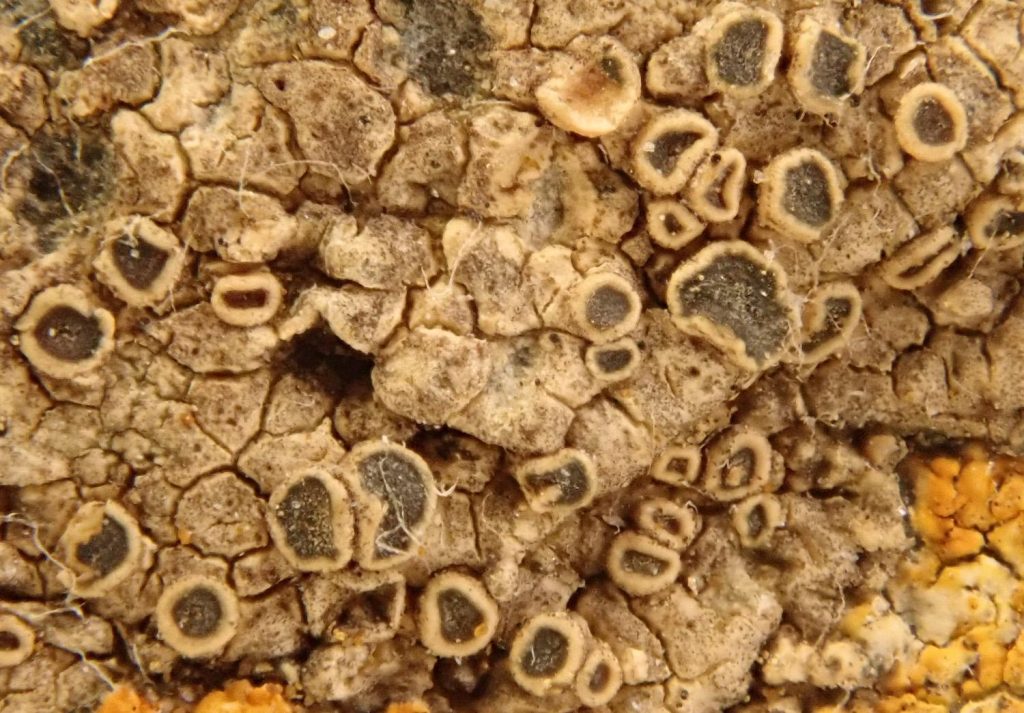
[attachment=1]Lec actophila Devon MP b small.jpg[/attachment] 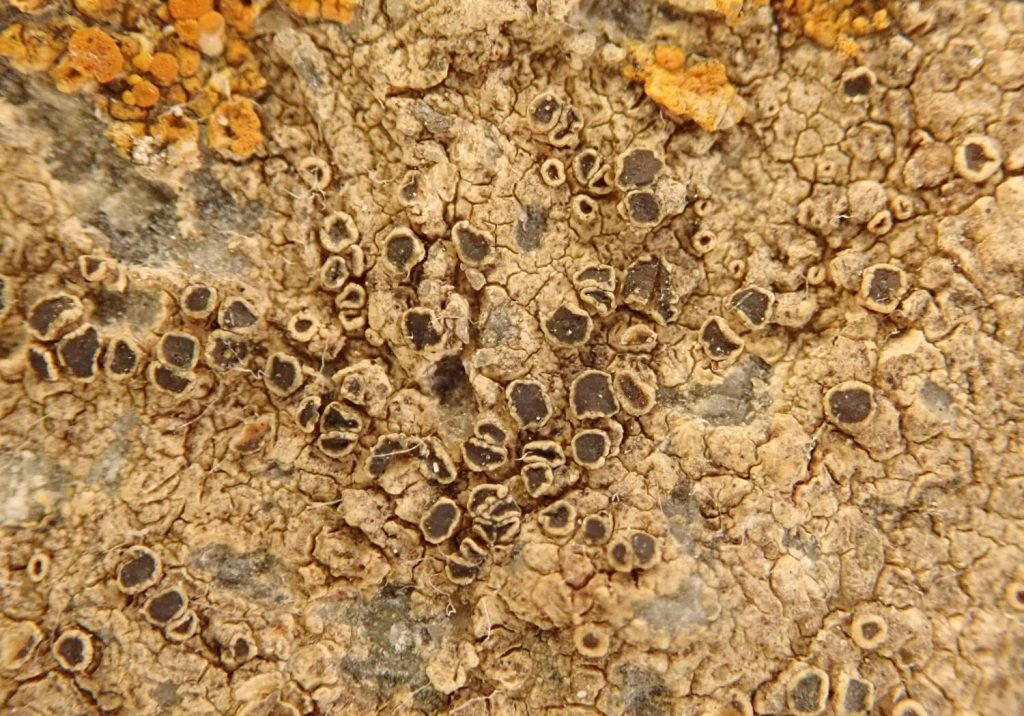
[attachment=0]Lec actophila Devon MP a small.jpg[/attachment] September 29, 2023 at 1:21 pm #45514Anonymous
Myriolecis actophilais not possible because the latter species has a thallus (see the photograph by maxieput90, but this photograph perhaps represents Myriolecis massei?). In my humble opinion I think that we are in the group of Myriolecis dispersawhich is a fairly common species in this environment. It is not possible for me to give an opinion on fluorescence because I do not have experience with it. Regarding Neil’s photograph I think it is Lecanora helicopiswhich can be parasitic on Verrucaria maura s.l.Alain GERAULT
October 2, 2023 at 12:18 pm #45515Thanks Alain, and thanks also Neil and Maxine. I’ve now handled a specimen of Myriolecis actophila from Maxine, and I am confident that my original specimen is not the same species. I’m grateful for the suggestion of M massei which I’ll bear in mind. Juliet
-
AuthorPosts



- You must be logged in to reply to this topic.