- This topic is empty.
-
AuthorPosts
-
December 8, 2025 at 2:31 pm #33124
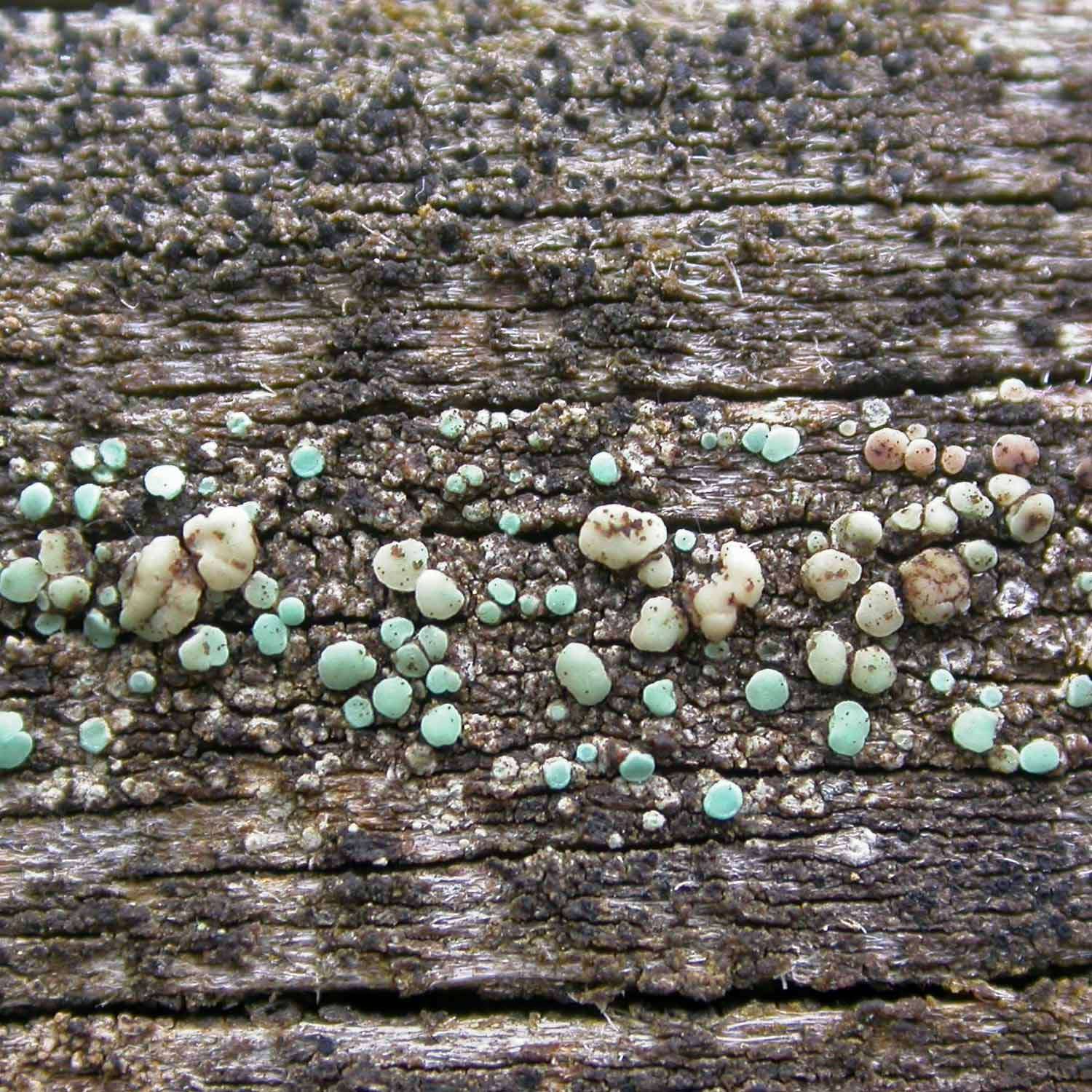
Lecanora symmicta or Lecanora stenotropa? On a (probably treated) wooden fence rail, Warwickshire. Spores are 8.5-11 x (3) 3.5-5 um (not sure whether the K/ink/vinegar spores had thick walls or a perispore). But there were very few free spores, so maybe they are too immature to measure. Young apothecial margins without algae. Descending crystals in the epithecium that dissolved in K.
No obvious thallus to test. Apothecia were C- or C faint yellow. K-, K/UV-, KC yellow.
Di N
December 8, 2025 at 8:07 pm #46792I am going to suggest Lecanora stenotropa. This was my gut reaction on first glance at the photos and seems to be backed up by your observations. I think there is a bit too much margin showing for L. symmicta in which the apothecial margins get excluded at a very early stage. The discs of L. symmicta are usually distinctly (pale) brownish (or sometimes darkened) whereas the apothecia in your material are mostly a cleaner paler colour, much of the colony having the slight blue-rinse appearance typical of L. stenotropa. L. symmicta contains arthothelin and perhaps other xanthones and your chemical tests have not detected any hint of xanthones (no C+ orange, no K/UV+ green [wet]). I think you have demonstrated the presence of usnic acid with your KC+ yellow reaction of the apothecial disc and the absence of xanthones. I also carefully add K then C (with cocktail sticks) to apothecial discs when I suspect L. stenotropa or L. polytropa and want to make sure it is one of the usnic acid containing Lecanora species. Assuming we have ruled out L. symmicta we now have the two most likely usnic acid-containing contenders on such lignum to consider, L. polytropa and L. stenotropa. Out of these two, your spores have the narrowly ellipsoid shape of L. stenotropa. LGBI2 states that the spores of L. stenotropa are 3 to 4 microns wide but I usually find some are wider, up to 4.5. Rightly or wrongly, I am sort of ignoring the one that is just over 5 microns wide, thinking it might look wider due to an optical effect apparently caught up in the hymenium. The spores of L. polytropa are broadly ellipsoid, more like hens eggs. In the East Midlands I come across L. stenotropa much more commonly on lignum (chemically treated fence and gate rails) than on its more ‘typical’ habitat of sandstone. I do find it occasionally on old sandstone headstones and I pick out candidates for it by its less yellowish colour compared to L. polytropa and it often having a slight blue tinge. On lignum L. stenotropa sometimes becomes more spectacularly bluish coloured due not only to its inherent appearance but also by apparently concentrating copper compounds in its structure.
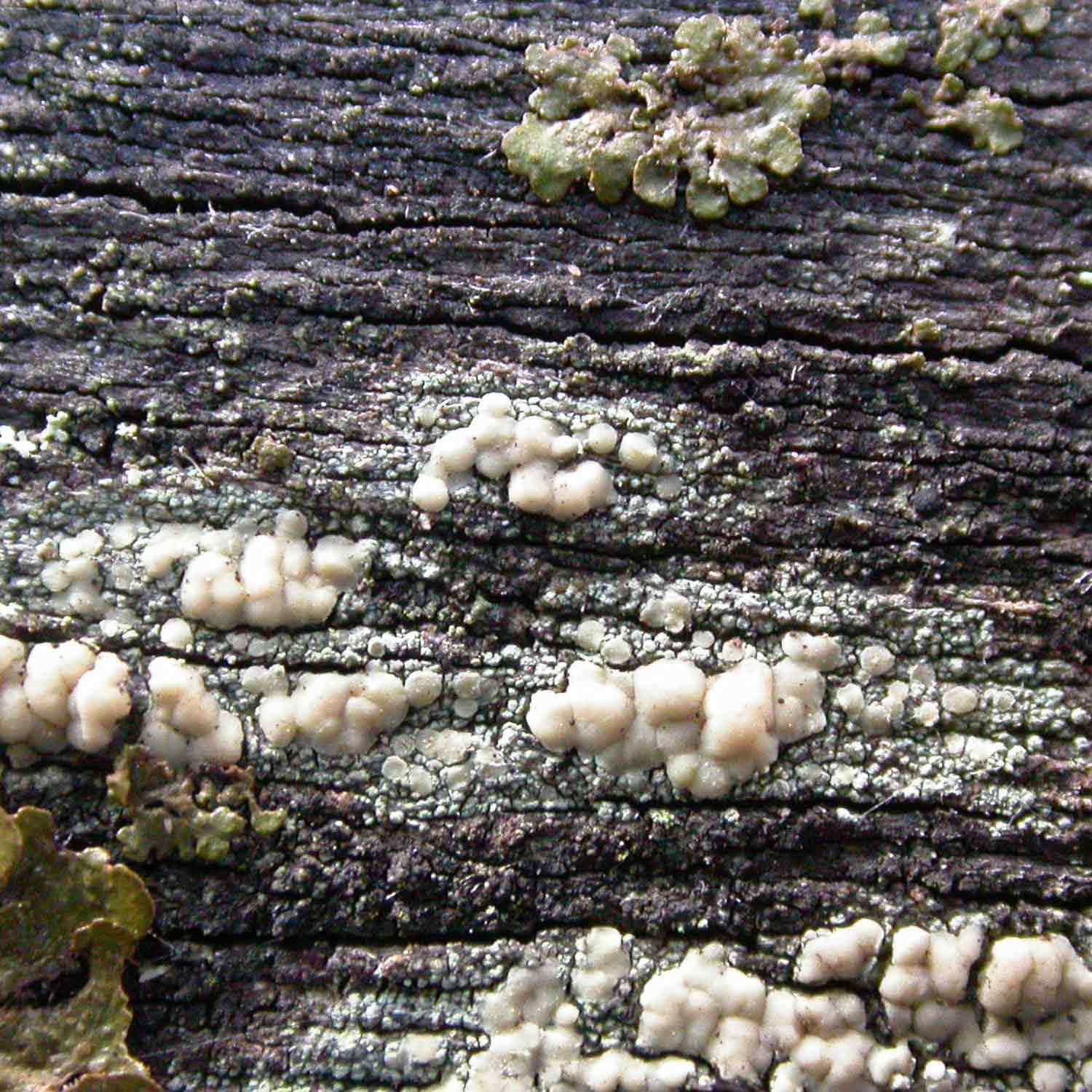
December 8, 2025 at 8:22 pm #46793Here is L. symmicta. 
[attachment=2]symmicta.jpeg[/attachment]
Here is L. stenotropa on sandstone, showing the slight blue tinge.
[attachment=1]stenotropa2.jpeg[/attachment]
Here is some L. stenotropa on chemically treated lignum, the bright bluish colour presumably due to accumulated copper compounds.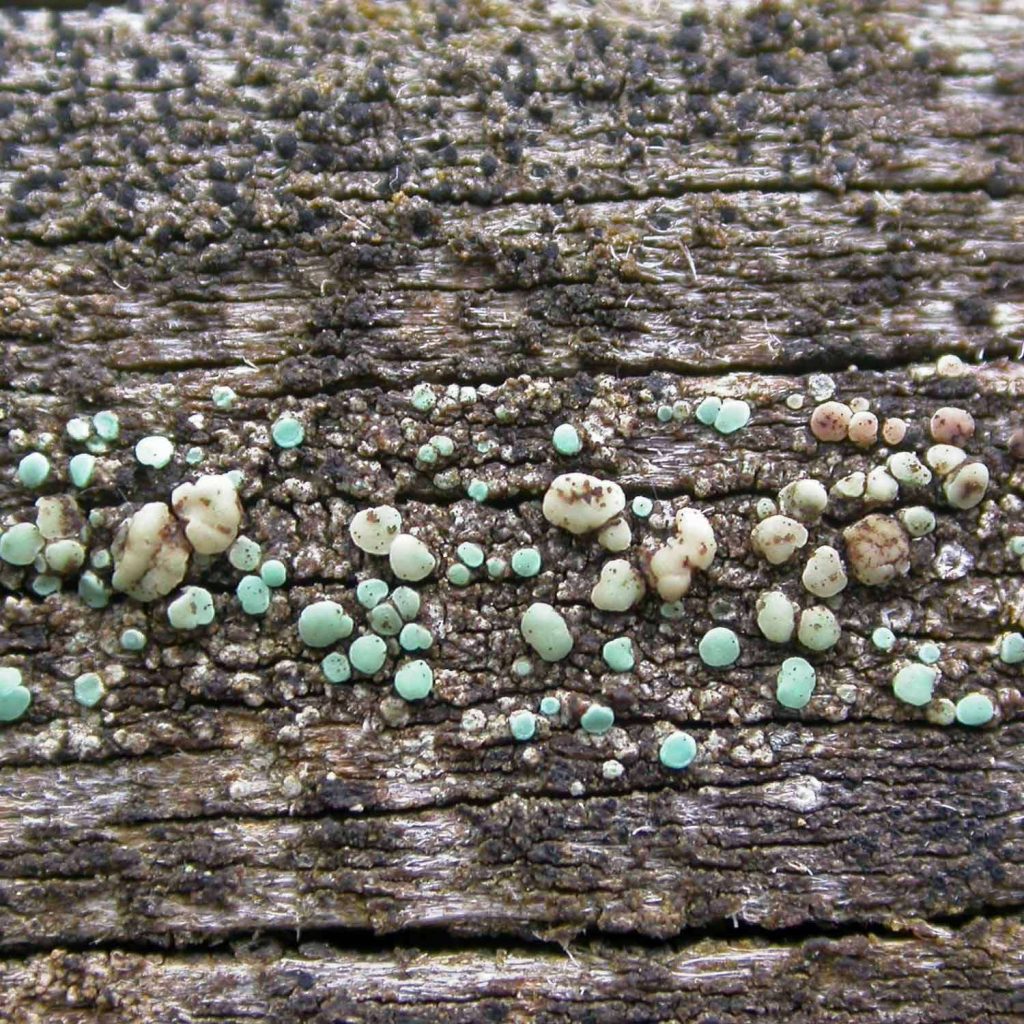
[attachment=0]stenotropa1.jpeg[/attachment]
When I am uncertain about which species I have, I often compare sections of known specimens of the main possibilities. There are a lot of subtle differences which defy easy description and hence aren’t often found in published accounts. For example there are almost certainly differences in the epithecial granules between L. symmicta and L. stenotropa/polytropa but if I have ever made detailed comparisons of these I don’t have the notes to hand. This has often helped my way towards an identification even if I eventually have to use published characters to formally decide on the name I am going to apply. In the case of the lichen in this topic/post I think I am happy to confirm it as L. stenotropa unless anyone has any doubts.December 8, 2025 at 9:24 pm #46794Thank you for the detailed very helpful response. I have since looked at another sample from the same fence with much flatter apothecia, which had no spores wider than 4.2 μm (all outside the asci) and the same reactions with K and C. L. stenotropa again. Thanks
-
AuthorPosts



- You must be logged in to reply to this topic.