Forums › Forums › General fungi discussion › Holiday Photos
- This topic is empty.
-
AuthorPosts
-
May 31, 2016 at 2:03 pm #30202
I’ve just returned from a road trip around the Rockies, Grand Teton and Yellowstone. Most of the journey is at elevations of 6000′ – 11000′ and there are just small patches of snow left as their short spring season gets underway. it’s a good time of year to visit – before the crowds arrive at the beginning of June. After the snow has melted it can get very dry so there is a bit of a flush of spring-fruiting fungi as the last of the snow disappears. I didn’t intend to do any fungi photos while I was there but I just couldn’t help myself when I saw a some colourful asco’s and an unfamiliar group of mushrooms all within a few feet of each other in the forest of the Grand Teton National Park.
The first two photo’s are what I believe is
Caloscypha fulgens, found on Pine debris at high altitudes after the snow melt in the USA but checking the FRDBI I see it has been found on Salix and Betula here in Hampshire, in the UK. The rest – I have done my best to name the others from publications on fungi in the area. It is a little easier with spring fungi, especially those with a specific host or environment (as the options are narrowed somewhat) but I could be completely wrong! Dave
Caloscypha fulgens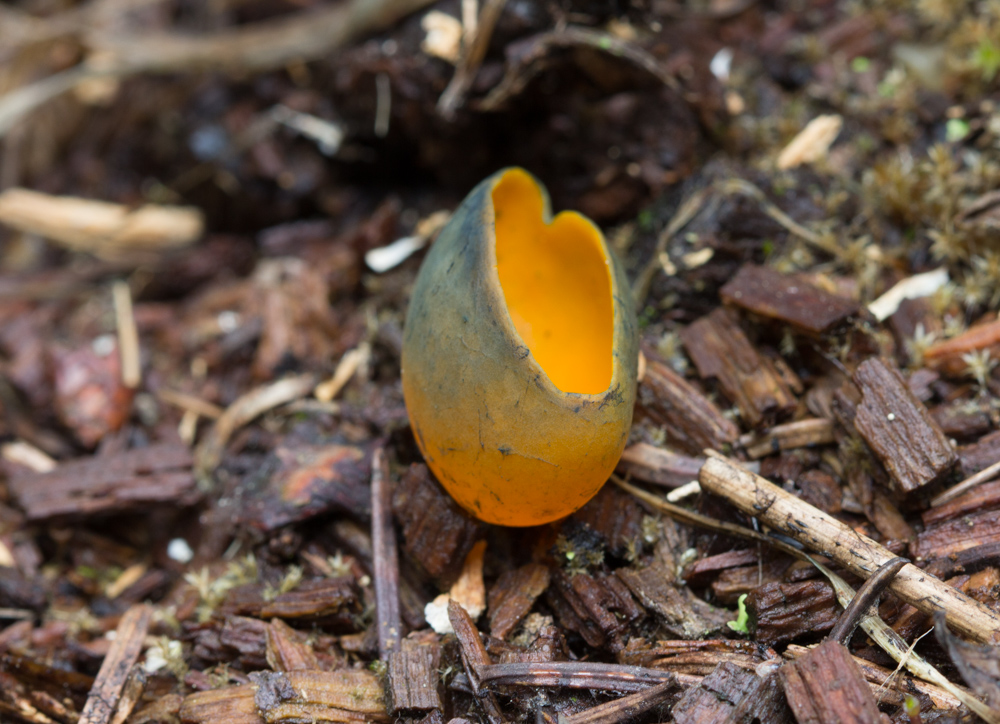
[attachment=5]Teton Fungi-2.jpg[/attachment] 
[attachment=4]Teton Fungi-3.jpg[/attachment] Gyromitra ancilis (Syn. Discina perlata)

[attachment=3]Teton Fungi.jpg[/attachment] Gyromitra gigas

[attachment=2]Teton Fungi-5.jpg[/attachment] Heterotextus alpinus (Syn. Guepiniopsis alpinus)

[attachment=1]Teton Fungi-8.jpg[/attachment] Mycena overholtsii

[attachment=0]Teton Fungi-4.jpg[/attachment] May 31, 2016 at 2:08 pm #38365…….and a couple of Lachnellulas (best guess at ID based on what’s common locally) Lachnellula arida
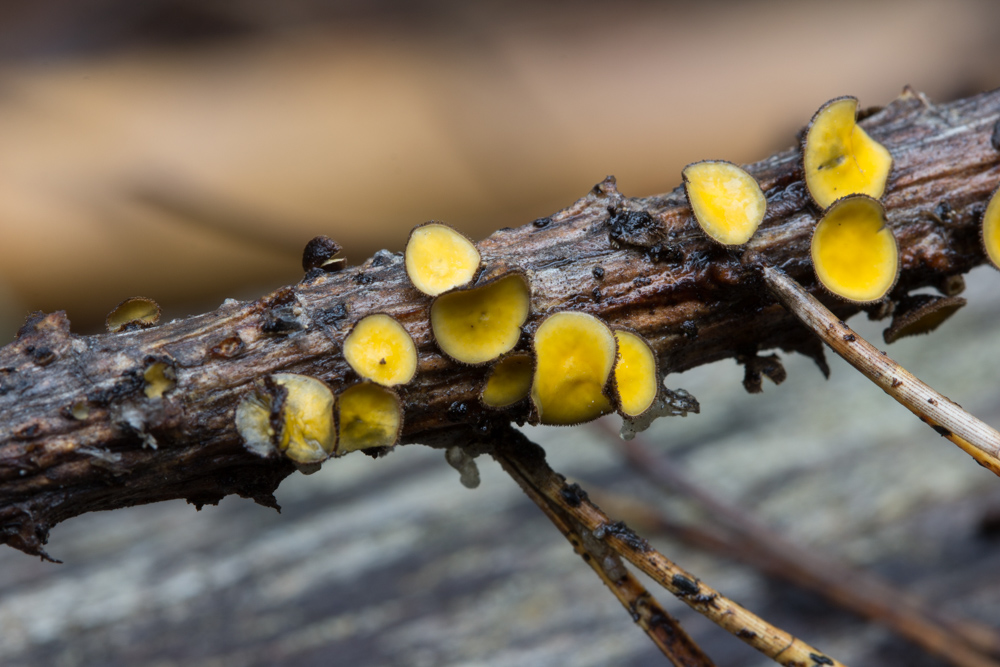
[attachment=2]Teton Fungi-7.jpg[/attachment] Lachnellula agassizii

[attachment=1]Teton Fungi-6.jpg[/attachment] 
[attachment=0]Teton Fungi-9.jpg[/attachment] June 2, 2016 at 8:20 am #38366Hello Dave Lovely finds and photos. Obviously the first ID is correct. I have found it at 3 locations in Surrey growing on the side of steep humus rich banks, apparently on soil, with oak nearby, hence not agreeing with the descriptions in the literature. I sent specimens to Kew several years ago, but presumably they were thrown away and not recorded, I think they only want county first now and these were county seconds etc.
Leif
June 2, 2016 at 9:51 am #38367Thanks Lief, I saw that the first record of
Caloscypha fulgenson the FRDBI was in 1968. I suppose ithe spores could be brought in on the boots of travellers, I assume that I will probably be redistributing the odd spore as I walk in the New Forest wearing the same boots that I wore in the Tetons. I also saw that
Discina perlatais a synonym of Gyromitra ancilis, which has a few records in the UK (mostly Scotland) and that Gyromitra gigasgets a mention on the FRDBI but is now noted as extinct in the UK. Dave
June 6, 2016 at 3:56 pm #38368I’m just back from holiday – three days in Dorset! It was generally dry although a few fungi showed up at Forde Abbey on the 1st. June. My first ever record of
Leccinum pseudoscabrum(syn. carpini– under Hornbeam appropriately) and a Cortinarius which seems to be C. rigens. Of note is the earliness of these species: I’ve two records of Leccinum spp. in July and two of Cortinarius spp. in July, but have never found representatives of either of these Genera in June.
-
AuthorPosts


- You must be logged in to reply to this topic.