- This topic is empty.
-
AuthorPosts
-
August 21, 2023 at 9:56 pm #32652
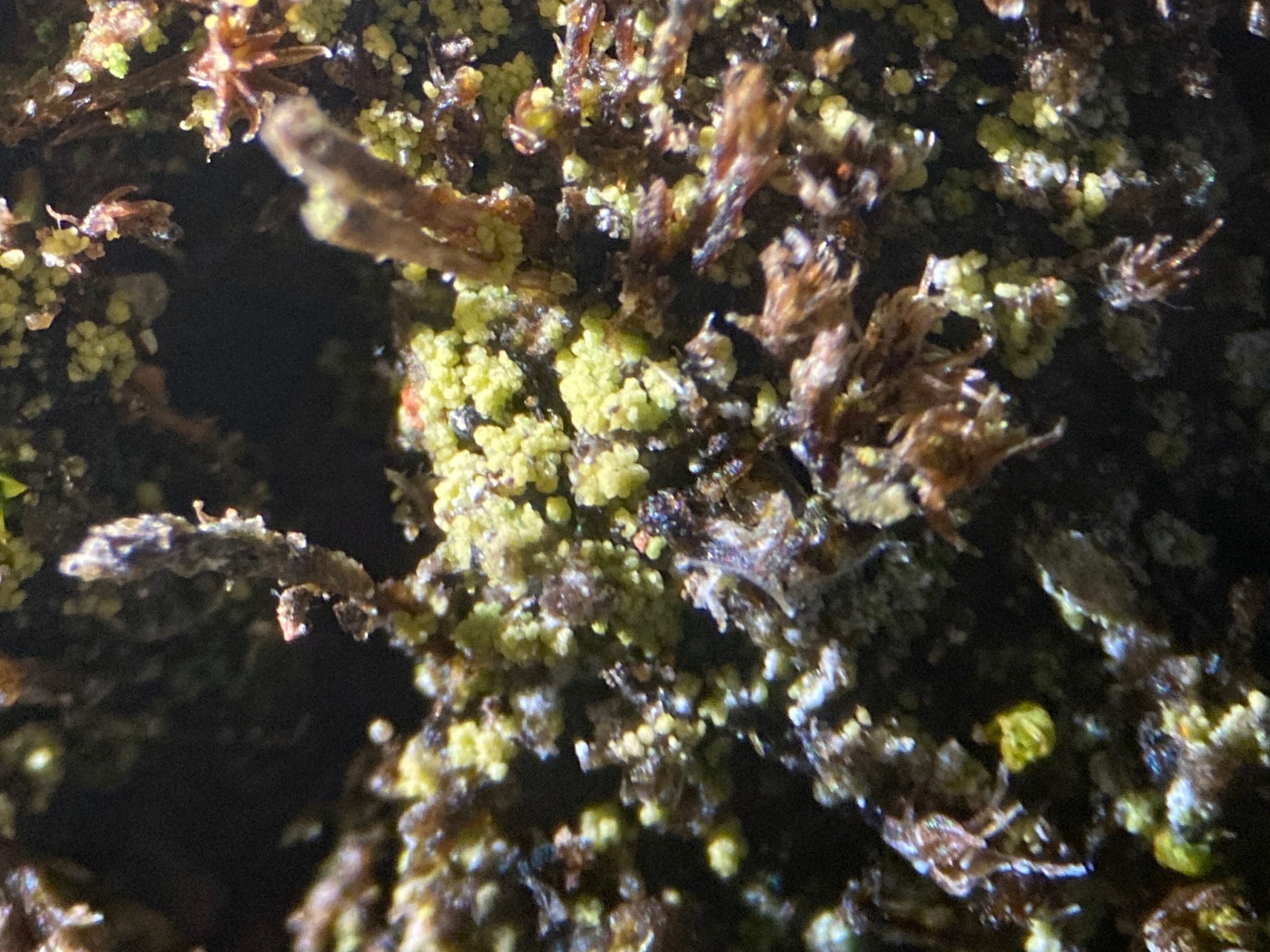
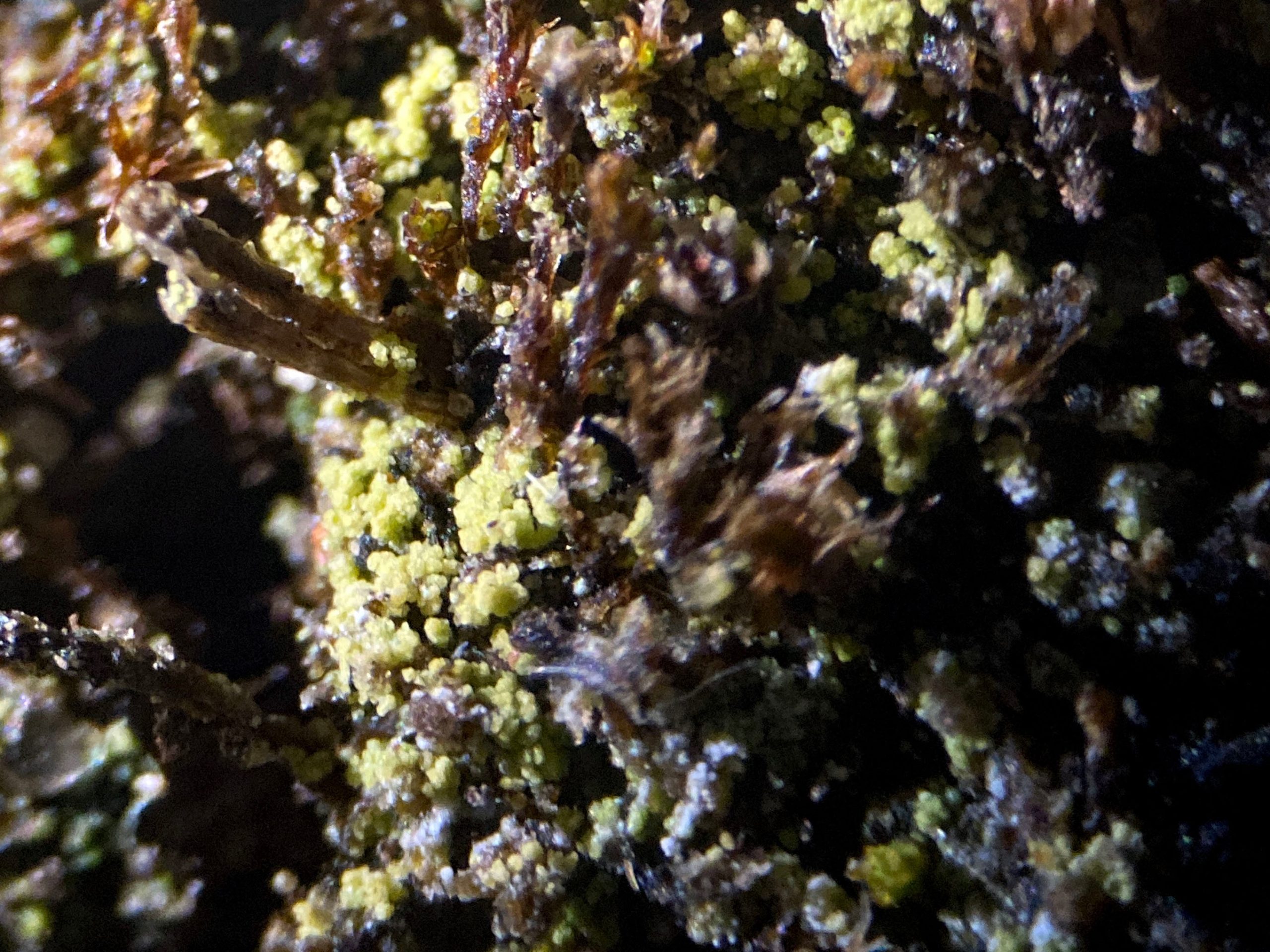
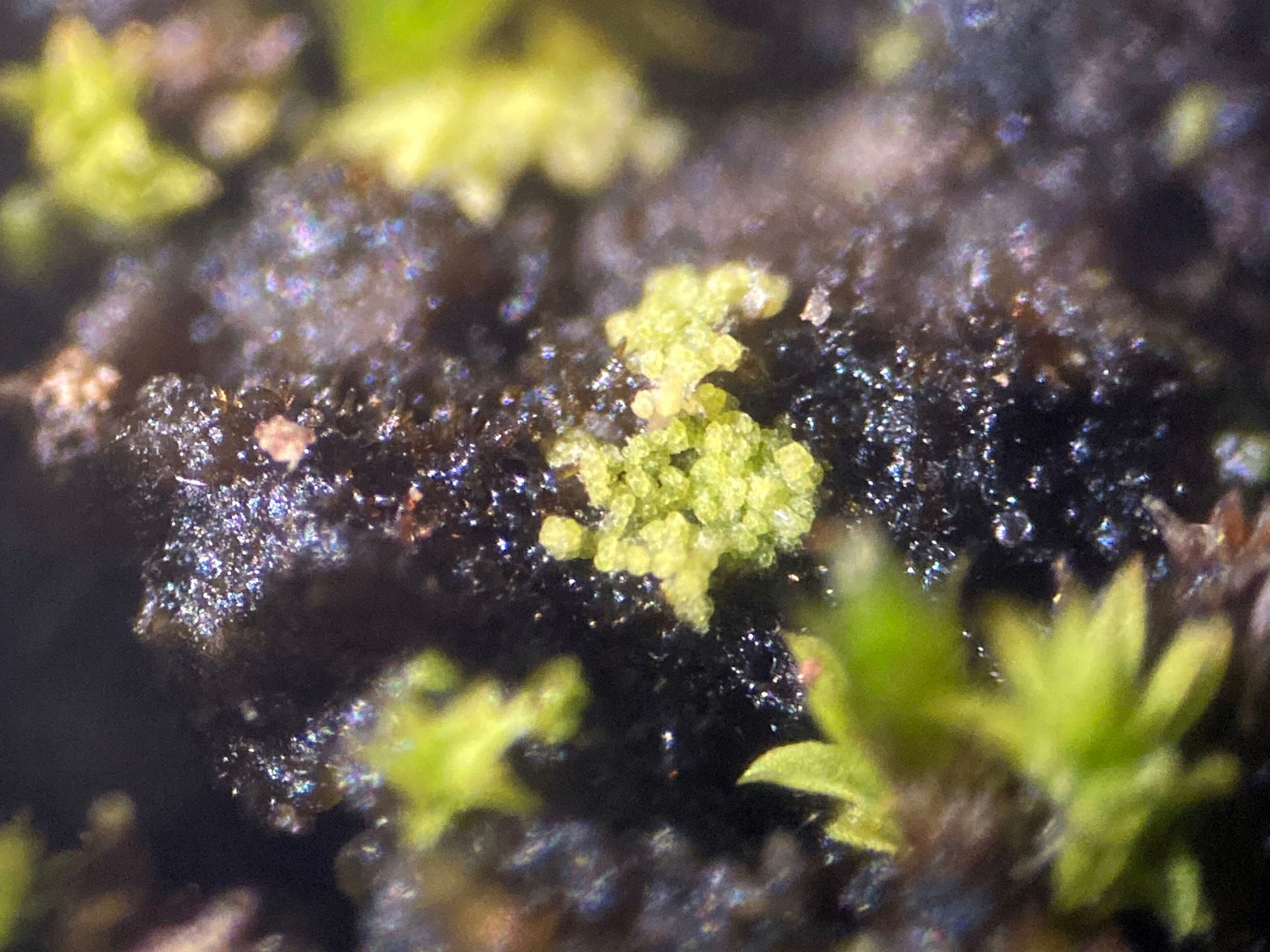
Surveying the open vegetation colonising the hollow left by removing the runway at Greenham Common, Andy Cross and I noticed some bight yellow green granular soredia growing on moss cushions on gravel enriched with crushed concrete. These are quite a distinct colour and are clumped into loose granular masses. These are fragile and easily break into individual soredia c 28 to 50µm across. These have rounded clear cells on the outside. Nothing much of a thallus can be made out and the soralia are C-. 
[attachment=5]2023-08-21-04.jpg[/attachment] 
[attachment=4]2023-08-21-06.jpg[/attachment] 
[attachment=3]2023-08-21-07.jpg[/attachment]
On the moss cushion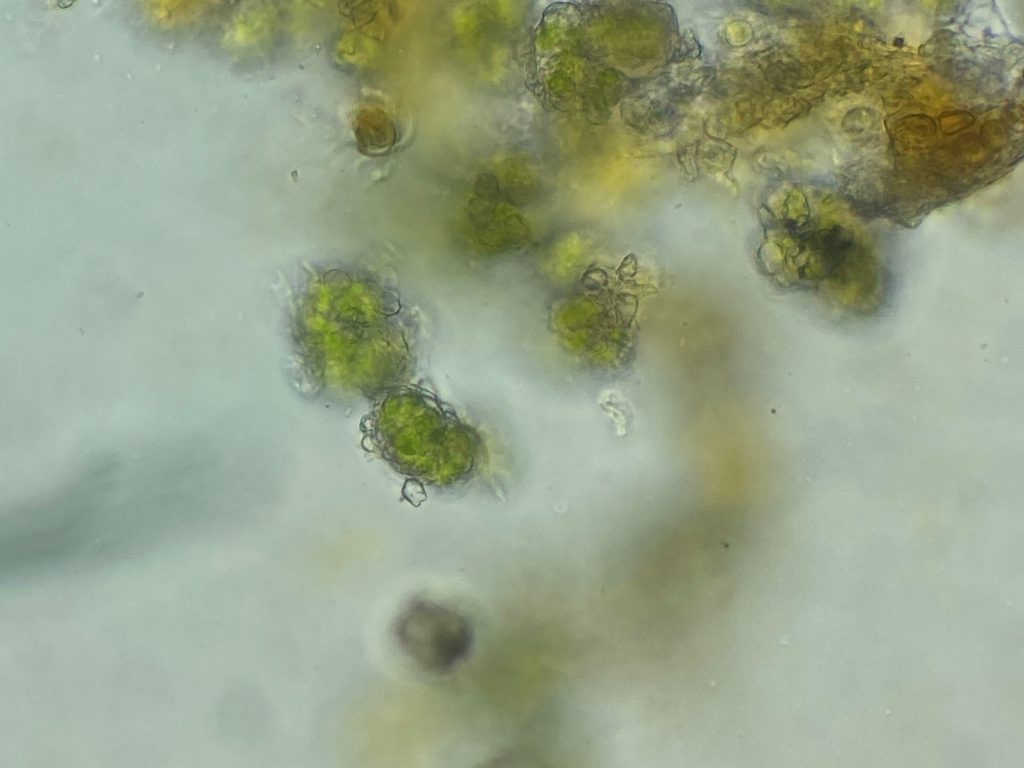
[attachment=2]2023-08-21-08.jpg[/attachment] 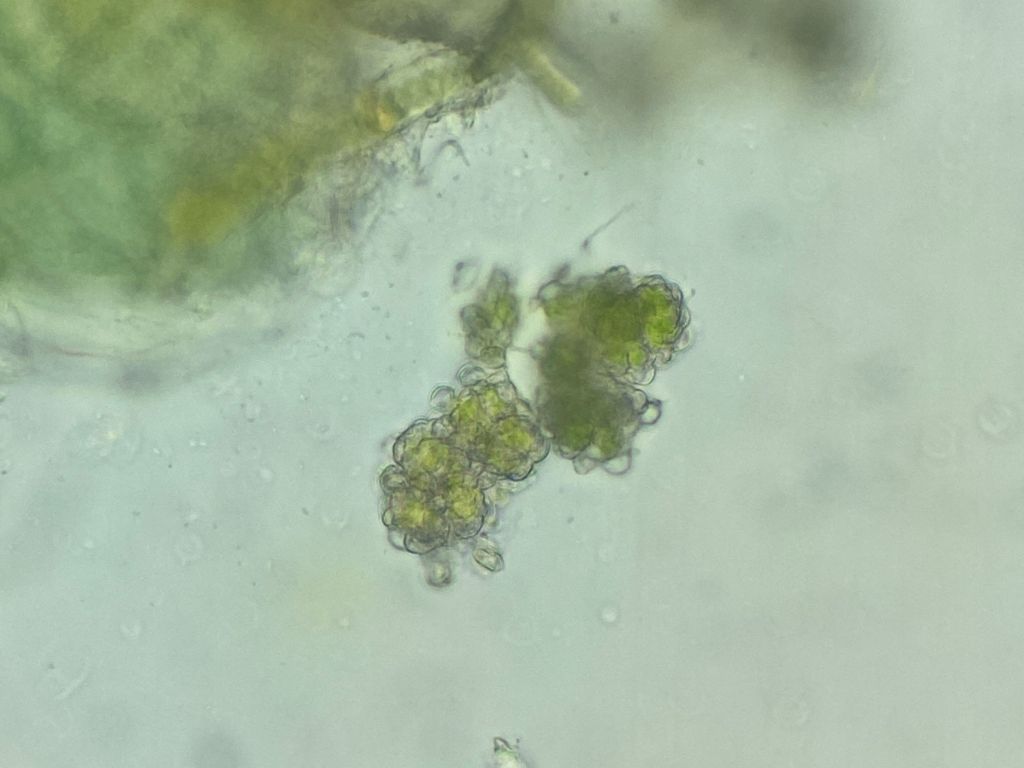
[attachment=1]2023-08-21-09.jpg[/attachment]
SorediaAnyone have any ideas as to what this is? All I can think of is that they have a resemblance to
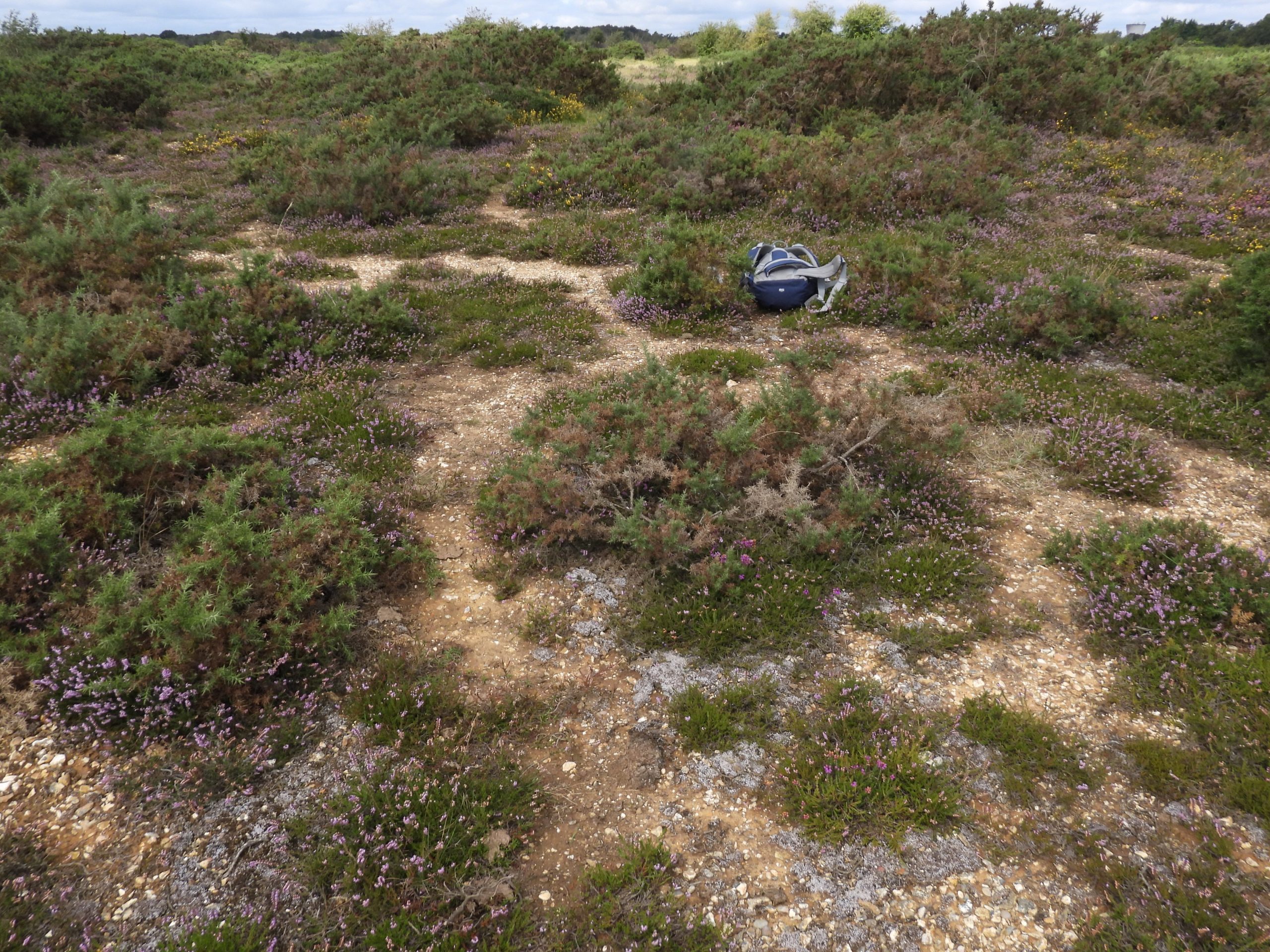
Bacidia fuscoviridisgrowing on rough substrates, where the thallus is not very visible. A different habitat, which was our main target:

[attachment=0]2023-08-21-01.JPG[/attachment]
Lichen rich short grazed heath disturbed when building the cold war runway, with masses ofCladonia firmaturning he ground grey-white in the foreground. Neil
August 22, 2023 at 1:47 am #45575Vezdaea leprosa? August 22, 2023 at 8:56 pm #45576Alan I had not thought of that as there was little likelihood of heavy metal contamination and no sign of apothecia. Mark does have some useful pictures and a drawing of the algae of
Vezdaea leprosaand the fungal haustoria penetrating them at https://fungi.myspecies.info/all-fungi/vezdaea-leprosahttps://fungi.myspecies.info/all-fungi/vezdaea-leprosa” class=”bbcode_url”> It will probably remain a mystery for the time being
Neil
August 23, 2023 at 7:35 am #45577Another possibility which came to my mind in that habitat is Bacidina caligans. This has soredia which are usually in distinct but irregular clumps, and the soredia are often a bright yellowish green, especially when fresh and slightly moist. The trouble with making this suggestion is that I don’t have any way of proving it from sterile material. While I sometimes record sterile colonies of B. caligans, I only do so when occurring in familiar habitat, such as the horizontal surfaces of certain memorials, where I am used to finding fertile material. In less familiar settings, I think I would need apothecia before recording B. caligans. When growing on rock (the most usual substratum) B. caligans is often seen to have an inconspicuous, minutely warted thallus but this might not be apparent if overgrowing mosses. Soredia from widely disparate taxonomic groups are often frustratingly similar in appearance microscopically. Some have distinctive haustoria, a recognisably unusual photobiont type or visible pigments but most appear as just a cluster of algal cells wrapped up in paraplectenchymatous hyphae.
August 23, 2023 at 9:23 am #45578Mark I suspect it is a
Bacidia/ Bacidina, but as you say, no easy way of working out which one. We have one more day there so I will have a look for apothecia if we have another go at the gravel/crushed concrete biocrust in heathland habitat. It is quite interesting one (if odd) with Agonimia gelatinosa, Agonimia globulifera, Placidium squamulosum, Toniniopsis bagliettoana, Scytinium pulvinatum, Scytinium tenuissimumand another interesting small Scytinium, which I will put up photos of tonight. Neil
-
AuthorPosts




- You must be logged in to reply to this topic.