Forums › Forums › General fungi discussion › Fungus Of The Day (One identified fungus only please, with species name in attachment comment and in post)
- This topic has 953 replies, 55 voices, and was last updated 3 weeks, 5 days ago by
admin.
-
AuthorPosts
-
November 13, 2023 at 6:34 am #34197
This one parasitises Galerina, probably pumila. The stouter one, paradoxum, parasitises Cystoderma amiamtheum. As does pearsonii which I saw last year.
Yes, another name change, previously Squamanita.
November 29, 2023 at 8:50 am #34198A nice find of Cuphophyllus ledidopus – Scalyfoot Waxcap In sheep grazed pasture near Rochdale.
This young one has much clearer scales than I have seen before.
January 19, 2024 at 4:12 pm #34199What are some notable characteristics or features of Cuphophyllus ledidopus, and have you observed any variations in its appearance, such as the clearer scales on the young specimen mentioned in your post? January 21, 2024 at 7:45 am #34200C. lepidopus was previously considered a variant of C. fornicatus which I think is still a species complex. So the general appearance is as fornicatus. There are scales on the base of the stipe and sometimes on the cap. If cut in two there is a colour change, a pink flush in the main context maybe with a little blue.
Although I have seen all these I have not seen this species enough to say what variation there is. It seems to be that the scales can be very well developed or not from what I have seen.
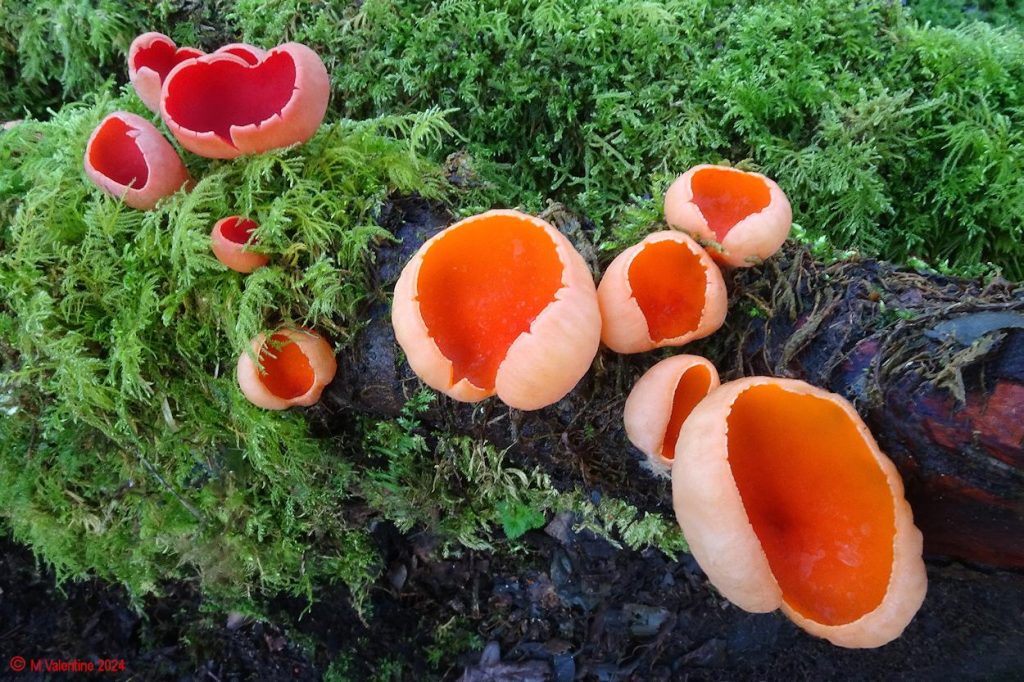
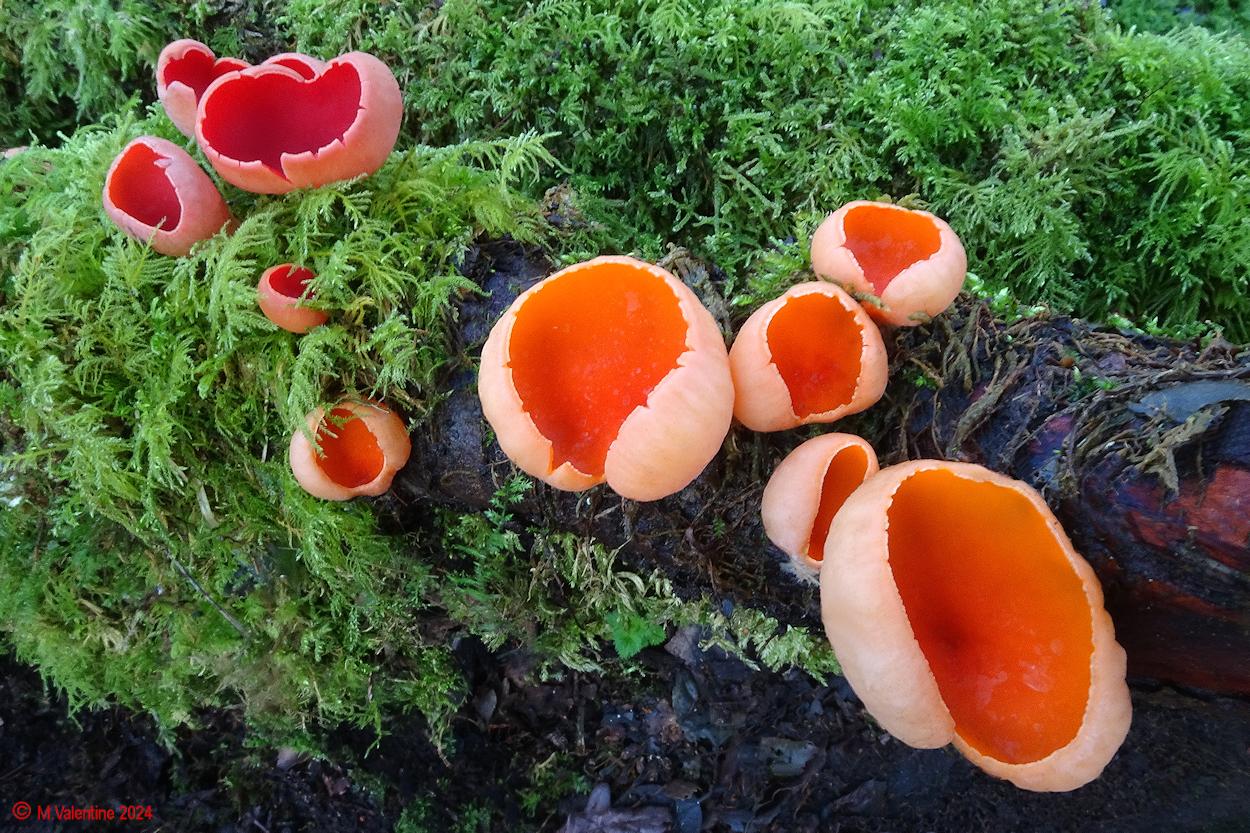
February 25, 2024 at 3:12 pm #34201Sarcoscypha austriaca– Scarlet Elfcup – with orange variant. I made the annual pilgrimage to check whether the orange variant of
Sarcoscypha austriacahad reappeared. Very pleased to confirm that yes, it is there in good numbers once again.
It also seems to be a very good year for the normal red ones, with many hundreds more fruitbodies being seen all over the entire site than in previous years.
The orange ones however, still only appear at the one very small localised area, (growing on a substrate of a few fallen birch trunks/branches). – These trunks/branches becoming more and more decayed as the years go by.
How many more years the variants will appear, remains to be seen. (They were first seen here in January 2013, and have appeared at that spot every year since – but haven’t been found anywhere else on the site).
To reaffirm: – Microscopy has previously been done several times, over several years, on both red and orange fruitbodies from this exact location, and samples have been sent to Kew, where Dr Paul Cannon confirmed them as variants of
S.austriaca. .
[attachment=0]Sarcoscypha austriaca – Scarlet Elfcup (with Orange Variant).jpg[/attachment]
.Regards,
Mike.
March 23, 2024 at 9:29 am #34202Flammulina velutipes , Velvet shank on a stump on Fishchowters Lane, Totnes yesterday. Known as a winter fungus but seems quite late (or early!) but we’ve not had a lot of frost down here.
Gary
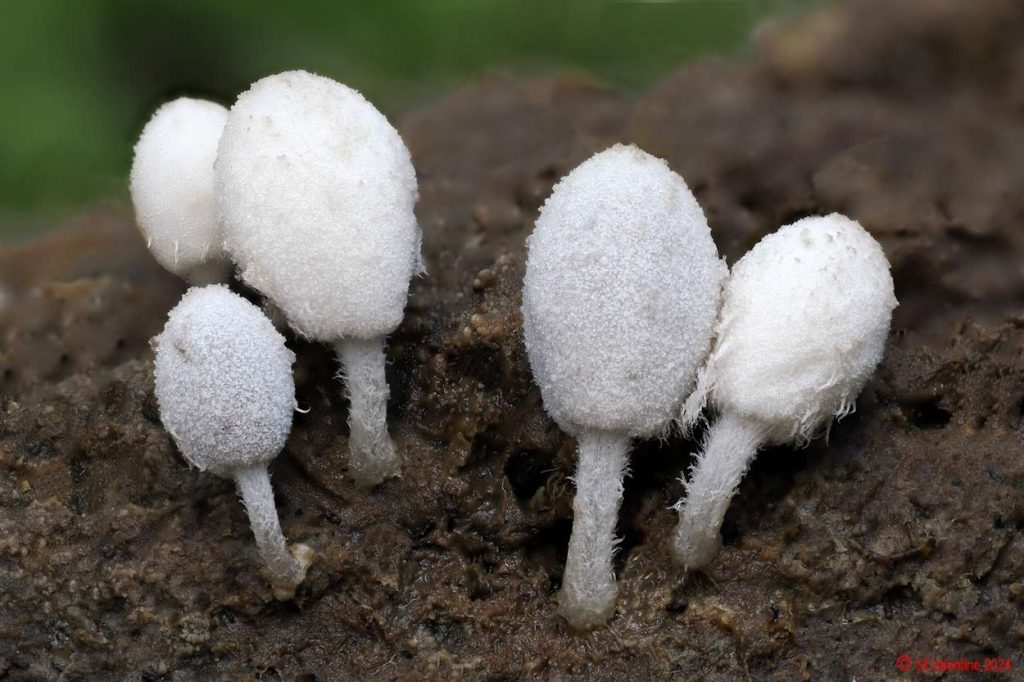
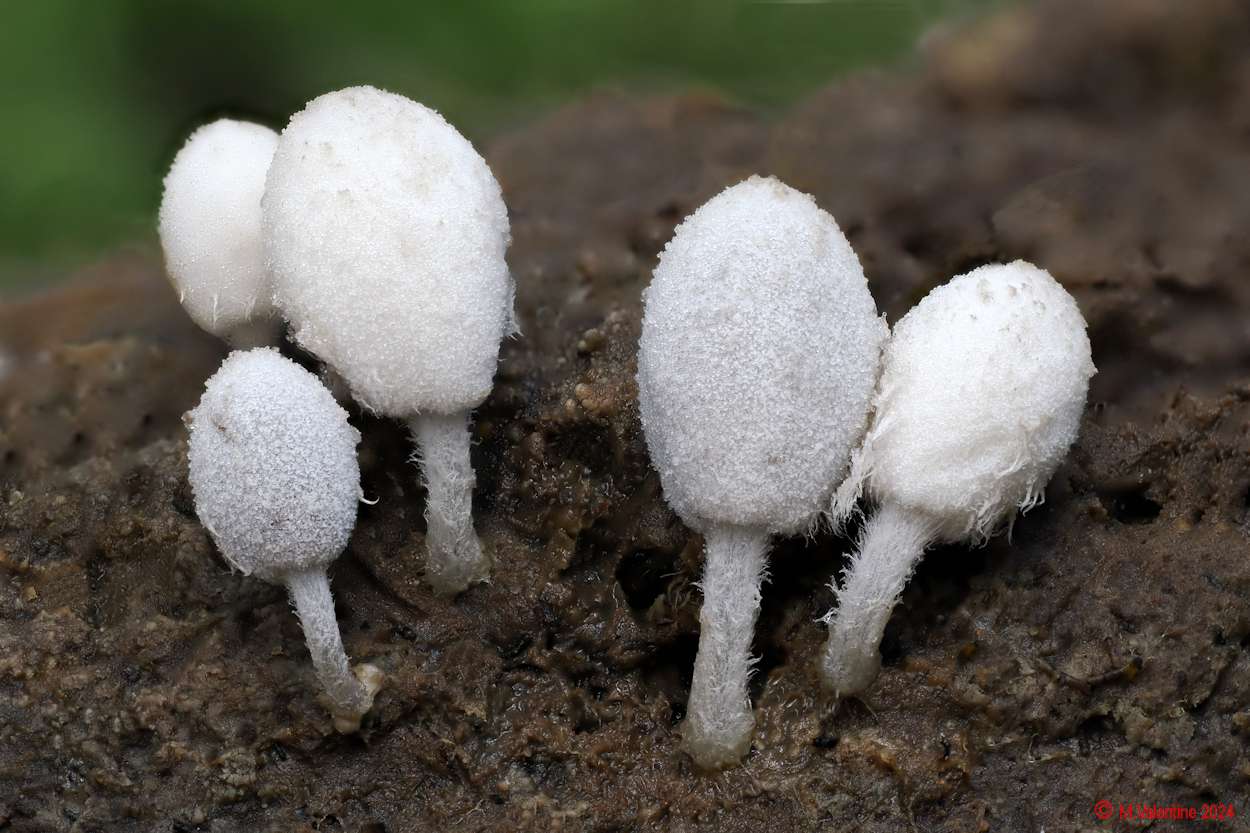
October 3, 2024 at 5:24 pm #34203Coprinopsis stercorea– Dung InkcapFound on herbivore dung, 2nd October 2024, Gisburn Forest.
(Largest fruitbody approximately 10mm tall).
Spores: – Ellipsoidal/cylindrical, smooth, 5.6-7.7µm x 3.2-4.2µm; central germ pore. (4-spored basidia).
Cap surface with projecting spine-like tufts of veil, along with distinctive finely echinulate almost spherical veil cells (±80µm diam.) which are connected by thin branching hyphae.
.
[attachment=0]Coprinopsis stercorea – Dung Inkcap.jpg[/attachment]
.Regards,
Mike
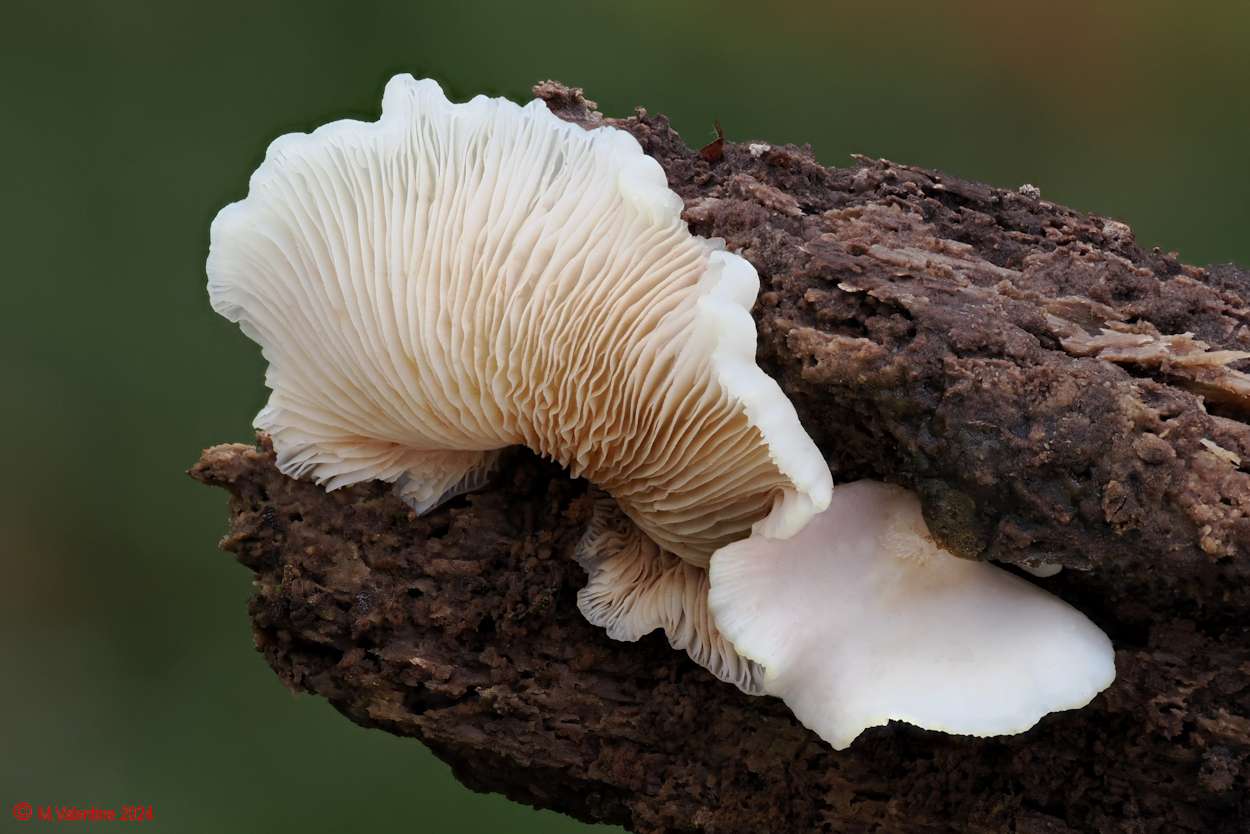
October 4, 2024 at 10:23 am #34204Crepidotus applanatus– Flat Oysterling. Found earlier in the week. – Quite a large number of fruitbodies along a fallen well decayed Fagus (Beech) trunk. – Roddlesworth Plantation, Lancashire.
Spores globose, 4.5-7μm x 4.5-6.5μm, ornamented with minute verrucose warts.
.

[attachment=0]Crepidotus applanatus – Flat Oysterling.jpg[/attachment]
.Regards,
Mike.
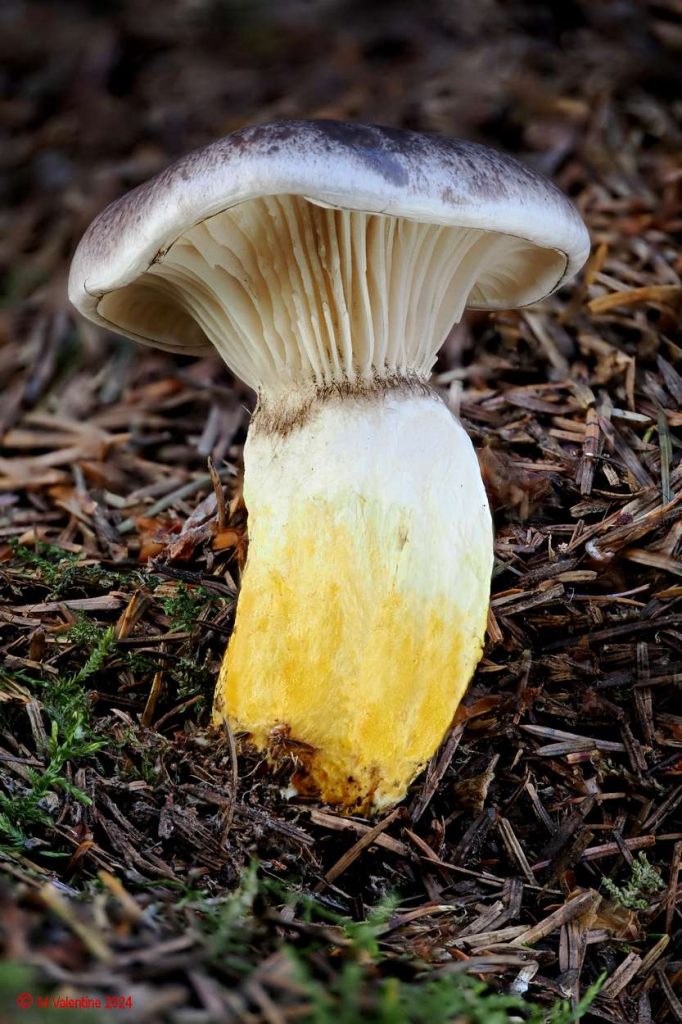
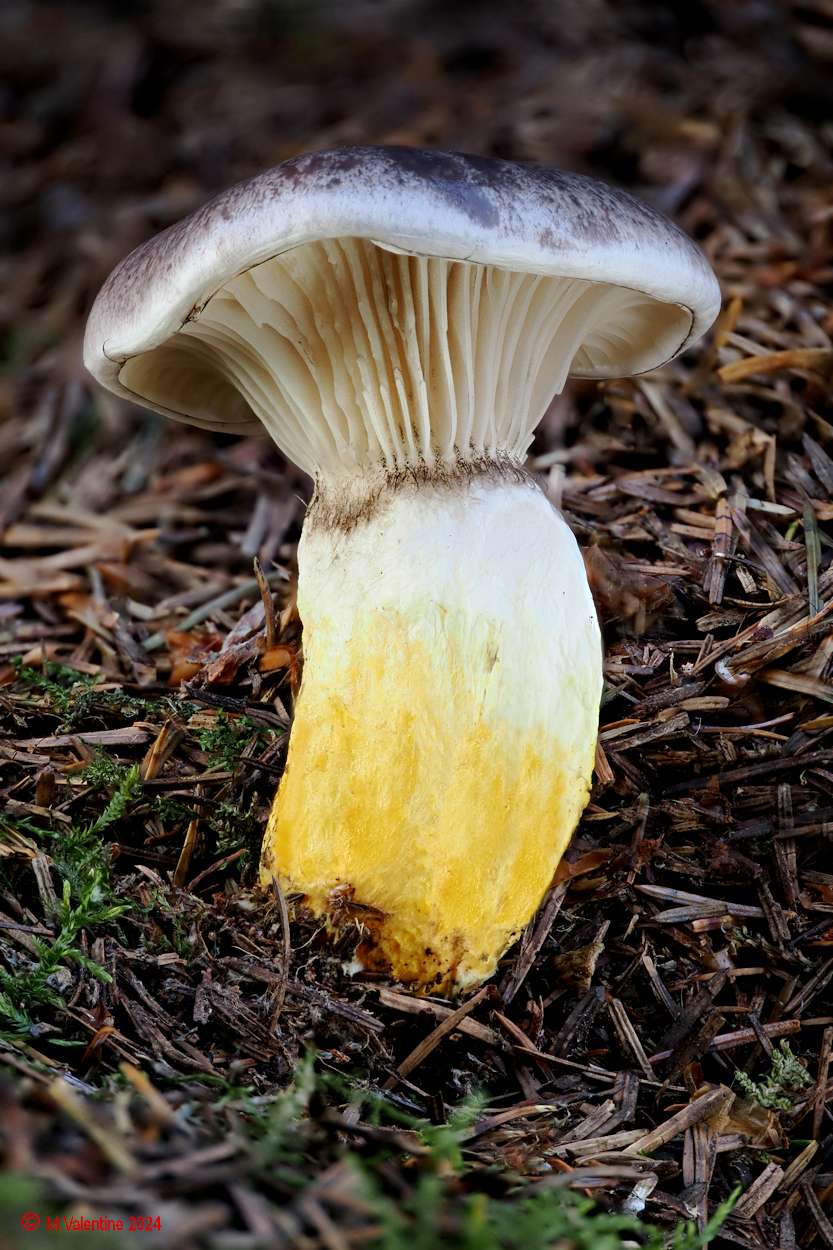
October 6, 2024 at 12:28 pm #34205Gomphidius glutinosus– Slimy Spike Found yesterday below Picea (Spruce), Gisburn Forest.
Spore print dark sepia-brown. Spores subfusiform, smooth, 17-20μm x 5.5-7μm.
.
[attachment=0]Gomphidius glutinosus – Slimy Spike.jpg[/attachment]
.See also: –
https://www.fungi.org.uk/viewtopic.php?p=15855&hilit=Gomphidius#p15855 Regards,
Mike.
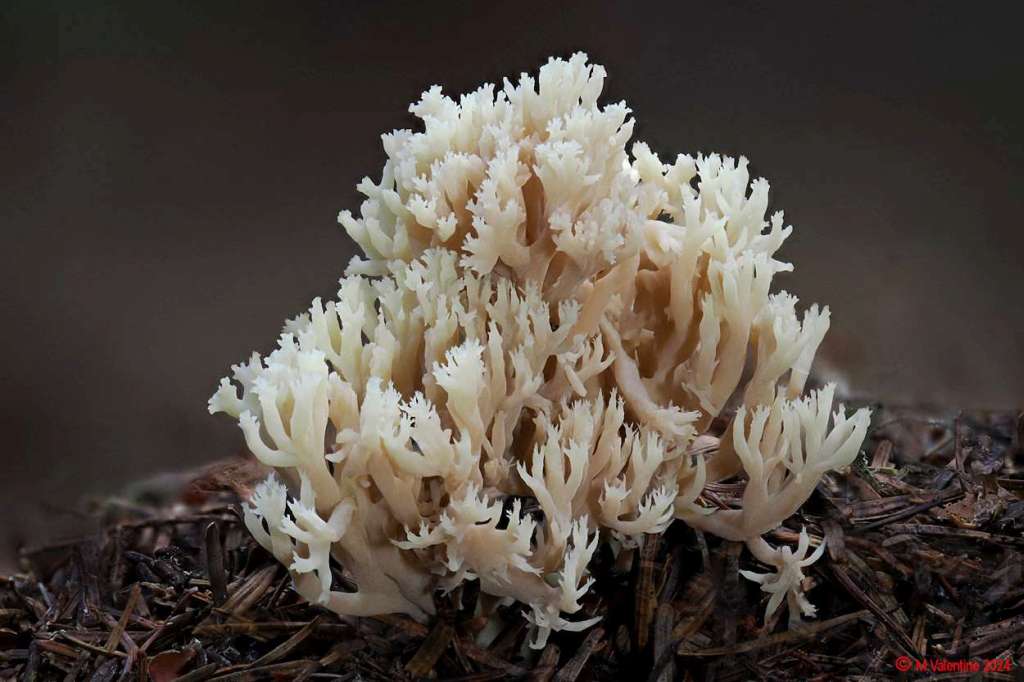
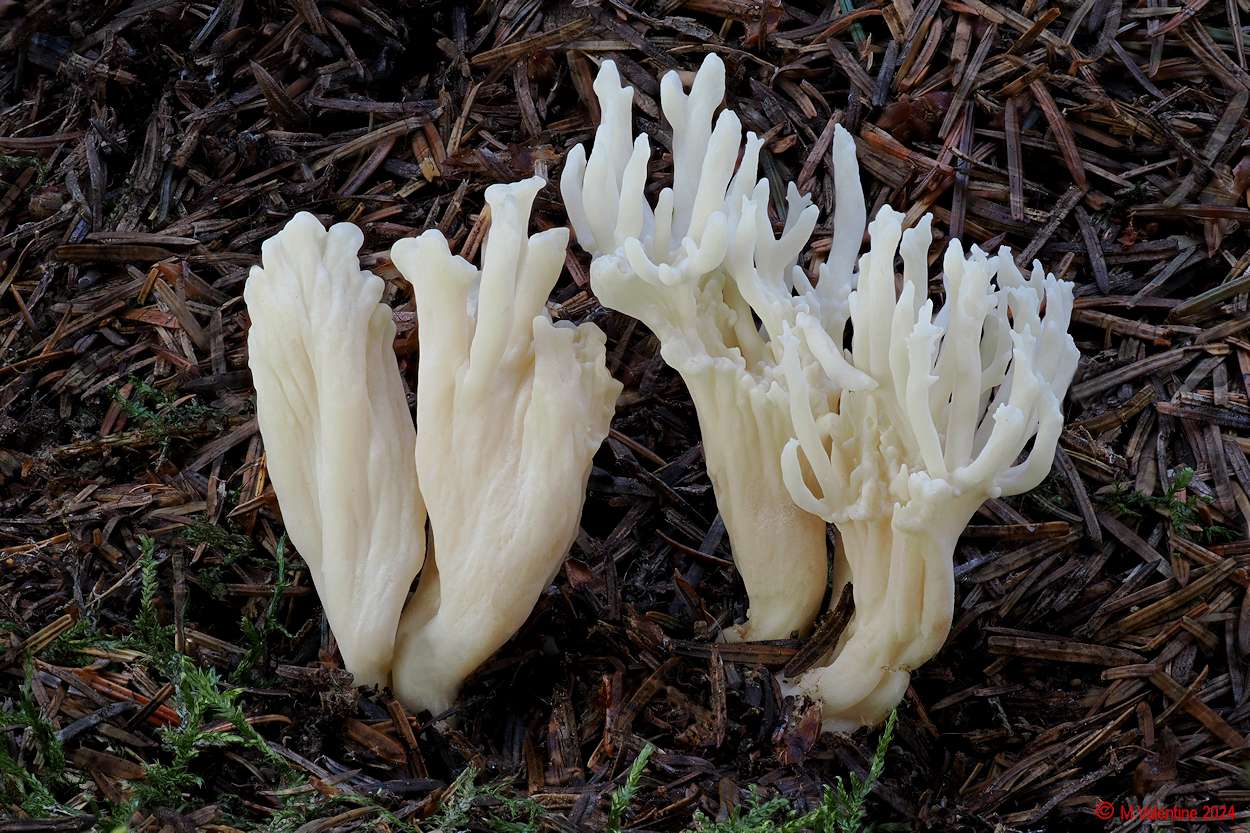
October 7, 2024 at 11:51 am #34206Clavulina coralloides– Crested Coral. Found on 5th October 2024 under Picea (Spruce), Gisburn Forest.
Spore print white. Spores broadly ellipsoidal to subspherical, smooth, 6-9µm x 6-7.5µm
.
[attachment=0]Clavulina coralloides – Crested Coral.jpg[/attachment]
.Regards,
Mike.
October 8, 2024 at 10:58 am #34207Clavulina rugosa– Wrinkled Club. Found on 5th October 2024 under Picea (Spruce), Gisburn Forest.
Spore print white. – Spores broadly ellipsoidal to subglobose, smooth, 8.5-13.5µm x 7.8-12µm
A small cluster of fruitbodies spotted amongst a large fruiting spread over an area of approximately 4 metres square.
These showing the more extreme variations that can occur. – From solid amorphous “lump” to finely branched, (somewhat similar to typical “coral” fungi).
.
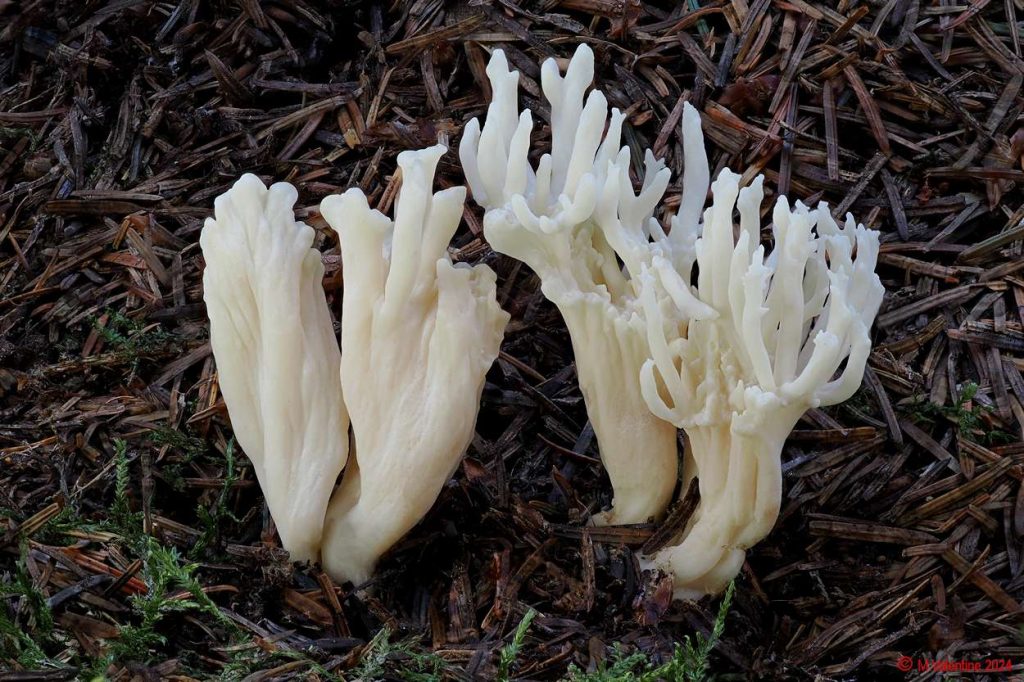
[attachment=0]Clavulina rugosa – Wrinkled Club.jpg[/attachment]
.Regards,
Mike.
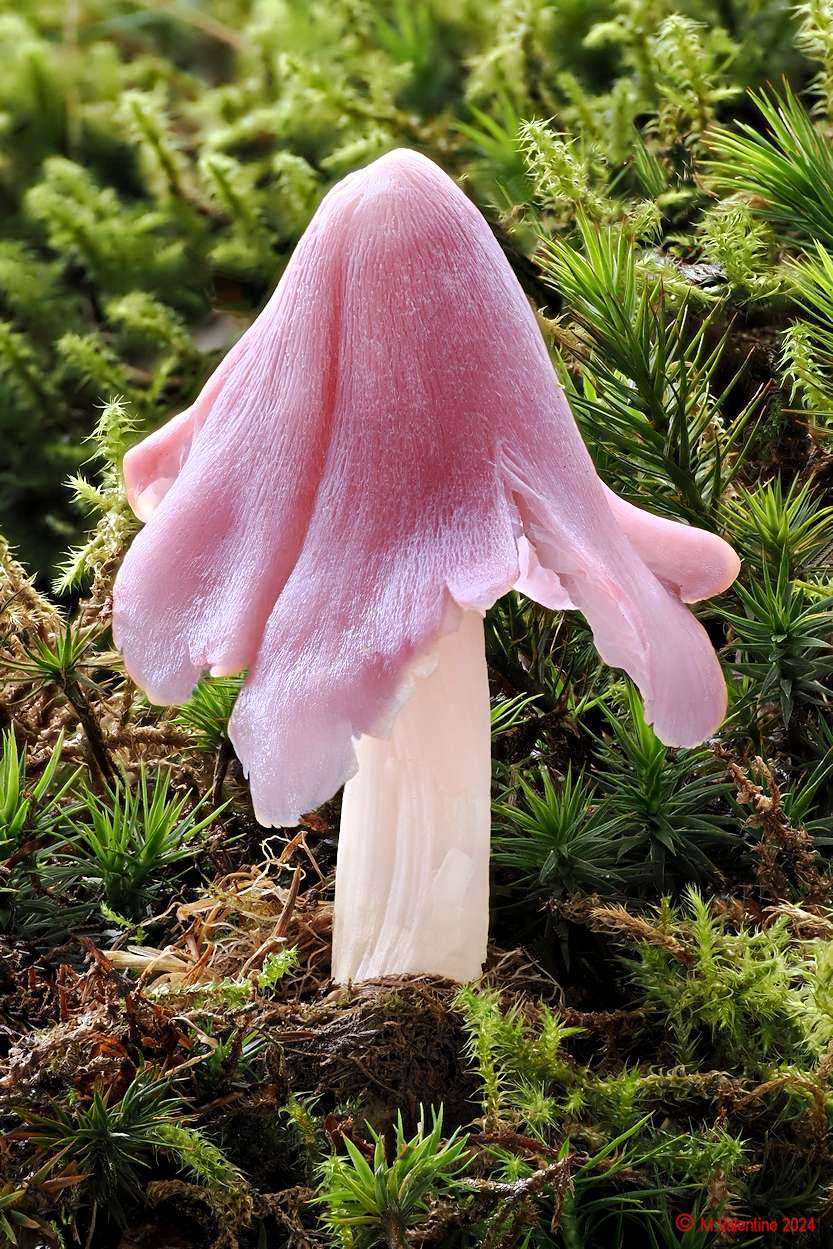
October 14, 2024 at 11:42 am #34208Porpolomopsis calyptriformis– Pink Waxcap / Ballerina Waxcap. Found 13th October 2024, on mostly nutrient poor sheep grazed access land, Darwen Moor.
Spore print white. – Spores broadly ellipsoidal to ellipsoid-oblong, smooth, 6-9μm x 4-7μm
.
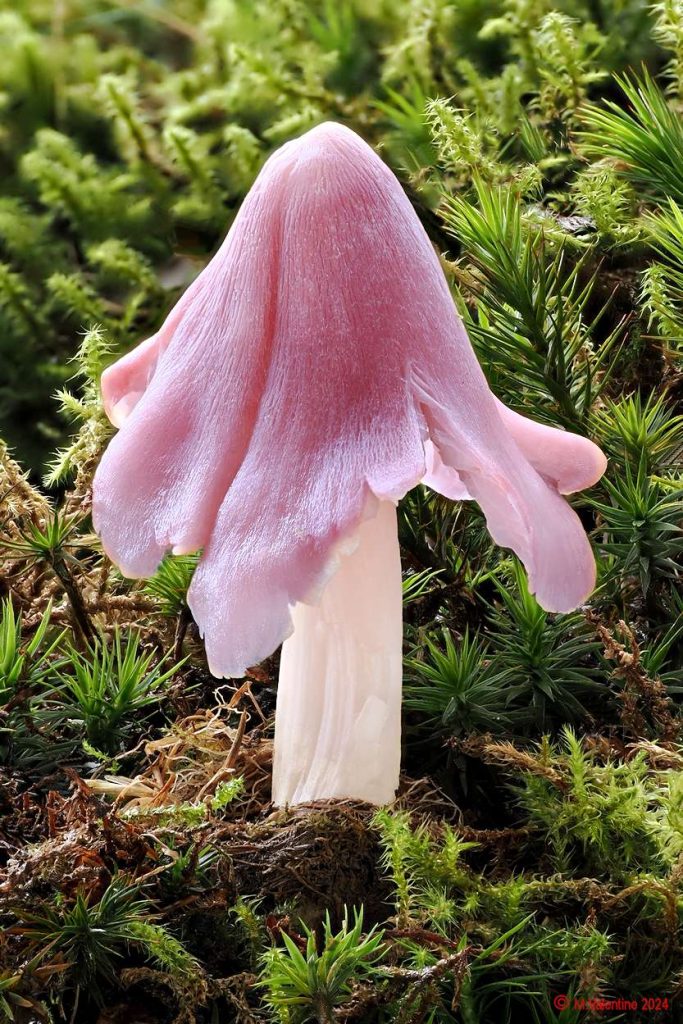
[attachment=0]Porpolomopsis calyptriformis – Pink Waxcap.jpg[/attachment]
.Regards,
Mike.
October 17, 2024 at 10:35 pm #34209Hydnellum aurantiacum enveloping heather shoots. Cairngorms, Ancient pine woodland.
October 29, 2024 at 5:07 pm #34210Drumstick truffle club Cordyceps capitata Mixed woodland, Yorkshire
November 2, 2024 at 3:11 pm #34211Geoglossum atropurpureum– Dark Purple Earthtongue Found 1st November 2024 in nutrient poor regularly mown mossy grass. (Cricket outfield – Private Site).
Asco-spores cylindrical-slightly bent, hyaline, multi-septate, 19-35µm x 4-5.5µm
.
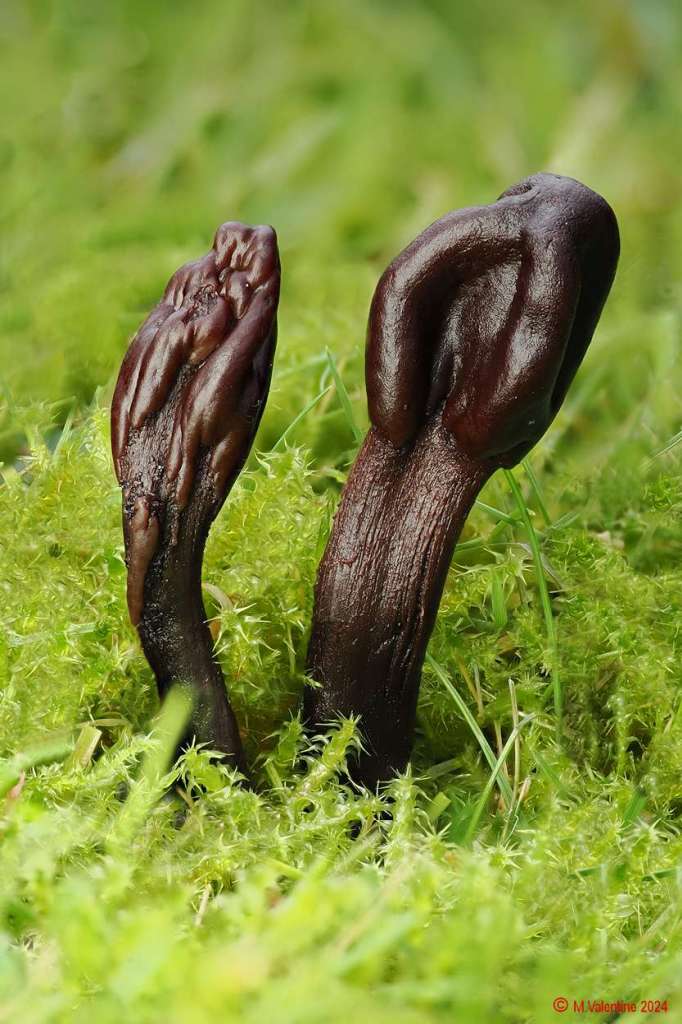
[attachment=0]Geoglossum atropurpureum – Dark Purple Earthtongue.jpg[/attachment]
.Regards,
Mike
-
AuthorPosts




- You must be logged in to reply to this topic.