Forums › Forums › Fungi ID requests (post here if you aren’t sure what type of fungus you’ve found) › Entoloma on Sphagnum
- This topic is empty.
-
AuthorPosts
-
May 29, 2015 at 7:56 pm #29423
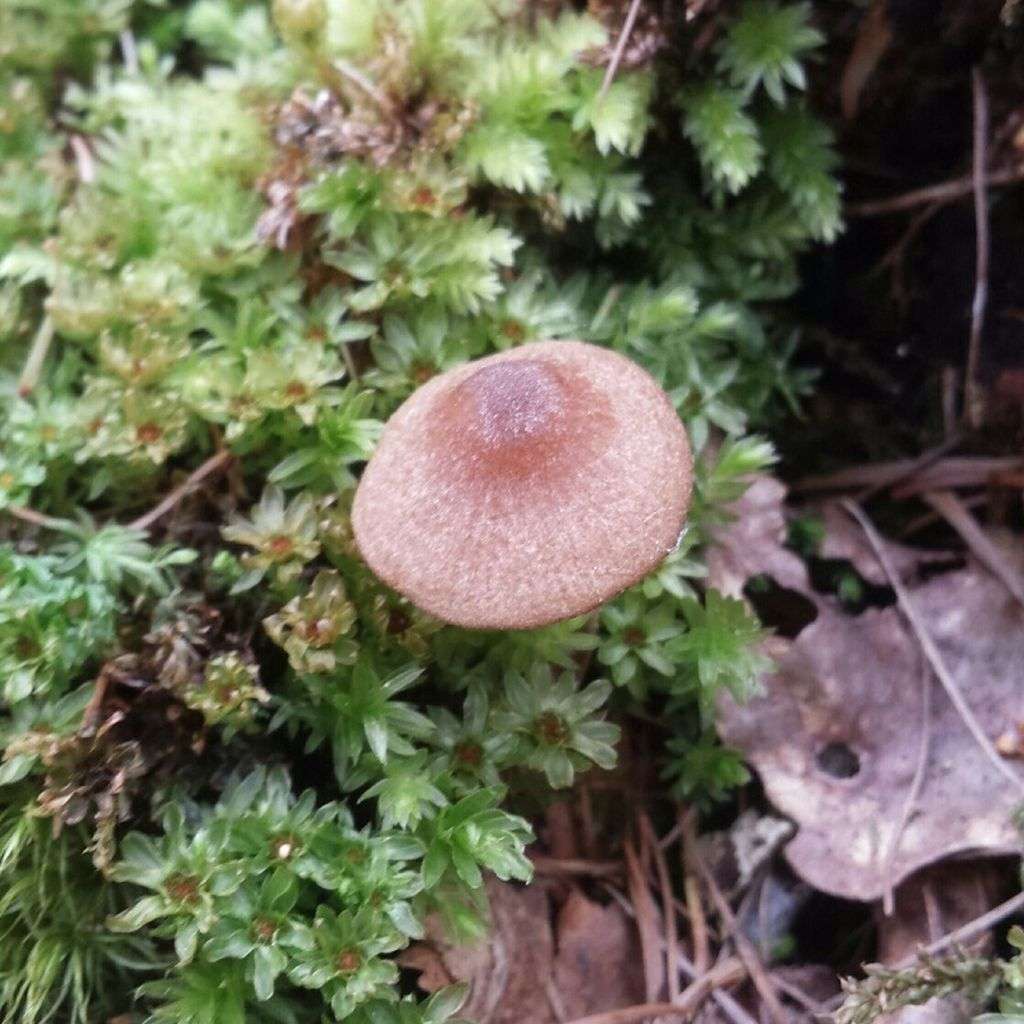
Hi On Sphagnum in woodland next to a bog. I thought intially it could be a Conocybe or Tubaria
I nearly discarded this LBJ – I’m glad I kept it however it gave a lovely pink/brown spore print. Spores Me = 11.4 x 7.3 µm ; Qe = 1.6
Cap: 2cm Light brown with a darker centre – slightly velvety texture. Poss. slightly striate?
Stipe: 2 cm. Paler, with slight scurfiness
[attachment=5]20150527_124447-1_resized.jpg[/attachment] 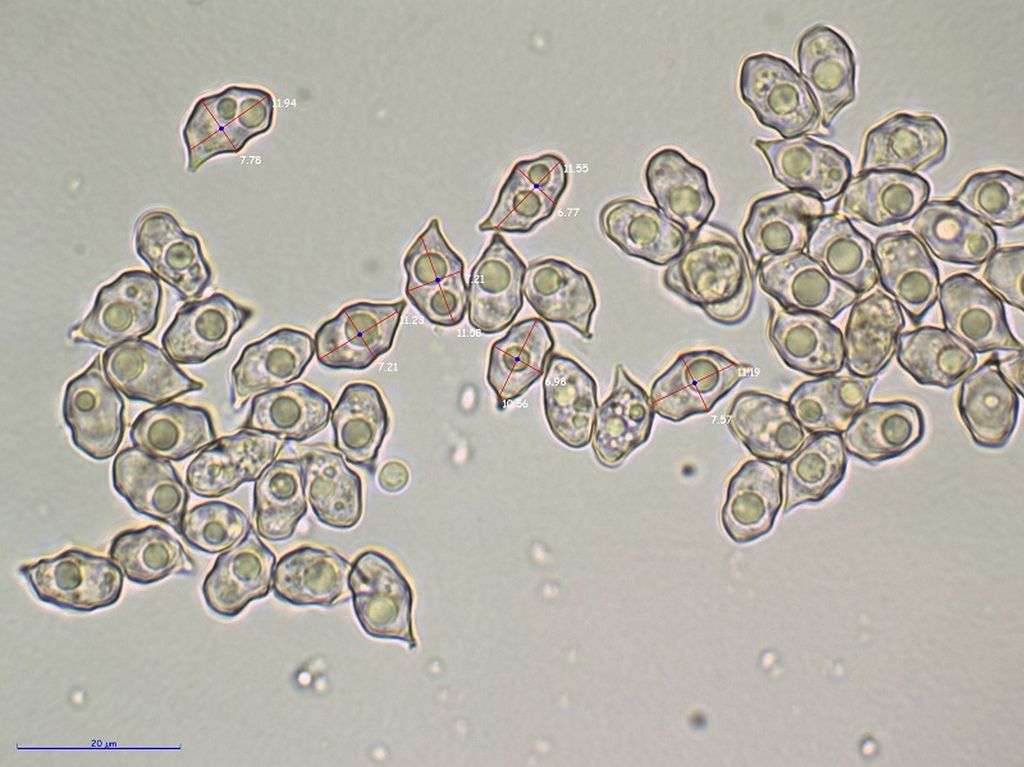
[attachment=3]spores x 1000_10.pixi.jpg[/attachment] 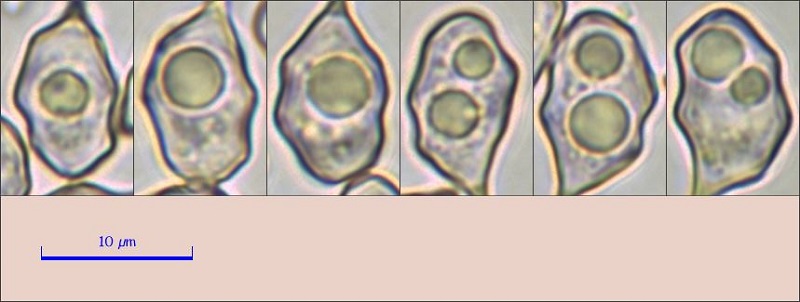
[attachment=4]Spores18.pixi.jpg[/attachment] 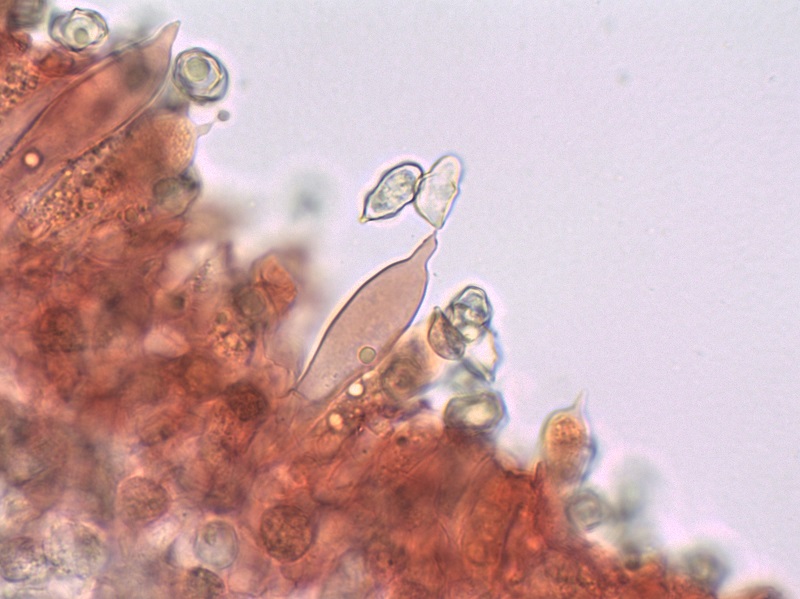
[attachment=1]basidia x 1000_18_800.jpg[/attachment] 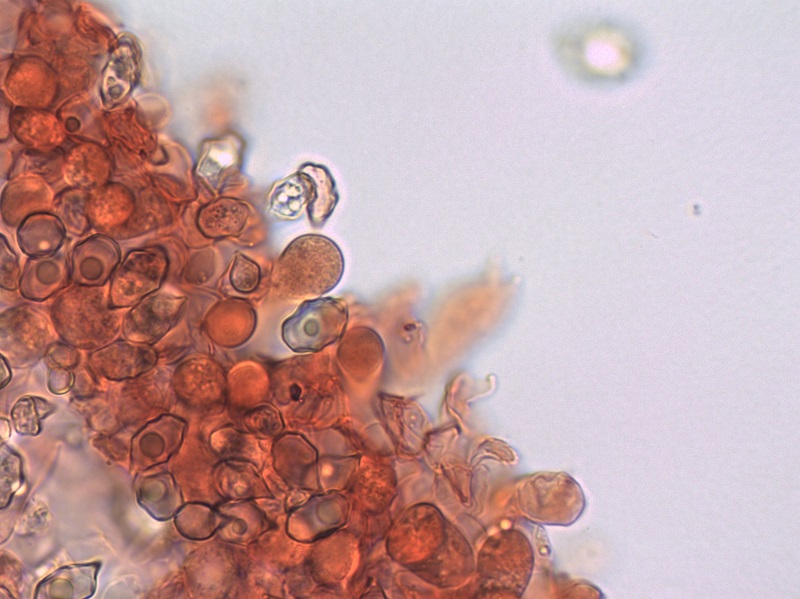
[attachment=0]pleurocystidia x 1000_800.jpg[/attachment] 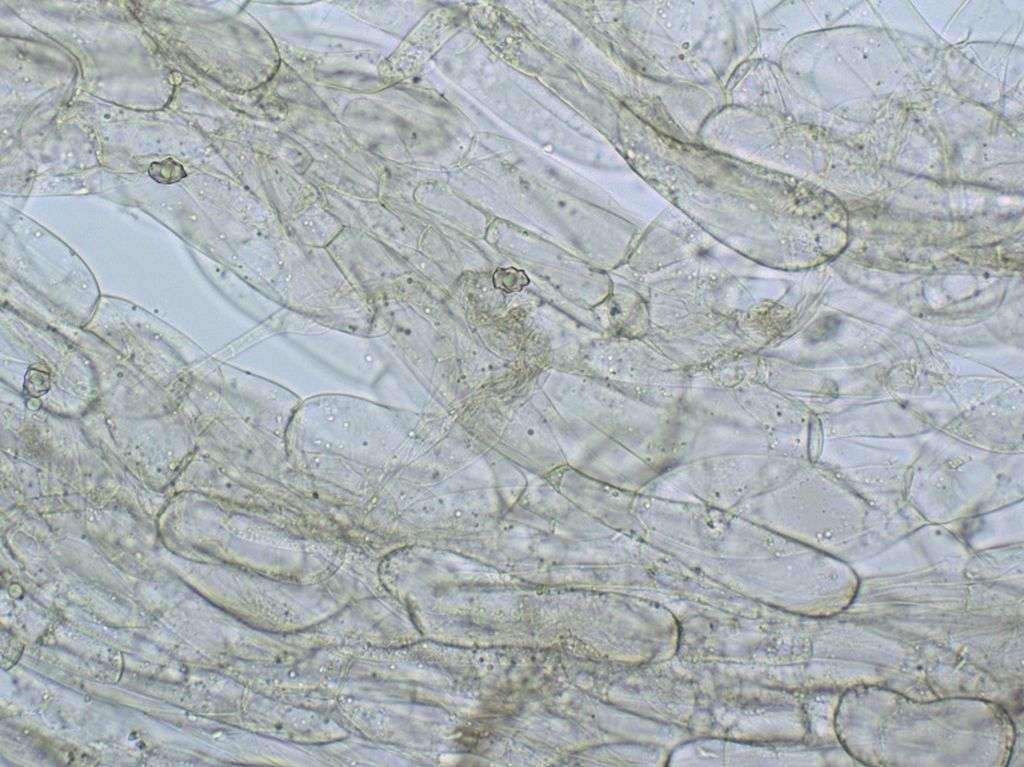
[attachment=2]PP x 400_800.jpg[/attachment] The only thing I can find which comes close is
Entoloma farinogustus(vol 4, p71 FoS) but I’m not entirely convinced. It’s a little dried out now but it does smell a bit mealy. I may have a little nibble. Any help appreciated or possibly point me in the direction of a good Entoloma site..
P.S.
E. cetratumappears to be another option.. May 29, 2015 at 8:08 pm #34719Hi nice images! I nearly always find
Entolomato be a rather scary genus. If you PM me with your email address (which I shall treat as confidential) I might be able to help a bit on Entolomagenerally. best wishes
Chris
May 29, 2015 at 8:18 pm #34720Thank you Chris. PM sent May 29, 2015 at 9:58 pm #34721Most likely E. cetratumwhich is fairly common in the right places: I recorded it on 23rd May last year from Snowdonia. E. farinogustusis not recognised as British (although there is one record on FRDBI identified as such). May 30, 2015 at 6:19 am #34722Thank you Chris and Roy – your help is much appreciated. Yes, taking into account distribution then
E.cetratumis the answer. I can’t see any mention of the one-spored basidia anywhere in the literature though. May 30, 2015 at 6:35 am #34723For the moss – I don’t think it’s Sphagnum, probably a mix of Pocketmoss ( Fissidens) and Common Smoothcap ( Atrichum undulatum). May 30, 2015 at 9:04 am #34724Thanks Jimmy – I hadn’t really looked at that . I was too busy worrying about the mushroom. Very good to know.
Cheers,
John
May 31, 2015 at 8:25 pm #34725Hi, We have plenty of records of Entoloma cetratum in acid places at Longshaw in the Peak District.
I posted this on WAB just befor its demise (ii’s worth saving forum posts on your computer!)
Honey Pinkgill – Entoloma cetratum
I presume this Entoloma is easy because it’s (unusually for the genus) a species with 2-spored basidia. We found this 3 times at Longshaw last year, in two different woods. One was a remnant ancient woodland, with a larch plantation in its midst. The other was a woodland pasture heavily underplanted with conifers. We have many previous records of Honey Pinkgill at Longshaw. At first sight it’s just a dull yellow-brown LBM, with not much to say it’s a Pinkgill. The features I used to name it were the obvious angular Entoloma spores, and the basidia which are 2-spored.
This was the first record – at that time I used a well-worn 1960’s Vickers Microscope and a hand-held 2005 Konica Minolta digital camera pointed down the eyepiece.
Your images are excellent!
Steve
June 4, 2015 at 12:11 pm #34726Thanks Steve 
Yes, that looks like the same fellow. Not something I would have recognised in the field as an Entoloma as the gills were so pale (as shown in your photos).
-
AuthorPosts


- You must be logged in to reply to this topic.