- This topic has 0 replies, 1 voice, and was last updated 1 day, 14 hours ago by
Neil Sanderson.
-
AuthorPosts
-
October 26, 2026 at 5:54 pm #70976
On the Wessex Lichen Group meeting on October 17th to look at some unvisited old Beeches saved from the Backley Bottom wildfire Nicola Bacciu spotted an odd looking clump of black apothecia. These were on a flushed area of a fairly acidic bark on a mature Oak growing with Normandina pulchella, but with abundant Micarea peliocarpa adjacent; it looked like a small wound track in more acidic bark.
Once back home I could see the apothecia were actually rather lovely furrowed black perithecia on a brown-green granular thallus.
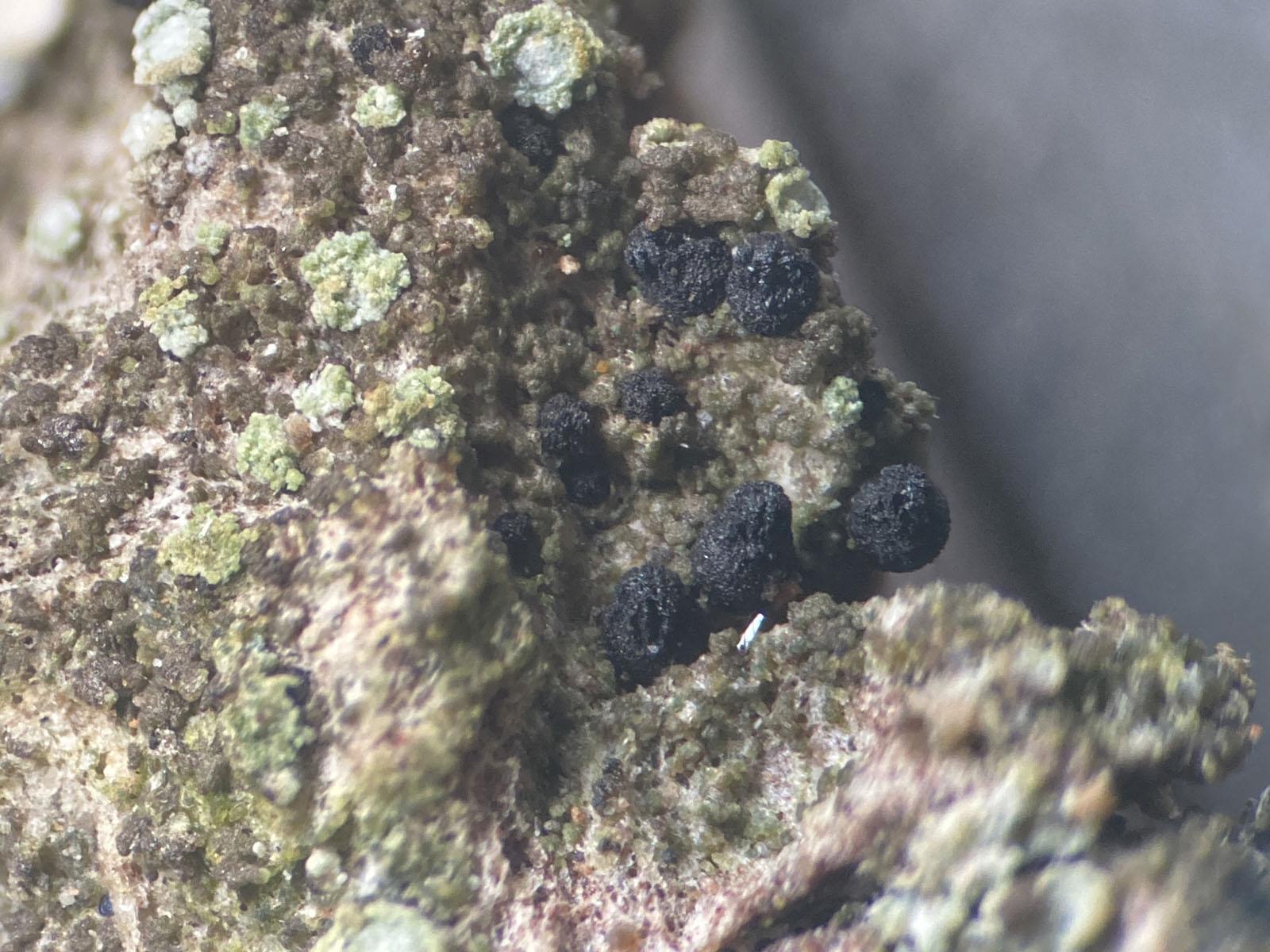
Perithecia and thallus
It looked like an Agonimia and I thought of A. repleta, but looking inside a perithecia, the asci were two spored.
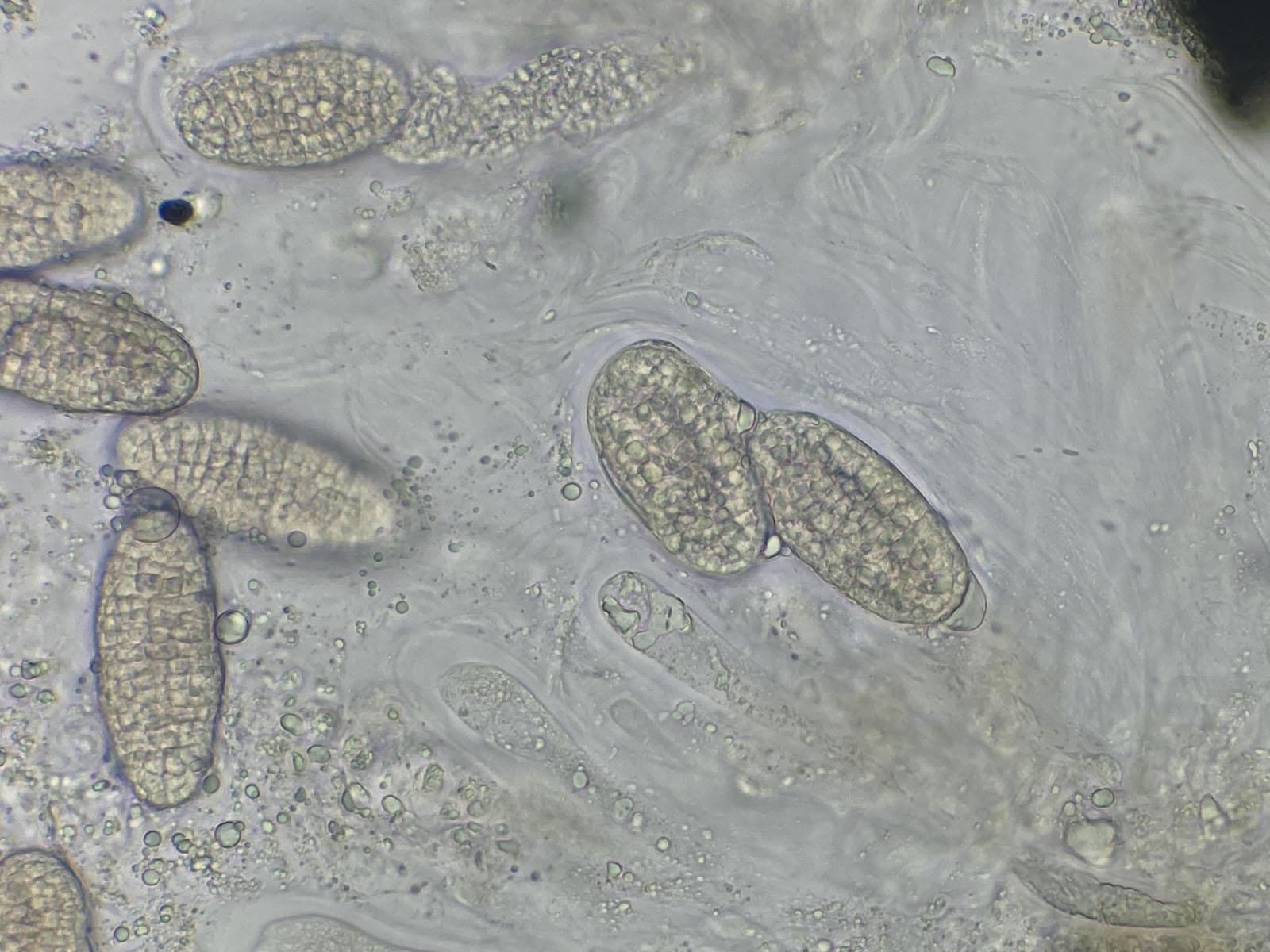
Asci with two spores
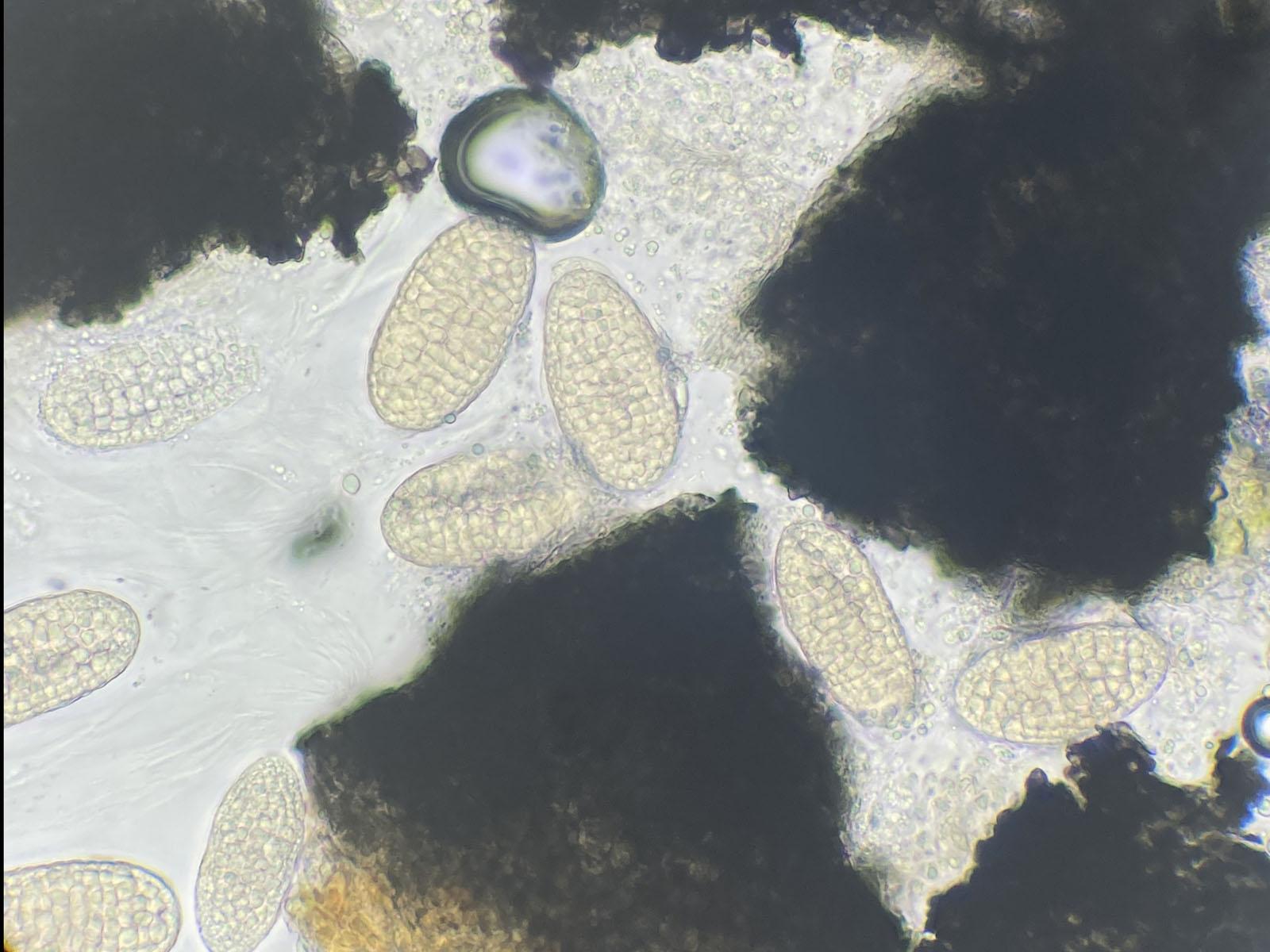
More spores
That suggested Agonimia tristicula, but the granular thallus looked wrong and everything was quite small for A. tristicula.
Details: a green-brown granular thallus, greener when wet, granules to c200µm but the largest looking aggregated from smaller granules, with a papillose cortex surface, occasionally sub-squamulose; asci two spored; spores muriform, 57 – 88 x 25 – 30µm.
I remembered there was another taxa close to Agonimia tristicula recorded from Europe, Agonimia vouauxii, so checked Italic 8 https://italic.units.it/index.php?procedure=taxonpage&num=2840. My specimen match the description here but was at the larger end of the perithecia spore sizes but very small for Agonimia tristicula https://italic.units.it/index.php?procedure=taxonpage&num=69, but with the thallus matching A. vouauxii.
Agonimia vouauxii was described from the low counties, mainly from debris in dunes and coastal habitats https://www.verspreidingsatlas.nl/4509. Checking LGBI3 it is mentioned here that it has been suggested that records of Polyblastia agraria in Britain may actually be Agonimia vouauxii. This was interesting as I had collected Polyblastia agraria from a bank in a costal grazingmarsh on Hayling Island. Looking at the specimen, this had smaller dimensions than my specimen (two spores per asci, spores muriform 53 – 60 x 16 – 20µm), but also with the measurements given by Italic 8, but at the smaller end. The thallus, however, was absolutely identical to my specimen from the New Forest Oak.
Given the good match to the description, the coastal habitat and the frequency of Agonimia vouauxii on the Netherland’s coast, I think there is little doubt that British coastal Polyblastia agraria, especially in East Anglia is the same taxa as is recorded just across the sea as Agonimia vouauxii, but checking some more specimens would be advisable. It would also be useful to check records of Polyblastia agraria from old metal mines, however, before assuming these are also Agonimia vouauxii.
My Oak material is closer to Agonimia vouauxii than Agonimia tristicula and seems unlikely to be the later taxa. It could be something else, but if Agonimia vouauxii is accepted it seems a reasonable determination for the moment, as stay a occurrence of an ephemeral species in a wound track.
Neil
-
AuthorPosts

- You must be logged in to reply to this topic.