- This topic is empty.
-
AuthorPosts
-
February 3, 2026 at 8:57 pm #33142
On the BLS visit to Carlisle cemetery the other day, I came across a nice open area with tall headstones on the way back to my car (and hence with no-one with me). On a horizontal surface I noted this squamulose lichen on a horizontal piece of stone. The photo is not good, but it does look very like online photos of Acarospora moenium. Has anyone seen this species before? It’s a long way for me to go back and check, but perhaps someone more local might want to look for it. NY 3894 5426. February 3, 2026 at 9:36 pm #46854The lichen in your photo looks remarkably good for A. moenium, a species which I have quite a lot of experience of. I encountered it in the first year of looking at lichens and thought it looked like something interesting though I was given all sorts of different suggestions for its potential identity. I collected lots of specimens which I took from the broken asbestos cement roof of a collapsed Nissen hut and eventually worked out its identity, subsequently confirmed by Brian C. It could potentially be confused with Aspicilia contorta, which has a similar ecology and similar size and colour of areoles but the areoles of A. moenium are more squamulose, they are a bit like little Pringles and I think I can see in your photo the right sort of arched voids under the edges of some of the areoles. If there is anyone else in the area interested in following this up I do think it would be worth it. It is certainly not common, perhaps surprising because when it does turn up it is, for example, on the rough concrete of manhole covers, decaying concrete on multi-story car-parks, all sorts of mundane situations but even when you know the species you rarely find it.
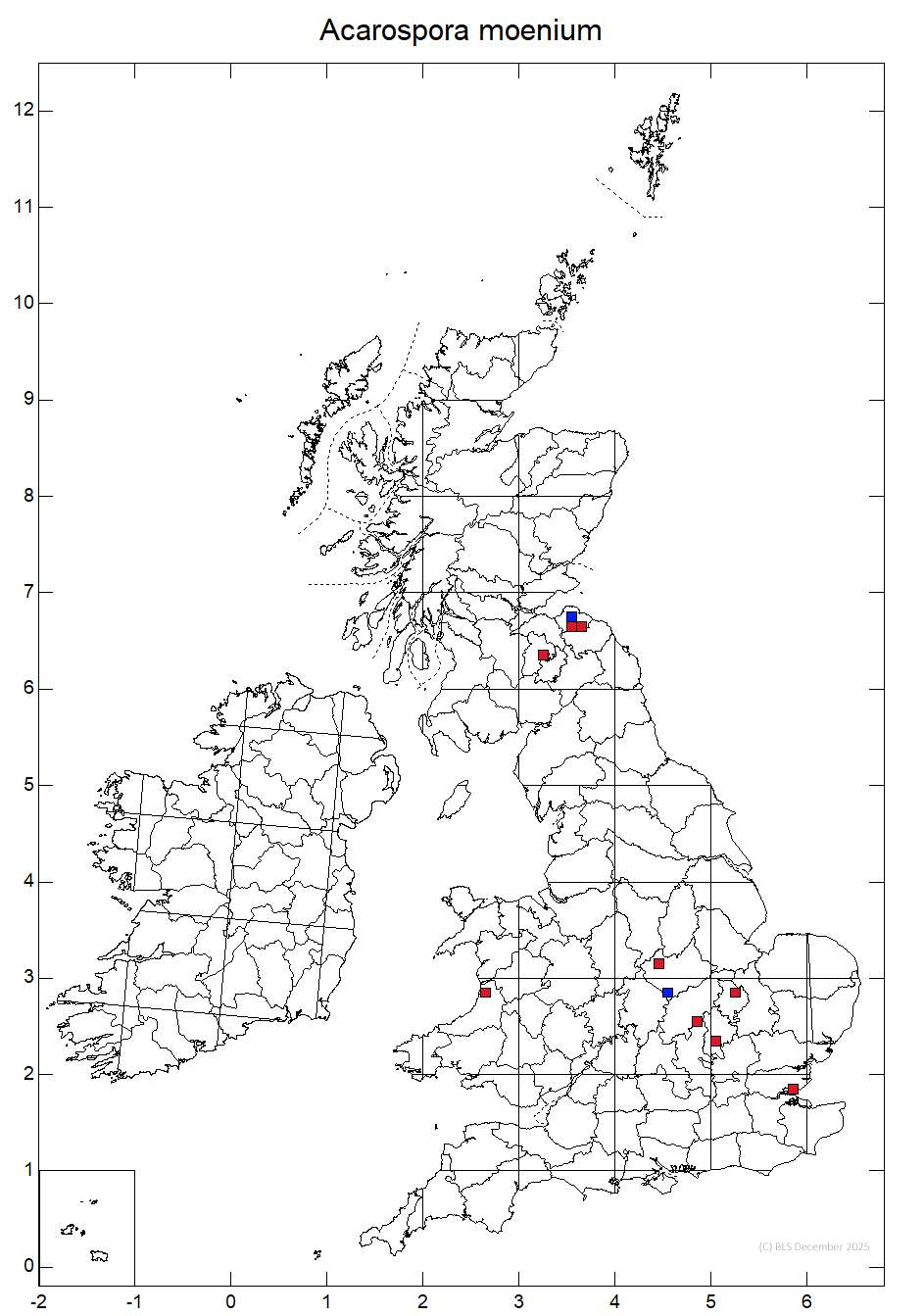
The distribution map, a cluster in East Lothian and a few in ‘my’ region, hint that it might be overlooked.

[attachment=0]Acarospora moenium.jpg[/attachment] February 5, 2026 at 8:31 am #46855Having looked at your photo again, I am very close to confirming it as A. moenium, though if it would be a new Vice-county record then perhaps best if it checked. It would be an interesting little excursion for anyone who lives close enough. Here are a couple of my own images and an annotated drawing. 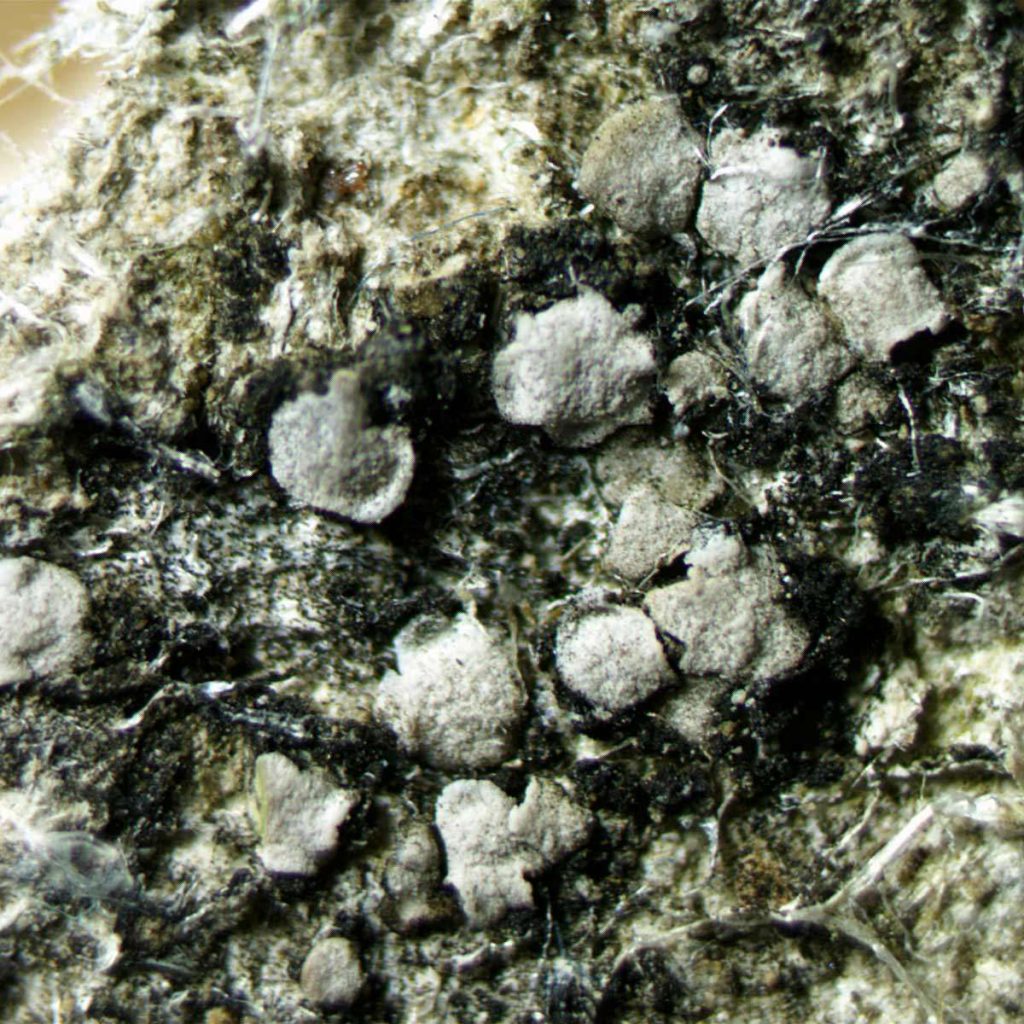
[attachment=2]moenium3.jpeg[/attachment] 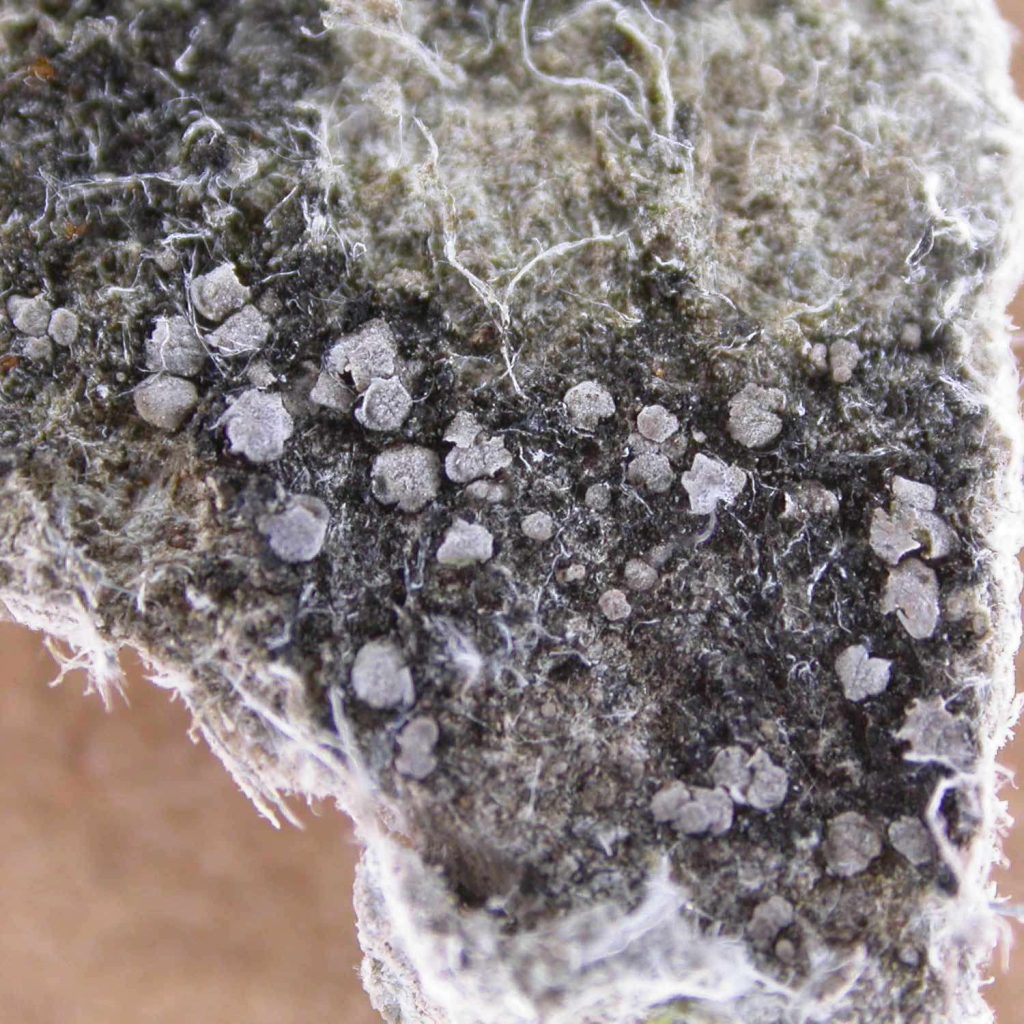
[attachment=1]moenium2.jpeg[/attachment] 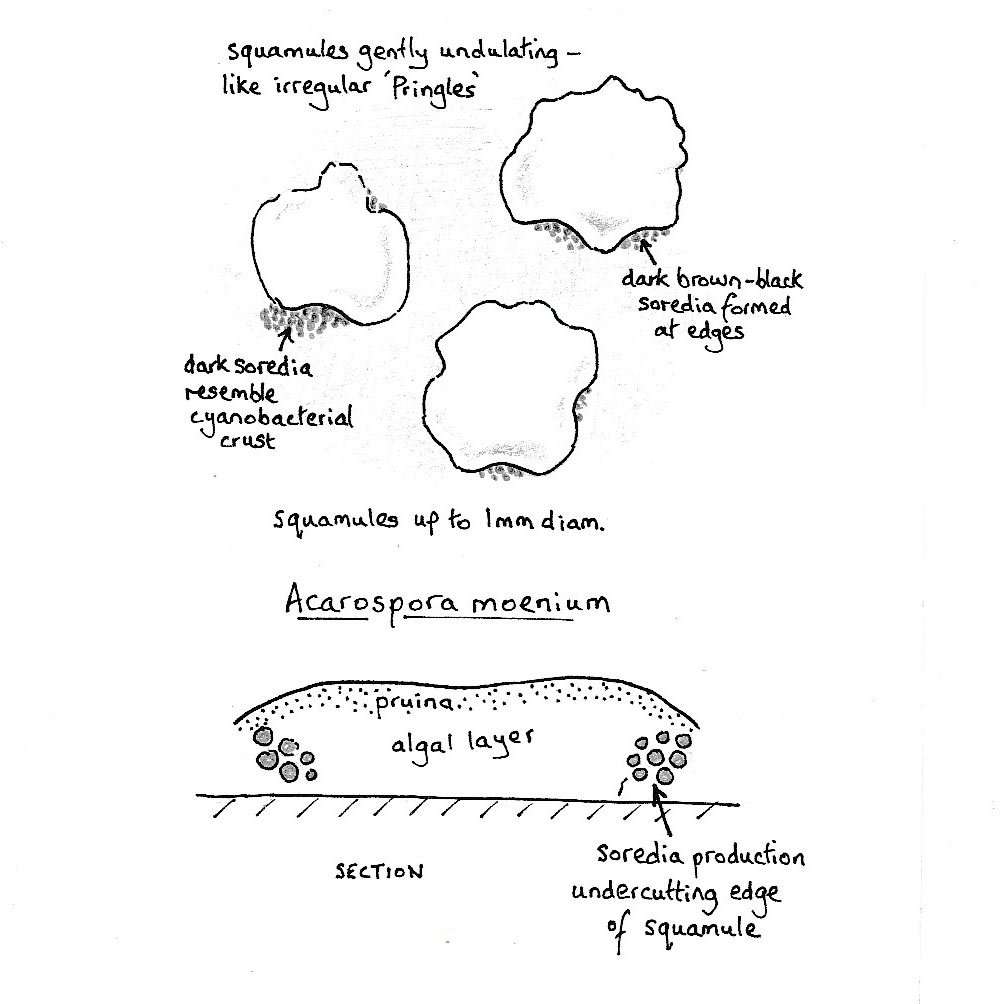
[attachment=0]moenium1.jpeg[/attachment] February 5, 2026 at 5:47 pm #46856As luck would have it, I am in Carlisle tomorrow morning… so weather and enthusiam willing I will go and have a look. Pete
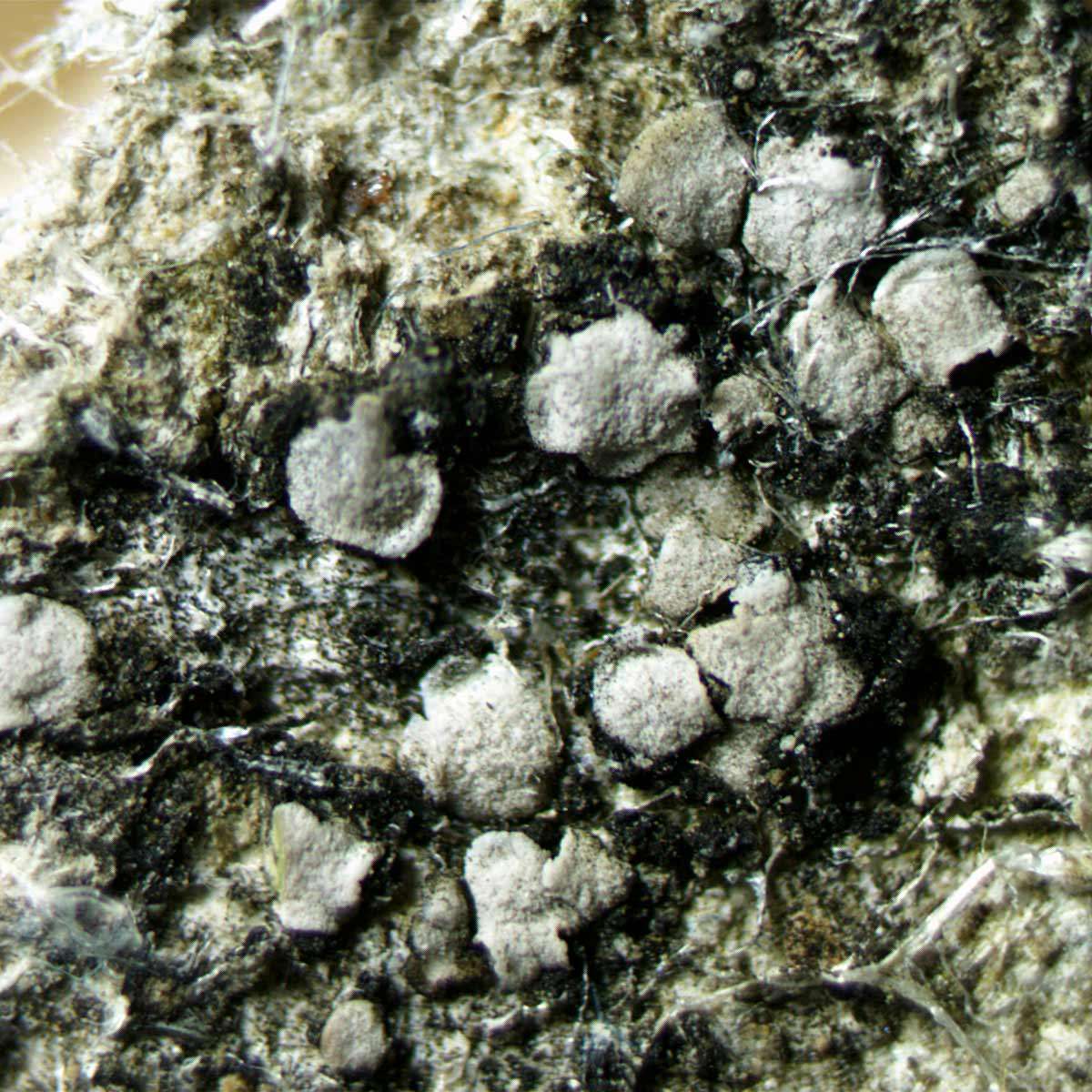
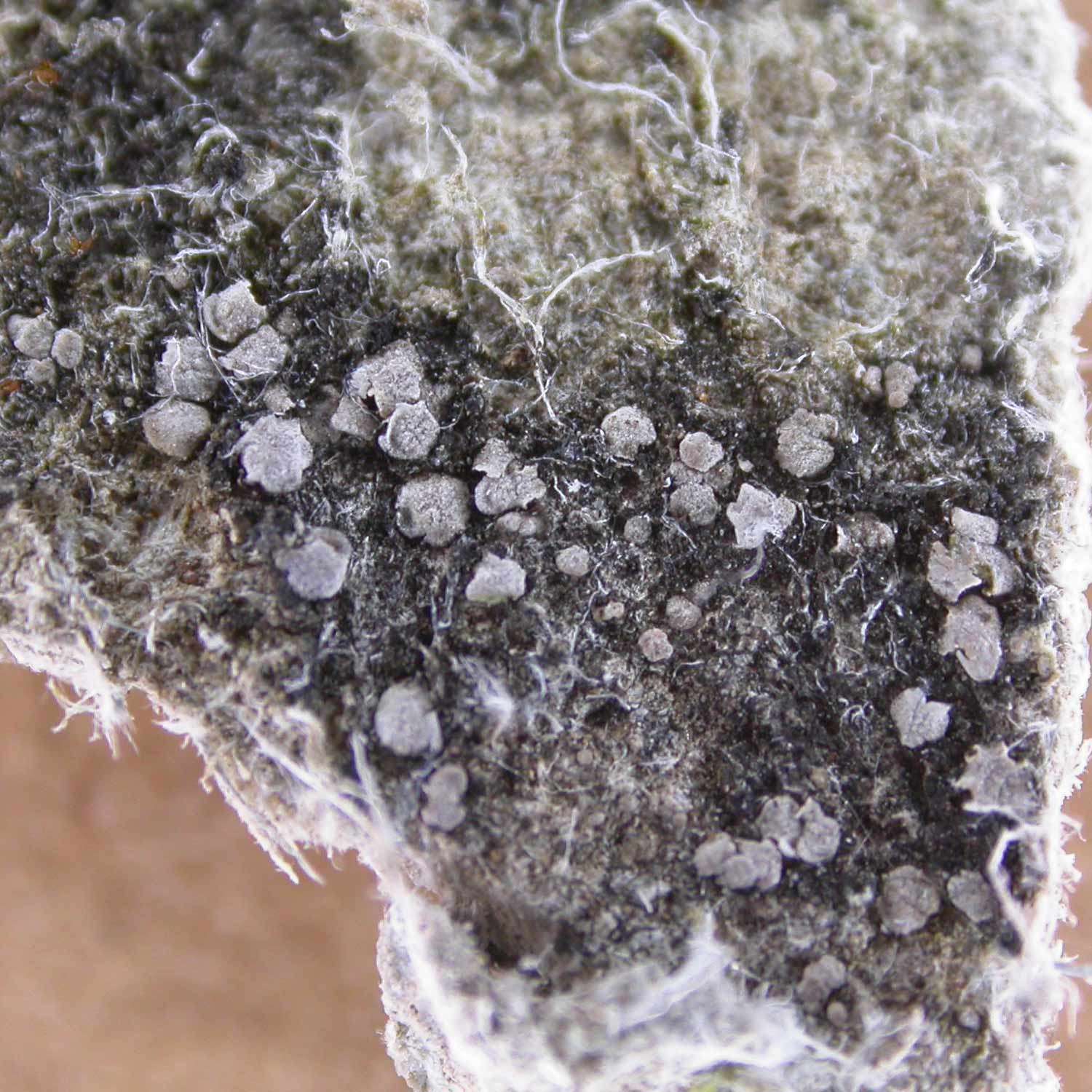
February 6, 2026 at 5:44 pm #46857Went along today to Carlisle Cemetery… I don’t think I found the gravestone you did Rob, but on a horizontal cross bit very nearby ( NY3896754270- Albert Hill’s grave) I found something that I thought was what you had been looking at- photos attached. I’ve never seen A. moenium but it meets the description as far as I can tell- small convex subsquamulose areoles up to about 1mm diameter, grey pruinose, looking like those modern gazebo things to me ( but I can see the Pringles analogy), the edges raised above the substrate (cut away would be a good description). The black gungy-looking substance underneath (through the 10x handlens) looks more like soredia through the 20x one. I removed a bit using sellotape, and under the microscope it looks even more like soredia (though the areoles are well mashed mashed after the journey home). Thank you for the diagram Mark, once again your picture was really helpful in making sense of something. February 6, 2026 at 9:25 pm #46858Many thanks for taking the trouble to go back and find this and for the great set of photographs, perhaps some of the best I have seen of this species (for there can be no real doubt that this is A. moenium). Your oblique photographs really capture the shape of the squamules, and including a finger for scale shows how tiny these squamules are. A synonym of Acarospora moenium is Aspicilia excavata and that name is more evocative of the lichen even though it has been superseded. The white-pruinose areoles/squamules are reminiscent of some ‘Aspicilia’ species such as contorta and ‘excavate’ describes the way the edges of the squamules become undercut as soredia are formed. February 8, 2026 at 8:24 pm #46859Thanks both, very happy this is confirmed. I will add to the day list for the visit. -
AuthorPosts



- You must be logged in to reply to this topic.