- This topic is empty.
-
AuthorPosts
-
January 17, 2021 at 7:42 pm #31983
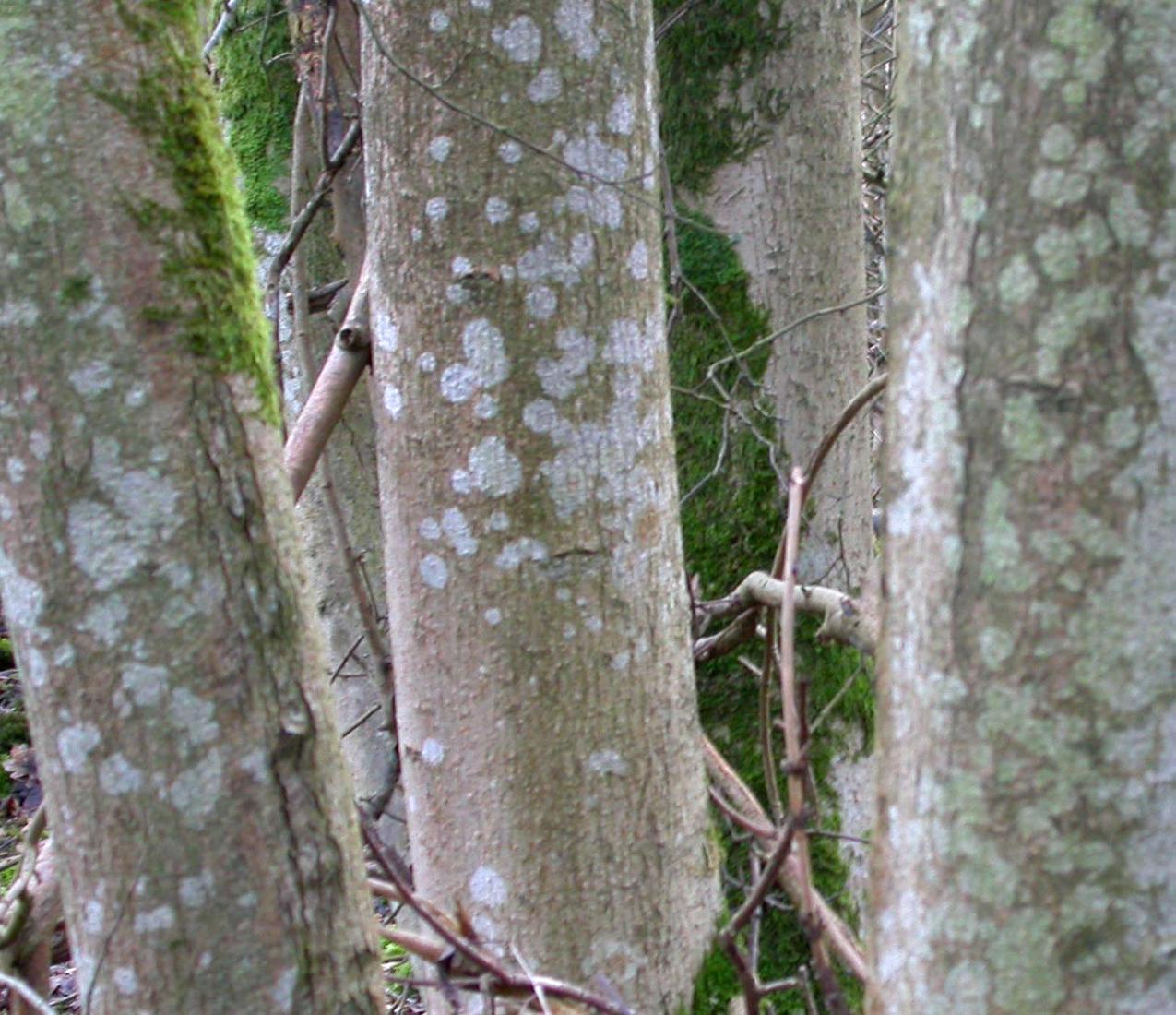
Growing on shaded trunks of a multi-stemmed Fraxinus in North Bedfordshire, forming extensive patches of thin pale thallus. My first impression through the lens was that the apothecia looked like tiny Cliostomum griffithii fruits but there were also sessile pruinose pycnidia present. It rang absolutely no bells. The pycnidia had a dense covering of crystalline matter, walls brown, K- and containing numerous sub-globose conidia 2 x 1.5 microns.
Apothecia 0.25-0.35 mm diameter, disc medium brown, margin darker. Exciple well-developed in section but not forming a well-defined raised margin. Apothecia plane to weakly convex. Asci multispored (>32, numerous), ascospores globose c. 2.5 microns. Paraphyses sparsely branched and anastomosed, not expanded at apex. Ascus apex with weakly reacting tholus, with a non-staining plug-like apical cushion.
This seems like such a distinctive and well-developed lichen but I can’t make it fit any of the known multi-spored lichens known in Britain.
I will produce a more detailed and careful description in due course but just wondered whether anyone recognised this?
January 17, 2021 at 9:43 pm #43853Mark Hi, this has a bit of a resemblance to a specimen
Strangospora deplanataI found on the New Forest, you would need to compare in detail and see what you think. If it has stalked pycnidia it would probably be this but it can also have sessile pycnidia. My collection was over growing Pyrenula chlorospila, so if yours was also overgrowing other lichens this could add to the complexity. Some pictures: 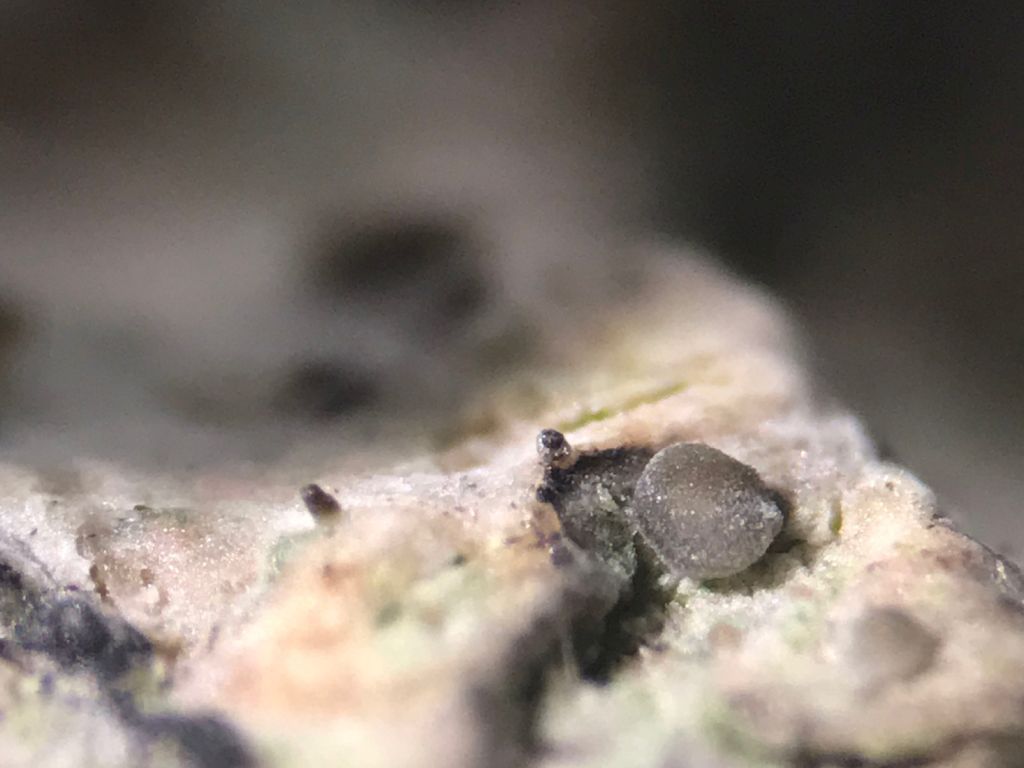
[attachment=3]2018-11-15-11.jpg[/attachment]
Apothecia & stalked pycnidia
[attachment=1]2018-11-15-14.jpg[/attachment]
Apothecia in water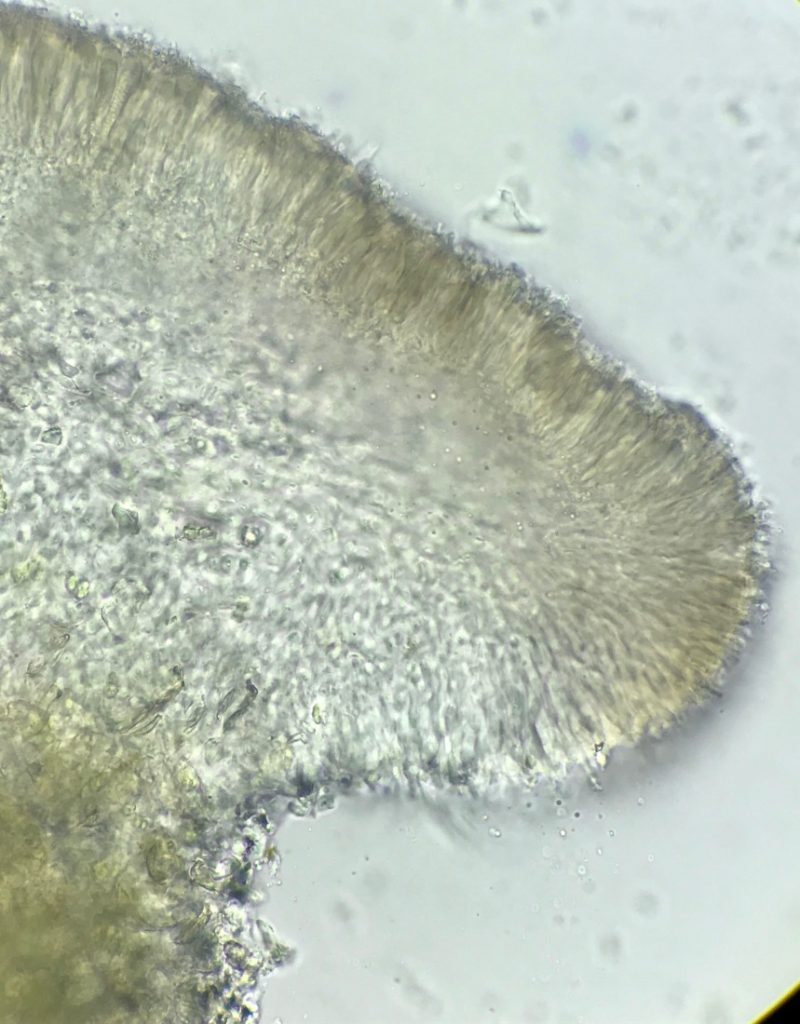
[attachment=2]2018-11-15-16.jpg[/attachment]
Apothecia in K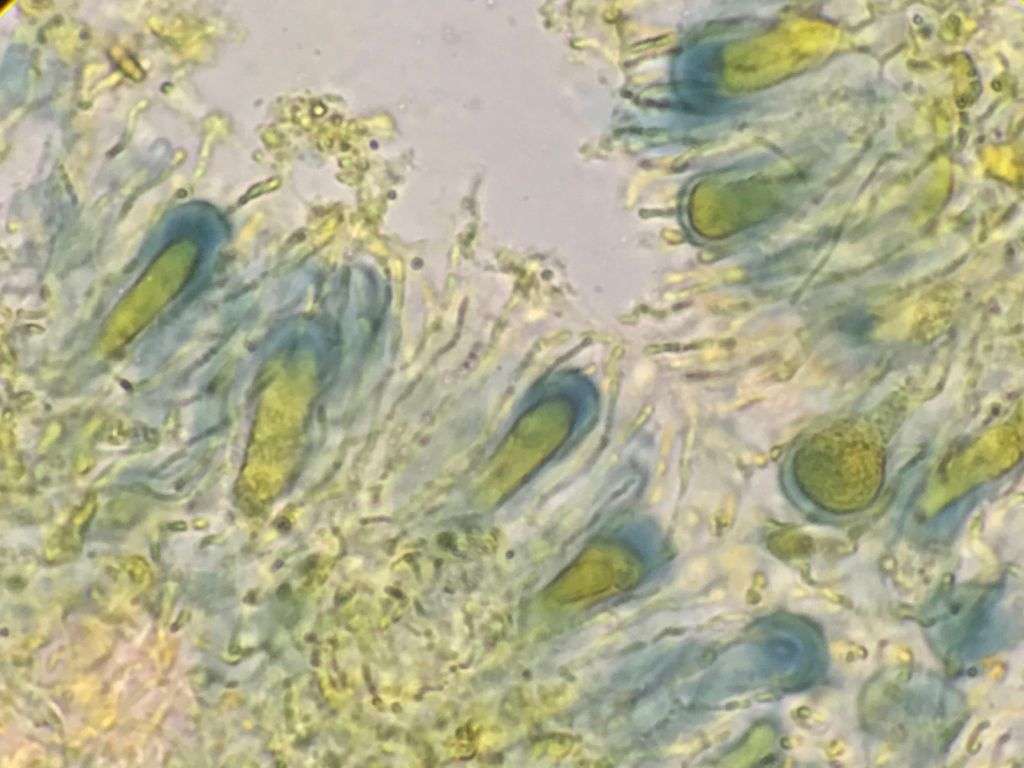
[attachment=0]2018-11-15-06.jpg[/attachment]
Asci in K/IIf it is, this is a very rare lichen
All the best
Neil
January 17, 2021 at 10:16 pm #43854Hi Neil, I think you have probably cracked it. I had initially dismissed Strangospora deplanata but now I have given it some more thought after receiving your useful suggestion, and I think it is likely. I will do some more work on it tomorrow. The woodland is an ancient site but all its old trees were felled many decades ago, replaced mainly by conifer (though much of it failed and natural regeneration occurred in large patches, including regrowth from old coppice stools). If it is a relict, it probably survived on an old ash coppice stool. However, it is behaving more like a colonist on relatively young bark, with numerous small rounded thalli spattering the relatively small diameter ash trunks. I wonder if this is another lichen which is starting to change its behaviour? A decade ago, I would have been amazed to find things like Strigula taylorii in a wood like this but now it is common, including on trees close to the putative Strangospora.
Many thanks,
Mark
January 18, 2021 at 1:30 pm #43855I have decided to record this multi-spored lichen as Strangospora deplanata (thanks to Neil for his tentative suggestion). An identification shouldn’t really be a one-off, irreversible event. Ideally applying a name is an informed hypothesis, subject to future review and that is the spirit in which I am naming my material as S. deplanata. LGBI2 states that the asci in Strangospora have “a strongly K/I+ blue apical dome”. I found that the apical dome, while certainly giving an amyloid reaction, did not give anywhere near as strong a reaction as in many lichen asci. I also found that it has a non-staining apical cushion, penetrating the entire height of the tholus.

[attachment=4]Screenshot 2021-01-18 at 12.42.20 PM.png[/attachment] LGBI2 states that the pycnidia are “sessile to short-stalked, reddish brown to black but superficial conidia often give a white-pruinose appearance…” Almost all of the pycnidia in my material are sessile but very occasional ones give the impression of forming short stalks. Many of the pycnidia on my material are densely pruinose, this pruina caused by a definite crystalline substance (not stray conidia).

[attachment=3]Worley7001r.jpg[/attachment] I am pleased with my discovery on yesterday’s walk, less than half a mile from home. It greatly expands the known distribution of S. deplanata and I can provide some additional notes about identification based on recent examination of fresh material.
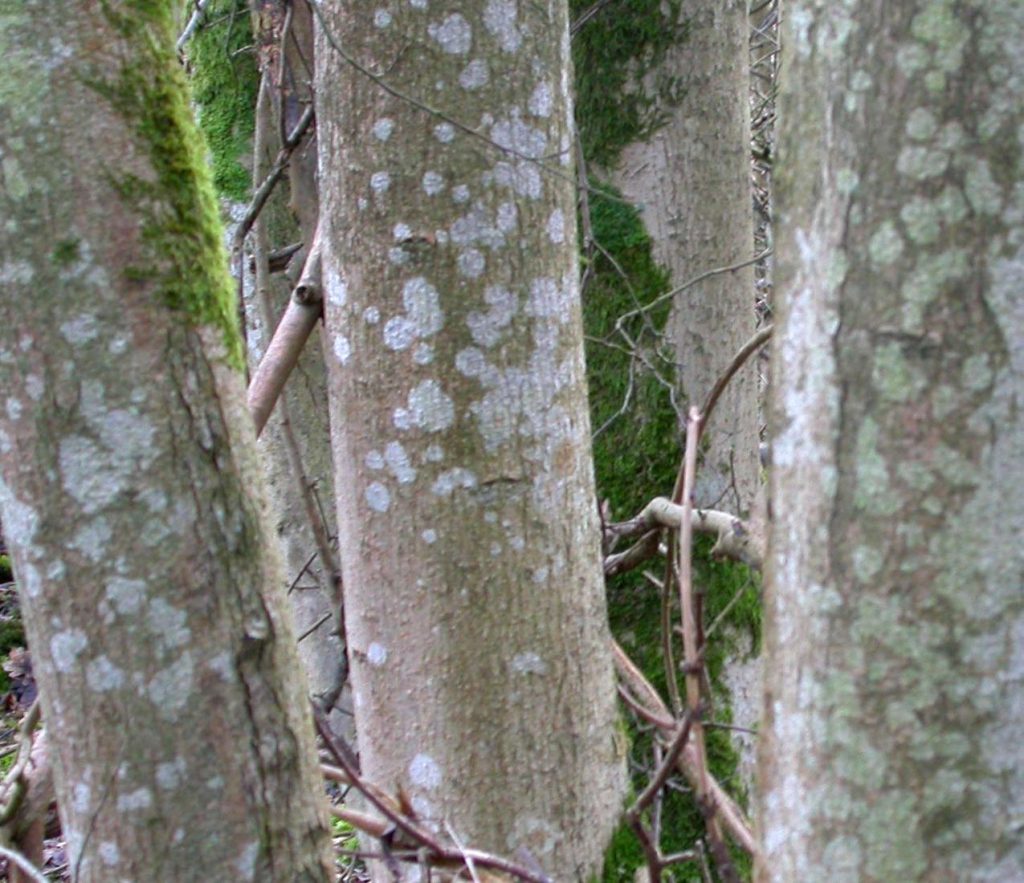
Here are some images showing the general appearance of my material.
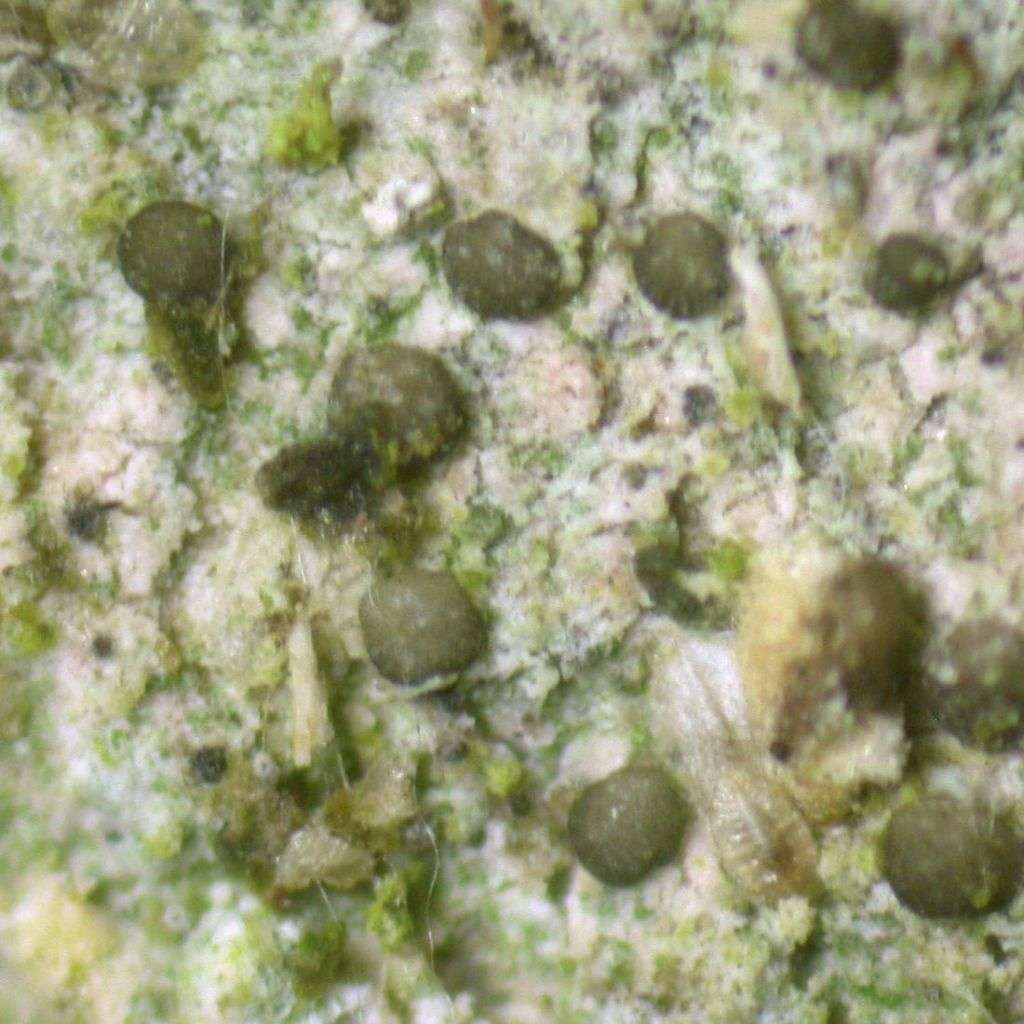
[attachment=2]Worley7001Aa.jpg[/attachment] 
[attachment=1]Worley7001Ab.jpg[/attachment] 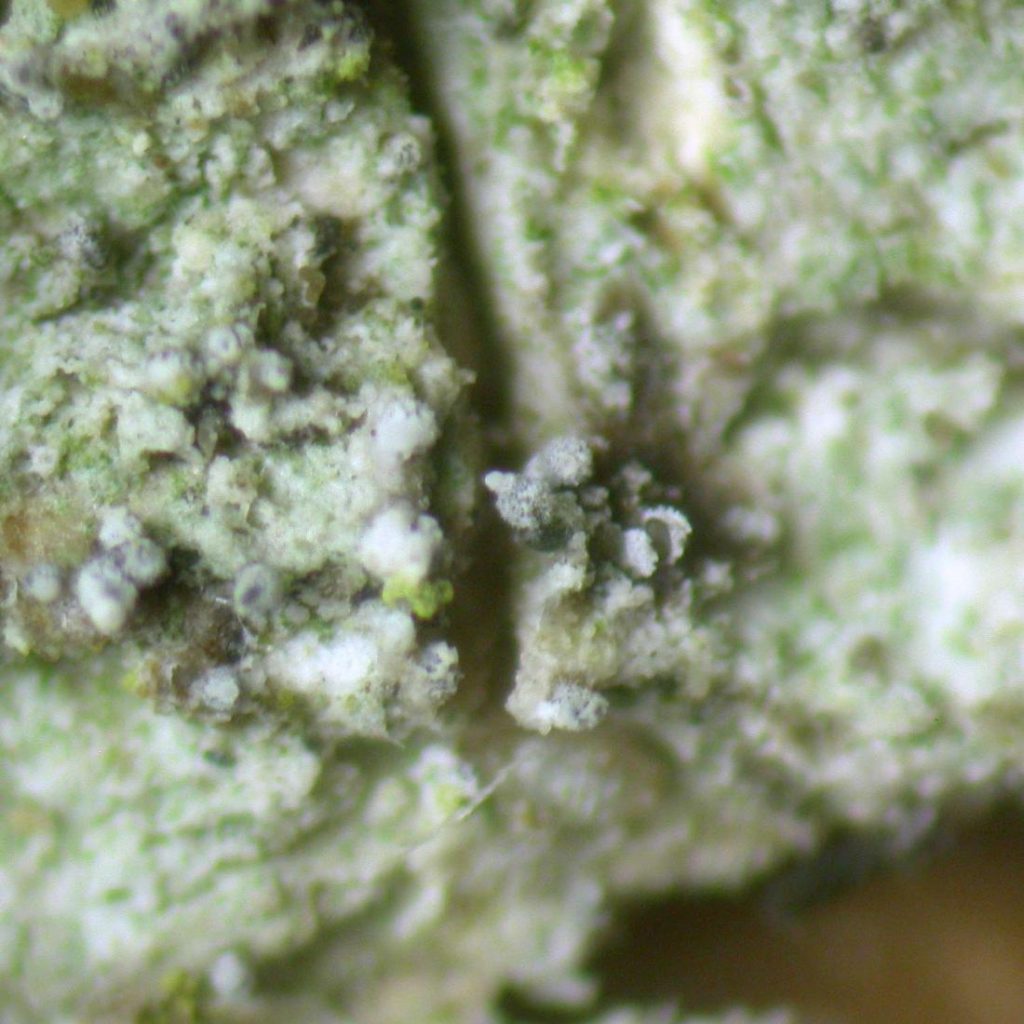
[attachment=0]Worley7001Ac.jpg[/attachment] January 18, 2021 at 2:06 pm #43856I have received a very useful tweet and links from Henk-Jan van der Kolk: “S. deplanata has recently been found in The Netherlands, Belgium and Northwest Germany, it thus seems to be expanding.”

[attachment=1]Screenshot 2021-01-18 at 1.48.11 PM.png[/attachment] https://twitter.com/hjvdkolk/status/1351162546787667970 One of the useful links:
My original thread on twitter:
https://twitter.com/obfuscans3/status/1350901067958149123 And an explanatory thread about why I initially discounted Strangospora deplanata:
https://twitter.com/obfuscans3/status/1351136559454691328 I sometimes like to work in real time on twitter to give my followers an impression of how we all make incorrect initial assumptions, have flights of fancy, hit dead ends, but can often work towards a good resolution.
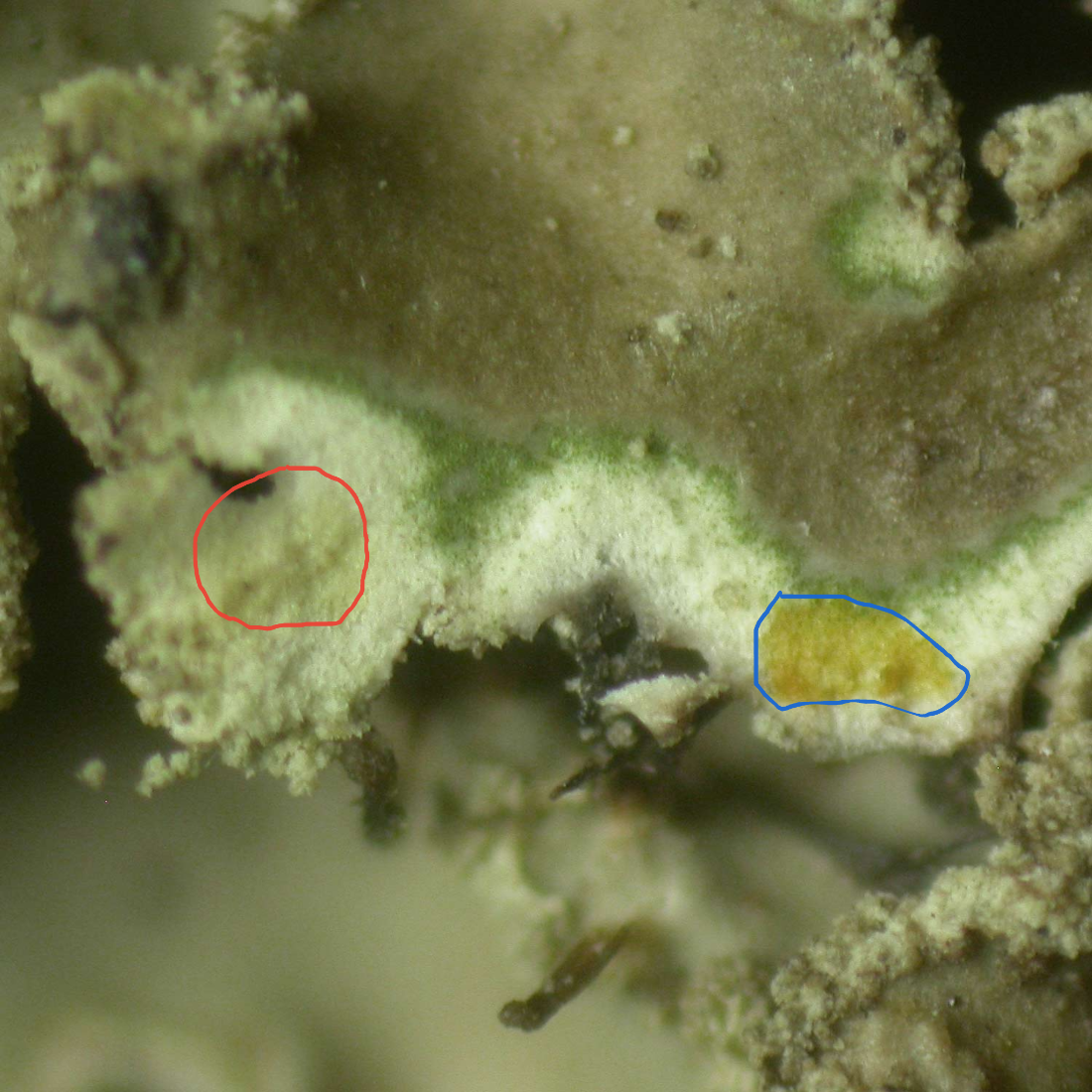
I also benefit from queries sent to me. Who knew that Physconia enteroxantha exhibits a strong C+ yellow-orange medullary reaction (much stronger than the K+ yellow)? It is not mentioned in the literature but the sender of this tweet inadvertently discovered it.
https://twitter.com/di_napier/status/1350587165898645510 Weak K+ yellow ringed in red, strong C+ yellow-orange ringed in blue. The medulla of P. enteroxantha also exhibits a noticeable UV+ orange fluorescence. Using a one to five ranking, I would state that the medulla of P. enteroxantha is K+ yellow, C+++ yellow-orange, UV++ orange.

[attachment=0]canvas (28).png[/attachment] January 18, 2021 at 2:21 pm #43857All this is really interesting. It would not be at all surprising to see range extensions for species bearing in mind the pace at which we are changing the environment, so it could well be a recent colonizer rather than a relict. I’ve taken some info from this thread to add to the LGBI3 account of Strangospora, but it would be really good to see the images and a more comprehensive description in a more permanent form than the forum. Mark, would you be able to do this?
January 18, 2021 at 2:30 pm #43858Mark A great find, it took me some time stumbling though the keys to get there. This appears to be one of those lichens with a very obscure ecology. It may be a crust but it is quite obvious when found, and I think this one is/was genuinely rare and not over looked. Although I found it in very high quality old growth woodland (Mark you were within 100m of it when in Jan’s 1ha Beech plot), I thought it odd that I have found it only once, but it was overgrowing
Pyrenula chlorospilaover several meters, of trunk so clearly a fast growing species, but had since not seen it elsewhere. I had wondered if this was more some sort of very rare colonist and not a rare relic species. Your find confirms that suspicion. (Just as I was writing this your post on Henk-Jan van der Kolk’s response and paper came through, so yes this is a colonist to look out for. Google translate of parts of the PDF is interesting, the ossier beds were dug by an “”army” of pilot whale workers” and the location is called “Pilot Whales of Death” !?!)

[attachment=0]2018-11-15-10.jpg[/attachment]
Strangospora deplanataapothecia growing inside a broken Pyrenula chlorospilaperithecia, New Forest Neil
January 18, 2021 at 2:48 pm #43859Paul, yes I will happily add images and description to the FGBI site. I too suspect that this is a colonist rather than a relict, especially after receiving the information from the Continent. Neil, in the case of my site, the Strangospora deplanata had plenty of clean bark available for colonisation (only algal crust in its way). The way that it spattered the ash trunks with numerous individuals, some merging into large patches, certainly gave the impression of a lichen that grows rapidly and readily colonises.
[attachment=0]Worley7001s.jpg[/attachment] March 24, 2024 at 10:38 am #43860In Bedford Cemetery there are numerous calcareous sandstone gravestones from late Victorian and Edwardian times. These support an interesting intermediate community containing elements of the community on limestone and elements of the community on siliceous sandstone. Lecanora horiza is abundant on the vertical faces, Physconia grisea often dominates areas where bird droppings enrich the surface and it is on one of these calcareous sandstone gravestones that Anaptychia ciliaris is present. In previous visits I had noticed colonies of a thin grey crust with short-stalked white pycnidia on the vertical faces of these calcareous sandstone gravestones. During our recent visit I found a fertile colony. The asci contain numerous spherical ascospores and the conidia are spherical and about 1.5 microns diameter. I feel sure that these colonies are Strangospora deplanata. I have now found it growing on half a dozen gravestones at three sites. After my initial encounter with Strangospora on a gravestone (last year) I tentatively concluded that I had found saxicolous S. pinicola, the conidia perhaps being wrongly described in the Flora, or two conidial states existing. Now I have changed my mind and think that all these saxicolous occurrences are S. deplanata. Naming a specimen isn’t a one-off, irreversible event. It is good to reappraise specimens and concepts and be open-minded about revising the identity of specimens.
I wonder if S. deplanata has been overlooked on gravestones, or whether its occurrence on them is a recent phenomenon.
-
AuthorPosts



- You must be logged in to reply to this topic.