
Vouauxiella verrucosa?
- This topic is empty.
-
AuthorPosts
-
October 21, 2023 at 7:42 am #32690
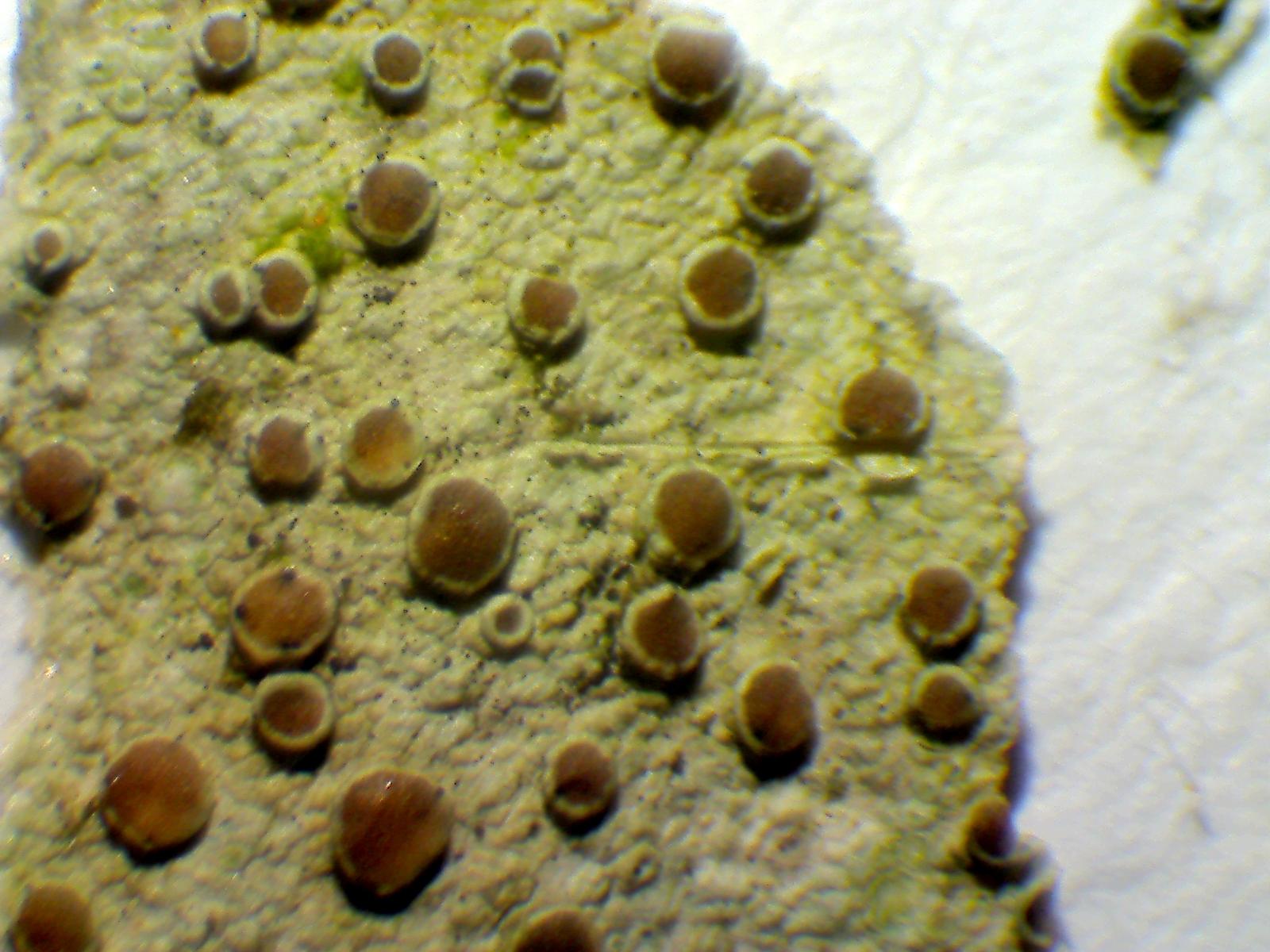
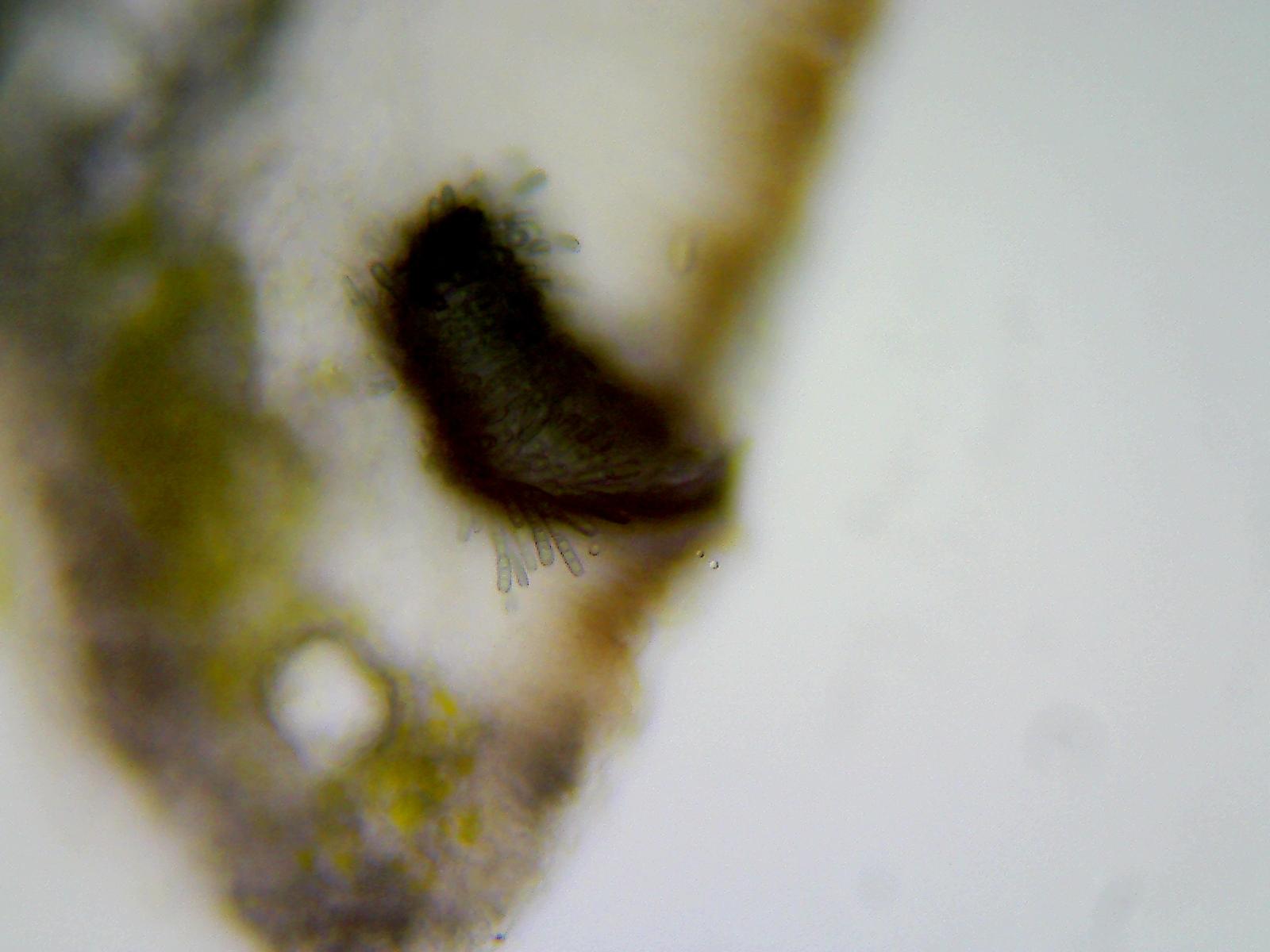
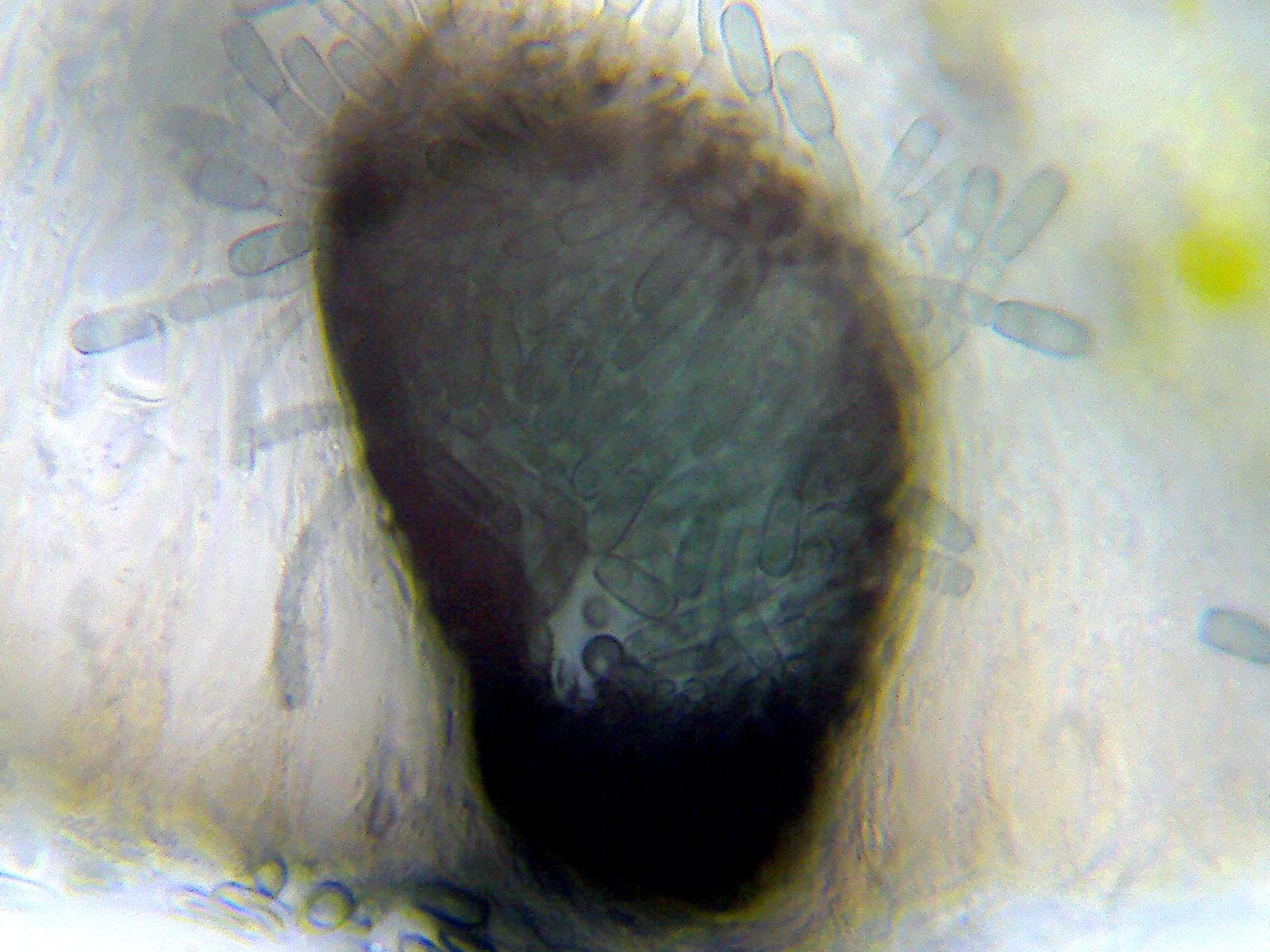
I attempted to section some small pycnidia on a Lecanora chlarotera host. This was my first attempt at this and I was surprised to find some conidia. Measuring 32 of these I’m achieving an average of 7.6 x 4.3. Are these dimensions along with the rather poor micrographs good enough for anyone to confirm as Vouauxiella verrucosa? 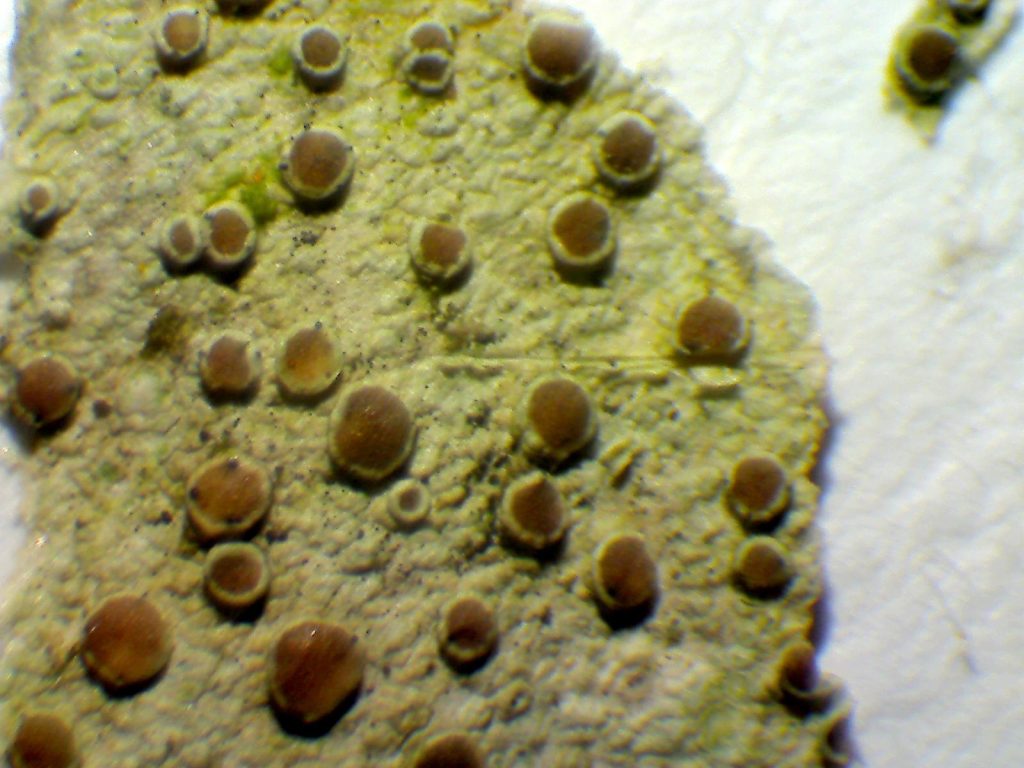
[attachment=1]0007.jpg[/attachment] 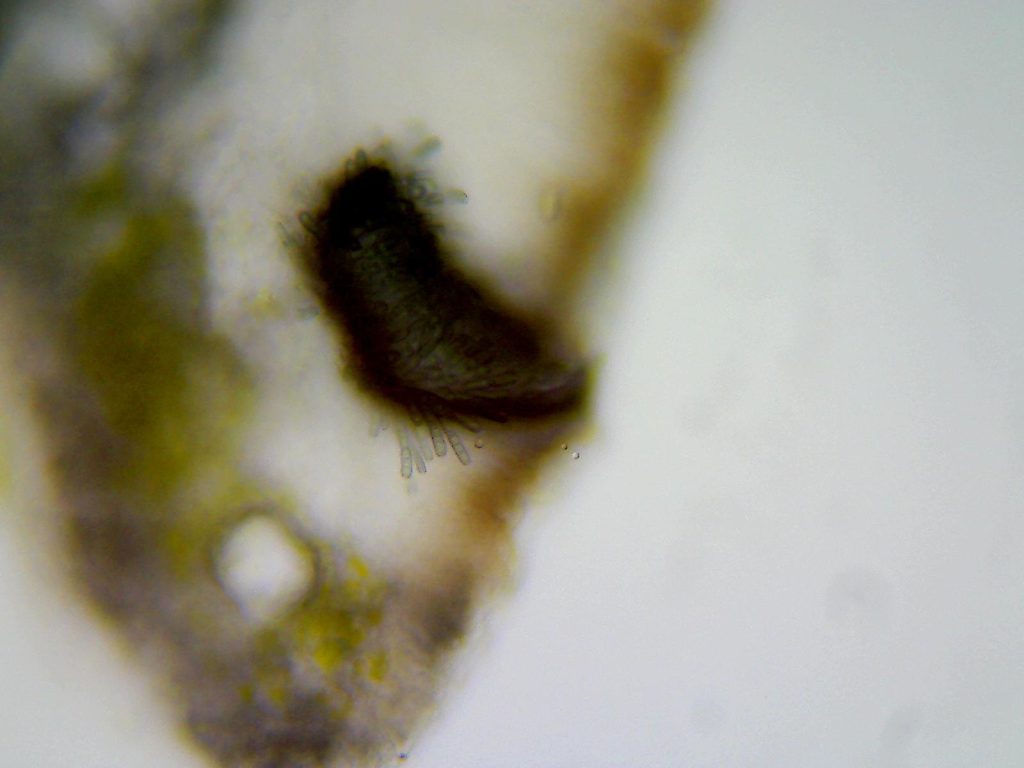
[attachment=0]0004.jpg[/attachment] October 22, 2023 at 1:24 pm #45671The way the conidia are being formed, taken with their size and the way that the conidiomata are arranged mainly towards the edge of the host’s apothecial discs all suggest that you have indeed found a lichenicolous fungus in the genus Vouauxiella. The only thing I would suggest is that you make further investigations into which of the two British species you have. The host does appear to be Lecanora chlarotera s. lat. and I have always recorded Vouauxiella lichenicola on this host. I have only recorded V. verrucosa from L. campestris and L. horiza. Your decision has perhaps been swayed by the size of the conidia, the published information suggesting that the conidia of V. verrucosa are slightly larger than those of V. lichenicola. I am not sure whether or not the sizes of conidia in the two species actually overlap. I think you should examine the conidia at the highest magnification available and try to decide whether or not the conidia have the relatively coarse warted ornamentation of V. verrucosa. There are illustrated descriptions available on the FGBI website which might help. https://fungi.myspecies.info/all-fungi/vouauxiella-verrucosa https://fungi.myspecies.info/all-fungi/vouauxiella-lichenicola Another feature which pushes my opinion towards V. lichenicola is the way the conidiomata in your specimen are so neatly restricted towards the outer part of the apothecia, a feature which tends not to be so marked in V. verrucosa.
If you find that the conidia are verrucose, in addition to being relatively broad, then we may have to review our current assertion that V. verrucosa is confined to L. campestris and L. horiza. If you find that the conidia are smooth, then we may have to re-examine specimens of V. lichenicola to check whether the conidia of this species can be wider than stated in the published accounts. Either way it will be a useful exercise if you are prepared to carefully re-examine the conidia in your specimen.
October 22, 2023 at 6:20 pm #45672Thank you for your detailed reply. I will prepare further slides and look to examine at 1000x. That will be my first attempts using immersion so it may take a while to come back with answers. October 25, 2023 at 12:50 pm #45673I spent some time today setting up to use oil immersion for the first time and calibrating my graticule eyepiece for x1000. I then looked at the existing specimens and cut some new sections from another apothecia. At the higher magnification the conidia are clearly not verrrucose. When I measured using the eyepiece the widest I found was 3 microns. Some “blobs” at the edge of the pycnidia measured more but at the higher magnification these were clearly not conidia. 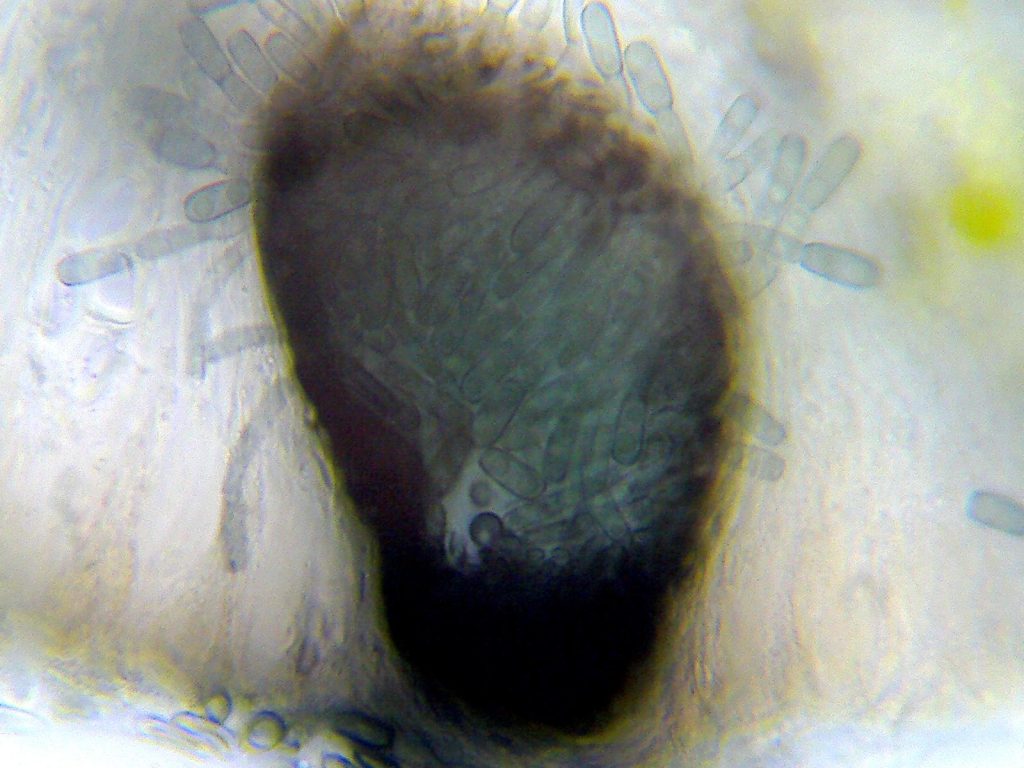
[attachment=0]x1000b.jpg[/attachment] Thanks for your help on this. Apart from learning about this LF genus it has pushed my microscopy skills forward.
My initial measurements were carried out using the measuring tool on the camera software. I’m now of the view this may only be good enough for “rough” measurements e.g. is something about 10 or about 15 microns. Distortions due to how the image appears on the screen and my accuracy in where I click the mouse could easily result in inaccuracies. The use of the higher magnification also allowed the distinction of conidia from other items.
I will now record as Vouauxiella lichenicola. Looking at the current map on the BLS website I think this may be the first record for VC76 Renfrewshire.
October 25, 2023 at 3:07 pm #45674Many thanks for continuing the study of your specimen and reporting your findings. I am pleased that you have been able to arrive at a confirmed identification (Vouauxiella lichenicola) and I agree that you are justified in recording it as such. Although I don’t bother with oil immersion for most routine identifications, it is well worth the small amount of fuss when you want a slightly better look at small features and for measuring things accurately. Now that you have used oil immersion once, you won’t be hesitant to use it again when it helps in future. The other member of the genus (V. verrucosa) appears to be rather rarer or else overlooked in most regions. If your local churchyards have any calcareous gravestones (limestone, marble, calcareous sandstone) it might be worth looking for any strong colonies of Lecanora campestris/horiza growing on their vertical faces. It is in that situation that I most often find V. verrucosa in lowland England.
-
AuthorPosts


- You must be logged in to reply to this topic.