
Possible Verrucaria romeana
- This topic is empty.
-
AuthorPosts
-
November 10, 2025 at 9:34 am #33108
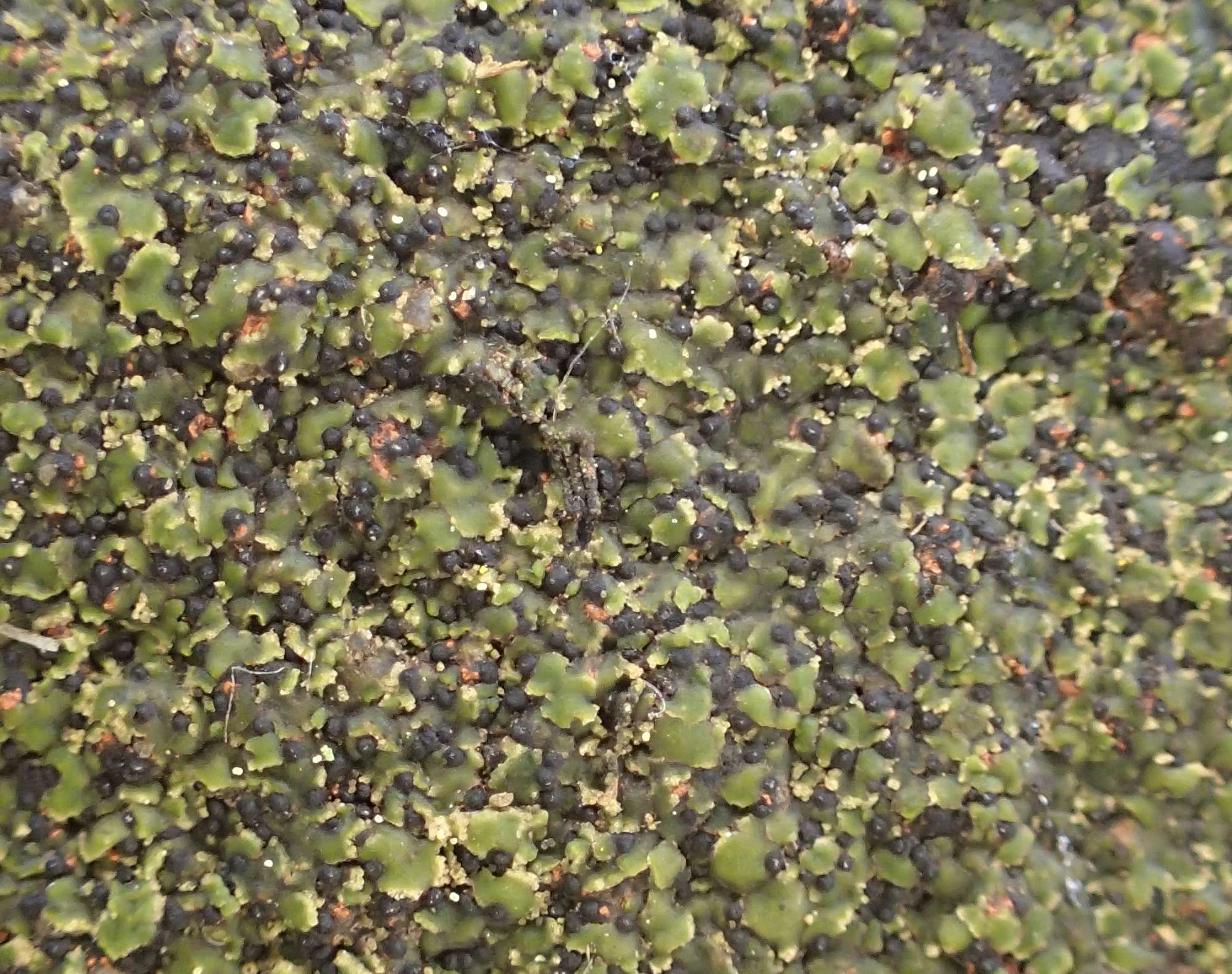
Hi, I wondered if anyone can give some help with this Verrucaria found on the mortar of a churchyard boundary wall in a very damp shaded area among moss. I was considering Verrucaria romeana based on the following:
Black basal layer
Very squamulose overlapping nature of the aeroles
Size of spores – 22.5-27.5 um X 10-13 um
Well-developed involucrellum
Somewhere I have read that V romeana, when well developed, has those raised/blasidiate? edges that are present, but I can’t seem to find that information at the moment.
Any help much appreciated
Thank you
Sylvia
November 10, 2025 at 10:44 am #46739Hi Sylvia I was shown a thallus of
V. romeanaat Juniper Hall that looks almost identical to your images (see attached), the blastidia aren’t referred to much and seem to be variable in their expression. V. macrostomacan also produce similar structures (see http://www.afl-lichenologie.fr/Photos_AFL/Photos_AFL_V/Texte_V/Verrucaria_macrostoma.htm It seems that the gold standard to differentiate the species is that in
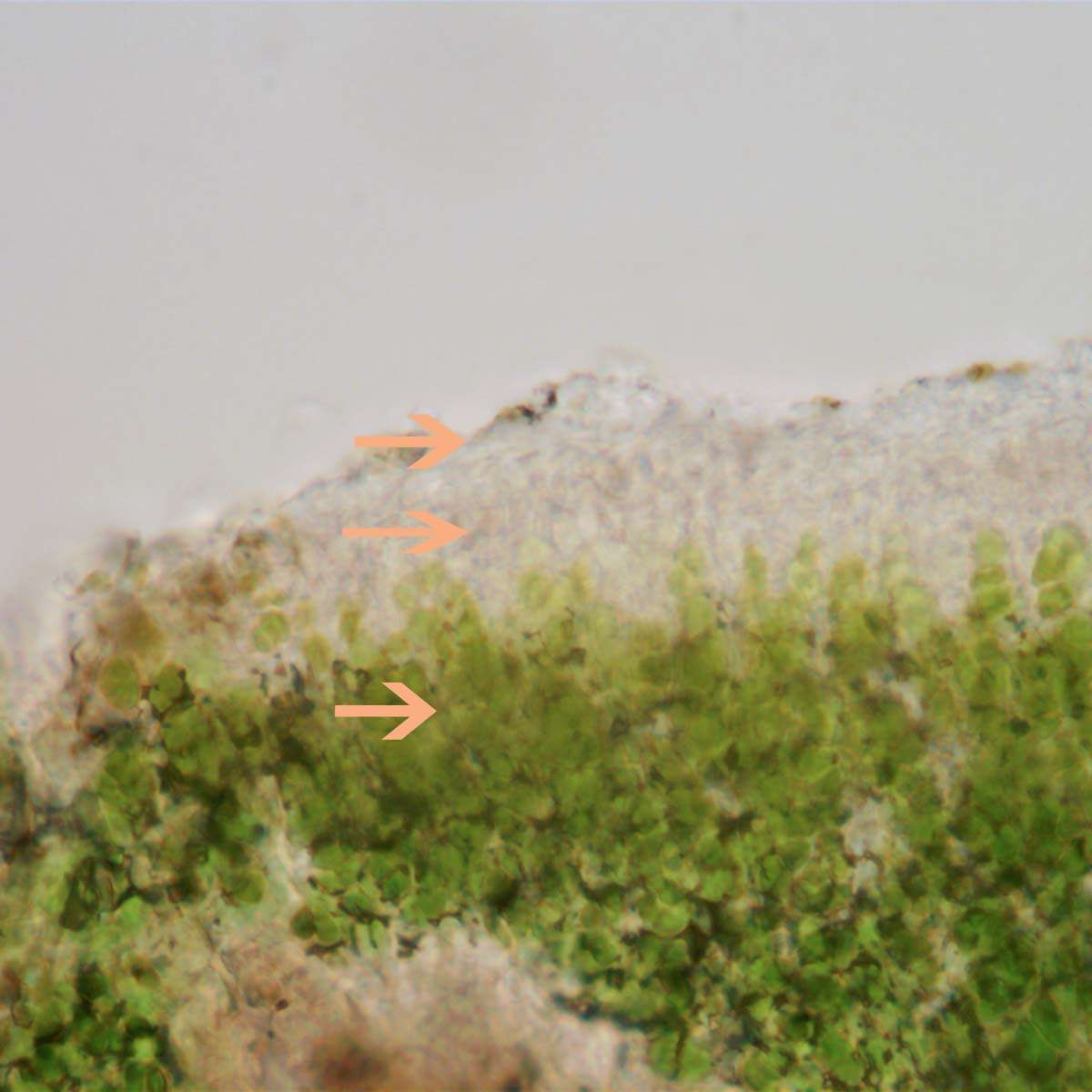
V. romeanathe epinecral layer is absent or poorly developed, while in V. macrostomait is well-developed; that may be expressed by thalli with an epinecral layer being glossier than those without, but I don’t know how reliable that distinction is. Thin sections of the thallus are really needed. Two sections from Mark Powell are attached, which gives you some idea of what is expected. 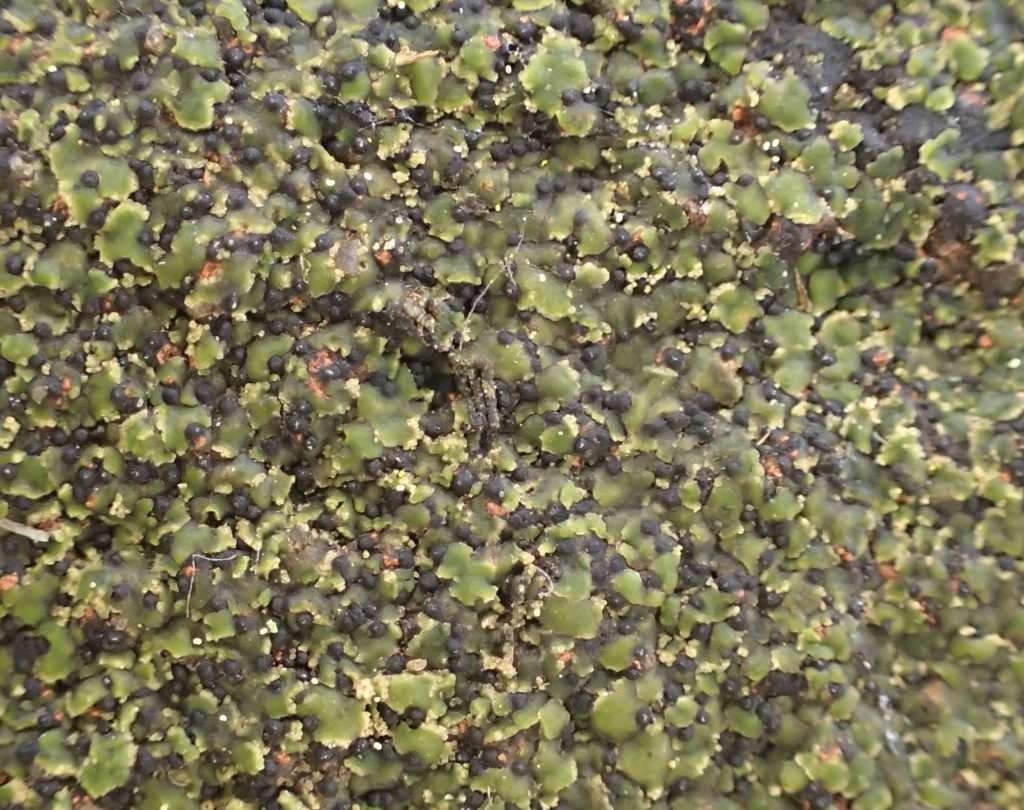
[attachment=2]PB030258a.jpg[/attachment] 
[attachment=1]Verrucaria squam3929i.jpg[/attachment] squamulosa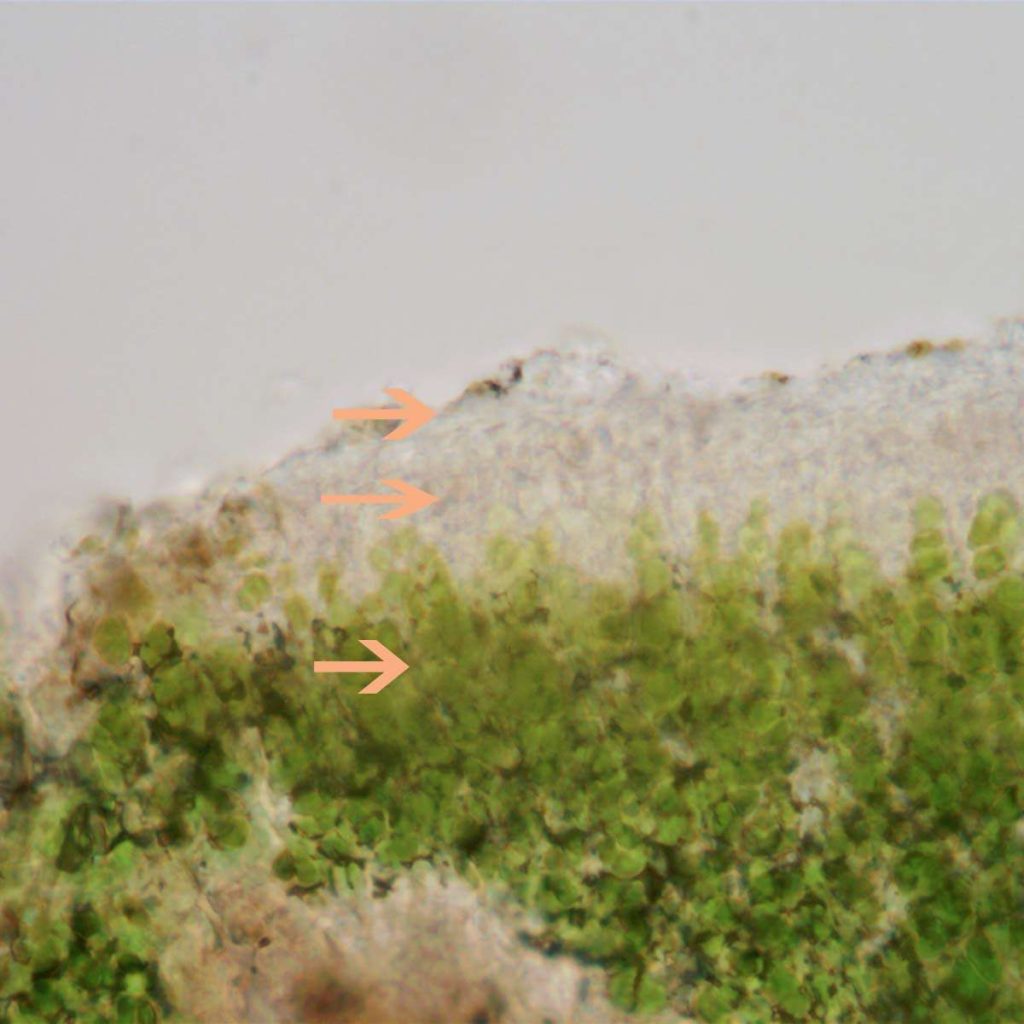
[attachment=0]Verrucaria macr4188h.jpg[/attachment] macrostomaIt’s not easy, but hopefully this helps
Paul
November 10, 2025 at 12:54 pm #46740Thanks Paul, My photos do look identical to your photo. But I will get sectioning and see if I can get some measurements for the epinecral layer or better still not find it much at all.
Thanks for your help.
Sylvia
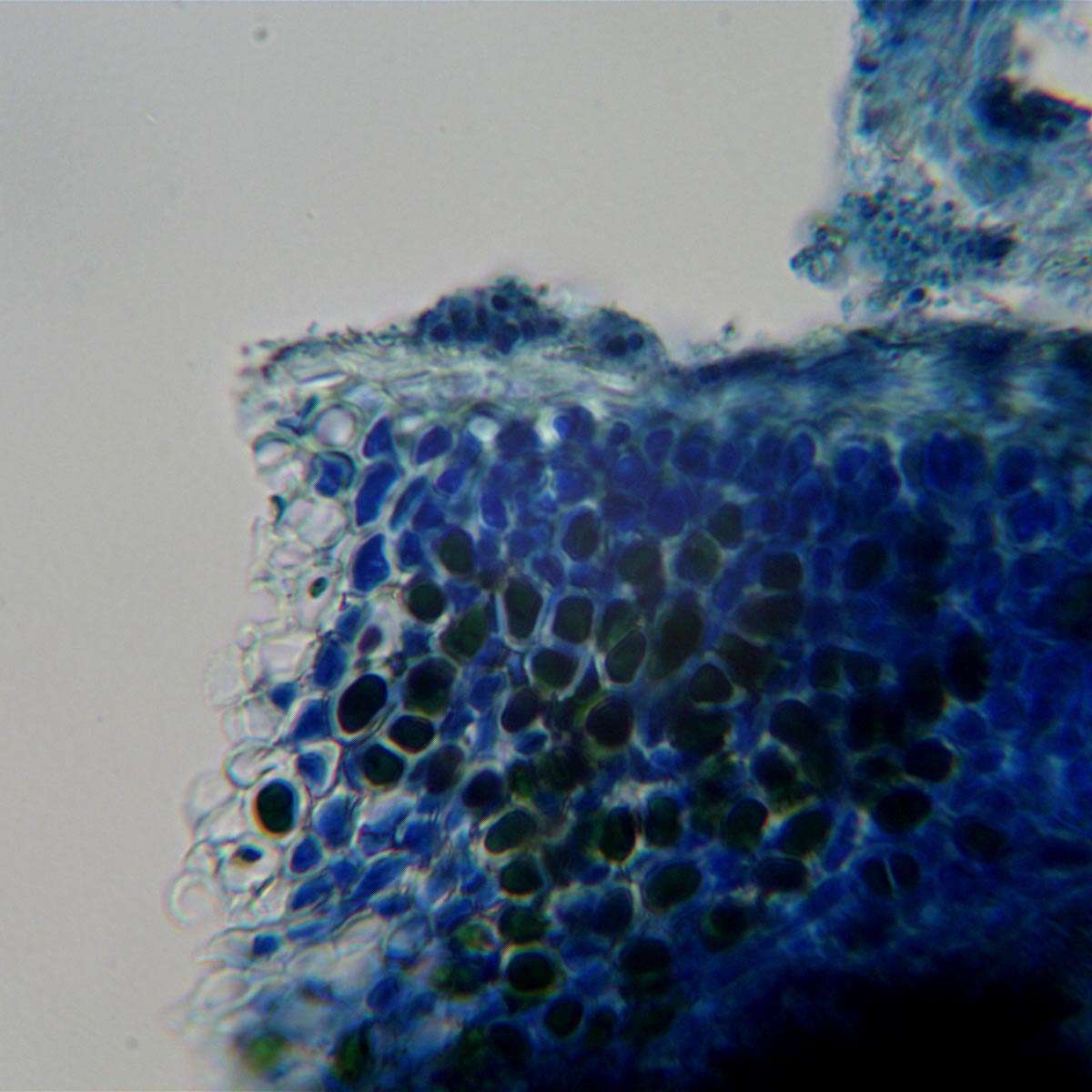
December 15, 2025 at 7:34 pm #46741Hi Paul, I had to go back and get some more sample of the potential V romeana, hence the delay, and I have also found a thallus at another church, which seems to be a possible V romeana (keys out in LGBI3). I’ve attached photos below of the epinecral layer from both samples – both have epinecral layers that are at the thickest 9 micrometers and in many places absent. This seems to fit the bill for V romeana, rather than V. macrostoma.
Thanks,
Sylvia
-
AuthorPosts


- You must be logged in to reply to this topic.