
Possible Catillaria fungoides
- This topic is empty.
-
AuthorPosts
-
January 23, 2025 at 9:43 pm #32987
Hi, On the trunk of a local urban mature Elm I’ve found a Catillaria, that I think might be Catillaria fungoides. The characteristics are as follows:
Thallus grey but with black soredia, although these are cracked in parts to expose green
Black lecideine apothecia (shown in photos) less than 0.4mm, with a margin that is slightly lighter than the disc
Spores 1-septate full of oil droplets 10-12.5um X 3-3.75 um
Paraphyses with very dark swollen tips
I looked at the soredia under x100 and x400 and they resembled photos on-line, unfortunately due to a camera malfunction I haven’t got photos.
I read that there should be oil drops in the hymenium, but I wasn’t sure if I could see this or not.
It didn’t seem quite right for Catillaria nigroclavata, but perhaps it is. The soredia seemed to fit with C fungoides though.
Thanks for any advice.
Sylvia
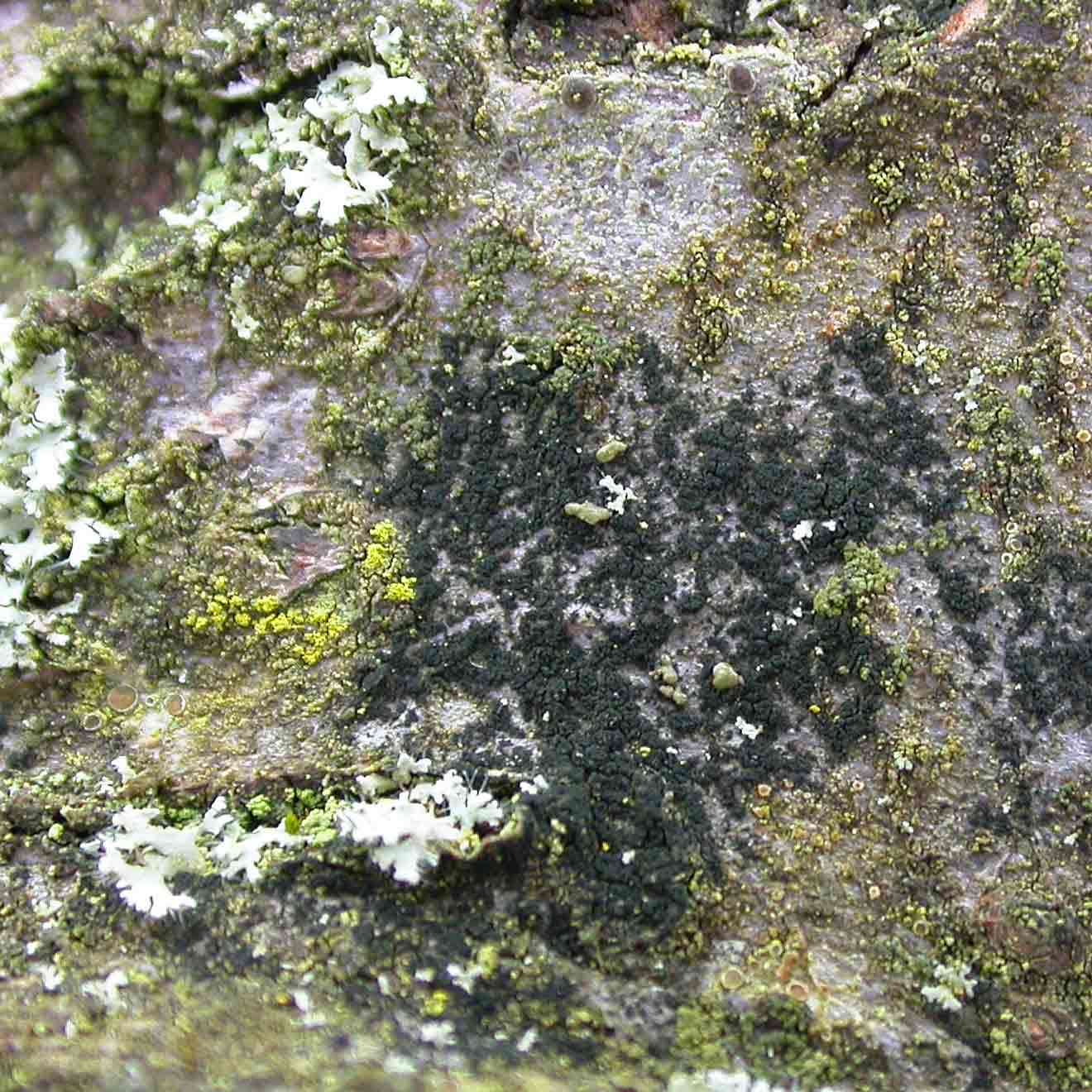
January 24, 2025 at 6:59 pm #46469I think it is likely that you have found C. fungoidesbut rather than give what would only be a hesitant confirmation I will provide some thoughts which might help you. I haven’t seen enough fertile specimens of C. fungoidesto explore any supposed differences in the apothecia between it and C. nigroclavata. I think the apothecia are very similar and although C. fungoidesis supposed to have more oil droplets in the hymenium, I think it might be a case of usually more abundant droplets in C. fungoidesrather than a strict difference of presence vs. absence of the droplets. The droplets/inclusions which you have observed in the spores are just the way that most spores look when they are from freshly collected material aren’t at all diagnostic. There is also the complication that Catillaria nigroclavataoften grows in close proximity to sterile colonies of C. fungoides(and Halecaniaviridescens)and one has to convince oneself that any apothecia really belong to the dark sorediate patches of C. fungoides. So, if the apothecia are of limited help, we are left mainly with the rather distinctive appearance. The sorediate patches are very similar to those of
H. viridescensbut always darker, distinctly blackish. Sometimes soredia dominate, in other specimens the soredia are in irregular patches on a thin grey thallus, this thallus often having something of the ‘greasy’ appearance of Catillariathalli. If in doubt, I usually check that it is Pd- (not essential if you don’t have Pd), check that distinct haustoria are present (which narrows it down to Catillariaor Halecaniain this habitat) and then if it looks right I record it. The haustoria can be seen in K mounts and also show up nicely after staining, one ‘computer mouse’ haustorium per algal cell. I added
C. fungoidesto the British list in 2015 and it was the least painful addition I made. I found blackish, Pd- patches of soredia and found that the algal cells each bore a single haustorium like in C. nigroclavataand in H. viridescens. My first specimen was sparingly fertile (I was fairly sure the apothecia belonged to the blackish soredia) and the thallus was visible and its greasy appearance reminded me of other Catillariaspp. such as C. chalybeia. I put just two words into a search engine “sorediate Catillaria” and the type description of C. fungoidesappeared in the first page of results. It is becoming rather common in lowland England on twigs, branches and sometimes on trunks. 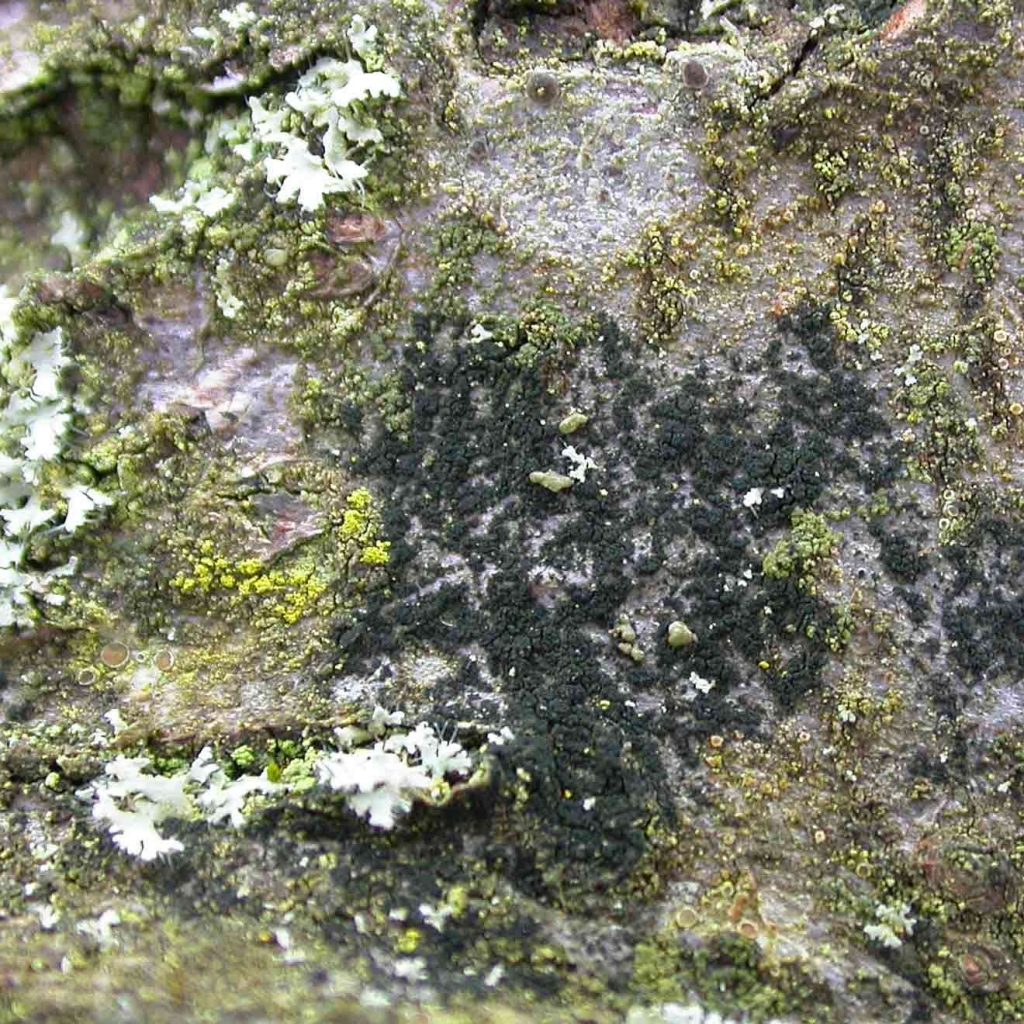
[attachment=2]ENHuVqrWkAAnHAG (1).jpeg[/attachment] 
[attachment=1]GC_ndKTXwAAe2g0.png[/attachment] 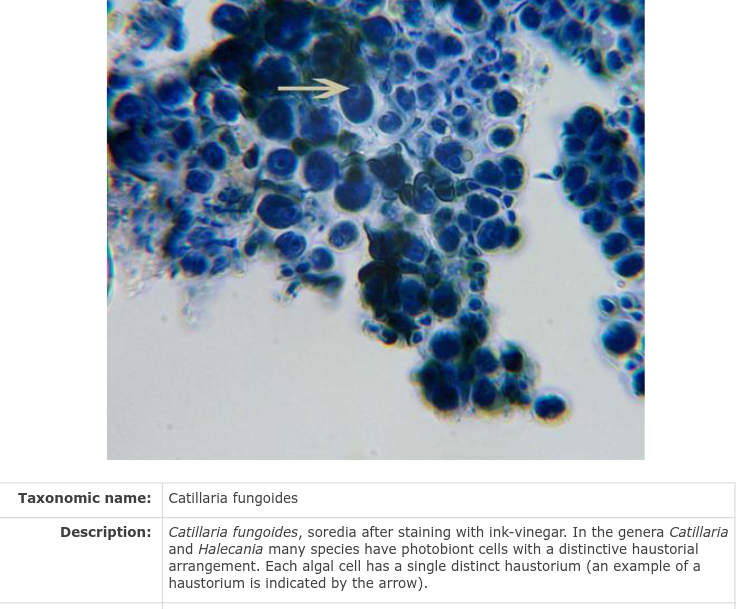
[attachment=0]GC_nfLtXEAAUKtu.png[/attachment] January 24, 2025 at 7:14 pm #46470Thank you so much Mark for your reply. Yes the healthy-looking apothecia were somewhat separate from the soredia as well also giving me some doubt. So I will focus on the soredia. Back to the microscope and see if I can find these haustoria. Thank you
Sylvia
January 26, 2025 at 1:39 pm #46471I’ve been looking out for Catillaria fungoides on my patch in Gloucestershire with no sure success yet. I had some hope with a black coating on a mature cherry trunk, but though there are Catillaria type fruit present, and balls of green algae enclosed in something or other, they are shiny and I’m suspecting cyanobacteria. Any ideas what I’m looking at? January 26, 2025 at 4:51 pm #46472After my initial discovery of C. fungoides I started looking for more blackish crusts and came across a lot of the sort of crust that you have found on the cherry trunk. These crusts appear to be a mixture of cyanobacteria, algal cells and dematiaceous fungal hyphae. Such mixed crusts also occur on stone, though from casual inspection they seem to vary in their makeup depending on the substratum. You certainly have some Catillaria apothecia in there too, most likely C. nigroclavata, but these are probably struggling for space amongst the mixed black crust. I am still sometimes uncertain in the field about whether I have C. fungoides or one of these mixed black crusts. C. fungoides tends to be less shiny, more obviously and softly sorediate, rather like a very dark version of Halecania viridescens.
You should come across C. fungoides in due course. It can occur on twigs, branches and trunks (usually trunks of relatively young trees). I have also found good colonies on the lignum of dead elm sucker stems. I have most often found it on Fraxnus and Malus (occasionally on Crataegus and others). It often grows with species such as Candelariella xanthostigmoides (‘reflexa’), H. viridescens, C. nigroclavata and generally, but not exclusively, seems to like sheltered conditions. Ornamental and fruit trees in gardens sometimes support C. fungoides. If I was plonked in an unfamiliar part of lowland England and asked to find C. fungoides as quickly as possible I think I would try to find some pole-sized ash trees, in lightly shaded conditions, such as beside woodland rides or woodland edges and look for the dark patches (which can sometimes be large and conspicuous enough to see from several metres away).
-
AuthorPosts



- You must be logged in to reply to this topic.