
Polyblastia albida?
- This topic is empty.
-
AuthorPosts
-
December 14, 2025 at 10:03 pm #33130
Hi, I found this lichen on the wall of a Sussex church, which keyed out as Polyblastia albida in LGBI3. I wondered if this looked correct or not? The attributes are as follows:
Black perithecia <0.4mm immersed in pits, leaving pits when they fall out
Thallus is cream/white but partially immersed in the substrate
Spores muriform, 8 per ascus, 35-45 X 15-20 micrometers, the photos below show that there are a number of transverse septa and longtitudinal septa
Photos below, although the spores took the vinegar/ink stain rather too well.
Everything seems to fit with P. albida, but I was a bit concerned about the substrate. The church wall is a mixture of stone, with sandstone, ironstone and lime mortar, but there was two different Verrucaria not far away from the P albida. The wall, however, was not hard calcareous rock, which I read is the usual substrate for this lichen. If not P albida, then which other Polyblastia could it be?
Thanks for any help.
Sylvia
December 15, 2025 at 9:54 am #46807I can’t think what else it is likely to be other than Polyblastia albida and, as you say, it seems to fit. Rather than rushing into a confirmation straight away, I will explain my thinking when looking at your photos. One of the first things I checked was that there weren’t any paraphyses which would help confirm that we are looking at a member of the Verrucariaceae. Your stained section of a whole perithecium shows that the periphyses are nicely stained but there don’t seem to be any distinct interascal filaments/paraphyses. In Verrucaria and related genera the hymenium often has a suggestion of linear structures, like trails of inclusions or lines separated elongated holes in the hymenial gel but no actual hyphae. I think I am convinced by your micrographs that no interascal filaments are present. When one comes across a member of the Verrucariaceae with muriform spores then another genus to briefly consider is Staurothele but this genus has algal cells within the hymenium and these are usually quite numerous and rather obvious and I can’t see any suggestion of them in your photos. I have very rarely encountered Staurothele in churchyards or elsewhere on old stonework but it is not unknown.
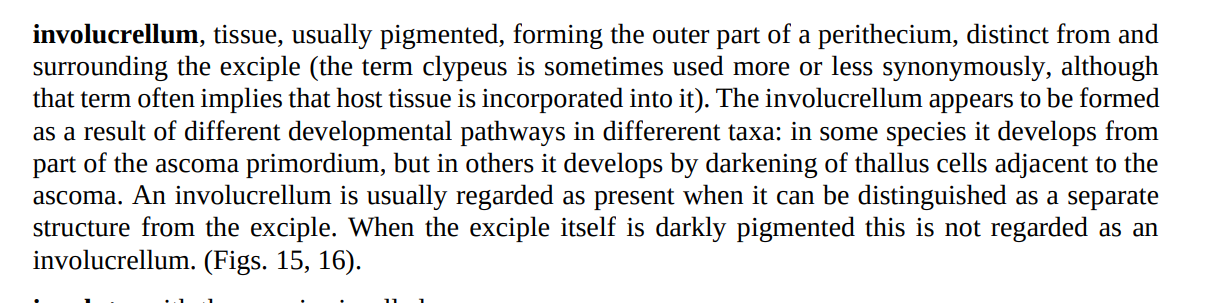
Assuming we are dealing with Polyblastia the two next important things to note are that the perithecia are immersed and that no involucrellum is present. The latter is sometimes difficult to interpret. I would say that your perithecia have an exciple (perithecial wall) which is thickened in the upper part but that there is no distinct separate structure which would be interpreted as an involucrellum.
By this stage, assuming we have interpreted things correctly, we have narrowed things down and we end up at P. albida.
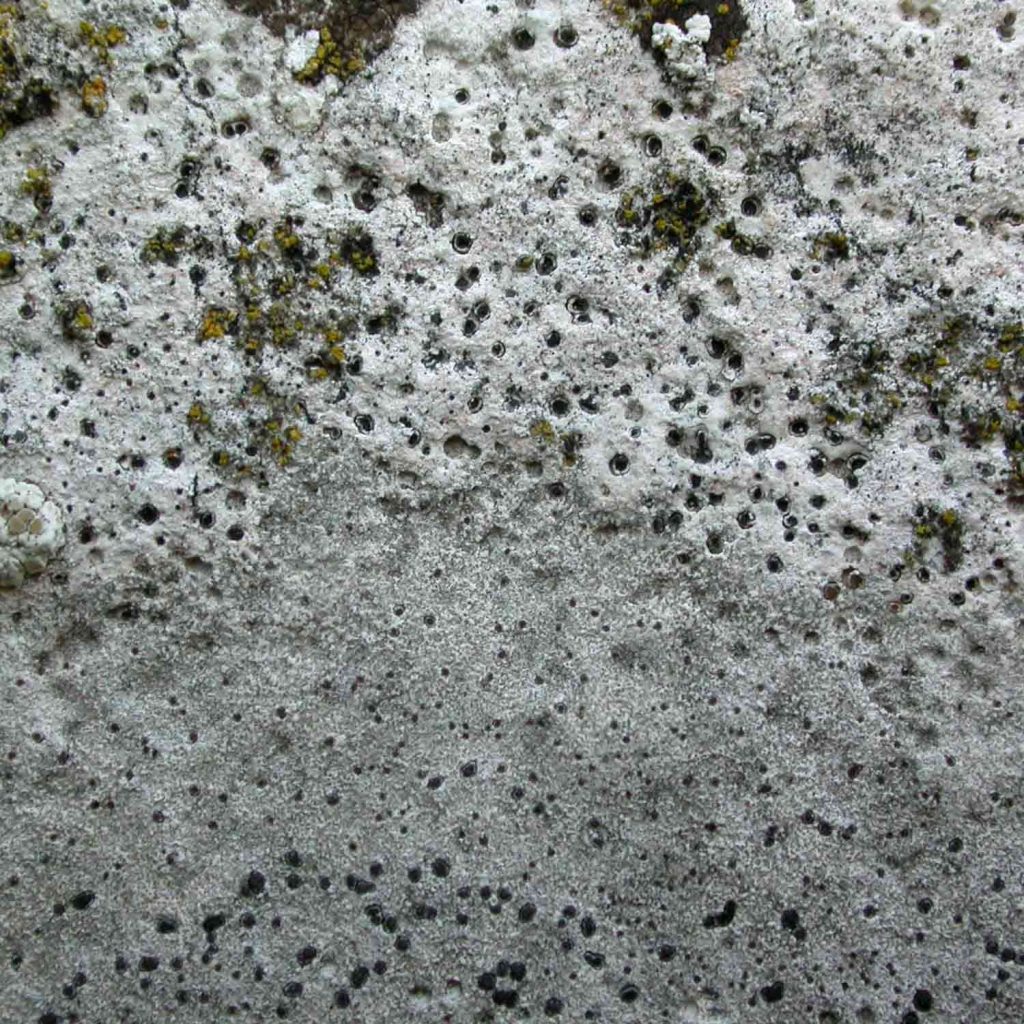
Here is Polyblastia albida in the upper part of my photo and Verrucaria hochstetteri below.
[attachment=6]albid1.jpeg[/attachment]
Polyblastia albida and its look-alikes have a lithothallus of redeposited calcite which make them seem like a thick layer of (woodwormed) white paint, contrasting with the much less developed lithocortex of V. hochstetteri resulting in very slight depressions in the stone. As an aside Thelidium pyrenophorum produces even more pronounced depressions in the stone (due to repeated browsing not having the protection of a lithocortex). Thelidium decipiens, T. incavatum, Polyblastia albida and P. dermatodes form a quad of species which are indistinguishable in the field. Verrucaria baldensis and Verrucaria calciseda have a thicker lithocortex than the quad. These subtleties help to distinguish the various immersed pyrenocarps on limestone in churchyards which seem impossible at first.Here are ascospores from my collections of P. albida and I think they ring true when set against yours.

[attachment=5]albid2.jpeg[/attachment] 
[attachment=4]albid3.jpeg[/attachment]
A few more notes and images of P. albida and related species.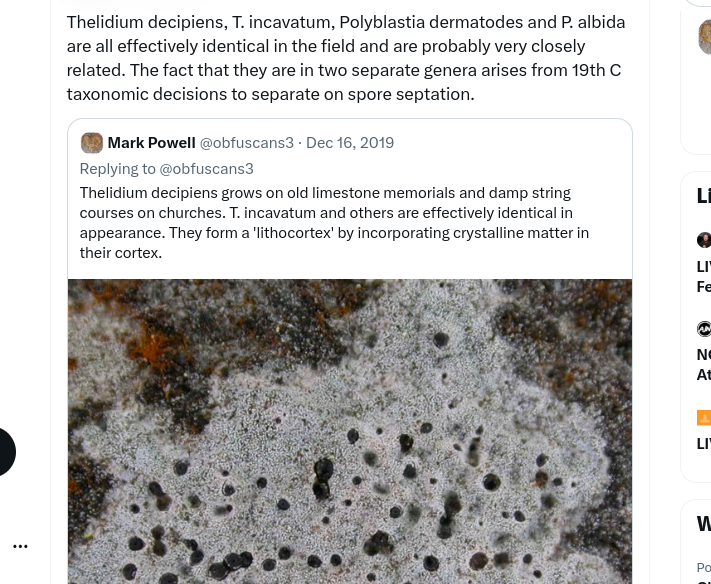
[attachment=3]Screenshot 2025-12-15 9.08.24 AM.png[/attachment] 
[attachment=2]Screenshot 2025-12-15 9.09.41 AM.png[/attachment] 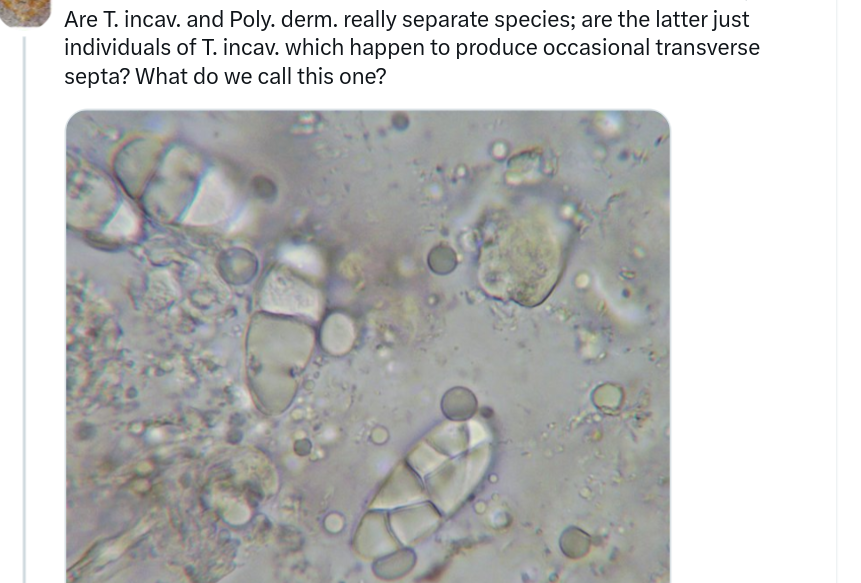
[attachment=1]Screenshot 2025-12-15 9.10.14 AM.png[/attachment] 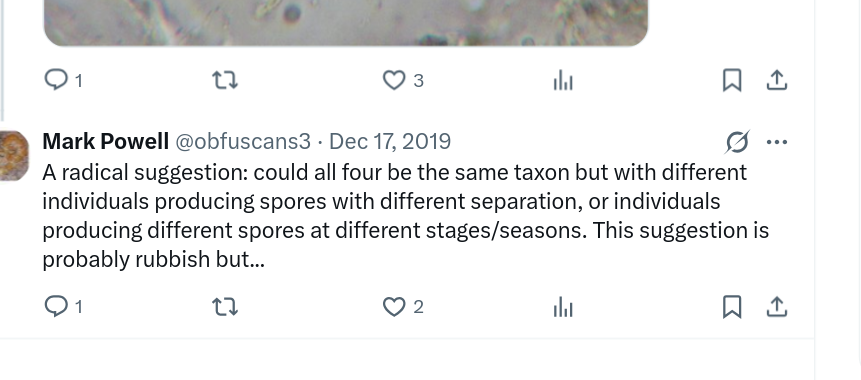
[attachment=0]Screenshot 2025-12-15 9.10.42 AM.png[/attachment] As long as you are happy that your specimen lacks distinct interascal filaments, has no distinct involucrellum, has no hymenial algae then I think you will be justified in recording it as P. albida. I usually do find P. albida and the rest of the ‘quad’ on fairly hard limestone, most commonly on Victorian/Edwardian limestone memorials (headstones and coped/coffin tombs) so I note your hesitation about the substratum. There is no problem with finding it on a vertical surface. As long as the particular stone was at least somewhat calcareous, as probably indicated by the presence of Verrucaria species nearby, then I wouldn’t worry too much.
December 15, 2025 at 2:38 pm #46808That’s great Mark, thank you. I have a few other photos that I have checked, but I can’t see any interascal filaments, so I feel confident about the ID. The presence or not of an involucrellum can still confuse me though and I was uncertain at first. The churchyard also contained Thelidium incavatum and Thelidium decipiens on a nearby limestone tomb, so almost the ‘quad’. I feel I need to have a look for the fourth one now!

Best wishes,
Sylvia
December 15, 2025 at 4:27 pm #46809Recording three of the four from a churchyard is really good going. In the past there were many good churchyard recorders who hadn’t developed appropriate collecting techniques, and who didn’t trouble themselves too much with microscopy, who almost completely overlooked Thelidium incavatum and its look-alikes. In my experience T. incavatum is the most common by some margin, followed by T. decipiens (which I have a slight suspicion has a slight preference for slightly shady situations such as the chamfered plinth on the north side of a church). Polyblatia albida and P. dermatodes both seem to turn up quite a lot less commonly and I usually find them when I take a bit of potential T. incavatum for checking. I am often a bit disconcerted by P. dermatodes but if the spores are submuriform I feel that P. dermatodes is the best name. The decision of whether an involucrellum is present or not is often not as straightforward as it sounds. An involucrellum is not a single evolutionary homologous structure; in different groups it arises from different developmental pathways. Really, it is probably accurate to say that an involucrellum is any structure that a taxonomist has decided is sufficiently distinct to consider as being a separate structure to the exciple itself.
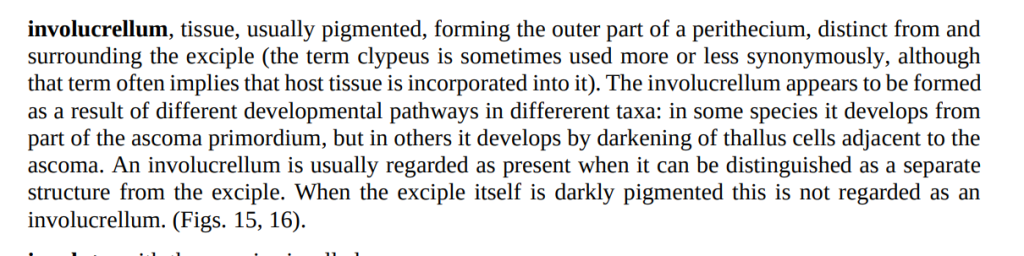
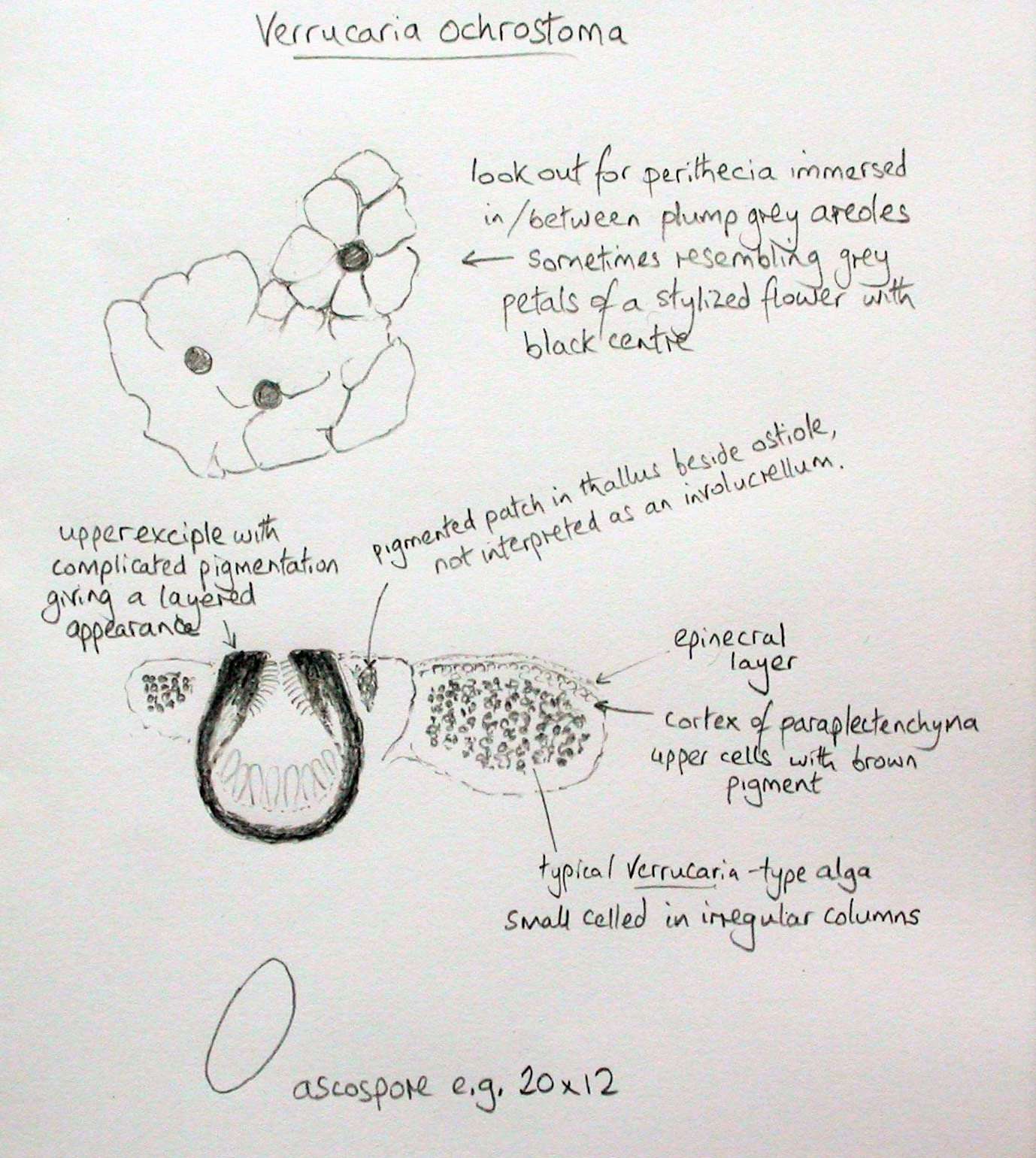
[attachment=1]Screenshot 2025-12-15 4.12.23 PM.png[/attachment] When I was working on the identity of Verrucaria ochrostoma, a lichen that was virtually unknown to British lichenologists before 2013, despite being so common and widespread, I agonised over the issue of whether an involucrellum was present or not. The upper part of the exciple is multilayered and there is often a little patch of pigmented thallus near the apex of the perithecia but neither of these features is considered to be an involucrellum.
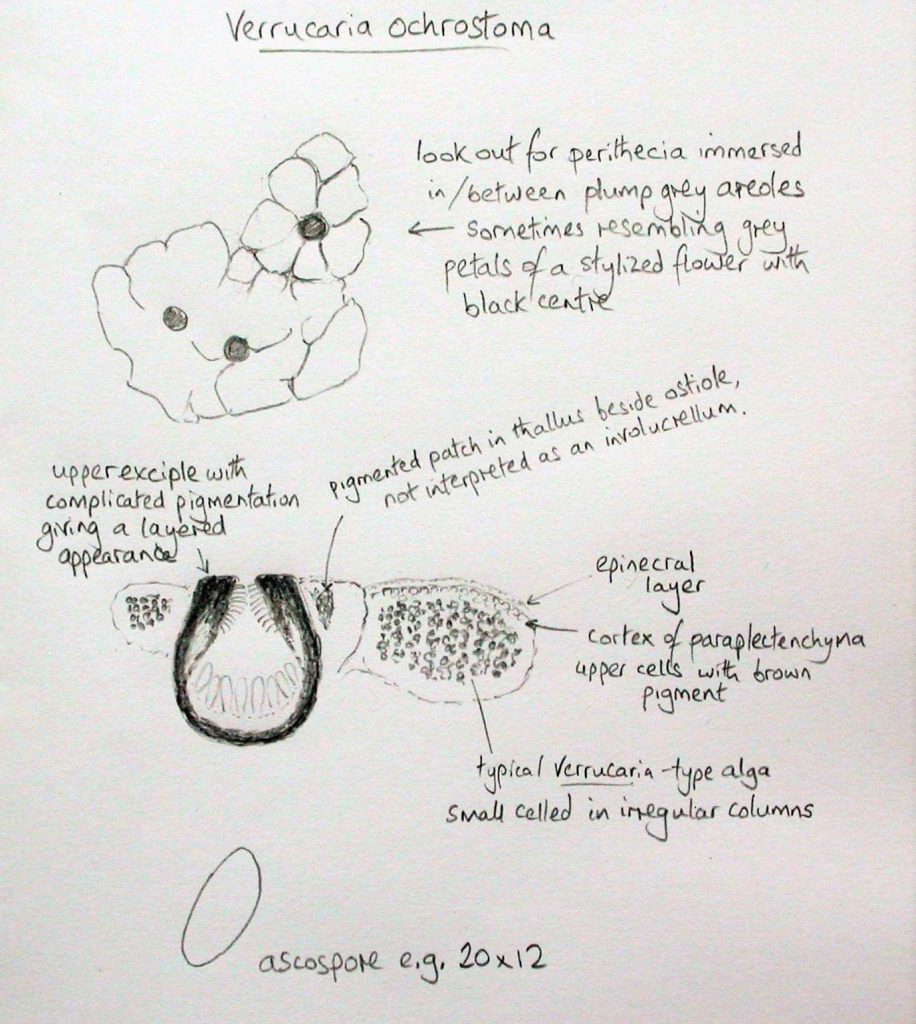
[attachment=0]ochrostoma.jpeg[/attachment]
Similarly, when I found the first occurrence of Verrucaria sphaerospora in Britain, I had the difficulty of deciding whether its perithecia had an involucrellum or not. In this case it does have an involucrellum but it is fused with the exciple, forming a complete globose covering hardly distinguishable from the exciple.December 15, 2025 at 8:53 pm #46810Looking at the Verrucaria and similar is certainly a challenge. Thanks once again for your in-depth replies they’ll help me get a grip on the little devils. Best wishes,
Sylvia
December 16, 2025 at 9:43 am #46811Yes, Verrucaria and its allies are a challenge but rather an important one in churchyard recording. They constitute well over 10% of the list for most churchyards, certainly churchyards in limestone areas. As a guide, in the northern Home Counties that I know best, I would expect to find the following in most churchyards: Thelidium incavatum, T. pyrenophorum, Verrucaria calciseda, V.elaeina, V. fuscella, V. hochstetteri, V. macrostoma f. furfuracea, V. ochrostoma, V. muralis, V. nigrescens f. nigrescens, V. nigrescens f. tectorum and V. viridula.
Less commonly, but not very rare, I find: Polyblastia albida, P. dermatodes, Thelidium decipiens, Verrucaria baldensis, V. obfuscans, V. polysticta, V. macrostoma f. macrostoma and V. romeana.
Of course some of my Verrucaria species are now placed in genera such as Bagliettoa and Placopyrenium but I have clumped them in Verrucaria for this rough and ready analysis.
We have come quite a long way in our understanding of churchyard Verrucariaceae in the past two decades. Thelidium pyrenophorum was completely overlooked or misidentified in the past. Verrucaria obfuscans was added to the British list in 2015 despite it being so common and often present in abundance on church buildings. Up until about 2010 or so, Verrucaria calciseda was poorly known by churchyard recorders and often recorded as V. baldensis. It is quite common for me to come across Verrucaria specimens which I can’t name. I feel that there is still quite a lot of unrecognised diversity out there with this and related genera. If we have only just got to grips with such common and distinctive species as T. pyrenophorum, V. calciseda, V. obfuscans and V. ochrostoma, it seems likely that there are many other less common and less distinctive taxa that we are overlooking. How many lichenologist’s eyes have scanned over sheets of V. obfuscans in the past and not registered anything more than vague thoughts such as ‘a dull brown Verrucaria, perhaps something like V. nigrescens that has gone wrong with some metal contamination’.
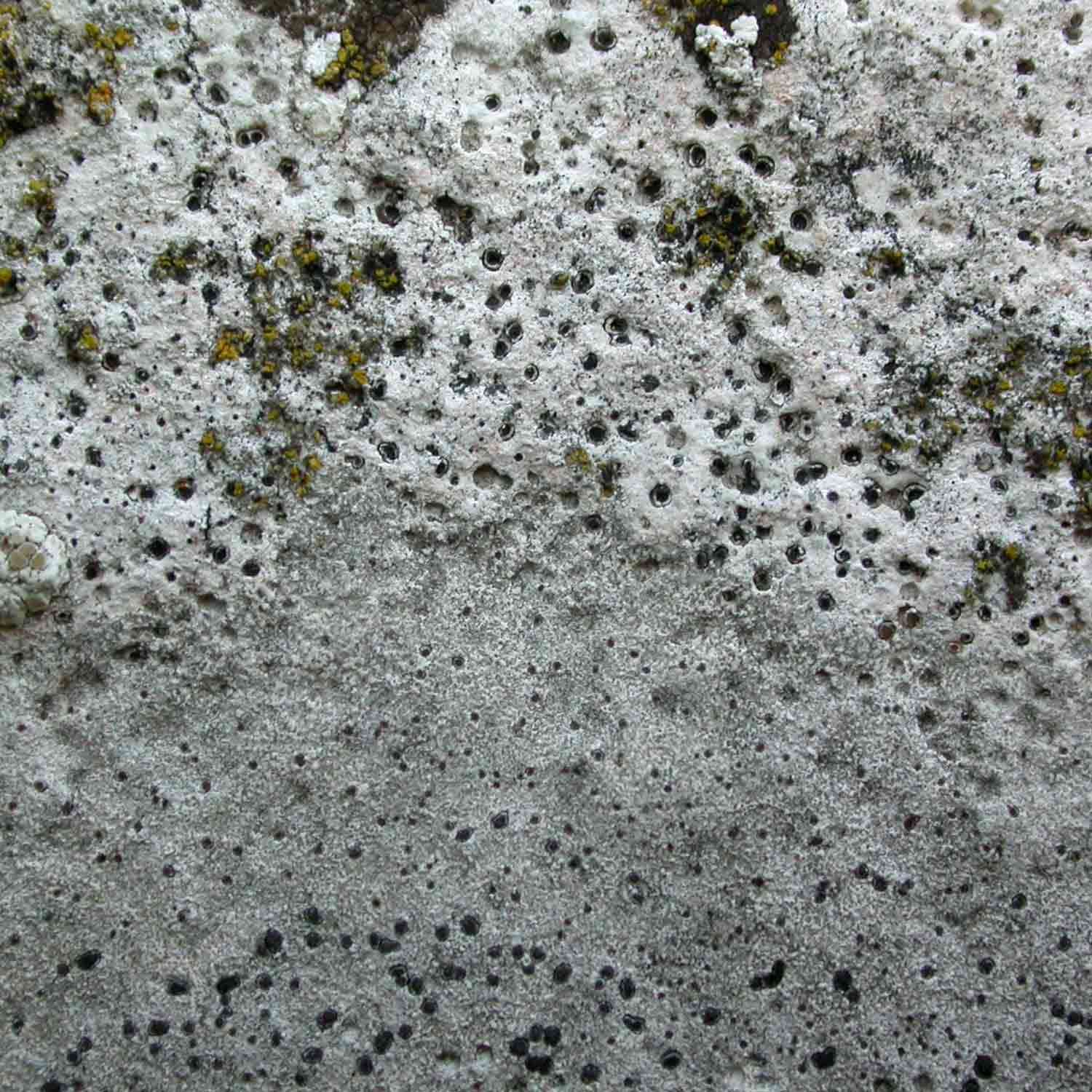
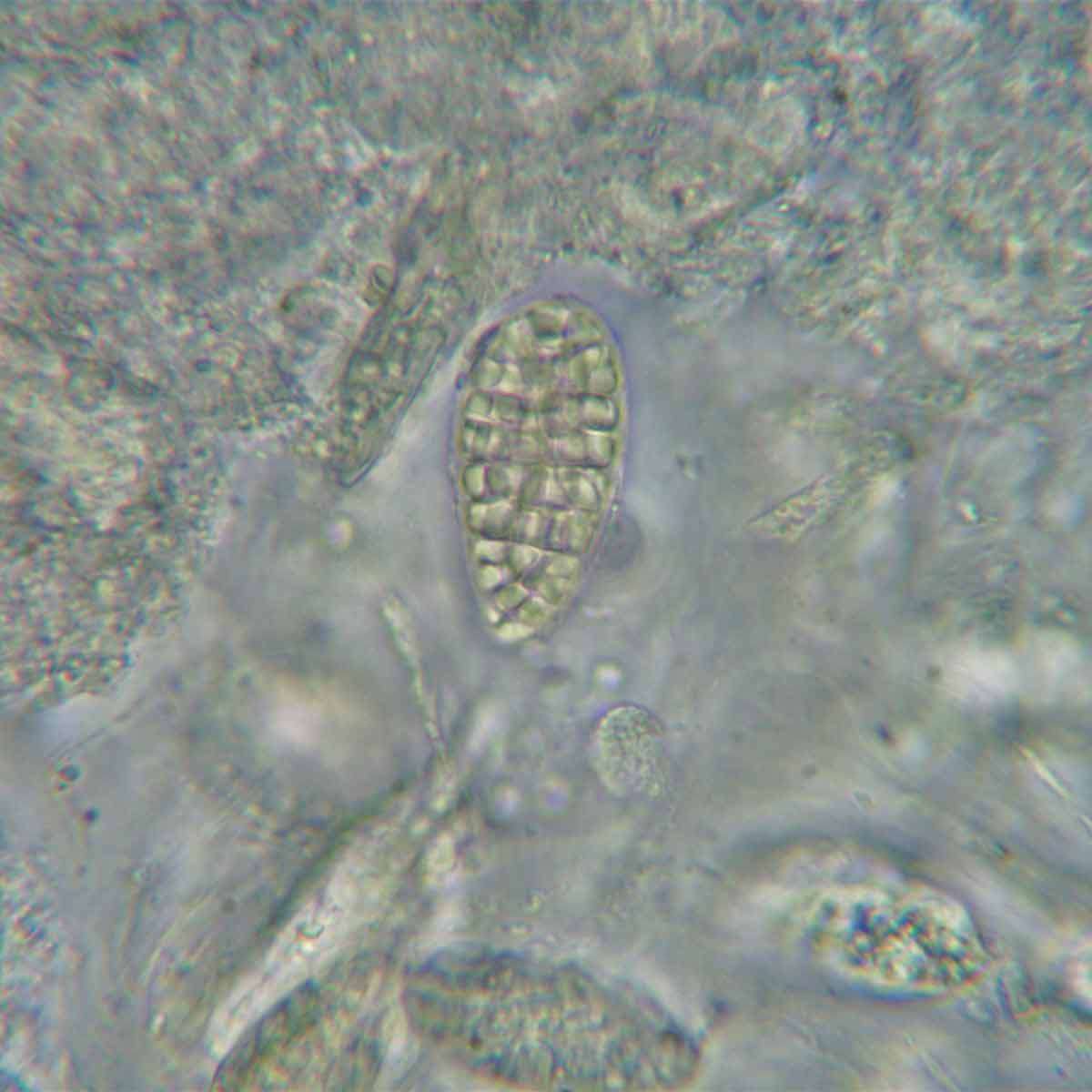
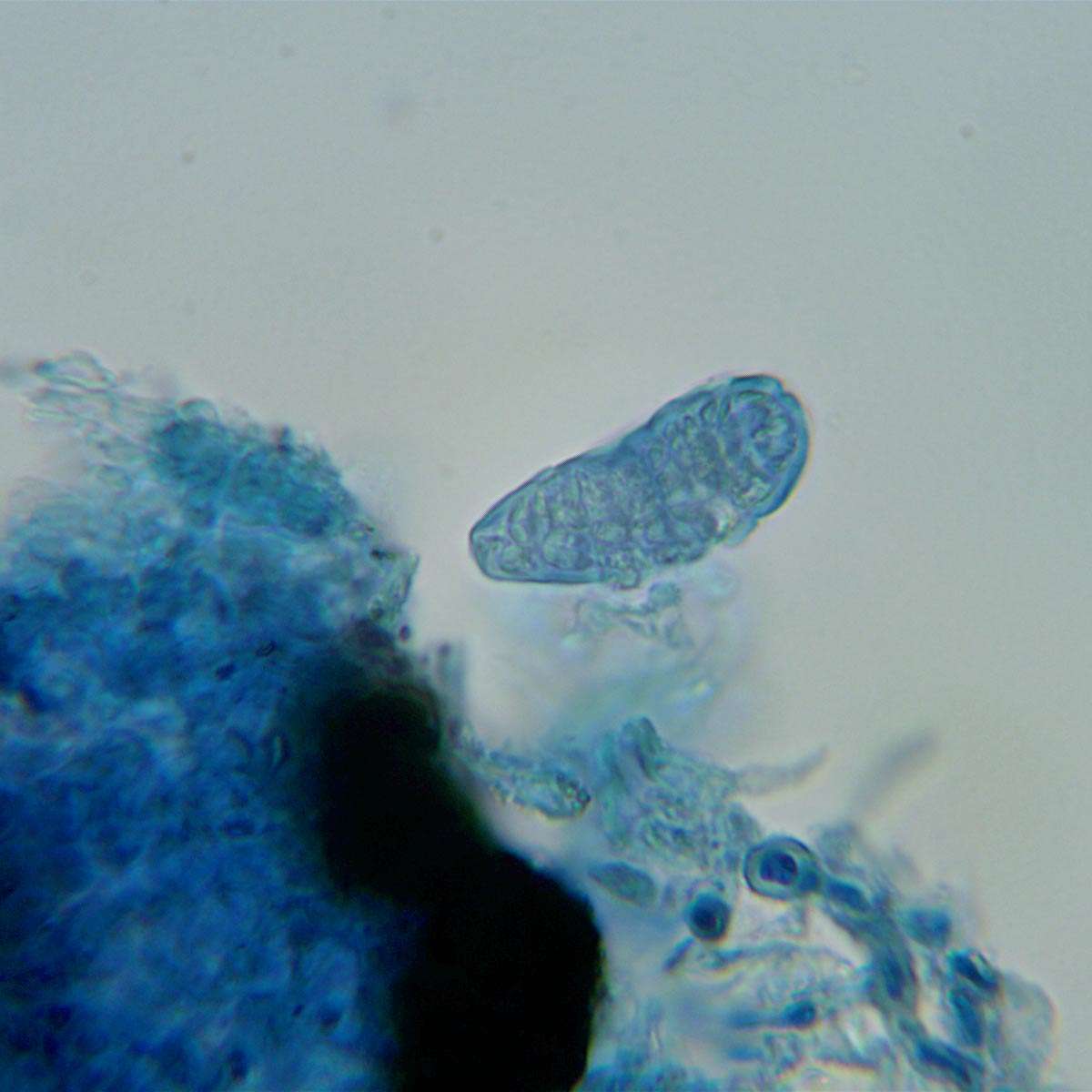
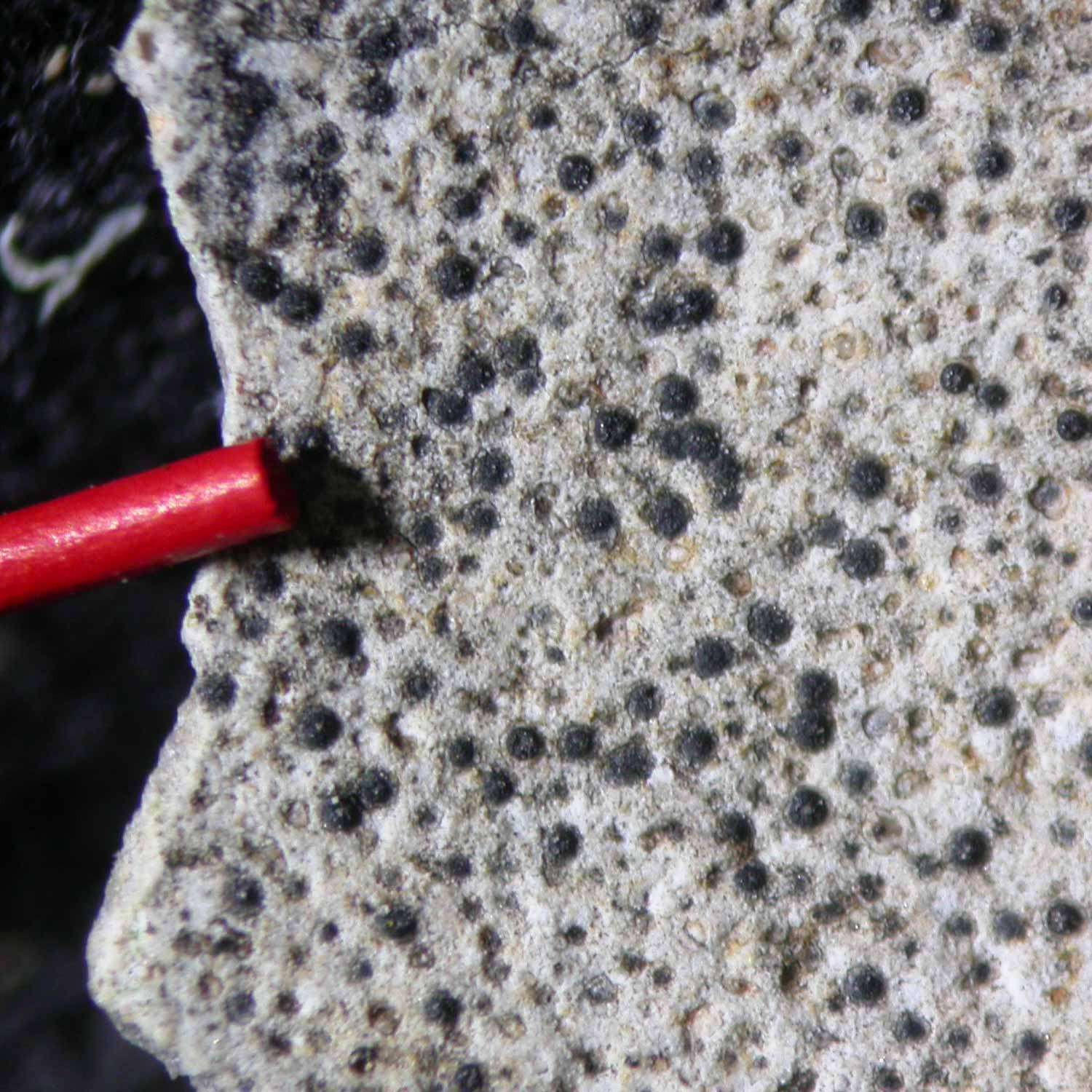
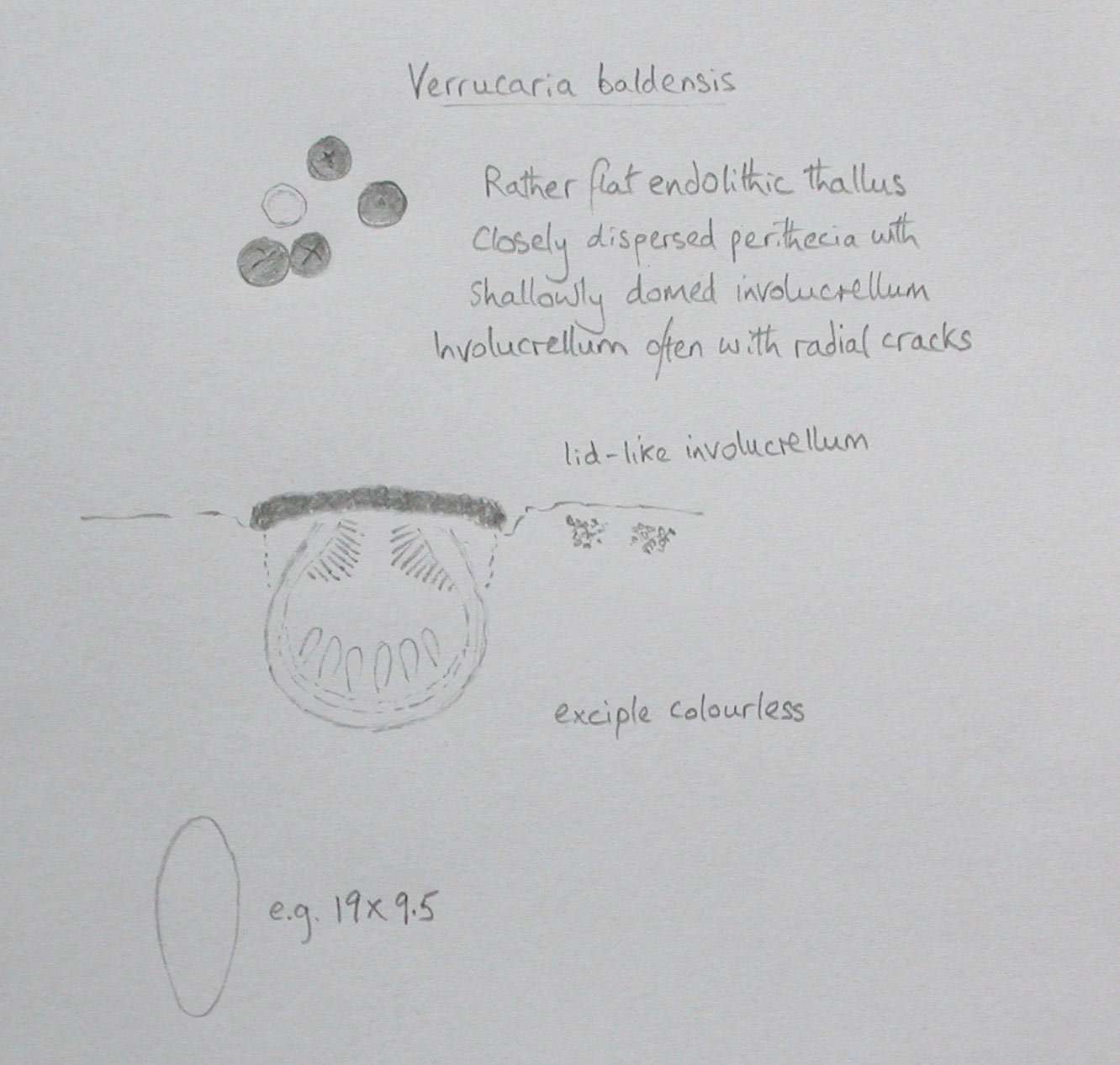
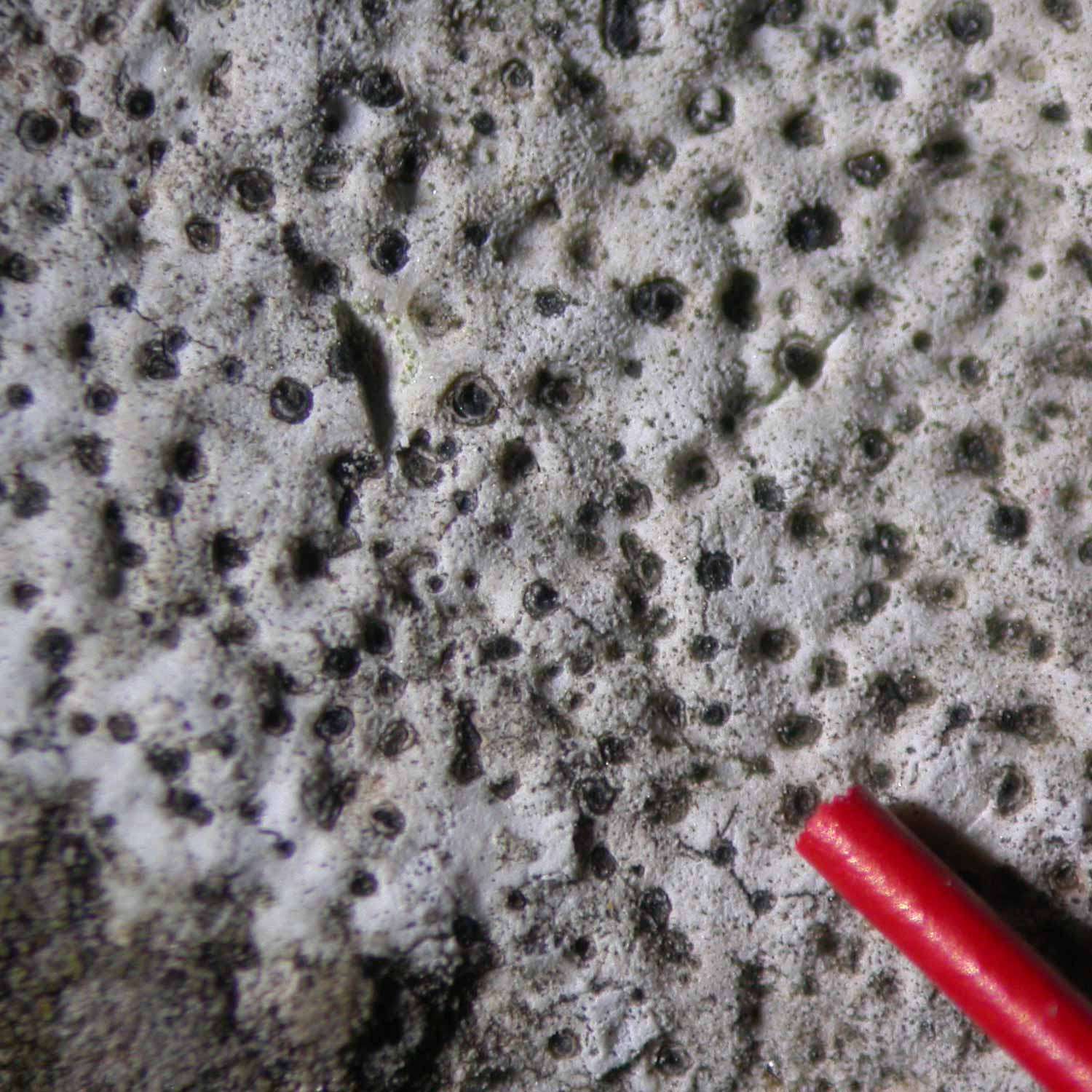
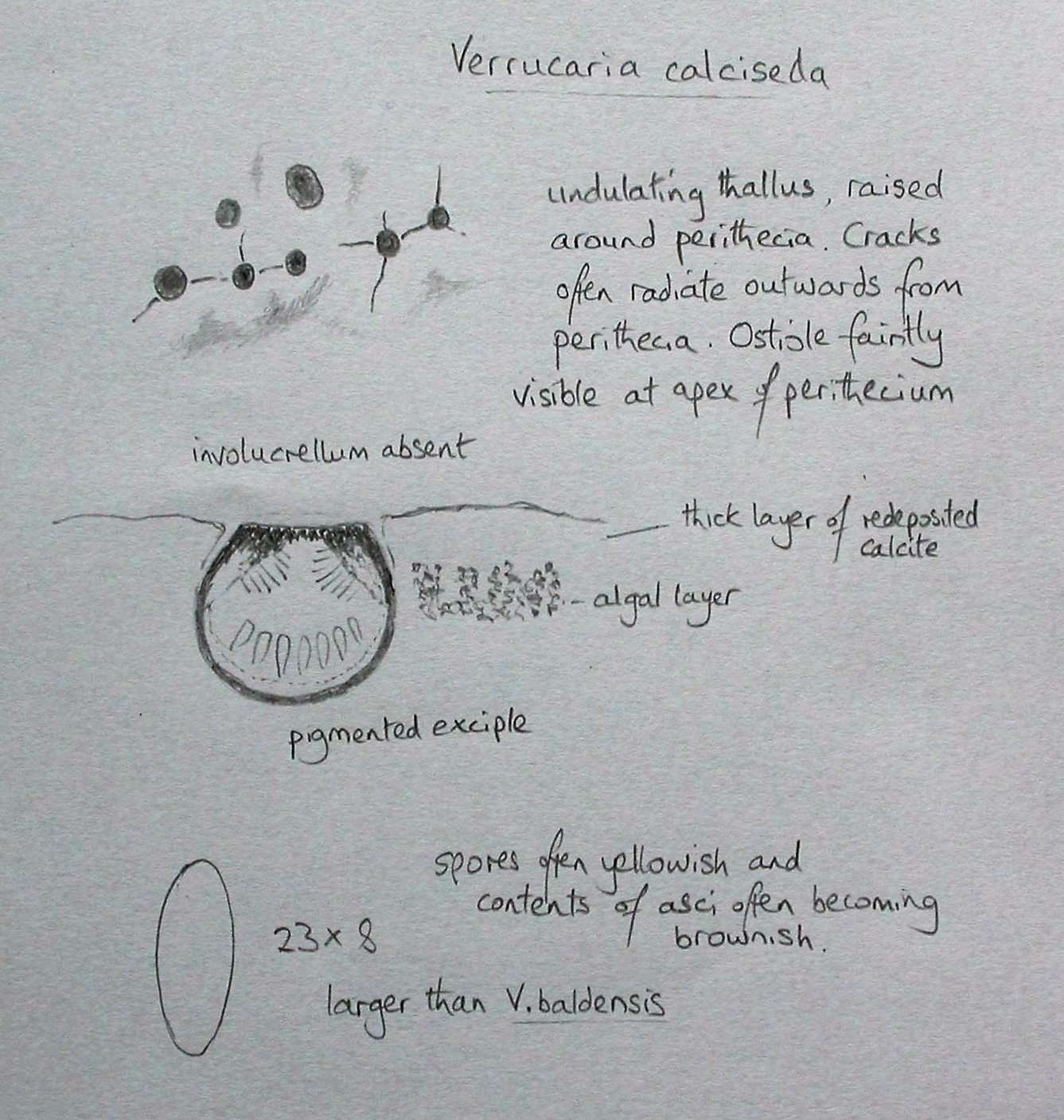
Here are some images and details of V. baldensis s. lat. and V. calciseda (both now placed in Bagliettoa). These are the two churchyard immersed pyrenocarps with the thickest lithocortex, especially V. calciseda which looks like a thick coat of masonry paint. Thelidium incavatum and its three look-alikes have a thinner cortex than this pair but thicker than V. hochstetteri.

[attachment=3]bald1.jpeg[/attachment] 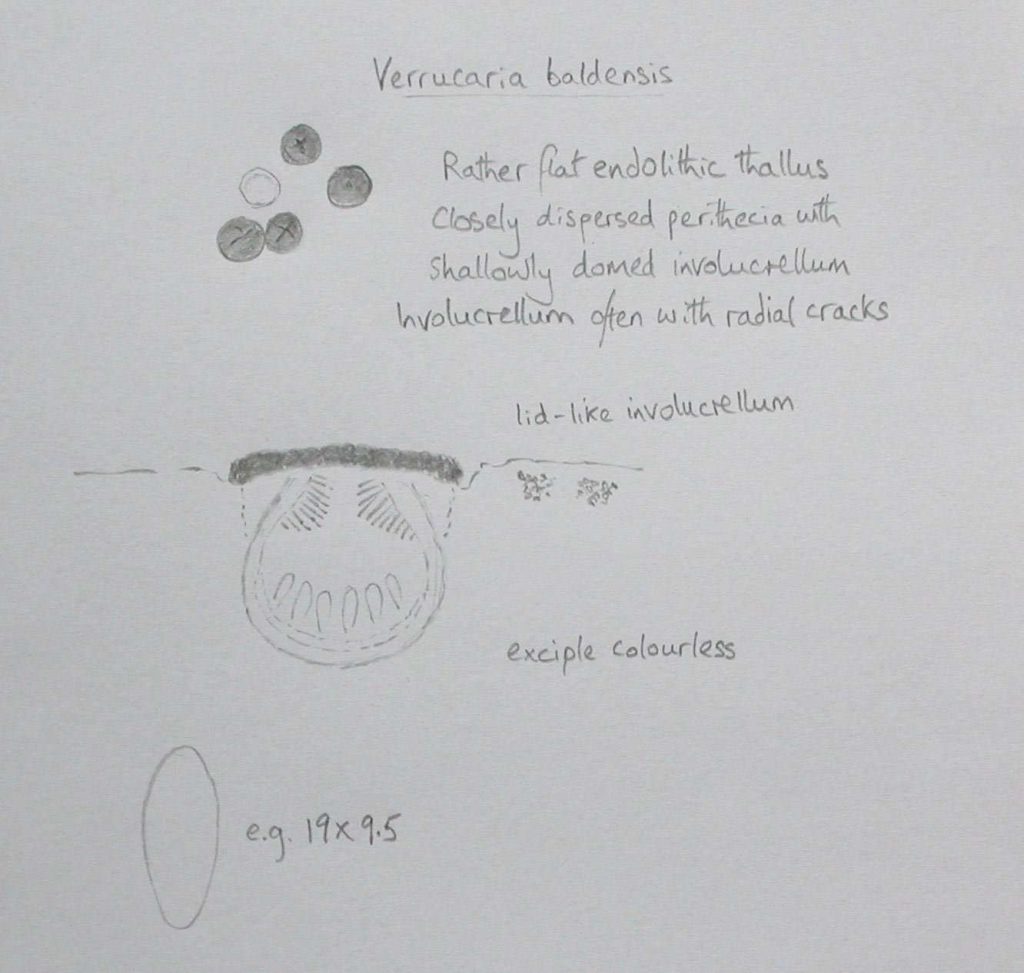
[attachment=2]bald2.jpeg[/attachment] 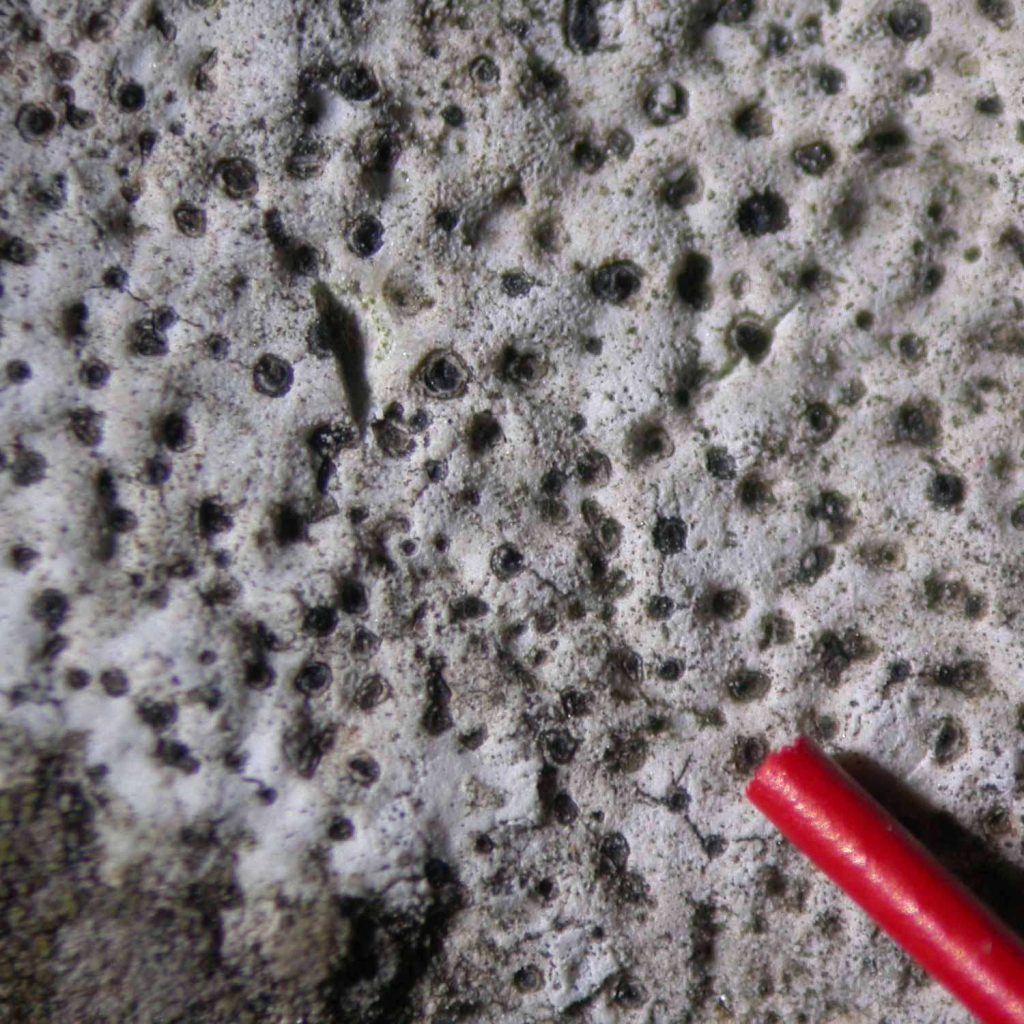
[attachment=1]calc1.jpeg[/attachment] 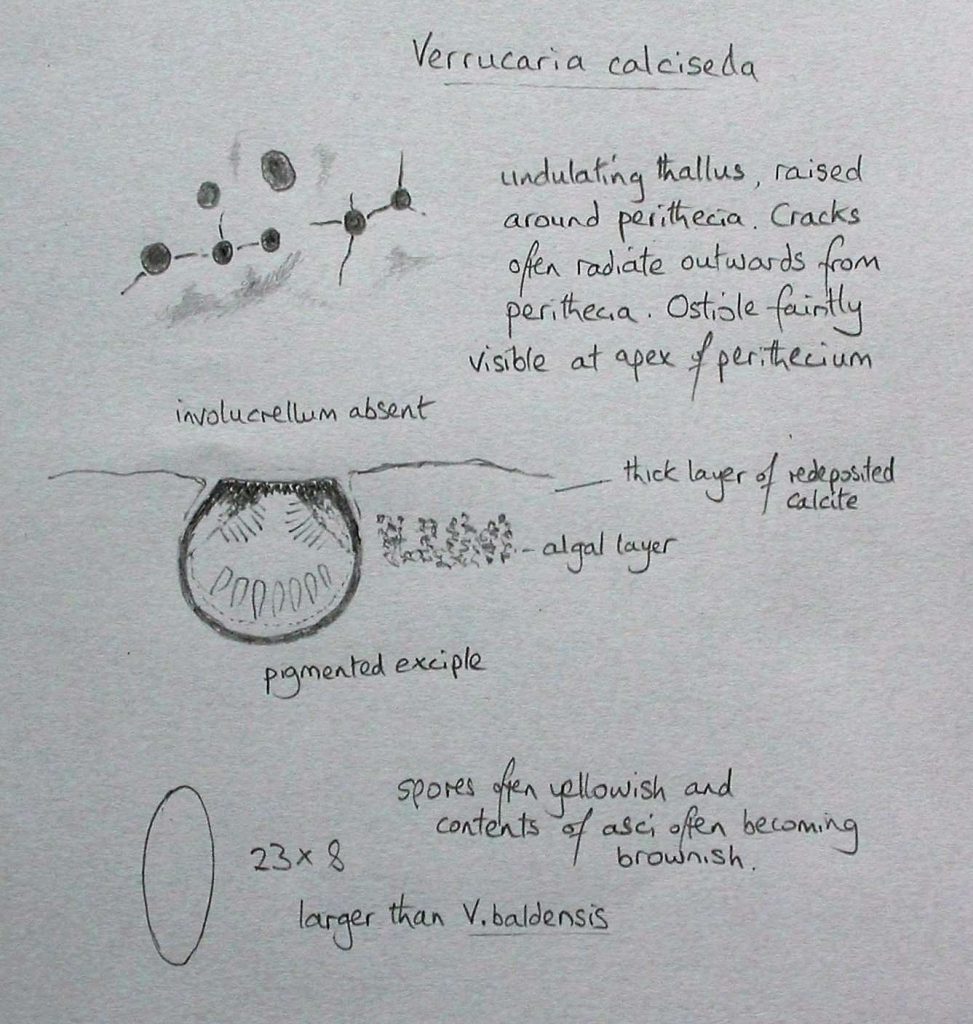
[attachment=0]calc2.jpeg[/attachment] December 17, 2025 at 7:53 pm #46812Thanks Mark, I find B calciseda in every churchyard and it seems to be more common than B baldensis in the churchyards I’ve done so far. It’s really interesting to see the two lists of what you expect to find.
Best wishes,
Sylvia
-
AuthorPosts


- You must be logged in to reply to this topic.