
Phaeophyscia sciastra?
- This topic is empty.
-
AuthorPosts
-
July 11, 2024 at 6:54 pm #32843
Poole Harbour, Dorset. Tentatively thinking this is Phaeophyscia sciastra on an exposed, seagull-enriched houseboat roof covered with mineral roofing felt. Lobes turning green when wet, underside black, medulla white and and there seem to be isidia rather than soredia present.
Or is it just a dark form of Phaeophyscia orbicularis?

[attachment=7]w Phaeophyscia 240708 012.jpg[/attachment] 
[attachment=6]w Phaeophyscia 240708 018.jpg[/attachment] 
[attachment=5]w Phaeophyscia 240708 038.jpg[/attachment] 
[attachment=4]w Phaeophyscia 240710 002.jpg[/attachment] 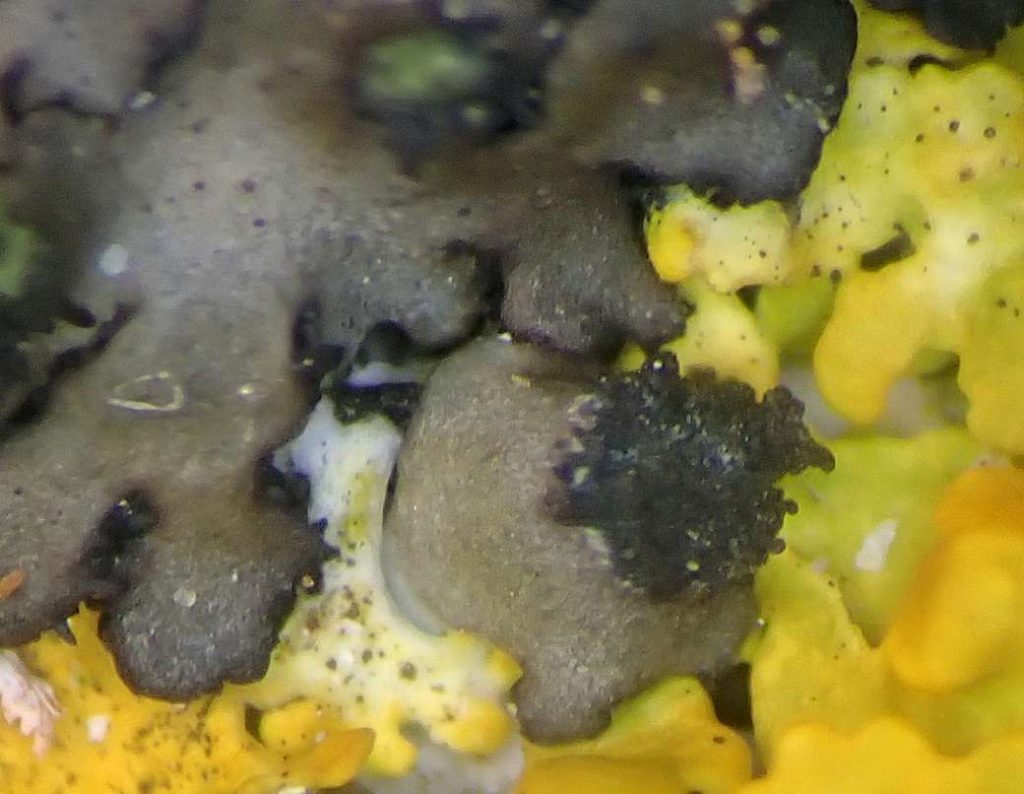
[attachment=3]w Phaeophyscia 240710 003.jpg[/attachment] 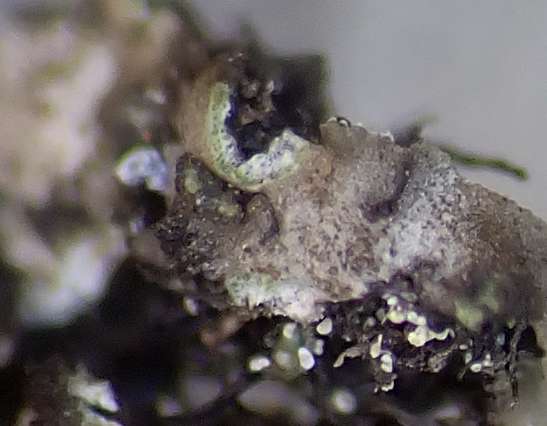
[attachment=2]w Phaeophyscia 240710 005.jpg[/attachment] 
[attachment=1]w Phaeophyscia 240710 008.jpg[/attachment] 
[attachment=0]w Phaeophyscia 240710 013.jpg[/attachment] July 12, 2024 at 4:51 pm #46113Phaeophyscia nigricans ?AG
July 12, 2024 at 10:26 pm #46114Thanks for the suggestion but the underside of the lobes and the rhizines are black which would rule out Phaephyscia nigricans which has Quote:“underside whitish, pinkish or pale brown-white, with sparse, generally pale rhizines”

[attachment=0]Phaeophyscia 240712 007.jpg[/attachment] August 26, 2024 at 10:35 am #46115For what it’s worth, I have collected several specimens similar to yours from exposed faces of roadside trees and concrete in Denmark, in the hope that they might be P. sciastra and so far I have concluded that they are all forms of P. orbicularis. In more well developed specimens, it is usually possible to see orbicularis-like circular soralia with quite granular soredia, that eventually develop cortex and appear isidia-like. It is my understanding that the isidia in P. sciastra are mainly marginal, so the presence of the “isidia” in circular laminal/submarginal patches might be a way to rule out P. sciastra. I am not an expert in the genus, but I have looked at hundreds of thalli in the past year, trying to come to terms with the bewildering variability of P. orbicularis. I was lucky to have a few of my collections sequenced, one small-lobed morph with terminal capitate soralia and one with long marginal soralia and marginal rhizines, but so far everything has been orbicularis!  September 5, 2024 at 3:19 pm #46116
Thanks Jonas – yes I think (finally!) it must just be P. orbicularis -
AuthorPosts


- You must be logged in to reply to this topic.