
Pale morph of Lecidella elaeochroma?
- This topic is empty.
-
AuthorPosts
-
February 28, 2021 at 5:24 pm #32045
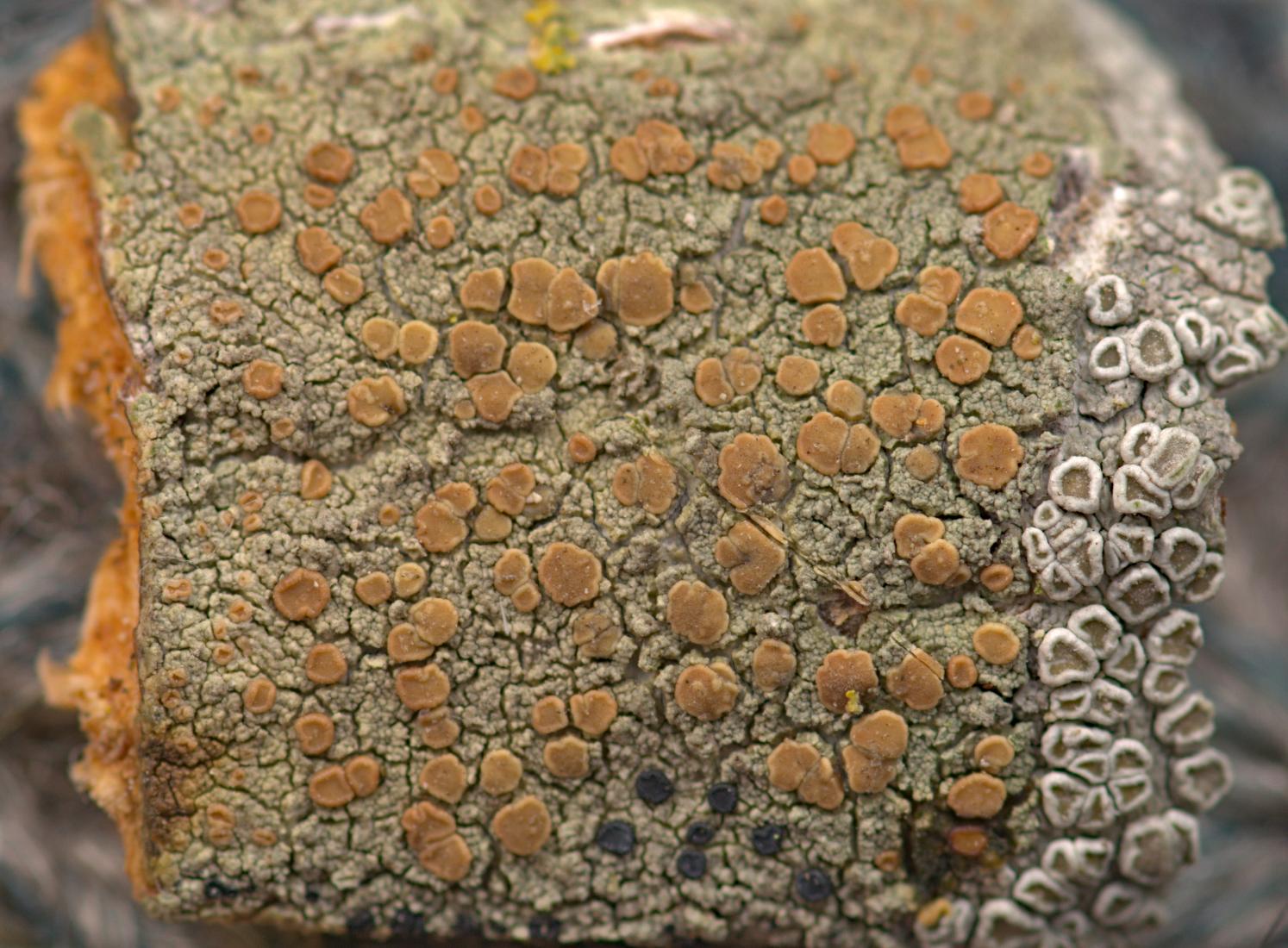
This specimen was collected from the bark of Tilia sp. on an old estate on the island of Langeland in southern Denmark. It has caused quite some confusion, but I think I may have finally craked the case thanks to a post on this forum (
https://www.fungi.org.uk/viewtopic.php?t=2510 
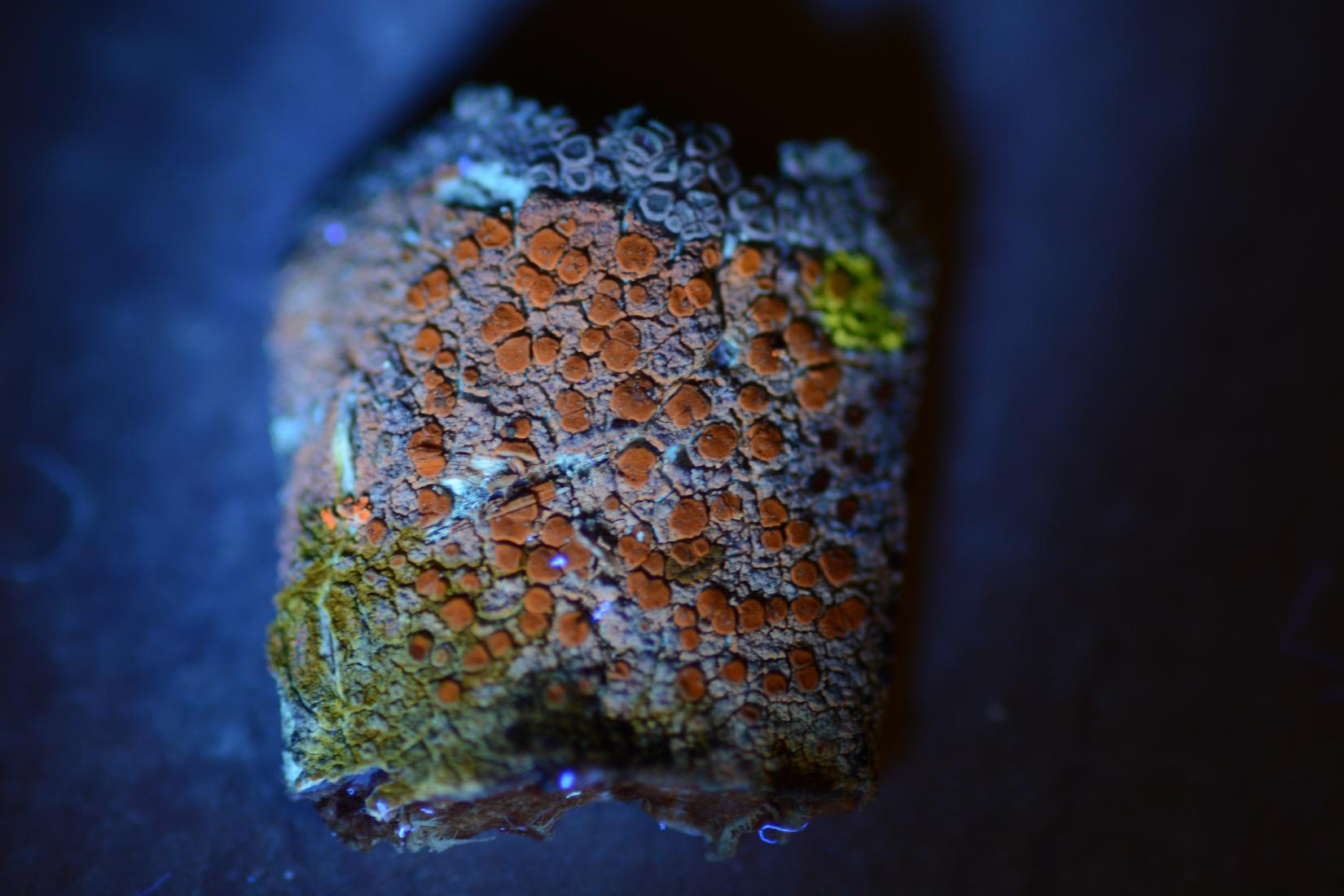
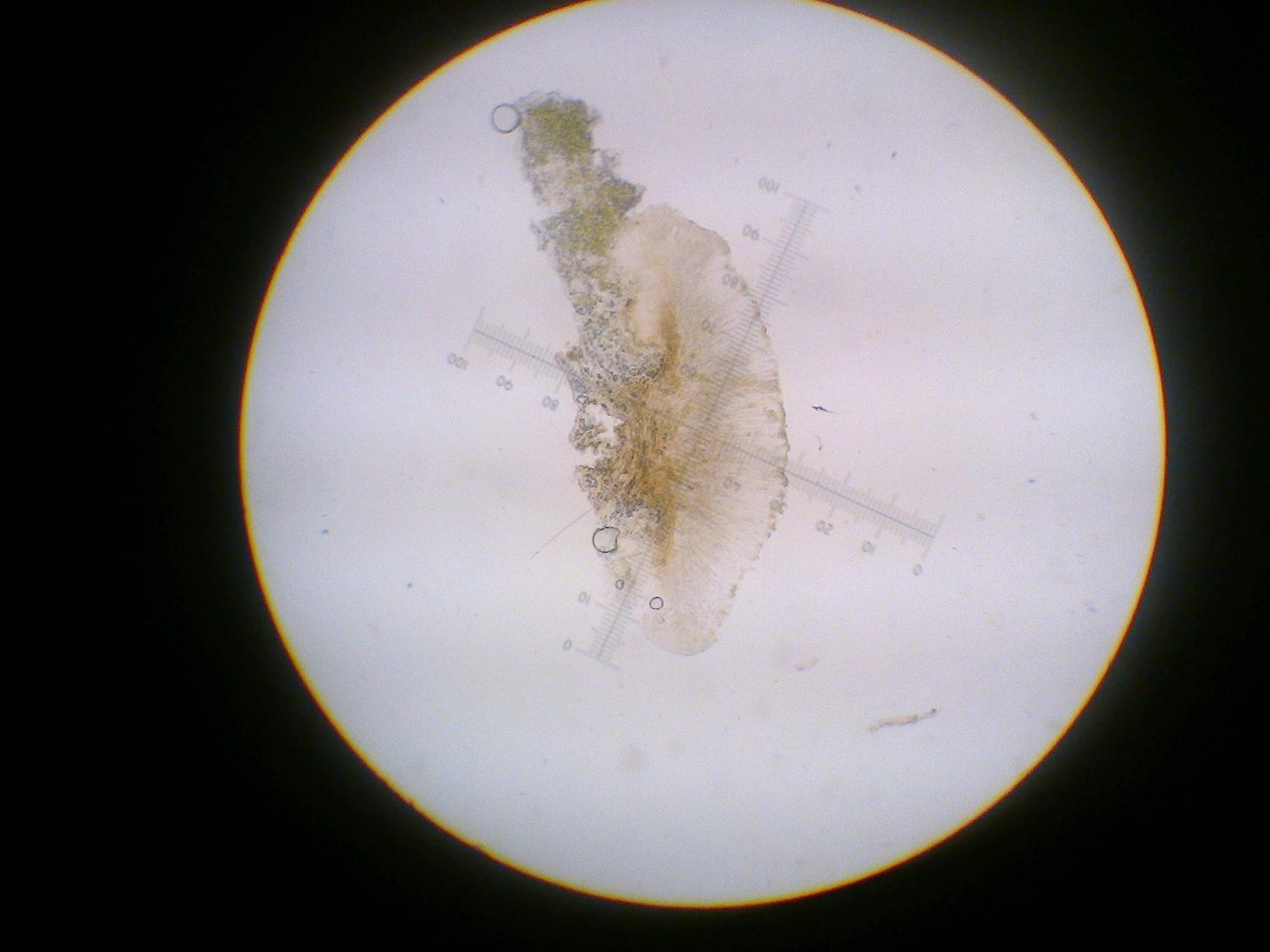
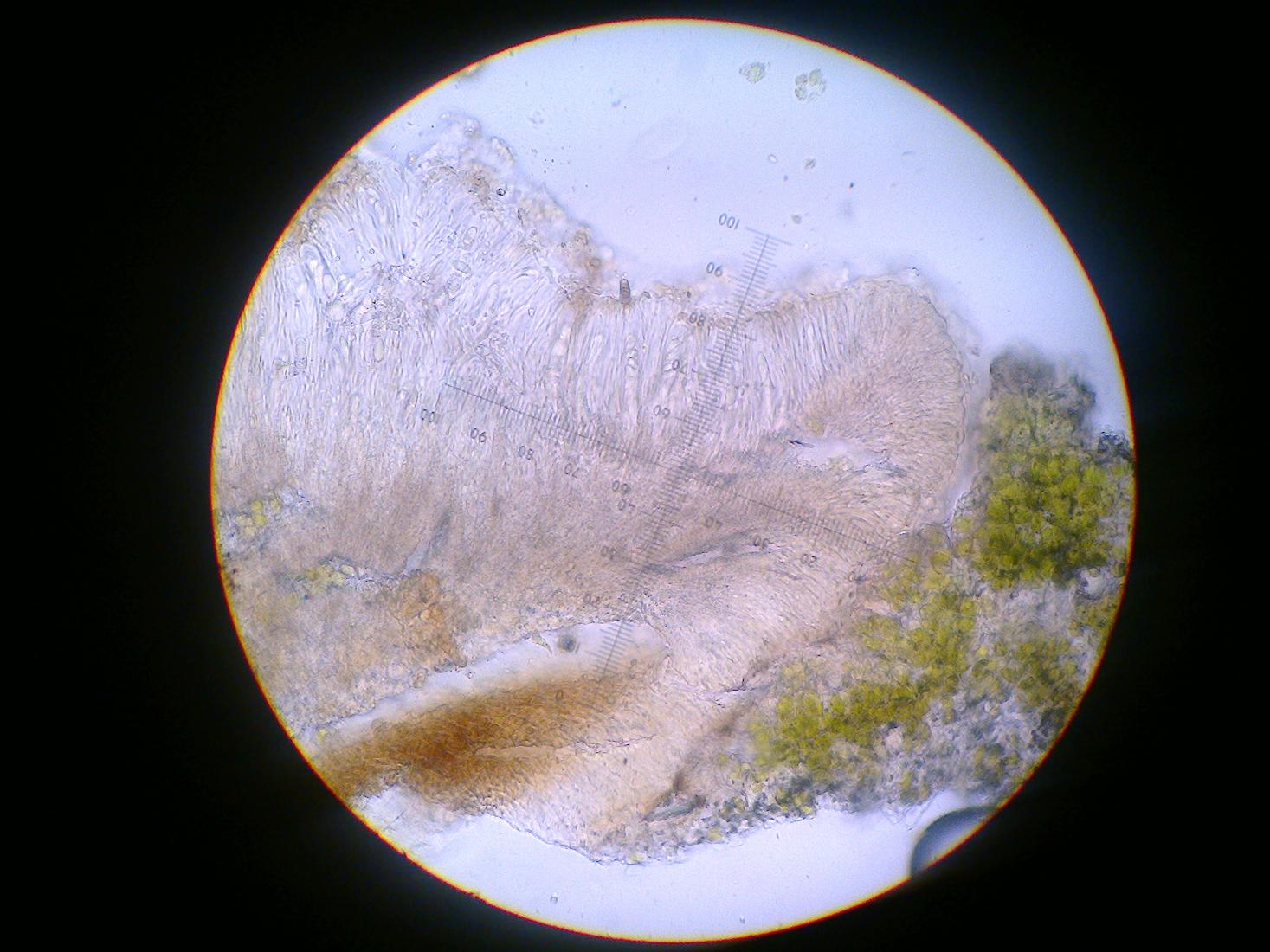
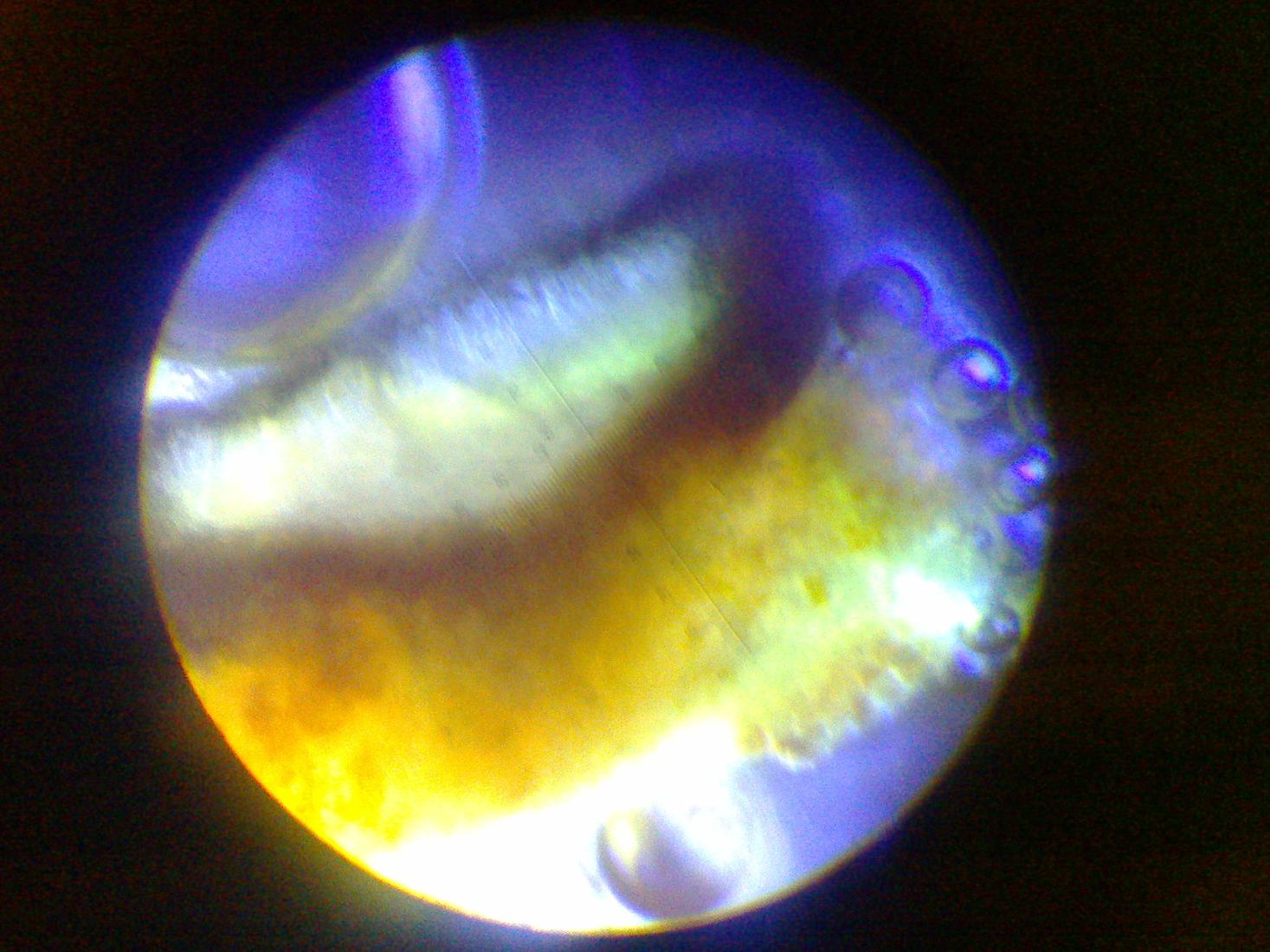
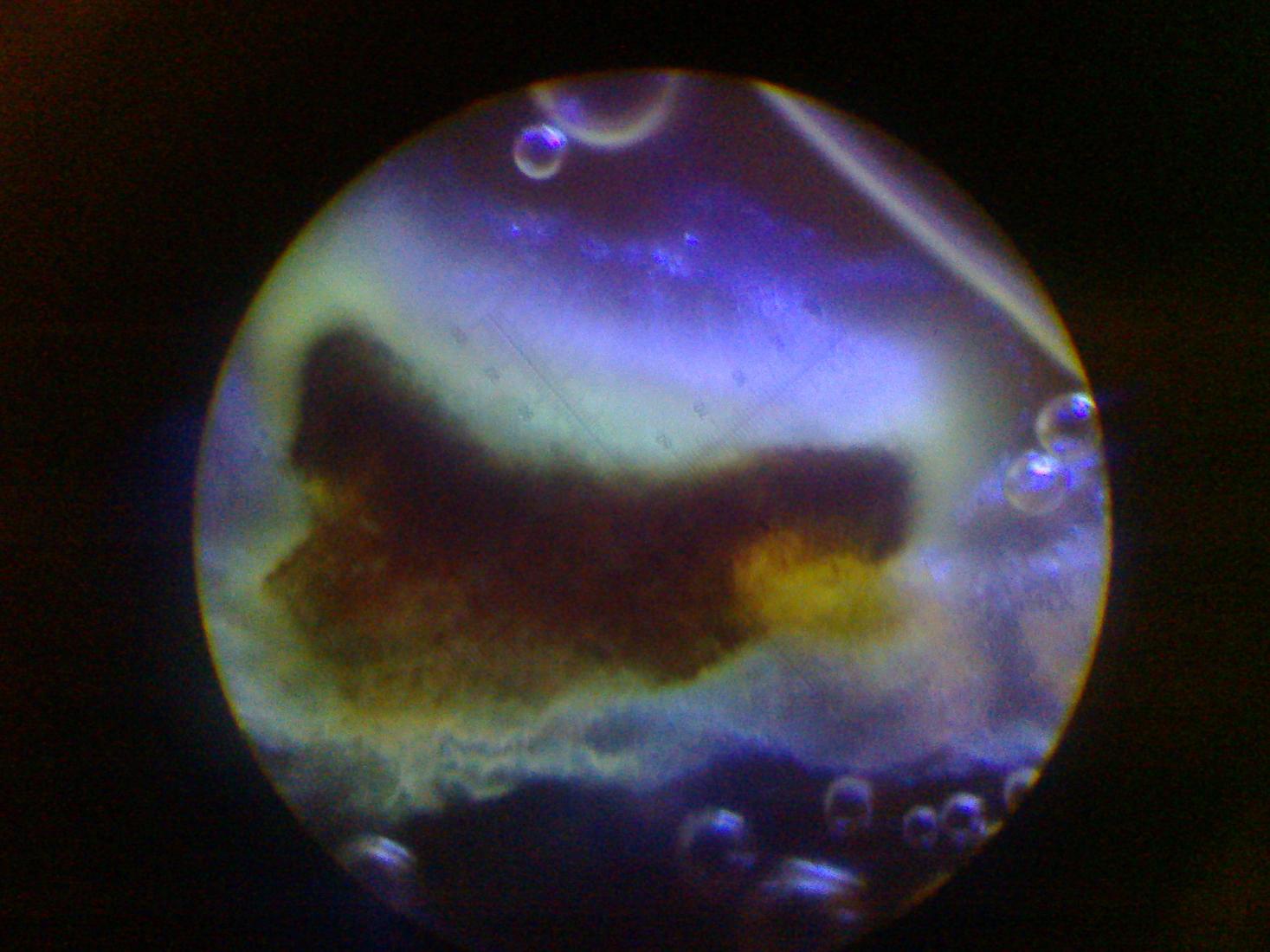
Apothecia to about 0.70 mm in diameter, the thallus and apothecial sections react C+ yellowish orange (this is most clear in apothecial sections) and apothecia react UV+ orange (xanthones present?), thallus is P- and K+ yellow (K/UV bright yellow). Hypothecium brown, K+ intesifying. Spores are broadly ellipsoid to ovoid (slightly asymmetrical) and measure 11.66 µm x 6.22 µm (mean of 10 spores). Asci as far as I can see of the lecidella-type, but I would be lying if I said that I was comfortable in interpreting these K/I reactions. The K/I reaction of the bacidia-, biatora- and lecidella-type seem very similar to me…
Any help in confirming or rejecting this suggestion is more than welcome.

[attachment=0]DSC_3156_01.jpg[/attachment] 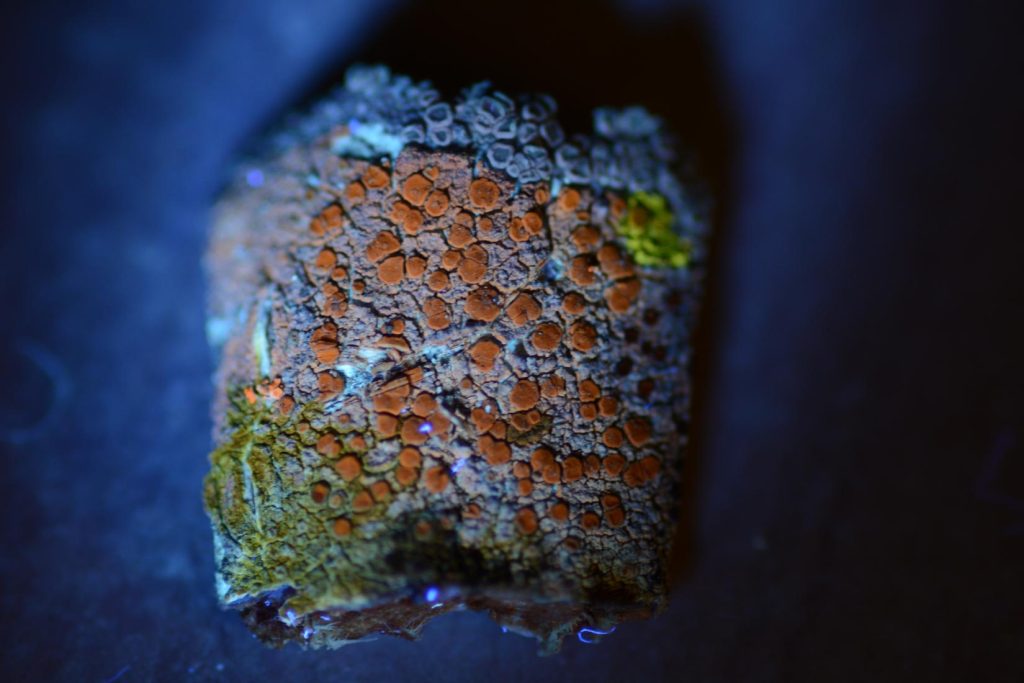
[attachment=8]DSC_3159.JPG[/attachment] 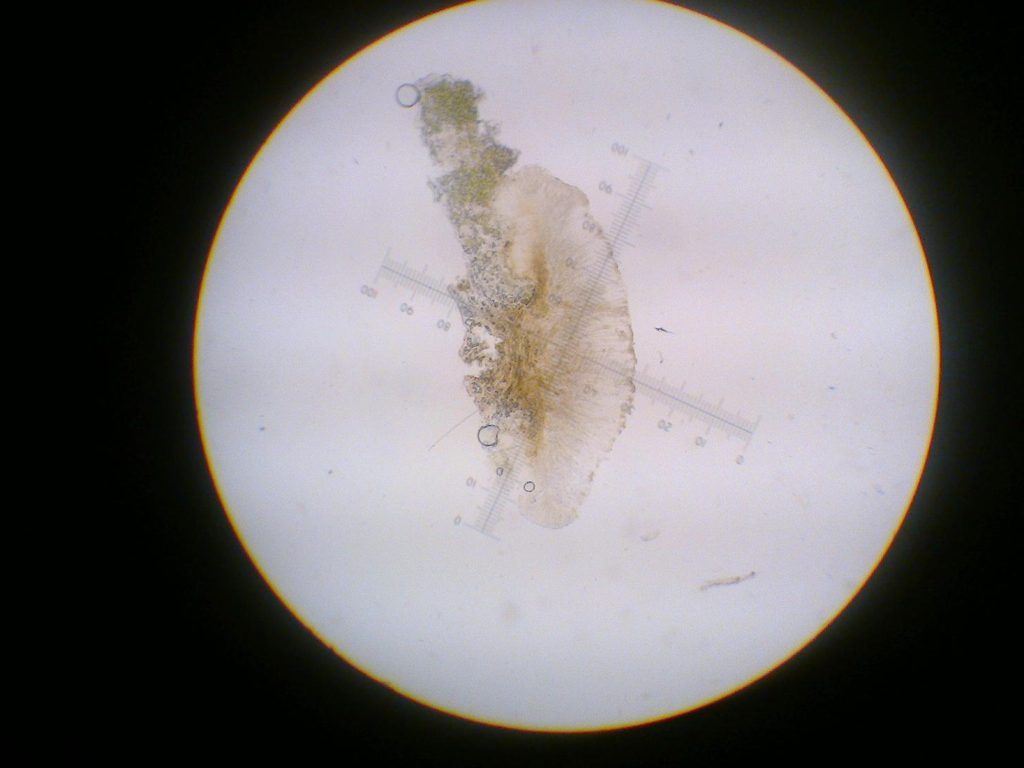
[attachment=3]Billede1852.jpg[/attachment] 
[attachment=7]Billede1845.jpg[/attachment] 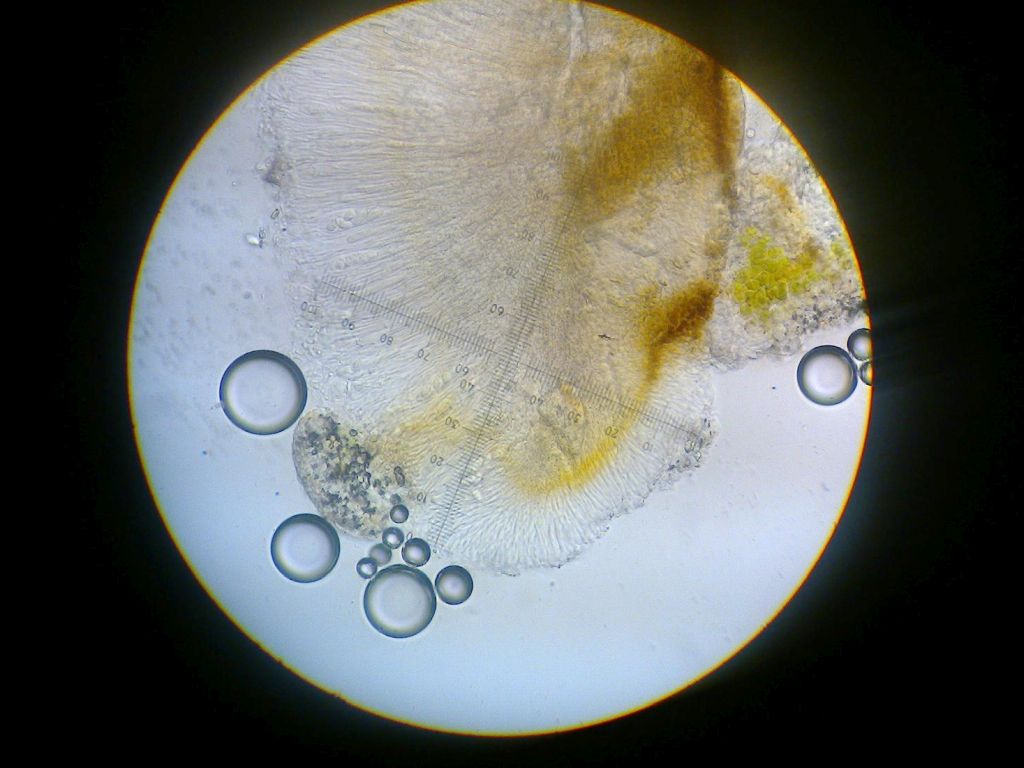
[attachment=6]Billede1846.jpg[/attachment] 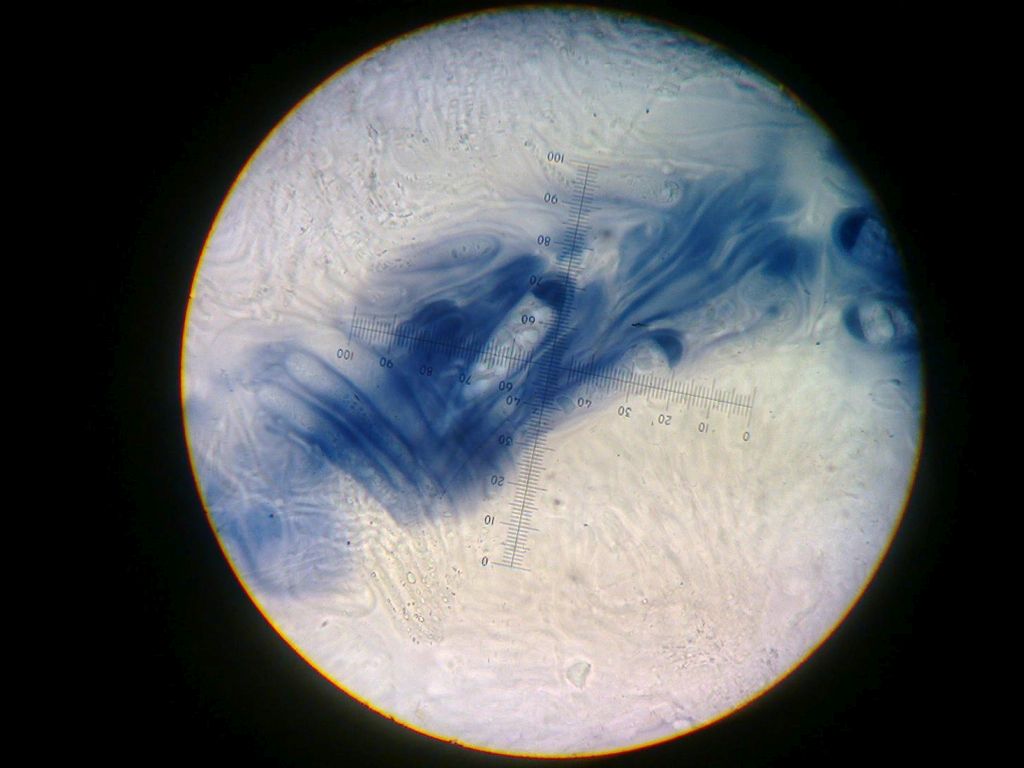
[attachment=5]Billede1850.jpg[/attachment] 
[attachment=4]Billede1851.jpg[/attachment] 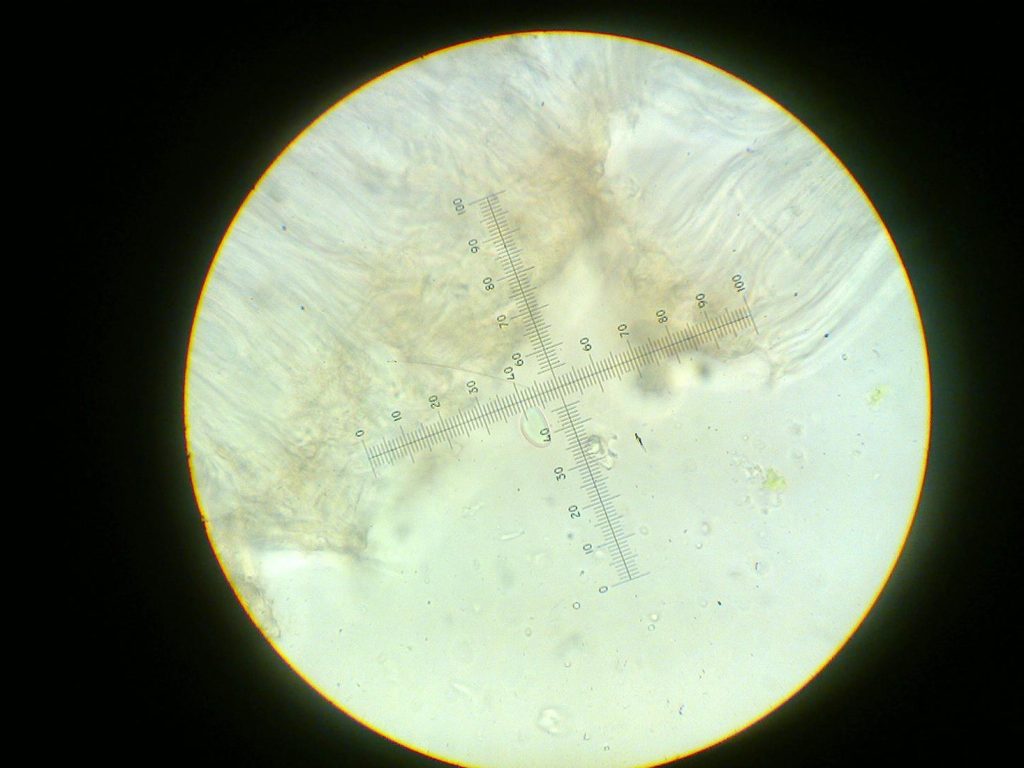
[attachment=2]Billede1856.jpg[/attachment] 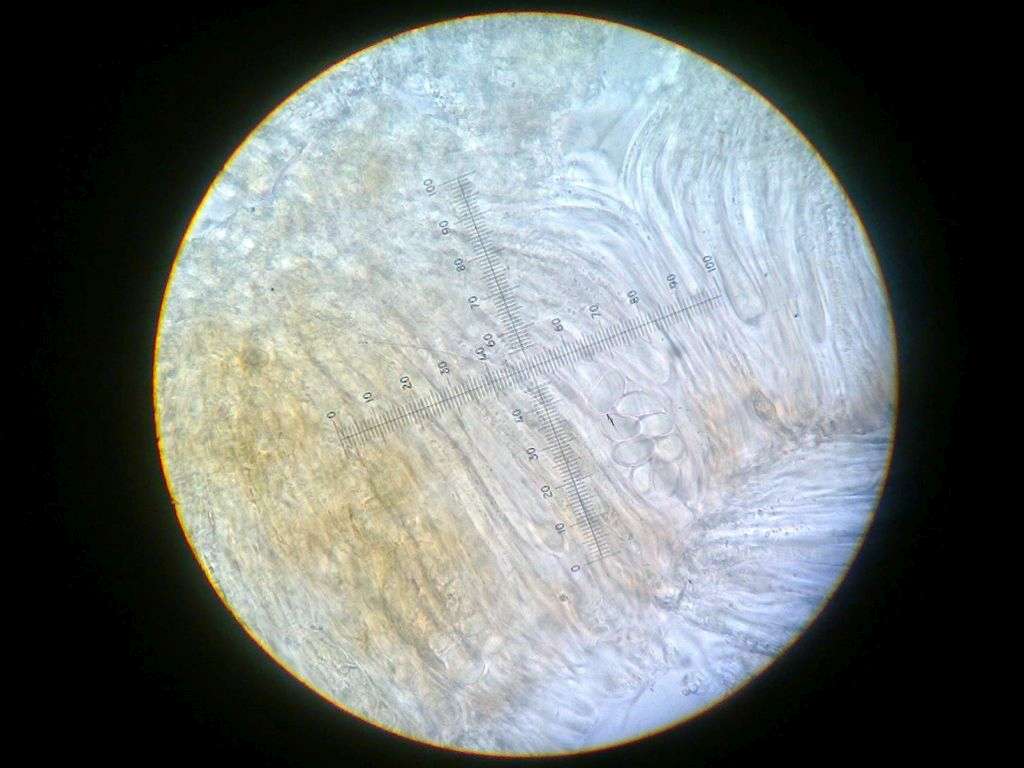
[attachment=1]Billede1857.jpg[/attachment] February 28, 2021 at 8:18 pm #44040I feel sure that you have a pale morph of Lecidella elaeochroma, pale because it lacks one of the two normal pigments (lacking the blue-green pigment). In addition to the characters that you have mentioned (ascus type, simple ellipsoid ascospores, C and UV+ orange reactions) I can see numerous minute colourless inclusions in the lower hymenium in a couple of your sections. This abundance of tiny inclusions is something that alerted me to the correct identification when I was first struggling to identify a pale morph of L. elaeochroma. I tried to key it out in the main keys in LGBI2 and was knocked off course at several couplets, in particular the nature of the paraphyses (which are not simple) and the ascus type (which is not Lecanoratype). I have written a twitter thread describing my initial struggles with this sort of material: https://twitter.com/obfuscans3/status/1213420631406137344 When I shine a UV light on to normal
L. elaeochromaI don’t see any distinct UV+ orange reaction of the apothecia. I will experiment with sections to see if there is such a reaction but that the fluorescence is made inapparent by the darkness of normal type apothecia. The appearance of this type of
L. elaeochromais really remarkable and when encountering it for the first time my thoughts turned to genera such as Bacidiaor Fellhaneraand certainly not to Lecidella. February 28, 2021 at 10:58 pm #44041Thank you for the reply, I enjoyed following your identification process! I may have misinterpreted the paraphyses as simple as I don’t have a good stain for them yet – they are clearly branched in your specimen and I don’t doubt that it is the the same species. I have ordered some ink and will try the ink – acetic acid stain on my next specimen.
My interpretation of the paraphyses as simple led me towards
Biatoraas I first interpreted the K/I reaction as the Biatora-type (and I am still not entirely sure of the difference between Lecidella– and Biatora-type, if I am honest). The picture of B. helvola on ITALIC ( http://dbiodbs.univ.trieste.it/italic/italic07?s=246&us=admin I am interested to hear what you find out regarding the UV-reaction of normal apothecia. I made a very haphazard setup to do a quick test with no overwhelming results. I think I can see a small band of orange UV-reaction in the hymenium that turns yellow and moves “inward” when I add C, but simply replacing my condenser with a UV torch might not be the best way to test this and I suspect that there are some artefacts…

[attachment=2]Billede1858.jpg[/attachment] 
[attachment=0]Billede1881.jpg[/attachment] 
[attachment=1]Billede1876.jpg[/attachment] -
AuthorPosts



- You must be logged in to reply to this topic.