
Mystery lichen on sandstone church wall
- This topic is empty.
-
AuthorPosts
-
February 5, 2024 at 8:38 pm #32768
Hi, Sorry to post for help with an ID with so little information, it’s probably something really common, but I am getting nowhere with this lichen. I found a large patch on the south-facing sandstone wall of Petworth Church, all tests were negative (K, C, and UV). It appears to be squamulose but with lecanorine apothecia. Any pointers would be great. I will need to go back to get a sample as the bus arrived before I could get one.
Thank you,
Sylvia
February 6, 2024 at 4:42 am #45926It took me a few minutes racking my brain but I am fairly sure I know what this is, a lovely thing I have only seen once, in a churchyard on the Isle of Wight. Have a look at Solenopsora vulturiensis: https://www.afl-lichenologie.fr/Photos_AFL/Photos_AFL_S/Solenopsora_vulturiensis.htm If it does turn out to S. vulturiensis, then you seem to have found a spectacular and fertile colony of it (LGBI says that apothecia are rare), and your superb photos of it will be much appreciated. A glance at the distribution map shows that it is quite distinctly coastal but could turn up a few miles inland.
https://britishlichensociety.org.uk/resources/species-accounts/solenopsora-vulturiensis February 6, 2024 at 9:10 am #45927A little-known feature of the genus Solenopsorais that it has the distinctive ‘computer mouse’ haustoria which are also seen in Catillaria, Halecaniaand Leprocaulon. In the following drawing, Lepraria lobificans(lacking such haustoria) is provided for comparison with Leprocaulon calcicolaas these two leprose lichens look almost identical in the field and the presence of such haustoria is one of the characters I use in confirming specimens of L. calcicola. 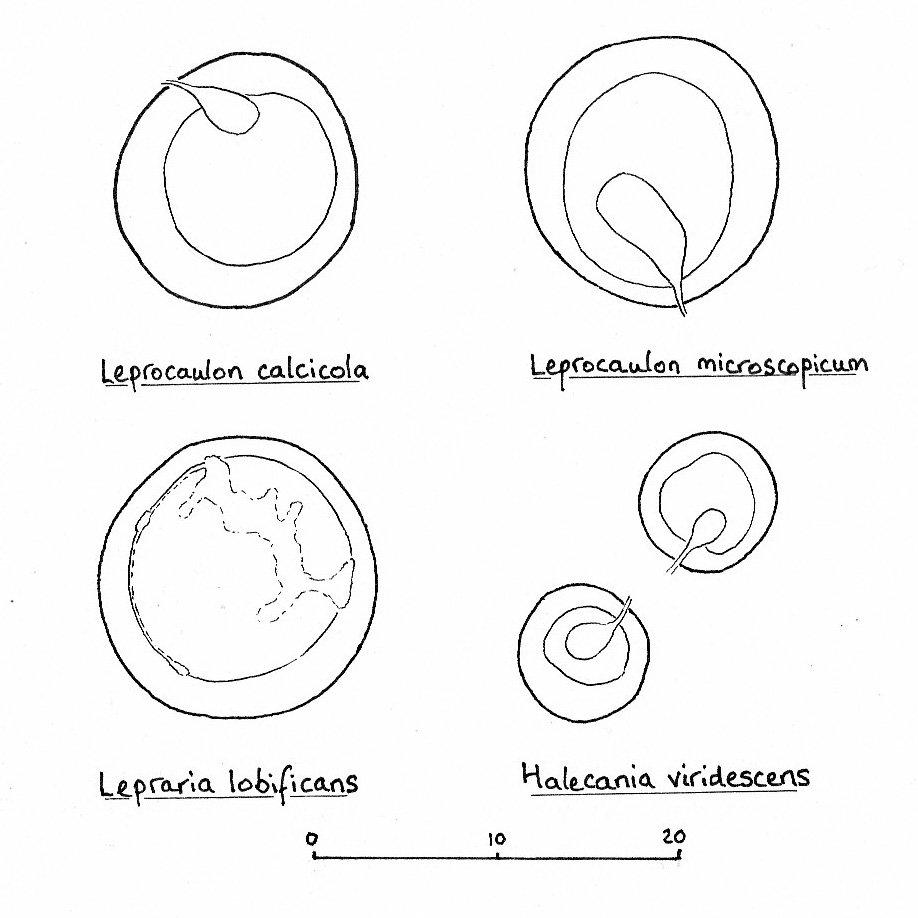
[attachment=3]DXkLRSTXcAAj0IY.jpeg[/attachment]
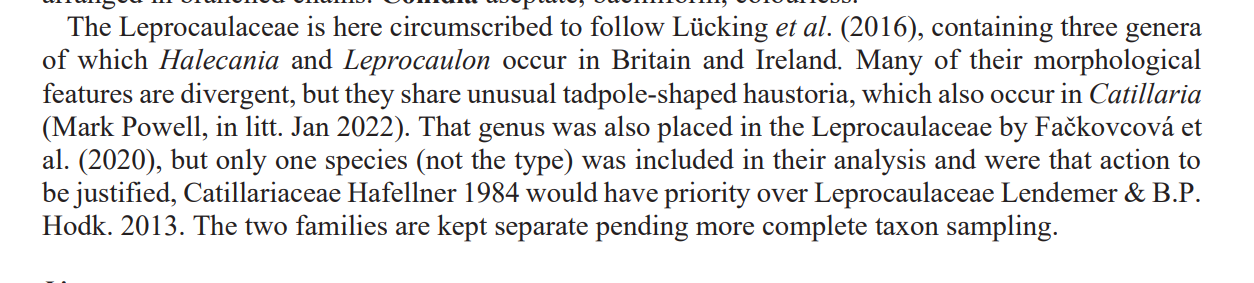
It has been fascinating to see these four genera jumping about in their higher taxonomic placements, variously placed in different families and even in different orders. LGBI3 currently placesCatillariaand Solenopsorain the Catillariaceae and Halecaniaand Leprocaulonin the Leprocaulaceae, both those families in the Caliciales. LGBI2 considered Catillaria, Halecaniaand Solenopsorato belong in the Catillariaceae and placed this family in the Lecanorales. In the meantime, at one stage Halecaniaand Leprocaulonwere together in the family Leprocaulaceae which was placed in a newly erected order Leprocaulales. A relatively recent paper has transferred Solenopsorato the Leprocaulaceae. 
[attachment=2]Screenshot 2024-02-06 8.34.46 AM.png[/attachment]
A note has been placed in the LGBI3 account for the Leprocaulaceae to explain the higher taxonomic placement used there.
[attachment=1]Screenshot 2024-02-06 8.33.23 AM.png[/attachment]
SurelyCatillaria, Halecania, Leprocaulonand Solenopsorawill all end up in the same family eventually? Catillariaand Halecaniaseem so similar in so many respects that I can’t believe that they belong in different families. Anyway, this is not necessarily relevant to the interesting lichen on Petworth Church but many colonies of
Solenopsoravulturiensisare likely to be sterile and less well-developed. It made me think that if I had a some suspected S.vulturiensisthat I wasn’t sure of, I would certainly examine the photobiont cells to see if any of the distinctive haustoria were present (and it might be useful for someone who has access to this species to check that the haustoria are indeed easily apparent in that species, I have only looked for them and seen them in S. candicans). I notice that the LGBI3 account for
S. vulturiensisdoesn’t mention its occurrence on walls and this might be disconcerting for anyone thinking they had found it in churchyards. Some Continental accounts, including the lichensmaritimes and Italic websites, include chapels and walls in habitat notes for S. vulturiensis. 
[attachment=0]Screenshot 2024-02-06 8.57.29 AM.png[/attachment] February 6, 2024 at 10:03 am #45928Thanks so much Mark. What a lovely lichen to find. It does have an odd look as the apothecia seem almost as if they don’t belong on it – although I could clearly see them developing. There was a lot more on the north wall of the church but non-fertile. I will definitely be going back for a better look at the church as I also found Pertusaria pseudocorallina, which I have seen in Cornwall, but first time in Sussex for me (there are some records). Amazing what you can find in 20 minutes waiting for a bus. Thank you
Sylvia
February 6, 2024 at 10:05 am #45929Meant to say – although I put the K test as negative, it was one of those where I was very undecided about whether there was a slight yellow and erred on the side of negative. February 6, 2024 at 11:06 am #45930LGBI states that S. vulturiensis is “K+ faint yellow” and that the chemistry is “+/- atranorin”. So chemistry isn’t really particularly diagnostic but you might like to shine UV on a spot of K applied to your lichen and see if the K/UV+ yellow test for atranorin develops when the spot dries. Your photos provide a model for how to present images for identification, giving an overview, some nice close-ups and the all-important and often forgotten edges of the thallus/colony. If you had only posted the first image, without a view of the nice squamulose morphology, I doubt whether I would have got anywhere with it and my thoughts might have drifted incorrectly towards thinking it might be some odd-looking Bacidia rubella!
February 7, 2024 at 8:28 am #45931I start to feel a little jealous when I think of such exotic species as Solenopsora vulturiensisin churchyards. However, this is probably partly a case of ‘the grass seeming greener on the other side’ because the churchyards of my home region (South Midlands and northern Home Counties) do seem genuinely surprisingly rich in a national comparison. The list for my own relatively unremarkable parish churchyard, chosen at random by fate simply because I live here, now has a list of over 160 (plus 15 lichenicolous fungi). It has been an interesting exercise to keep working away at a single churchyard and to compare these results with what is found in typical one-off visits. Here are some observations. 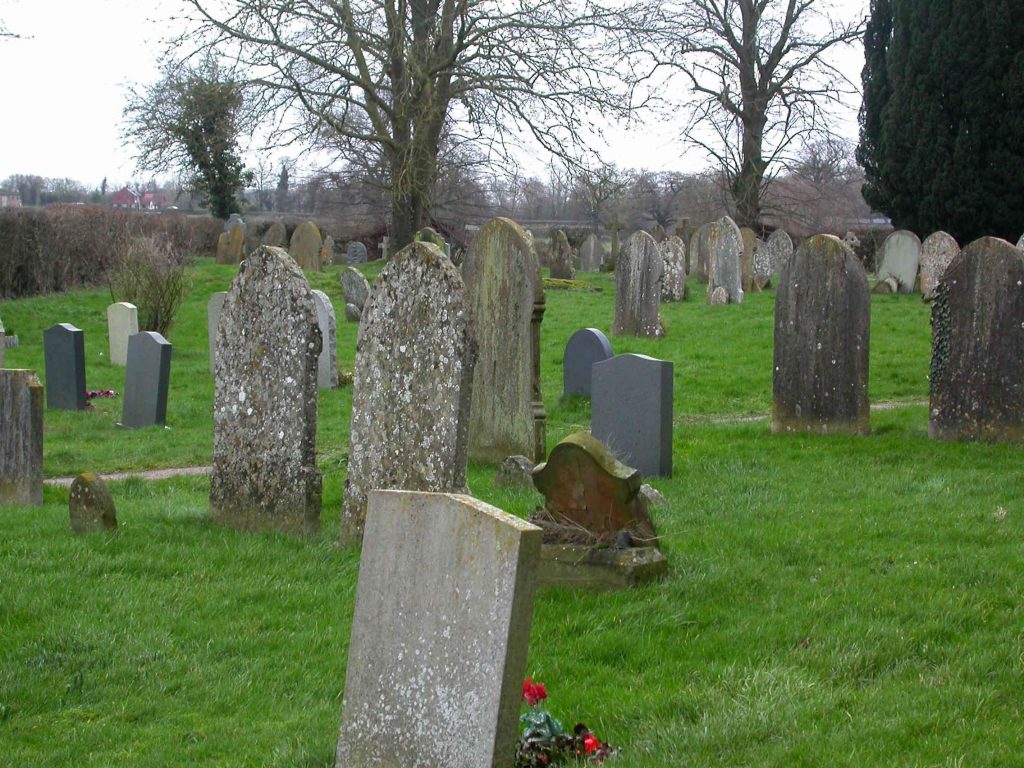
[attachment=4]GFZ90o1XAAAHK-I.jpeg[/attachment] 
[attachment=3]GFZ_ZpuWQAAseEx.png[/attachment] 
[attachment=2]GFZ_fpsXIAAj0mT.png[/attachment] 
[attachment=1]GFaAH-KXcAEolwy.png[/attachment]
When I revisited some of the sites that Jack Laundon studied in the 1970s, his annotated species lists were particularly interesting because they provided a subjective assessment of abundance. I am producing something similar for the main sites in my parish; here is the first part of the churchyard list.
[attachment=0]GFW4cAyWEAAiXSh.png[/attachment] -
AuthorPosts



- You must be logged in to reply to this topic.