
Lecidella query
- This topic is empty.
-
AuthorPosts
-
May 19, 2022 at 8:51 am #32357
Found a tiny patch of this lichen on the top wooden rail of an old fence. Growing next to L.Polytropa which had caught my eye. Could not get a decent photograph with my camera so used the digital microscope to take these for the details. It looks like a Lecidella and thought it could be L.Elaeochroma. However the thallus did look much more warted and cracked to be sure. Further searching suggested it might be L.carpathica so checked the BLS maps and has not been recorded at that10km grid block. However it has one old and one recent record in the adjacent squares. Dobsons however does say this is found rarely on sawn wood.
I am used to seeing L.Elaeochroma as very prevalent in my area and it does not look right based on the thallus so am leaning towards L.carpathica or leaving as undecided for further investigation.
Any forum thoughts would be much appreciated.
May 22, 2022 at 8:25 am #44810I’m afraid that I would need to see a section before suggesting an identity for your lichen. I wouldn’t even confirm that it is a species of Lecidella from the photos though that genus is one particularly likely contender. If for the moment we assume that we found that it did indeed belong in Lecidella, I have a couple of comments about the published literature. The Lecidella key in LGBI2 (at couplet  doesn’t allow for L. carpathica or L. stigmatea growing on wood. Although these two species are much more common as saxicolous species, they do turn up from time to time as lignicolous species. The description of L. carpathica in LGBI2 states that the epithecium is ‘brown’. In fact it is deep, dark green as shown in the following micrograph.
[attachment=3]E2ntJb7WEAAxahI (1).jpeg[/attachment]
My gut feeling is that the thallus of your lichen is not quite as neatly warted as is usual for L. carpathica, and the margins a bit plump and rounded but the morphology of Lecidella species is subtle and it is often necessary to examine microscopically when you have an occurrence that it is poorly developed and/or out of its most typical situations. Here is a photo of very typical L. carpathica. Note the neatly warted thallus and rather narrow margins (compared for example with L. stigmatea).
[attachment=2]DXYVgjDXkAADlxM.jpeg[/attachment]
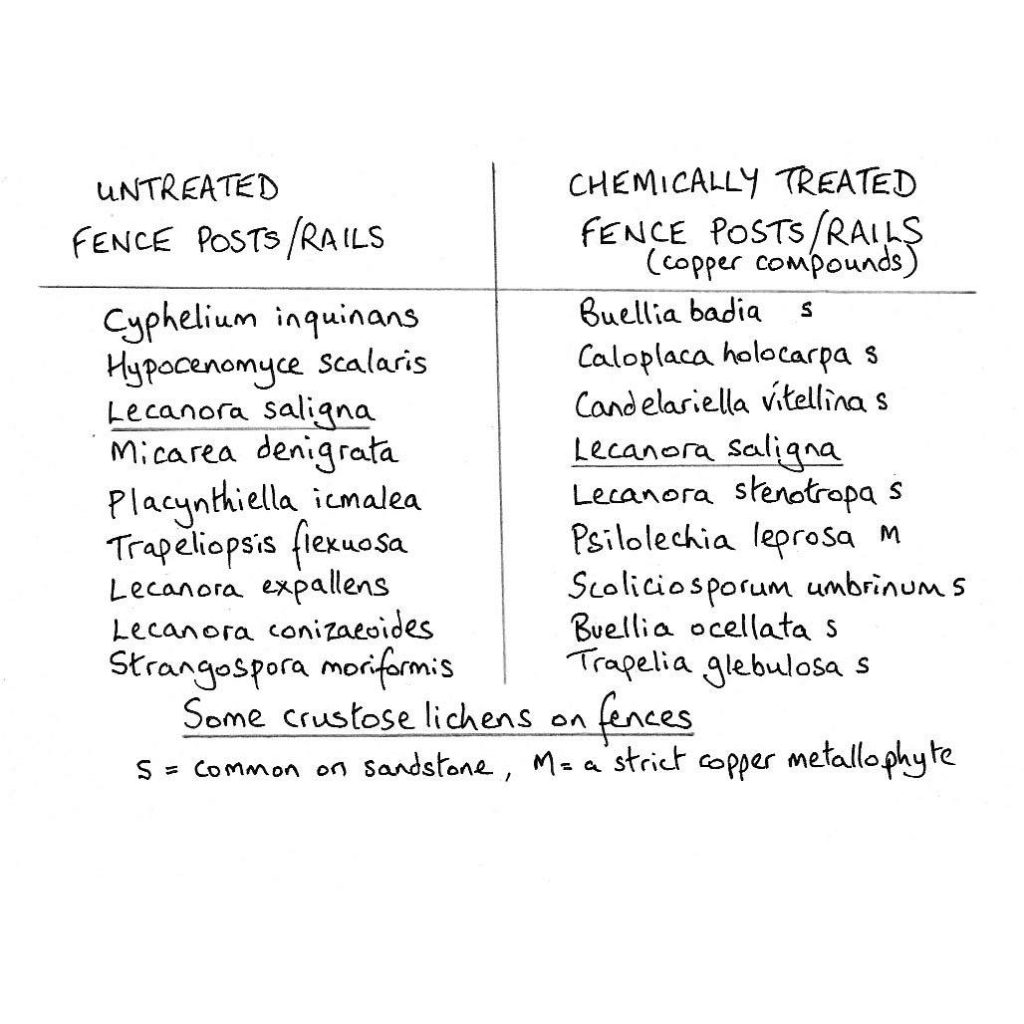
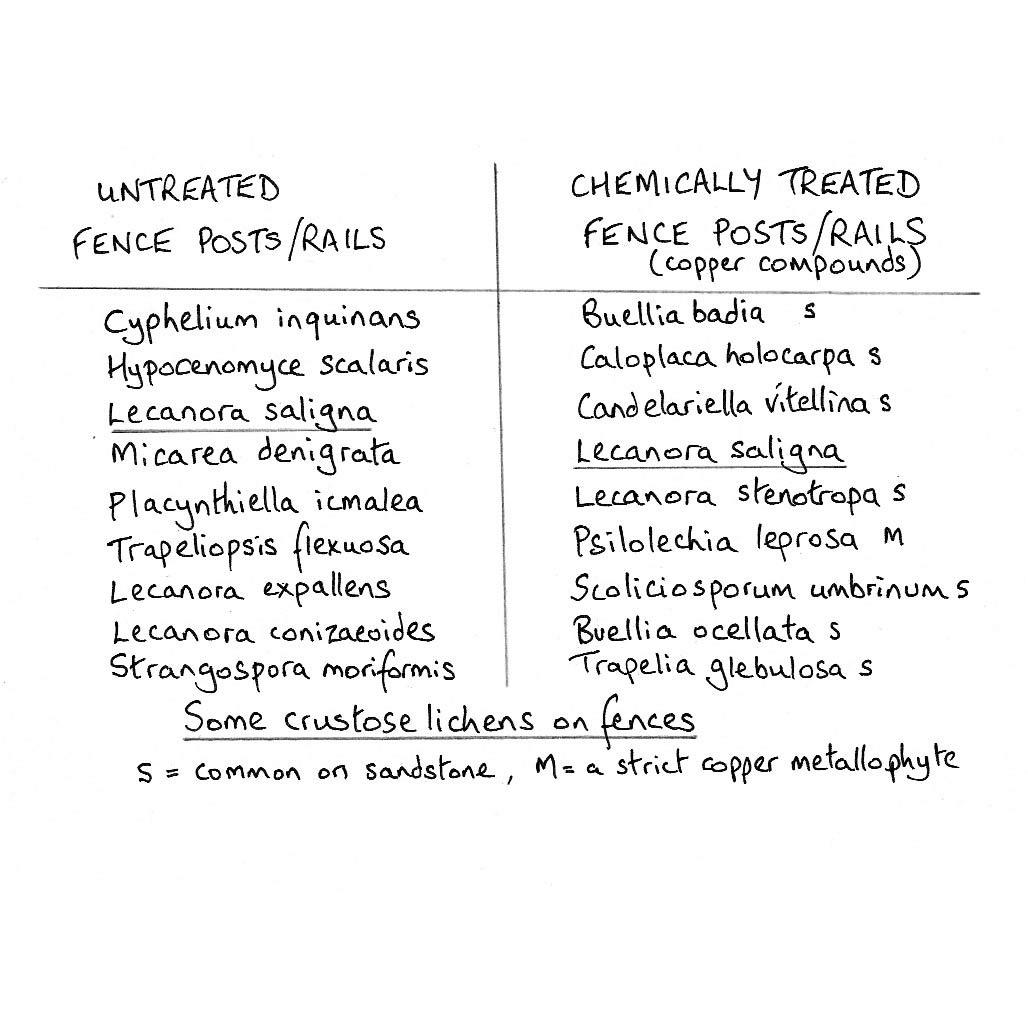
The best place to get to know L. carpathica is on worked sandstone or old brickwork.You mention L. polytropa on your fence rail. If the rail is relatively modern and hence probably treated with copper compounds, then L. stenotropa is a look-alike that is turning up very commonly on such rails. In fact chemically-treated fences and gates are developing an interesting community with much overlap of species more typically associated with sandstone. Here is a comparison of typical species found on wooden fences, untreated and treated with copper compounds.
[attachment=1]EMkj7LfXUAEI8ul.jpeg[/attachment]
I posted the following list on twitter, of ‘saxicolous’ species growing on chemically treated timber. Since then I have added Lecidea grisella and John S. has reported three species of Stereocaulon.https://twitter.com/obfuscans3/status/1488997022631968782 
[attachment=0]FKoAeIbXoAQC3P5.png[/attachment]
Sorry I can’t identify your lichen but do keep looking at fence rails as they provide some interesting records.June 29, 2022 at 1:23 pm #44811Mark is right – identifying crustose lichens from macro photos is a mugs’ game. Having said that… the flexuose margin of the apothecia remind me of those of a Fuscideaso I’m wondering if you have a lignicolous specimen of F. cyathoides, which does happen. The thallus of that species contains fumarprotocetraric acid, so will be Pd+ rust-red. Alan
-
AuthorPosts



- You must be logged in to reply to this topic.