
Lecanora (?) sp. from Denmark
- This topic is empty.
-
AuthorPosts
-
May 7, 2022 at 1:32 pm #32349
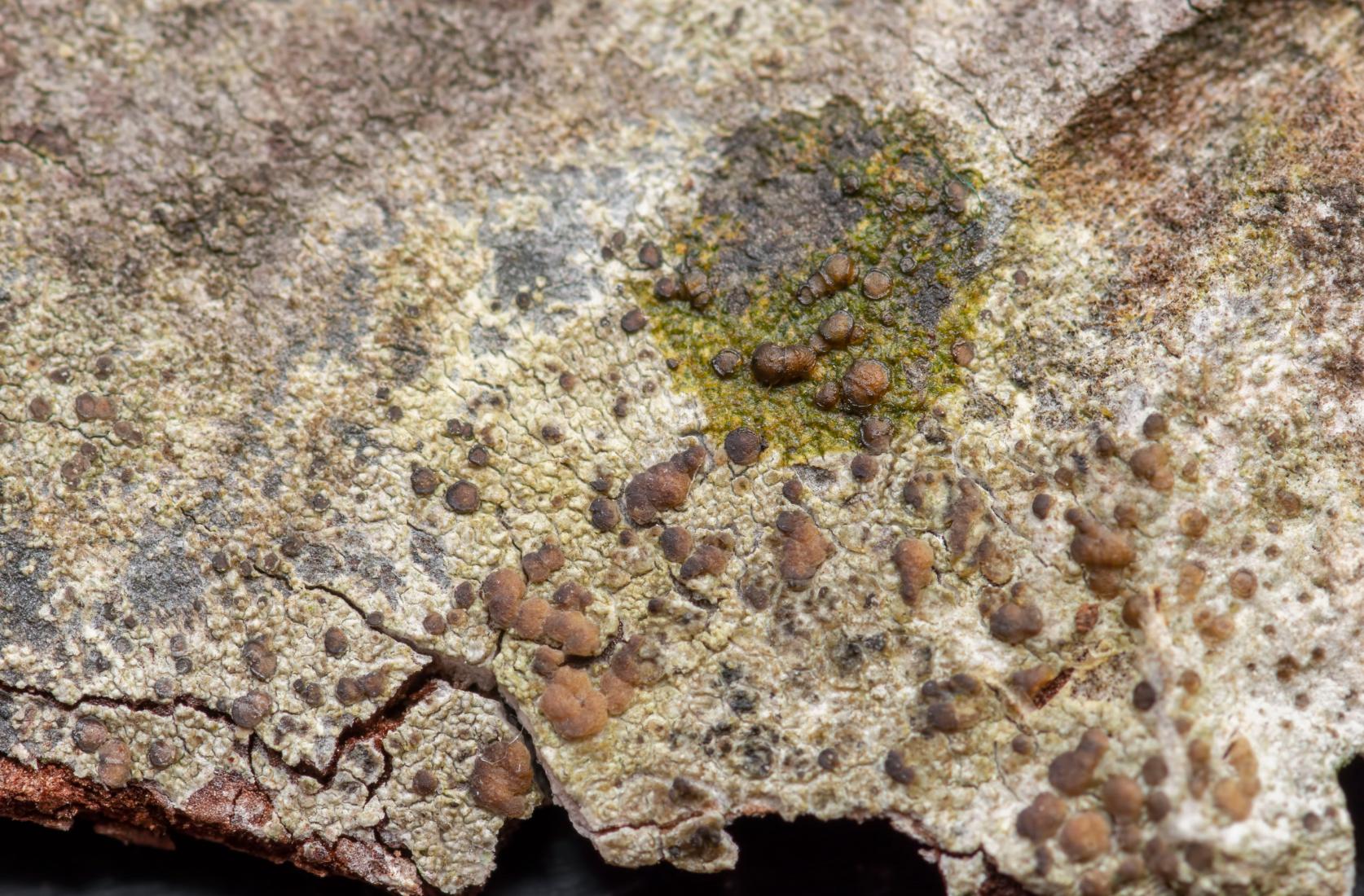
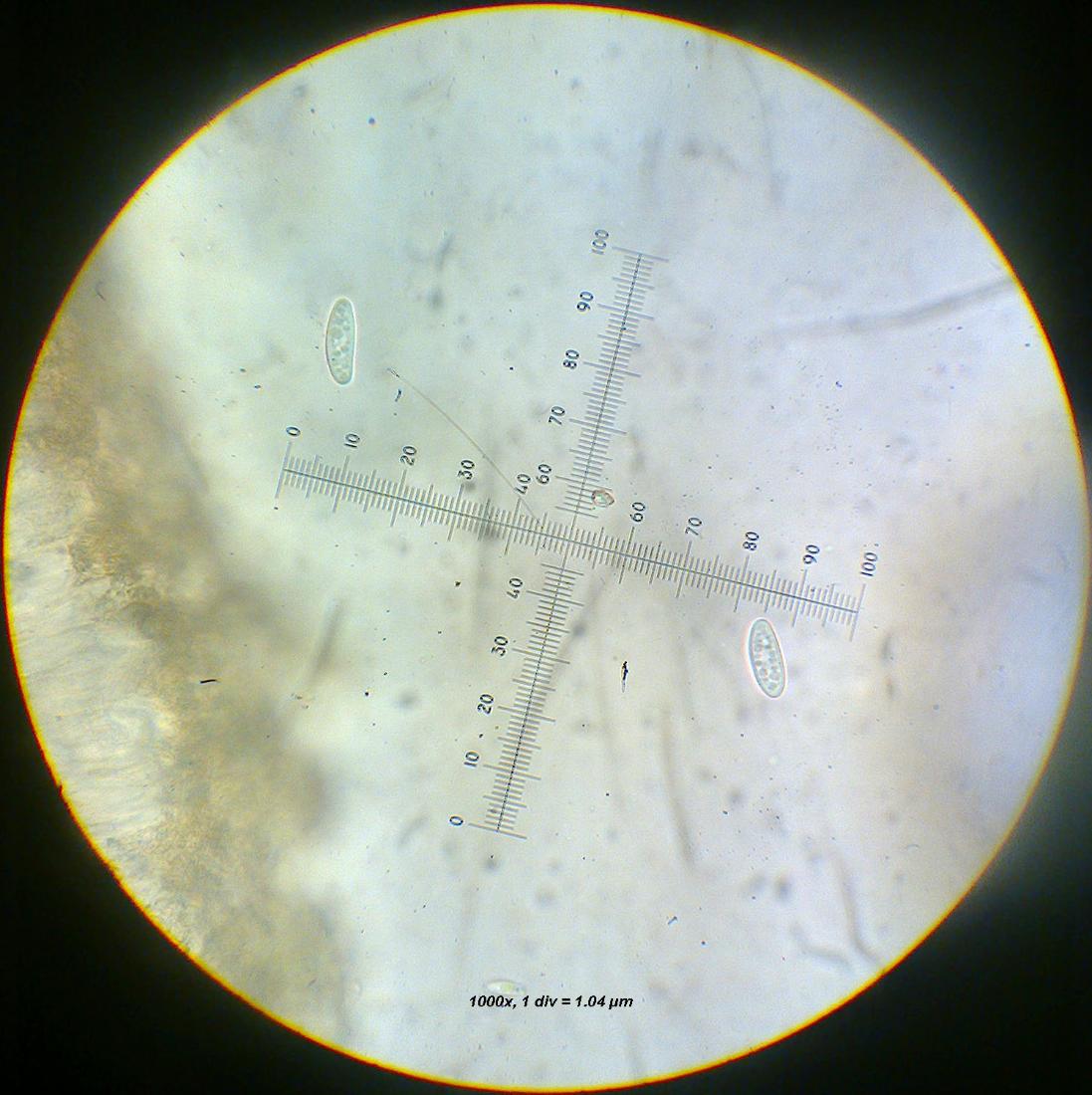
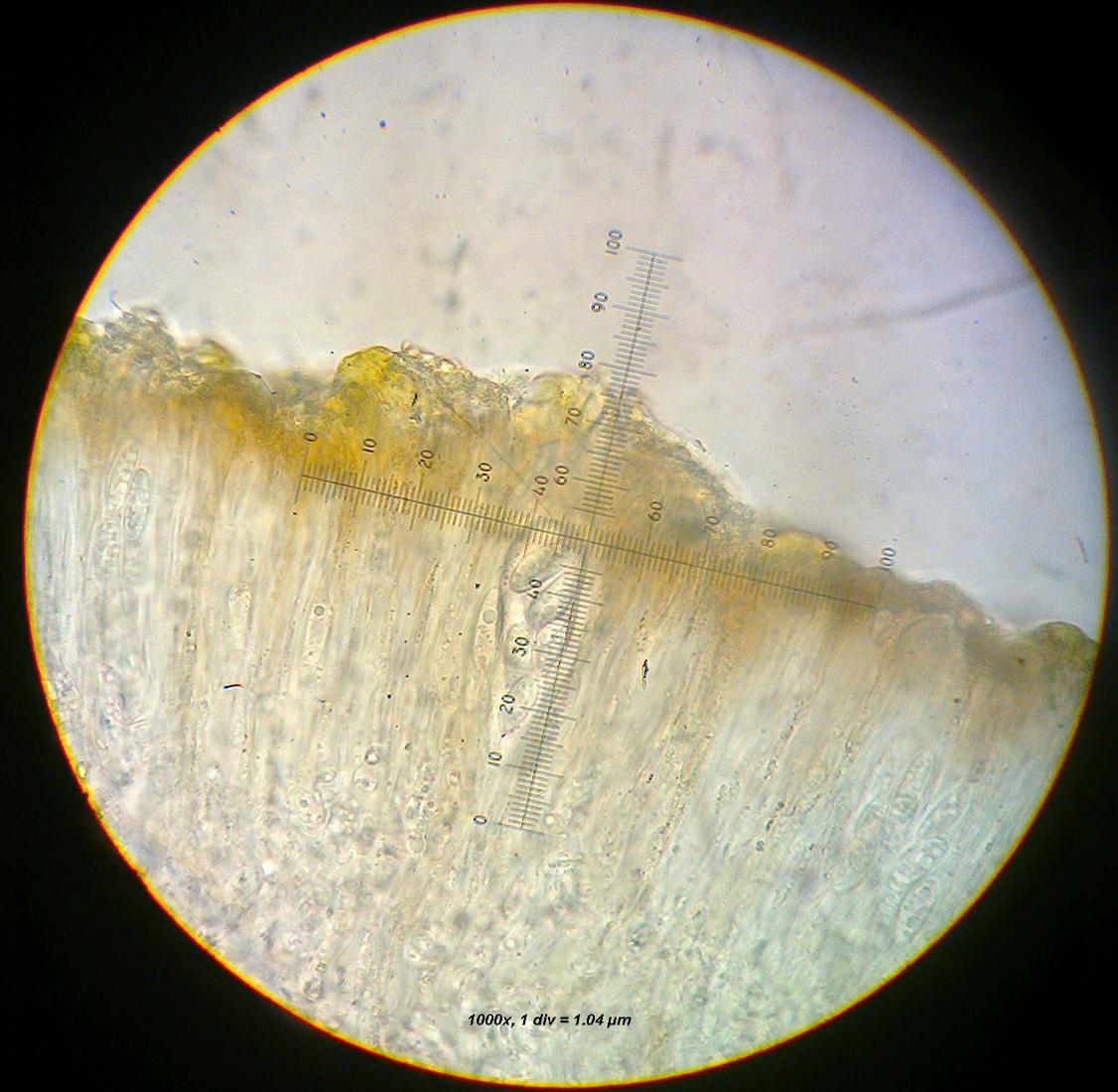
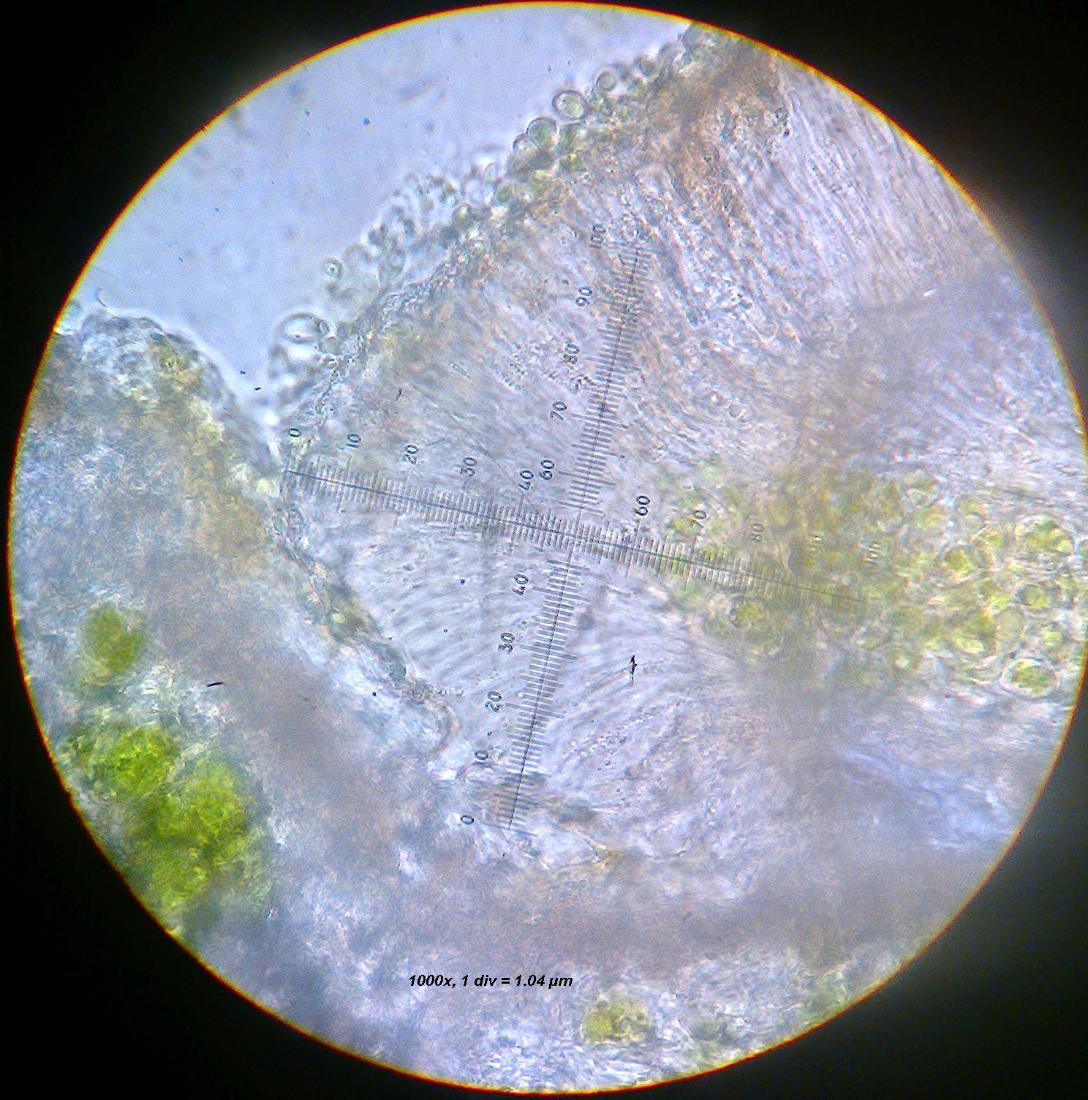
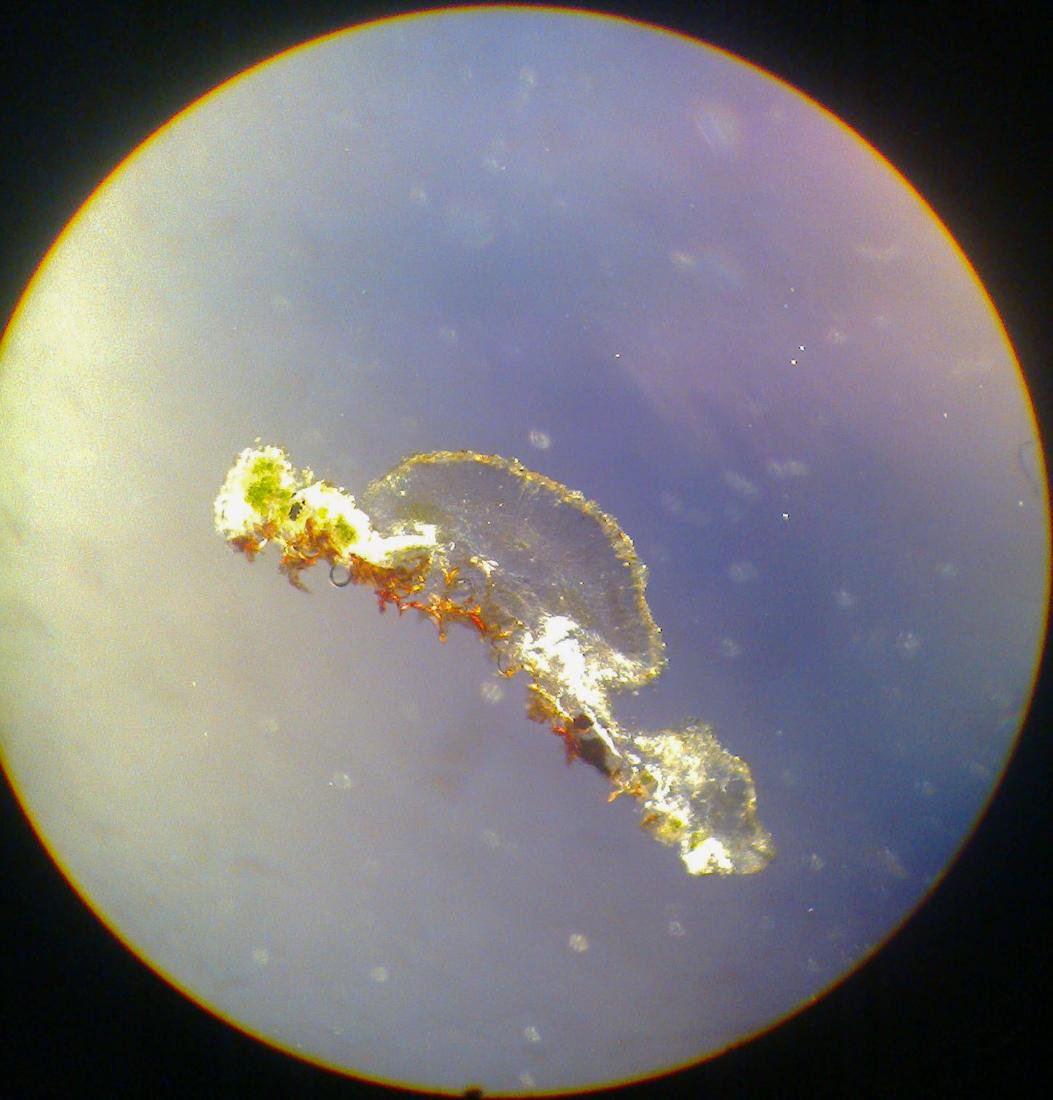
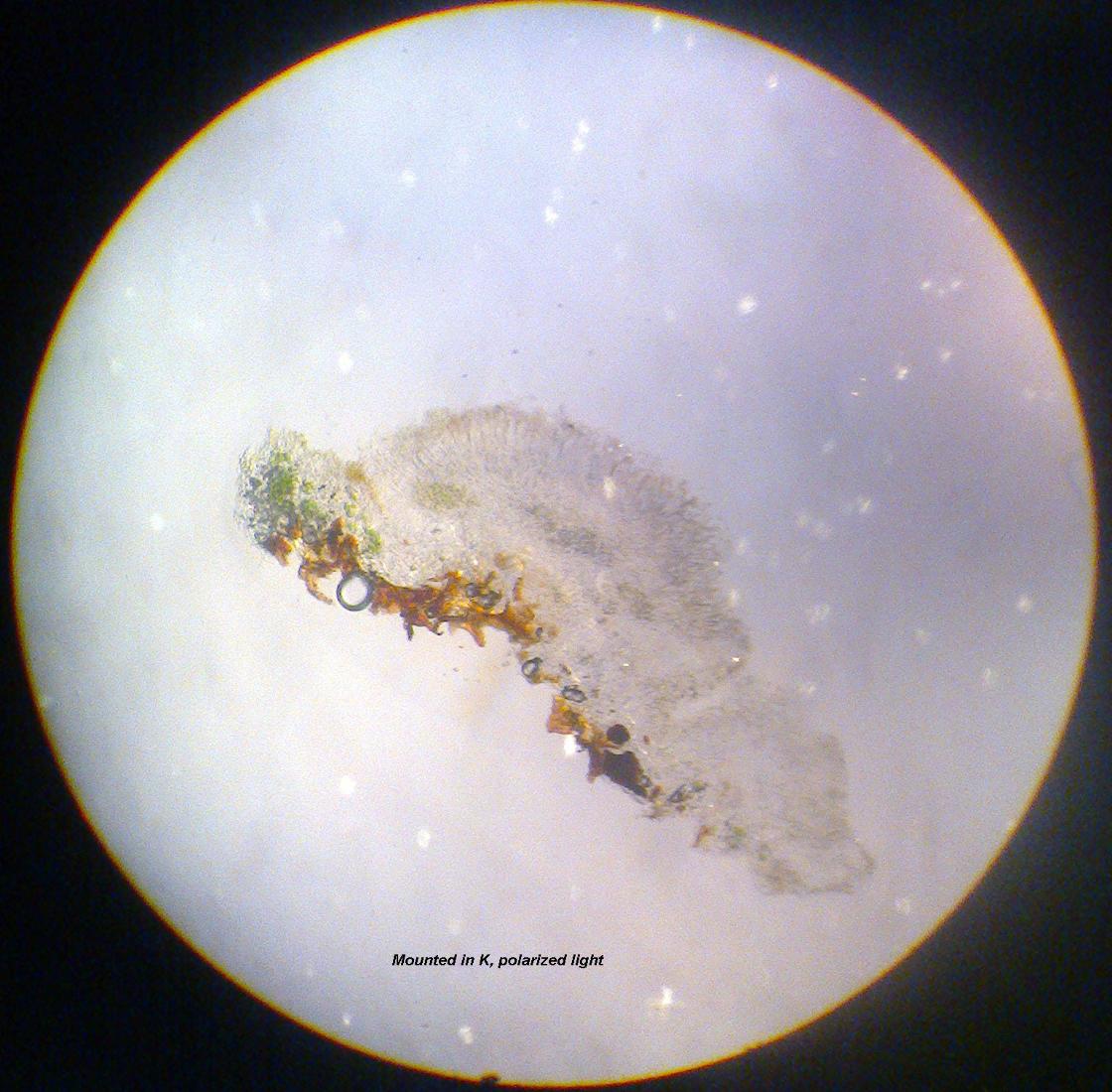
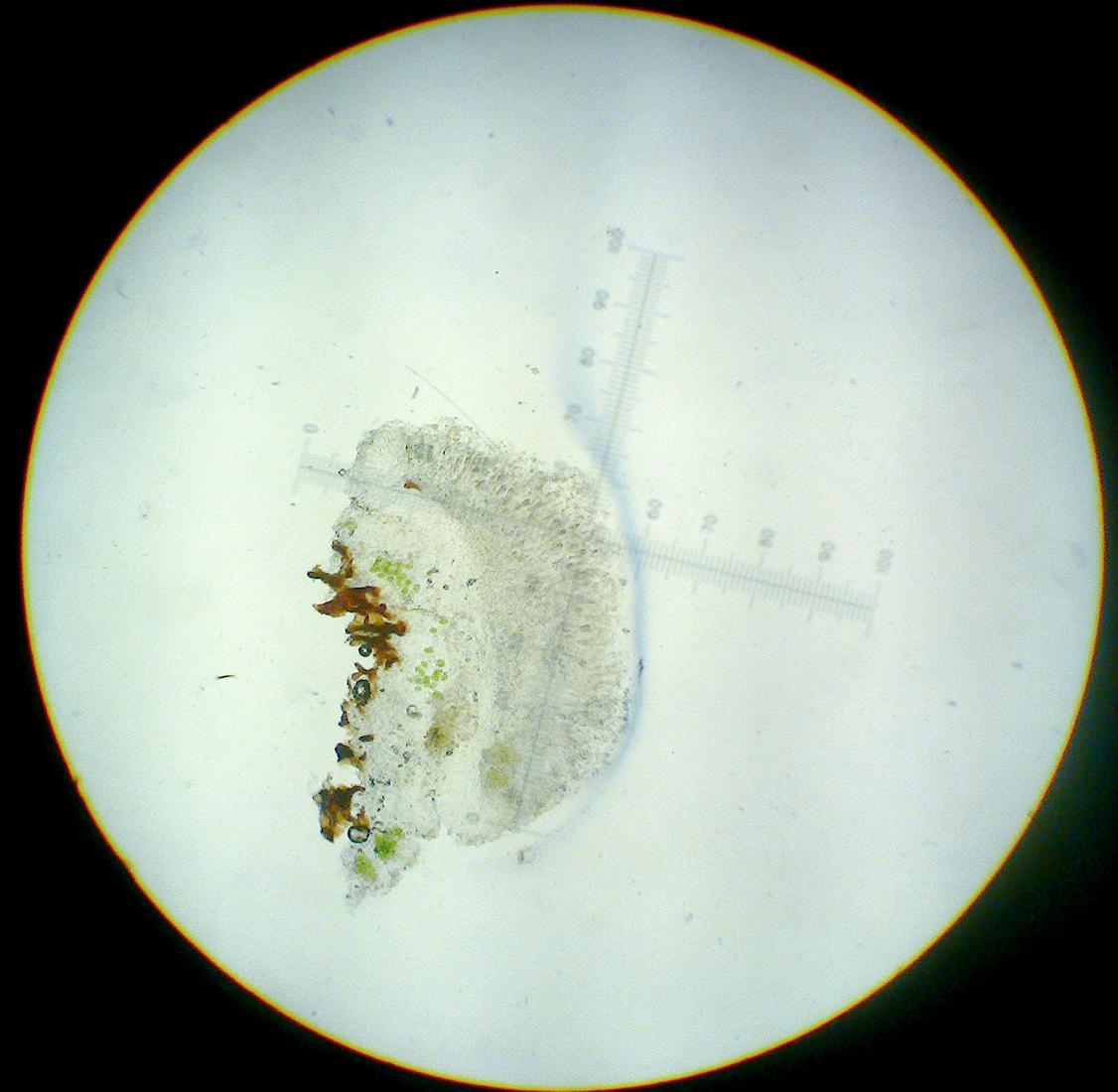
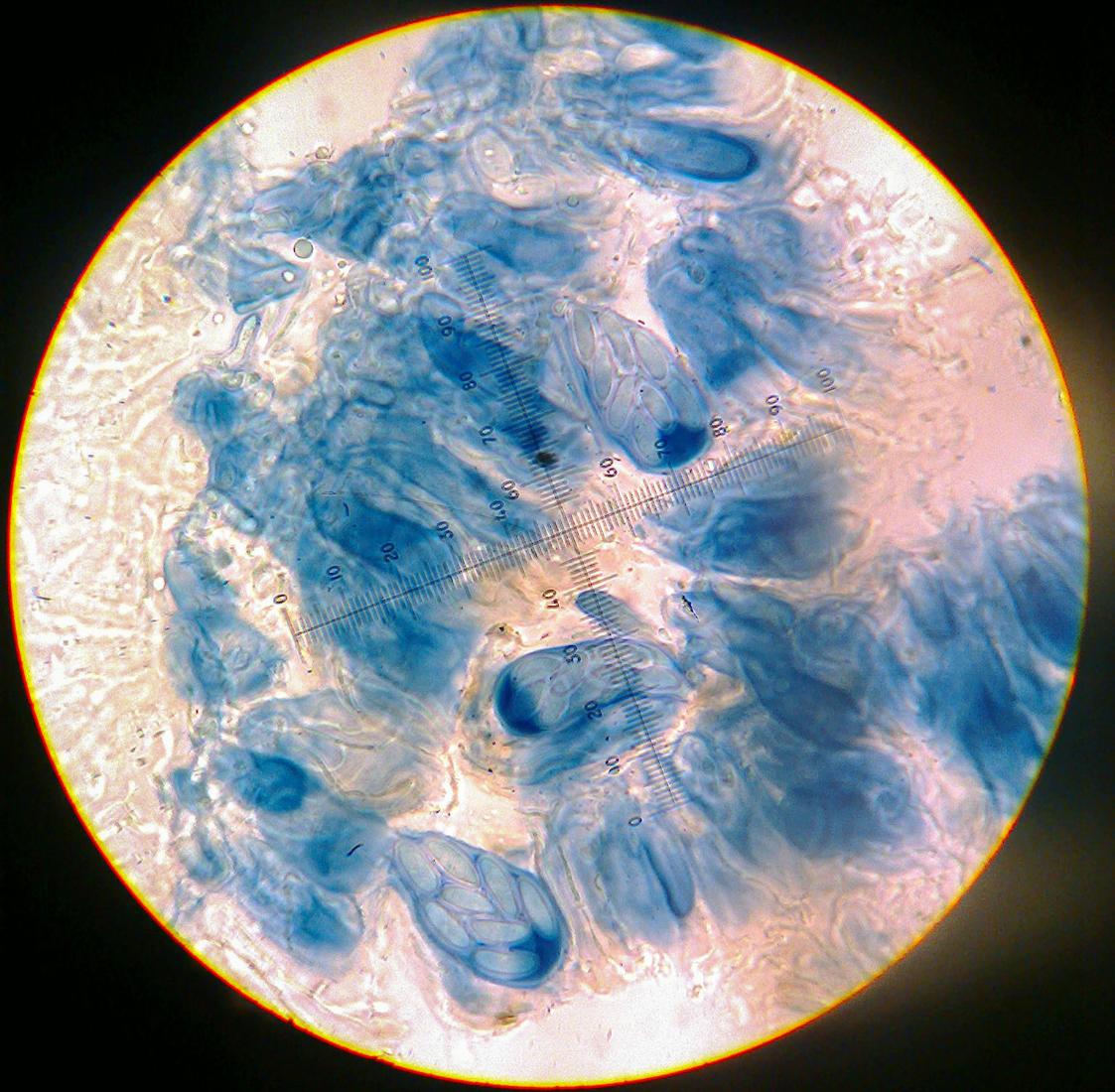
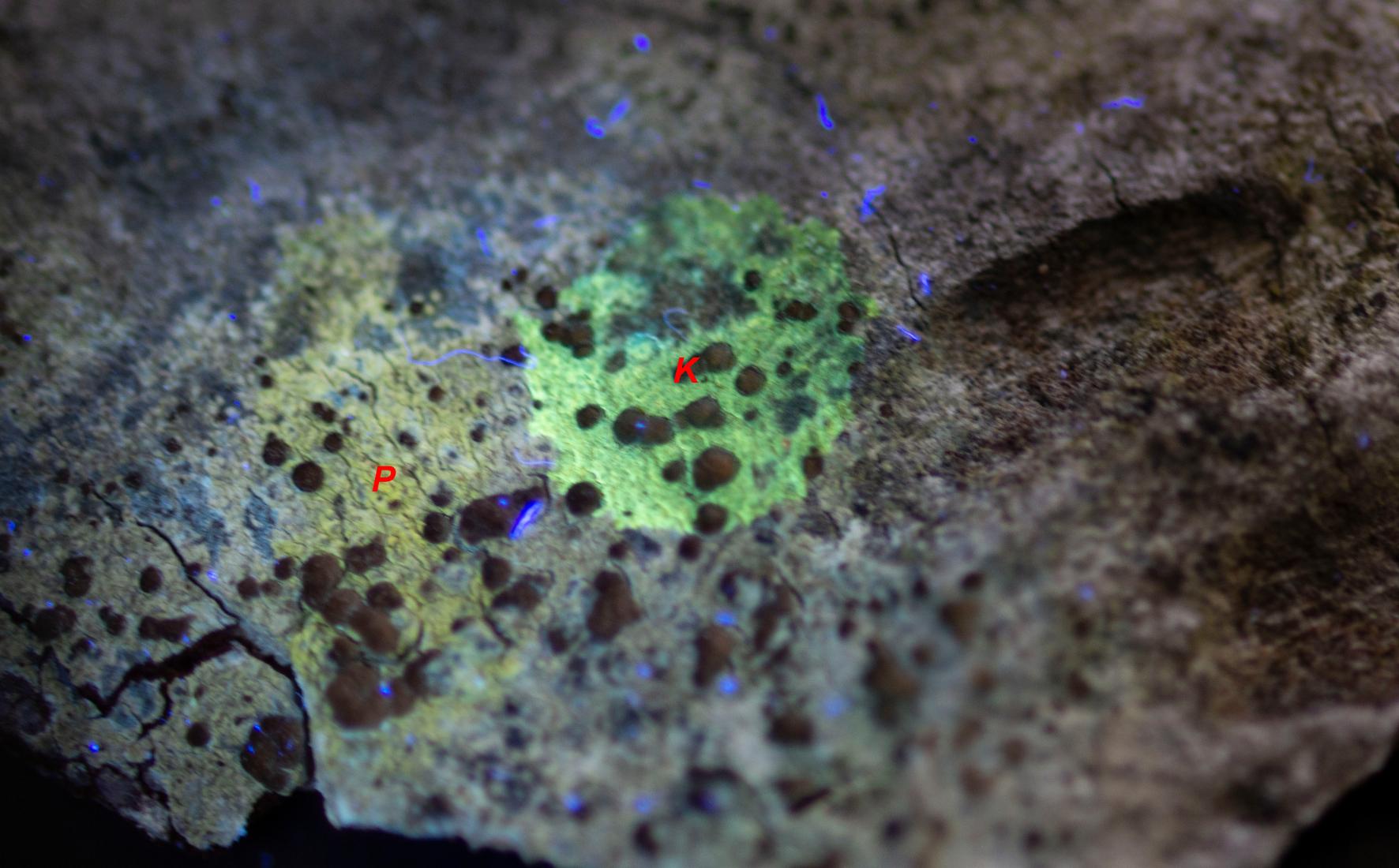
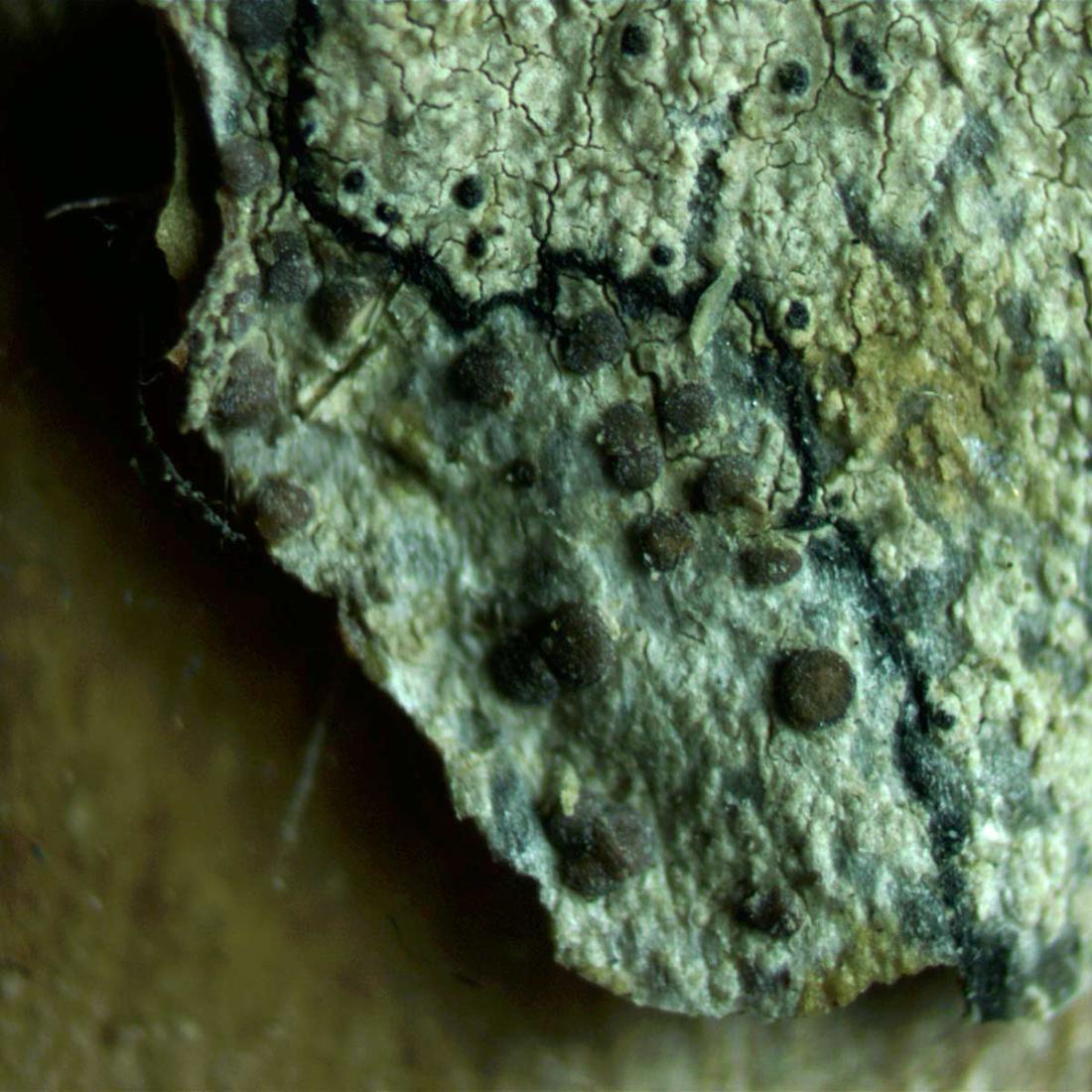
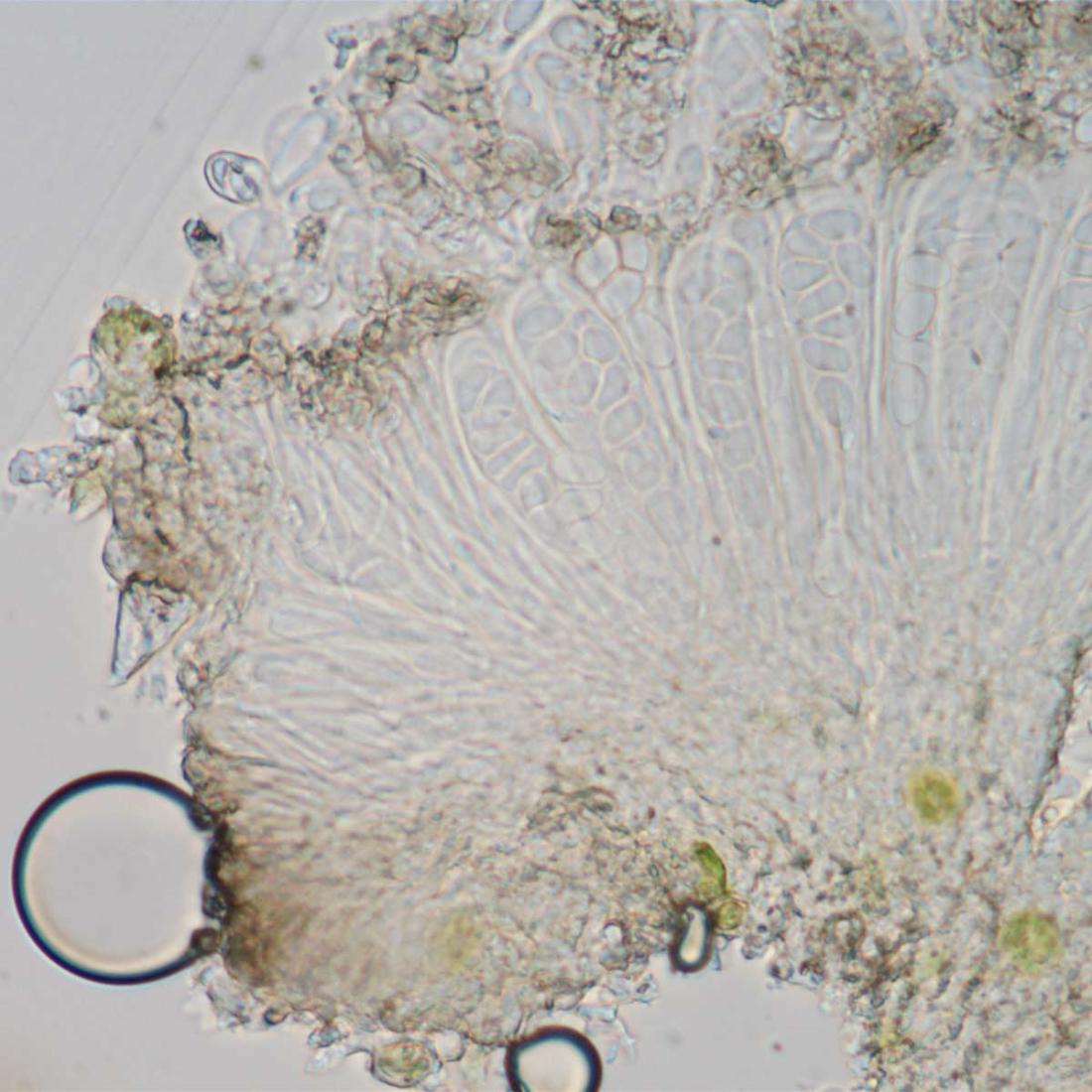
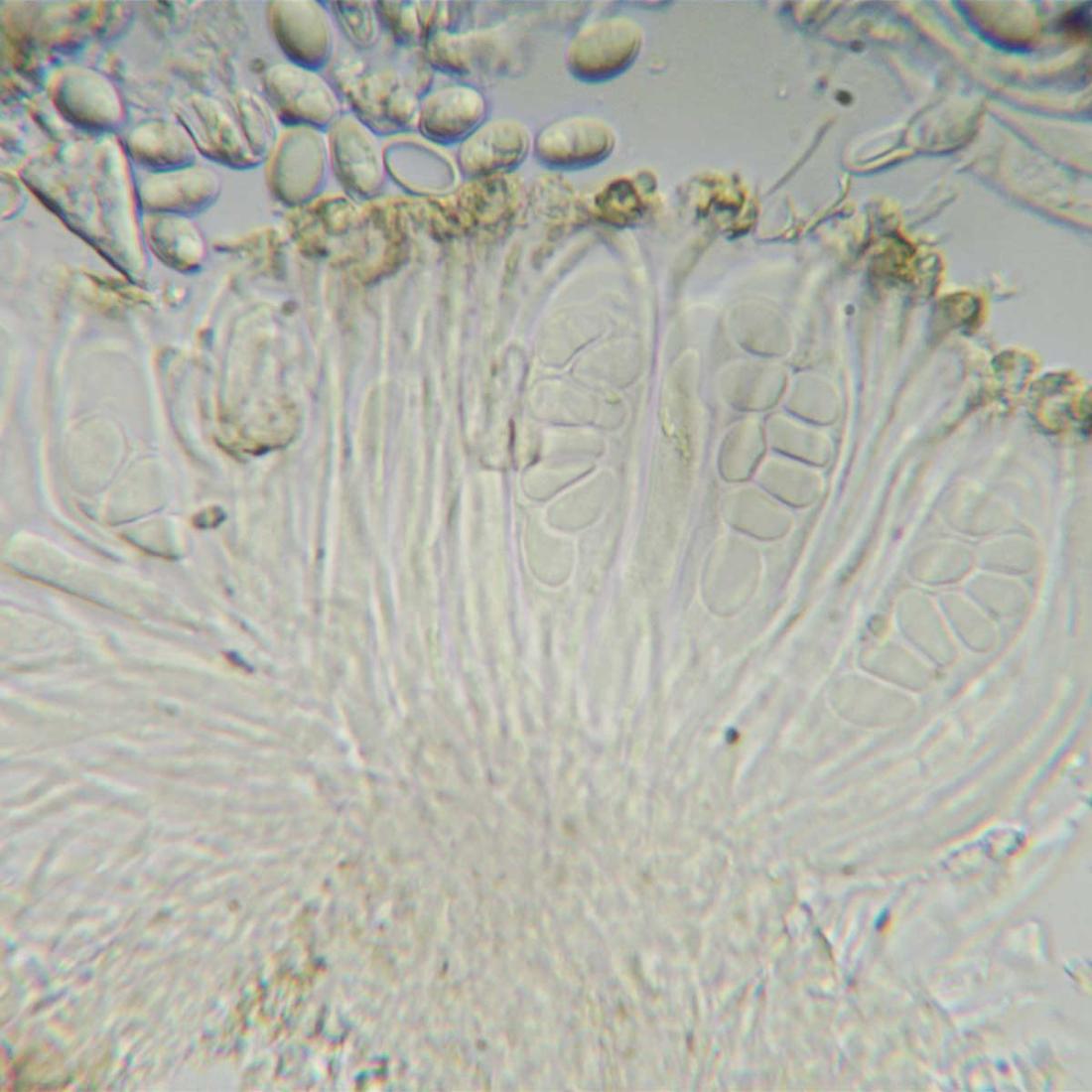
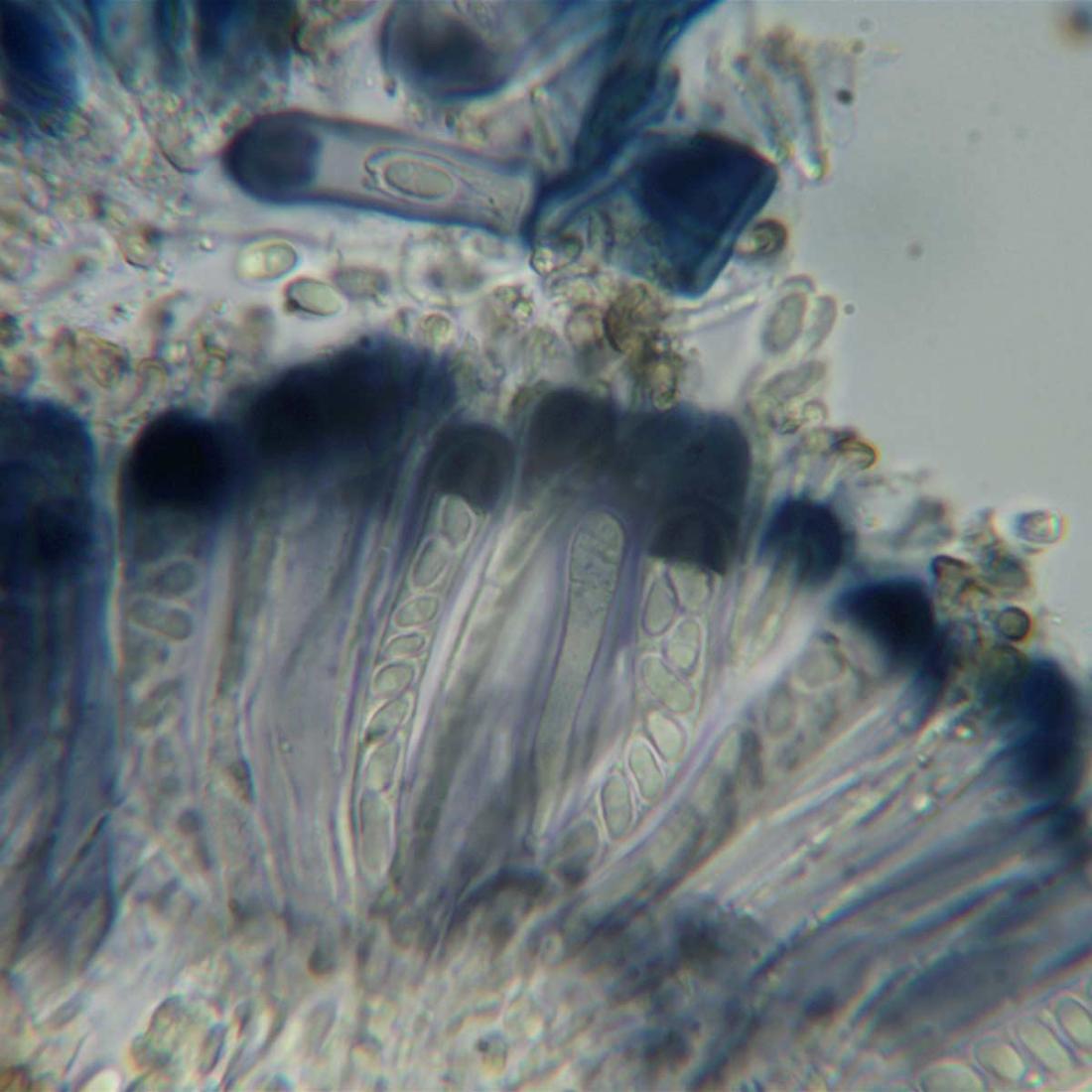
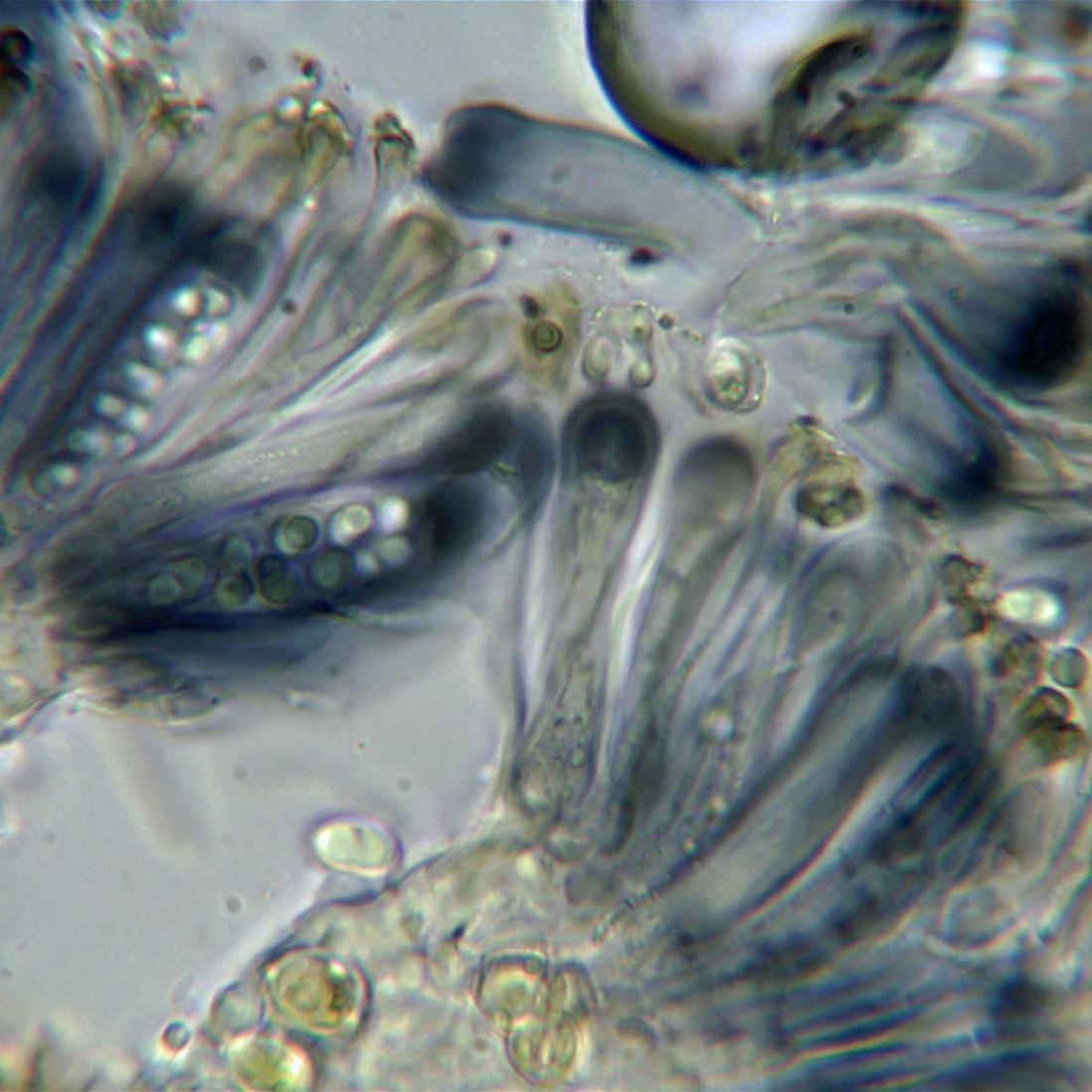
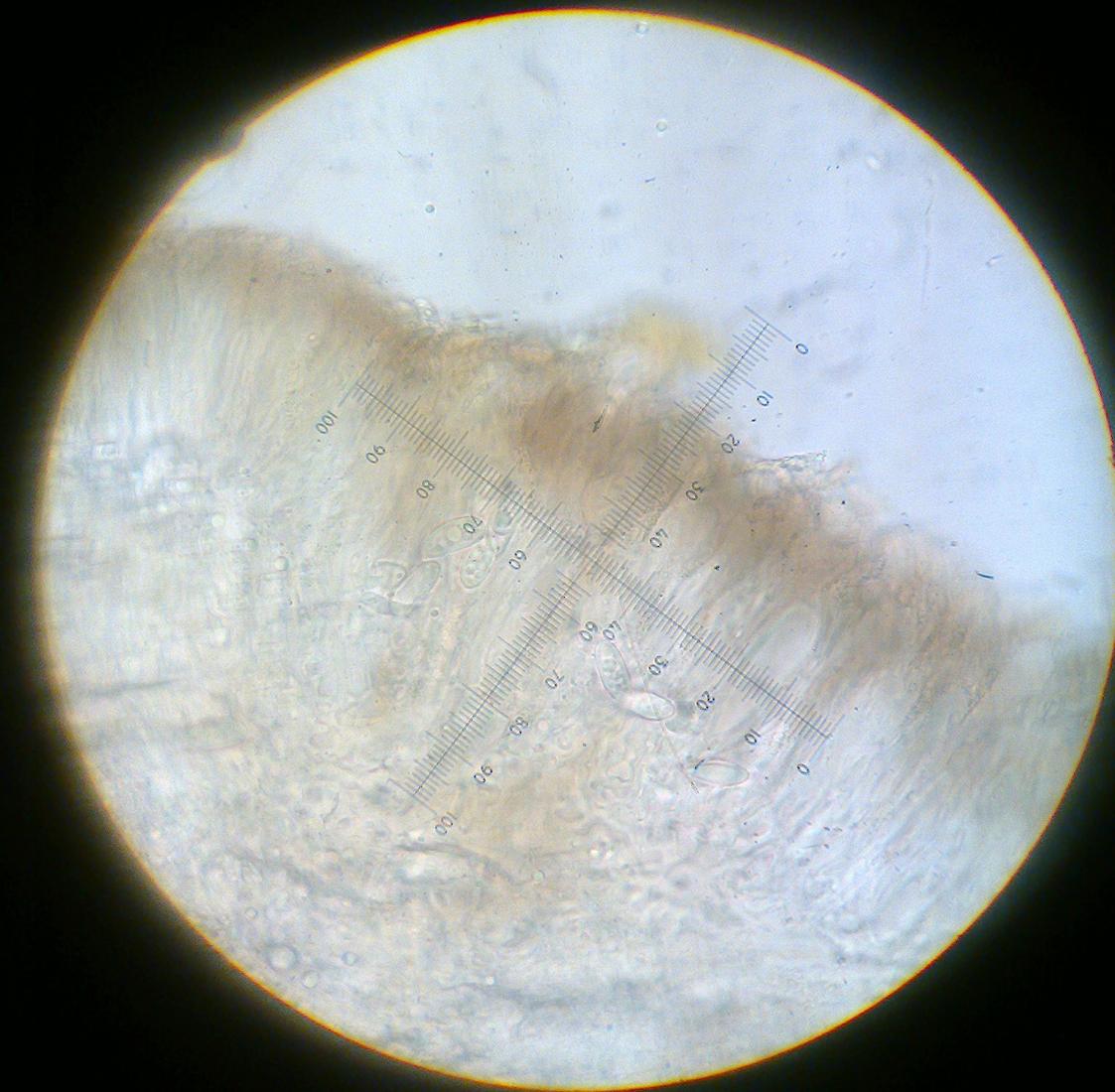
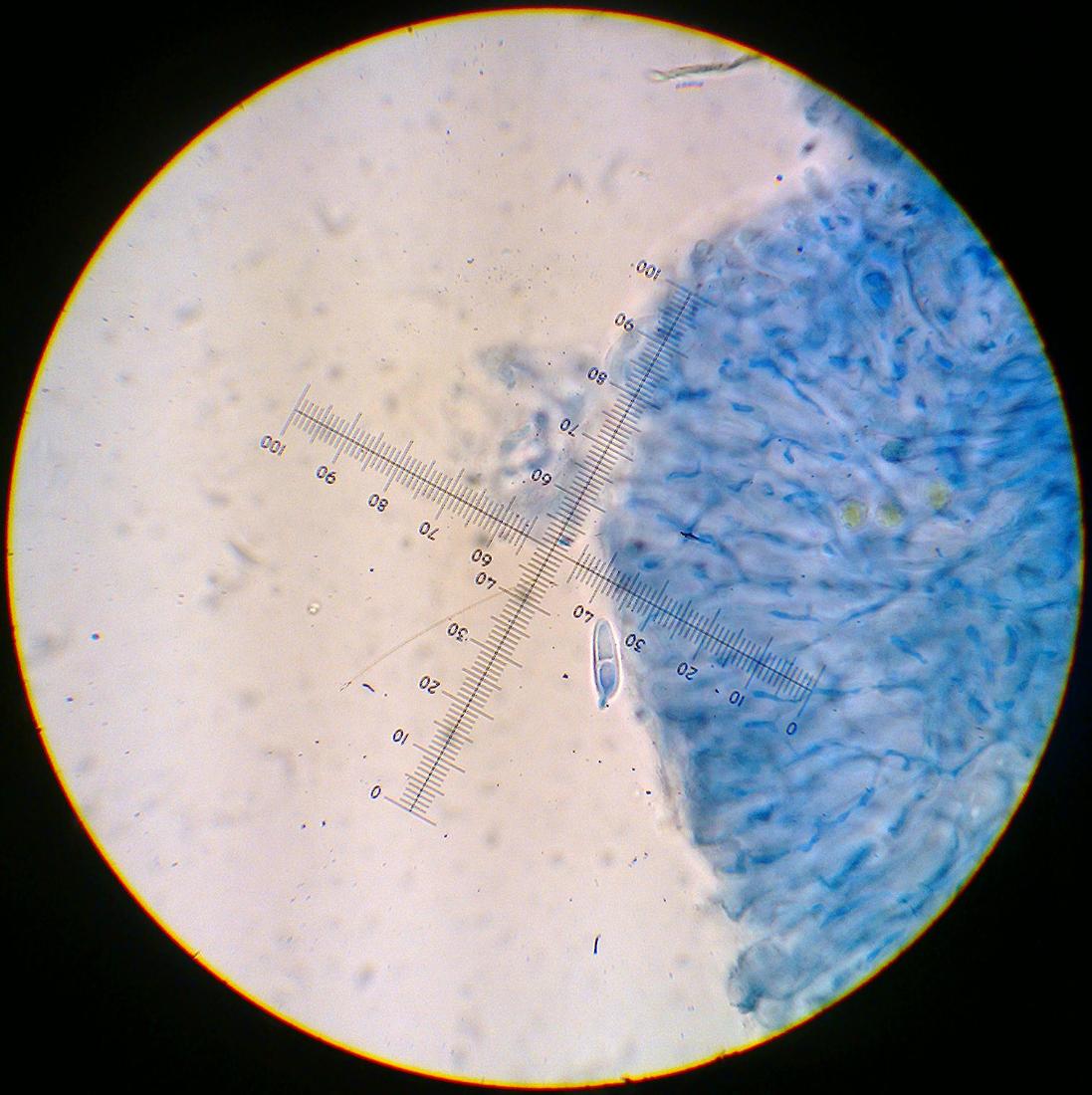
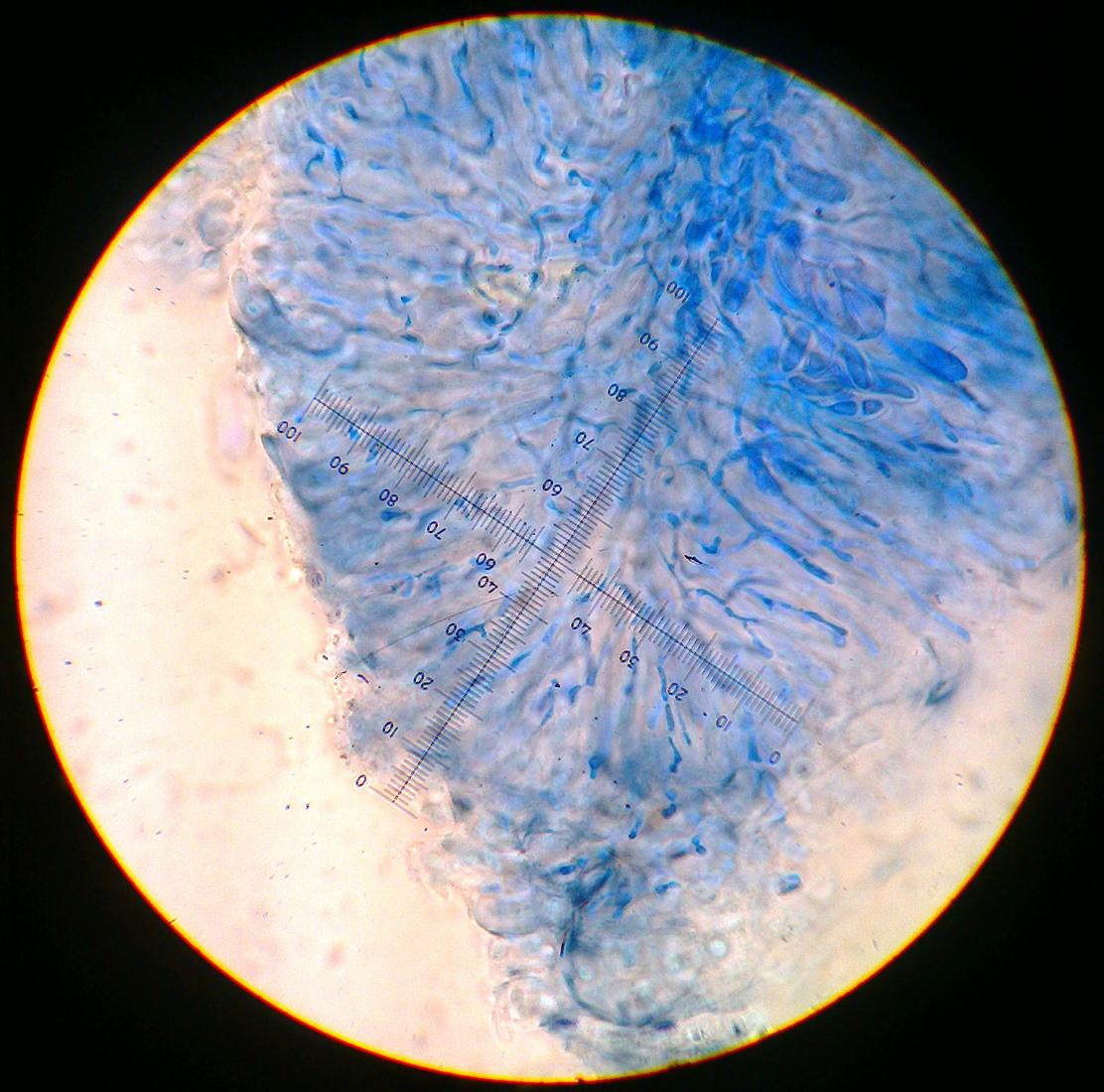
This one is causing me all kinds of problems. It was found in April in western jutland, Denmark, growing on the bark of an old Pinus sylvestris. I thought both morphology and ecology was good for Lecanora cadubriae, but the chemistry doesn’t agree. The specimen is K+ yellow turning at most slightly orange (K/UV+ bright yellow), P- or P+ slightly yellowish (P/UV+ orangeish yellow) and C-. The spores measure around 13-15 x 5-6 µm and the ascus type looks to me like the bacidia-type, but judging the biatora/lecanora/bacidia-types is not straight forward for me. Furthermore some of the blue color went into solution when doing the K/I “stain” which might be of diagnostic importance? There seems to be both epithecial and excipular crystals which are all soluble in K.
I have included a bunch of photos, hoping someone can point me in the right direction.

[attachment=9]cf. Lecanora sp. 1-1.jpg[/attachment] 
[attachment=6]Billede3039.jpg[/attachment] 
[attachment=4]Billede3044.jpg[/attachment] 
[attachment=3]Billede3045.jpg[/attachment] 
[attachment=2]Billede3046.jpg[/attachment] 
[attachment=5]Billede3041.jpg[/attachment] 
[attachment=1]Billede3047.jpg[/attachment] 
[attachment=0]Billede3048.jpg[/attachment] 
[attachment=8]Billede3050.jpg[/attachment] 
[attachment=7]Billede3053.jpg[/attachment] May 7, 2022 at 1:34 pm #44790Here’s a photo of the K/UV-reactions 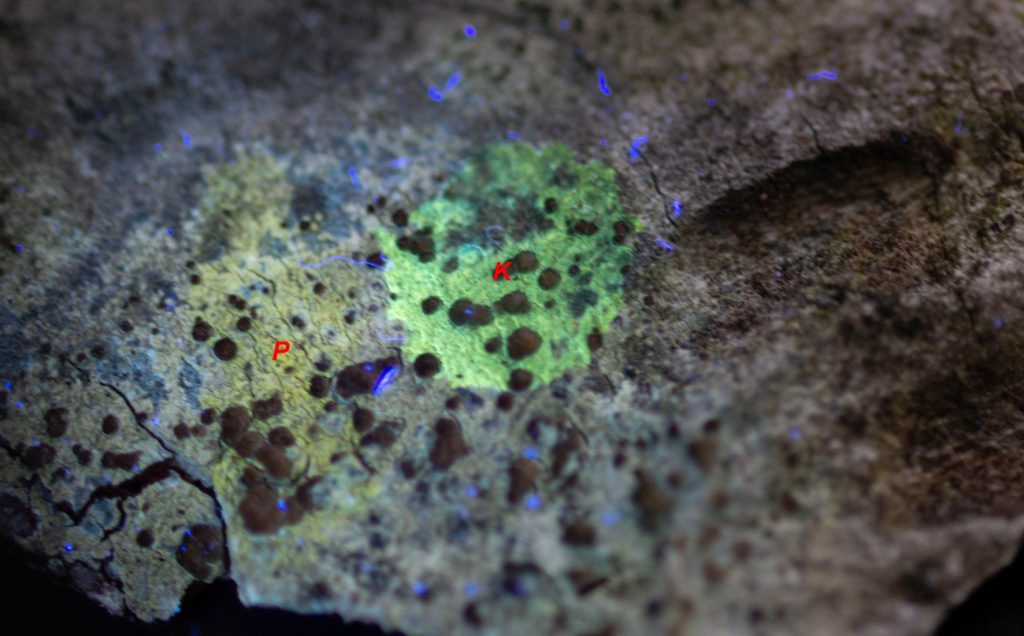
[attachment=0]cf. Lecanora sp. 1-2.jpg[/attachment] May 12, 2022 at 1:27 pm #44791My guess would be something in Ramalinaceae. Perhaps a Biatora,but no idea which one. May 13, 2022 at 7:35 am #44792Your enquiry prompted me to re-examine a specimen which I had, somewhat tentatively, identified as Lecidea exigua. There are many similarities between my material and yours but perhaps not an exact match. I am not providing a definite determination (I am hesitant even about naming my own material) but, in the absence of suggestions from others, perhaps my observations will provide another line of investigation. 
[attachment=6]exigua3.jpg[/attachment]
My specimen (above) is from the smooth bark of an apple tree in a Kent orchard. It has apothecia (250-)300-350 microns in diameter. The disc has a slight pruina due to coarse epithecial granules. The thallus is indistinctly warted, sits on a slight black prothallus (visible where the thallus is thin) and forms conspicuous black lines where it meets neighbouring lichen thalli. The thallus shows a patchy UV+ orange fluorescence, it is K+ yellow (yellow turning slightly orange as in yours). It is K/UV+ yellow (perhaps slight green hint). I suspect this K/UV+ yellow is indicating the presence of a xanthone (rather than atranorin). It is C- but I think the K reaction is slightly deepened more orange when C is applied to the spot (i.e. probably KC+ orange).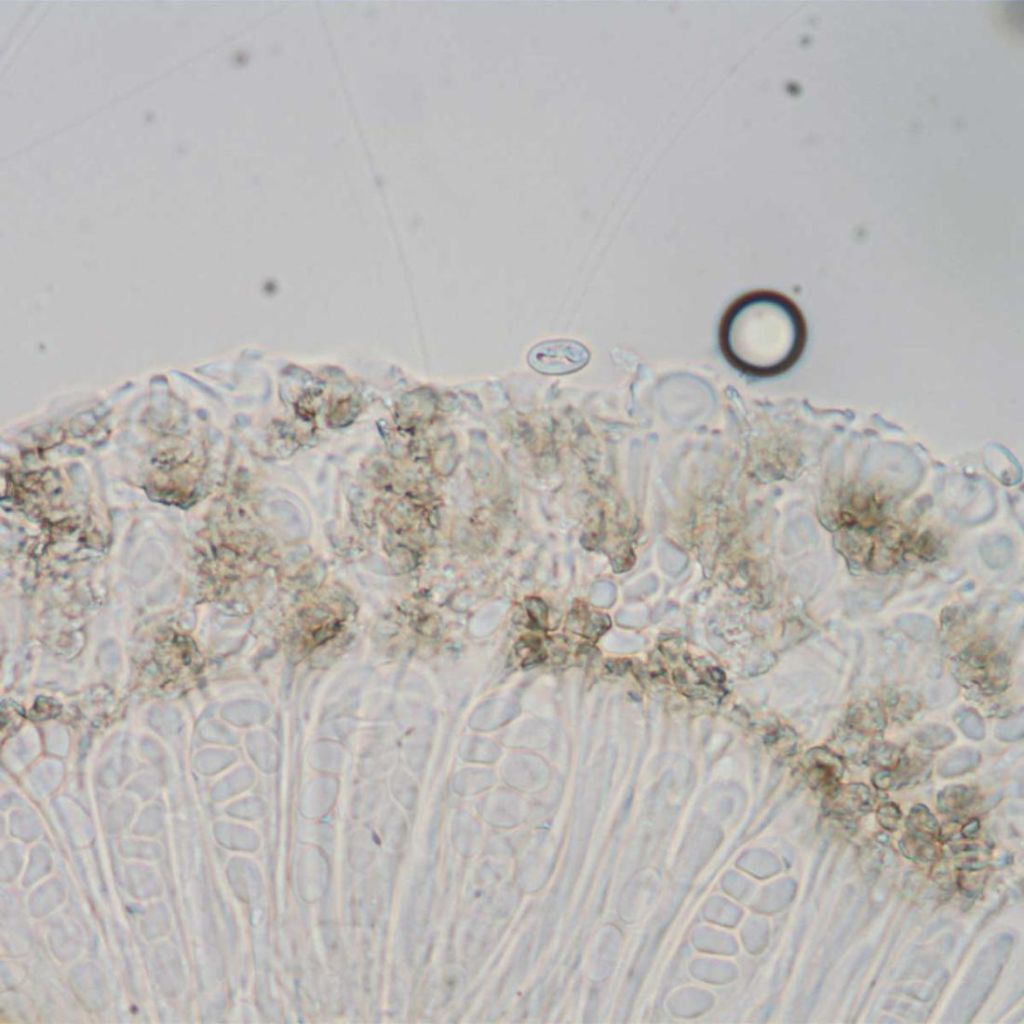
[attachment=5]exigua1.jpg[/attachment] 
[attachment=4]exigua2.jpg[/attachment] 
[attachment=3]exigua7.jpg[/attachment] 
[attachment=2]exigua6.jpg[/attachment]
Above are three sections in water and one in K. The coarse epithecial granules dissolve in K. My specimen had rather inconspicuous small crystals in the exciple, mainly towards inner parts, soluble or mainly soluble in K. The ascospores look a bit fatter than in your material (typically e.g. 11 x 5.5) but similar dimensions.I was particularly interested to see what the ascus tips were like in my specimen. The afl website states that L. exigua has a Lecidea-type ascus but this is not illustrated and may be an assumption (the same page states that Lecidella elaeochroma has a Lecanora-type ascus which is incorrect, an error also in LGBI2, L. elaeochroma having a Lecidella-type which is more like a Bacidia- or Biatora-type).
https://www.afl-lichenologie.fr/Photos_AFL/Photos_AFL_L/Lecidea_exigua.htm The asci of my material have similar ascus tips to your material, and rather similar to those in Lecidella as shown below.

[attachment=1]exigua4.jpg[/attachment] 
[attachment=0]exigua5.jpg[/attachment] I’m sorry that I can’t give any definite identification but I was struck by some of the similarities between your material and my specimen which I have tentatively concluded must be L. exigua. L. exigua is supposed to grow mainly on smooth bark of deciduous trees but there may be overlap of species on deciduous trees and the smooth bark plates of old conifers. I am not even certain that our material is the same taxon but seems to be the ‘same sort of thing’. Perhaps there is more than one taxon that has been named as L. exigua (it seems to be a rather poorly understood lichen with only scanty published descriptions).
May 17, 2022 at 8:19 pm #44793Thank you for your replies, Alan and Mark. I have been/still am busy with field work, but tonight I had some time to follow up on your input.
I am not much closer to an ID, but your suggestions prompted me to do some more testing/staining that might help.
First of all, some apothecia have a bluish pigment in the excipulum (consistent with the Lecidea-hypothesis?):
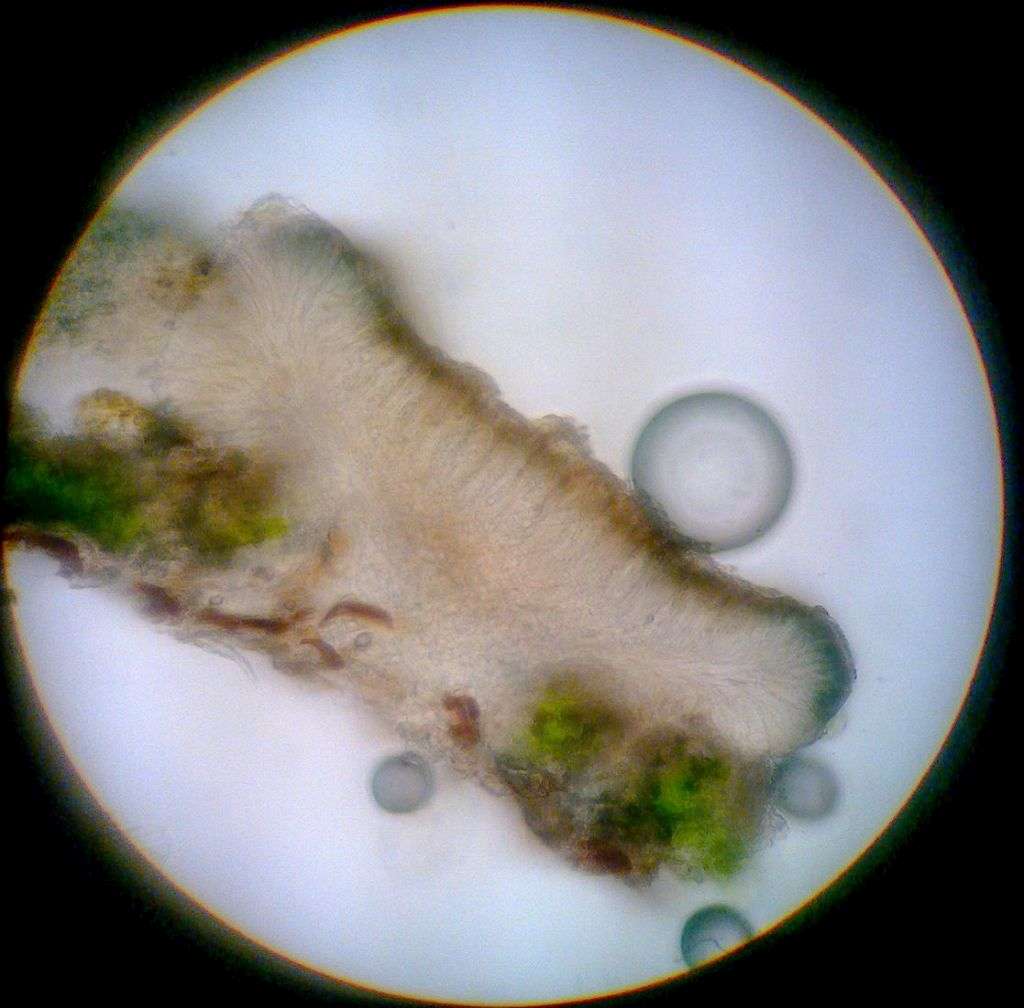
[attachment=2]Billede3070.jpg[/attachment] The brown epithecial pigment reacts N+ red and the crystals are not soluble in N:
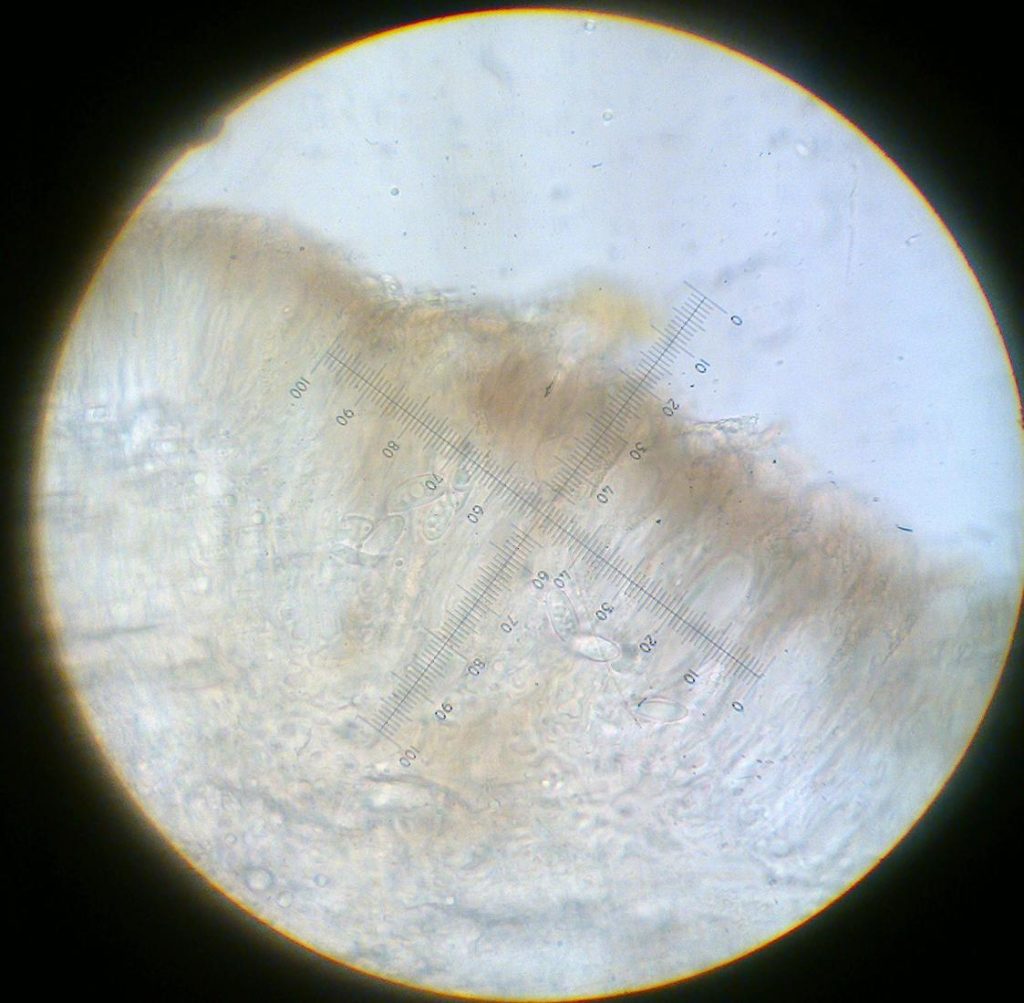
[attachment=1]Billede3072.jpg[/attachment] 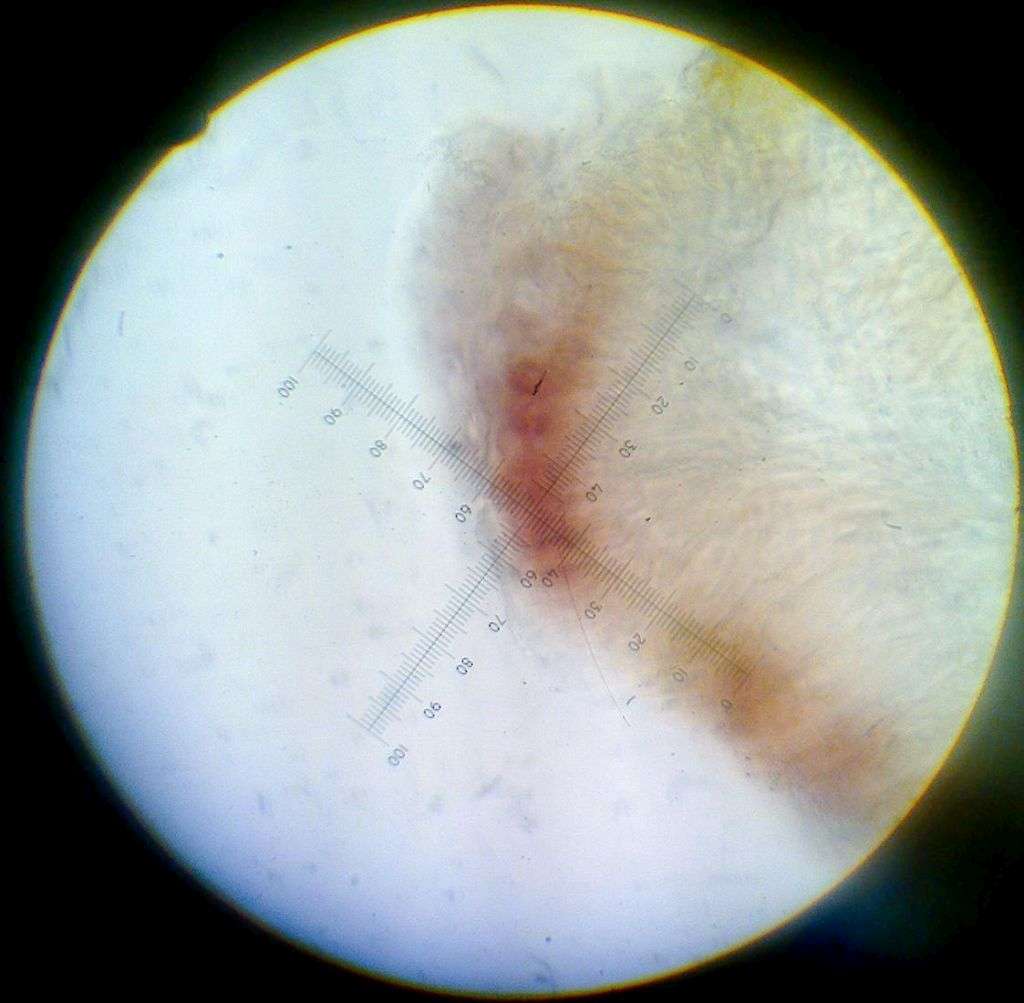
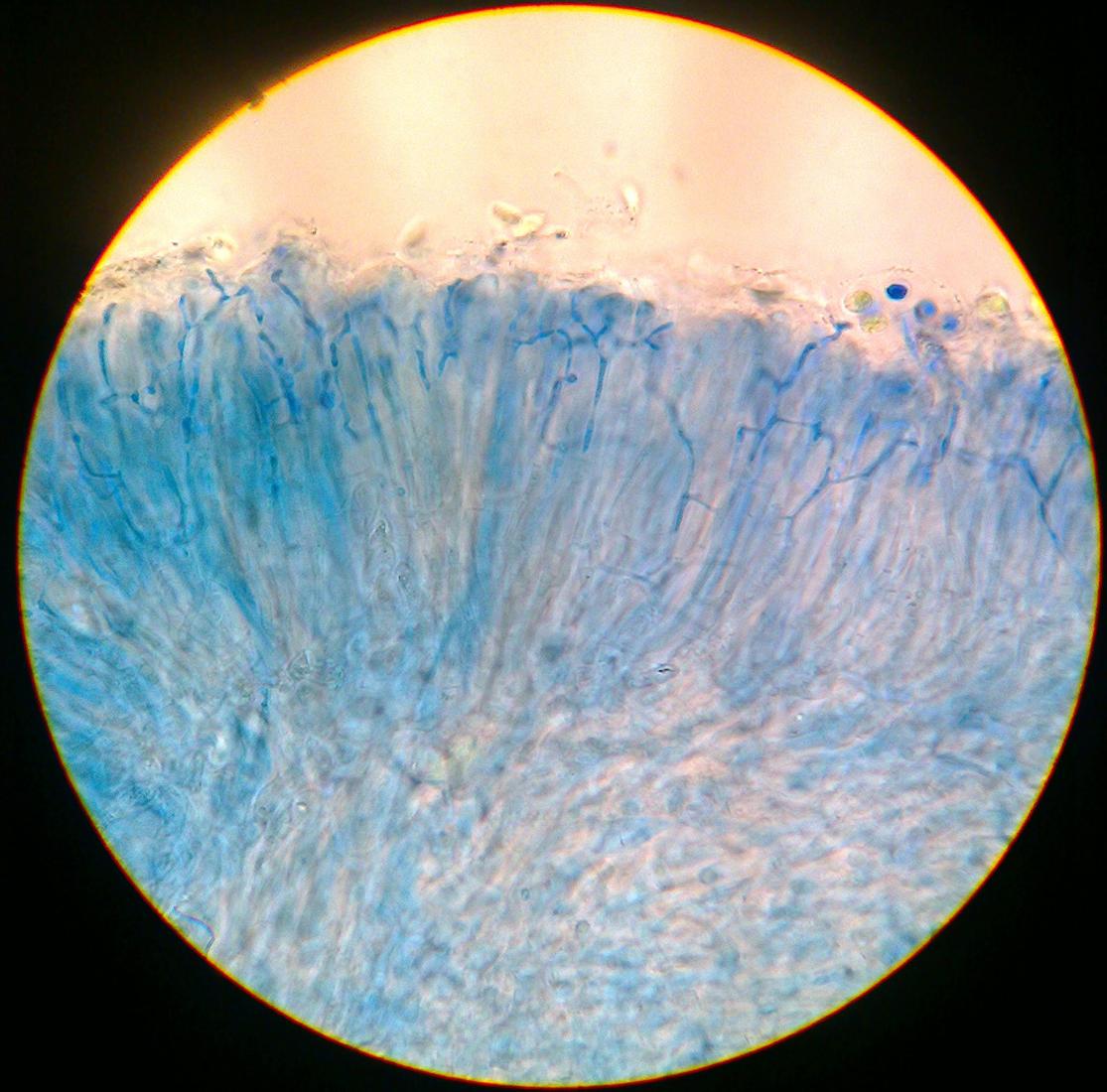
[attachment=0]Billede3074.jpg[/attachment] May 17, 2022 at 8:25 pm #44794I made an k/ink/vinegar-stain and found that while some paraphyses were simple, branching and anastomosis was common: 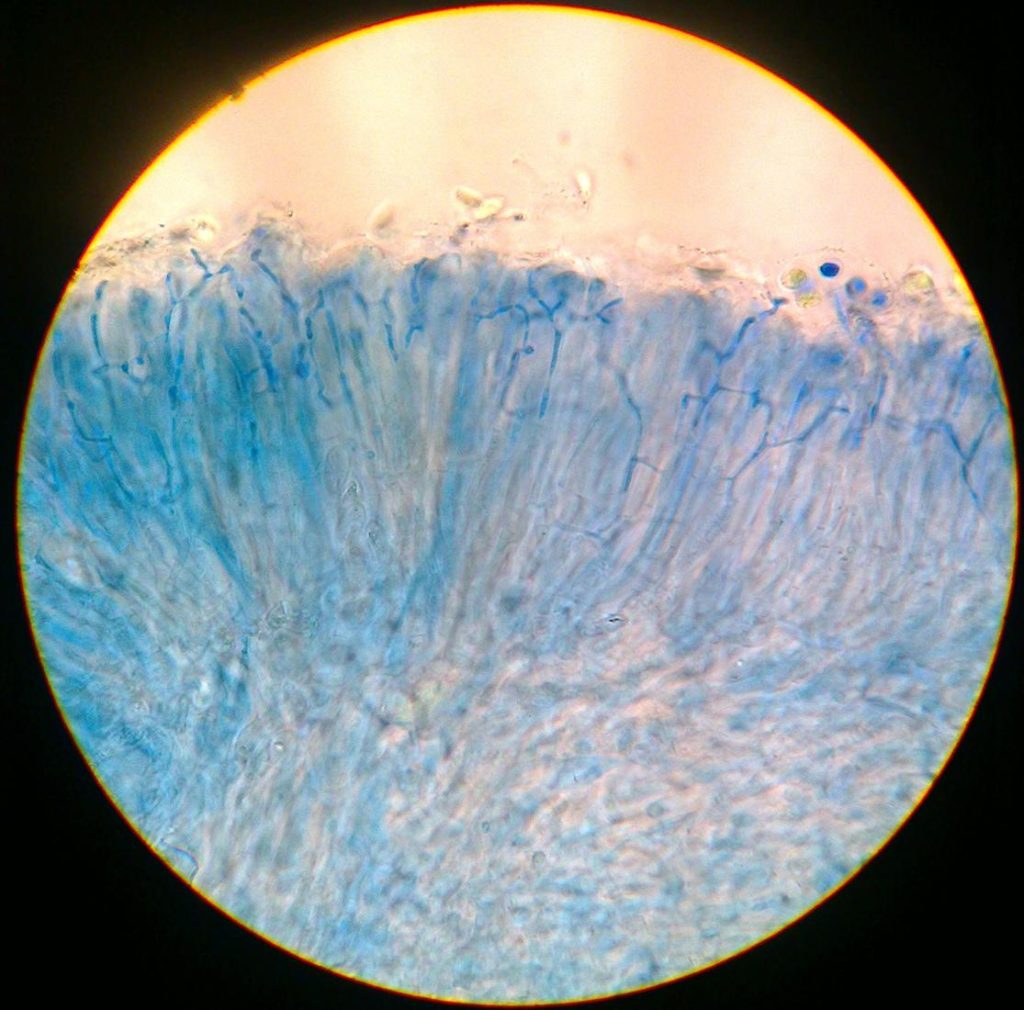
[attachment=2]Billede3080.jpg[/attachment] And much to my surprise, some spores appeared one-septate (I found three out of ~50 spores like this):
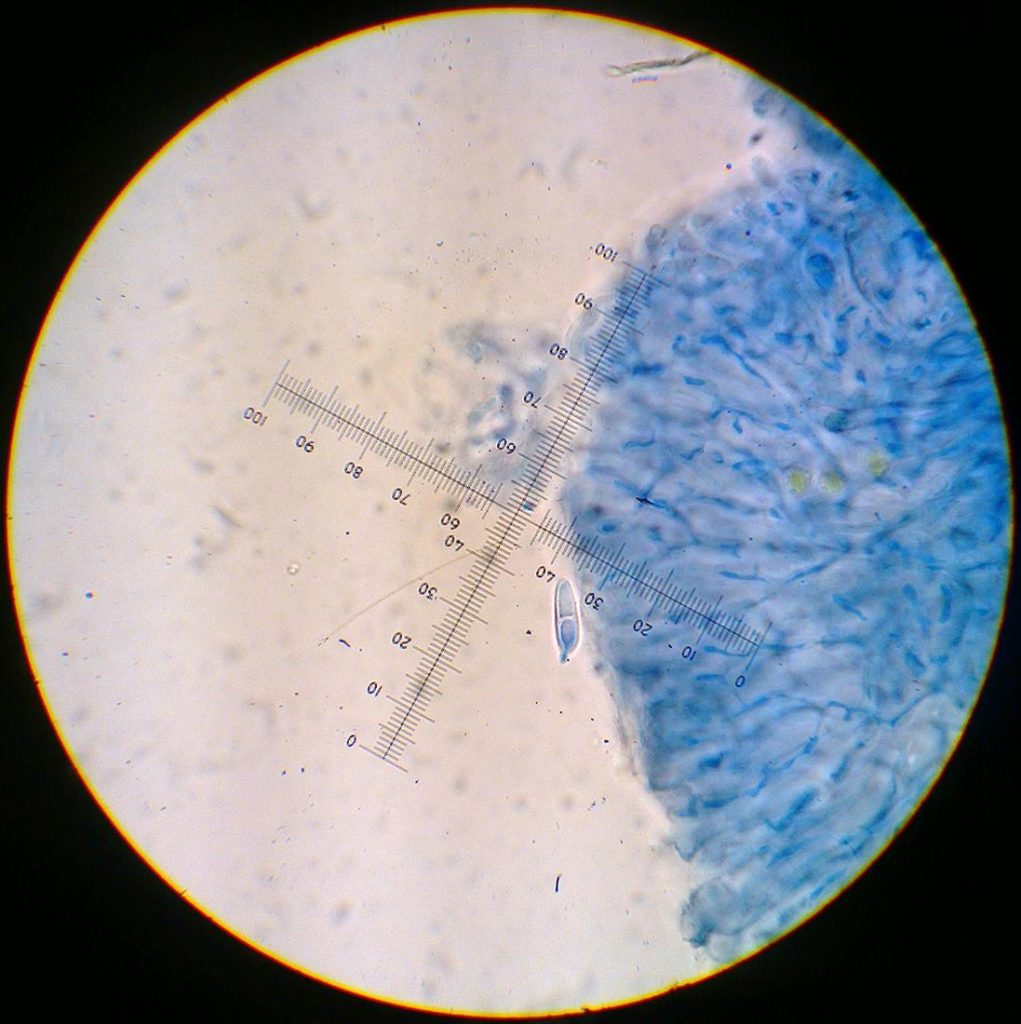
[attachment=1]Billede3081.jpg[/attachment] Lastly a picture of the excipular hyphae:
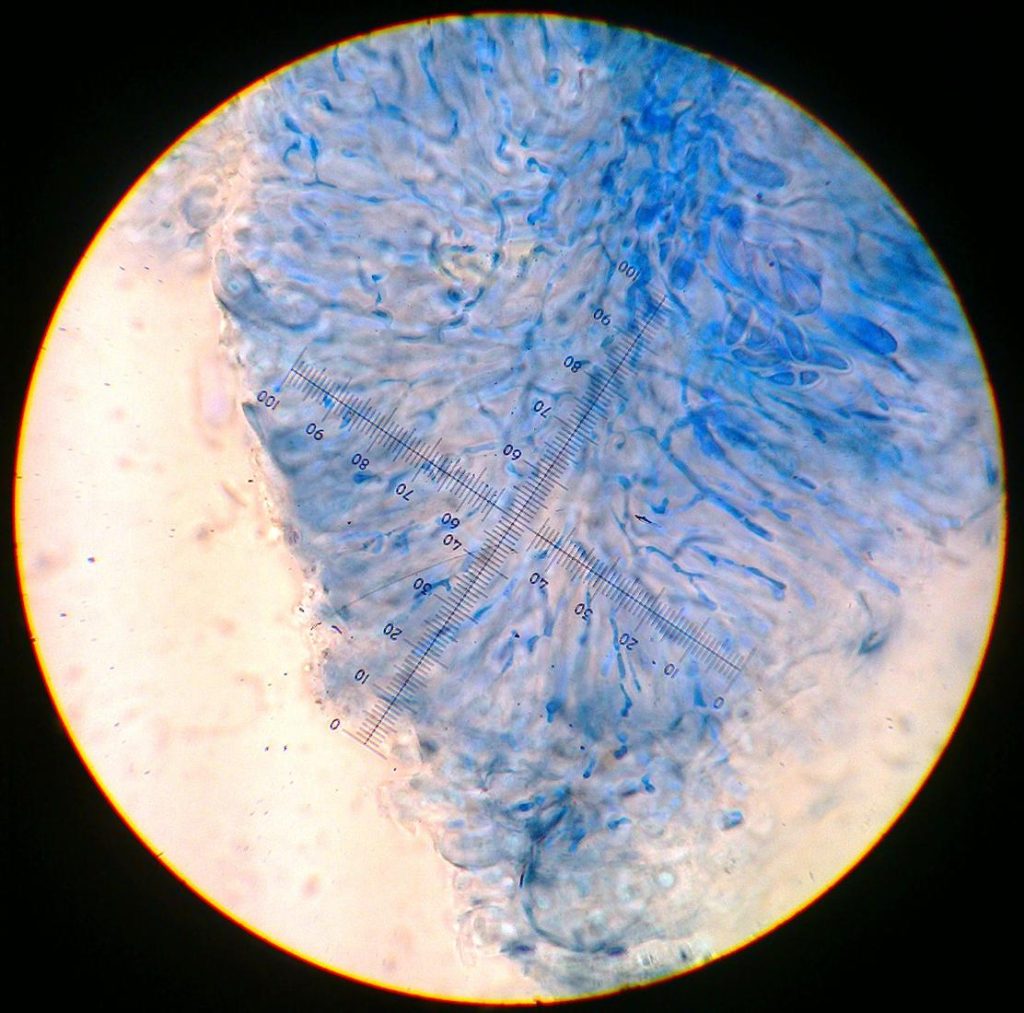
[attachment=0]Billede3083.jpg[/attachment] The thallus might have an extremely faint UV+ orange reaction (only barely visible with powerful torch in pitch black room, xanthone?), but it is too weak to capture on a photograph.
I have tried keying it as a Lecidea without much luck – it shares some characteristica with L. hypopta, but it is not a perfect fit. I cannot rule out L. exigua, but the paraphyses do not appear capitate above which causes some hesitation.
The Revision of British and Irish Lichens vol .11 (Ramalinaceae) points me in the direction of Biatora, but it does not key out to anything meaningful.
I hope these new pictures might shed some light on the true identity of my specimen.
August 7, 2022 at 11:20 pm #44795Just a thought, prompted from editing the LGBI Lecanoraceae volume (out soonish), how about Palicella filamentosasee pictures https://dalib.cz/en/taxon/info/Palicella%20filamentosahttps://dalib.cz/en/taxon/info/Palicella%20filamentosa” class=”bbcode_url”> 
[attachment=0]Screenshot 2022-08-08 at 00.16.39.png[/attachment] Neil
September 10, 2022 at 12:15 pm #44796Thank you Neil for the reply! I am convinced that you are right – the fit is very good. I am glad to put this troublesome specimen to rest!

All the best,
Jonas
September 12, 2022 at 10:44 am #44797Jonas Glad to have helped
Now we need to refind it in Britain!
Neil
October 2, 2022 at 1:27 pm #44798If it helps, I can add that the species was quite abundant on the east-facing surfaces of old Pinus sylvestrisstanding at the edge of a forest and thus exposed – about a kilometer from the nearest coast. Good luck on the search! -
AuthorPosts








- You must be logged in to reply to this topic.