
Help to identify orange fungus on apple tree
Forums › Forums › Fungi ID requests (post here if you aren’t sure what type of fungus you’ve found) › Help to identify orange fungus on apple tree
- This topic is empty.
-
AuthorPosts
-
July 13, 2018 at 5:02 pm #30958
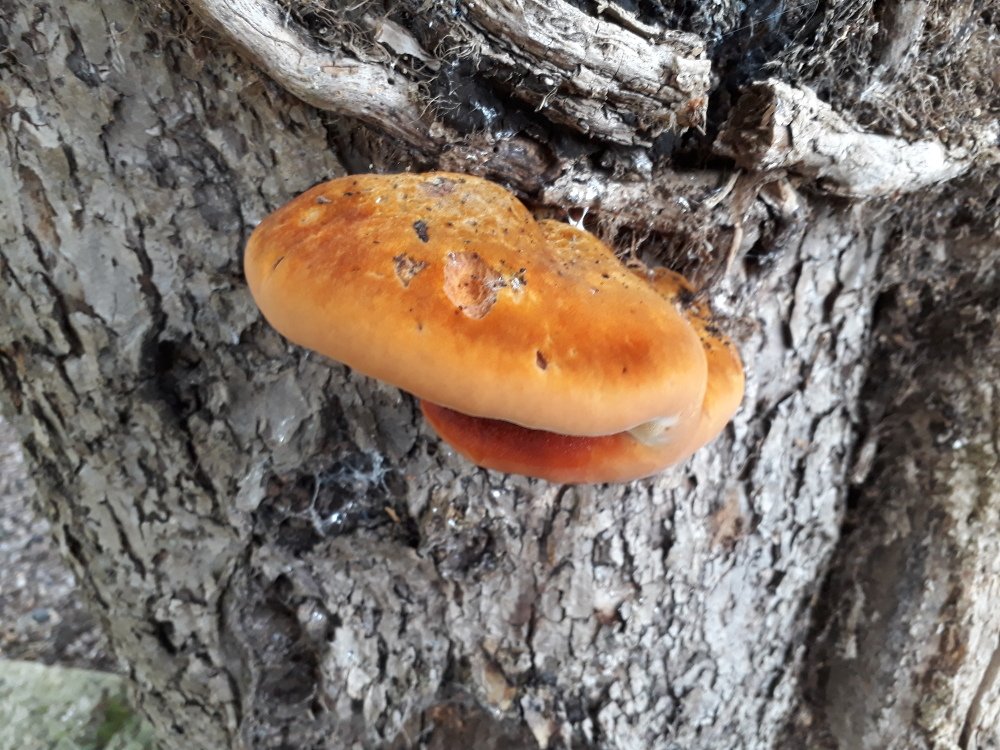
I noticed this fungus today (13Jul) on a mature cooking apple tree in my garden in Whitchurch, Shropshire. There had been a fair bit of rain last night after a long dry spell. I’ve never seen any fungus on the tree before. The tree produces lots of cooking apples, and has been dropping immature apples from the start of June to the present (as it usually does). There used to be a large growth of ivy on the tree but the ivy trunk was cut off several years ago (you can see the cut off trunk in one of the photos).
The fungus is on the main trunk about 110 cm up from the ground, a bit above a place where the outer bark seems to be missing. The larger bit is about 12cm wide and the smaller bit is about 9cm wide. I have not noticed any smell.
I have no interest in eating the fungus, but am concerned about what it might mean for the health of the tree. I’m wondering whether I should just remove the fungus.
[attachment=8]20180713_162729.jpg[/attachment] 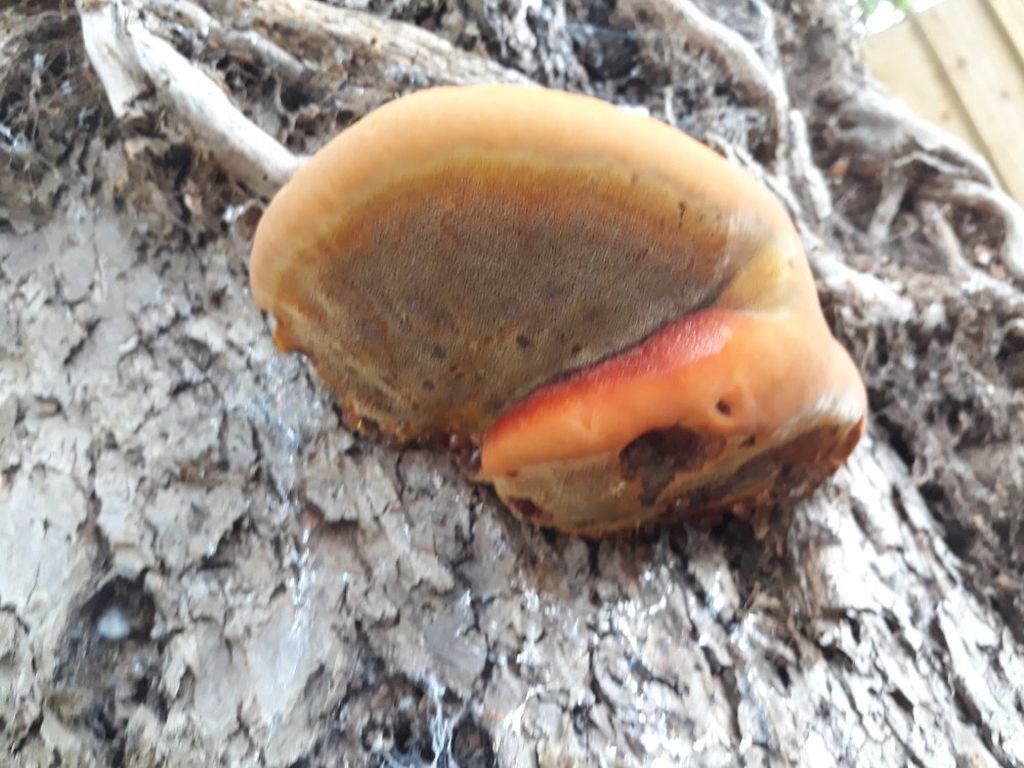
[attachment=7]20180713_162735.jpg[/attachment] 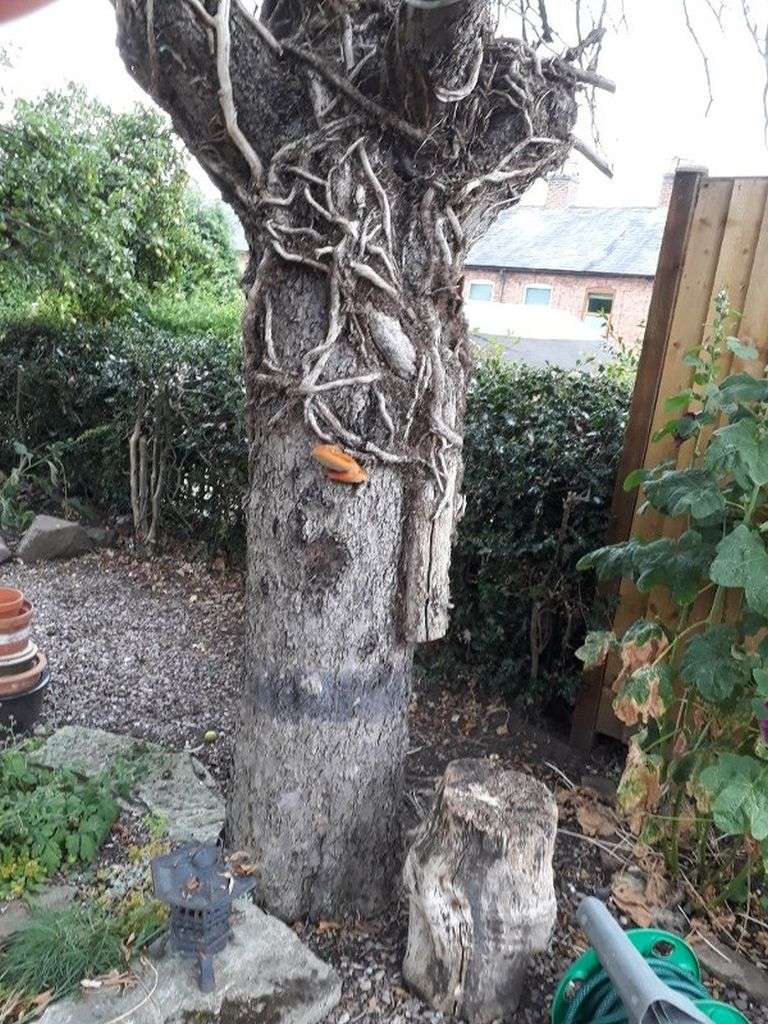
[attachment=6]20180713_162747.jpg[/attachment] 
[attachment=5]20180713_162801.jpg[/attachment] 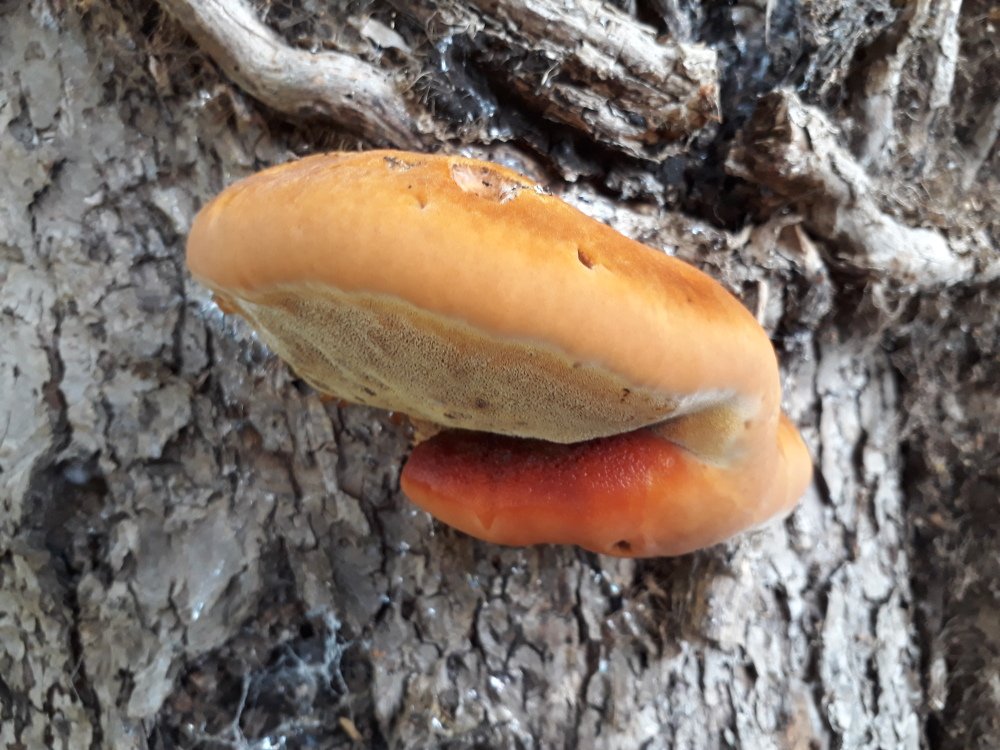
[attachment=4]20180713_162822.jpg[/attachment] 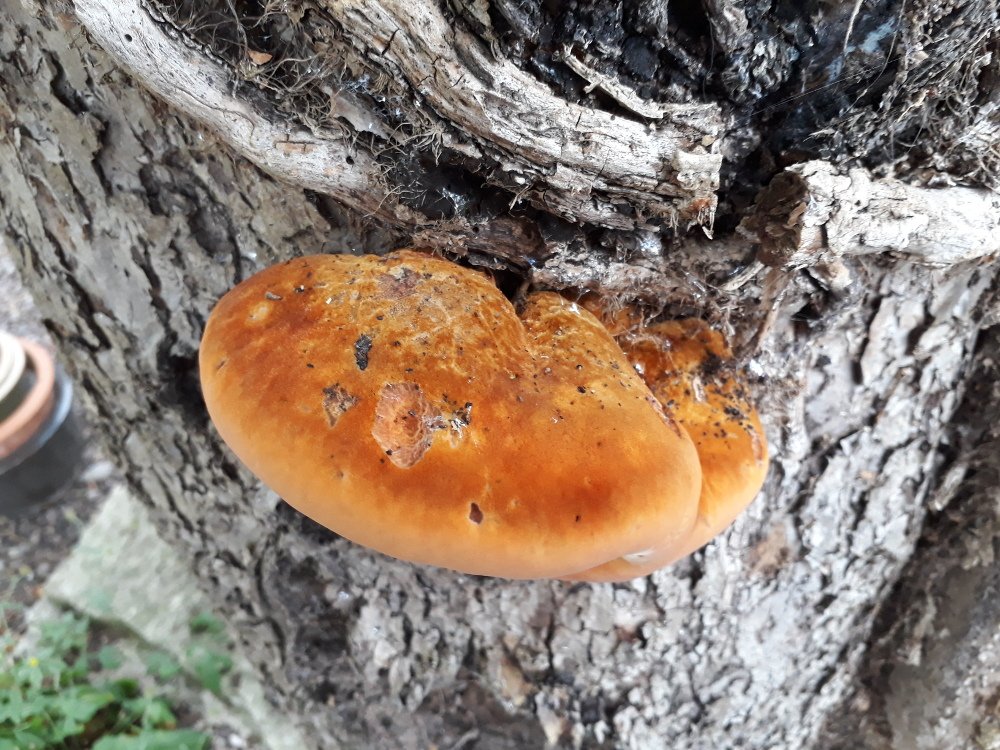
[attachment=3]20180713_162828.jpg[/attachment] 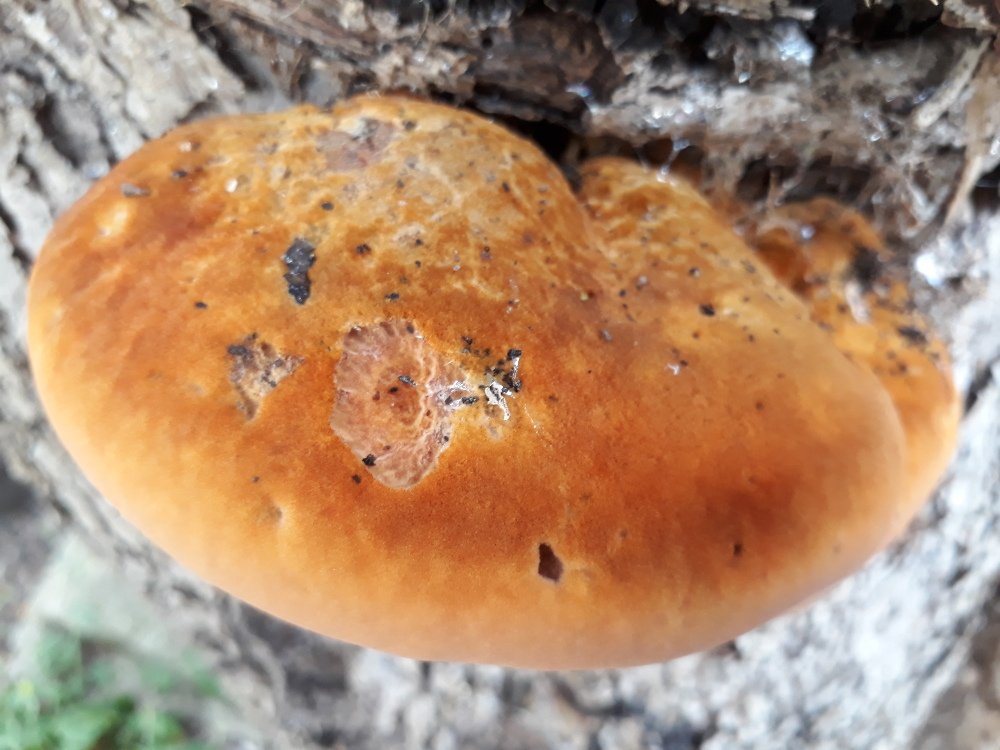
[attachment=2]20180713_165704.jpg[/attachment] 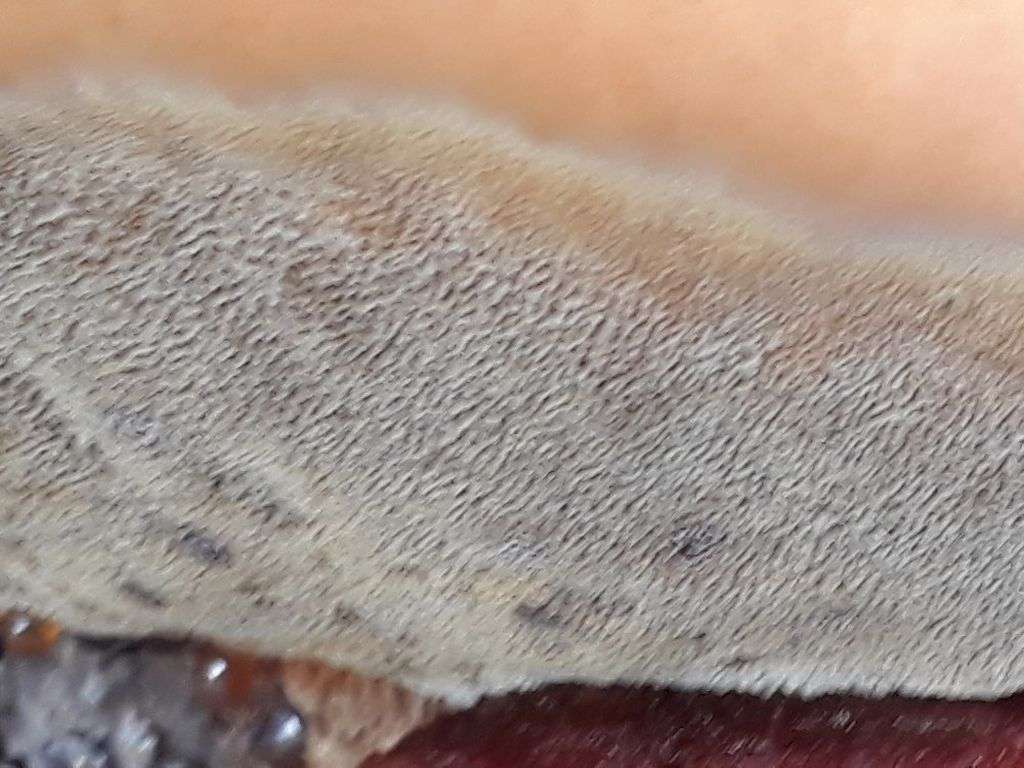
[attachment=1]20180713_165750.jpg[/attachment] 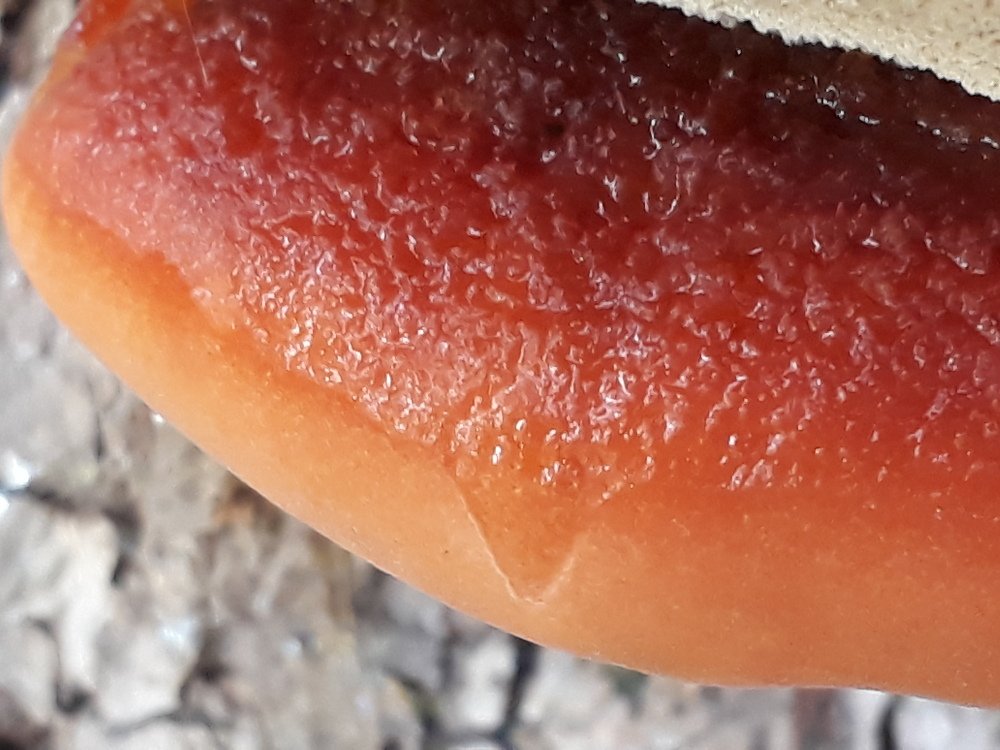
[attachment=0]20180713_165804.jpg[/attachment] July 15, 2018 at 10:45 am #41010Looks like Phellinus pomaceus, not uncommon on old apple trees. Parasitic, but there’s no point cutting off the fruit body. The organism within the tree remains unaffected. Just enjoy the new fruit the tree’s giving! July 15, 2018 at 8:17 pm #41011Hello, no, this is Inonotus hispidus, and it is a quite strong parasitic fungus. I don’t think that your tree can be preserved. How long it will withstand the fungus attack is hard to tell. Removing the fruitbody will not harm the fungus in the tree in any way. The mycelium will be spred in the stem already.
best regards,
Andreas
July 16, 2018 at 3:24 pm #41012Hi Andreas in that case would you say that the fungus pictured here:
https://wikivisually.com/wiki/Phellinus_pomaceushttps://wikivisually.com/wiki/Phellinus_pomaceus” class=”bbcode_url”> Chris
July 16, 2018 at 7:09 pm #41013Hello Chris, no, in my opinion the picture is correctly Phellinus pomaceus/tuberculosus.
The fungus in the thread here is a soft fleshed fungus with greyish-silvery pores, as can be seen on the last two pictures. So in my opinion an Inonotus species. Also the cap colour s more vivid rusty orange in colour than tzhe Phellinus pomaceus, and the last character that differs is the hirsute cap surface in the Inonotus compared to the more or less smooth cap surface of Phellinus.
best regards,
Andreas
July 16, 2018 at 8:15 pm #41014I’m now reluctant to get involved in such a learned discussion, but the thread picture seems to me to show a smoother surface than Chris’s Phellinus picture. July 16, 2018 at 8:33 pm #41015Hell eltio, forums exists for the purpose of such discussions, no? That’s what makes them valuable in my opinion.
If you have a look at the last picture, you will notice that the fungus has quite strigose pileus surface. On all other pcitures you can’tz see that, but I think that it is due to the fotograf technic that the pciture gets “flaw” and you don’t see it.
If the thread opener could answer the question, wether the fungus was hard like wood (Phellinus pomaceus) or wether it was softer, pressable and somewhat juicy (Inonotus)
best regards,
Andreas
July 17, 2018 at 8:09 am #41016I’m here to learn. Thanks Andreas. July 17, 2018 at 6:27 pm #41017mollisia wrote:
. . . .If the thread opener could answer the question, wether the fungus was hard like wood (Phellinus pomaceus) or wether it was softer, pressable and somewhat juicy (Inonotus)best regards,
Andreas
Yes, upon looking closer one can see that the cap surface of the fungus in the original post has been “grazed” – clear feeding signs, which would point to a soft consistency.July 18, 2018 at 8:00 am #41018Hello, by the way, I have never heard of Phellinus pomaceus/tuberculosus growing other than on Prunus spinosa or Prunus domestica agg. – never on an apple tree. Whereas Inonotus hispidus is very common on Malus (besides may be Fraxinus as main host).
best regards,
Andreas
-
AuthorPosts


- You must be logged in to reply to this topic.