
Geoglossum?
Forums › Forums › Ascomycetes › Geoglossum?
- This topic is empty.
-
AuthorPosts
-
February 6, 2016 at 8:37 pm #30091
Seen on chalk grassland near the Dorset coast yesterday – is Geoglossum sp. the closest its possible to get as it wasn’t collected? 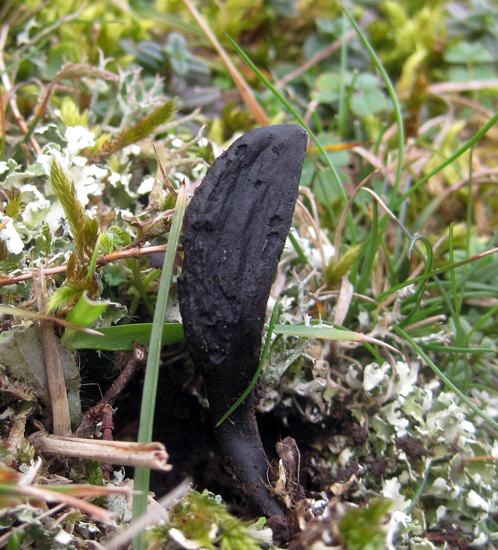
[attachment=1]zQ Geoglossum 160203 018a.jpg[/attachment] 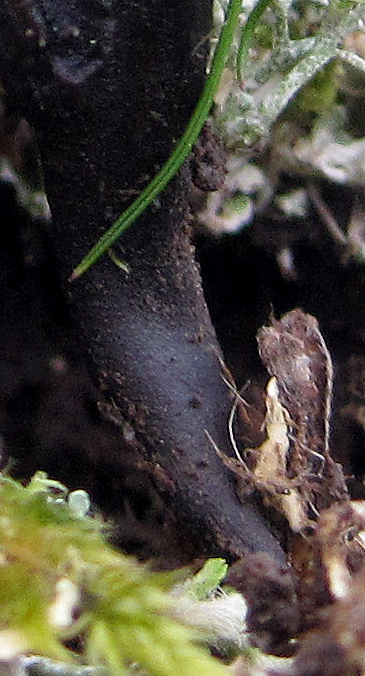
[attachment=0]zQ Geoglossum 160203 018c.jpg[/attachment] Thanks in advance,
Jenny
February 6, 2016 at 9:16 pm #38080A google will get you a key to earth tongues. A quick check of the FRDBI shows that Geoglossum fallax – which I chose at random as a representative earth tongue – is very rarely found in the new year, but I found one record in February. Of coirse there is always the problem that we all know they do not occur in january and february so we do not look for them then.
February 6, 2016 at 9:41 pm #38081JennyS wrote:Seen on chalk grassland near the Dorset coast yesterday – is Geoglossum sp. the closest its possible to get as it wasn’t collected?
Thanks in advance,
Jenny
Hi Jennysadly the simple answer is that is the closest. A glimpse at this thread
http://www.fungi.org.uk/viewtopic.php?f=4&t=775&hilit=geoglossum ” class=”bbcode_url”> http://www.fungi.org.uk/viewtopic.php?f=4&t=775&hilit=geoglossum best
Chris
February 7, 2016 at 4:17 pm #38082Hi Jenny Chris is quite right, though ID is not impossible with a key (Brian Spooner’s one works OK in general for me) and a microscope preparation or two. It’s important to ensure that you use mature (discharged) spores for measurement and counting septa. I was shown a neat trick to achieve this – if you dab the specimen repeatedly into a drop of water on a slide, mature spores on the fruit-body surface become dislodged and mature asci also discharge into the water drop. This seems to work even with oldish specimens.
Your pictures look more like G. cookeanum than G. fallax to me (and the ecology is right) but the microscope is essential.
And PS – well done with your Tubuefia find on the UKLichens site. More pictures will appear on the FGBI website from the specimen Mark Powell sent me, also of Laetisaria lichenicola….
February 7, 2016 at 5:34 pm #38083Many thanks Leif, Chris and Paul – wish I’d collected it but we were looking at lichens on chalk and like an eejit I just took a couple of photos! Thanks Paul for the spore tip – and it was pure synchronicity coming home with the Tubuefina just after Mark had posted his description and details! Laetisaria lichenicola seems to be pretty widespread (seasonal?) as I’ve found it most places where I’ve checked Physcia tenella in the last couple of weeks.
February 7, 2016 at 7:58 pm #38084Interesting Jenny – I had a late Geoglossum too on a neighbours lawn only two weeks ago -I knocked at the door and got a sample, haven’t had chance for microscopy yet though…………. PS -whats the UK lichens site?
Cheers
Ken
February 7, 2016 at 8:07 pm #38085Hi Ken, its one of the Yahoo groups: https://groups.yahoo.com/neo/groups/UKLichenshttps://groups.yahoo.com/neo/groups/UKLichens” class=”bbcode_url”> February 7, 2016 at 10:11 pm #38086Thanks Jenny – Lichens approved already – this simple guide to Earthtongues from NWFG may be helpful: http://fungus.org.uk/nwfg/earth-tongues.htm Cheers
Ken
-
AuthorPosts


- You must be logged in to reply to this topic.