
Cladonia symphycarpa Can Not be Identified by Spot Tests
- This topic is empty.
-
AuthorPosts
-
October 28, 2023 at 3:34 pm #32703
Cadonia symphycarpais a rare, normally sterile, Cladoniaforming squamule mats in open vegetation on calcareous soils from the coast to montane habitats. It has been characterised in Britain by a K+ yellow to red spot test with crystals forming under the microscope (norstictic acid), although many other chemotypes occur elsewhere. Burgaz et al (2019) lists seven! of which four have norstictic acid and atranorin along with other chemicals while three others have atranorin with an assortment of other lichen acids, so giving a K+ yellow spot test that is also K(UV) dry+ bright yellow. So the presence of a norstictic acid spot test can not be relied upon. I have a specimen I collected from limestone soil, CG1 by the coast, Broad Haven, Stackpole, VC45, SR980 942, 31/8/1995, K+ yellow, K/UV (dry)+ bright yellow and Pd+ orange-red, which was determined by Peter James as
Cladonia firma(which has these spot tests), but the specimen has largely white squamule undersides and other typical features of C. symphycarpa. Recently doing some management advice work on The Lizard more generous specimens were found in coastal serpentine rock heath, which appeared to be
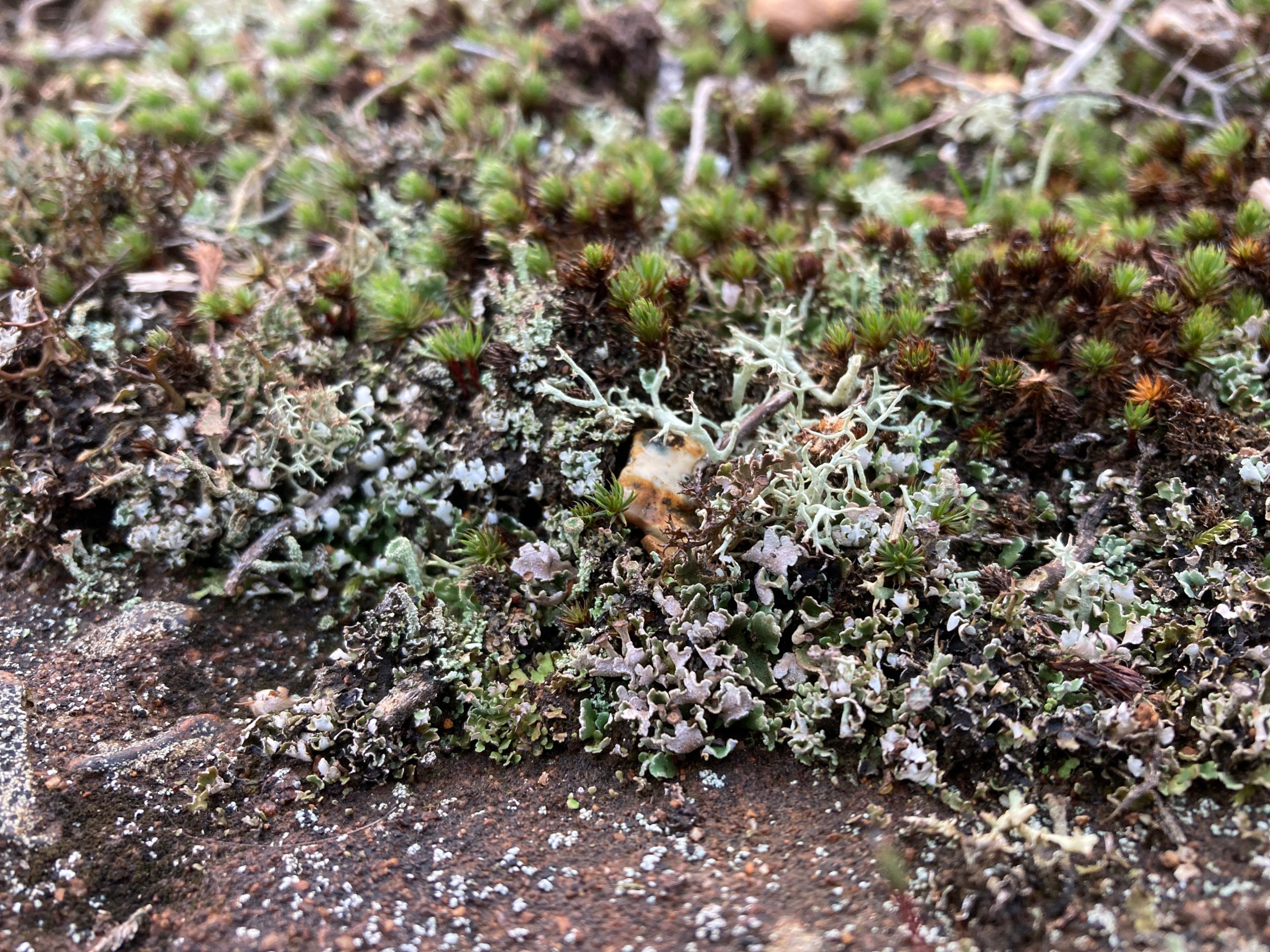
Cladonia symphycarpabut were K+ yellow in the field. I comparing the three specimens collected with typical K+ yellow to red C. symphycarpaand Cladonia firmaspecimens (the latter from a location where C. firmahad been confirmed by sequencing).This comparison confirmed these were not C. firmabut another chemotype of C. symphycarpa. The spot tests match chemotype V of Burgaz et al (2019) (Atranorin,fumarprotocetraric and rangiformic acids, and zeorin (inconstant)). As Burgaz et al (2019) and Association Française de Lichénologie describe
C. firmaas preferring substrates with an acid or subneutral pH and non-calcarious soils, it is possible that K+ yellow and Pd+ orange-red C. symphycarpahas been collected in Britain previously from coastal limestone and calcareous dunes but misidentified as C. firma. At the Lizard heaths, true C. firmadid occur, but further inland on more acidic heaths. Cladonia firmahttps://britishlichensociety.org.uk/resources/species-accounts/cladonia-firma ” class=”bbcode_url”> https://britishlichensociety.org.uk/resources/species-accounts/cladonia-firma C. symphycarpahttps://britishlichensociety.org.uk/resources/species-accounts/cladonia-symphycarpa ” class=”bbcode_url”> https://britishlichensociety.org.uk/resources/species-accounts/cladonia-symphycarpa Cladonia symphycarpafrom The Lizard: 
[attachment=6]2023-10-16-41.jpg[/attachment]
A scan of K+ yellow, K/UV (dry)+ bright yellow and Pd+ orange-redCladonia symphycarpaspecimen from the Lizard. 
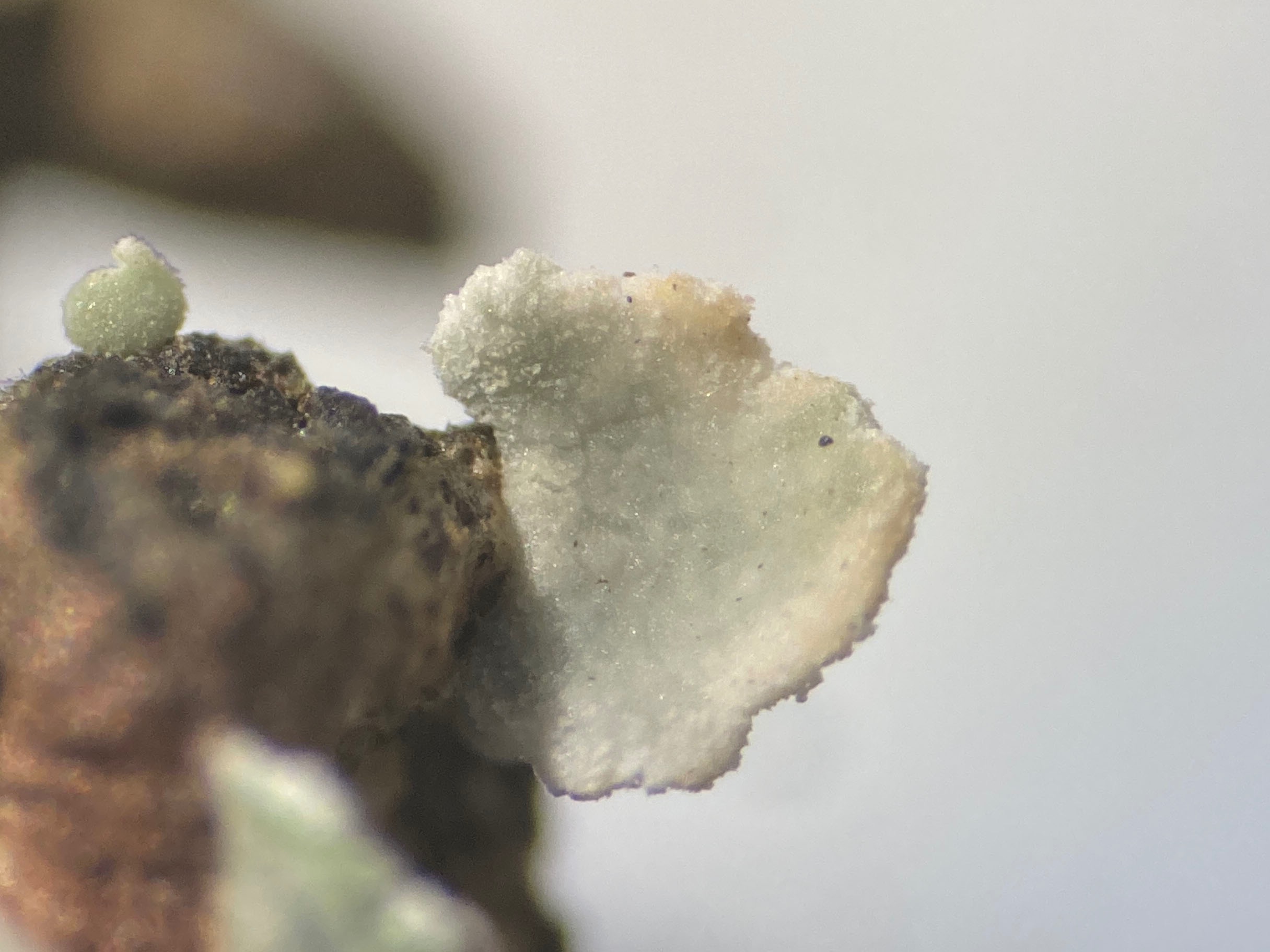
[attachment=5]2023-19-16-42.jpg[/attachment]
A close up of aCladonia symphycarpasquamule underside showing the lightly flocked underside and violet-brown tinges at the upper edges. 
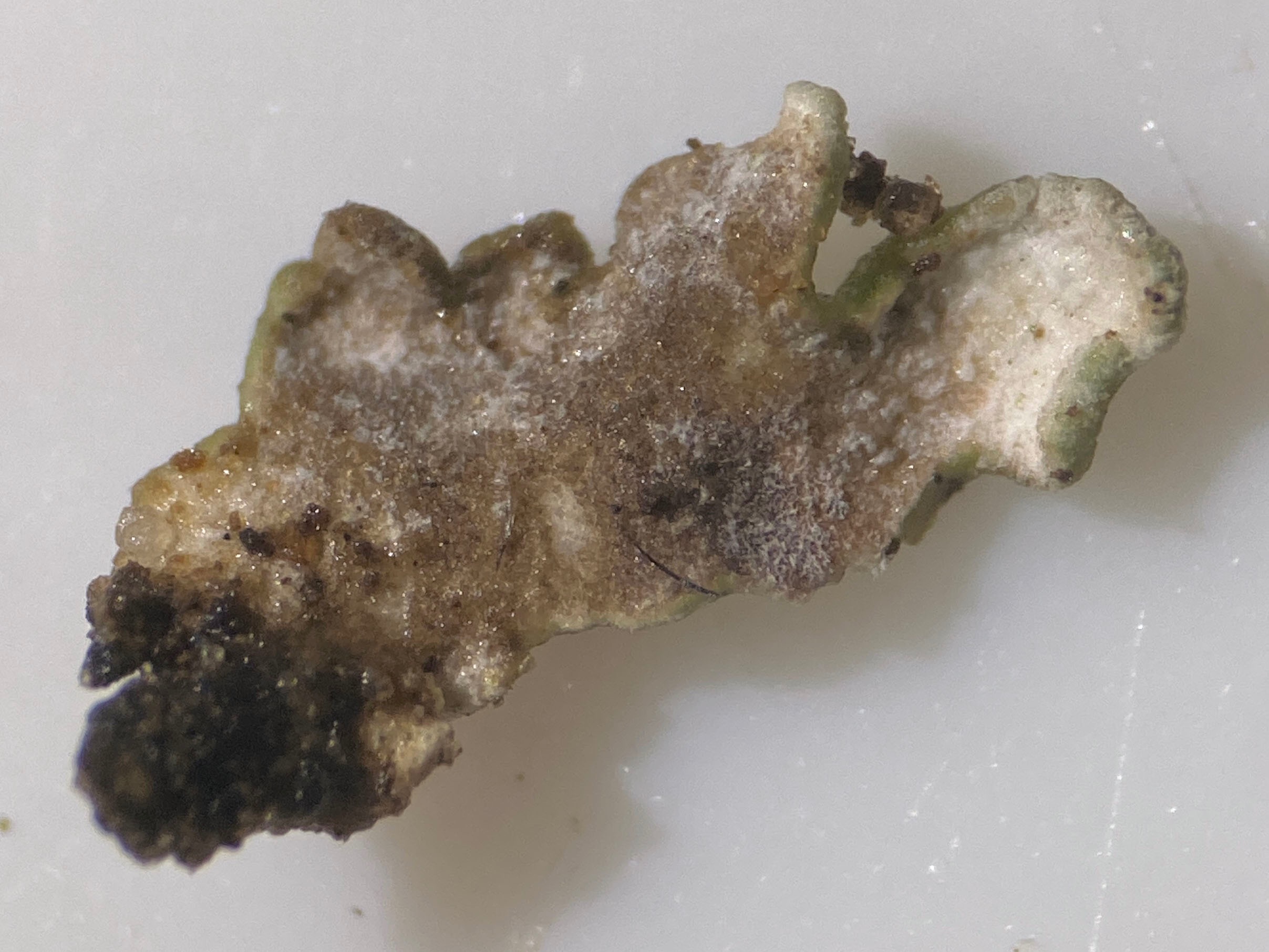
[attachment=4]2023-19-16-43.jpg[/attachment]
A close up of aCladonia symphycarpasquamule upper surface showing brown pruinose tips. Cladonia firma: 
[attachment=3]2021-11-05-03b.jpg[/attachment]
Cladonia firmawith podetia, Beaulieu Heath, New Forest 
[attachment=2]2022-01-29-07.JPG[/attachment]
Cladonia firma, showing the tometose underside of squamules coloured grey brown tinged with violet, on ironstone exposed in hollow way, heath, Rock Hills, New Forest 
[attachment=1]2021-11-05-07.JPG[/attachment]
Cladonia firma, underside of squamule, Beaulieu Heath, New Forest 
[attachment=0]Cladonia-firma-2.jpg[/attachment]
Cladonia firma, showing the distinctive pruina on the squamule tips, characteristic of this species, Cladonia symphycarpaand Cladonia subcervicornis, White Moor, New Forest © Andy M Cross Other possible
C. symphycarpa K+ yellow chemotypes are Chemotype III: Pd+ yellow, K+ yellow, C–, KC–, UV–. Atranorin and psoromic acid or Chemotype IV: Pd–, K+ yellow, C–, KC–, UV–. Atranorin, rangiformic acid and zeorin (inconstant). Neil
Reference
Burgaz, A.R., Ahti, T. & Pino-Bodas, R. (2020)
Mediterranean Cladoniaceae. Madrid: Spanish Lichen Society. October 31, 2023 at 10:58 am #45695Thank you Neil for this information on this little-known species, thank you also for pointing out the freely available publication by Burgaz et al. on species of the genus Cladonia. This is a very good update on the species of the Cladoniagenus, unfortunately very poorly illustrated by completely unusable herbarium photographs! In our time it must be possible to illustrate a publication with better photographs… About
Cladonia firma, this species is common on the Côtes de Bretagne and also in the area: Scilly Islands, Cape Lizard, Ouessant, Pointe de Bretagne, Channel Islands, etc. Among French botanists there does not seem to be a name to name this very characteristic zone, in particular for lichens and I would like to know if among English botanists there is a name more specific than “Oceanic zone”? Thanks in advance if you have a name.
Alain GERAULT
-
AuthorPosts




- You must be logged in to reply to this topic.