
Cladonia mitis from lowland heath?
- This topic is empty.
-
AuthorPosts
-
September 3, 2025 at 9:40 am #33074
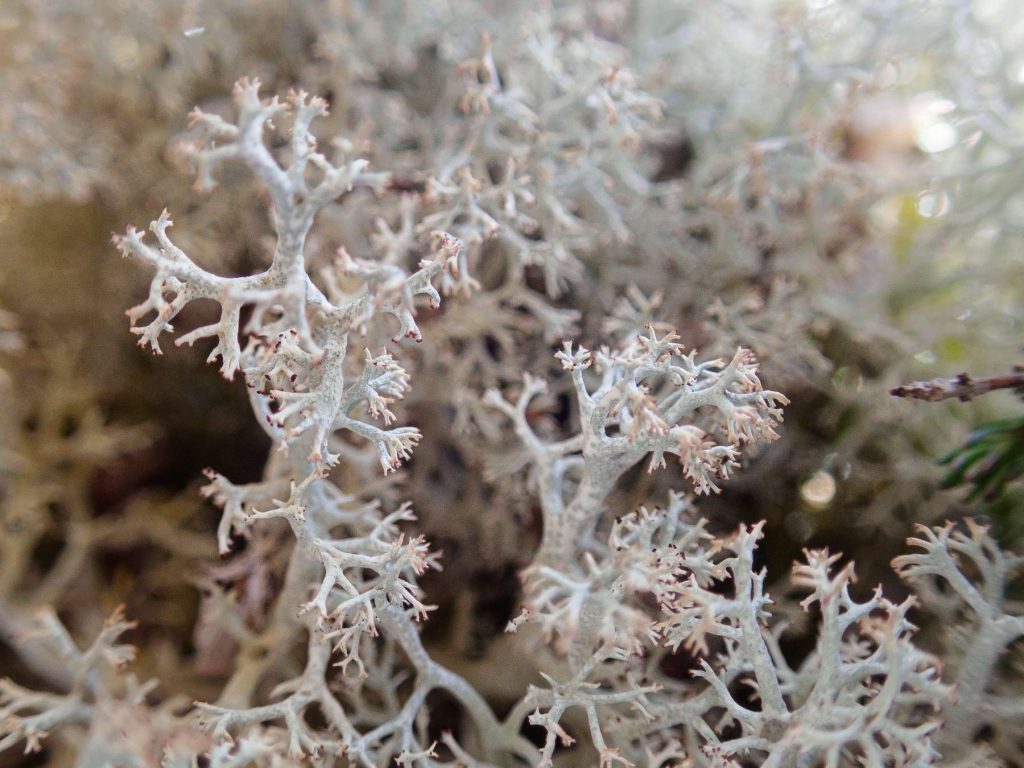
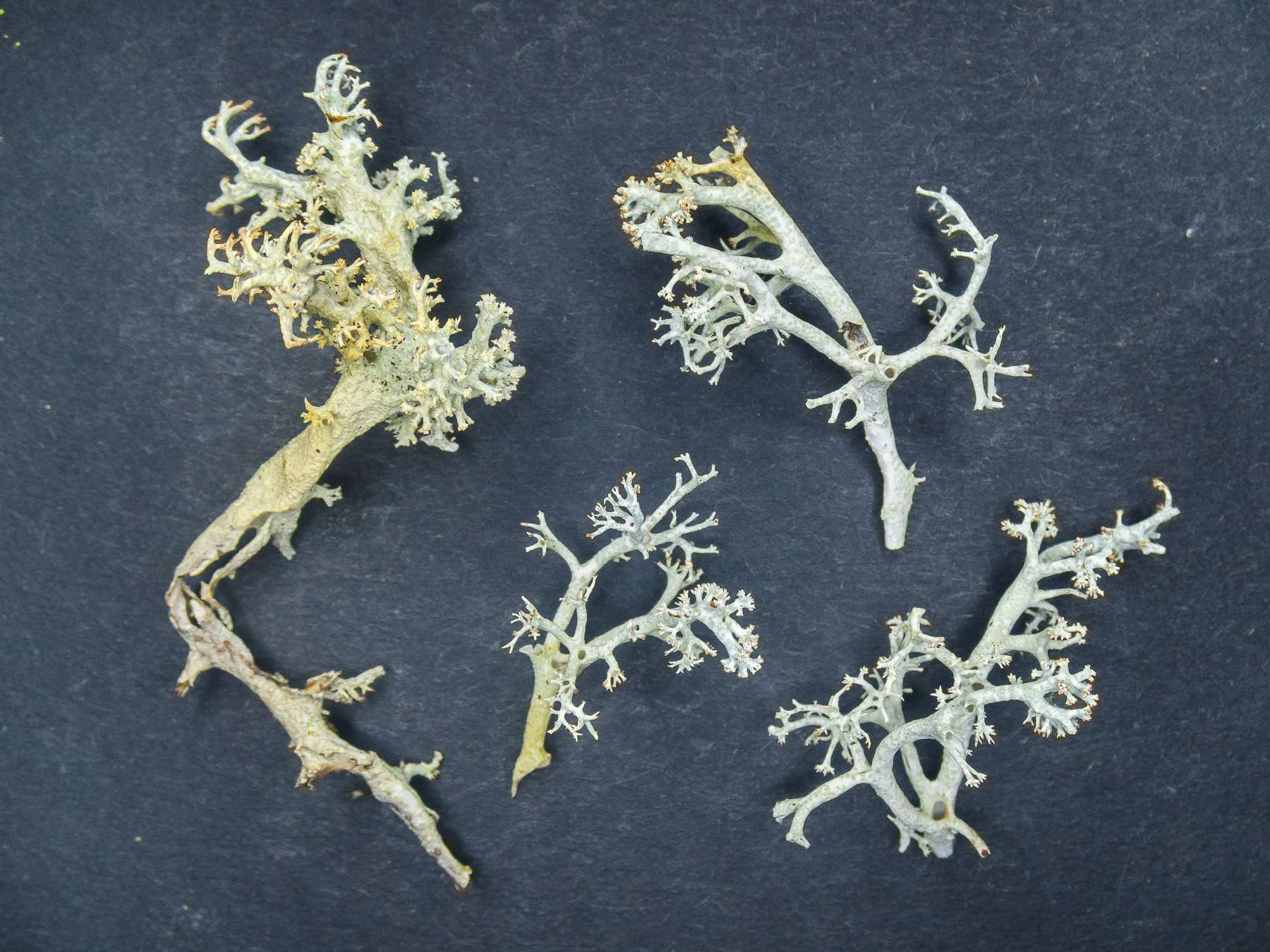
Following on my post yesterday about potential Cladonia cocciferas. str. from lowland heath, I wonder if these podetia might belong to C. mitis? It seems incredible, and I’m unwilling to believe it, but they seem neither to be C. arbusculanor C. portentosa. They come from the same possibly high-quality lowland heath as the potential C. cocciferas. str — Westleton Common in East Suffolk (VC25/TM4468). They don’t seem to belong to
C. arbusculabecause they test neither Pd+ red nor Pd+ yellow. I’ve tested multiple times in both the field and at the bench, including with a freshly prepared batch of Pd. (The slight discolourations on the collected podetia are mostly patches of dried Pd from two-month-old tests, not a yellow reaction from psoromic acid. There was no colour at the time of the test.) The podetia also lack the strong directional ‘nap’ or recurve of
C. arbuscula— though there does seem to be some slight tendency for it, and perhaps more than one might expect for ‘classic’ C. portentosa. They also don’t seem to be
C. portentosabecause they don’t test UV+ blue. And as mentioned, the morphology doesn’t seem to fit precisely well either — including the ‘monstrous’ inflated form. My understanding is that the ‘monstrous’ form of C. portentosais found in boggy areas, but this specimen comes from a dry, sandy lowland heath where ‘classic’ C. portentosacan be abundantly found. On the positive side, the specimen does seem to have characteristics of
C. mitis: hollow podetia, ecorticate surface, some slight recurve, tri- or tetrachotomous branching at the apices, fairly rich branching. Any advice gratefully received!
Many thanks,
Anthony
[attachment=5]Cladonia mitis sp inc 20250628-A-1.jpg[/attachment] 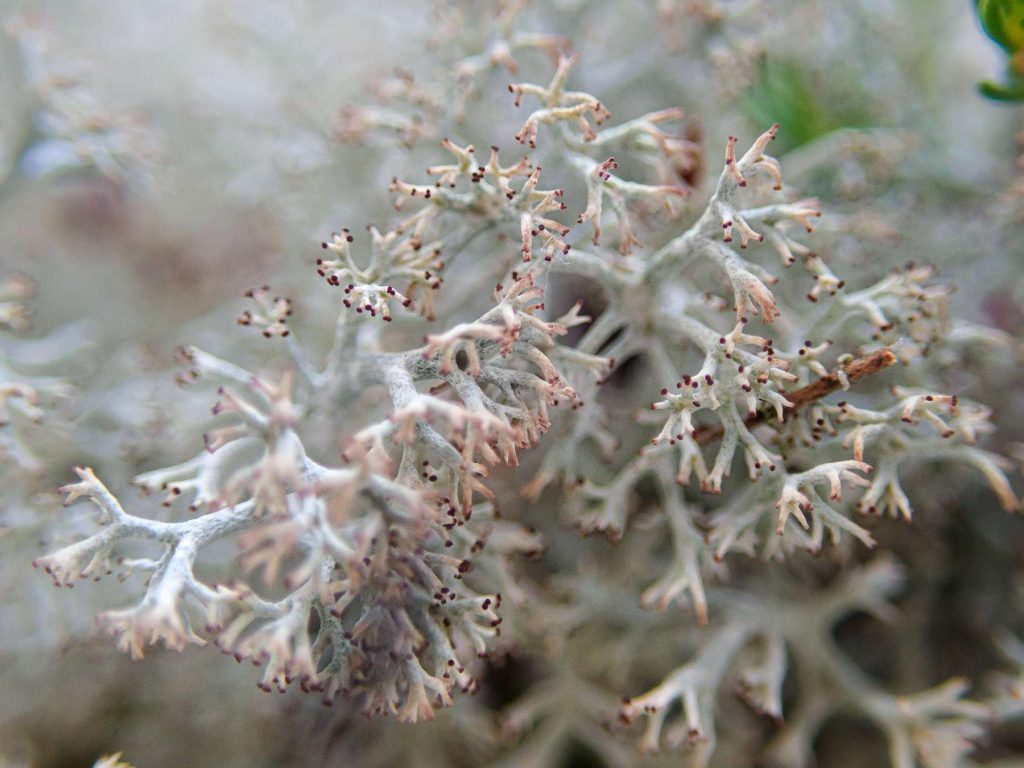
[attachment=4]Cladonia mitis sp inc 20250628-A-2.jpg[/attachment] 
[attachment=3]Cladonia mitis sp inc 20250628-B-1.jpg[/attachment] 
[attachment=2]Cladonia mitis sp inc 20250628-B-2.jpg[/attachment] 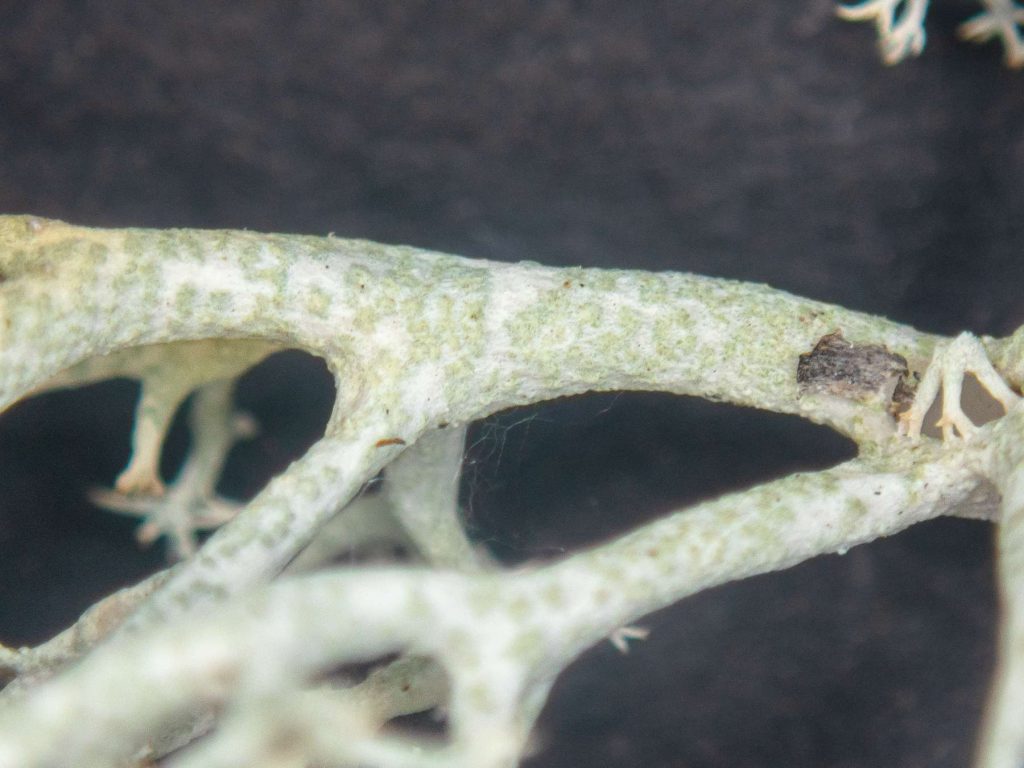
[attachment=1]Cladonia mitis sp inc 20250628-B-3.jpg[/attachment] 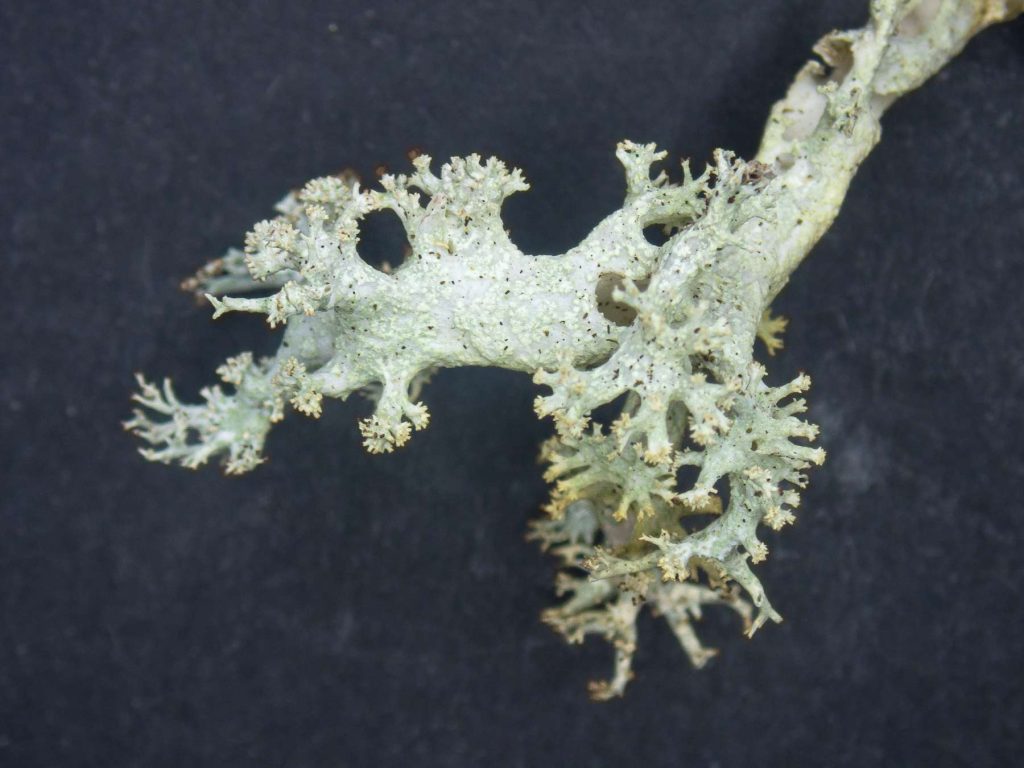
[attachment=0]Cladonia mitis sp inc 20250628-B-4.jpg[/attachment] September 3, 2025 at 12:55 pm #46657Anonymous
I am thinking of Cladonia portentosa, the blue coloration under UV light being difficult to highlight in fresh conditions. Alain
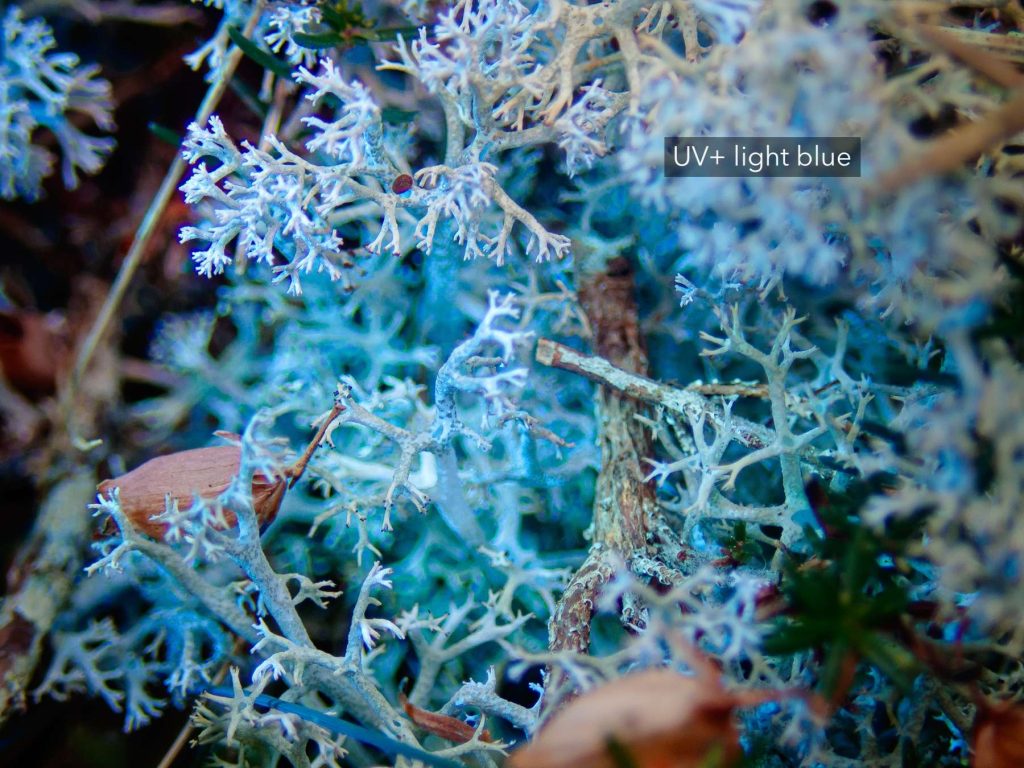
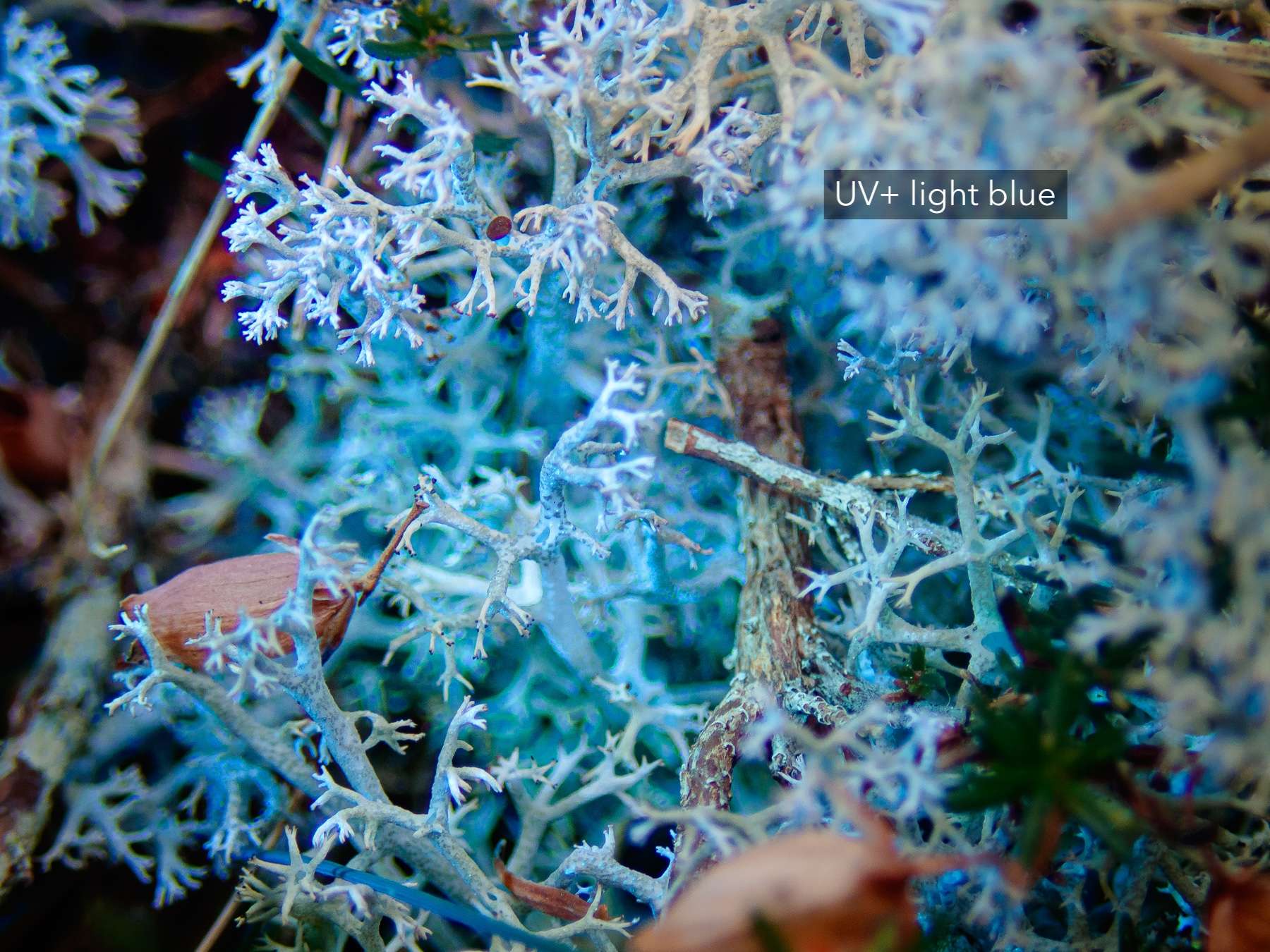
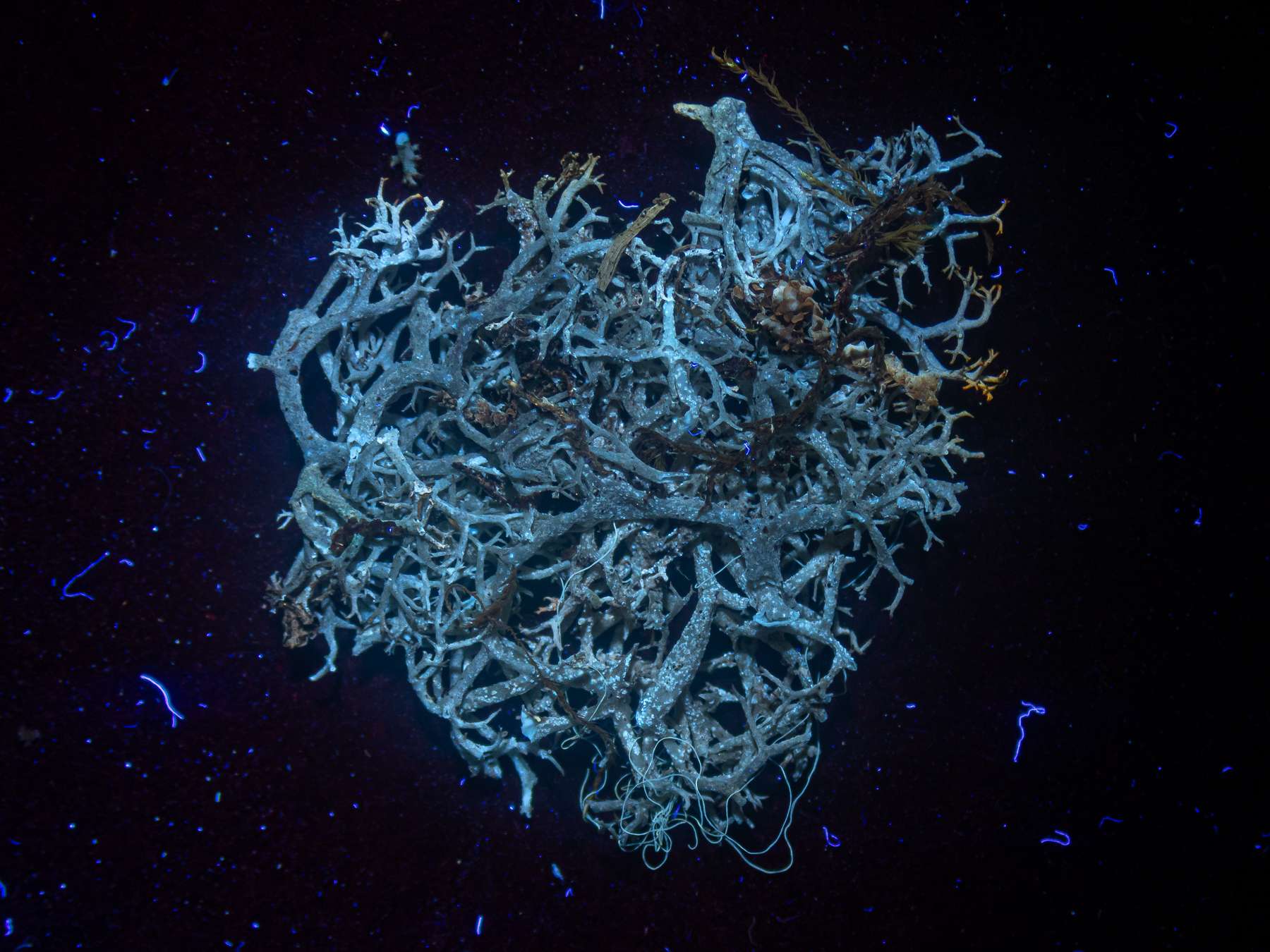
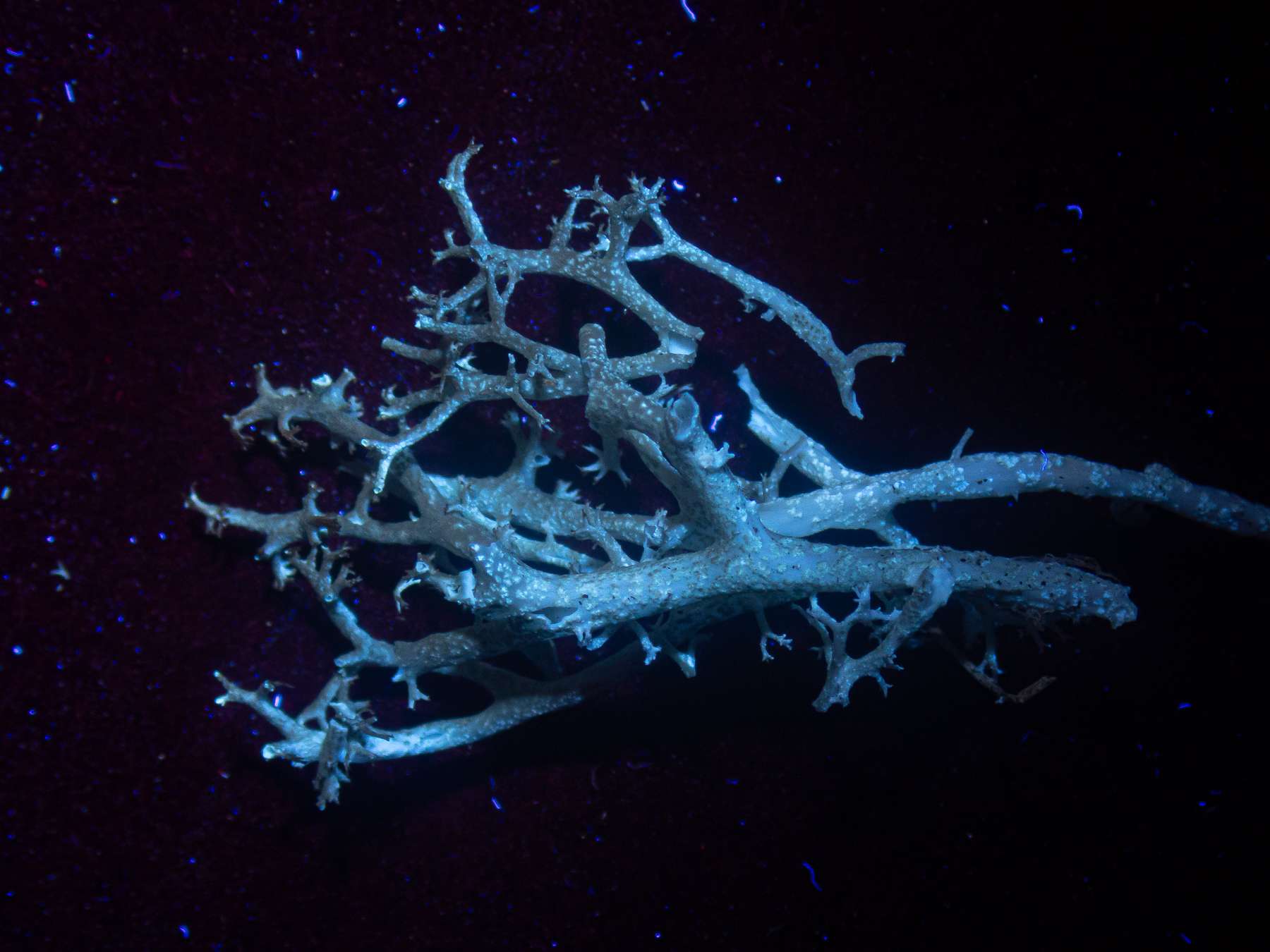
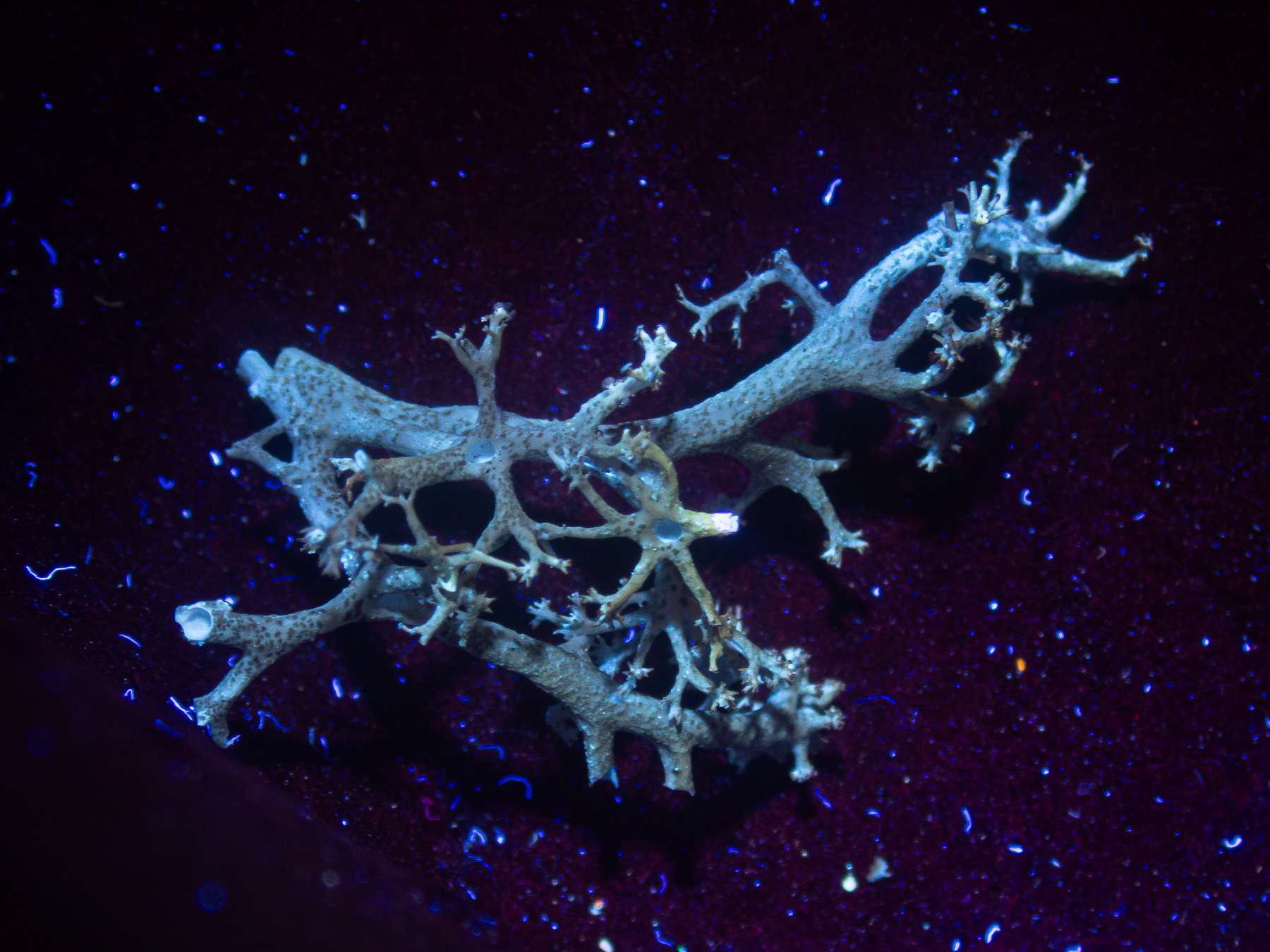
September 3, 2025 at 5:23 pm #46658Many thanks, Alain. You may be right. With pale Cladonia, it can be difficult to distinguish true blue UV-fluorescence from mere blue UV-reflectance! Below are some comparison photos that may help:
C. portentosa, C. arbusculasubsp. squarrosa(reacts Pd+ red), and the possible C. mitis. All the collected podetia are dry, and either months or years old. But just in case perlatolic acid degrades over time, I’ve also included a photo of fresh
C. portentosafluorescing clearly in the field. (If I can get sufficient shade on the specimen, I haven’t yet found it too problematic to capture the UV+ blue fluorescence of C. portentosafrom fresh lichens.) In all cases, I’m using a front-filtered 365nm UV-torch (Alonefire). I also equalised the white balance, tint and saturation of the three photographs of the collected podetia to allow for better comparison.
Considering that
C. arbusculais UV-, it stands to reason that it must be merely reflecting the UV-light (a bit like white paper), not fluorescing on its own. The C. portentosa, however, must be fluorescing UV+ blue from perlatolic acid. Perhaps that accounts for its somewhat more even blueness, especially in the photo of the fresh lichen in the field? To my eyes — and this is just my own colour perception of course! — the possible
C. mitislooks more like the C. arbuscula(i.e. merely reflecting) than it does the C. portentosa(i.e. fluorescing). But I accept that others may see the colours differently, and that the morphological similarities and differences may be better evidence one way or the other. Thanks again,
Anthony
[attachment=3]Cladonia portentosa 20240921-B01 Westleton.jpg[/attachment] 
[attachment=2]Cladonia portentosa 20230802-A.jpg[/attachment] 
[attachment=1]Cladonia arbuscula subsp squarrosa 20250412-A.jpg[/attachment] 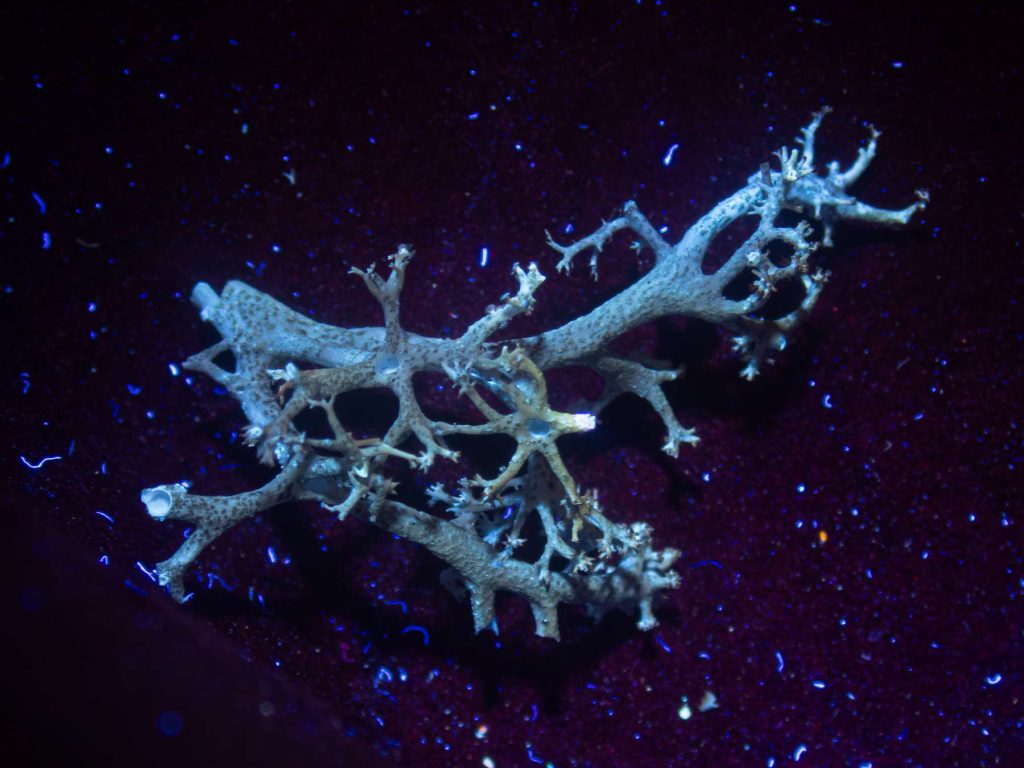
[attachment=0]Cladonia mitis sp inc 20250628-B-5.jpg[/attachment] September 3, 2025 at 6:34 pm #46659I was going to ask about double checking the UV flourescence as the podetia surface looks to be very like that of Cladonia portentosa; lose and a bit broken up (and giving a greenish tinge from a distance). C. mitisis very similar to Cladonia arbusculawith a compcact podetia surface that gives a slivery tinge from a distance. A close up of
C. mitispodetia 
[attachment=0]2023-02-11-08.jpg[/attachment] The best
Cladonia portentosaflourescence is seen at the base of the podetia and is in the cortex not the medual, I have never seen it fluoresce at the top of the podetia, and it is usually easy to see if not photograph Neil
September 3, 2025 at 6:49 pm #46660Many thanks, Neil. I can see the differences in the surface that you mean. Together with Alain’s comments, I think this points fairly clearly to C. portentosa. A fairly ‘exuberant’ form with which I wasn’t previously familiar. I’m a bit concerned now, though, about the fluorescence question, so any comments you might have on the photos below would be much appreciated. Does perlatolic acid degrade over time in the herbarium?
Best regards,
Anthony
September 3, 2025 at 7:58 pm #46661Anthony Fluorescence is very difficult to photograph, so not sure. One horible thought would be a perlatolic acid defficient varient of
Cladonia portentosa! Quote:Does perlatolic acid degrade over time in the herbarium?
I have just checked a uncurated box of specemens from when I was starting and a 1988 specimen of “
Cladonia impexa“, i.e. Cladonia portentosagave good flourescence, while a specmen named Cladonia arbuscula, included a mix of Cladonia arbusculaand Cladonia portentosa, with the latter giving a strong flourescence and the former no flourescence or reflectance; very dull indeed. I think fresh matterial of Cladonia arbusculagives more reflectance? A picture I have up on the BLS website:

[attachment=0]2022-02-03-06-Cladonia-portentosa-c-arbuscula.jpg[/attachment]
Cladonia portentosaleft and Cladonia arbuscularight Neil
September 4, 2025 at 8:41 am #46662Thanks again, Neil — that’s really helpful. I’m pretty confident I saw
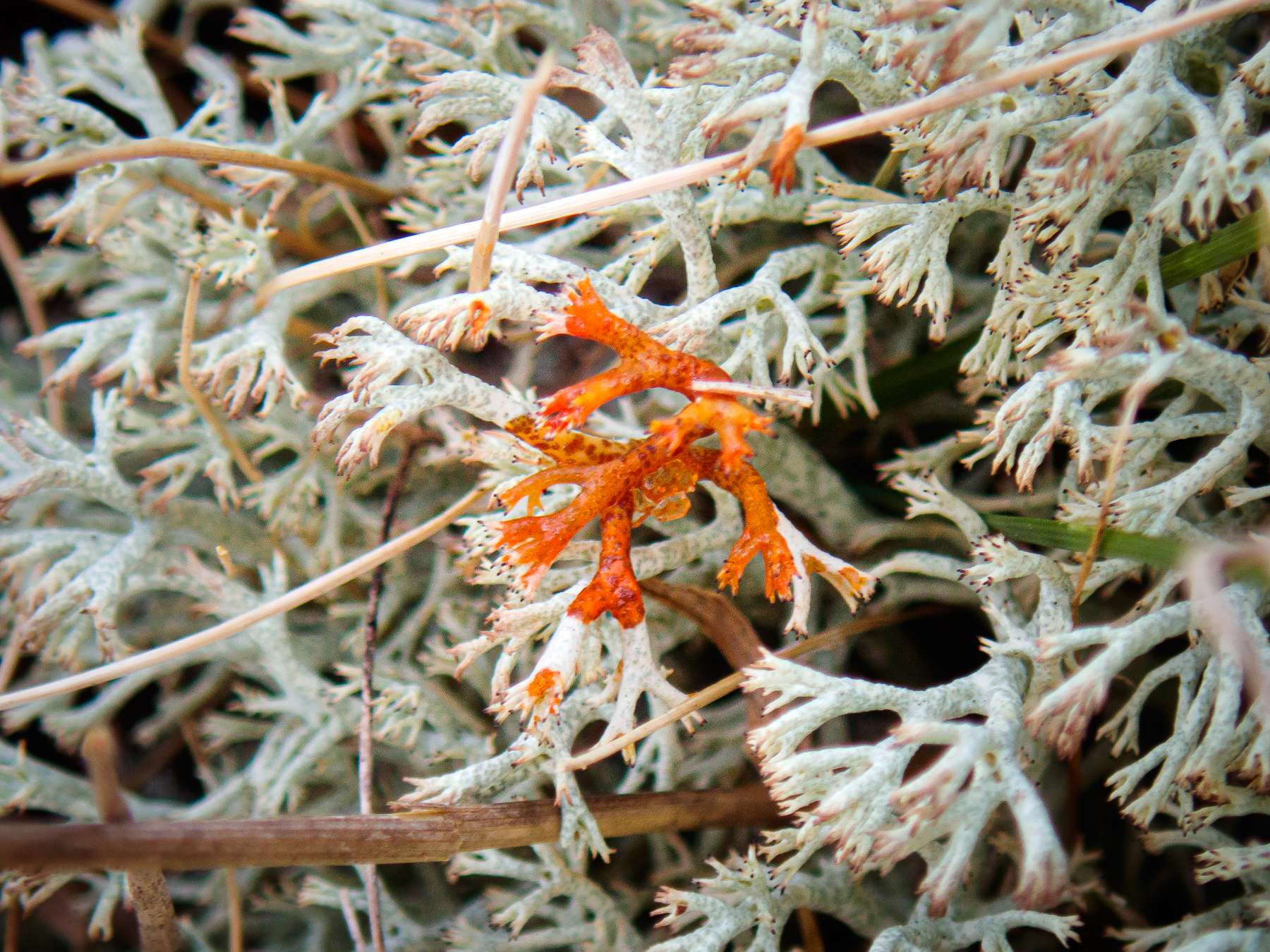
Cladonia arbusculaon another lowland heath in Suffolk (Wortham Ling, at VC25/TM0975), which tested a clear Pd+ red, and which has been recorded there before. See photo below (please do let me know if you disagree). However, I realise now that the sample I collected for my herbarium is mostly if not all
C. portentosa, with which the C. arbusculamust have been growing in something of an entangled fashion. This would explain the UV-photos above, which must be showing the UV+ blue fluorescence of C. portentosain all three cases. If your
C. arbusculawas quite dull under UV-light, then it seems that distinguishing between UV+ blue fluorescence on the one hand, and mere UV-reflectance on the other, is less problematic than I’d assumed. How frustrating! But also highly instructive. One expects one’s mistakes would result from thinking something is easier to recognise than it really is, rather than from thinking it’s harder!
Best regards,
Anthony
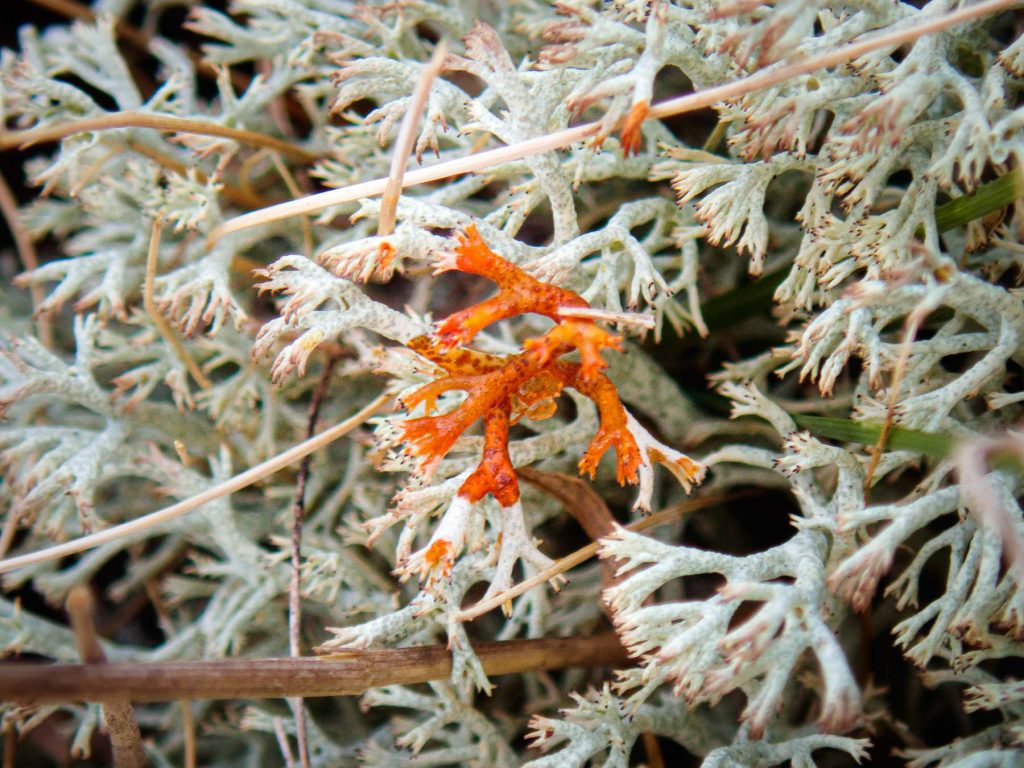
[attachment=0]Cladonia arbuscula subsp squarrosa 20250412-A.jpg[/attachment] September 4, 2025 at 10:52 am #46663Anthony That is perfect
Cladonia arbusculasubsp. squarrosa. With Cladoniayou only learn by trying! Neil
-
AuthorPosts







- You must be logged in to reply to this topic.