
Cladonia cryptochlorophaea?
- This topic is empty.
-
AuthorPosts
-
October 21, 2024 at 12:09 pm #32905
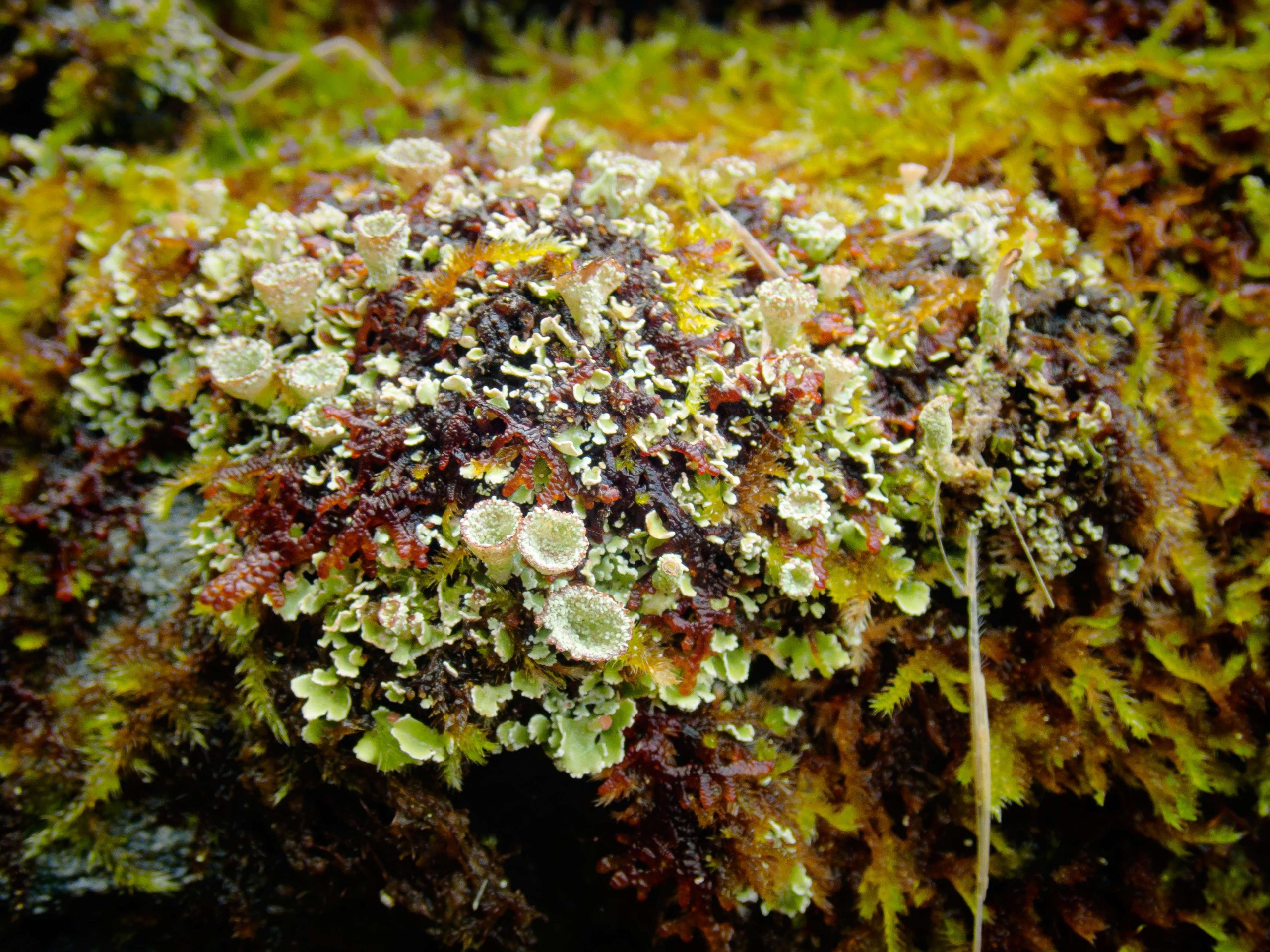
I’m hoping for some advice as to whether a specimen of Cladonia chlorophaeasens. lat. can reasonably be considered C. cryptochlorophaea, C. merochlorophaea, or barring that perhaps at least C. grayisens. lat. Found on moss on a siliceous drystone wall along the single access road in the tiny hamlet of Kilmichael of Inverlussa, Argyll, NR77858, VC101 Kintyre, at about 25 masl (the shore of upper Loch Sween a five-minute walk away).
Spot-tests show it to be C-, K+ yellow turning red (perhaps), KC+ red, Pd+ orange-red, and UV+ faint yellow (perhaps). Photos below.
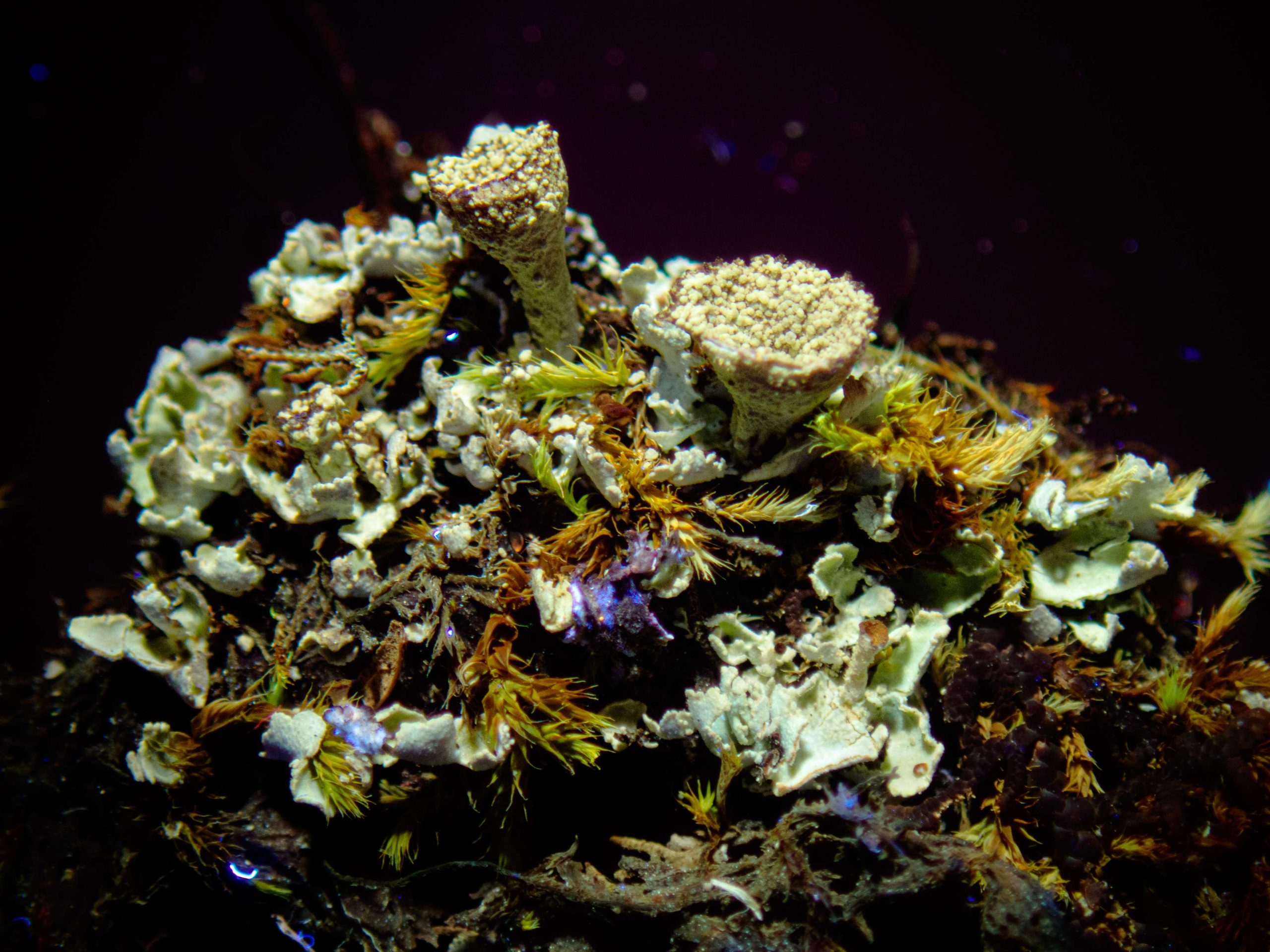
I’m a little unsure if the K-reaction is yellow turning red as it seems, or a sort of yellow turning brown from fumarprotocetraric acid. And the faint yellow (or blue?) tinge of the UV-fluorescence, assuming it’s actually there, depends more on the camera white-balance than I’m used to. The lichen as a whole seems to reflect so much bright bluish UV light that it’s hard to tell with the eye. (The UV-light photo is processed at the typical but rough 10,000K standard, and the filtered 365nm UV-torch is reliable.)
Many thanks in advance for any help! I think the KC+ red reaction seems clear, so I hope for a possible thumbs-up at least to record it as
C grayisens. lat., if I can’t justifiably record it as C. cryptochlorophaea(e.g. without TLC). 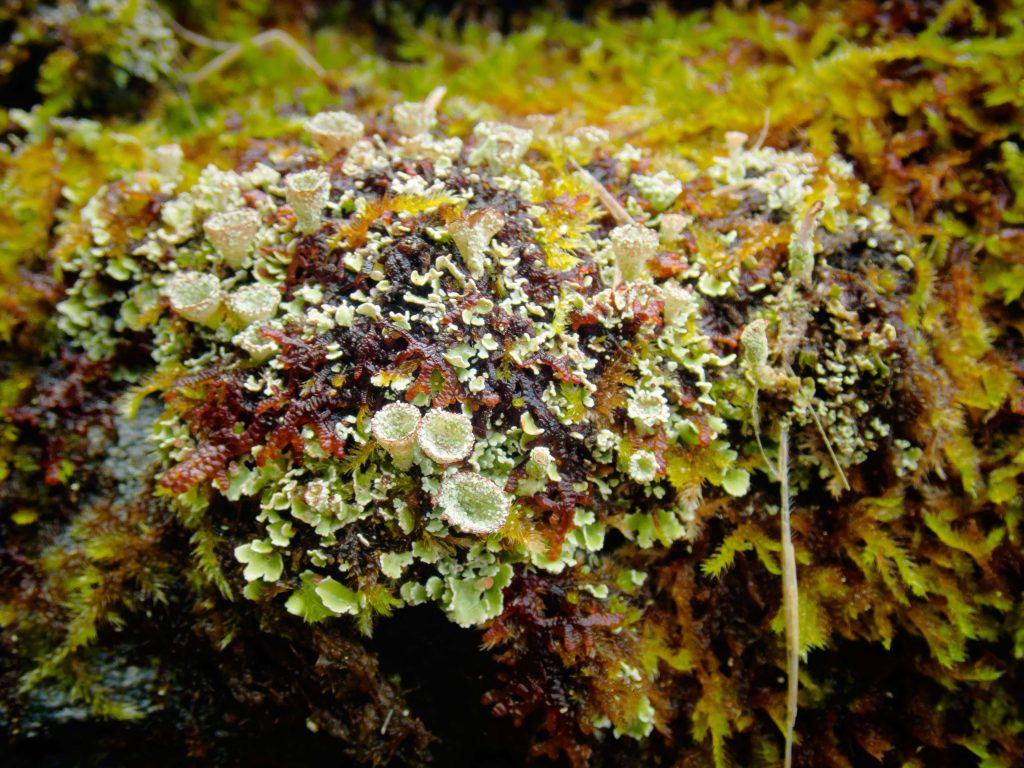
[attachment=8]Cladonia cryptochlorophaea sp inc 20240813-A01 Kilmichael of Inverlussa.jpg[/attachment] 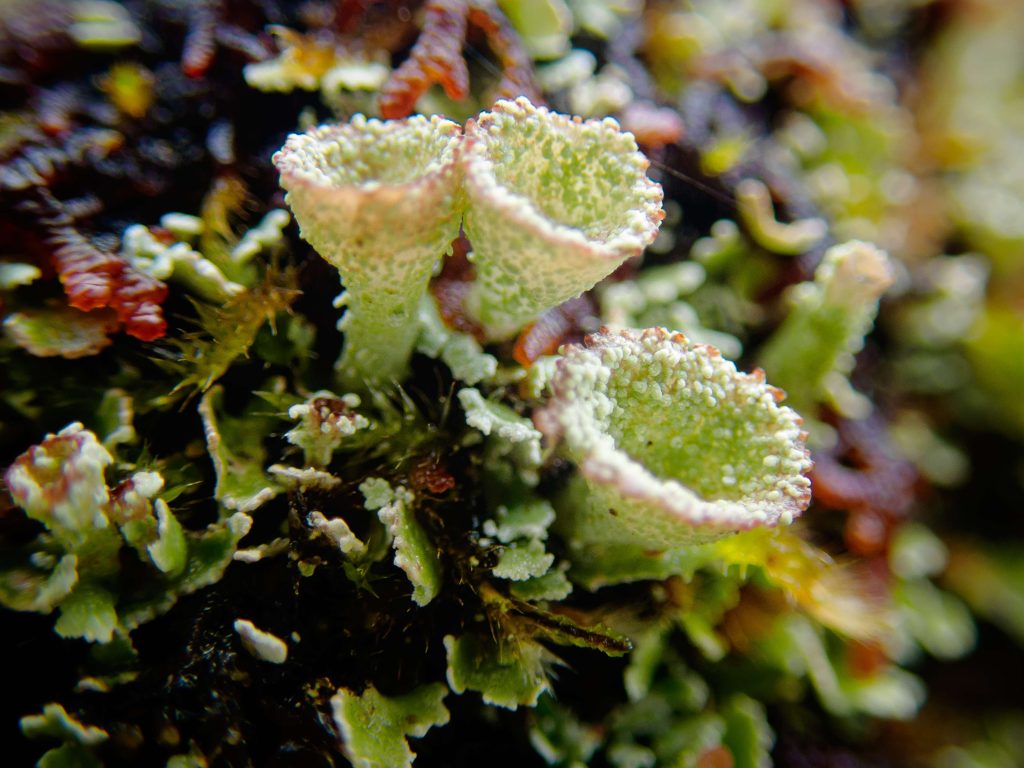
[attachment=7]Cladonia cryptochlorophaea sp inc 20240813-A02 Kilmichael of Inverlussa.jpg[/attachment] 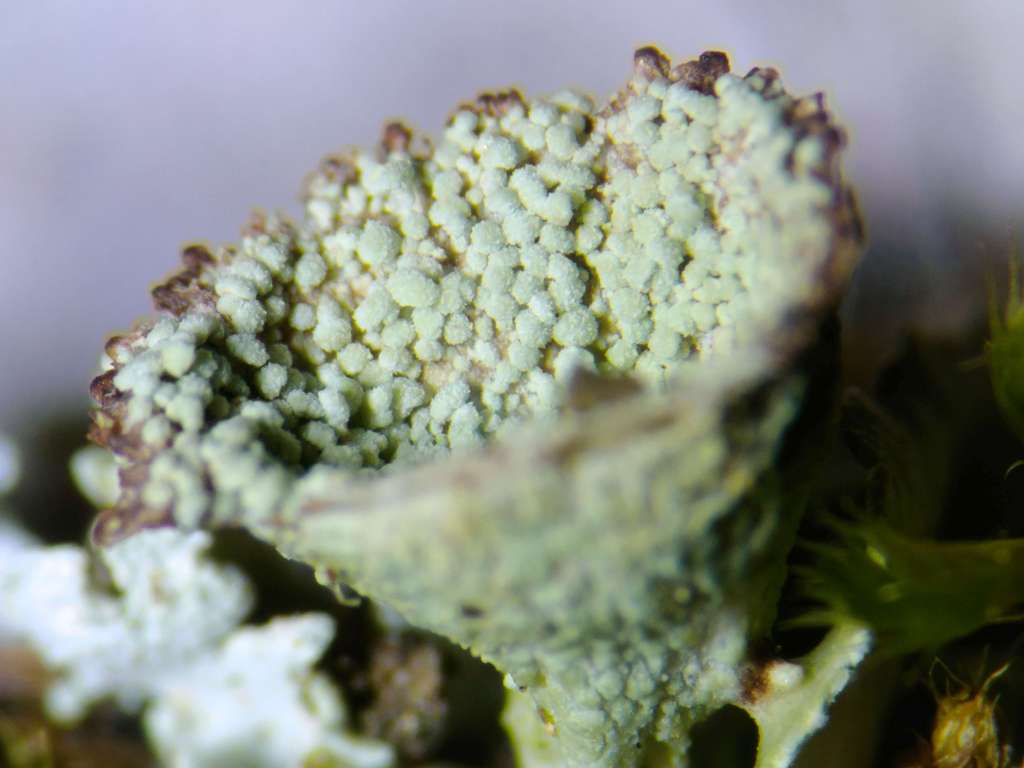
[attachment=6]Cladonia cryptochlorophaea sp inc 20240813-A04 Kilmichael of Inverlussa.jpg[/attachment] 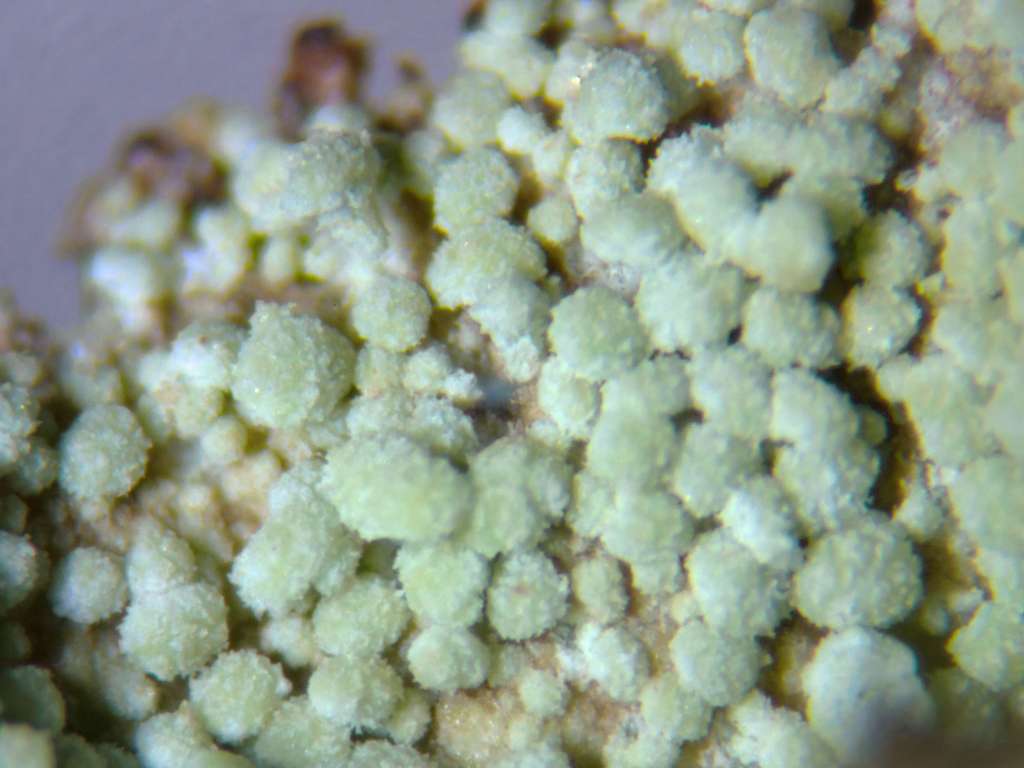
[attachment=5]Cladonia cryptochlorophaea sp inc 20240813-A05 Kilmichael of Inverlussa.jpg[/attachment] 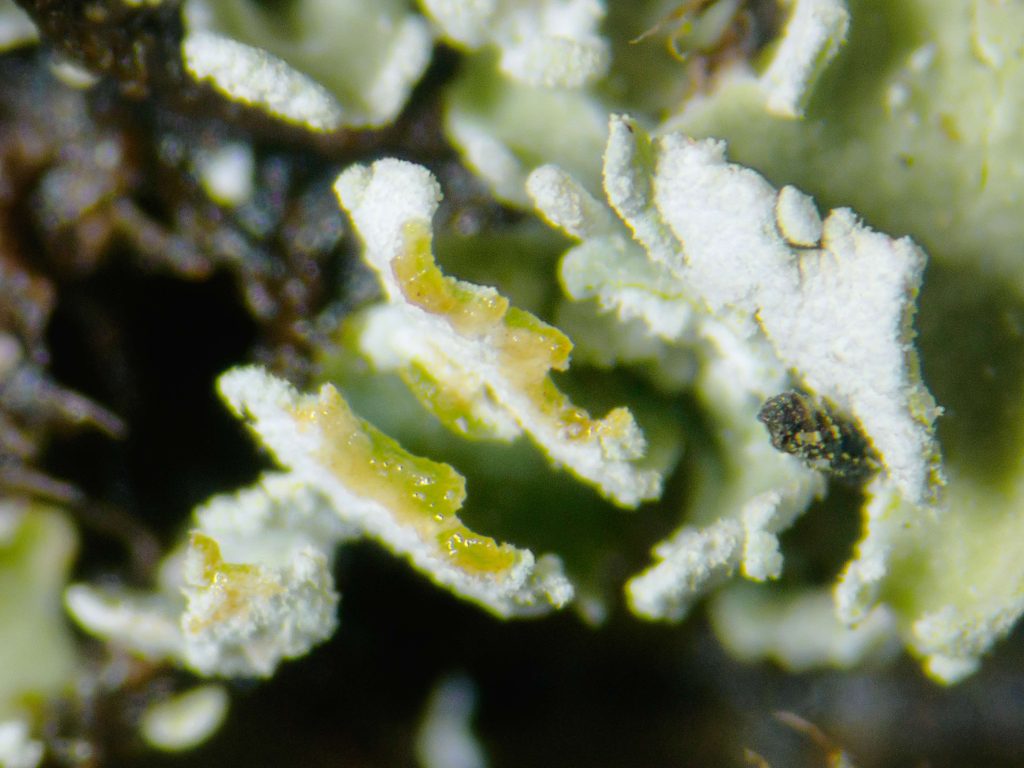
[attachment=4]Cladonia cryptochlorophaea sp inc 20240813-A08 Kilmichael of Inverlussa.jpg[/attachment] 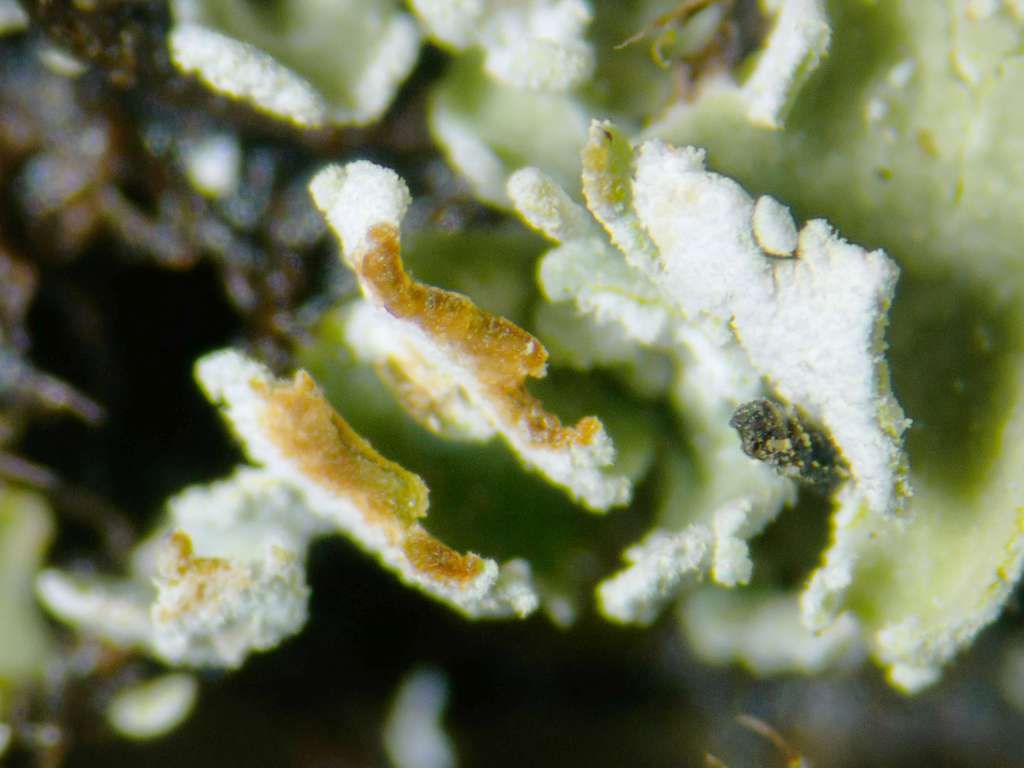
[attachment=3]Cladonia cryptochlorophaea sp inc 20240813-A10 Kilmichael of Inverlussa.jpg[/attachment] 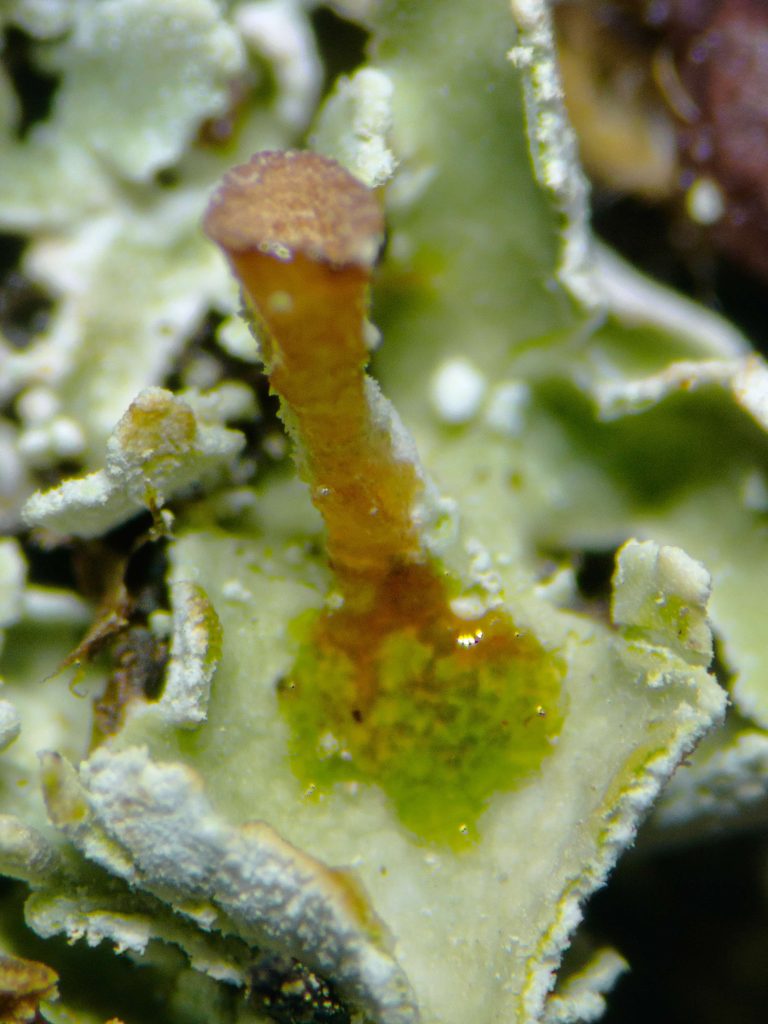
[attachment=2]Cladonia cryptochlorophaea sp inc 20240813-A11 Kilmichael of Inverlussa.jpg[/attachment] 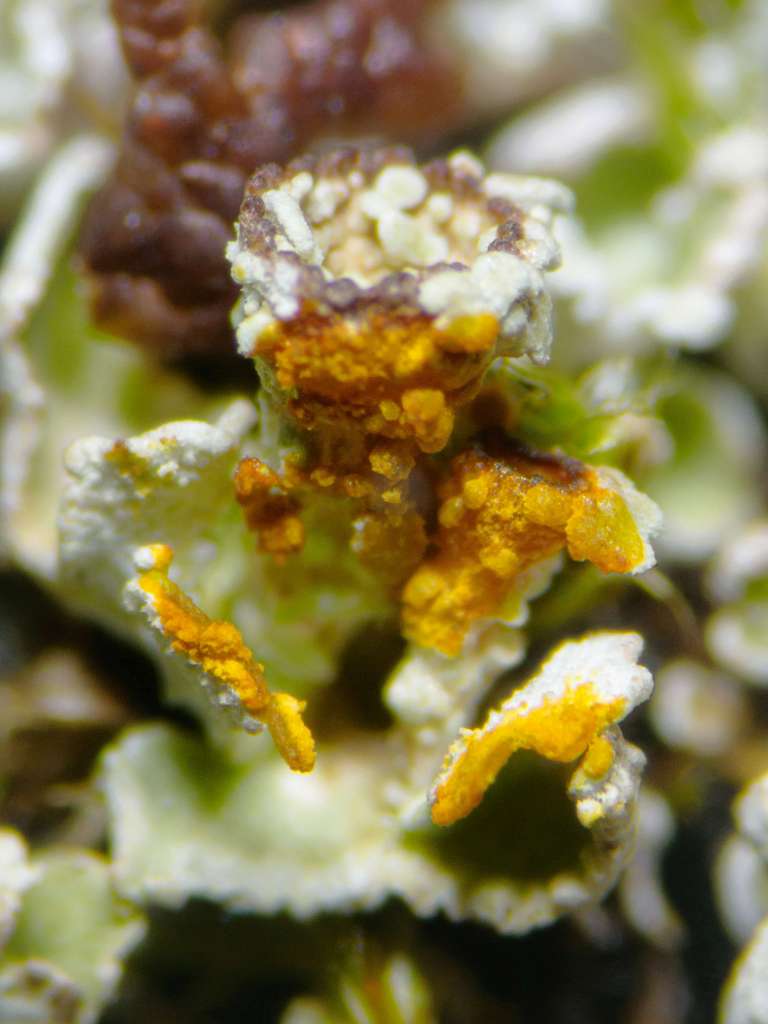
[attachment=1]Cladonia cryptochlorophaea sp inc 20240813-A12 Kilmichael of Inverlussa.jpg[/attachment] 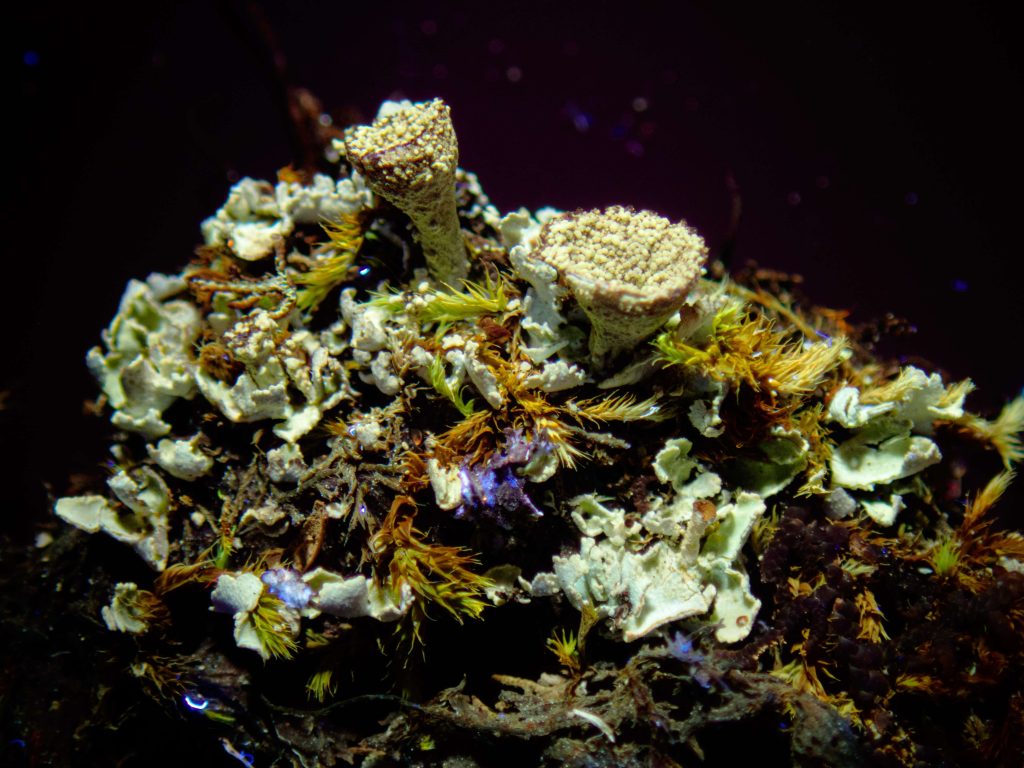
[attachment=0]Cladonia cryptochlorophaea sp inc 20240813-A14 Kilmichael of Inverlussa.jpg[/attachment] October 22, 2024 at 9:25 pm #46284The K reaction is due to fumarprotocetraric acid (which is the only K reaction I have ever seen from good Cladonia cryptochlorophaea, and is what I assume the “K+ yellow-red” quoted is, but maybe sometimes there is something, just I have never seen it, as I have stopped looking). The KC you have, however, is nothing like the Cladonia cryptochlorophaea/ Cladonia merochlorophaeareaction which is a fleeting if very distinct deep wine purple. This fades to nothing quickly. What you have is probably just what one gets adding C to a K fumarprotocetraric acid reaction. Also while some
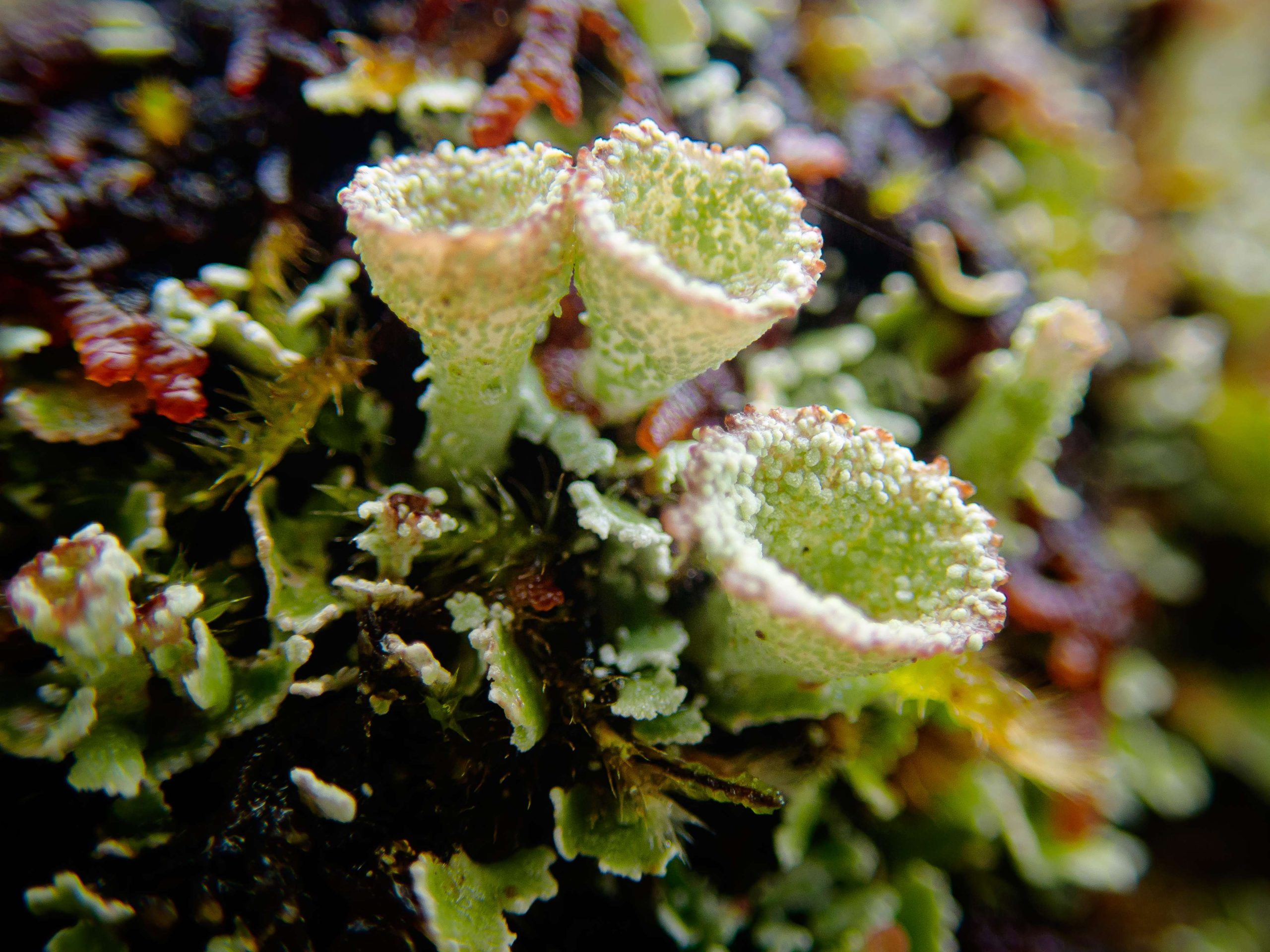
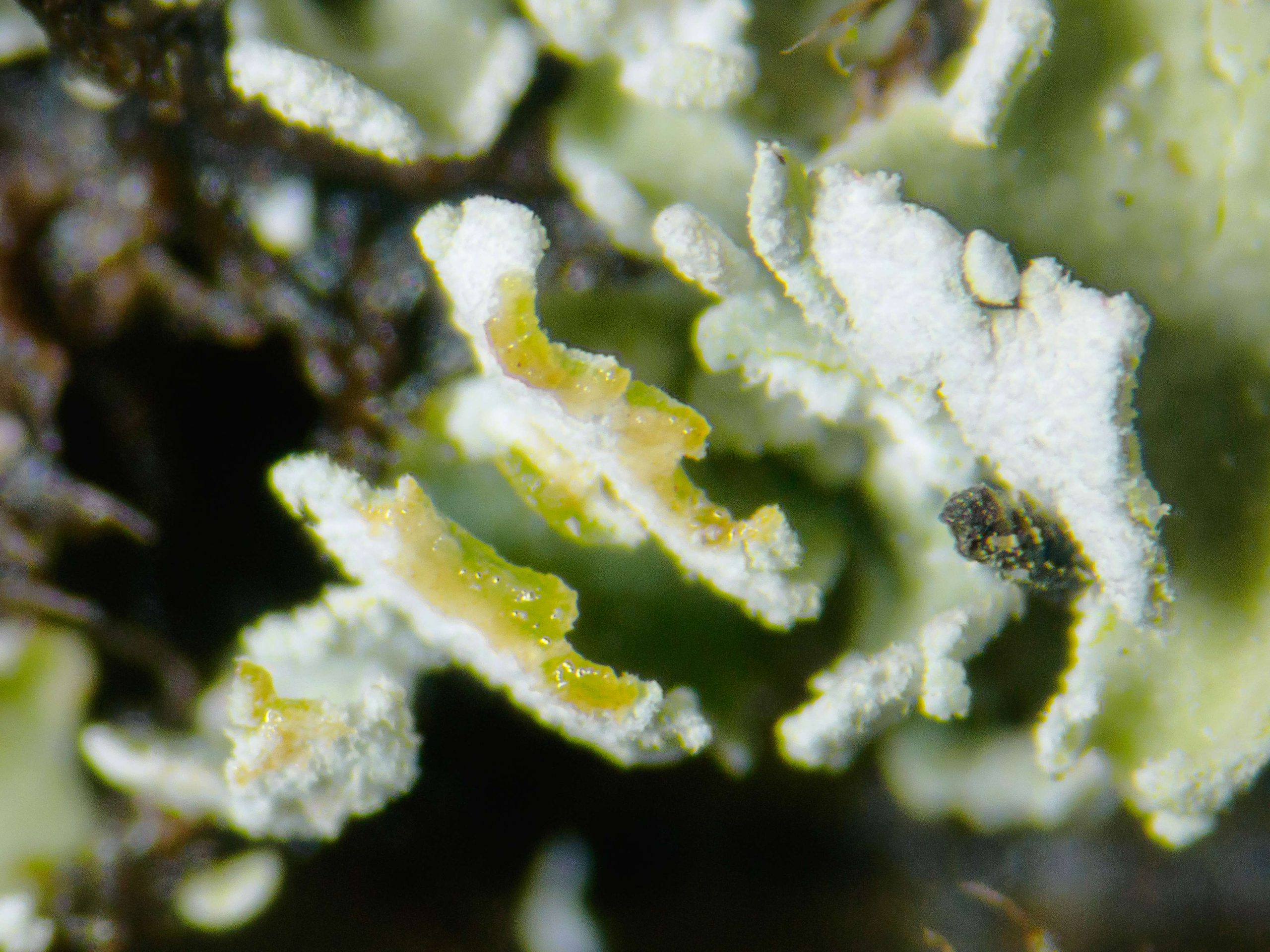
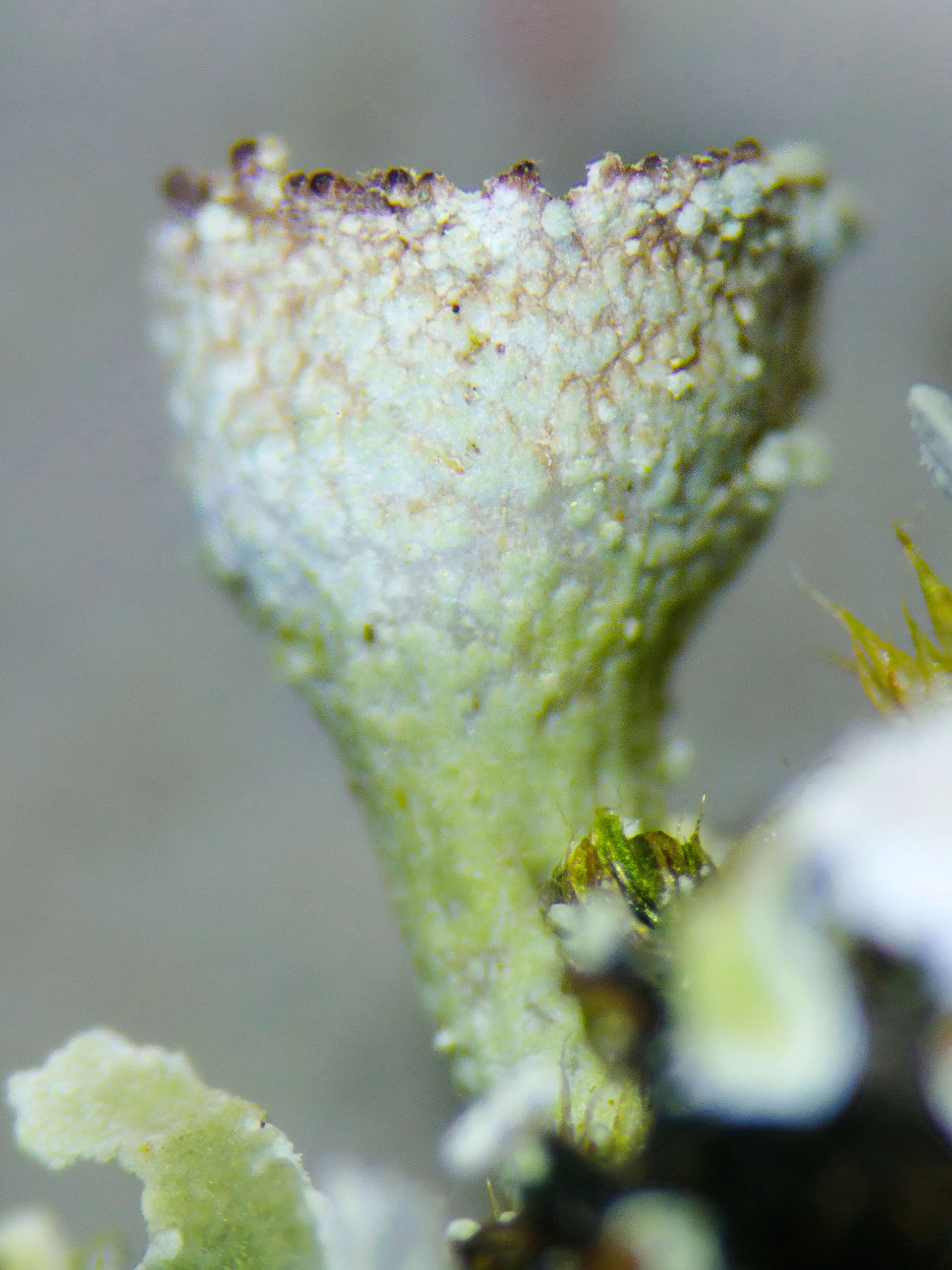
Cladonia grayis. lat. can have granules, usually atypically, none that I know have anything like that. This, however, looks very like Cladonia cyathomorpha, with the characteristic corticate granules inside the cup, but very little outside on the podetia stalk (unlike Cladonia pyxidata). It also has the wide green squamules with up turned ends typical of the Cladonia humilisgroup, to which it belongs. Also from what I can seen of the underside of the squamules are white and very mealy. When the squamules are large then you will see the distinct “veining” incised in the mealiness, but, being a Cladonia, this is only very clear on the larger material. The viening is not actually how one identifies it once you get to know it, it has a distinct “jiz”, but the viening is esentially to get to know good matterial so you can then identify typical scrappy material (Cladonias, maddening!!) . Cladonia cyathomorphais very typical on mosses on acid rock and is common in the uplands, so would be very much expected in the habitat you describe. It also occurs on acid bark on trees and probably accounts for quite a lot of the mapped “ Cladonia pyxidata” records on the BLS map in the uplands. I hope this helps. Away surveying in the Lizard at the moment, but I will try and photograph the
Cladonia cryptochlorophaea/ Cladonia merochlorophaeareaction when I get back. Neil
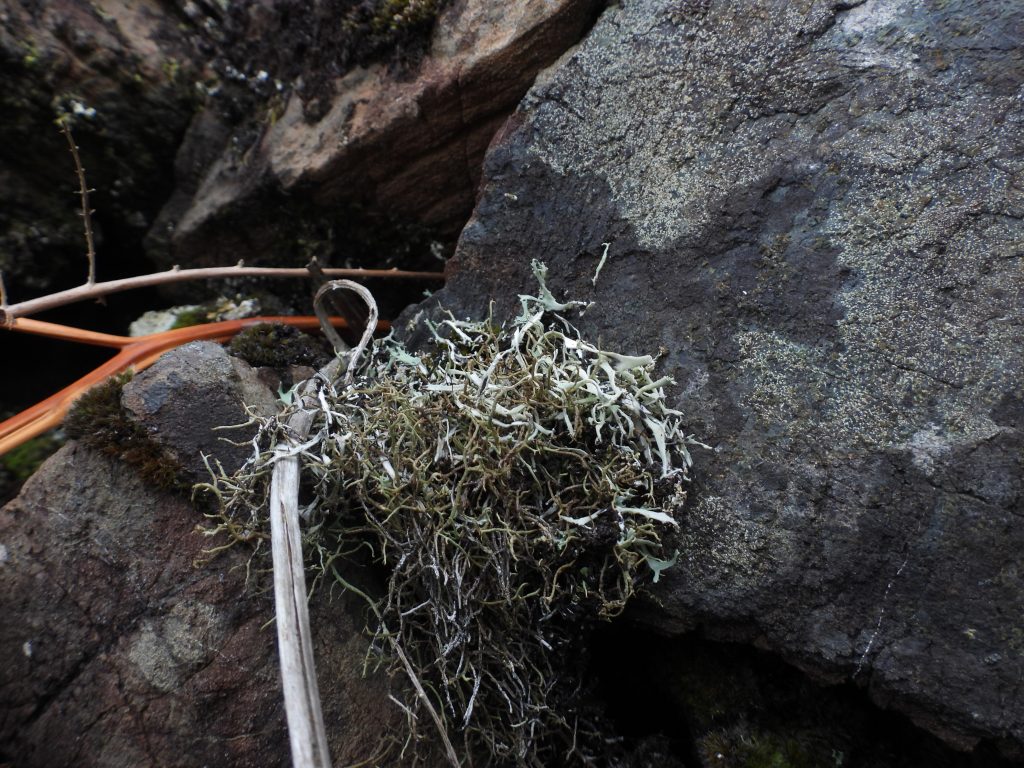
[attachment=1]2024-10-21-11.JPG[/attachment]
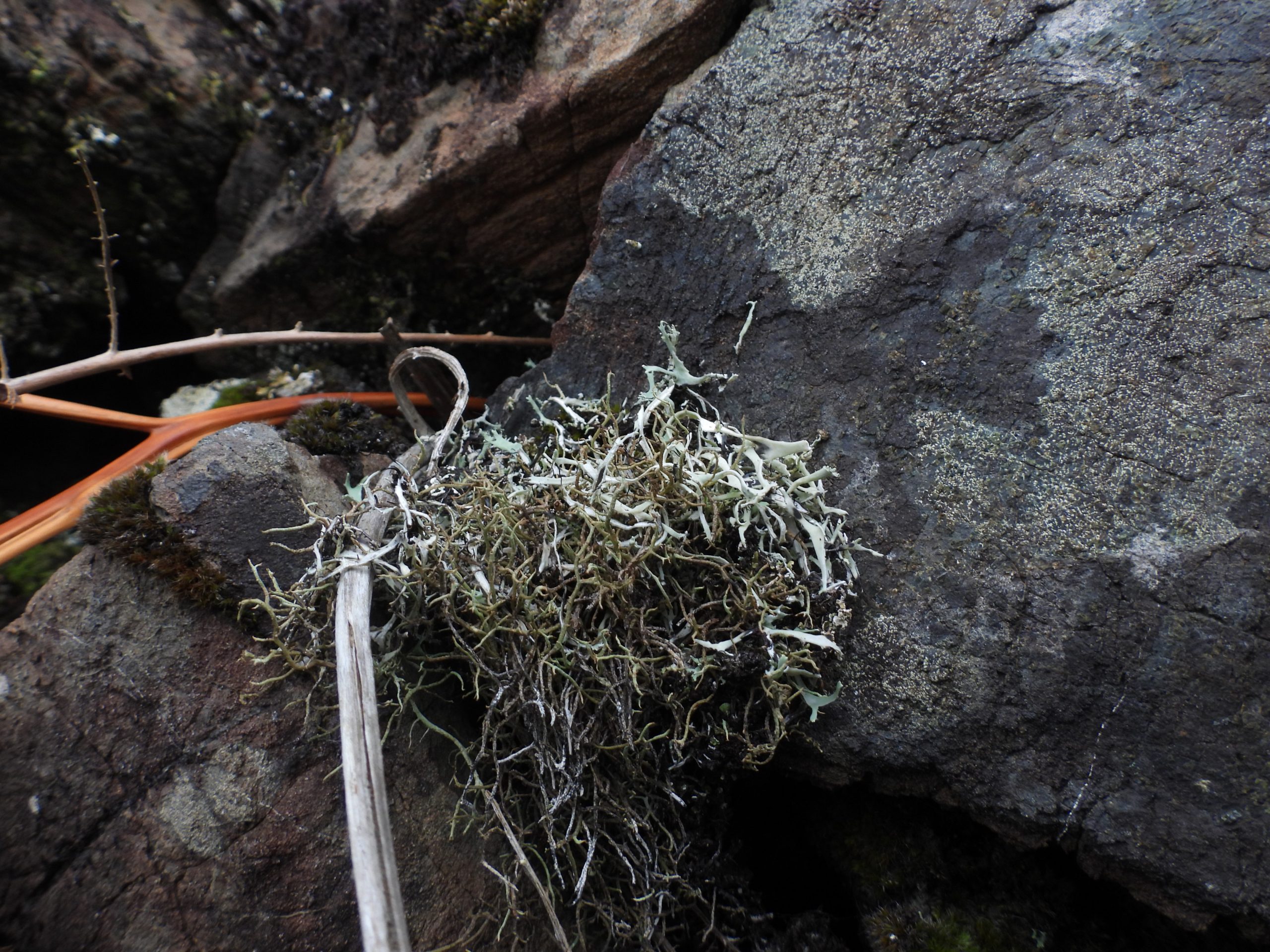
From current my workHeterodermia leucomelosand Cladonia stereocladaon serpentine Kynance, Lizard. Wow some mixture. 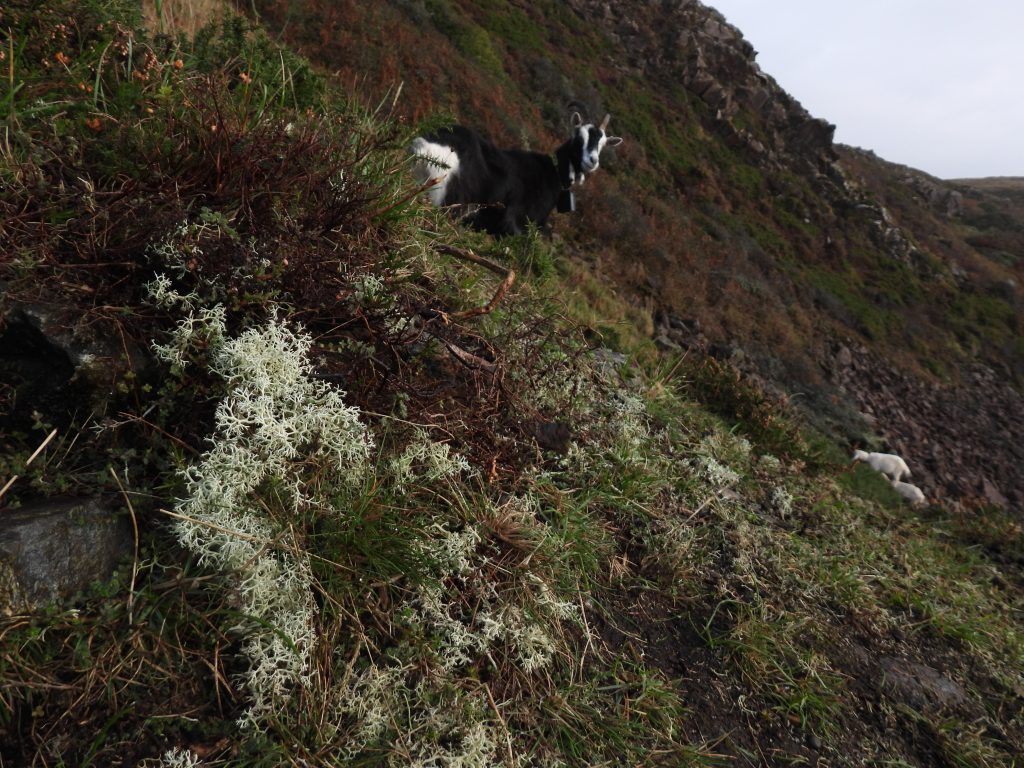
[attachment=0]2024-10-22-07.JPG[/attachment]
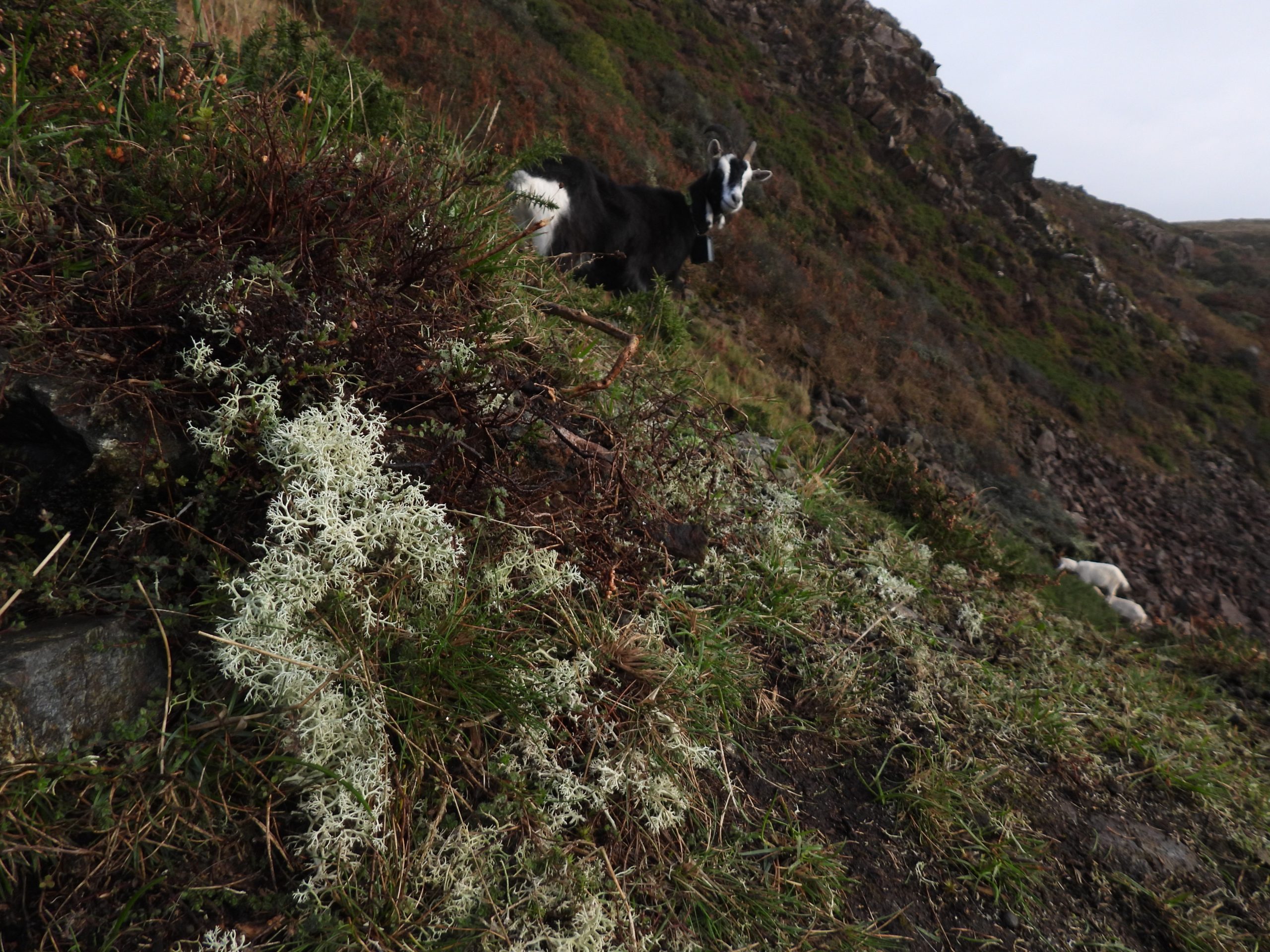
Cladonia mediterraneaand goat with GPS collar, Kynance, Lizard. The goats have browsed open a lot more suitable potential Cladonia mediterraneahabitat and then kicked loose bits of Cladonia mediterraneaseveral meters into the new habitat. OK I think!! October 22, 2024 at 10:13 pm #46285Dear Neil — Very many thanks for this advice. It really clarifies matters for me. I was looking for K+ yellow turning red because LGBI3 glosses the ‘K+ yellow-red’ in LBGI2 as ‘presumably yellow -> red’. It’s helpful to know that you yourself haven’t ever seen that reaction with
C. cryptochlorophaea, and I’m pleased that my suspicions weren’t misplaced that I was perhaps just looking at a typical brownish K-reaction to fumarprotocetraric acid. Your pointer on the KC-test is especially useful. I was a bit excited about the possibility of having witnessed this ‘KC+ wine-red’. I thought the phrase meant perhaps more a light beaujolais than a deep cabernet — but from your description it sounds more the other way round. Perhaps I should just stick with the catch-all
C. chlorophaeasens. lat. going forward! Thanks for the steer to
C. cyathomorpha, which I’d discounted because I thought the veining would be more obvious than you’ve explained. Another bit of fieldcraft that’s good to know. I’ll examine the larger squamules on my specimen for any evidence. Enjoy your Cornish fieldwork — glad the goats are cooperating with rare lichen conservation!
Thanks again,
Anthony
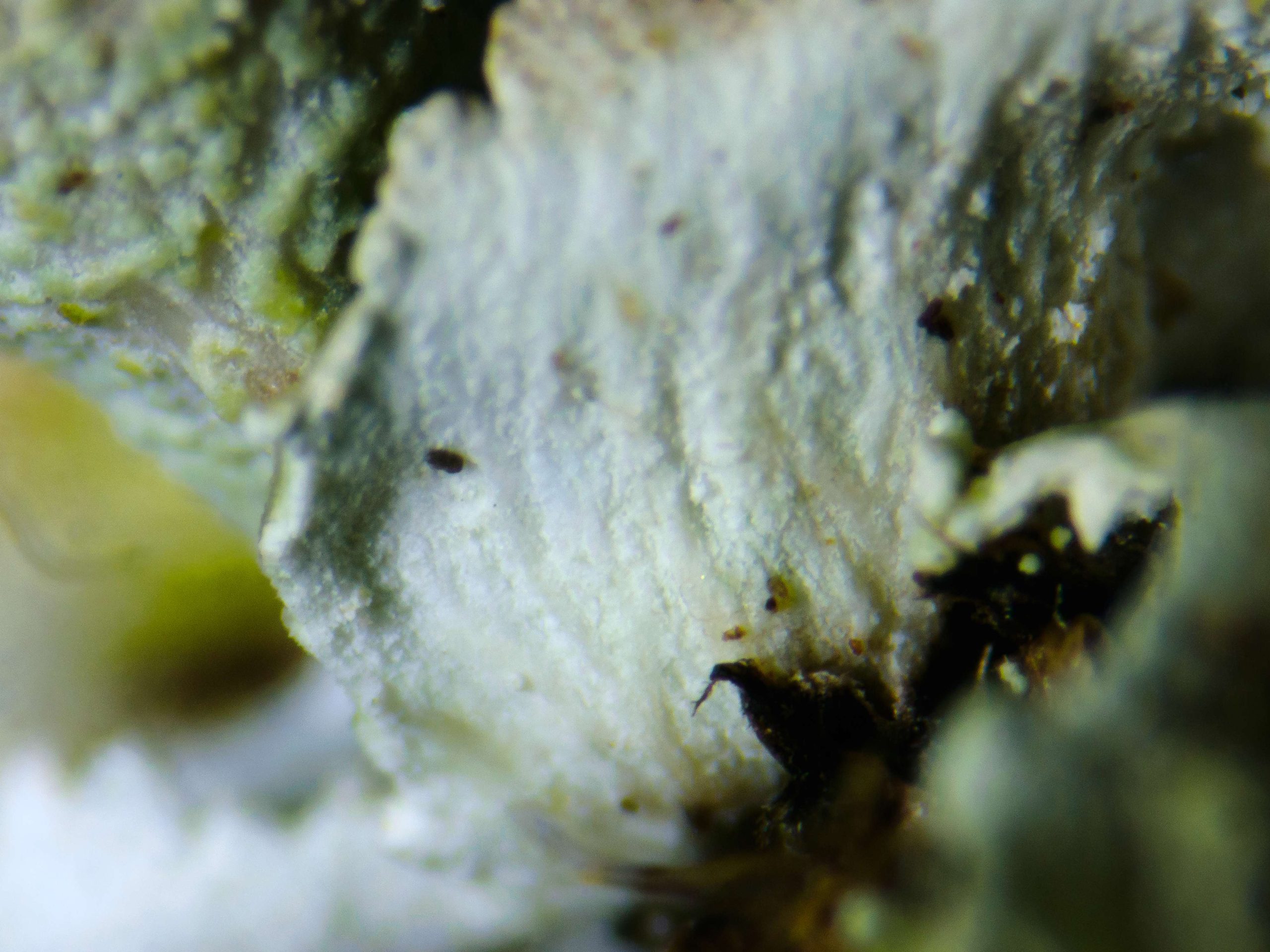
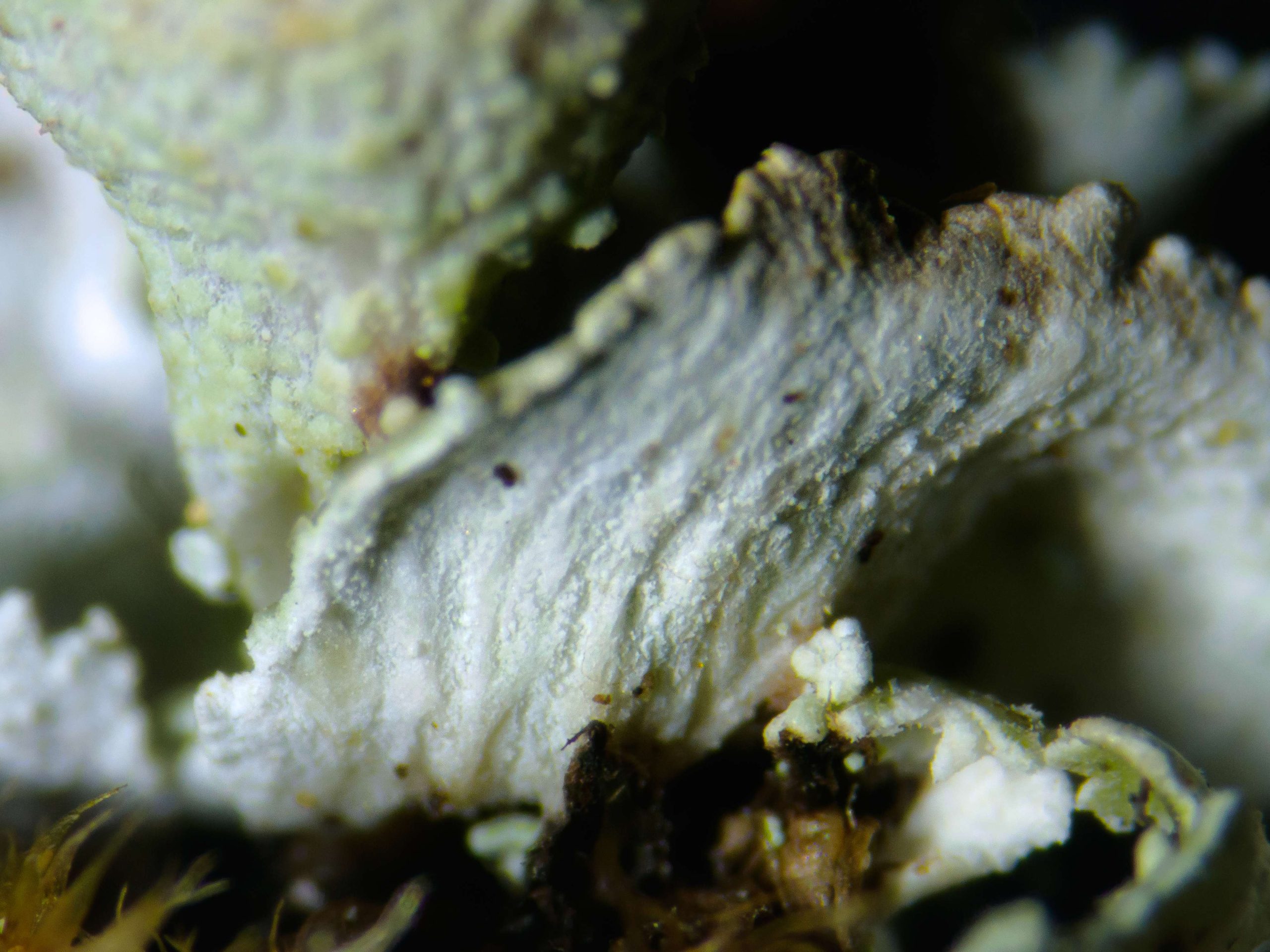
October 23, 2024 at 4:17 pm #46286Dear Neil — Just following up on the above — I’ve examined the squamules in my collected material and I believe I’ve found the tell-tale veining you descibed. But as this would be the first record of
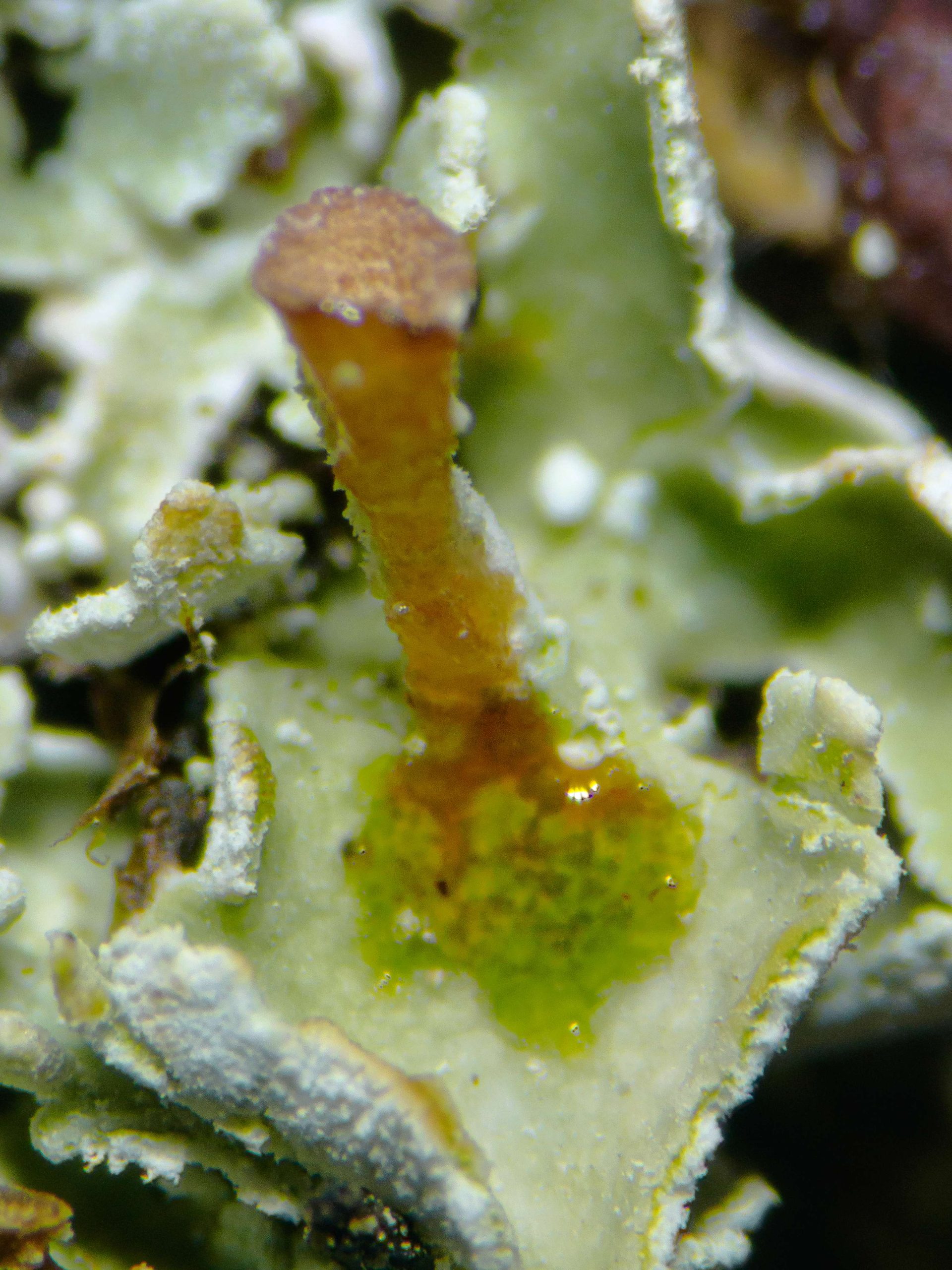
C. cyathomorphafor VC101 Kintyre, I’d be grateful to have your confirmation. Photos below. The veining was visible on the largest squamule in my material. I’ve tried to provide photographs with both direct and oblique lighting to help the slightly raised veining stand out from the otherwise ‘mealy’ underside (described on the ITALIC 8.0 website as ‘floccose’). I’ve also provided a better photograph of a podetium, to show the verrucose but generally egranulose and esorediate texture that you said also helped to separate
C. cyathomorphafrom C. pyxidataand C. chlorophaeasens. lat. Many thanks again,
Anthony
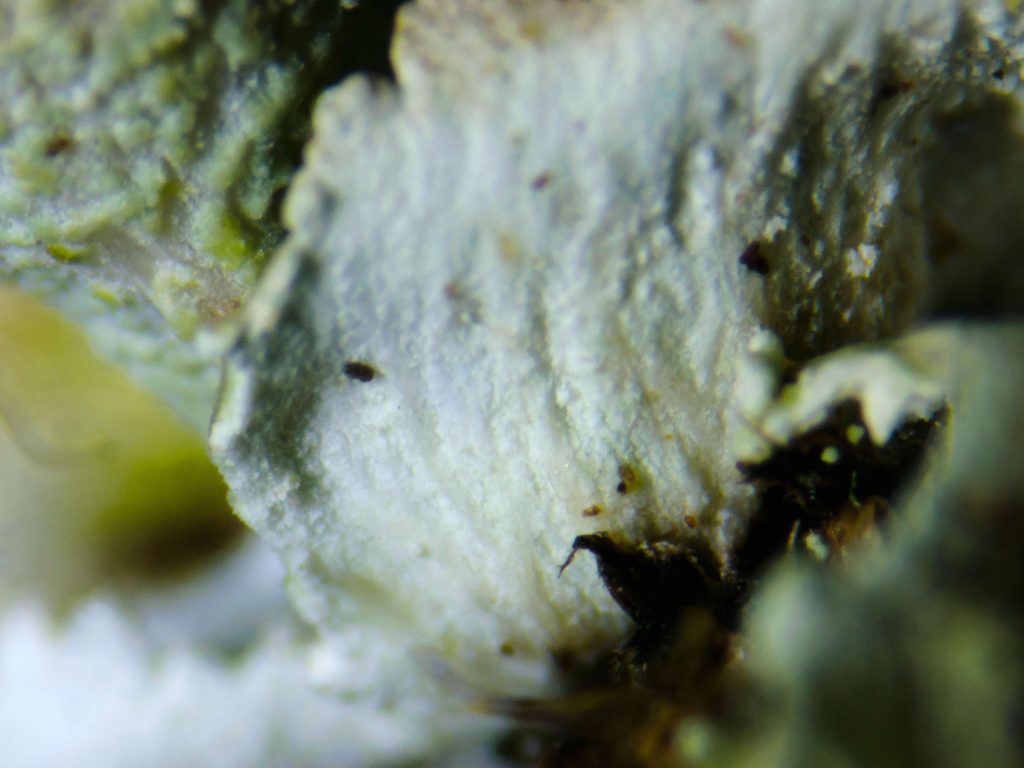
[attachment=3]Cladonia cyathomorpha 20240813-A11 Kilmichael of Inverlussa.jpg[/attachment] 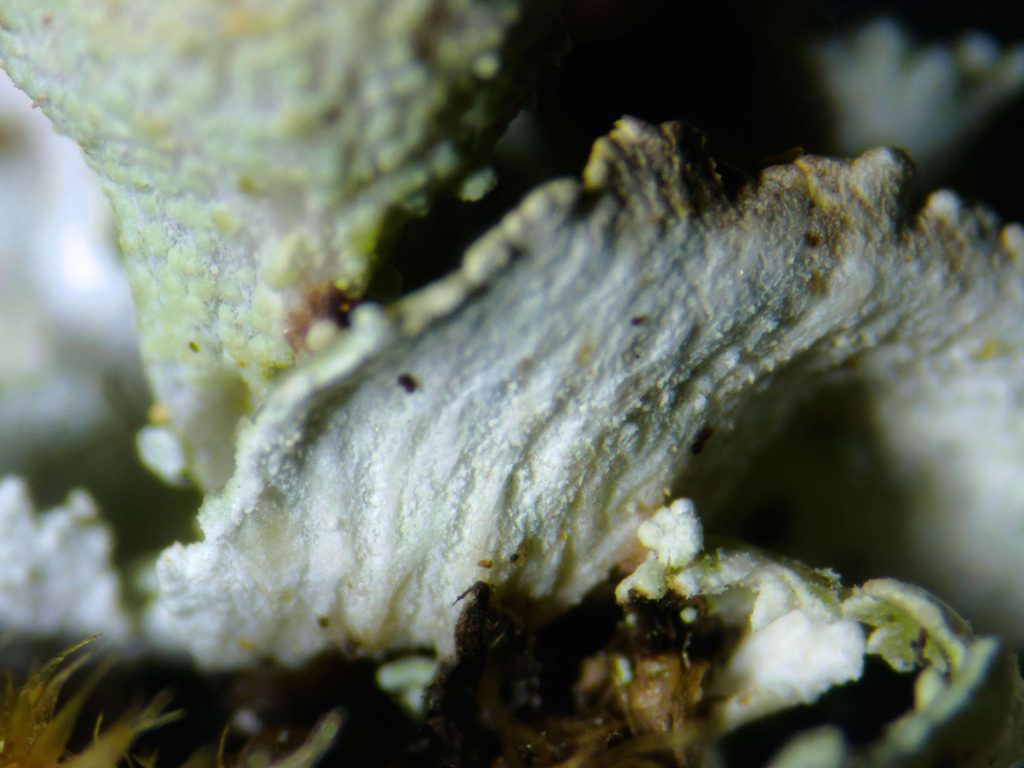
[attachment=2]Cladonia cyathomorpha 20240813-A12 Kilmichael of Inverlussa.jpg[/attachment] 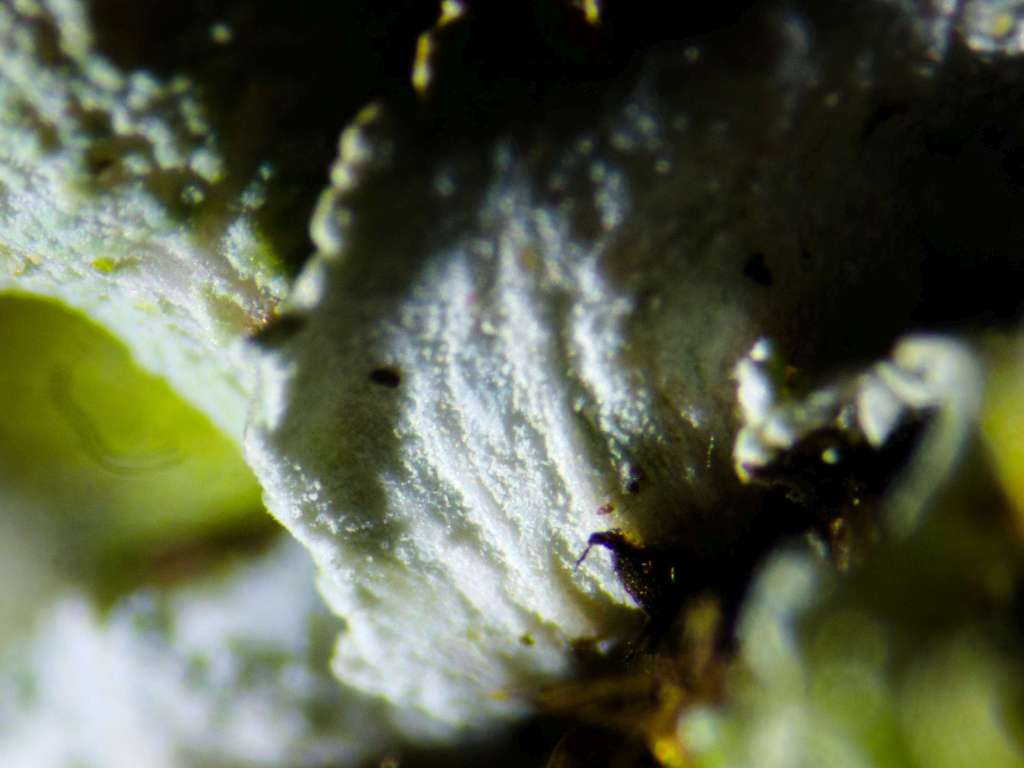
[attachment=1]Cladonia cyathomorpha 20240813-A13 Kilmichael of Inverlussa.jpg[/attachment] 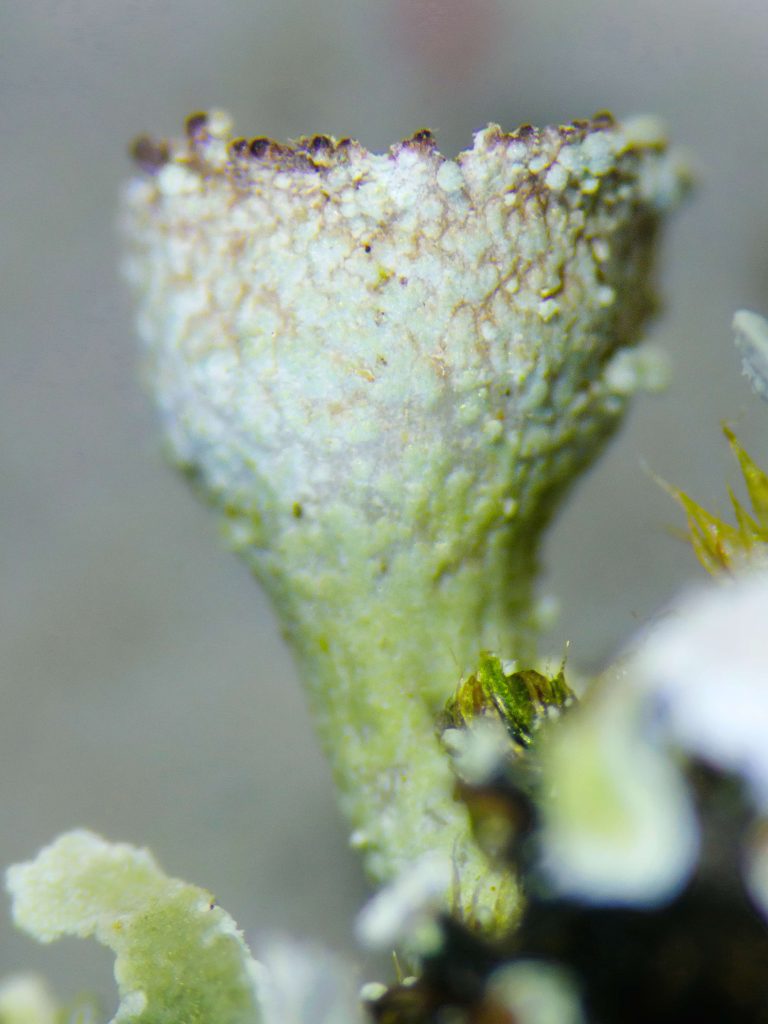
[attachment=0]Cladonia cyathomorpha 20240813-A04 Kilmichael of Inverlussa.jpg[/attachment] October 23, 2024 at 7:30 pm #46287Anthony Yes that is fine. I do usually look for these veins first time in the day when I find it, but once that is out of the way the granular inside of the cup contrasting with “the verrucose but generally egranulose and esorediate texture” of the podetia below the cup and the green squamules make it easy to spot once learned.
Ah ‘floccose’ I knew there was a fancier word. I think I have used flocked in some of the website descriptions.
Neil
October 23, 2024 at 7:39 pm #46288Many thanks for your guidance, Neil — I’ll be keeping my eyes open for this one from now on. -
AuthorPosts


- You must be logged in to reply to this topic.