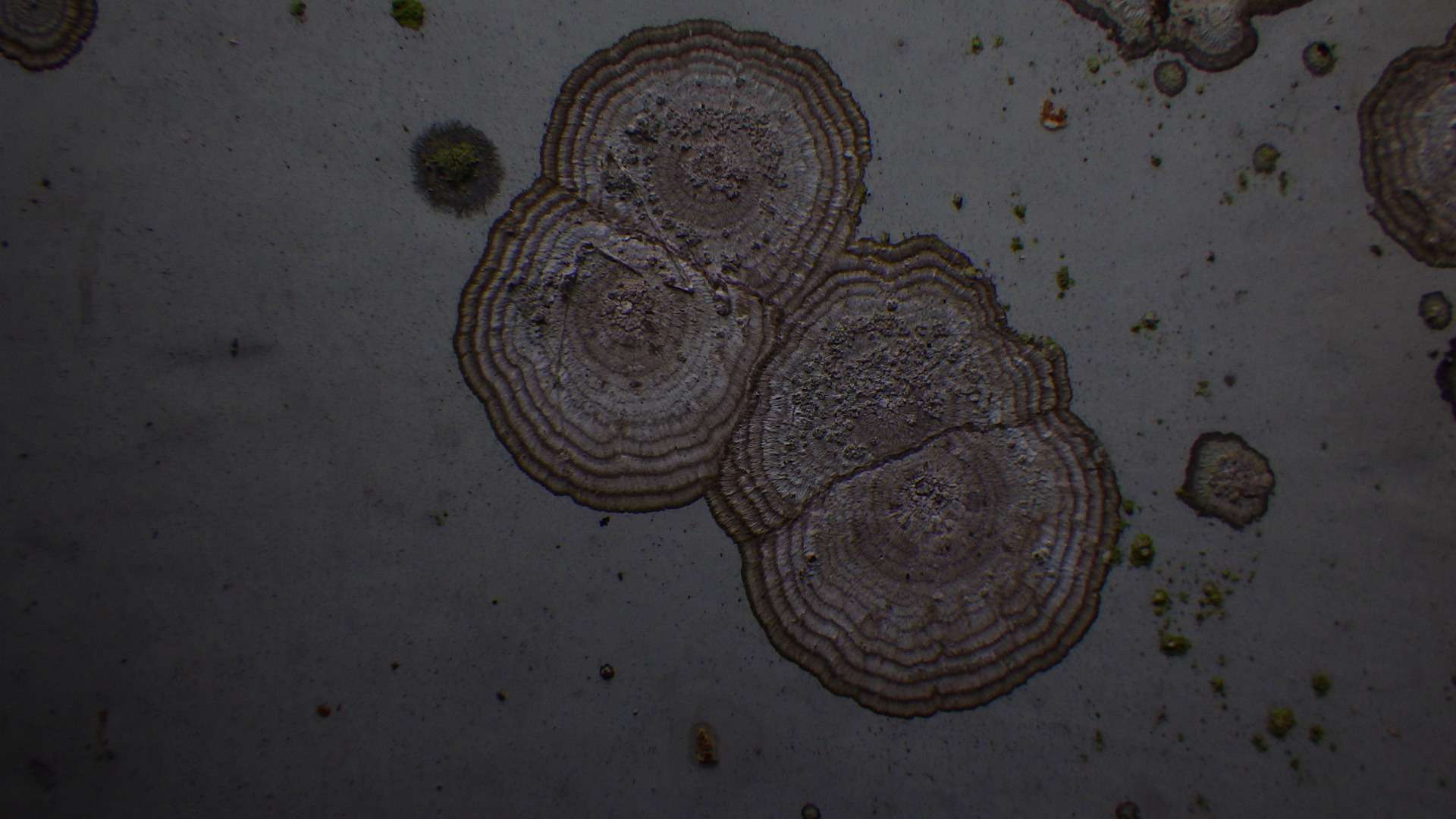
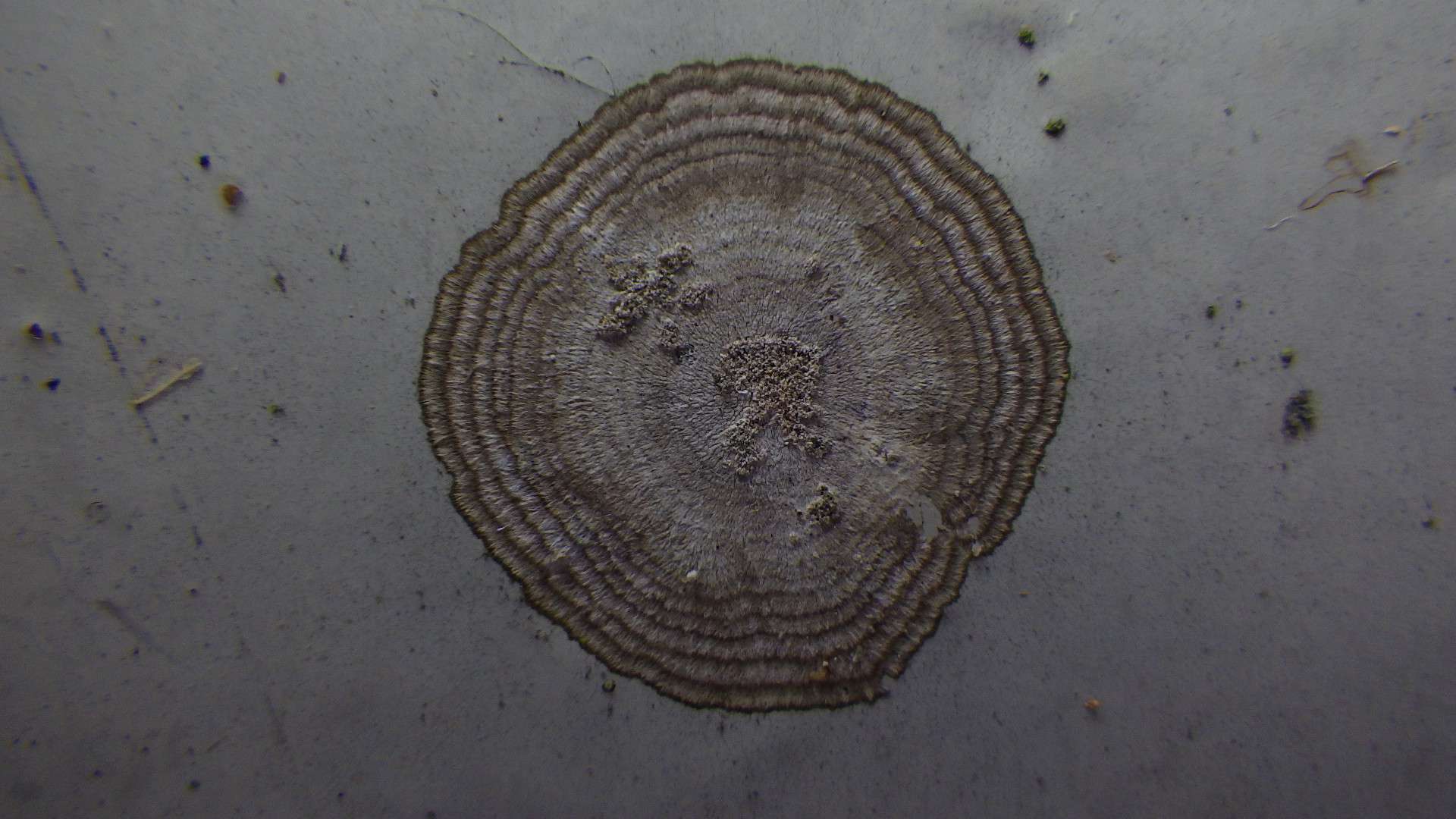
I came across these colonies on a painted door at Nevern Church Pembrokeshire SN0840, there was a lot of Dirina on the church walls so I believe these to be a strange form of Dirina.
Is that on flint? Both Dirina massiliensis and Ingaderia vandenboomi form colonies that look like that on flint and other very smooth surfaces. They are often tricky to tell apart on Flint, although Dirina normally has a brown prothallus , whilst I. vandenboomi has a black prothallus. The soredia of I vandenboomii are pinker and finer/softer and I find the C reaction is instant and bright red. In contrast, Dirina soredia are much coarser, greyer and I find the C reaction is not nearly as bright red or as quick.
Late to this, but I am fairly sure that is Dirina fallax, not Dirina massiliensis. Dirina fallax is a recent segregate from Dirina massiliensis, which is found on more acidic substrates (on siliceous and basic (non-calcareous) rocks and in this case paint) and has a thallus pale brownish grey, ± thin thallus. Dirina massiliensis has a thick, chalk-like thallus and grows on limestone, mortar and the like. The second picture down on Lichens Maritimes https://www.lichensmaritimes.org/index.php?task=fiche&lichen=228&lang=en” class=”bbcode_url”>https://www.lichensmaritimes.org/index.php?task=fiche&lichen=228&lang=en shows very similar material. I have not found photos of Dirina massiliensis with a similar zoned prothallus, but that might be because it grows on softer substrates normally.
Agree with Sylvia that it is not likely to be Ingaderia vandenboomi, as well as not having a dark blackish prothallus, the soralia are also not pink.