
Is this Coppinsiella ulcerosa?
- This topic is empty.
-
AuthorPosts
-
May 12, 2026 at 1:31 pm #33177
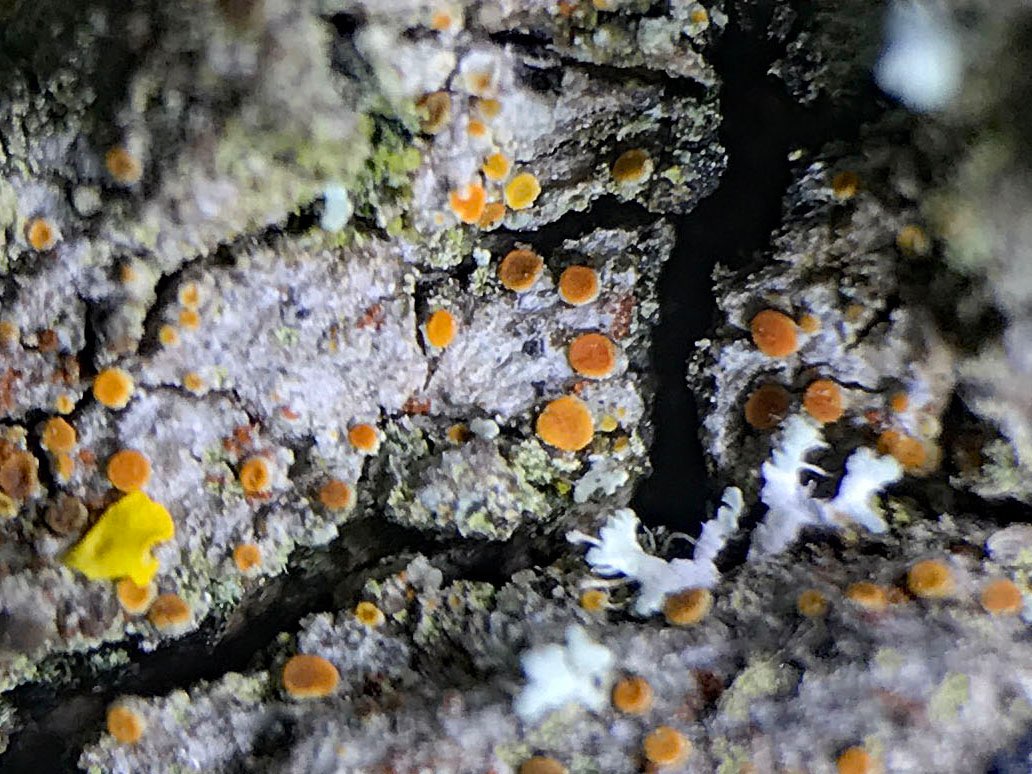
Hi, I found a large spread of this very fertile lichen low down on a very old Ash. It keyed out as Coppinsiella ulcerosa, but I’ve never knowingly seen that and after looking at the recent C ulcerosa thread, I wanted to check.
Thallus: grey/white, K-
Soredia: pale yellow, mostly dispersed across the thallus and not confluent, K-
Apothecia: dark orange (the colour in the photos I think makes them look slightly lighter than they actually were), slightly lighter margin. K purple
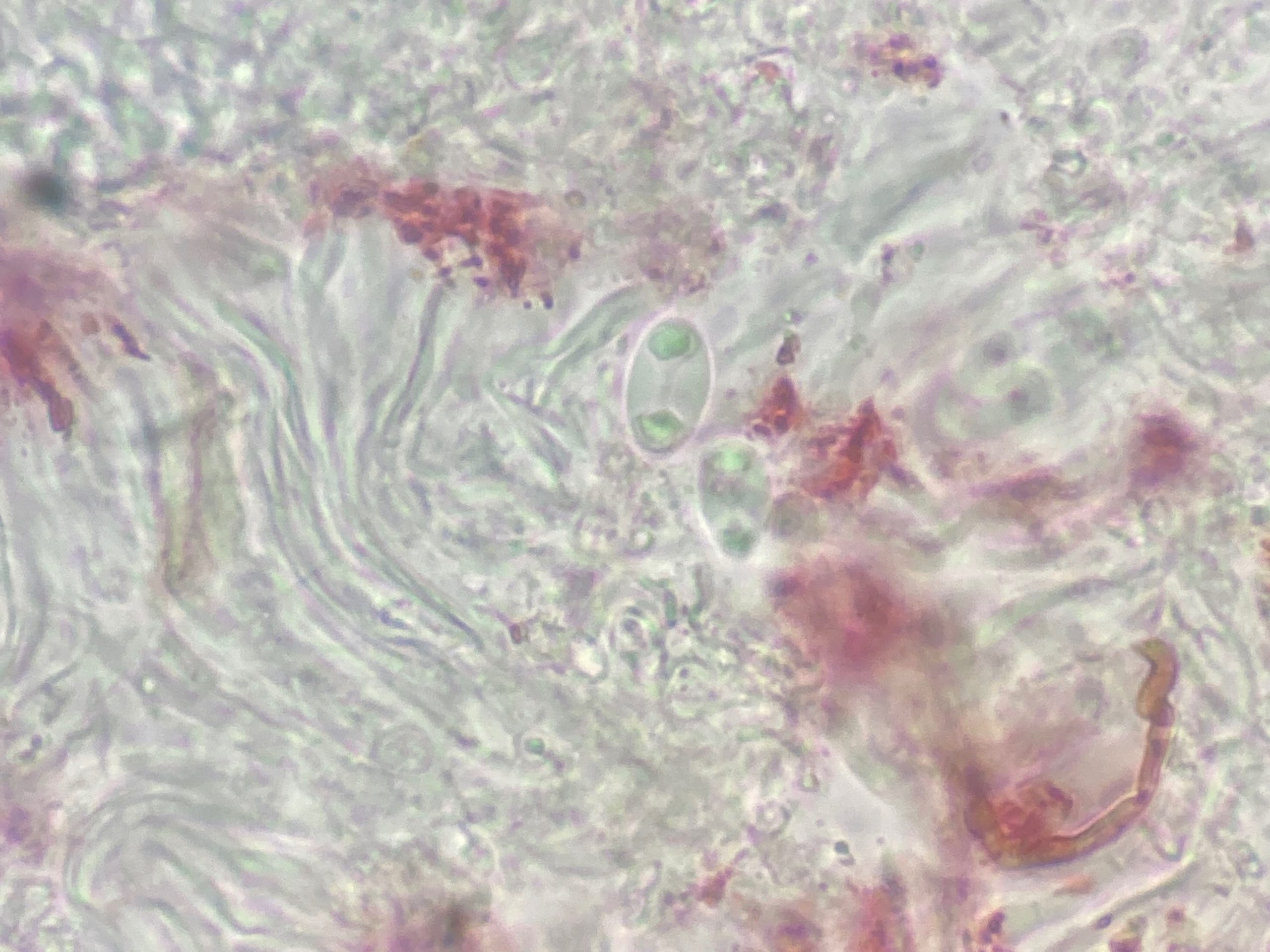
Spores: 10-12.5 x 5-7.5, with the septum 1/2 to 1/3 of the spore
Thank you
Sylvia
May 12, 2026 at 3:57 pm #46952Sylvia What I can see of the soralia look more like those of
Caloplaca alstrupii, with a rim of thallus “exploding” around the pustule. The very yellow soralia (P5120132.jpg) belong to something else I think; there is a sorediate Flavoplacaspecies in other pictures. Neil
May 14, 2026 at 7:04 pm #46953Thanks Neil, That’s really interesting. I have a reasonable sample so I’ll do a bit more microscopy and see where that gets me.
Sylvia
May 18, 2026 at 10:00 pm #46954I collected some fertile Caloplaca alstrupiilast week from a known tree. Some pictures: 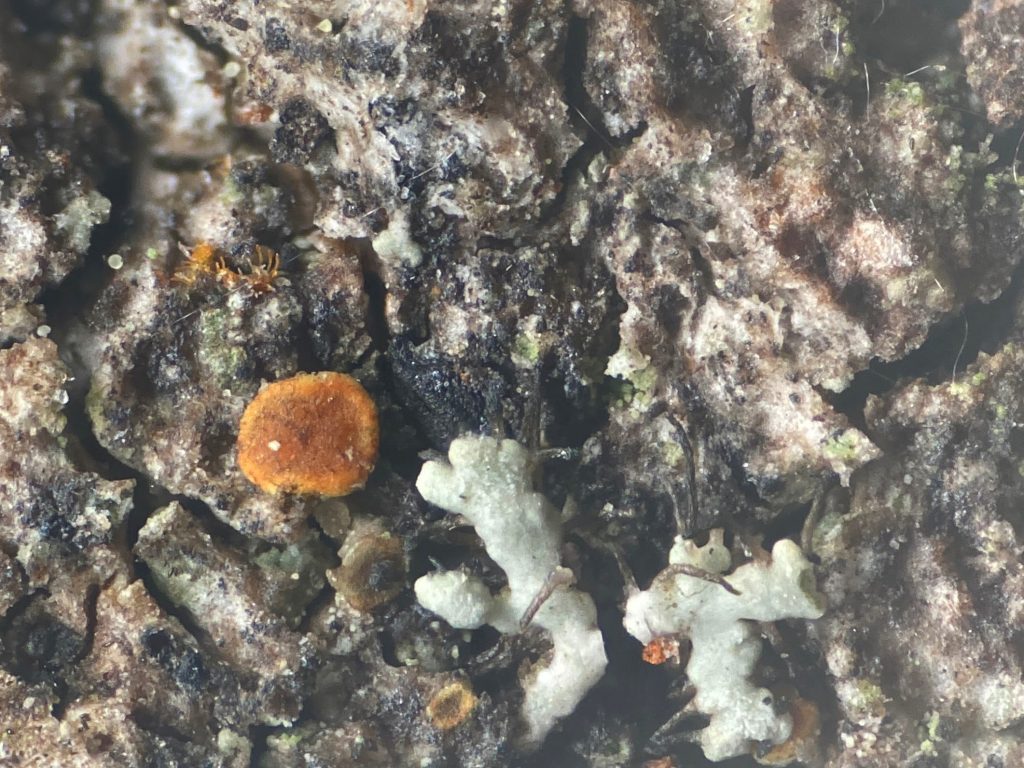
[attachment=5]2026-05-13-01.jpg[/attachment]
Apothecia with a crateriform soralia with green soredia to the right. (A stacked picture, manual focus with stacking using HeliconForcus; my new toy!)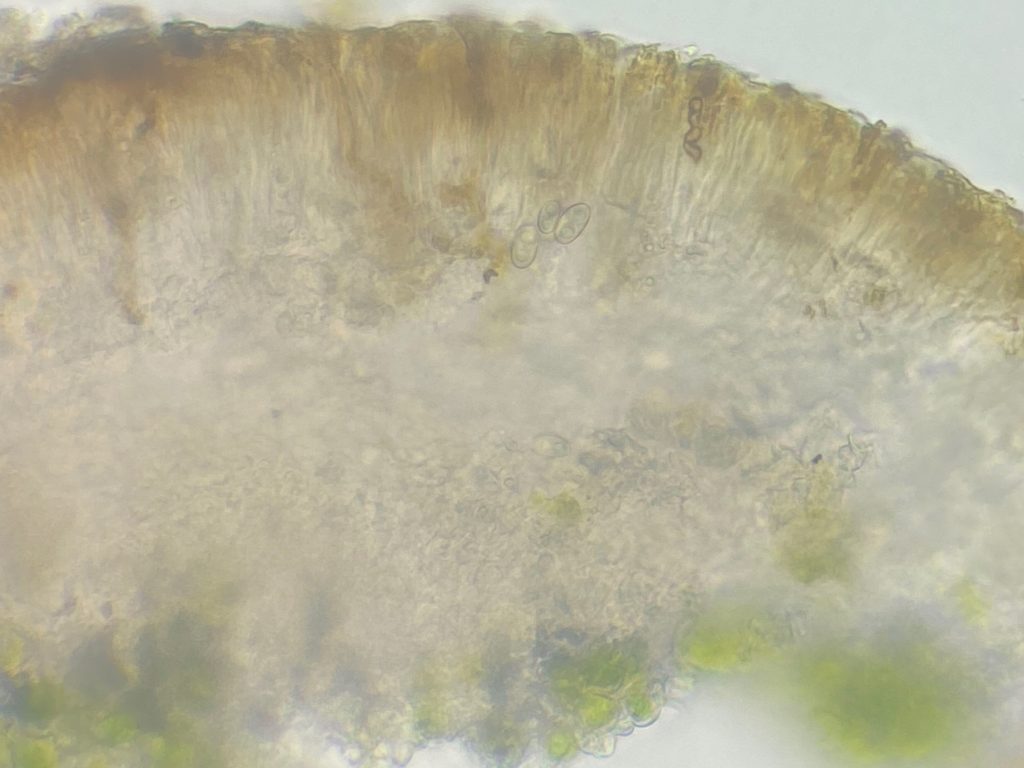
[attachment=4]2026-05-13-03.jpg[/attachment]
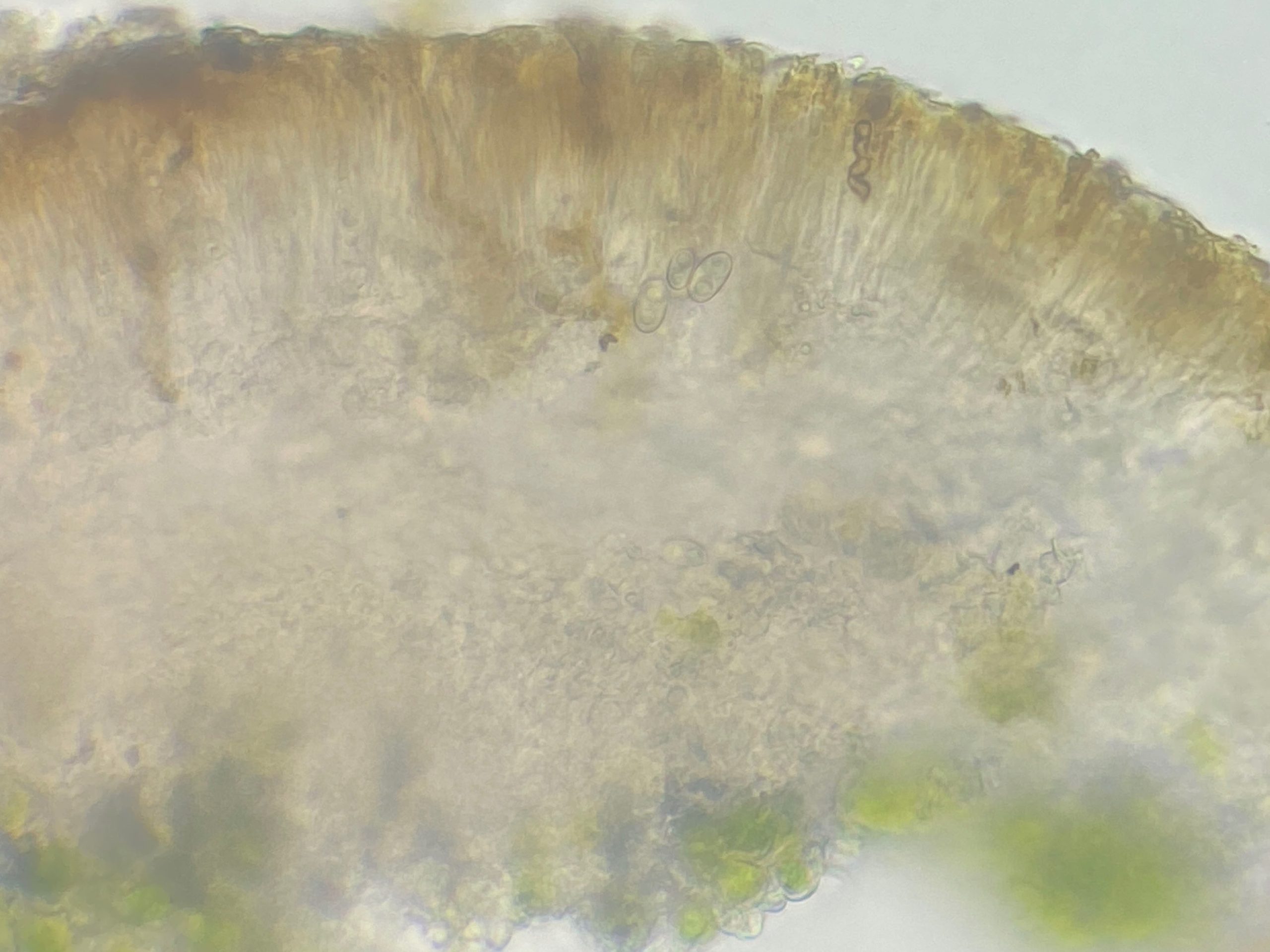
Apothecium section in water.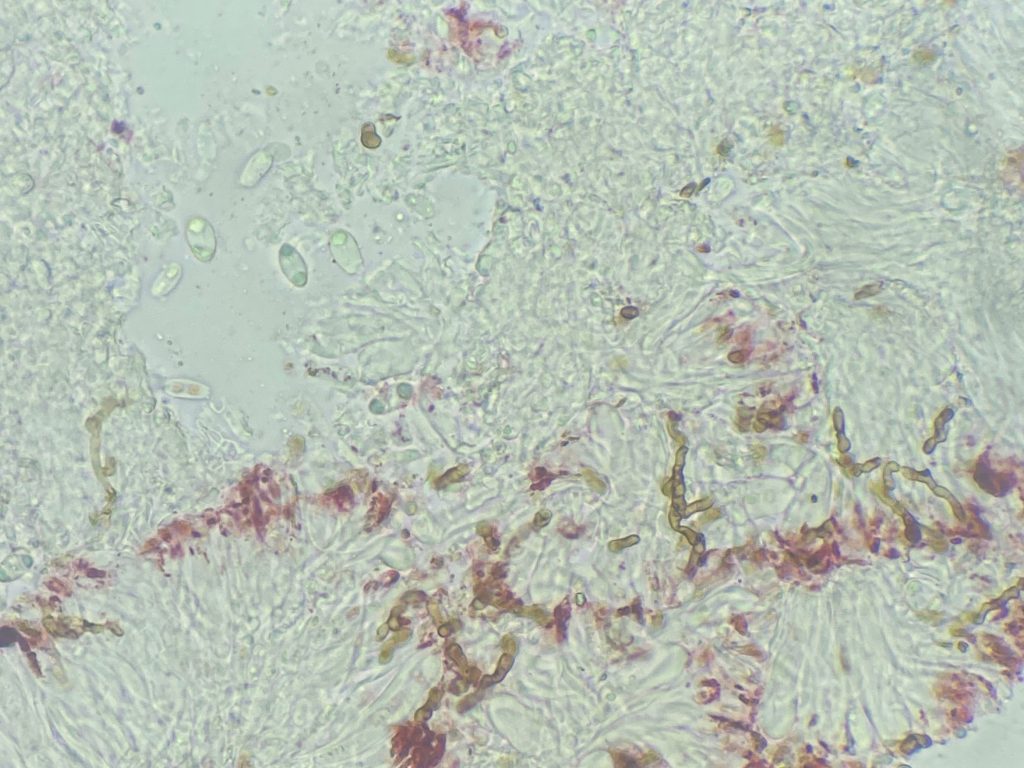
[attachment=3]2026-05-13-04.jpg[/attachment]
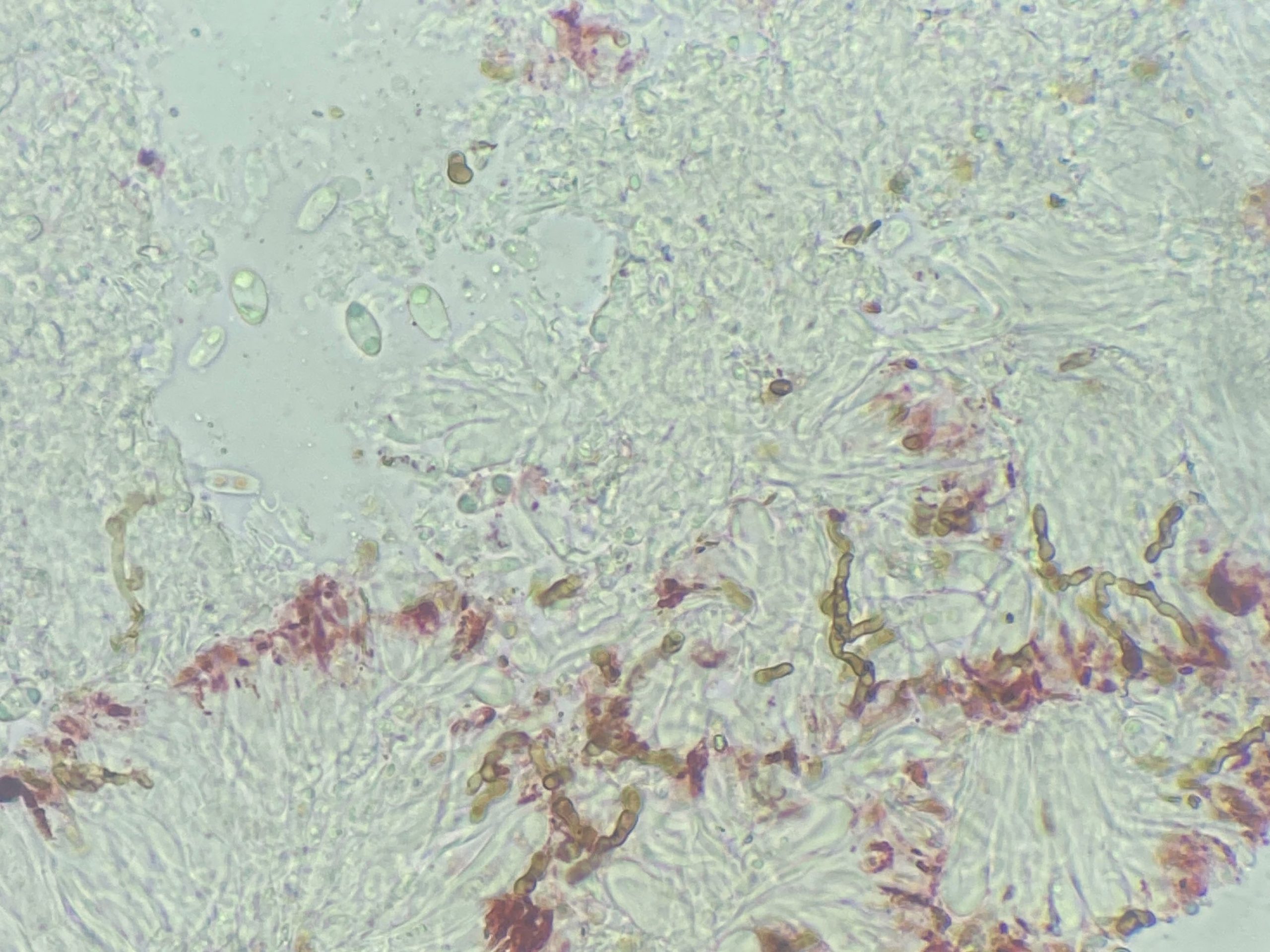
Apothecium squash in K with spores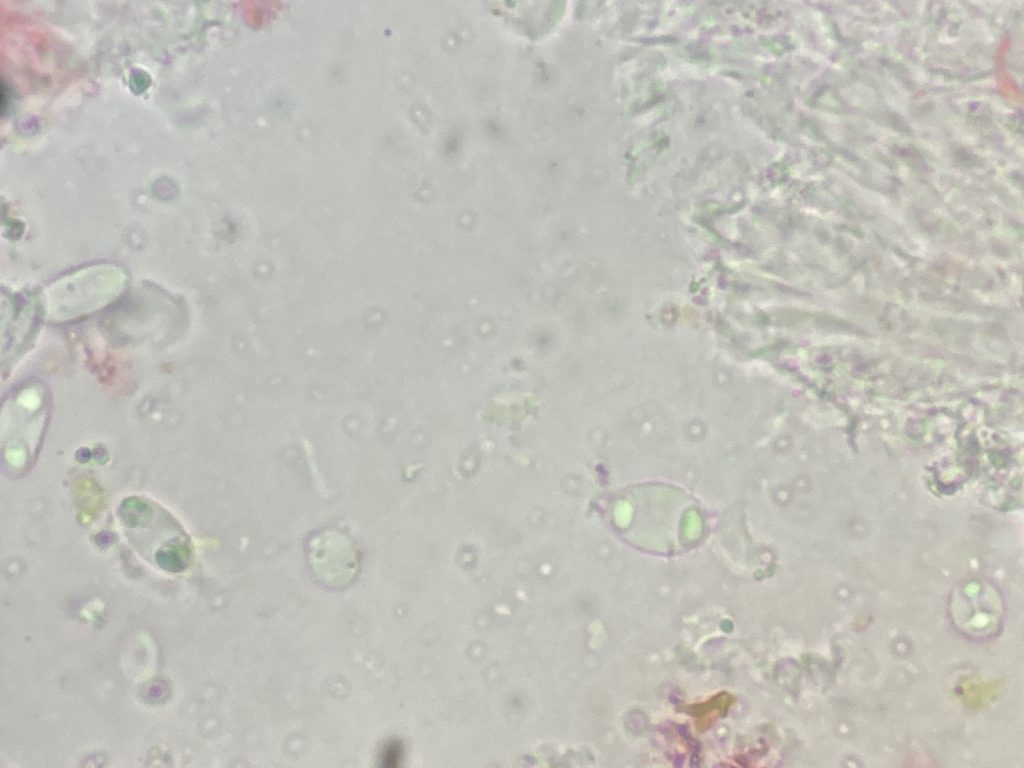
[attachment=2]2026-05-13-05.jpg[/attachment] 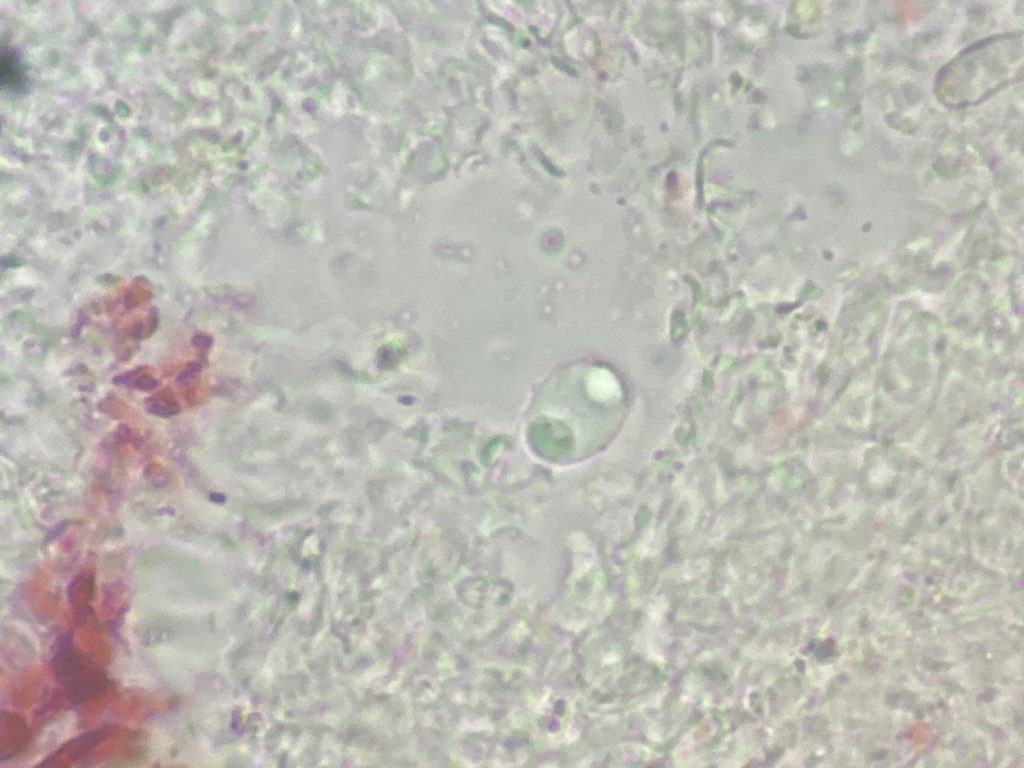
[attachment=1]2026-05-13-06.jpg[/attachment] 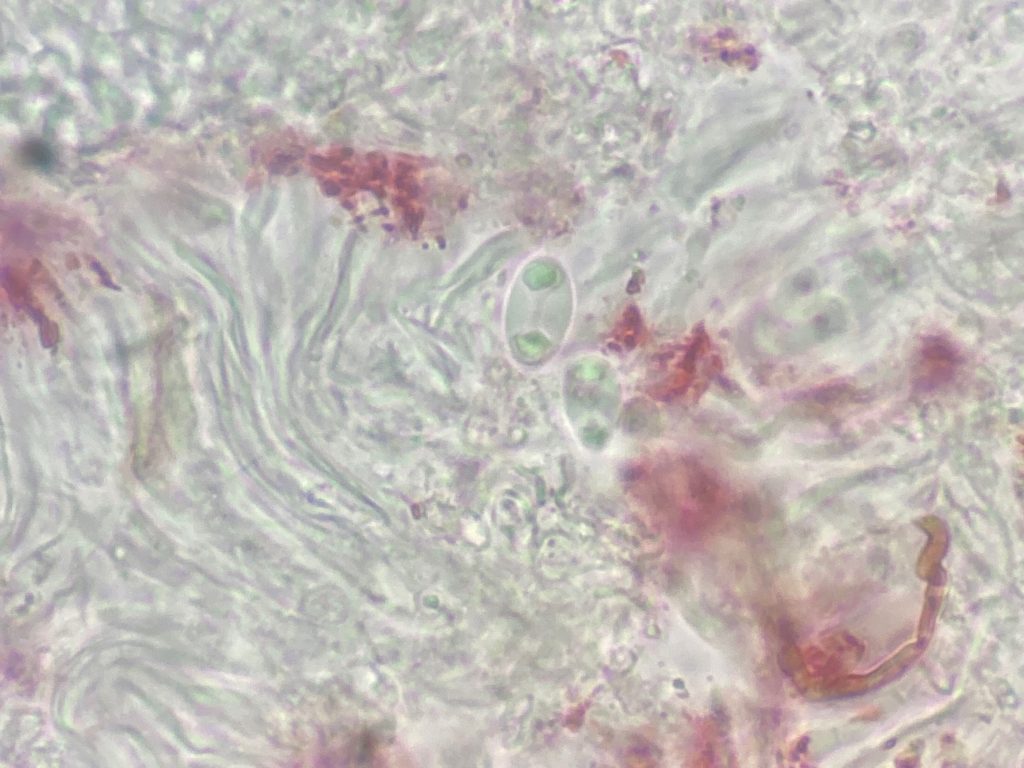
[attachment=0]2026-05-13-08.jpg[/attachment]
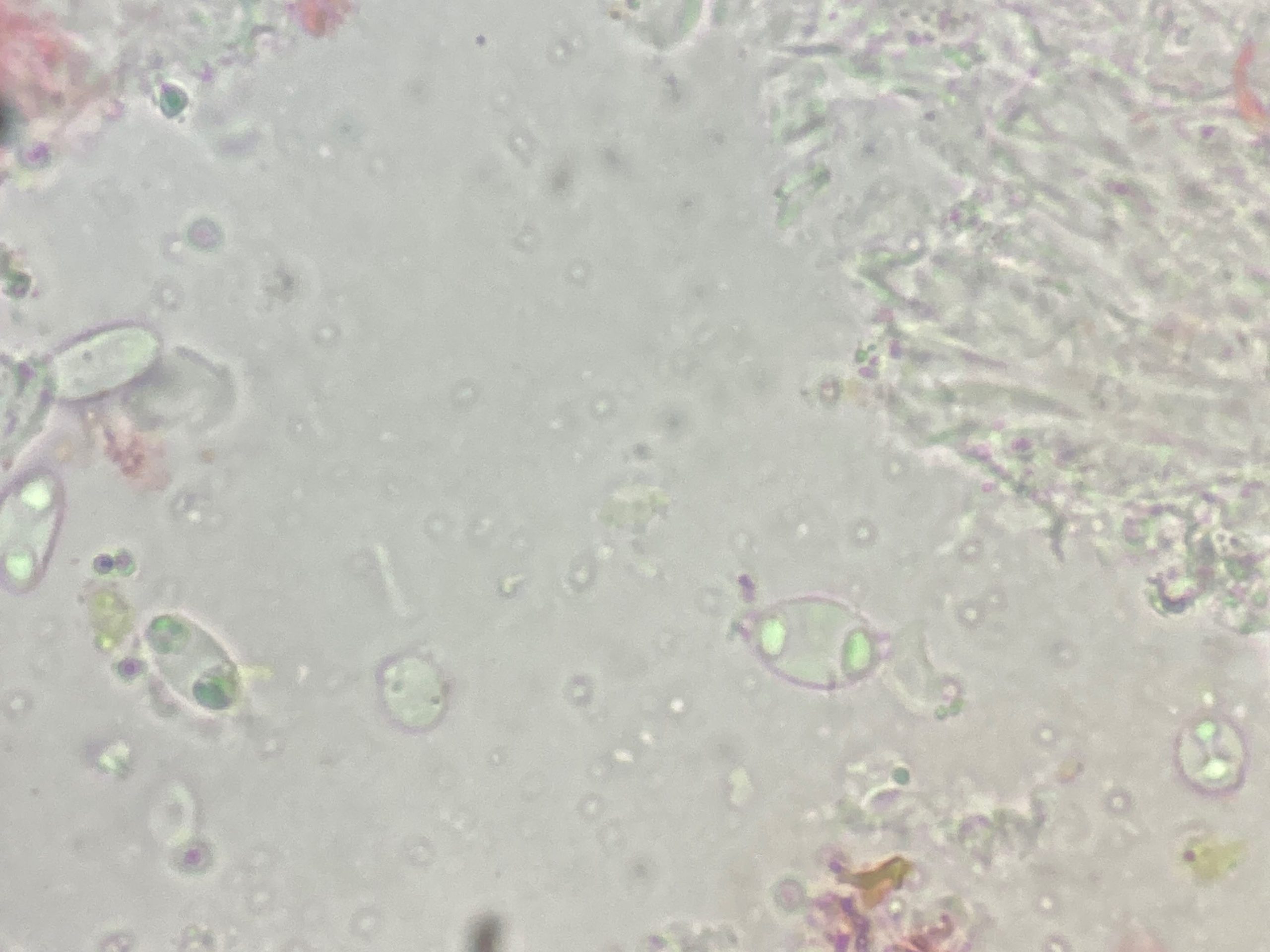
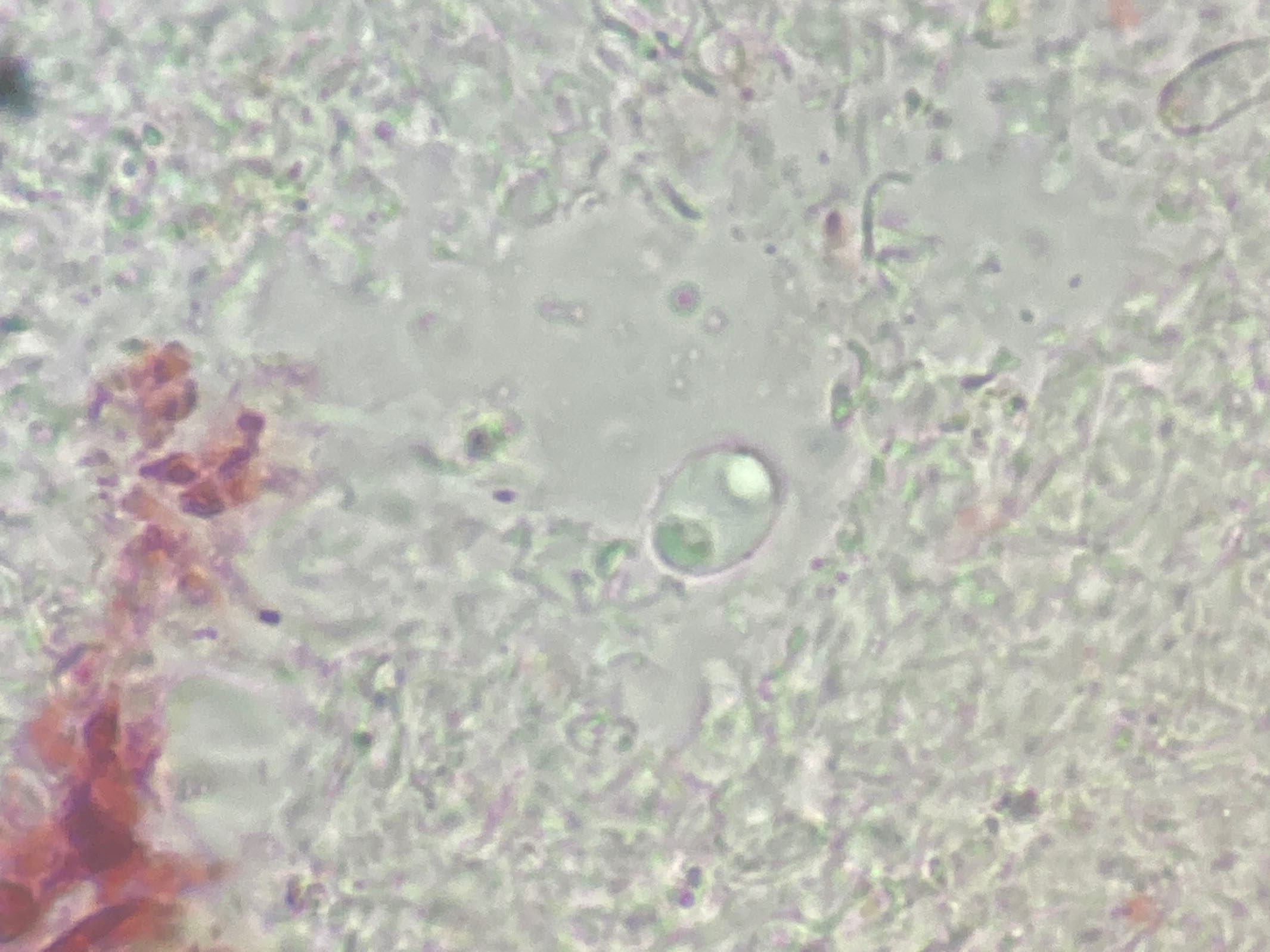
Spores in K, quite varied in shape and 9 – 11 x 6 – 8 µm with the septa just about half the length of the spore.Caloplaca alstrupiiis usually sterile but quite common and found on damaged young trees. I think Coppinsiella ulcerosais actually quite a bit less frequent (but more often fertile) and typically found on older wounded trees. I have some older
Coppinsiella ulcerosacollections, I will have a look at the spores in these tomorrow. Neil
May 19, 2026 at 8:01 pm #46955I checked my herbarium and the two “ Caloplaca ulcerosa” specimens I had, both appeared to be Caloplaca alstrupii! ho hum. I do have photo of
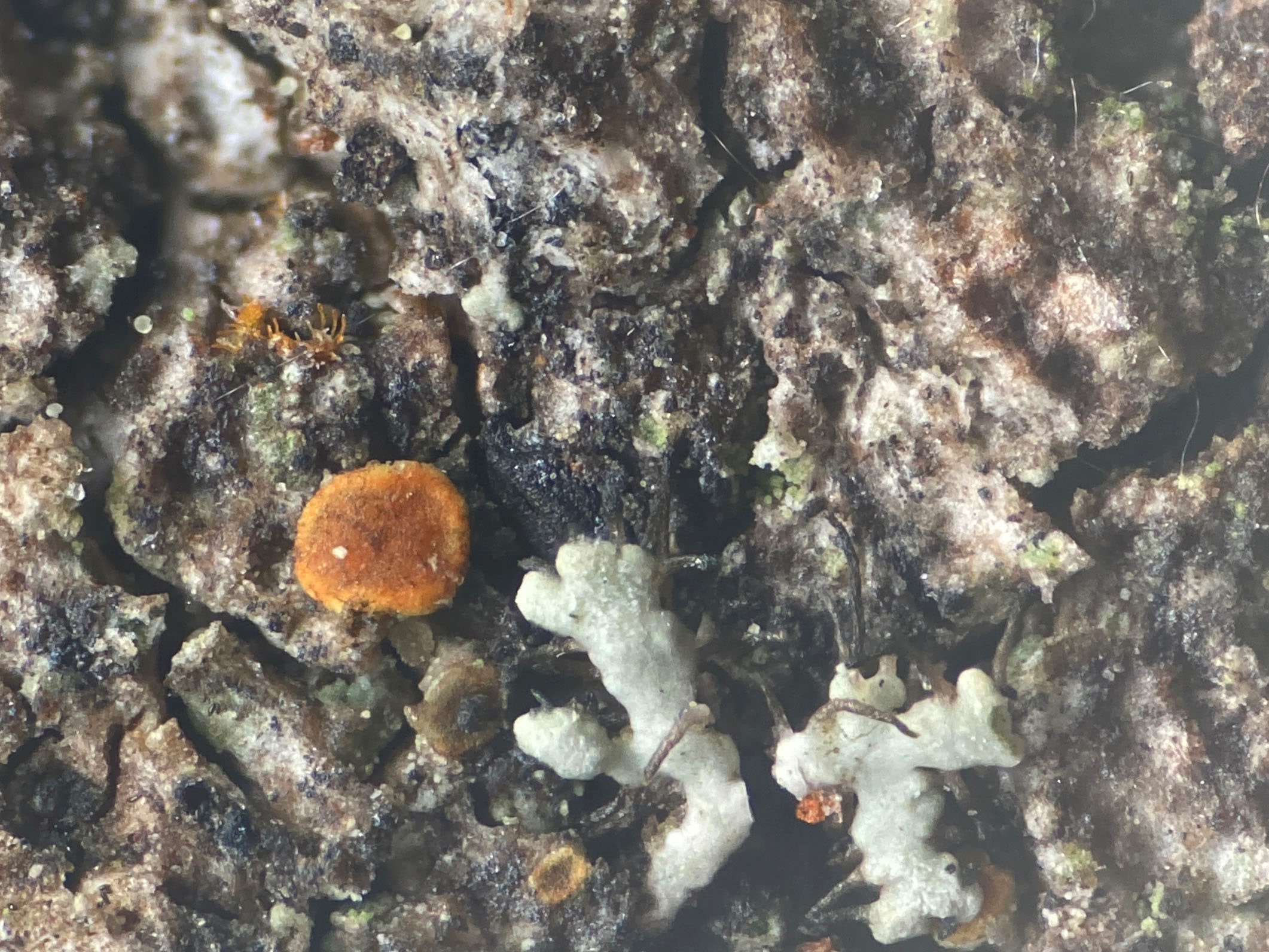
Coppinsiella ulcerosahowever: 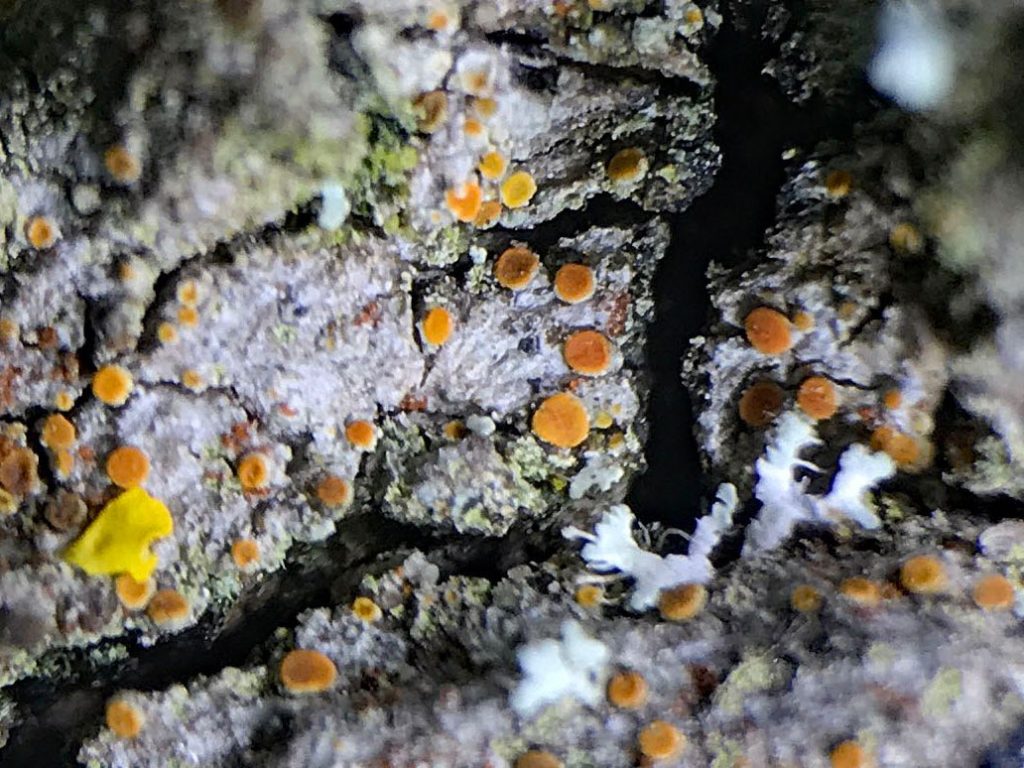
[attachment=0]2019-05-16-11.jpg[/attachment]
Coppinsiella ulcerosa, Ash Dibden, Hampshire. This does look very like your specimen and one thing visible on both is a thin, soon excluded thaline margin.
Caloplaca alstrupiilacks any sign of this, so I sure your specimen is Coppinsiella ulcerosa. All the best
Neil
May 19, 2026 at 8:10 pm #46956Thanks so much Neil. Yes, there is definitely a thalline margin on these apothecia and the colour on your photo is what I see – I find it quite difficult to get yellow/orange on photos actually the colour I see in reality. The habitat would fit as well – very old tree with damage to the trunk. Best wishes,
Sylvia
-
AuthorPosts


- You must be logged in to reply to this topic.