Forums › Forums › Fungi ID requests (post here if you aren’t sure what type of fungus you’ve found) › These fungi on compost heap – dangerous?
- This topic is empty.
-
AuthorPosts
-
October 27, 2020 at 9:02 am #31874
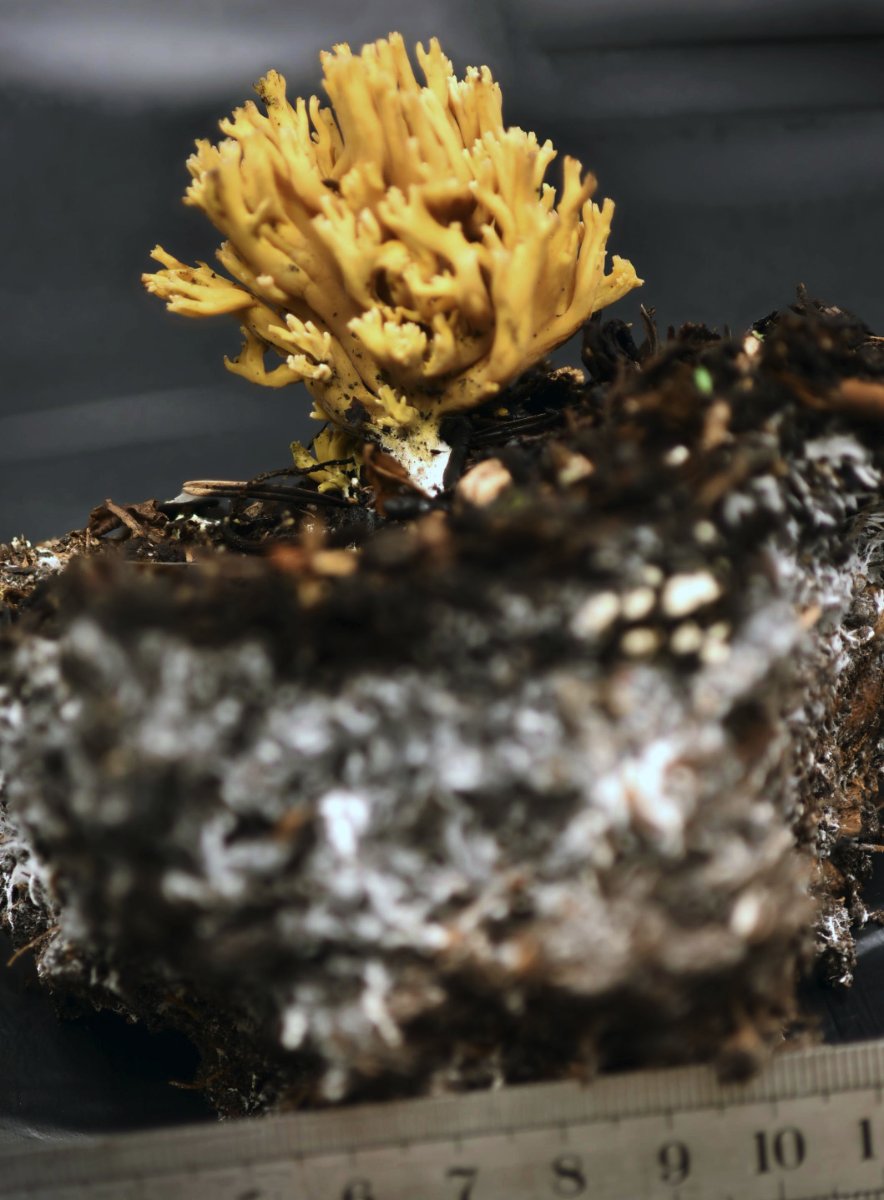
I have these growths on an old compost heap under a sycamore tree. 
[attachment=3]34AD6606-0BDD-4907-BC52-8D32464C6F85_1_105_c.jpeg[/attachment] 
[attachment=2]A01470E9-44F1-4896-9B60-66F5CB380326_1_105_c.jpeg[/attachment] 
[attachment=1]792274C9-8AB8-47B5-8142-EE4394F08DE3_1_105_c.jpeg[/attachment] 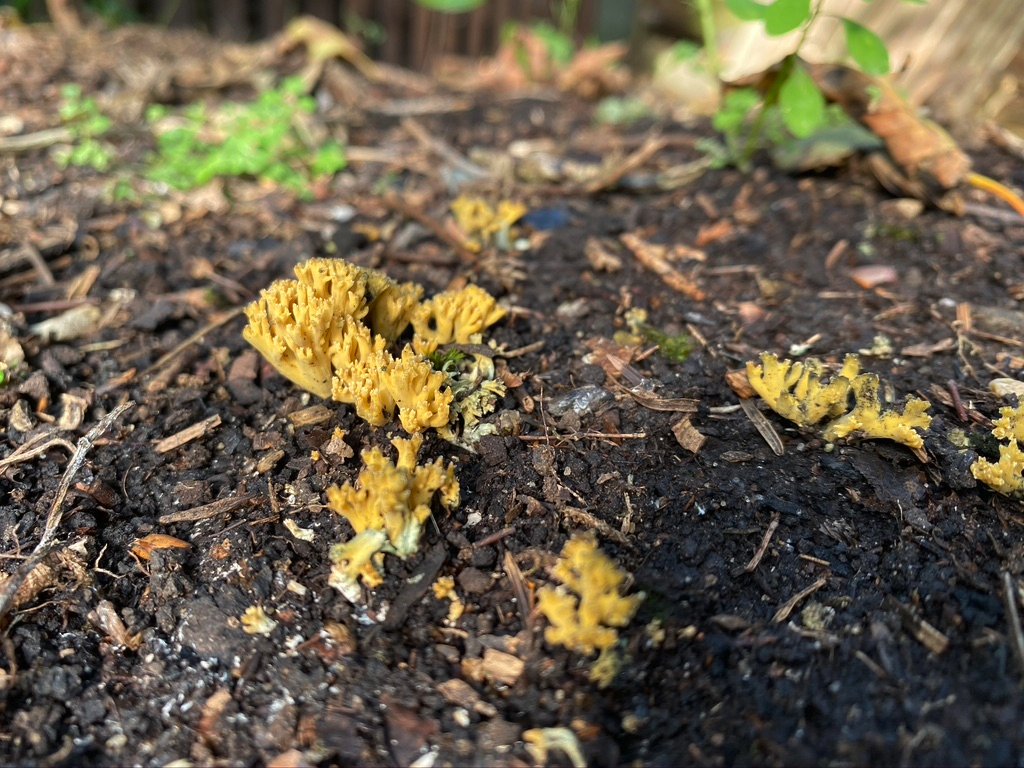
[attachment=0]CA15443C-CC05-4071-B75E-79573CBB213A_1_105_c.jpeg[/attachment] In the past few years I have had trees die and the last one, a mature apple tree, the tree surgeon thought was killed by honey fungus
My worry is that “things” might be dangerous to plants/shrubs/trees if I spread the compost on the garden
Any ideas?
October 27, 2020 at 10:20 am #43537Why does no-one read previous prosts on forums and the FAQs rather than stumble in blindly? Turn one over so we can see the gills and stem!Please take a moment to read
HELP US TO HELP YOU TO IDENTIFY YOUR FINDSWe appreciate you might not be able to provide all these details, but the more the better chance we have of reaching an ID.Particularly, we need to see clear photos of the top of the cap, plus of the gills and stem.
Best wishes
October 27, 2020 at 11:51 am #43538As we try to identify people’s finds on a daily basis, I fully empathise with Adam’s frustration that many folk don’t bother to read the FAQ’s and self help posts etc. that we have produced. If you do read the post that Adam mentioned
http://www.fungi.org.uk/viewtopic.php?f=4&t=49 HELP US TO HELP YOU TO IDENTIFY YOUR FINDS, You will see that with all but the most obvious of species, a great deal of information is generally needed.As an absolute minimum, good close-up photos of tops of caps, underside of caps / entirety of stem – (dig stem out don’t cut it off), along with as much information as possible about the habitat in which they were found.
(Obviously, in respect of the latter, we know that in this case, that was on a compost heap).
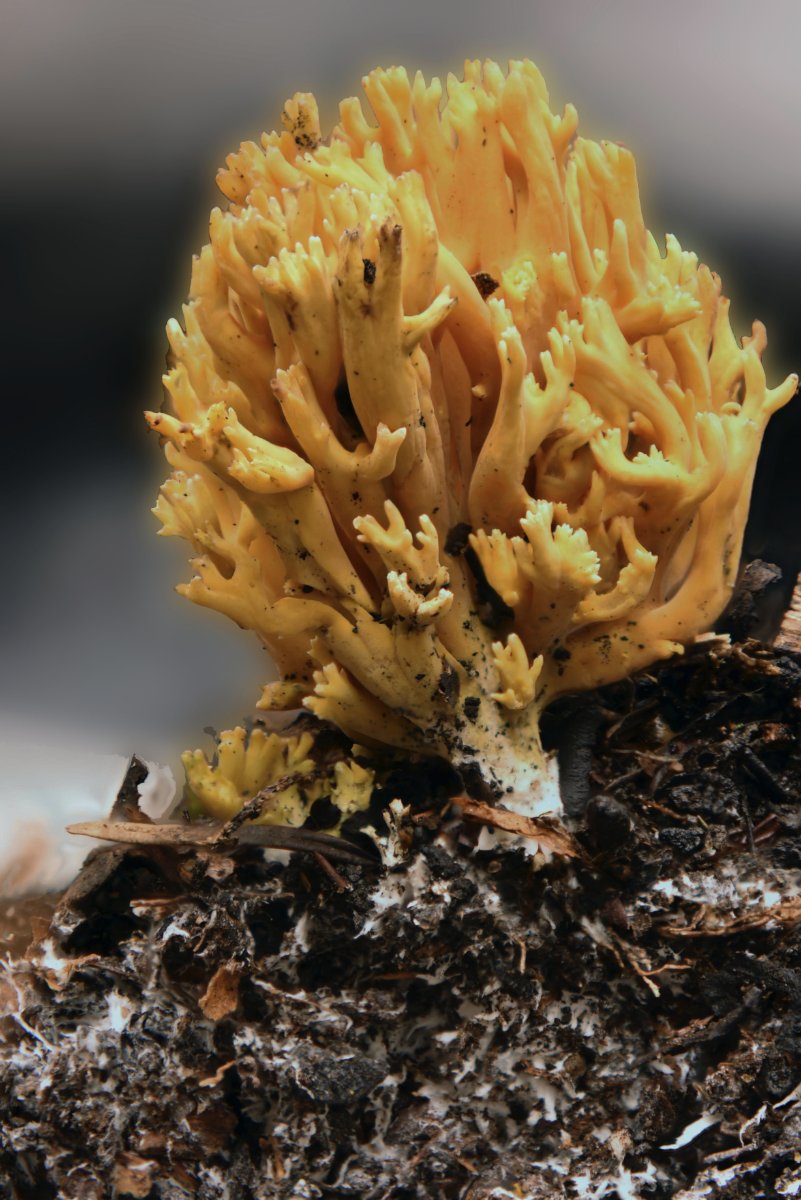
That said, I would suggest that your yellow-ish fungus is one of the
Ramaria(coral) species. – Virtually impossible to confidently identify to species level without microscopy. These larger
Ramaria‘s are generally ectomycorrhizal with trees, so, rather than being dangerous, quite the opposite – they are beneficial. As for the mushroom shaped fruitbodies: On casual glance they might have the look of Honey Fungus, but I think these have the general looks of
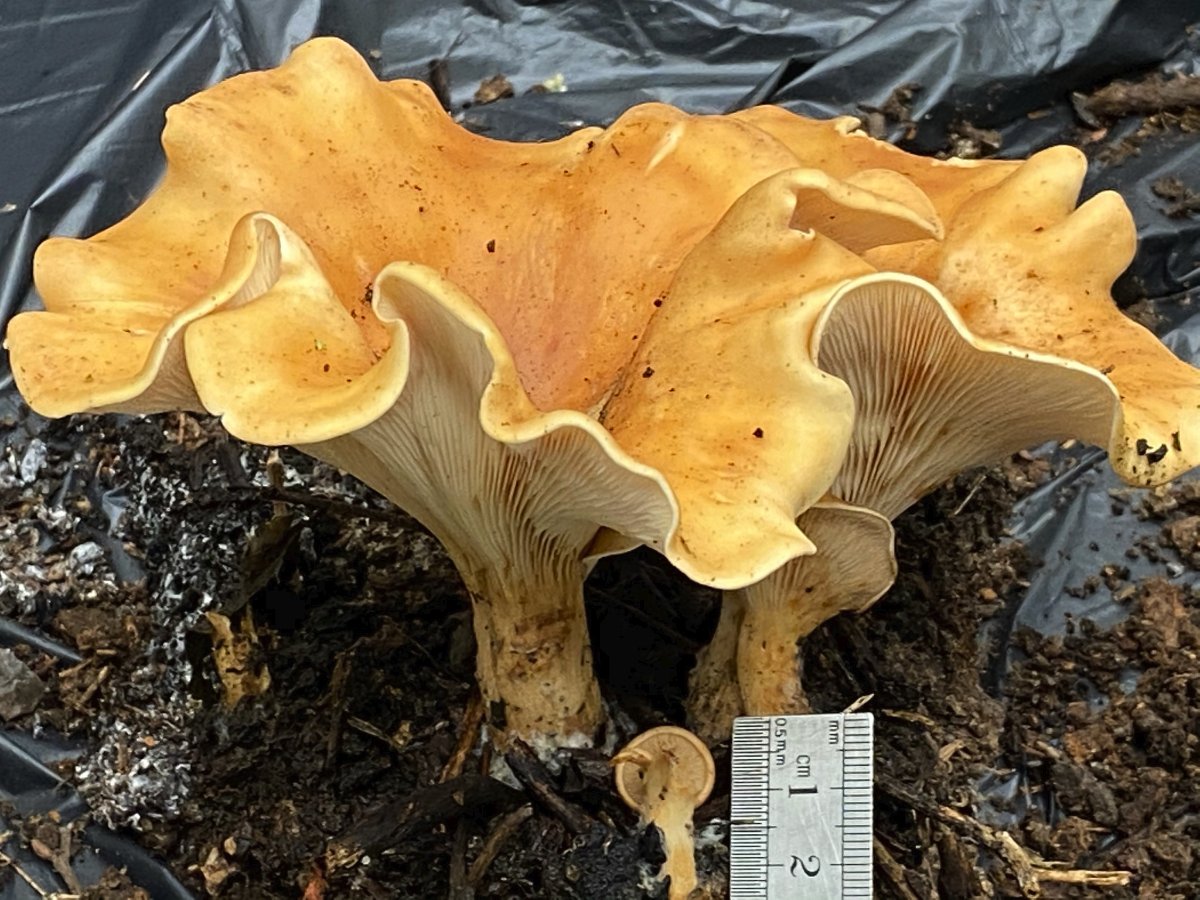
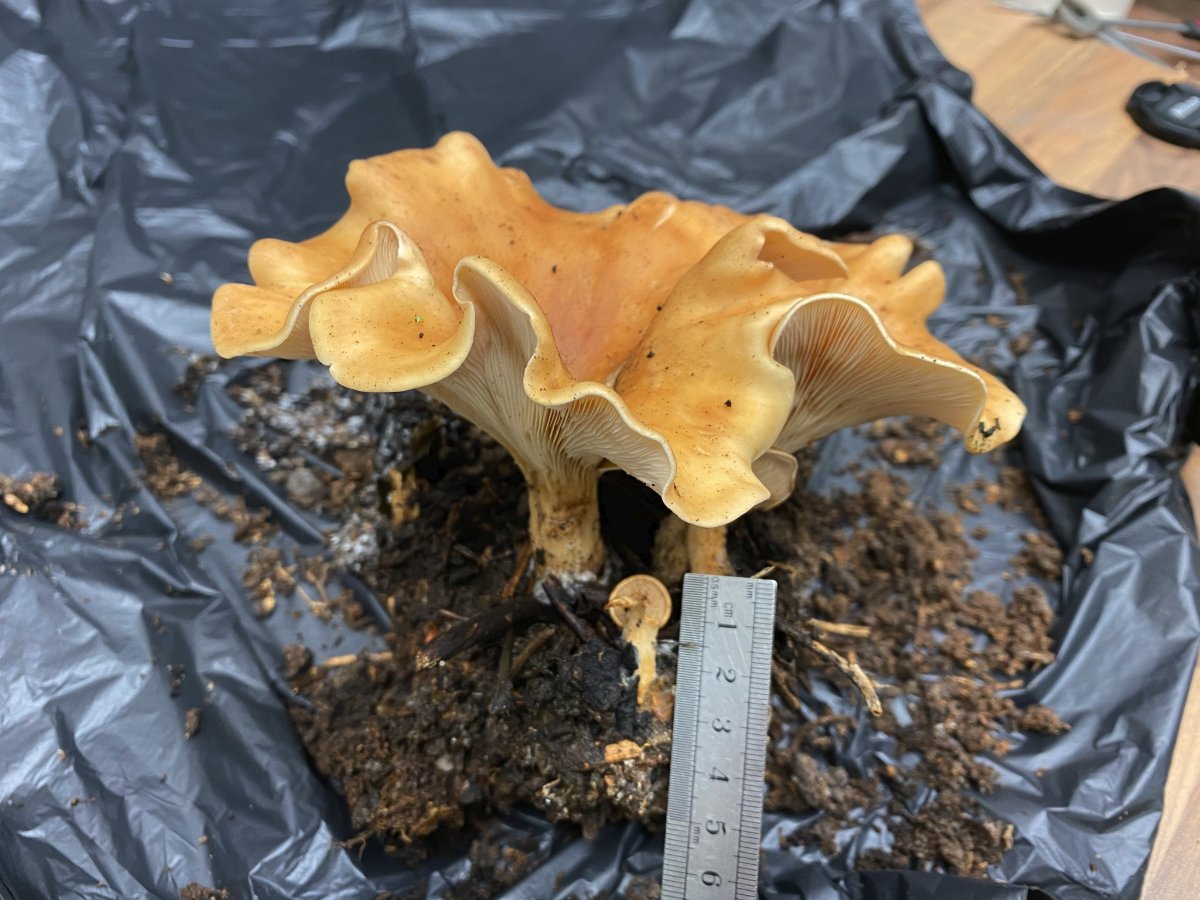
Lepista flaccida(Tawny Funnel), – which is where good photos of all elements of the fruitbodies would come in handy! (If you would post further images showing the relevant parts, we might be able to be more confident). If they are that species, then again, they would pose no threat to your plants or trees as they would be saprotrophs – breaking down and obtaining their nutrients from dead organic matter.
If either of these appeared in my garden I’d be quite pleased!!!
Regards,
Mike.
October 28, 2020 at 5:38 pm #43539OK, I dug up a couple of specimens and take a few photographs. As I said before, they are under a large sycamore tree growing on a very old compost heap. We live in the North of England (NW Leeds) and the fungi were first noticed in mid October.
The photo’s are not too good. If you need better, please say, and I’ll have a go at the spore print.
Having had a tree surgeon say that “honey fungus” killed a mature apple tree, I would be reluctant to liberally spread the compost around the garden!

[attachment=0]IMG_3857.JPEG[/attachment] 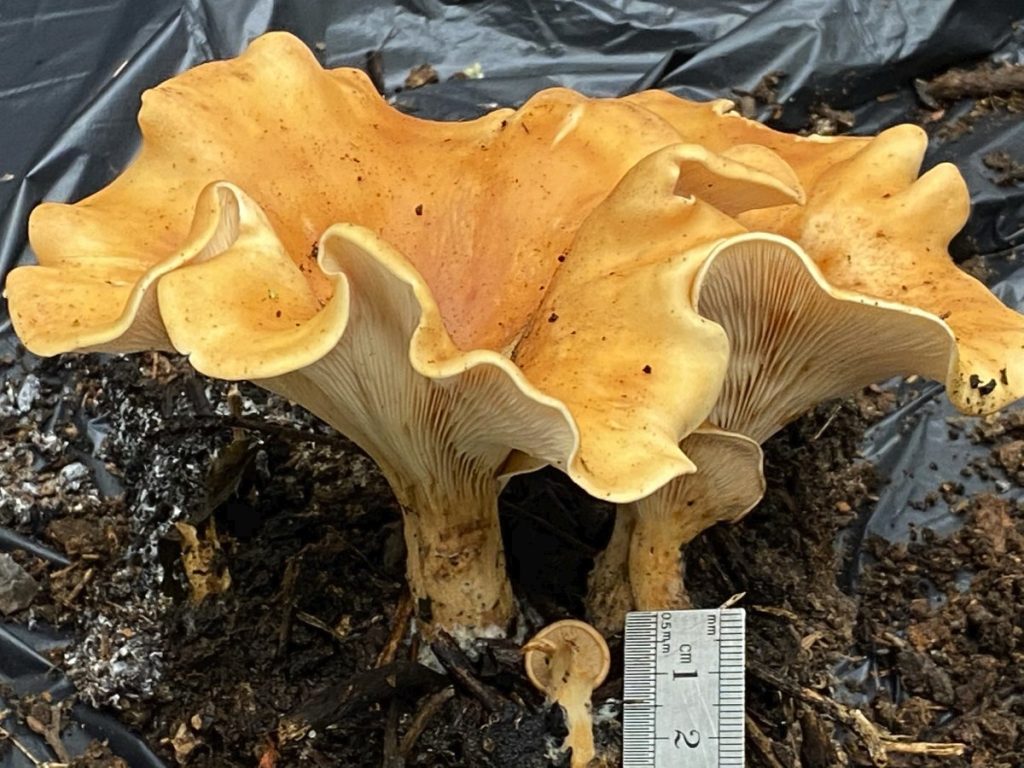
[attachment=1]IMG_3856.JPEG[/attachment] 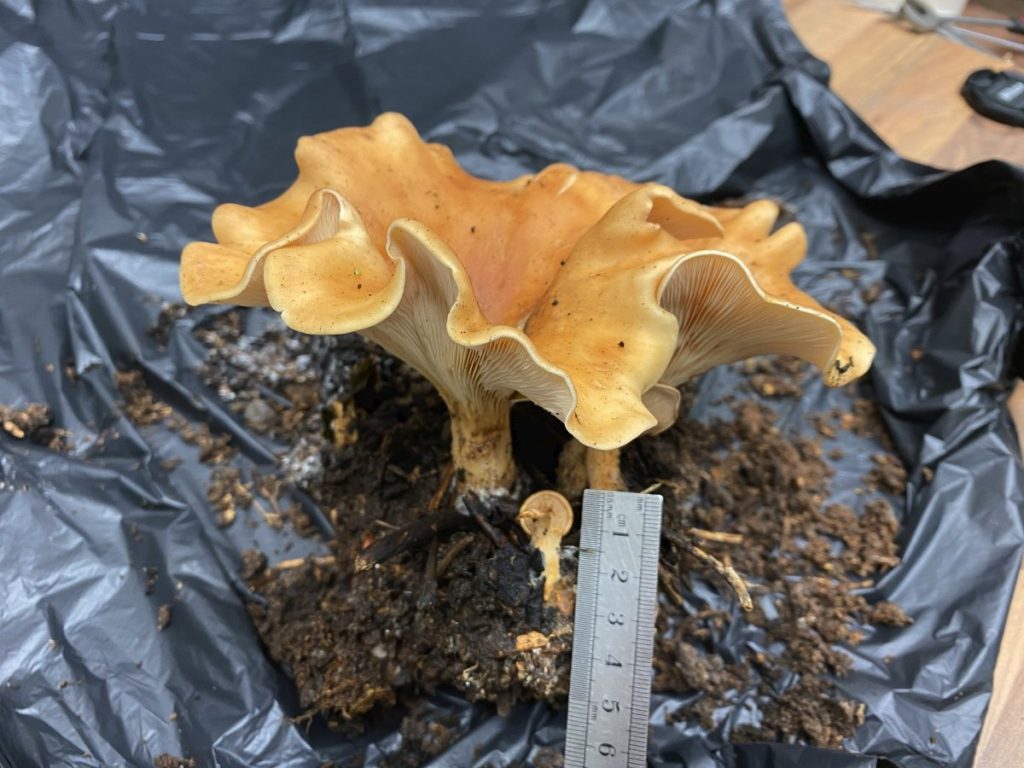
[attachment=2]IMG_3855.JPEG[/attachment] 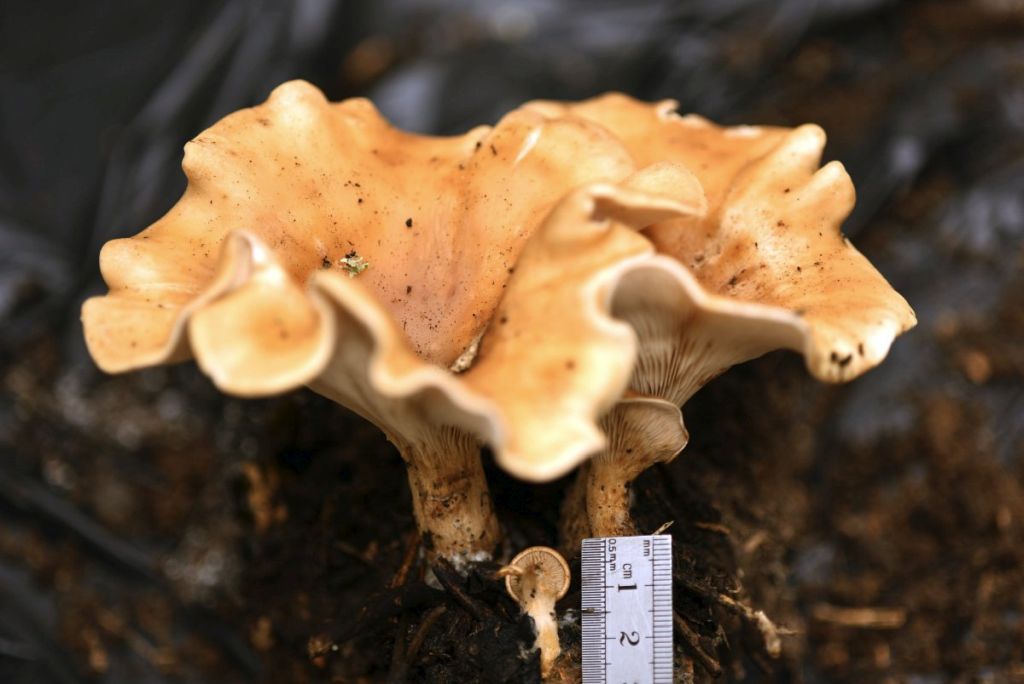
[attachment=5]Fungus 1 top.JPG[/attachment] 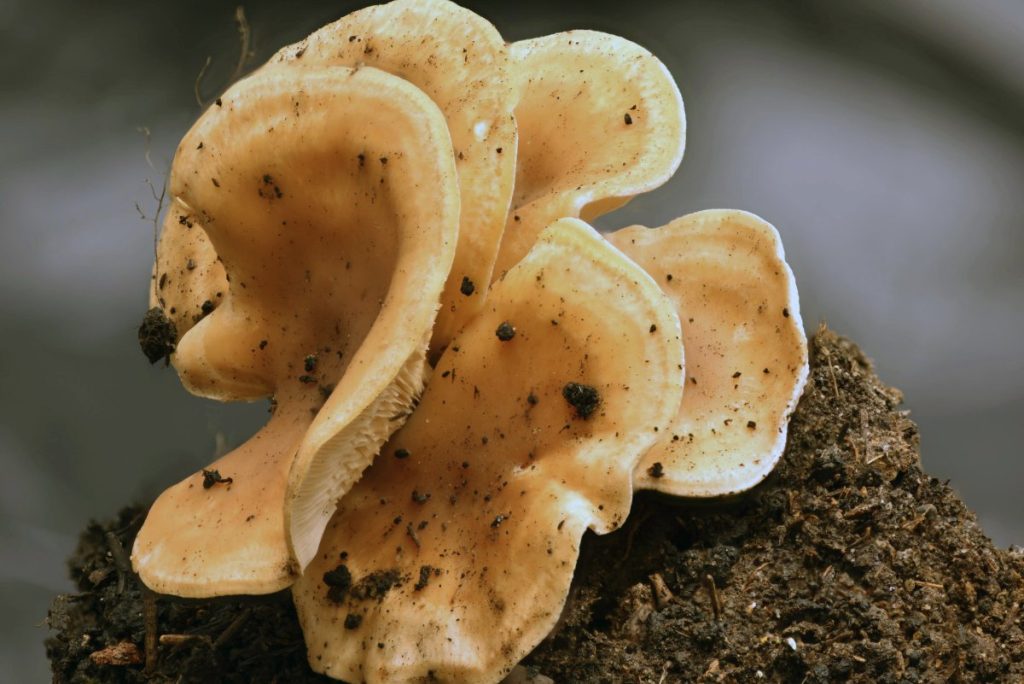
[attachment=6]Fungus 1 side.jpg[/attachment] 
[attachment=7]Fungus 1 side 2.jpg[/attachment] 
[attachment=8]Fungus 1 gills.jpg[/attachment] 
[attachment=4]Tree fungus 1.jpg[/attachment] 
[attachment=3]Tree fungus 2.jpg[/attachment] October 28, 2020 at 6:11 pm #43540Hi, These photos are ideal for what’s needed.
The photos of the mushroom species confirm that they have decurrent gills (gills that extend part way down the stems) which tallies with what I suspected.
I still think they are
Lepista flaccida. You would be able to differentiate what you have here from Honey Fungus very easily if you were to Google for images. – Honey fungi species would all look quite different to these when properly examined.
If, indeed, it was Honey Fungus that killed your apple tree, the mycelium and spores would still be well established within the soil, so I wouldn’t be at all worried about using the soil from the compost heap. (Unless of course, you had knowingly used the compost heap as a repository for any of the wood from the apple tree, or Honey Fungus fruitbodies etc. that you might have previously pulled up).
Honey Fungus mushrooms (or mushrooms of any other species), are just like apples on an apple tree, they are just the fruit.
The vast majority of the Honey Fungus organism (the mycelium) will still be there in the soil and in any dead wood from the apple tree (roots etc) that might still remain.
Unfortunately I can’t be any more specific with regards to the coral fungus, other than it being one of the
Ramariaspecies. As previously mentioned, they are almost impossible to identify to species level without microscopy.
Regards,
Mike.
October 28, 2020 at 6:40 pm #43541Great photos! Agreed with Mike for ID October 28, 2020 at 8:43 pm #43542That’s great Adam, Mike, many thanks. The tree surgeon was not sure of what killed the tree and possibly thought that he had to give me a reason. I never saw any evidence of any fungal growth never mind any Honey Fungus.
Anyway, it doesn’t look like I’ve got a compost heap full of it.
It’s been interesting and if i’m looking for another hobby……..
Best regards
Martin
-
AuthorPosts




- You must be logged in to reply to this topic.