- This topic is empty.
-
AuthorPosts
-
January 20, 2026 at 11:40 am #33138
Help appreciated with this squamulose lichen on a leaning calcareous ironstone headstone in Warwickshire. It was surrounded by Physconia grisea. The cortex is K+ yellow (and K/UV yellow), C-, Pd-. The squamules are about 1 mm across, with lecanorine apothecia. The undersides of the squamules are pale ar the edges, darker further in (though hard to tell whether that’s just dirt). Below the squamules is a dense white layer that appears to be compacted hyphae, up to 1 mm thick.
Unfortunately no spores found. The paraphyses are brownish at the tips and branched/anastomosed. No colour change in K.
(The brown specks on the lobes are superficial, rather than pycnidia.)
Keying out via Dobson and LGBI2 seems to go to Squamarina cartilaginea, but that seems rather unlikely from the distribution , and that is K-. Perhaps a very weird form of Protoparmeliopsis muralis, though it doesn’t look much like that, and that is usually K- too.
Di
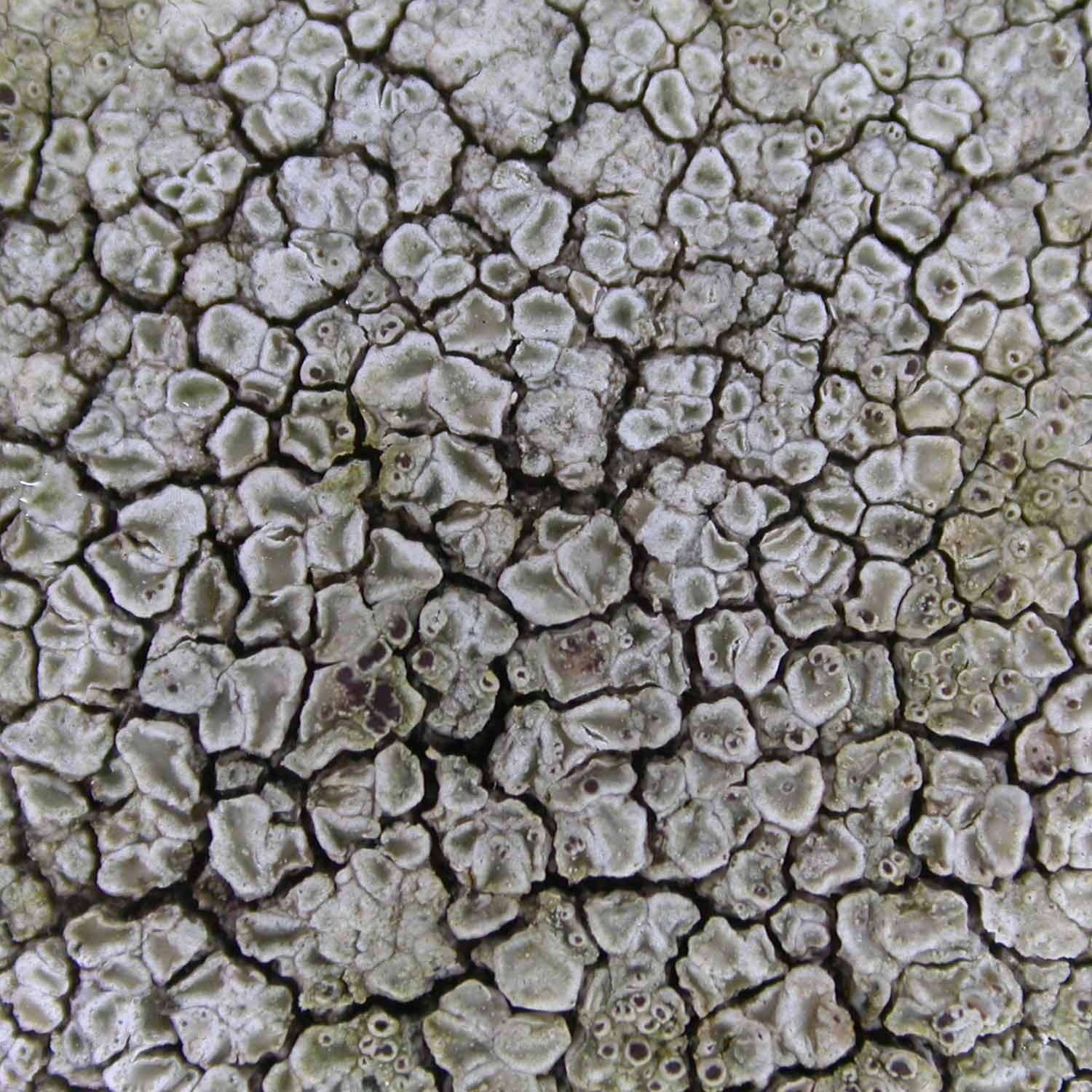
January 20, 2026 at 5:37 pm #46834If you can’t find any truly squamulose lichens which seem to fit then I will tentatively suggest an alternative idea. I have sometimes come across colonies of various Lecanora species which have had the hymenium browsed out of their apothecia leaving only the empty margins. These then sometimes make an attempt to produce some small secondary discs from the hollowed-out original apothecia. The following photo is an example, which I identified as L. campestris at the time. 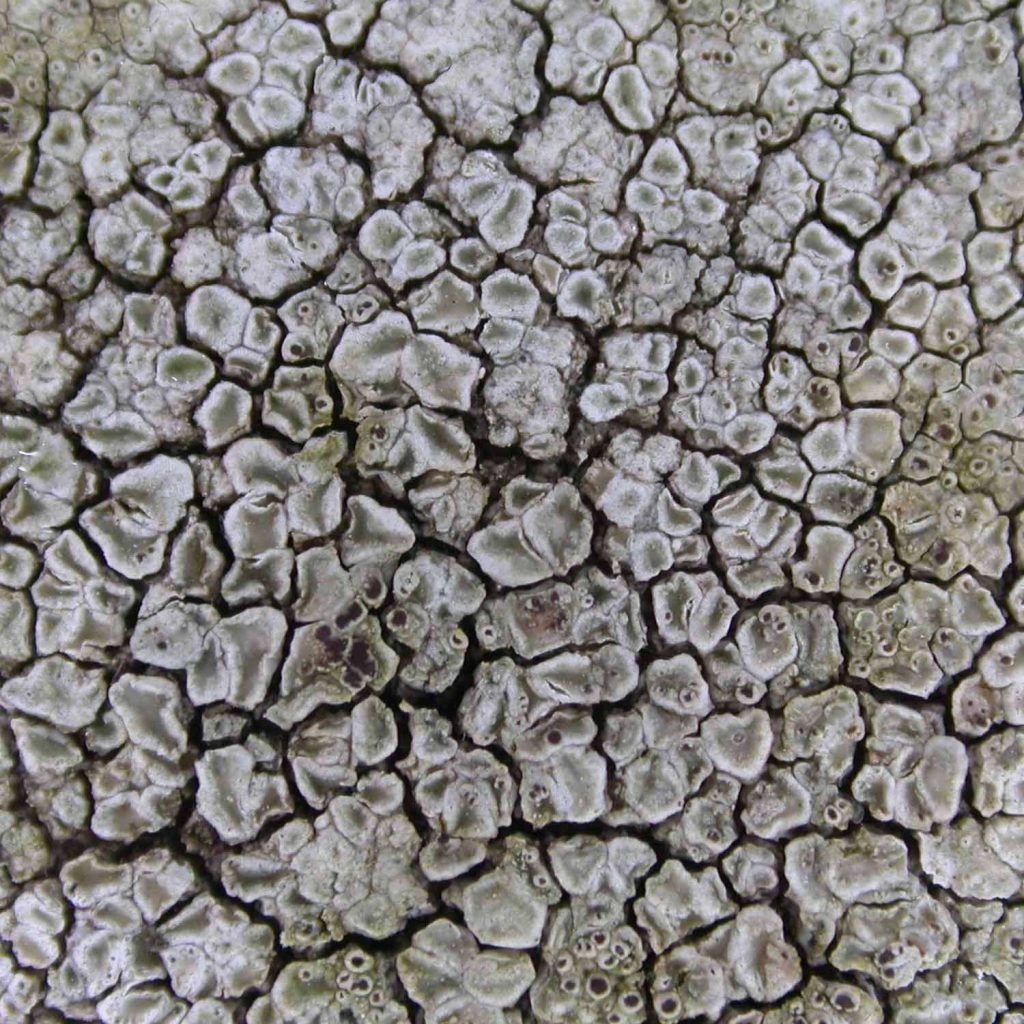
[attachment=1]campbrows.jpeg[/attachment]
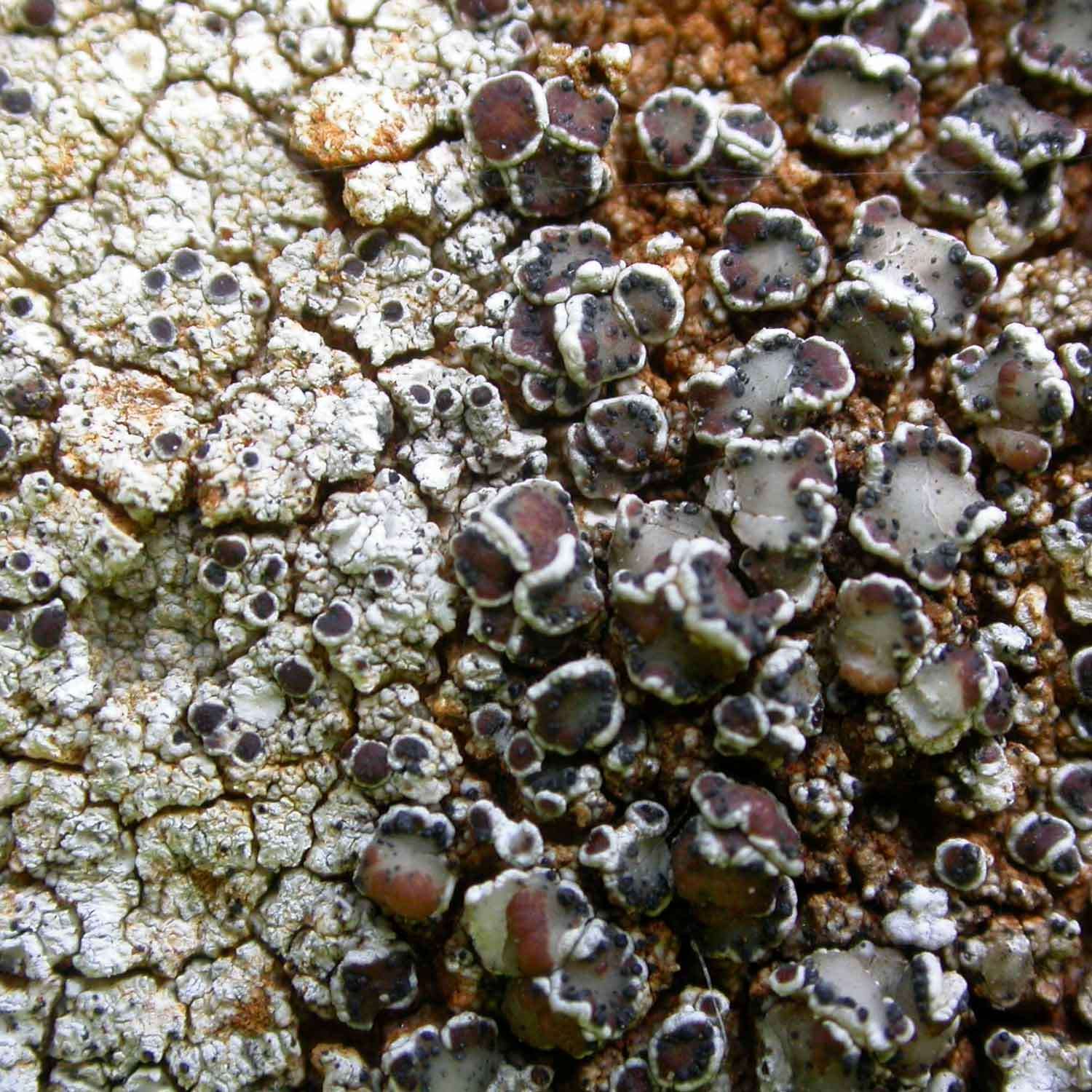
On a calcareous gravestone, and especially in the company of Physconia grisea, you might have L. horiza which might produce even more of a squamulose appearance if its apothecia were hollowed out, its apothecia tending to be rather large, with flexuous margins and appearing almost as if falling off the stone. In the following photo we have L. campestris on the left side of the image, L. horiza to the right (heavily infected with Vouaxiella verrucosa), neither of them very much hollowed out by browsing in this instance.
[attachment=0]horiza.jpeg[/attachment]
My suggestion is merely that, a possibility to consider rather than anything definite.January 20, 2026 at 7:20 pm #46835Many thanks. I had wondered about re-growth of something after heavy grazing. We did see Lecanora horiza at the same site. I’ll be going back there, and will look out for more clues. February 2, 2026 at 5:06 pm #46836Yes, it was indeed heavily-grazed and then re-grown Lecanora horiza. This patch was further up on the same stone. Thank you. February 3, 2026 at 5:43 pm #46837Thanks for letting us all know; it is an interesting phenomenon and useful for people to know what such heavily modified Lecanora campestris and L. horiza can look like. The separation of these two species is a bit tricky because there don’t seem to be any absolute diagnostic differences between them. They both lack epithecial granules and both are K+ yellow. Deciding on one or the other depends on an appraisal of a small suite of morphological differences and slight differences of ecology but all the features used to distinguish them are somewhat overlapping. Now that I am familiar with them, I think I can fairly confidently assign a name to half or perhaps up to two thirds of specimens while the other specimens leave me in some doubt and I tend not to record these more intermediate specimens. I have no doubt at all that you can reliably recognise good specimens of each species, especially those specimens which are towards the more typical ends of the spectrum. Lecanora horiza tends to lack a fimbriate margin (though it sometimes has a suggestion of a fimbriate margin on smooth surfaces such as aspen bark), the thallus of L. horiza tends to be whiter and lumpy compared to the pale grey warted thallus of L. campestris. The apothecia of L. horiza tend to be larger, often exuberant, with flexuose margins and often giving the impression that they might start to fall off the substratum. When I was working on how to separate these two, I became briefly very excited when I found several occurrences of typical L. campestris infected with Muellerella lichenicola and several occurrences of typical L. horiza infected with Vouauxiella verrucosa. I was excited because I hoped these lichenicolous fungi might prove to be host specific but further work showed that either LF can occur on either host.
-
AuthorPosts


- You must be logged in to reply to this topic.