- This topic is empty.
-
AuthorPosts
-
January 24, 2026 at 4:12 pm #33140
Really interesting (but daunting because of yet more name changes) to read the ‘Lecanora hybocarpa the Answers thread and then to discover there is yet another Lecanora, L. pseudargentata, here. From the New Forest descriptions and photographs the only distinct difference between Lecanora chlarotera s.str. and L. pseudargentata (without sequencing) seems to be the UV reaction?
Quote:The fluorescence is particularly good in separating Lecanora argentata from Lecanora pseudargentata, which is the only other Lecanora which would typically have dark chestnut brown disks. None of the others showed distinct UV+ orange-brown fluorescence from the thallus
Its left me confused as many/most of the Irish specimens I’ve recorded as chlarotera s.str (after examing sections under polarised light) have had what I would have described as dark chestnut-brown discs?
https://www.irishlichens.ie/pages-lichen/l-669.htmlhttps://www.irishlichens.ie/pages-lichen/l-669.html” class=”bbcode_url”> January 24, 2026 at 7:50 pm #46841Jenny I am still learning the new species, so finding my way on this. The specimens with pruina on the disks are very distinctive and it is the ones with pruinose disks I was already aware of as unlikely to actually be
Lecanora chlaroteras. str., so got one of those sequenced. With the combination of disk and thallus fluorescence it is a lot more distinctive and sequencing should not be necessary identifying well developed specimens. I have been out and around the New Forest looking for more. There is actually a lot about and quite a lot is not very pruinose, but the UV usually finds smaller agglomerations of pruina on some disks and this is key. The thallus UV is not bright but is distinct, other species can show much fainter orange-brown fluorescence but you will know the difference when you see it. Your pictures could be it (I had already looked!) but unless the pruina is visible I can not be sure from pictures. However, all material with dark chestnut-brown disks and a Lecanora chlaroteratype crystal distribution has proved to be Lecanora pseudargentatahere. As a widespread tropical/warm temperate species I would not be surprised if it is in Ireland. Actual Lecanora chlaroteras. str. all has had pale brown disks so far, as I can tell. I am finding that
Lecanora pseudargentatais locally frequent and the dominant Lecanora chlaroteras. lat. on branches around the edges of pasture woodland glades with wet grasslands and low N deposition. It does also occur somewhere in the canopy with in the woods from its occurrence on occasional fallen branches within the woods. It is absent from more shaded branches within the woods. It is less frequent around dry glades and absent from exposed trees and any with higher N deposition. None around my house on street and field Oaks about 1km from a large population of Lecanora pseudargentataaround wet grassland glades. Lecanora chlaroteras. str. seems more frequent away from the edge of the glades on more exposed trees but usually still low N conditions and Lecanora hybocarpas. lat. is more frequent on more nutrient enriched twigs. 
[attachment=0]2023-11-18-04.jpg[/attachment]
Looking into primeLecanora pseudargentatahabitat, Busketts Wood Neil
January 25, 2026 at 11:05 am #46842Jenny Looking at
https://www.irishlichens.ie/pages-lichen/l-669.htmlhttps://www.irishlichens.ie/pages-lichen/l-669.html” class=”bbcode_url”> Neil
January 25, 2026 at 11:36 am #46843Some more UV pictures: Lecanora argentatafrom branch on Oak, Denny Wood: 
[attachment=3]2026-01-24-03.jpg[/attachment] 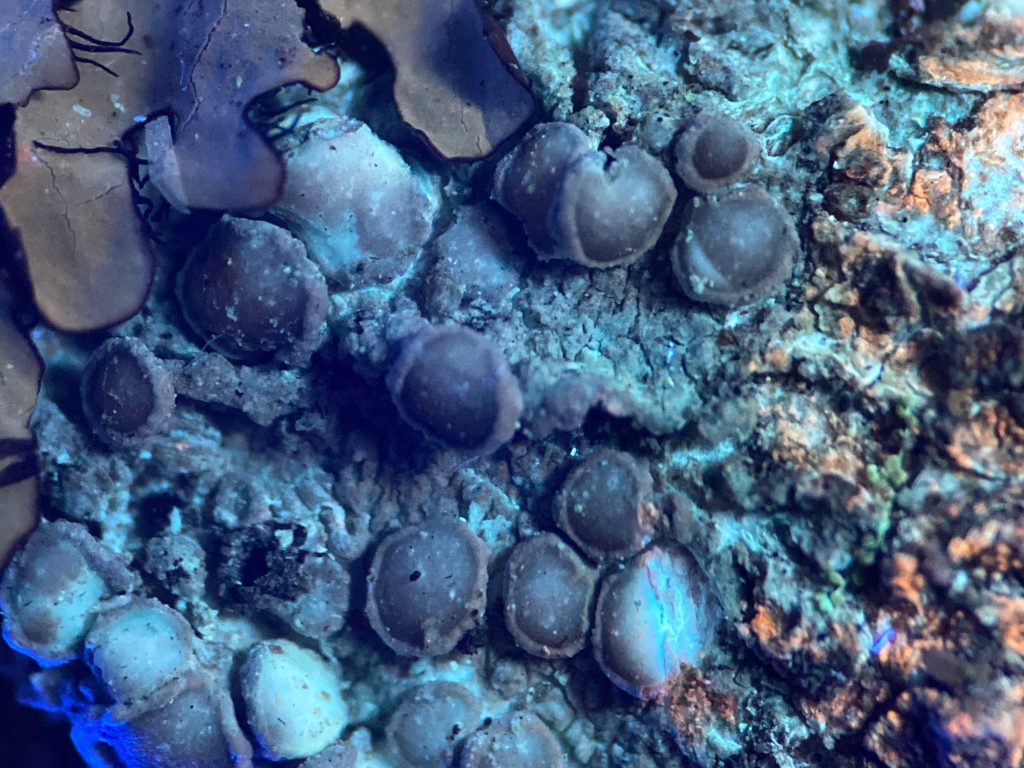
[attachment=2]2026-01-24-04.jpg[/attachment]
Faint orange-brown fluorescence on the margins, nothing on the disks.Lecanora pseudargentatafrom the same branch on Oak, Denny Wood: 
[attachment=1]2026-01-24-05.jpg[/attachment] 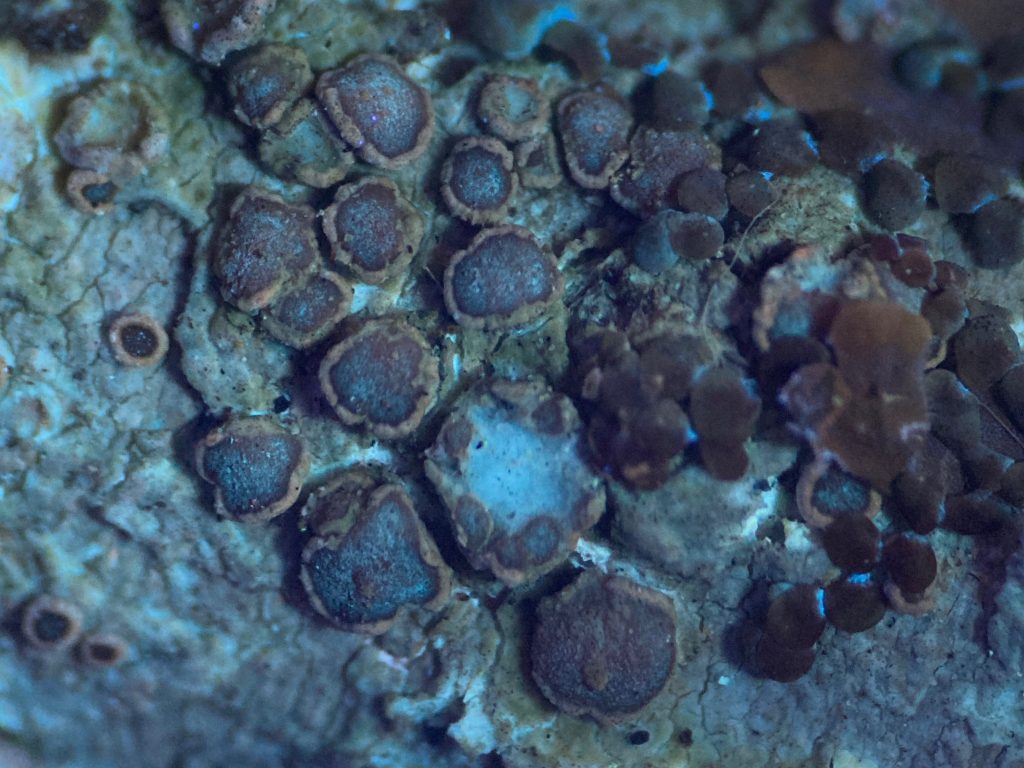
[attachment=0]2026-01-24-06.jpg[/attachment]
Stronger orange-brown fluorescence on the margins, the disks are not strongly pruinose, but speckled UV+ grey-blue fluorescence on the disks is noticeable.Neil
January 25, 2026 at 3:17 pm #46844Many thanks for further details and UV photographs Neil, and the photographs and micrographs sent – though gmail seems to have scrambled the order so checking the file names (1,1b etc) will clarify which micrograph goes with which photograph. January 26, 2026 at 9:14 am #46845Hi Neil I photographed this years ago (3/4/2011 to be precise) on an Aspen in Browndown Fen, Gosport (images are not very sharp). Is it a candidate for L. pseudargentata? If so, I could go back to get better photos and a small specimen to send you. I remember at the time it matched something labelled as L. hybocarpa on the internet, but I think you said it was a ‘maybe’ based on what your idea of that was at the time.
John Norton
January 26, 2026 at 9:23 am #46846In the field I would guess Lecanora argentataif it was on a trunk from the colour of the disks, but that would have no crystals on the disk surface and minimal UV fluorescence, so it would need looking at. Happy to have a look. Neil
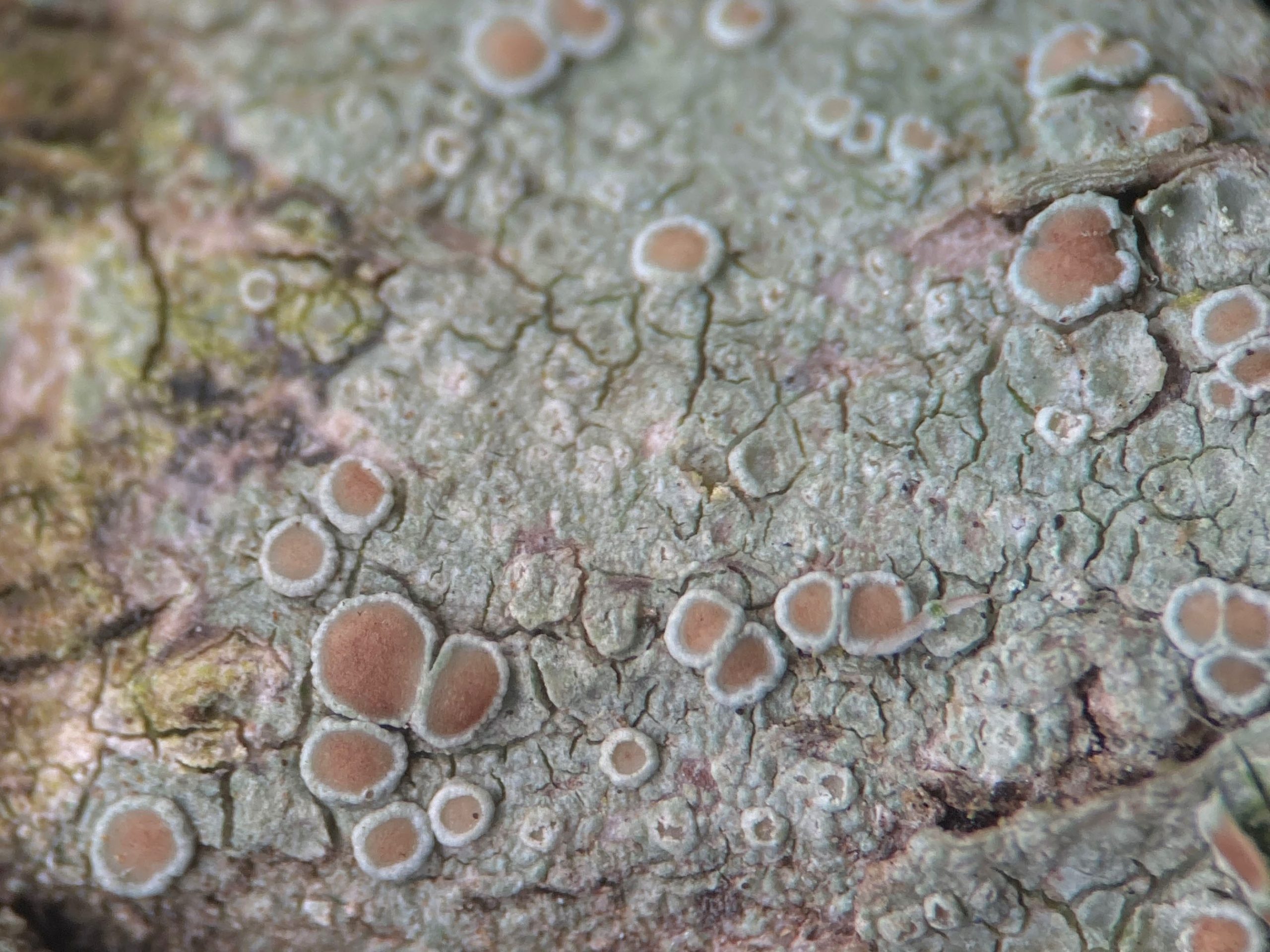
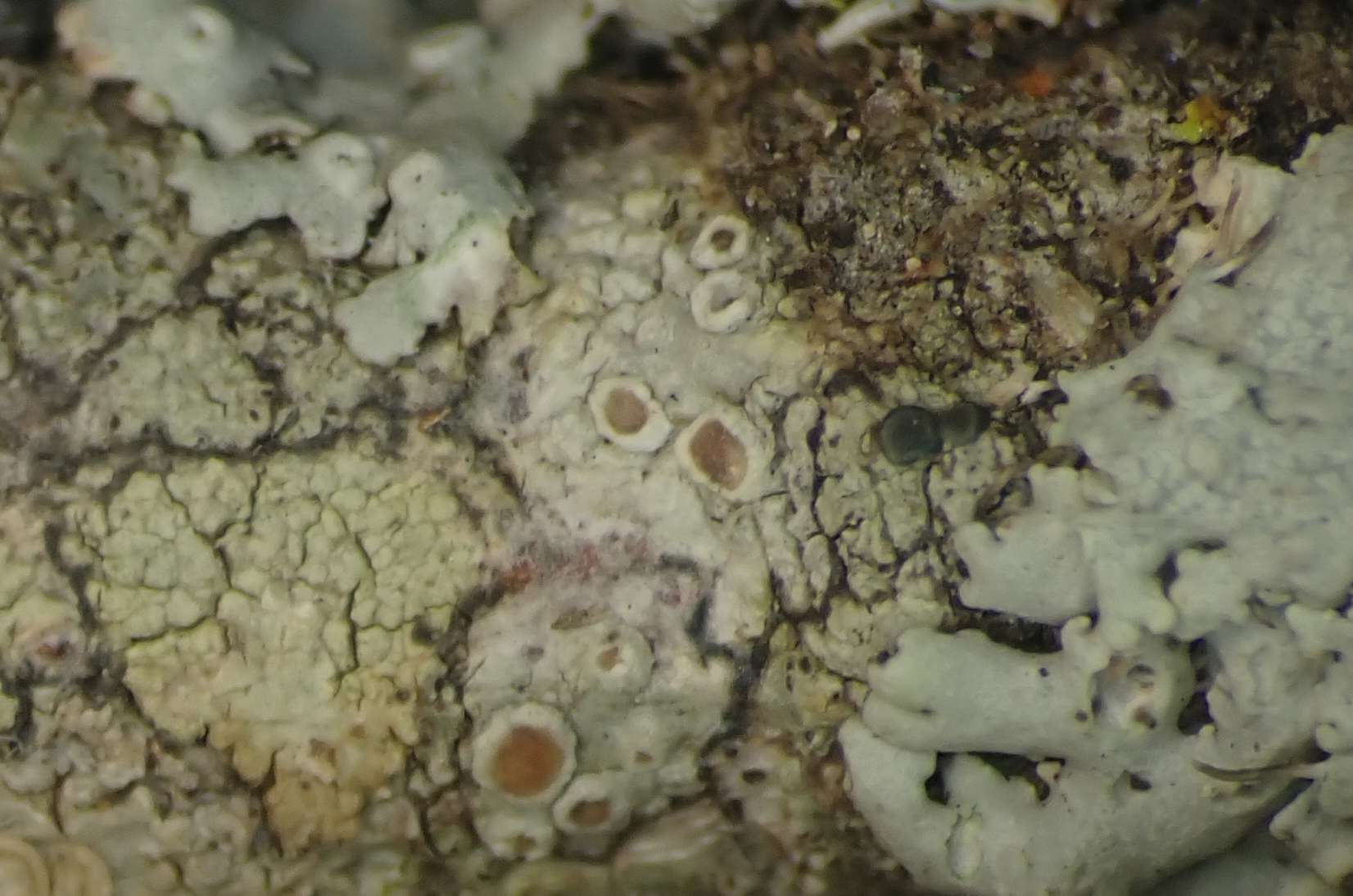
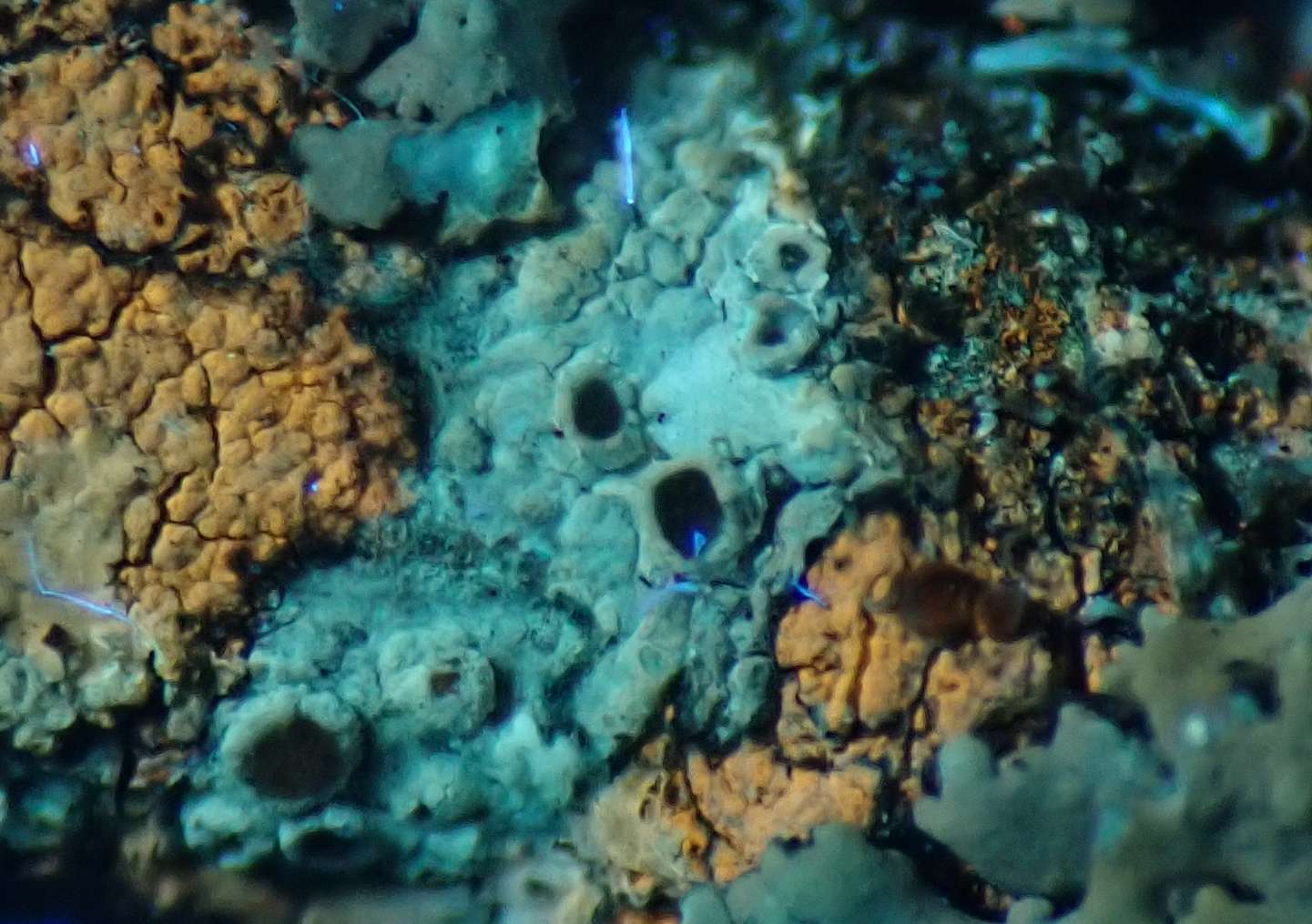
January 26, 2026 at 12:21 pm #46847Found an Ash twig collected 2012 from mid Cork (vcH4) and started investigating the Lecanora’s on it. Might this one be L. pseudargentata, though I’m slightly wary of the UV results I get? (Added bonus, specimen I can send!) 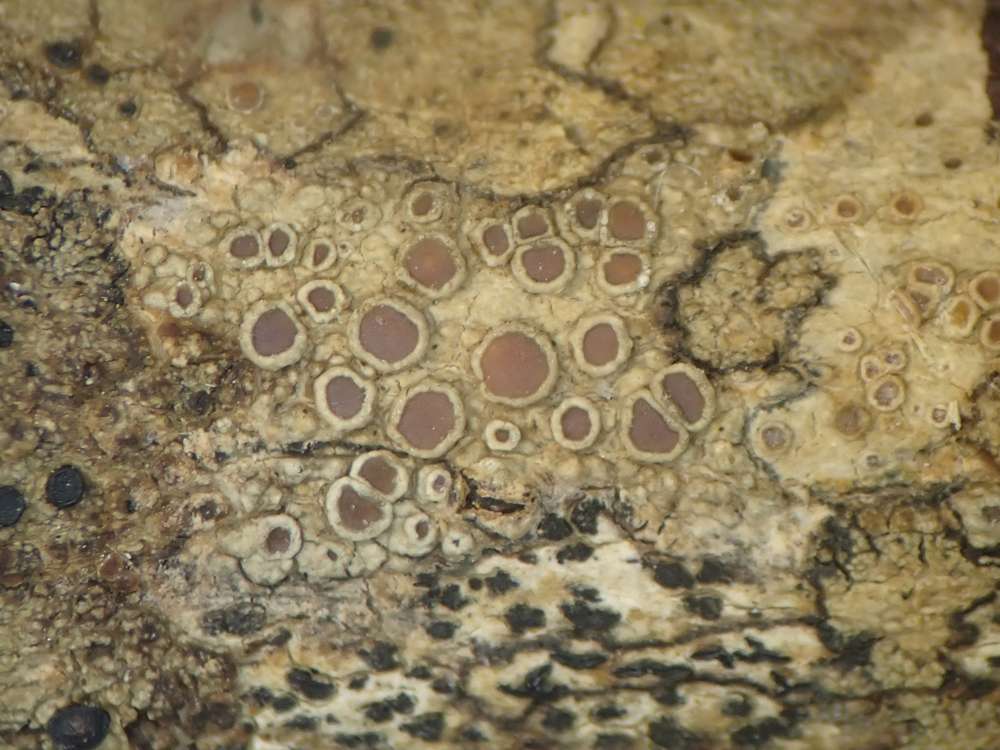
[attachment=3]w Lec 2 120419 009.jpg[/attachment] 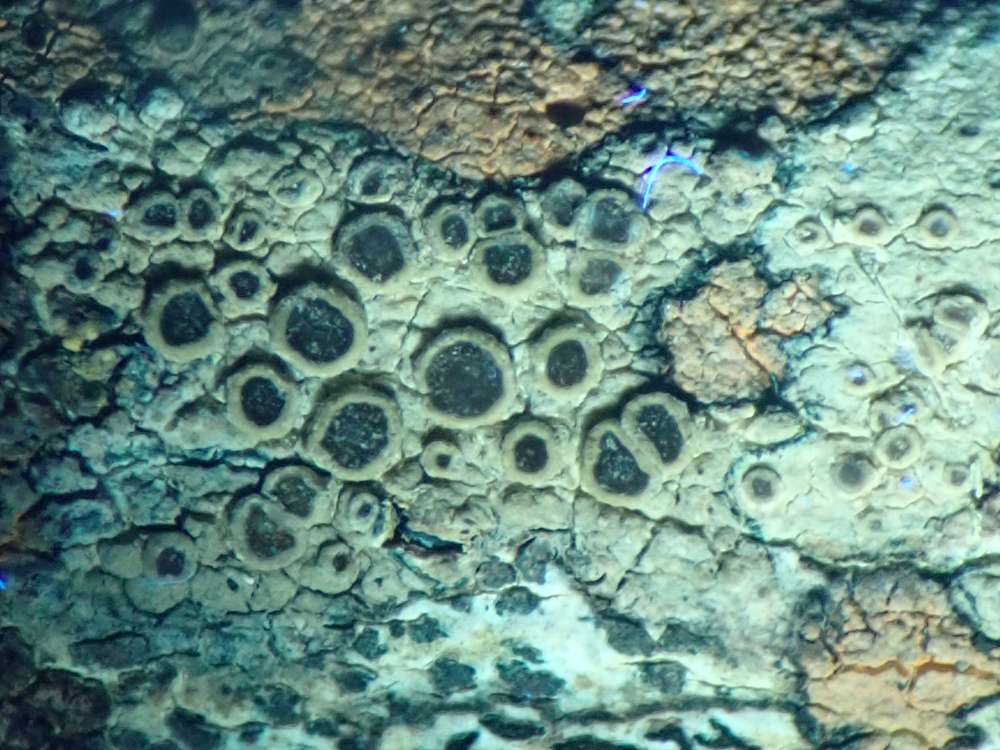
[attachment=2]w Lec 2 120419 010 UV.jpg[/attachment] 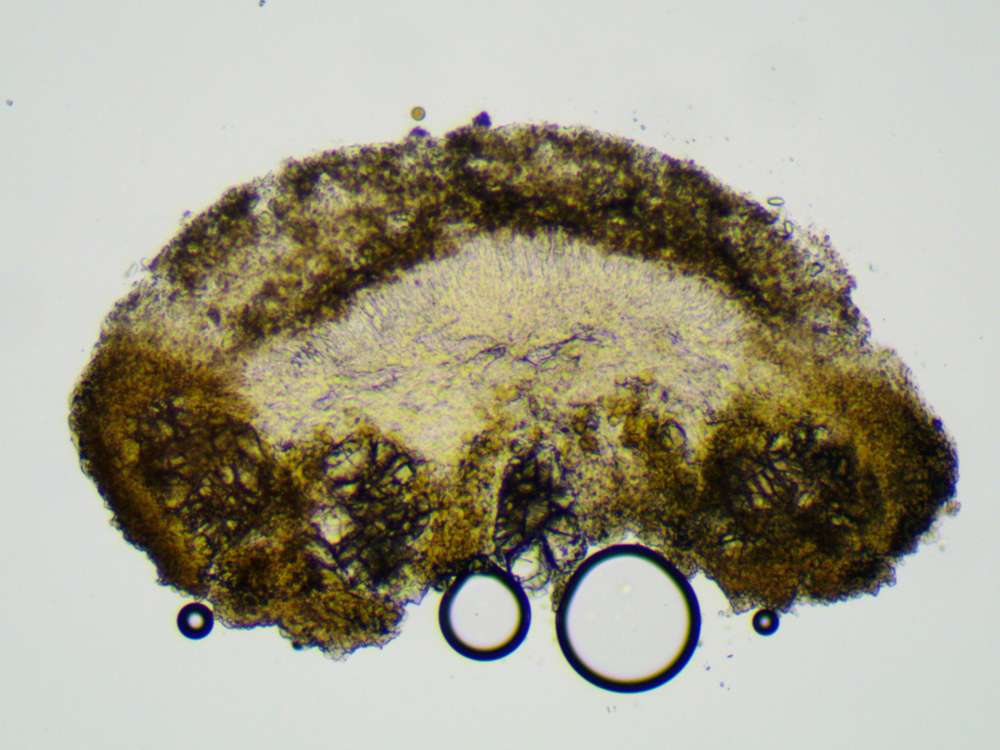
[attachment=1]w Lec 2 120419-3.jpg[/attachment] 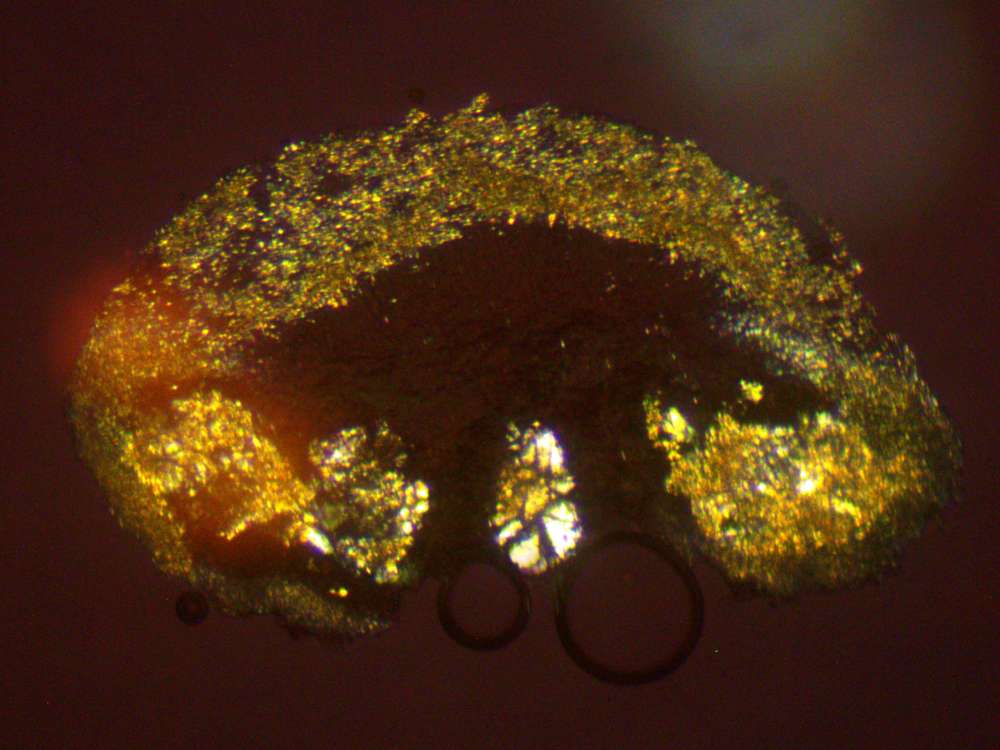
[attachment=0]w Lec 2 120419-3b.jpg[/attachment] January 26, 2026 at 3:10 pm #46848Jenny Looks good, I can see a blue-grey bloom on the disks in normal light. The UV photo looks to have a lot of white light in it but seems to be doing the right things. Best if I have a look.
Neil
January 26, 2026 at 3:16 pm #46849Thanks Neil, I should have said the whiter thallus (UV photo) with smaller apothecia on the right was L. albella. I’ve a few more to check and then I’ll send you any possibles
January 26, 2026 at 6:13 pm #46850Lecanora albellais a common associate in the New Forest, so promising too. Noted during this study that Lecanora albellahas a weak UV+ yellow reaction. I will check Glaucomaria carpineato see what that does. Neil
January 26, 2026 at 11:35 pm #46851Playing around with more Lecanora chlaroteras. lat. picked up today, I found a Lecanora chlaroteras. str. thallus that also had UV+ brown-orange fluorescence on its thallus. Looking up LGBI3, this species is described as having ±gangaleoidin. So I guess I had collected a gangaleoidin containing chemo-type. The disks were still pale brown and had no fluorescence: 
[attachment=1]2026-01-26-02.jpg[/attachment] 
[attachment=0]2026-01-26-03.jpg[/attachment]
Lecanora chlarotera s. str. with UV+ brown-orange fluorescence on its thallus, which presumably contains gangaleoidin.Neil
January 27, 2026 at 12:21 pm #46852Hi Neil – investigating more Irish Lecanora’s last night and I think this L. argentata (POL crystals, no granules) also seems to be showing a trace of gangaleoidin in the margins? 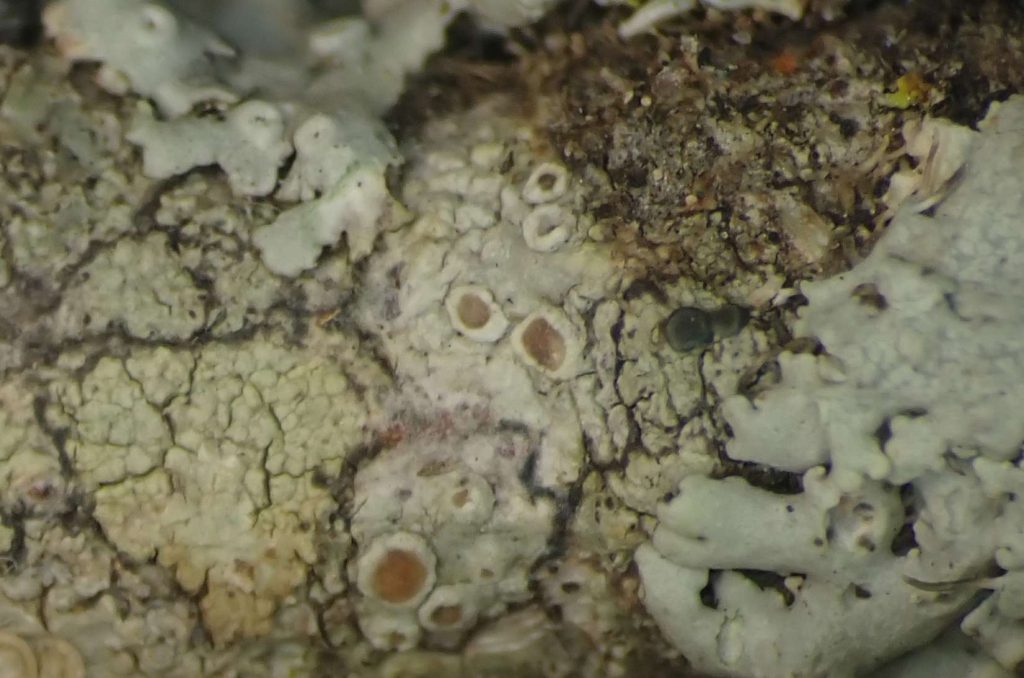
[attachment=1]Lecanora argentata 240828 013.jpg[/attachment] 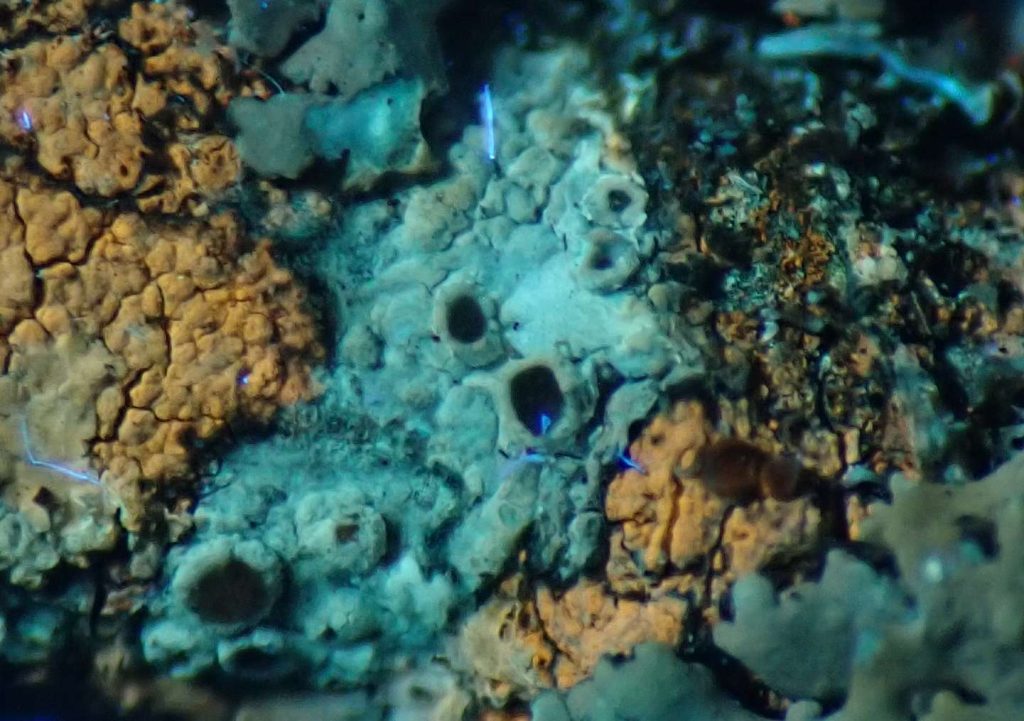
[attachment=0]Lecanora argentata 240828 019 UV.jpg[/attachment]
Lecanora argentataJanuary 27, 2026 at 3:22 pm #46853Jenny Yes that seems to be the minimum for
Lecanora argentata, which is always supposed to have gangaleoidin. The same twig that had the gangaleoidin containing Lecanora chlaroteras. str. also had a Lecanora argentatawith a much stronger UV+ reaction. All lacked any hint a UV+ blue-grey fluorescence on the disk. Neil
-
AuthorPosts



- You must be logged in to reply to this topic.