- This topic is empty.
-
AuthorPosts
-
October 16, 2025 at 12:59 pm #33098
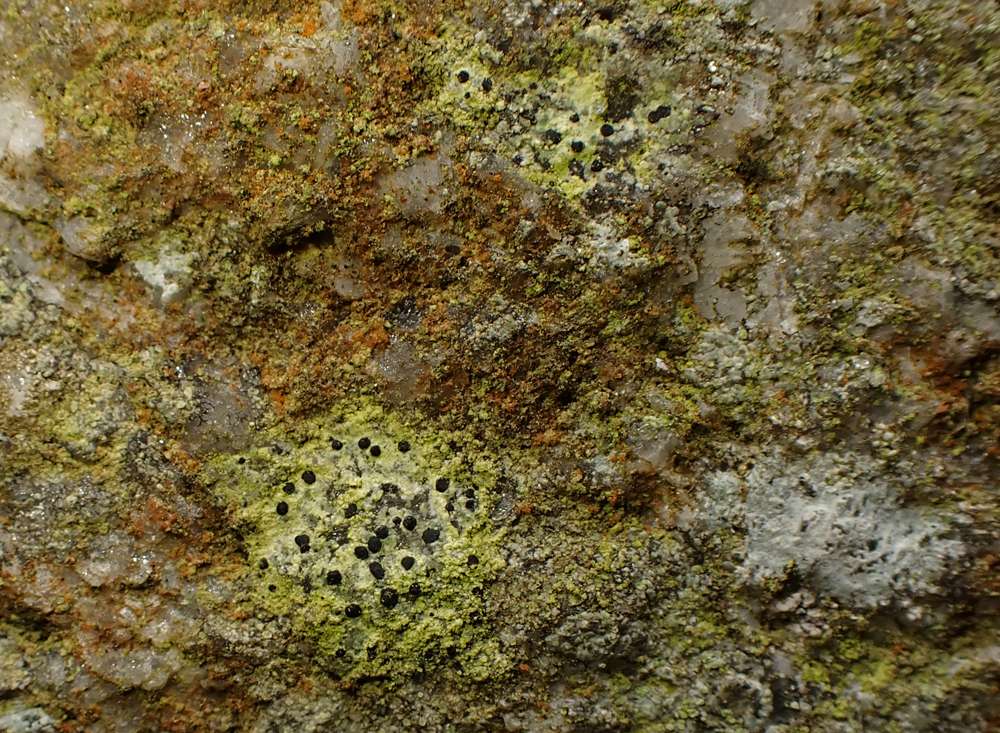
Dorset, in a fairly shaded graveyard on a limestone gravestone. The edge of the apothecium was K+ yellow and under the microscope the section was K+ brown, the asci 8-spored, spores 2-3 septate to sub-murifom, 18-24 x 10-12 µm.
The cracked, whitish thallus, apothecia with K+ yellow margins and the spores suggest Rhizocarpon umbilicatum – but the yellowish ?soredia is a problem! There is a general dusting of it over that area of stone but it does seem to be concentrated on the possible Rhizocarpon thallii
[attachment=6]w Rhizocarpon umbilicatum Q 251013 030.jpg[/attachment] 
[attachment=5]w Rhizocarpon umbilicatum Q 251013 031.jpg[/attachment] 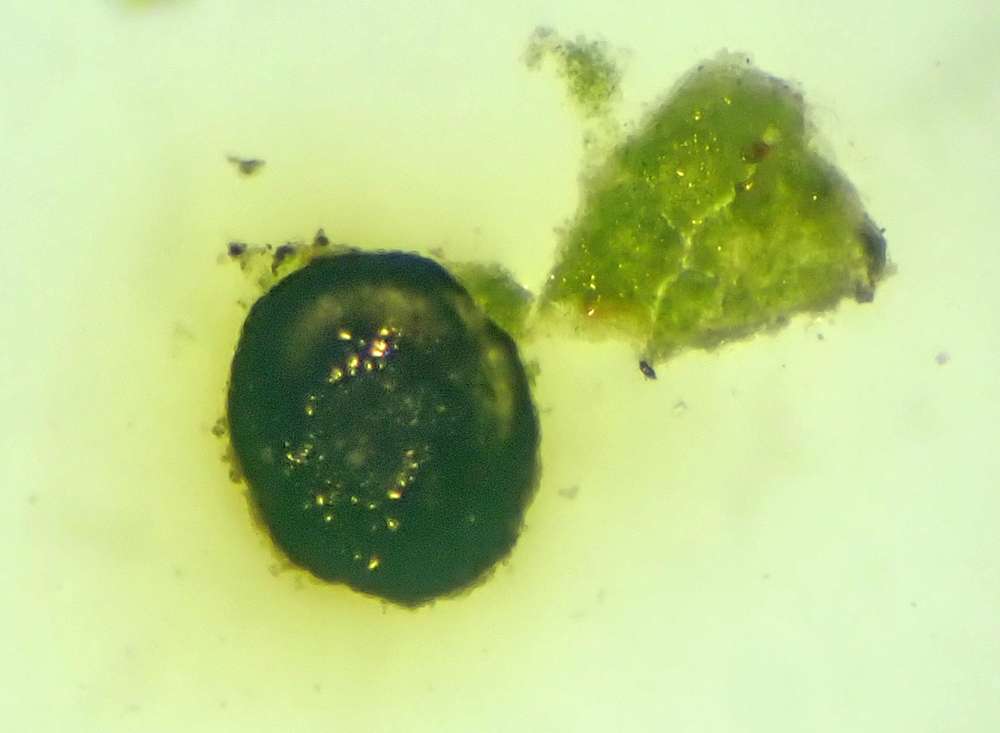
[attachment=4]w Rhizocarpon umbilicatum Q 251013 033.jpg[/attachment] 
[attachment=3]w Rhizocarpon umbilicatum Q 251013 036.jpg[/attachment] 
[attachment=2]w Rhizocarpon umbilicatum Q 251013 039.jpg[/attachment] 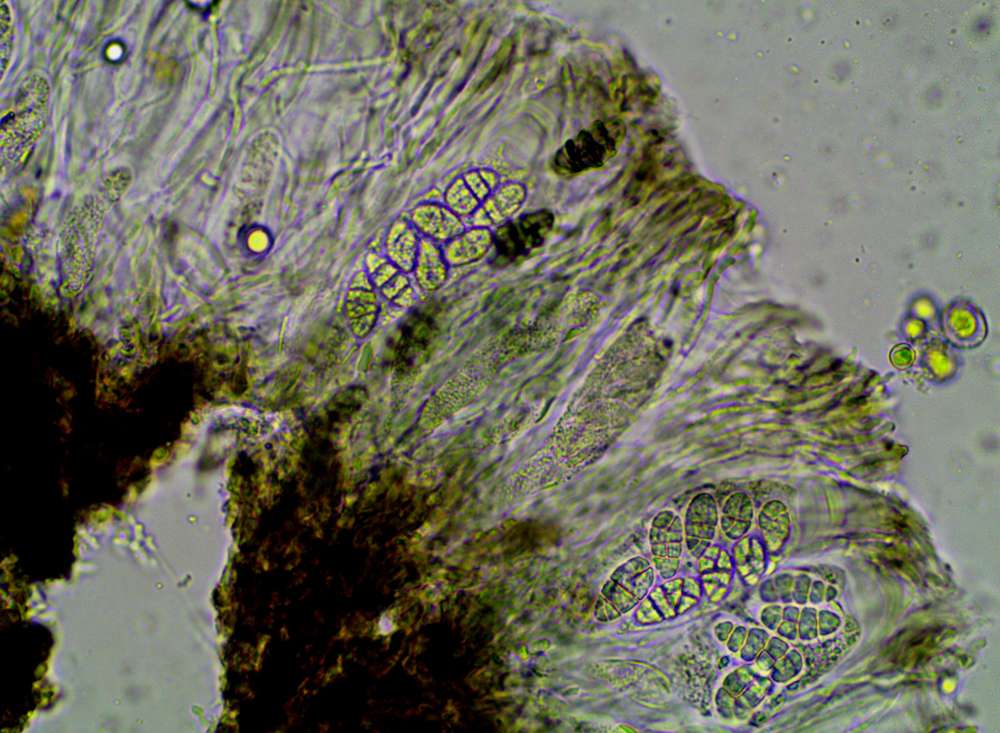
[attachment=1]w Rhizocarpon umbilicatum Q 251013-1.jpg[/attachment] 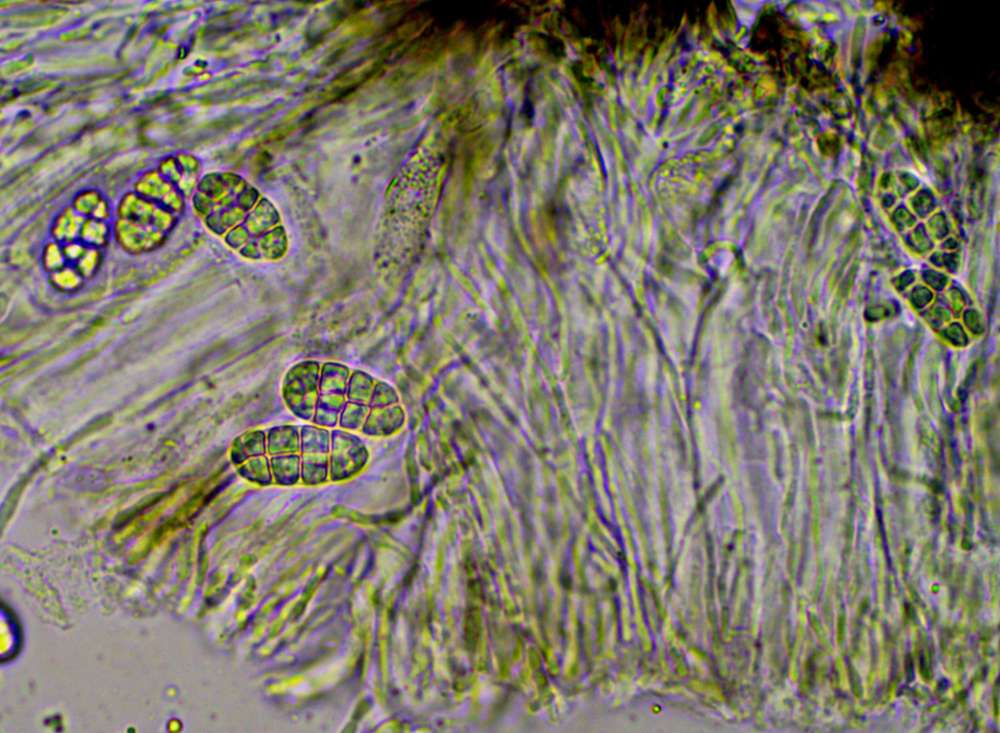
[attachment=0]w Rhizocarpon umbilicatum Q 251013-5.jpg[/attachment] October 16, 2025 at 4:26 pm #46707Looks more like Rehmia reductaaggr. to me (? R. postuma). Rehmia umbilicatahas a well-developed thallus and innate apothecia with a grey prinose margin. The limestone substrate is unusual, but I have seen this species on calcareous sandstone. I suspect the ‘soredia’ are just free-living algae. Note that the
Rh. reductumgroup is now recogonized as the distinct genus Rehmia. For this and other changes see: https://fuse-journal.org/images/Issues/FuseVol16Art12.pdf Alan
October 18, 2025 at 2:05 pm #46708Thank you for your reply Alan, and my apologies as having checked my notes and photographs again I think was mistaken in saying that the gravestone was limestone. Your suggestion of Rehmia postuma (Rhizocarpon postumum) is interesting – I’ll record it as R. reductum sens lat but add your comment in the notes
-
AuthorPosts


- You must be logged in to reply to this topic.