Forums › Forums › Fungi ID requests (post here if you aren’t sure what type of fungus you’ve found) › Mushrooms on My Lawn 4
- This topic is empty.
-
AuthorPosts
-
January 2, 2023 at 11:28 pm #32534
Good day! These specimens I found in my garden in a place with little lighting, at the time it was cold and very humid, the soil of the place contains a lot of fertilizer and other plants other than fruits like mangoes.
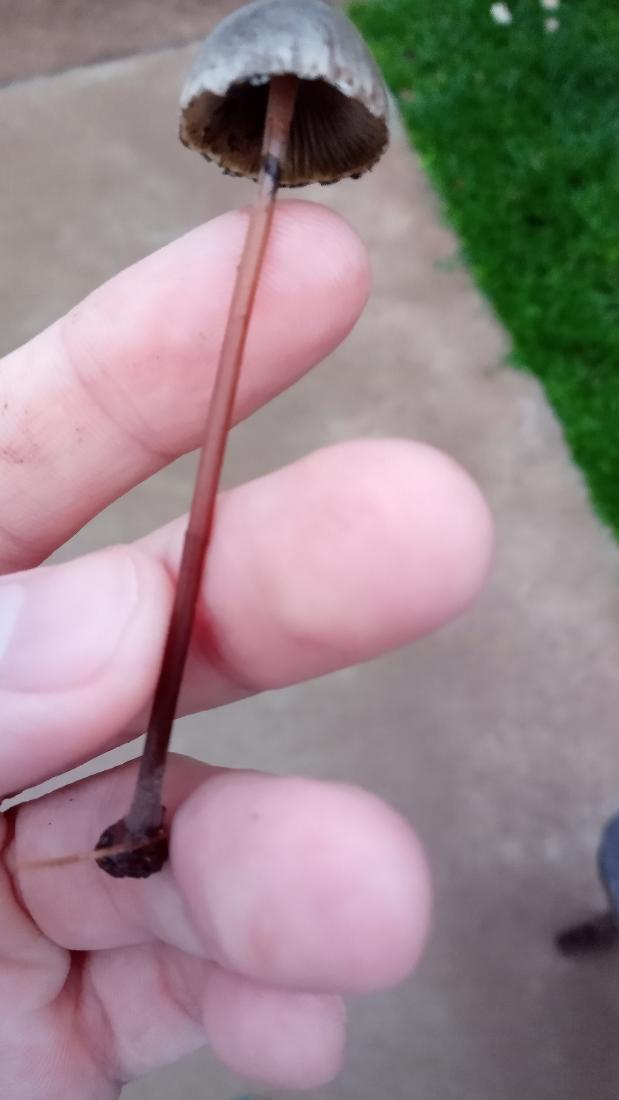
They have a very long stem compared to the cap and thin (I couldn’t identify if it’s fibrous or not), I didn’t notice the presence of smell in them, dark coloration and they were directly on the ground.
I found these specimens in Brazil, Southeast region and in summer
What identification would be of great value.
Thanks in advance. Pedroga

[attachment=6]IMG_20230102_190230_939.jpg[/attachment] 
[attachment=5]IMG_20230102_190413_990.jpg[/attachment] 
[attachment=4]IMG_20230102_190455_412.jpg[/attachment] 
[attachment=3]IMG_20230102_190917_955.jpg[/attachment] 
[attachment=2]IMG_20230102_190944_628.jpg[/attachment] 
[attachment=1]IMG_20230102_190947_781.jpg[/attachment] 
[attachment=0]IMG_20230102_190953_938.jpg[/attachment] January 4, 2023 at 5:36 pm #45239You might want to compare your collection here to Panaeolus papilionaceus. However, I see some taxomonic characteristics that point far from this name. January 5, 2023 at 2:58 am #45240Perhaps a Panaeolus, but Brazilian fungi are likely to be very different from those in Europe. I would seek out appropriate web forums. Not quite sure what “taxomonic” means – presumably “taxonomic” was intended; nevertheless the phrase “taxonomic characteristics” is meaningless – presumably “diagnostic characteristics” was intended . . . and if they “point out
farfrom this name” why suggest them? January 5, 2023 at 9:14 pm #45241It looks like it has a ring or ring-zone at least, and a very dark stem, which would rule out Panaeolus papilionaceus. However, it’s not a species I recognise and nothing in Fungi of Temperate Europe resembles it. I think it is most likely a Brazilian species. I tried to find a Brazilian mycological society but the only reference I could find was to the Latin American Mycolgical society with contact details from Chile. http://www.ima-mycology.org/society/member-mycological-organizations January 6, 2023 at 3:11 am #45242adampembs wrote:
It looks like it has a ring or ring-zone at least, and a very dark stem, which would rule out Panaeolus papilionaceus. However, it’s not a species I recognise and nothing in Fungi of Temperate Europe resembles it. I think it is most likely a Brazilian species. I tried to find a Brazilian mycological society but the only reference I could find was to the Latin American Mycolgical society with contact details from Chile.http://www.ima-mycology.org/society/member-mycological-organizations
In Brazil we have a lot of “mushroom culture” there is almost nothing about them, and mushrooms are everywhere… In my backyard alone I found a bunch that I haven’t even put on the website yet.
I am thinking of going to my farm where there is a very large ATLANTIC FOREST reserve and looking for fungi and bringing them to the site, I think you will be able to identify them or at least serve as a curiosity
January 6, 2023 at 8:29 am #45243Hi, I remembered a talk on Youtube from the British Mycological Society about Columbian Fungi last year. see here
https://www.youtube.com/watch?v=4EhV6nTPQAs&list=PLryjBXhn7wUZR7-fnf3T7IKva_wCFI4HQ&index=13 It may be of some help to you
Gary
January 21, 2023 at 9:19 am #45244This might be a good connection for Brazilian fungi. -
AuthorPosts




- You must be logged in to reply to this topic.