- This topic is empty.
-
AuthorPosts
-
February 3, 2022 at 4:00 pm #32303
Some hopefully rational thoughts from a beginner – Undecided on this one as Dobson’s has the latter with a pale under-surface while the former is listed as pale brown. I have off-white which favours the latter. The isidia to me seem coralloid and much branched which favours the former. No reaction to K or C. Checked online at some of the good sites and on balance their photographs would lean me towards the latter again. Tried really hard to determine if the isidia was hollow or not but at the magnification on my tiny digital microscope could not be certain although would say slightly flat in cross section and if I had to guess it would be solid white. To conclude I would say the isidia shape is the best determining factor which says elegantula.
Interested to hear any other views.
February 3, 2022 at 8:45 pm #44650I have never taken much notice of the underside of Melanohaleaspecies. Perhaps I should investigate one day but I suspect the isidia provide better diagnostic characteristics than trying to judge the darkness of the underside. I dug out a specimen each of this pair and have attempted to take some close-up shots to illustrate the differences of the isidia.
First we will look at
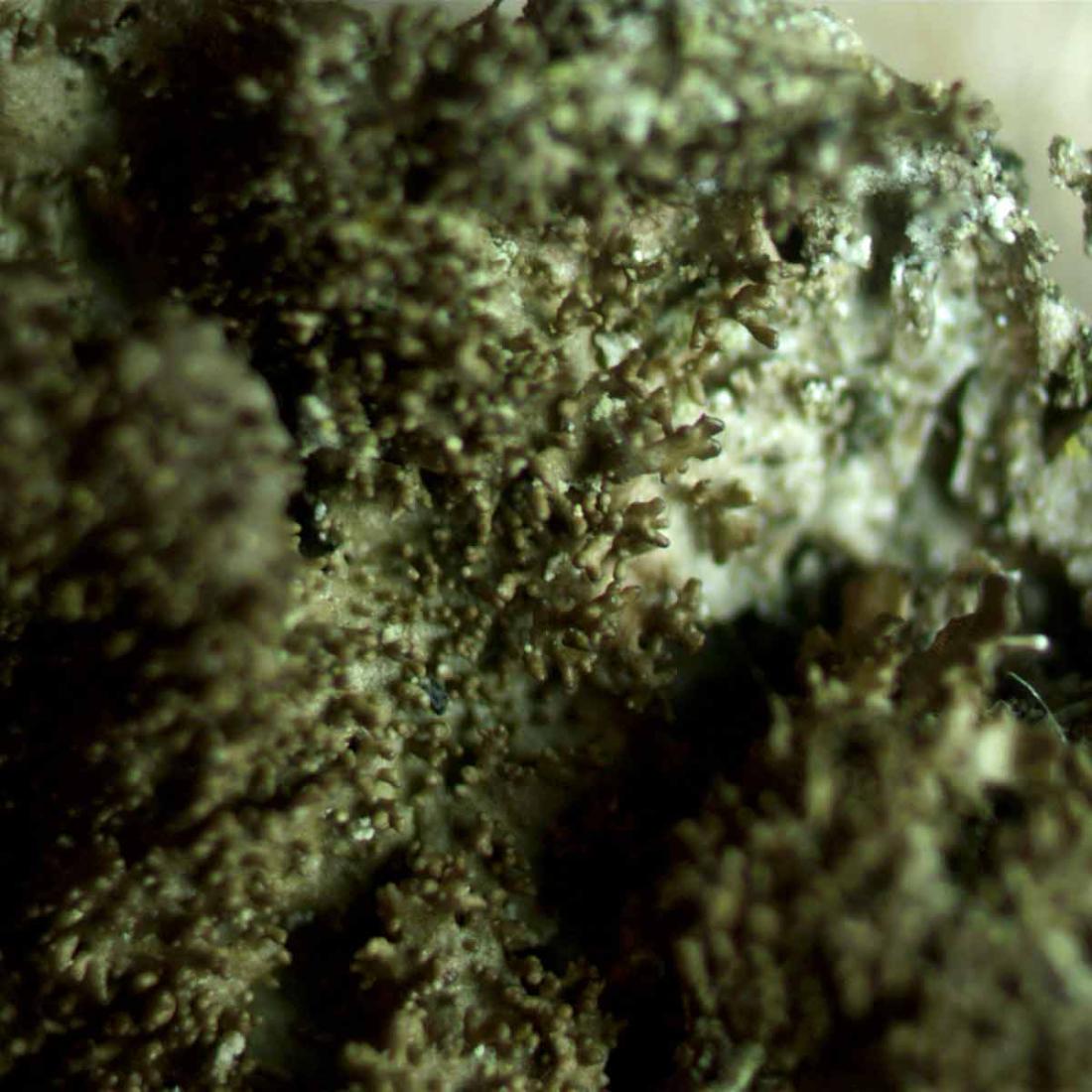
M. elegantula. The isidia develop first into mainly cylindrical pegs, then start to become coralloid (and may eventually become somewhat flattened). 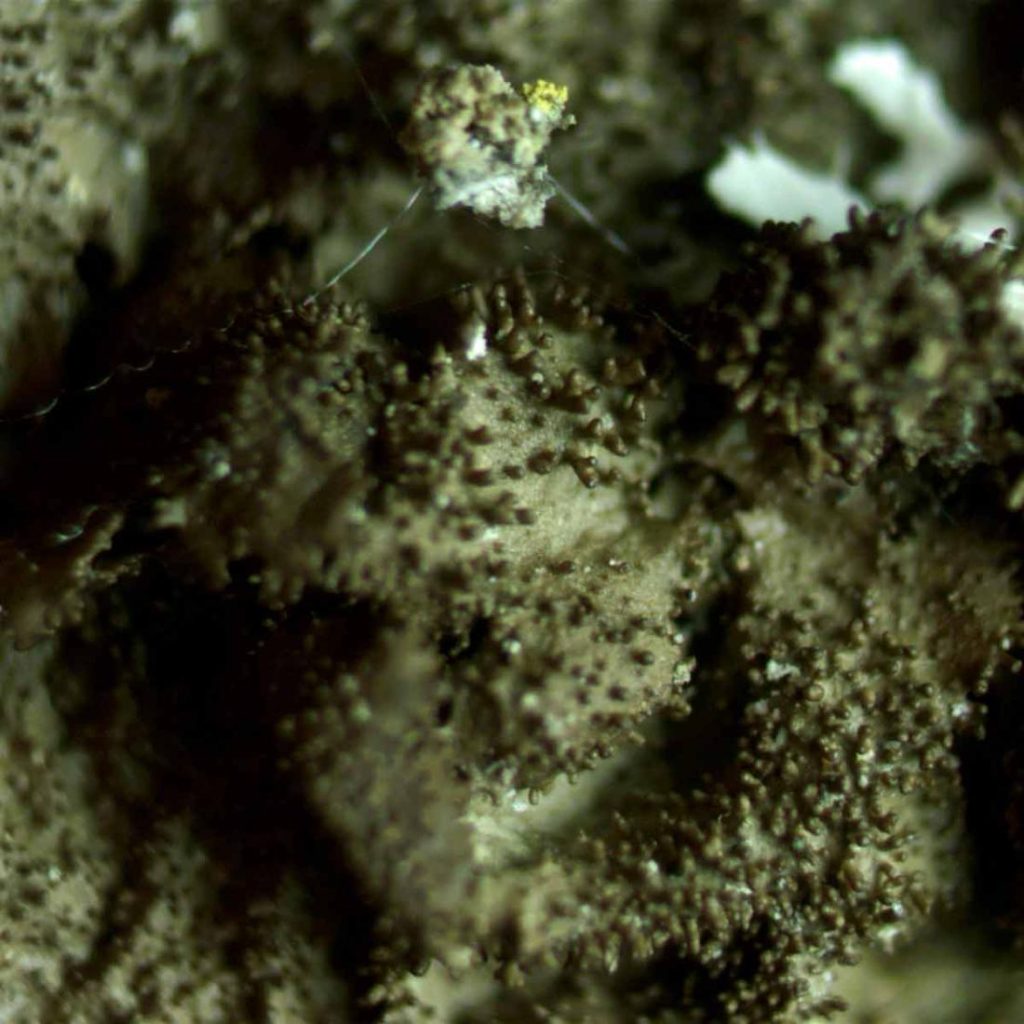
[attachment=7]elegant2.jpg[/attachment] 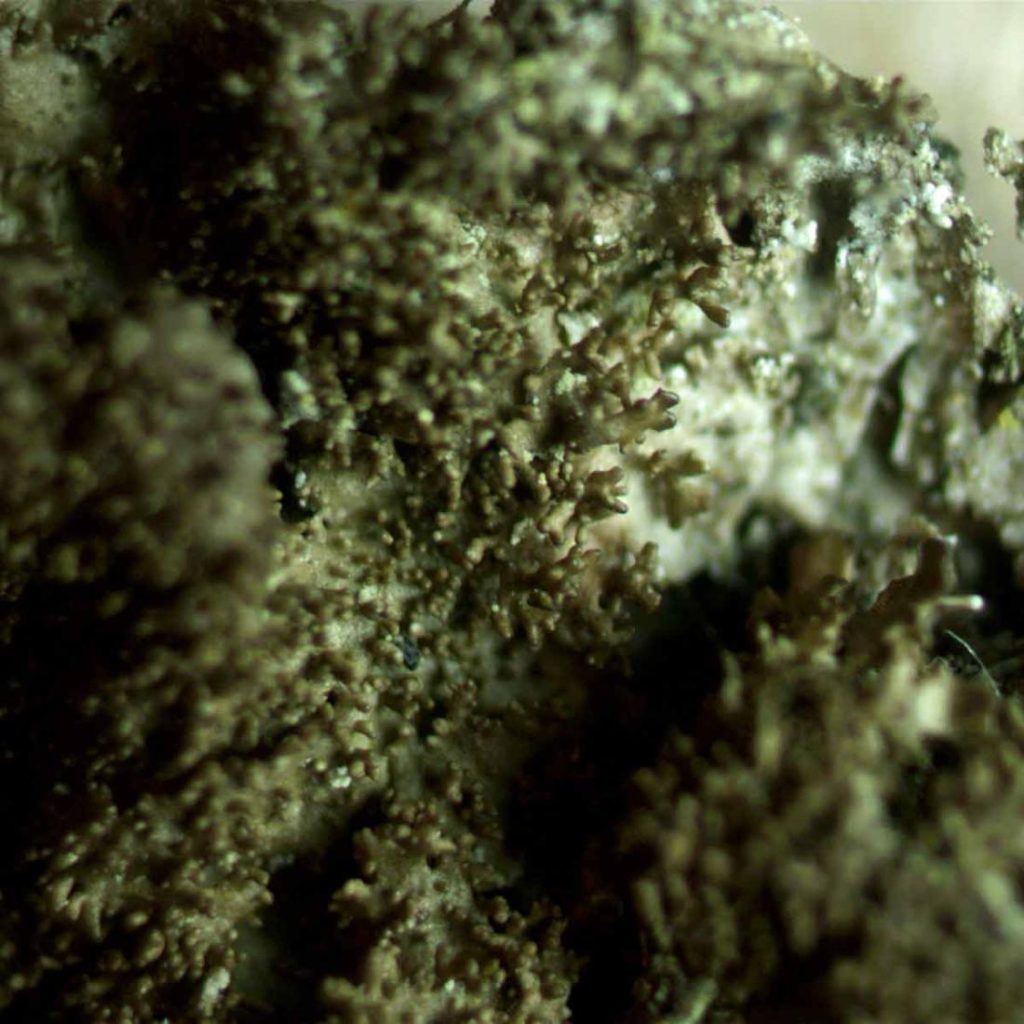
[attachment=6]elegant3.jpg[/attachment]
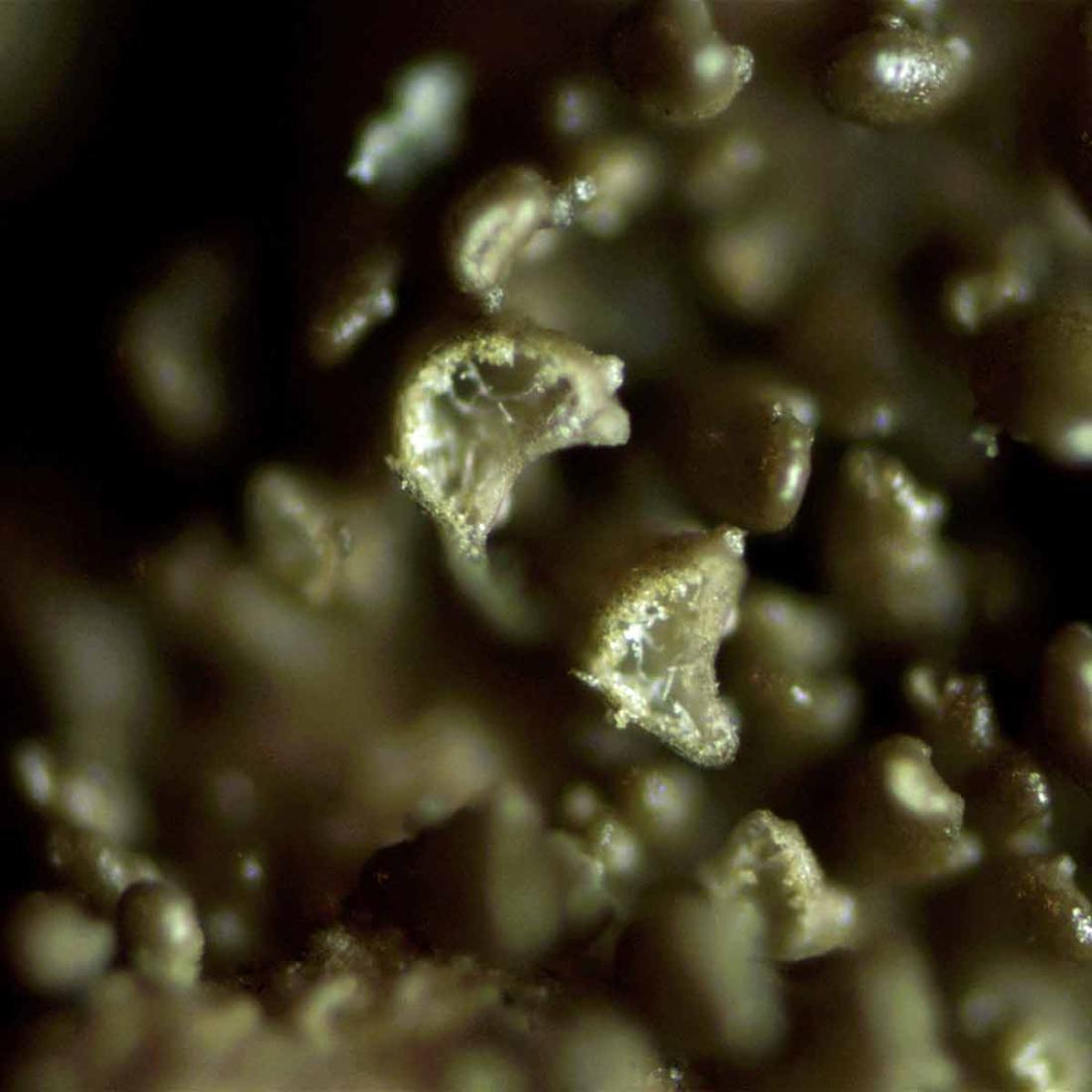
Looking at an isidium that has been sliced with a razor in extreme close-up, we see that the tissue inside is rather loose but nevertheless there are hyphae which form a continuous tissue across the centre.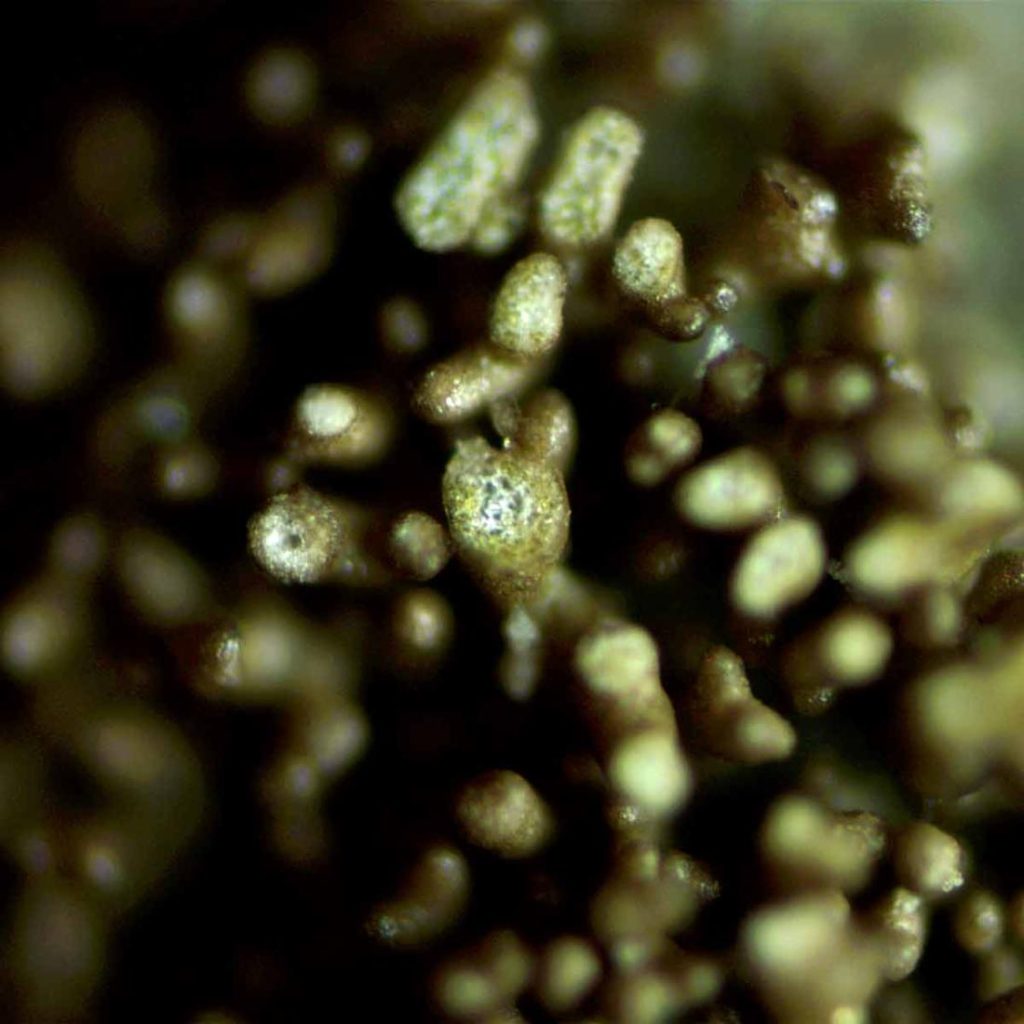
[attachment=5]elegant1.jpg[/attachment] Now to look at
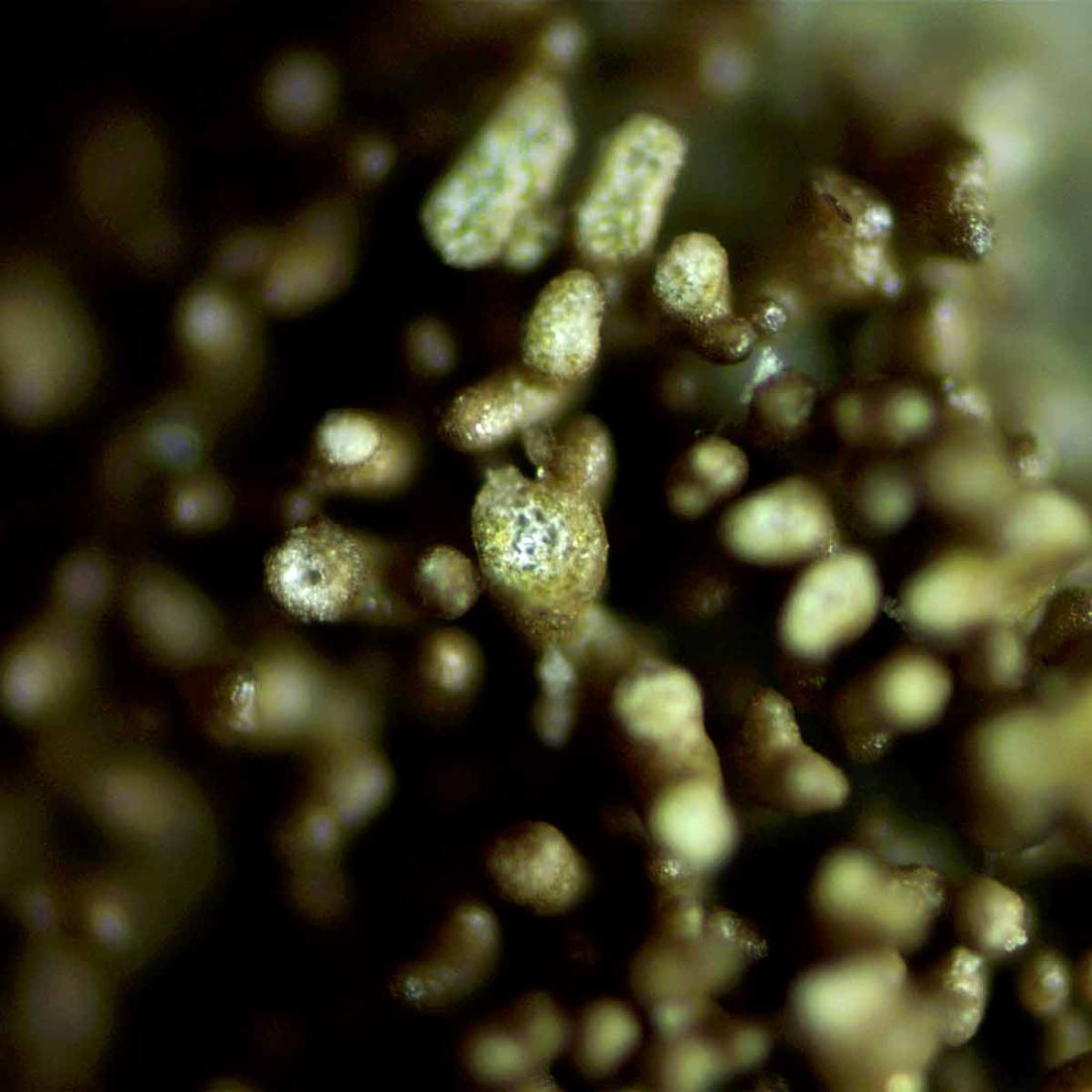
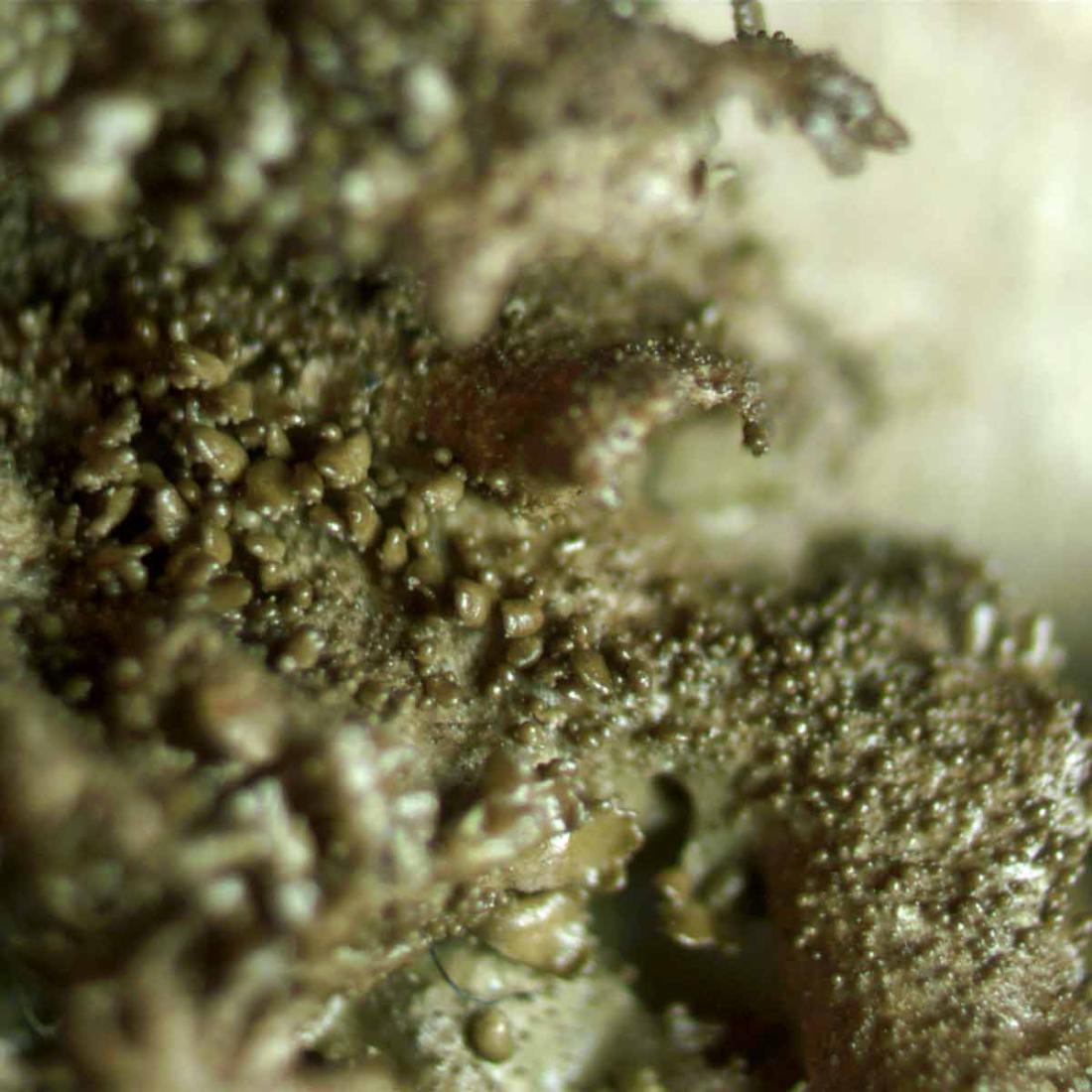
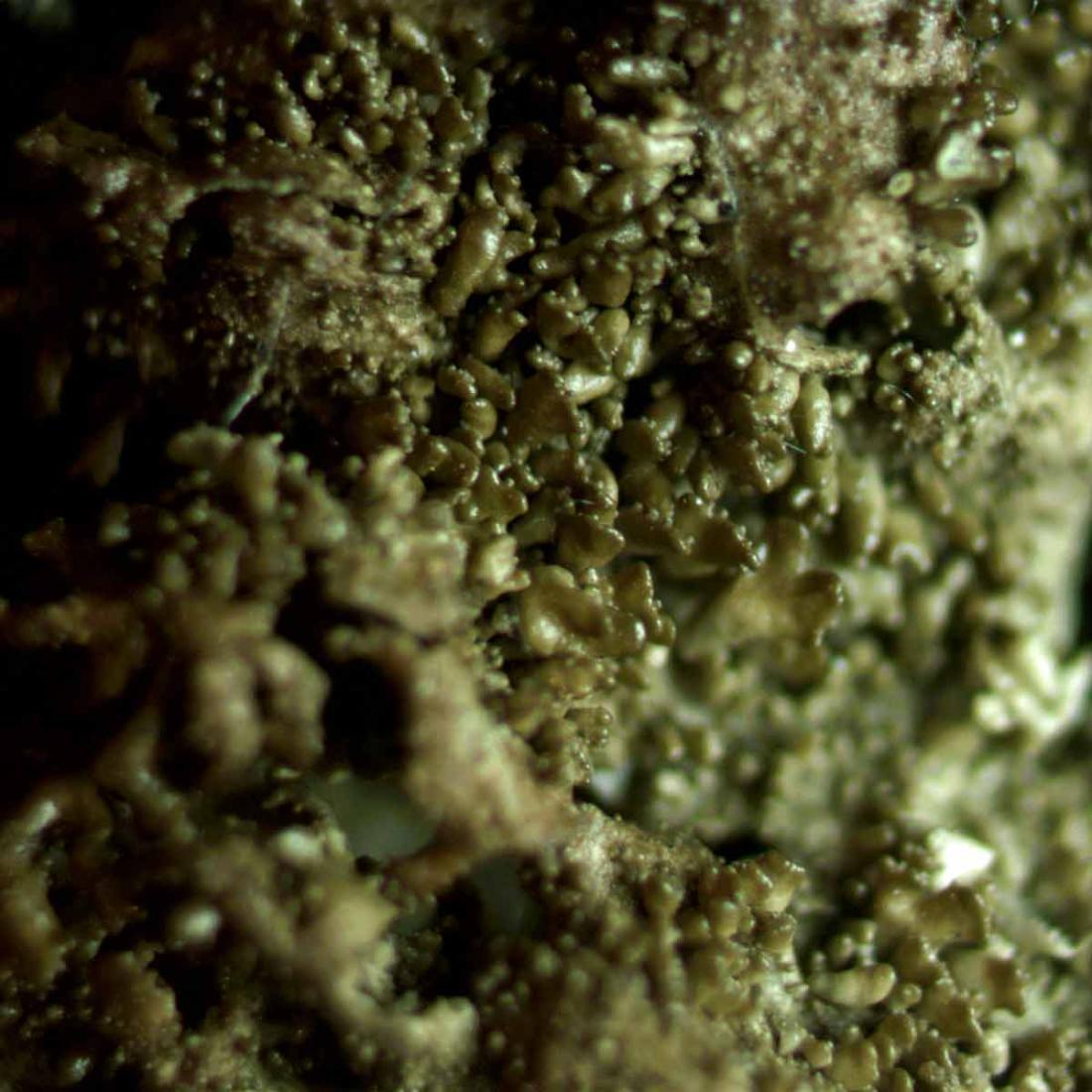
M. exasperatula. In this case the isidia soon take on a swollen appearance, becoming like partially inflated flattened balloons. They have a tendency to look as if they are flopping over in places, leaning against each other. They have less of a tendency to become intricately coralloid. 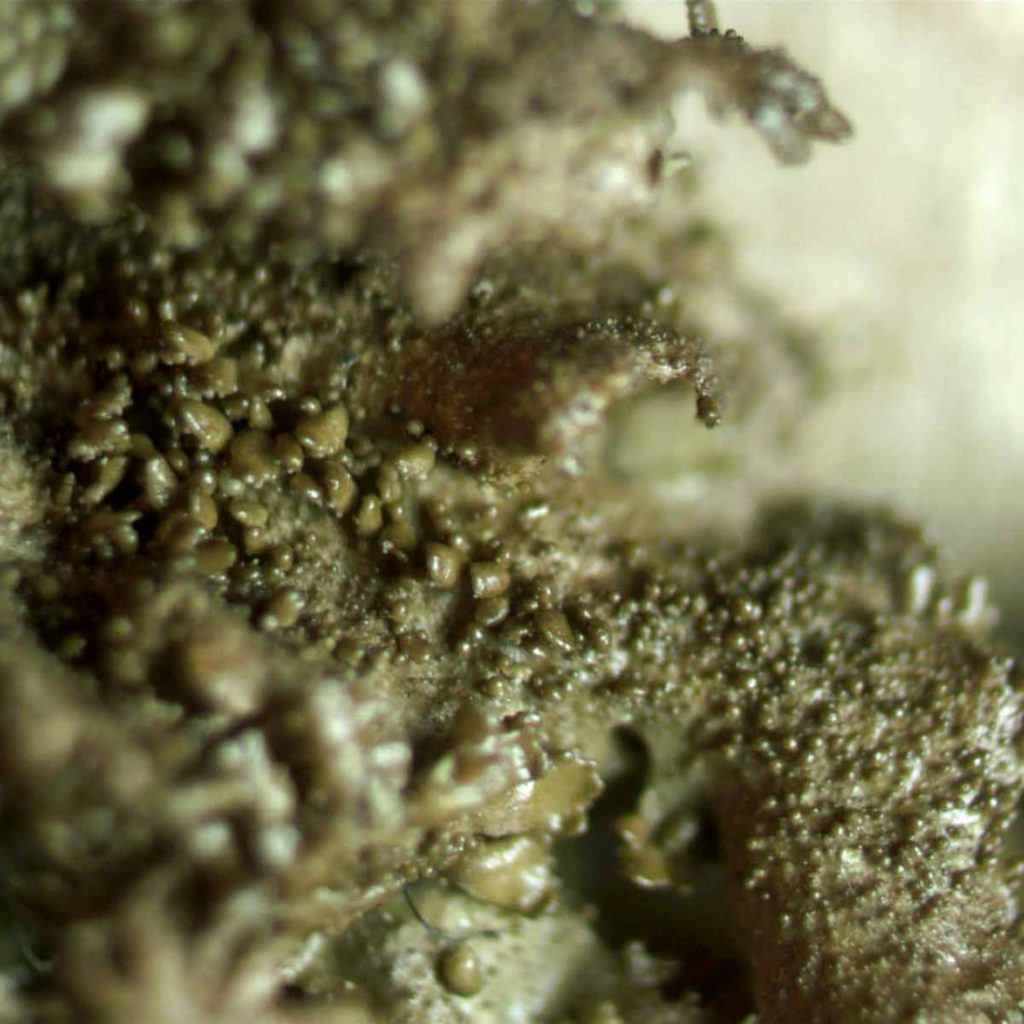
[attachment=4]exasp5.jpg[/attachment] 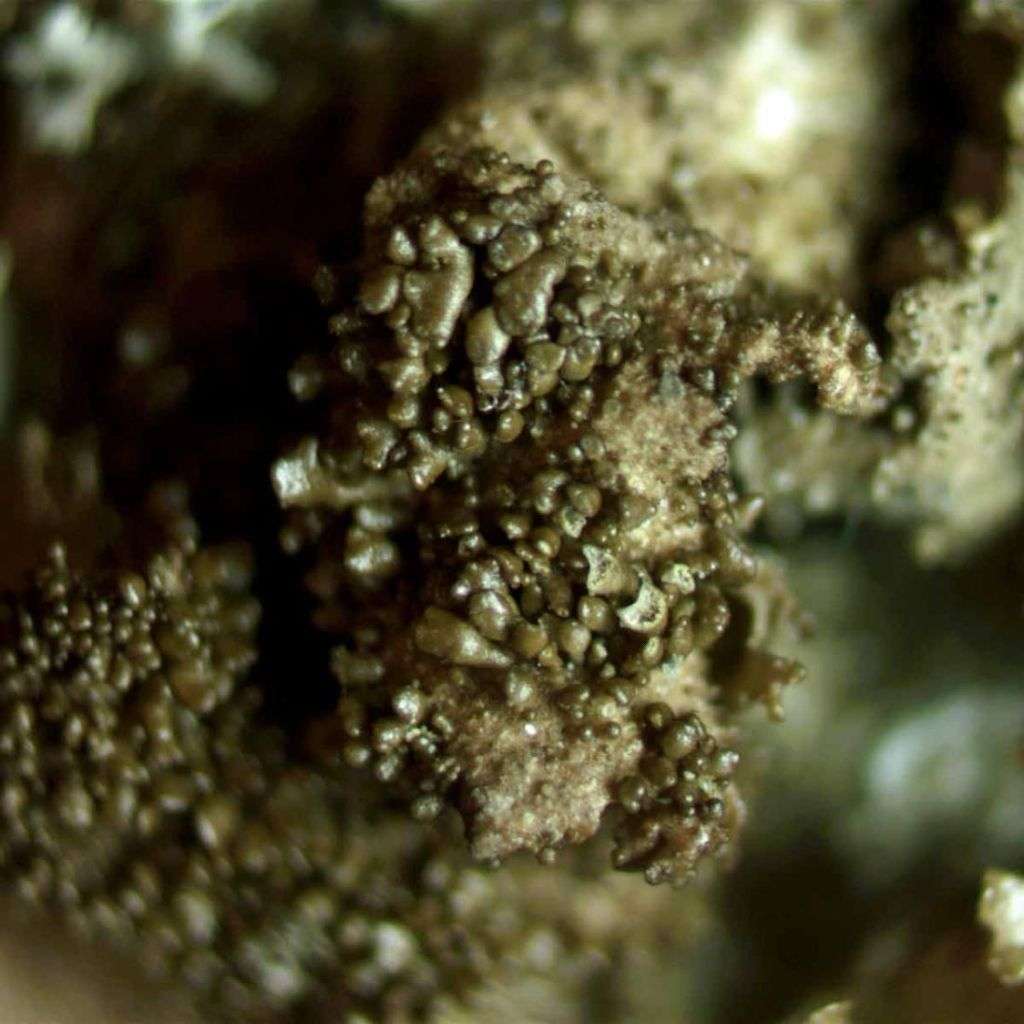
[attachment=3]exasp4.jpg[/attachment] 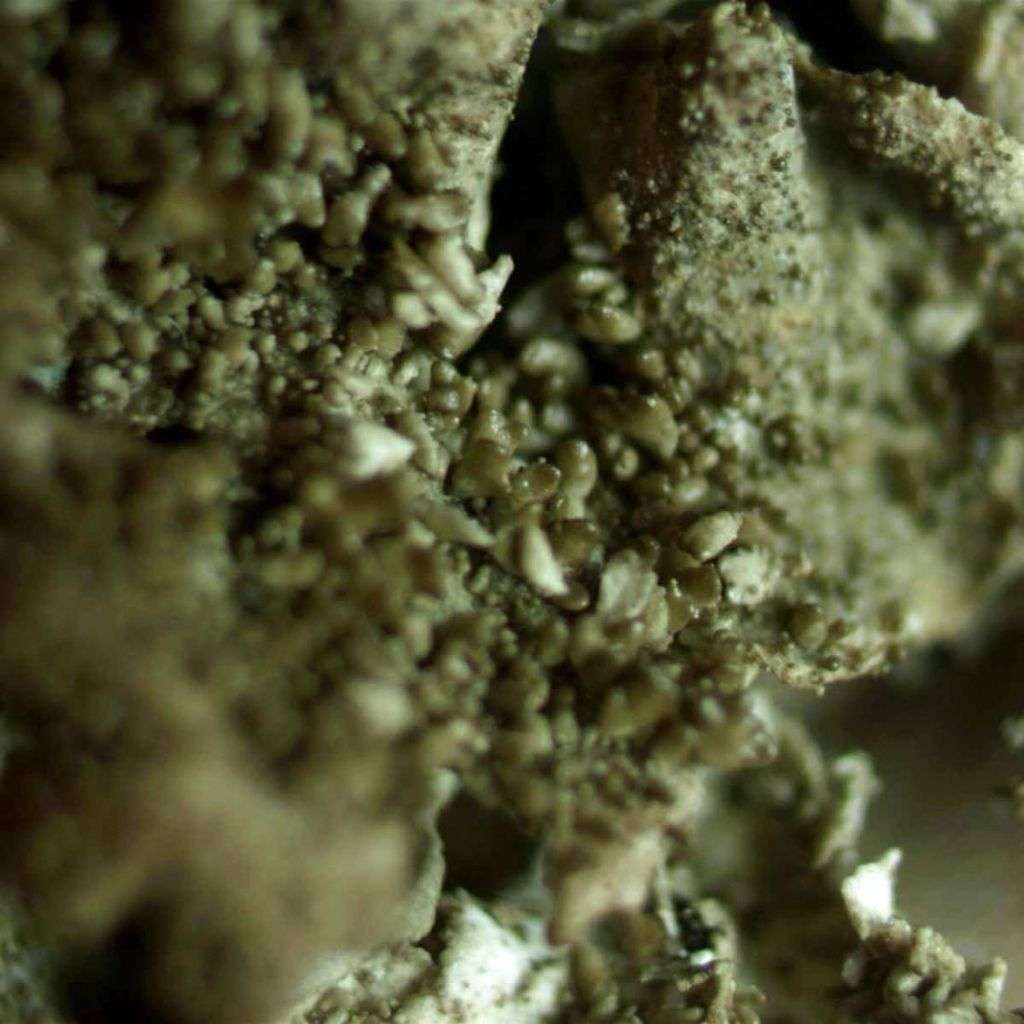
[attachment=2]exasp3.jpg[/attachment] 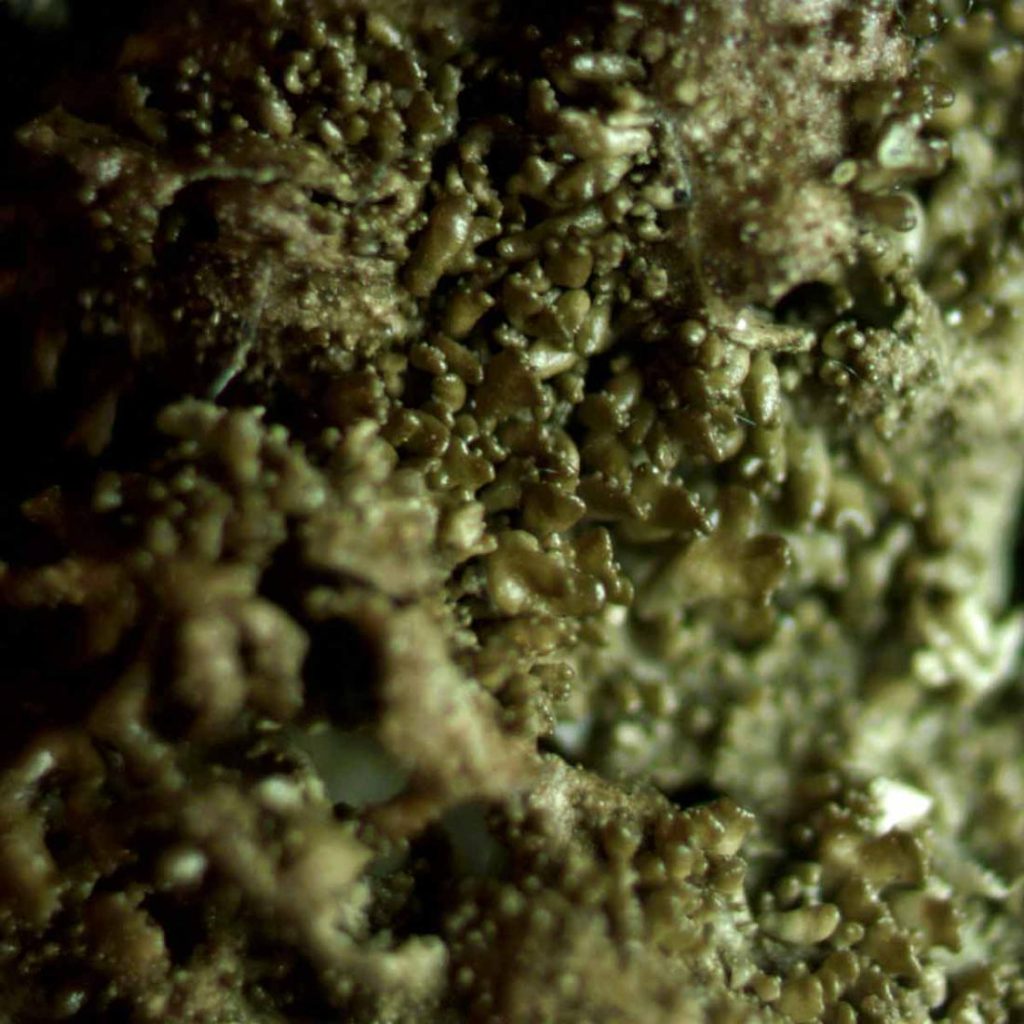
[attachment=1]exasp2.jpg[/attachment] Now to look at isidia that have been sliced. The isidia are seen to be truly hollow, with a central void that is not really spanned by anything that would be interpreted as continuous tissue.
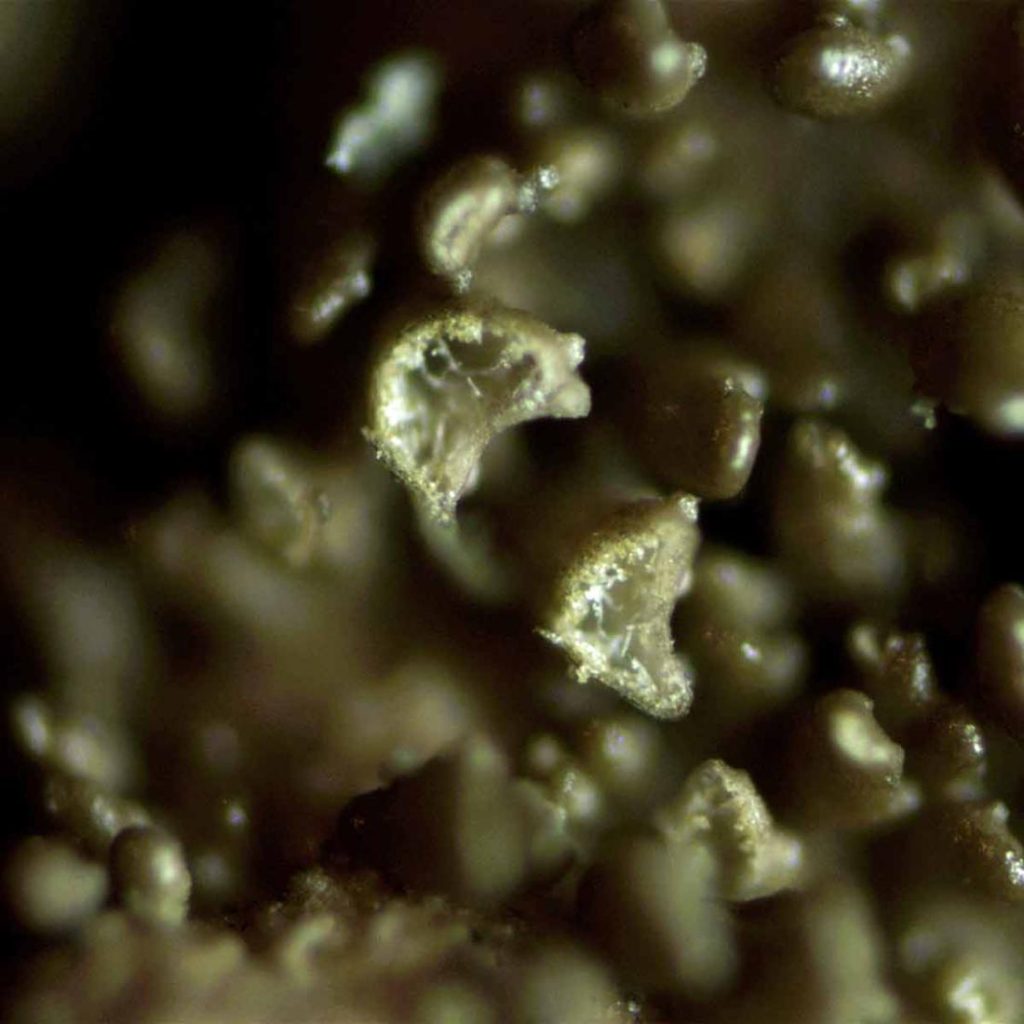
[attachment=0]exasp1.jpg[/attachment] I hope these will help in your deliberations and I think you will decide that the identity of your lichen is
M. elegantula. I am taking on trust that we really are dealing with a species of Melanohalea(it looks right) and that you have satisfied yourself that the medulla is thin and wispy (compared with Melanelixiaspp.) and that you have used strong fresh C to test the medulla. Mark
February 4, 2022 at 9:29 am #44651I definitely agree with Mark about the colour undersides of these lichens not being very helpful (and I would extend this to Parmelia s. lat.), in most species the top side characters are easier to understand so no need to peer underneath. Neil
February 4, 2022 at 11:55 am #44652I agree with Neil about the difficulty of interpreting the undersides of parmelioids. Of the genera that I encounter frequently it is perhaps in Puncteliathat the darkness of the undersides is most useful but even here there is scope for being led astray. LGBI2 and other sources claim that the underside of P. subrudectais ‘pale brown or partly white’. In reality, there is often a zone of very dark brown verging on black beneath the innermost parts of the marginal lobes. If we study the gradation of colour from margin to interior, we find in P. subrudectathat it often goes from mid brown to dark, almost blackish brown but then becomes paler again in central parts. By contrast P. borrerigoes from mid brown near the margin and then rapidly darkens without becoming paler again, becoming jet black underneath and remaining so in central parts. Many people merely lift up an outer lobe of P. subrudecta, see that it is becoming blackish underneath and mistakenly assume P. borreri. I compiled a twitter thread which hopefully illustrates some of the most important points to consider when attempting to identify
Puncteliaspecies. https://twitter.com/obfuscans3/status/1210862789666988034 I find the pruinosity of the upper surface of
P. borrerito be a good and reliable character (but like all parmelioid characters best considered in conjunction with all other reliable characters available). 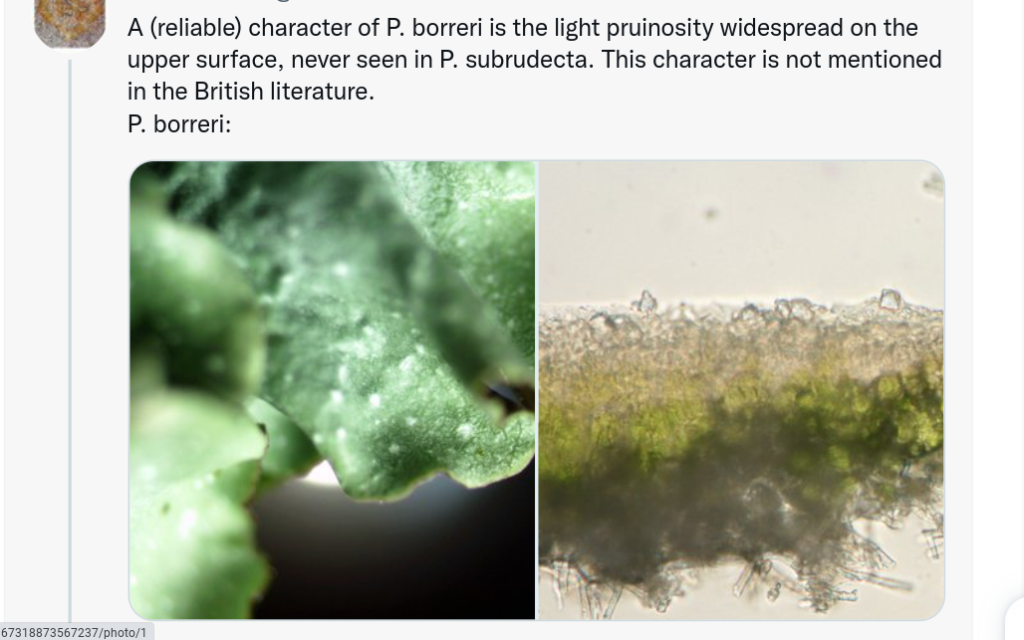
[attachment=3]Screenshot 2022-02-04 at 11.37.32.png[/attachment] The pruinosity of
P. borreriis widespread on the upper surface and is not to be confused with the very restricted but usefully diagnostic pruina on the lobe margins of P. jeckeri. 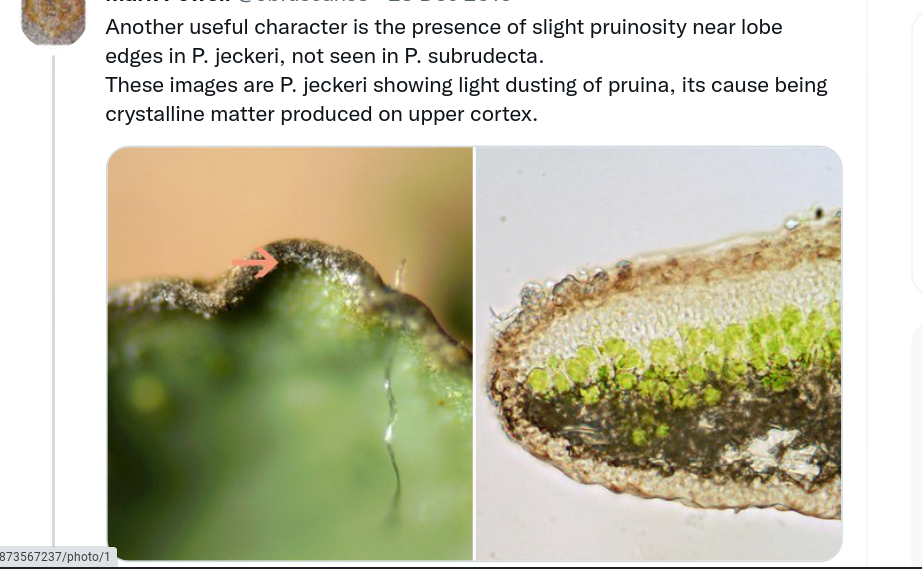
[attachment=2]Screenshot 2022-02-04 at 11.41.40.png[/attachment] Another word of warning about
P. subrudectaconcerns relatively young thalli. These may have developed the dark zone but, even in their immature central parts, not yet become paler brown. Hence some people think they are being diligent in looking at the centre of the thallus but still misled by the darkness they find there. Some people have tried to distinguish between
P. borreriand P. subrudectaon the supposed difference in tone of red given by gyrophoric and lecanoric acids with C. My experiments with specimens of each, tested side by side, indicate to me that any such difference cannot be reliably interpreted. 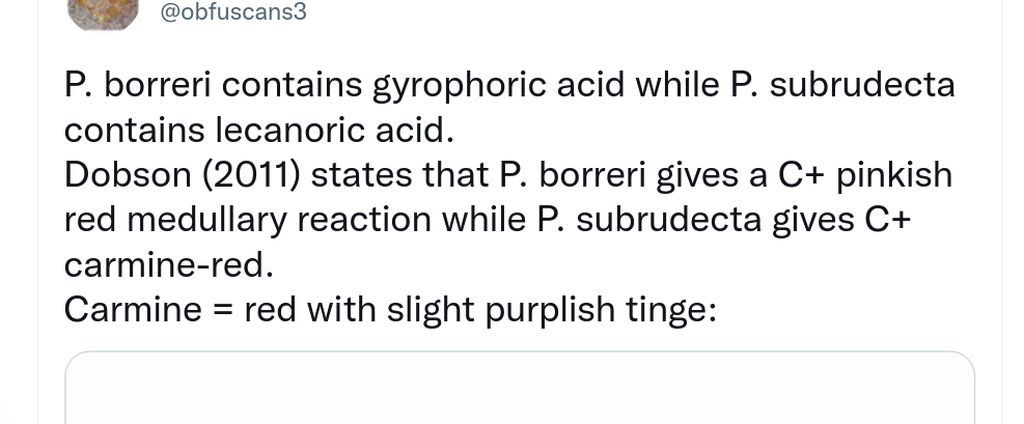
[attachment=1]Screenshot 2022-02-04 at 11.46.28.png[/attachment] [attachment=0]Screenshot 2022-02-04 at 11.46.28.png[/attachment] Sorry to divert the subject of this post to
Punctelia; it is intended to continue the theme that interpreting the underside of parmelioids need real care. Mark
February 4, 2022 at 8:27 pm #44653Mark many thanks for your help and in particular for doing the isidia cross section of the two. I am now certain the isidia are solid and the white medulla is thin and whispy. The font of knowledge given in replies to my posts is impressive and make looking at lichens much more interesting. One of my common sayings to new graduates was okay now you have your degree it not the end but the start as you will never stop learning. Substitute Dobsons for the degree and you get my drift. Will now add this to my BLS spreadsheet. Lastly noticed your post on P.orbicularis and had already put one last month into my BLS spreadsheet but also had noted that I could not get a K+ yellow reaction on the medulla.
February 4, 2022 at 8:34 pm #44654Mark No a very useful digression into
Punctelia, I was aware when I wrote my last post, that Punctelia subrudectas. str./ Punctelia borreriwas one split where the underside did matter but was still confusing. I will have a good look at both in the light of your really useful observations. Neil
-
AuthorPosts




- You must be logged in to reply to this topic.