Forums › Forums › Fungi ID requests (post here if you aren’t sure what type of fungus you’ve found) › Looks like a viscid waxcap, but wrong spores
- This topic is empty.
-
AuthorPosts
-
September 12, 2015 at 4:55 pm #29730
Found on a road verge near Oak. Birch on the opposite side of the road. Has the impression of a large, viscid waxcap but the spores look wrong? Spore size: 7.7-9.1 x 6.9-8.3µm 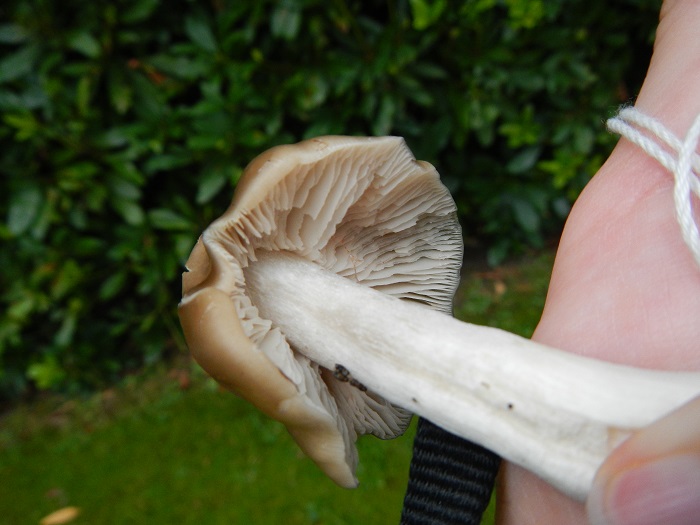
[attachment=2]DSCN8603.jpg[/attachment] 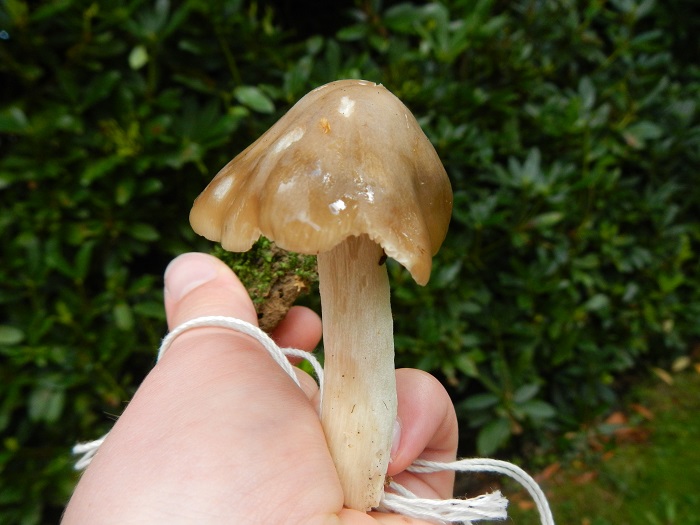
[attachment=1]DSCN8602.jpg[/attachment] 
[attachment=0]Site001 – Viscid Grey Waxcap-like fungus – Spores001 – unmeasured.jpg[/attachment] September 12, 2015 at 5:19 pm #36296Jimmy, these are Entoloma spores. Did you read the message I sent you where angular 5-7 sided spores are typical of Entoloma? As for which species, there is a lot of work to do unless it’s one of the easy ones

like perhaps E.conferendum (but I don’t think that is viscid..)
September 12, 2015 at 5:25 pm #36297Quote:Did you read the message I sent you where angular 5-7 sided spores are typical of Entoloma?
I did, but I didn’t think this looked like an Entoloma. I know they can vary in size, but I didn’t think they could vary in shape this much! What’s the work? September 12, 2015 at 5:33 pm #36298jimmymac2 wrote:Quote:
Did you read the message I sent you where angular 5-7 sided spores are typical of Entoloma?
I did, but I didn’t think this looked like an Entoloma. I know they can vary in size, but I didn’t think they could vary in shape this much! What’s the work?They can vary enormously. Spores are your best friends! Next, I would check the cheilocystidia. Was it definitely sticky?
Look at the photo at
http://www.entoloma.nl/html/engels.html to see the variation in EntolomasSeptember 12, 2015 at 6:14 pm #36299jimmymac2 wrote:Quote:Did you read the message I sent you where angular 5-7 sided spores are typical of Entoloma?
I did, but I didn’t think this looked like an Entoloma. I know they can vary in size, but I didn’t think they could vary in shape this much! What’s the work?There are small ones that look like Mycenas, fleshy bracket ones, tall ones with medium sized caps and robust ones. Look up Entoloma bloxamii and E. sinuatum for example.
That isn’t Entoloma conferendum, it’s too robust. Lovely looking fungus.
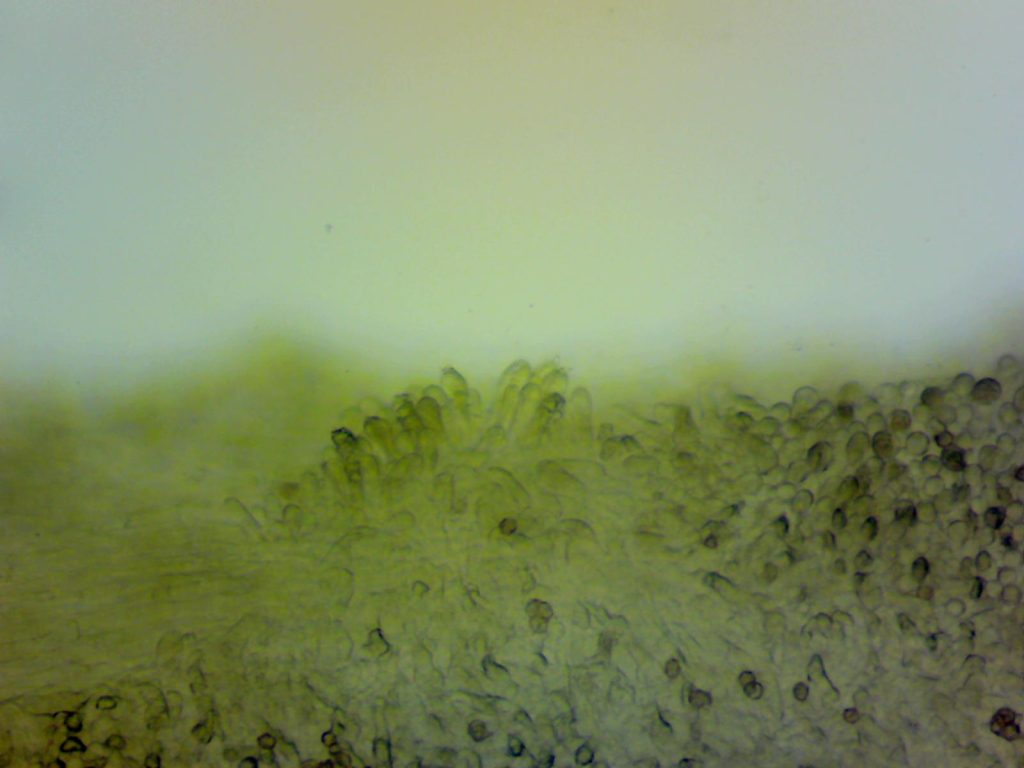
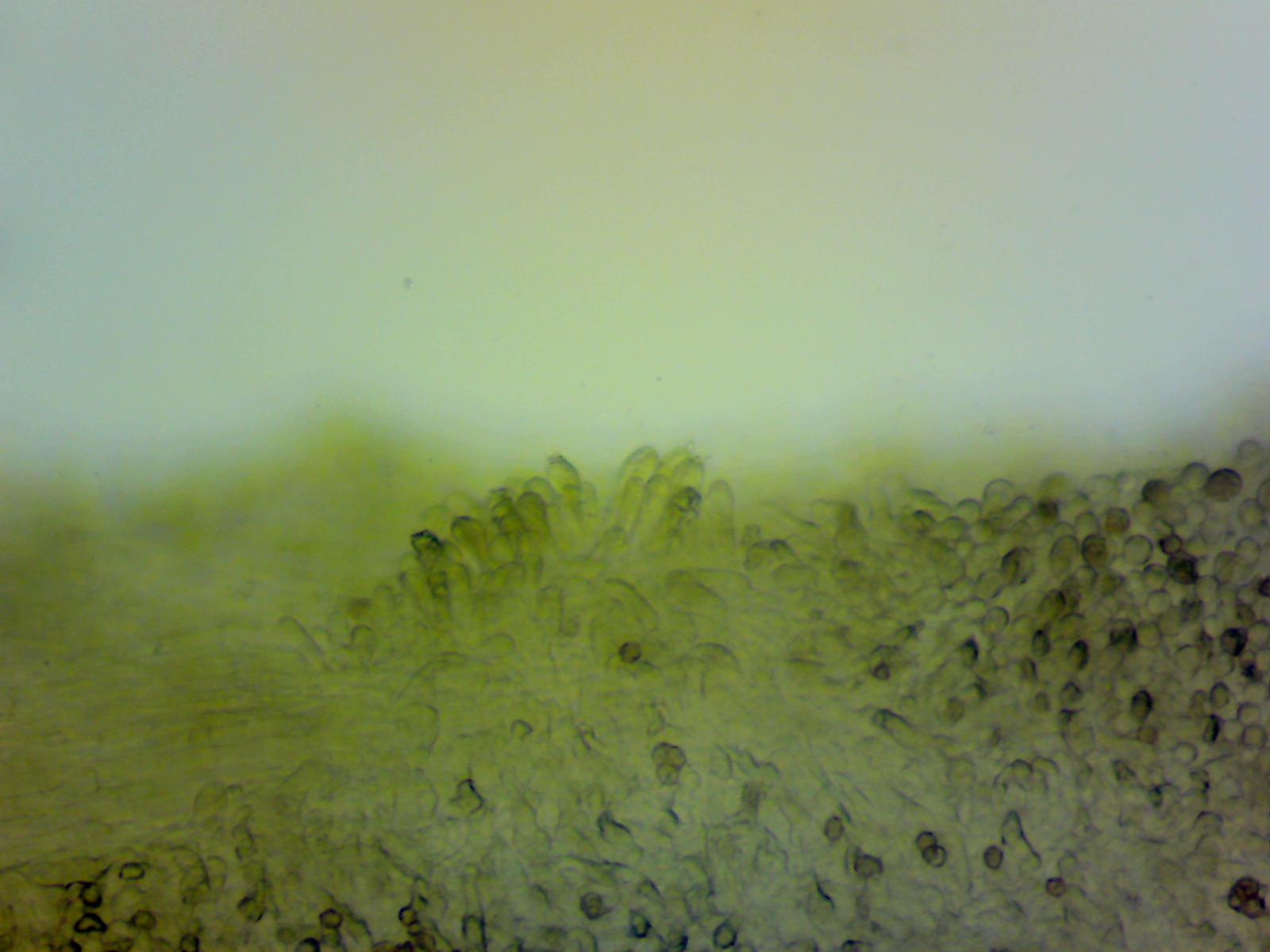
September 12, 2015 at 6:19 pm #36300I would say it was more slimy than sticky actually. I’ve put it in a pot in the fridge for tomorrow morning when I’ll try to see the c-cystidia. September 13, 2015 at 6:39 am #36301Has it a distinctive smell? Some have nitrous odours, others a mealy smell especially if cut (ie: the smell of fresh ground wheat). September 13, 2015 at 7:24 am #36302I seem to always have a cold when I smell fungi, but this one definitely had a mealy smell after I cut the cap. It reminded me of bread (I haven’t had breakfast yet!). I hope I did the c-cystidia right:
[attachment=1]Site001 – Viscid Grey Waxcap-like Fungus – Cystidia001.jpg[/attachment] 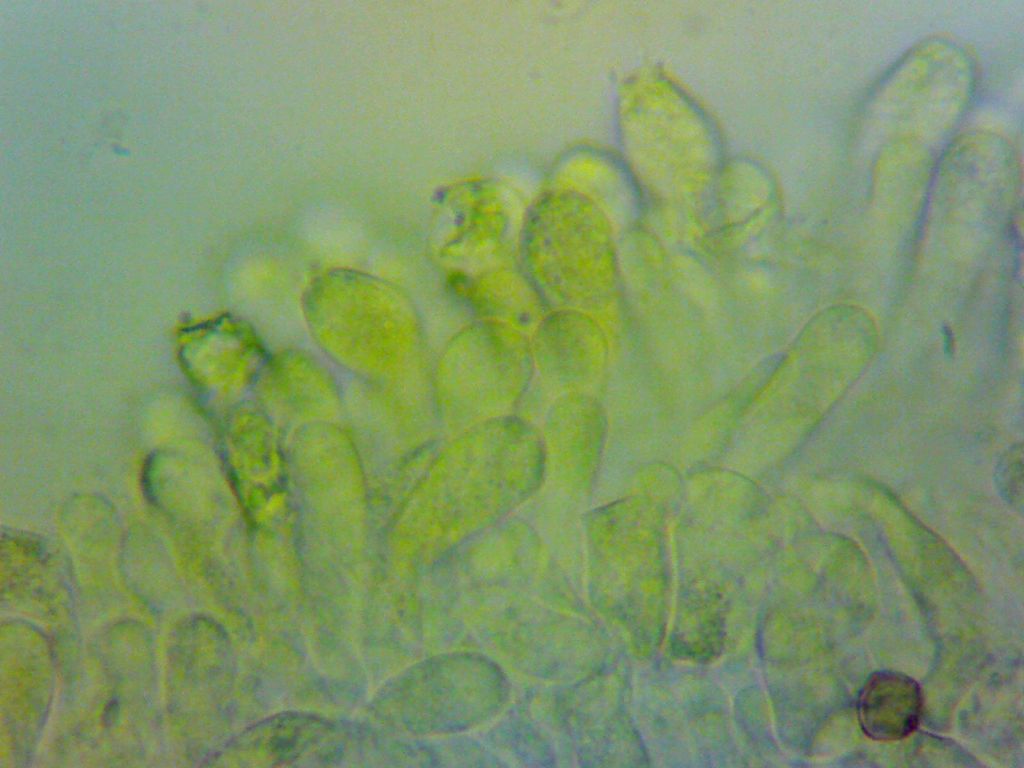
[attachment=0]Site001 – Viscid Grey Waxcap-like Fungus – Cystidia002.jpg[/attachment]
I also thought I might as well do the basidia while I was looking at the gills just in case it helped:
[attachment=2]Site001 – Viscid Grey Waxcap-like Fungus – Basidia001.jpg[/attachment] September 13, 2015 at 5:03 pm #36303I just took a quick look in Fungi Europaei 5 and species that have some resemblance include Entoloma rhodopolium (common), E. griseoluridum, E. rubrobasis, E. sordidulum, E. sphagneti, E. myrmecophilum, and others. Some of those might not be on the UK list, and might easily be eliminated by microscopy, smells, associations and so on. As Roy says, smell is sometimes very important. September 14, 2015 at 2:02 pm #36304If it has a mealy (farinaceous) smell it may be E. prunuloides. It is a grassland species and not associated with any trees. I don’t find it on many sites but it occurs in large numbers on my local ‘unimproved grassland’. The cap, when moist can be “…somewhat greasy”. The spores are like yours, isodiametrical (ie: length about the same as width), and up to 9 x 8µ. It has no cheilocystdia. I don’t think your specimen has any cystidia either. I think the gill edge is lined with basidia and ‘basidioles’ (these are immature basidia which have not yet got any sterigmata). September 14, 2015 at 6:42 pm #36305Thank you both! -
AuthorPosts


- You must be logged in to reply to this topic.