- This topic is empty.
-
AuthorPosts
-
January 13, 2026 at 9:58 pm #33137
The last issue of The Lichenolgist of 2025 has two significant open access papers on Lecanora. In one “New phylogenetic insights into the lichen genus Lecanora s. lat. (Lecanoraceae, Ascomycota): resurrection of the genera Glaucomaria, Straminellaand Zeora” (Ivanovich-Hichins et al, 2025) https://www.cambridge.org/core/journals/lichenologist/article/new-phylogenetic-insights-into-the-lichen-genus-lecanora-s-lat-lecanoraceae-ascomycota-resurrection-of-the-genera-glaucomaria-straminella-and-zeora/D85878DD666CCC546F2792373EA655A1 ” class=”bbcode_url”> https://www.cambridge.org/core/journals/lichenologist/article/new-phylogenetic-insights-into-the-lichen-genus-lecanora-s-lat-lecanoraceae-ascomycota-resurrection-of-the-genera-glaucomaria-straminella-and-zeora/D85878DD666CCC546F2792373EA655A1 Lecanoraproceeds apace. Zeorais resurrected for the L. symmictagroup (including Lecanora expallens, Lecanora confusa, Lecanora compallensect), Straminellafor the L. variagroup (including Lecanora conizaeoides) and Glaucomaria(for the Lecanora carpinea/ rupicola-group) (as in LGBI3). Also in here, already published elsewhere is Lecanoropsisfor the Lecanora salignagroup. It all makes sense but results in lots of new names to learn. The second paper is more focused and covers a topic discussed here before; what is the taxa identified as
Lecanora hybocarpain Europe? “ Lecanora hybocarpaand similar European species” (Arup et al, 2025) https://www.cambridge.org/core/journals/lichenologist/article/lecanora-hybocarpa-and-similar-european-species/10FB5FD6DFA96735E40D94DBA76AF69F#article ” class=”bbcode_url”> https://www.cambridge.org/core/journals/lichenologist/article/lecanora-hybocarpa-and-similar-european-species/10FB5FD6DFA96735E40D94DBA76AF69F#article Lecanora hybocarpa(as expected, great) and not one species, but four separate cryptic species, of which three occur in Britain (groan but of course!!). These are
Lecanora sinuosa, L. subsinuosa& L. cryptosinuosa(Arup et al, 2025). The contorted morphs that were called Lecanora sinuosaare also shown to be extreme forms of Lecanora sinuosaor L. subsinuosa. The cryptic species have some slight morphological differences, but can only reliably be told apart by DNA analysis. Arup et al (2025) recommended that morphological identified material is called Lecanora hybocarpas. lat. for the time being. See the paper for details but L. cryptosinuosaappears to be a rare temperate rainforest species, Lecanora sinuosais very widespread but L. subsinuosais also probably widespread but more oceanic on a European scale. Neil
January 14, 2026 at 8:40 am #46824Many thanks for this, Neil — fascinating and exciting stuff! I’ve only read Arup
et al.(2025) quickly, so I might have missed something. But it raised a sort-of ‘field lichenological’ question in my mind, which I’d be keen to hear your views on. What you think about their suggestion to use ‘
Lecanora hybocarpas. lat.’ as the working taxon name? It certainly seems the right taxon name for comprehensive research, but is it the best pragmatic recording taxon for Britain? Arup and his co-authors didn’t find any
L. hybocarpa(Tuck.) Brodo (1984) in Europe despite a substantial search. And as you’ve pointed out, it would have been unexpected if they had done. So while there may be no reliable morphological separation between L. hybocarpa(Tuck.) Brodo (1984) and L. sinuosa/subsinuosa/cryptosinuosa, isn’t there a fairly reliable biogeographical separation? And if so, wouldn’t that suggest that we should use ‘
L. sinuosas. lat.’ as the pragmatic recording taxon, at least for British recording purposes ( i.e.to encompass what we’ve thus far been calling L. hybocarpaauct. br. and L. sinuosa)? I suppose the confirmed presence of
L. pseudoargentatain Europe complicates matters a bit. But insofar as that species appears to have a chlarotera-type epihymenium, not a pulicaris-type, it should be pragmatically distinguishable from what I’m calling ‘ L. sinuosas. lat.’ There might be difficult cases to judge, as you and Pier-Luigi have pointed out already exist between
L. hybocarpaauct. br. and L. chlaroteras. str. But LGBI3 accepts that it’s pragmatically possible to differentiate between the chlarotera– and pulicaris-type epihymeniums in most(?) cases, so perhaps the presence of L. pseudoargentatain Europe doesn’t pose an insuperable difficulty. So far as practical field recording goes, it seems best to use the narrowest taxon name possible. So while we might have to use ‘
L. sinuosas. lat.’ just as we use ‘ Cladonia chlorophaeas. lat.’ (or perhaps ‘ C. grayis. lat.’), that name would seem a bit closer to the actual European (or British) species than ‘ L. hybocarpas. lat.’ Again, I could be missing something here. I’d be grateful for your views, or clarification.
Many thanks,
Anthony
January 14, 2026 at 10:15 am #46825Anthony Yes
L. sinuosas. lat. would also make sense, I will leave that decision to Brian Coppins. Quote:I suppose the confirmed presence of
L. pseudoargentatain Europe complicates matters a bit. That was for another post but a slightly distinct
Lecanora chlaroteras. str. like taxon from the New Forest, with a chlarotera-type epihymenium, dark brown disks, often slightly pruinose and found on horizontal branches in sheltered glades in the New Forest pasture woodlands may be L. pseudoargentata. A ITS sequence has returned a match for what I was told over the phone was L. pseudargentata, which at the time did not make sense. Now it does, but I need to double check I remembered right! If that is it, it is never going to be mistaken for L. sinuosas. lat./ Lecanora hybocarpa s. lat. Neil
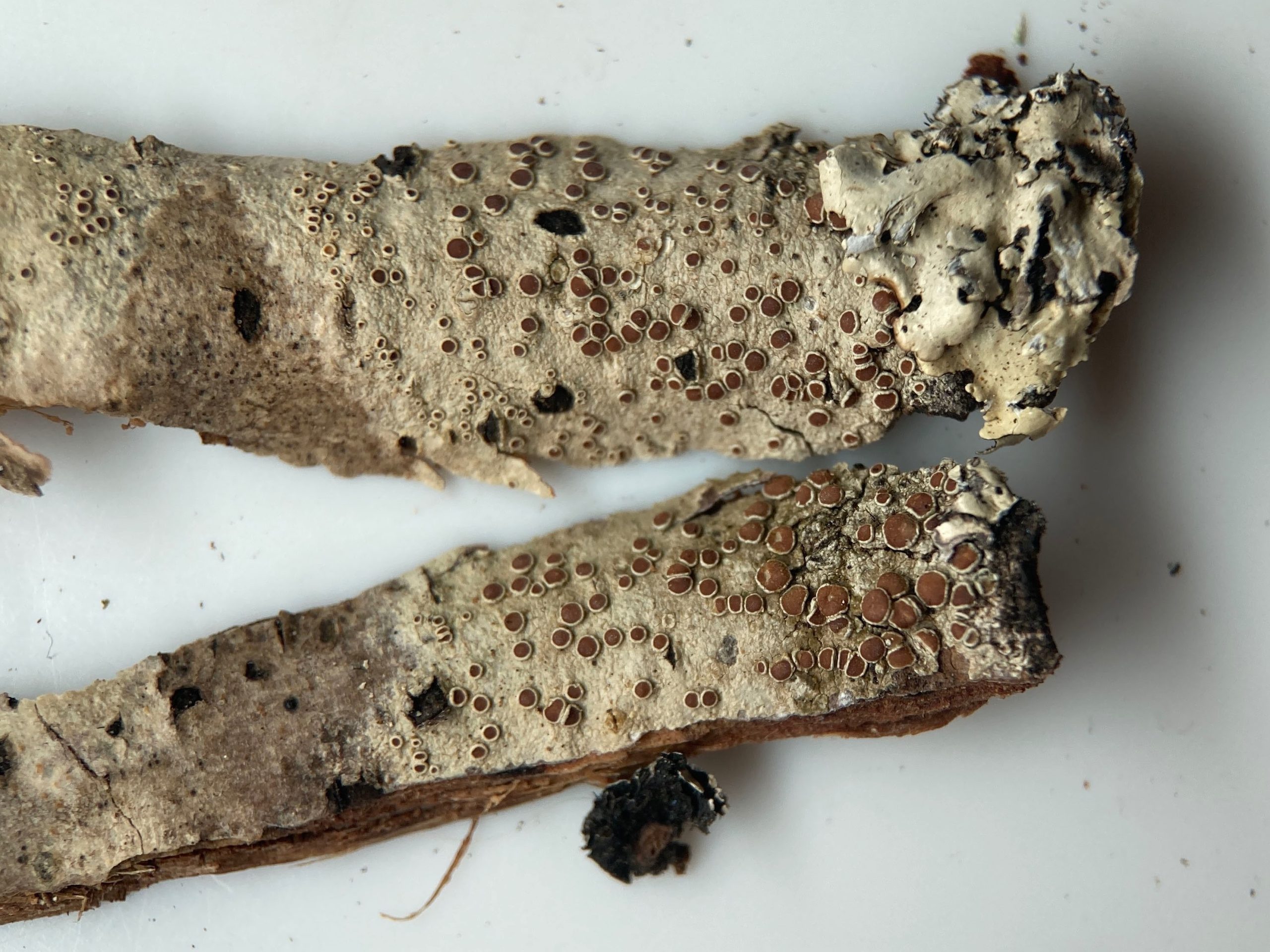
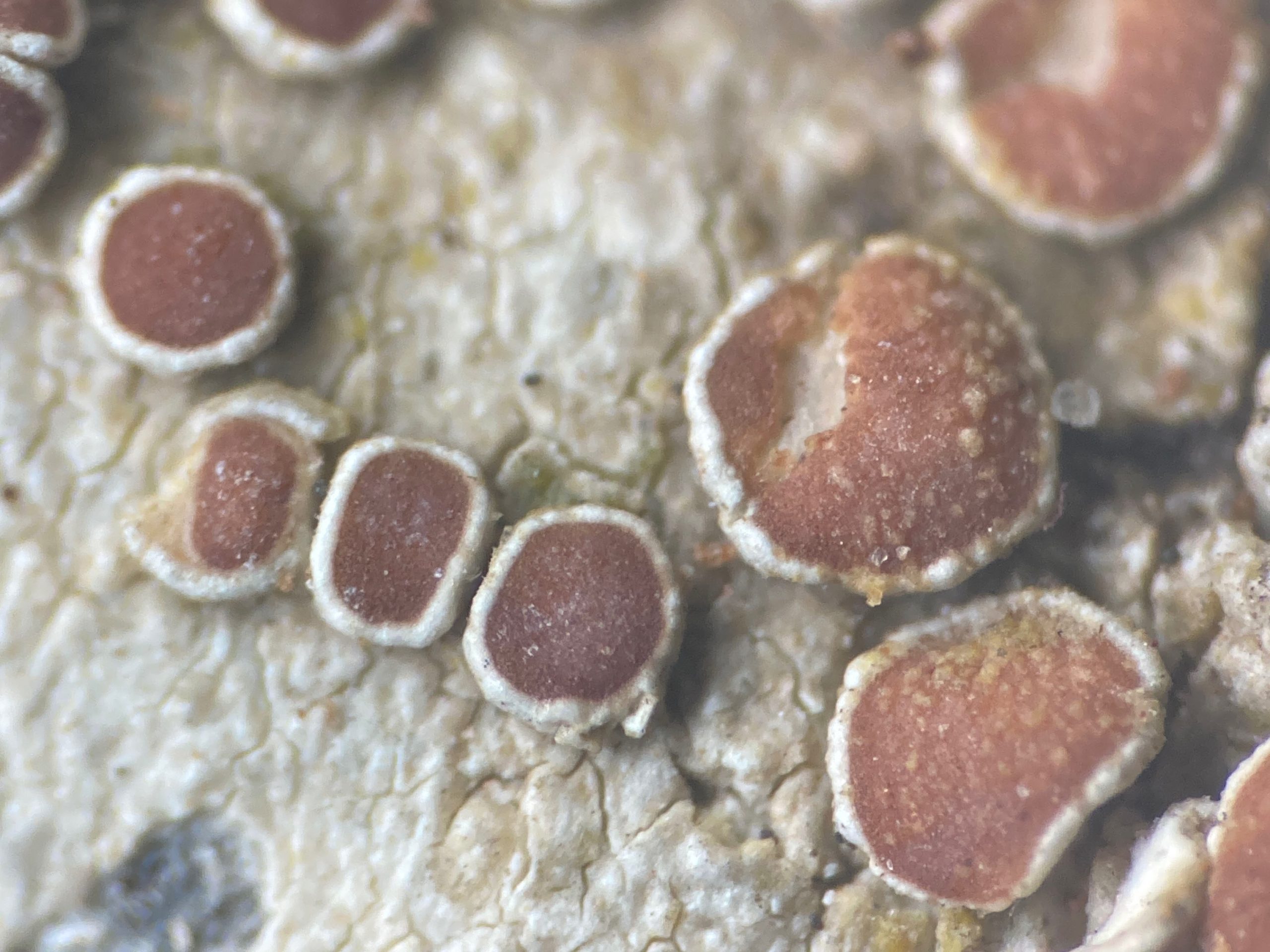
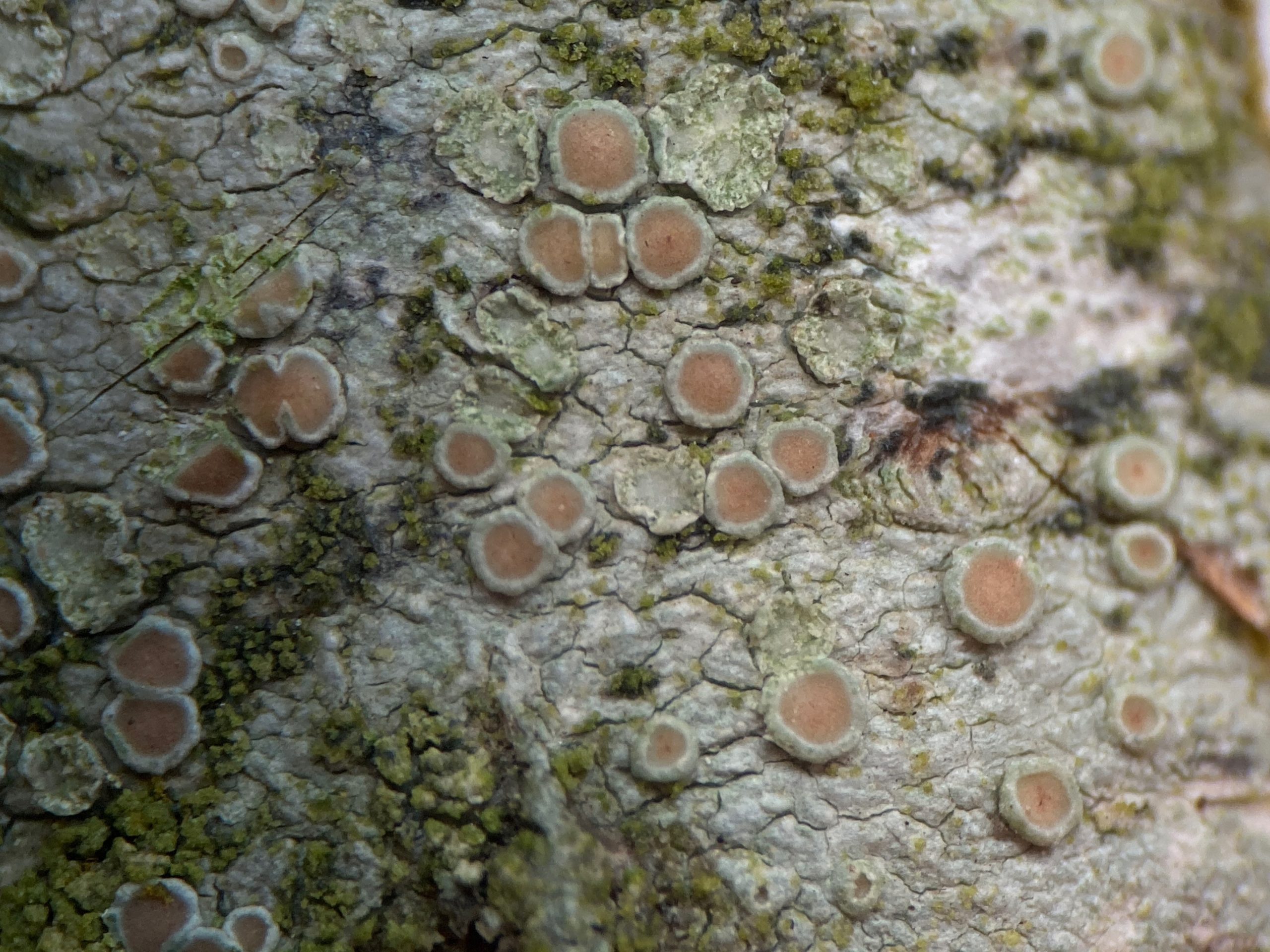
January 14, 2026 at 10:48 am #46826Confirmed, my specimen collected as Lecanora chlaroteras. str. from Bramshaw Wood had a sequence that matched L. pseudargentata. The photos are not the sequenced specimen; but from are very similar material from a horizontal Beech branch Mark Ash Wood. I will dig out the sequenced specimen latter.

[attachment=2]2019-06-27-01.JPG[/attachment] 
[attachment=1]2019-06-27-02.JPG[/attachment] 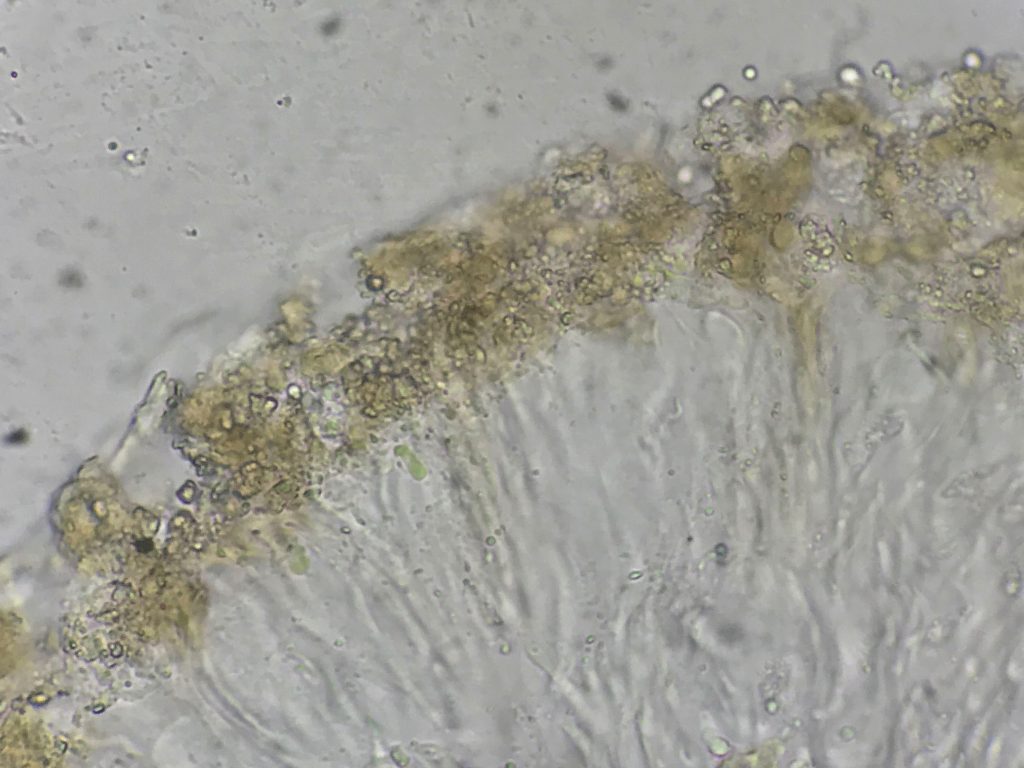
[attachment=0]2019-06-27-03.JPG[/attachment] Neil
January 14, 2026 at 12:00 pm #46827Dear Neil — Many thanks for this. I’ll be keen to hear what Brian eventually decides about the pragmatic name we should use here in Britain. It feels as though we have the name
hybocarpaon a sort of loan from North America! So
L. pseudoargentatais definitely here in the UK then. It’s good to hear your confirmation that it wouldn’t be confused with L. sinuosa/hybocarpas. lat. But it seems that it might not be reliably separable from
L. chlaroteras. str.? You mention it’s slightly morphologically distinct, so there’s some hope there. But if not, will we possibly end up with two pragmatic taxon names — not only
L. sinuosa/hybocarpas. lat., but also some pragmatic name that covers both L. chlaroteras. str. and L. pseudoargentata? Best,
Anthony
January 14, 2026 at 2:53 pm #46828Anthony Quote:pragmatic name that covers both L. chlarotera s. str. and L. pseudargentata?
Yes it is getting into a regressive nightmare with
L. chlaroteras. lat. potentially acquiring multiple meanings. L. pseudargentatais, I think, relatively distinctive for this group; I added the specimen to the sequencing as I thought it was distinct and different and already and had it as a possibly distinct taxon in my head. I may also be rare, early days, but I have not seen it outside of the New Forest old growth woods yet. So may we not need a name that covers both L. chlaroteras. str. and L. pseudargentata. Neil
January 14, 2026 at 11:23 pm #46829OK this is the sequenced specimen of Lecanora pseudargentata: 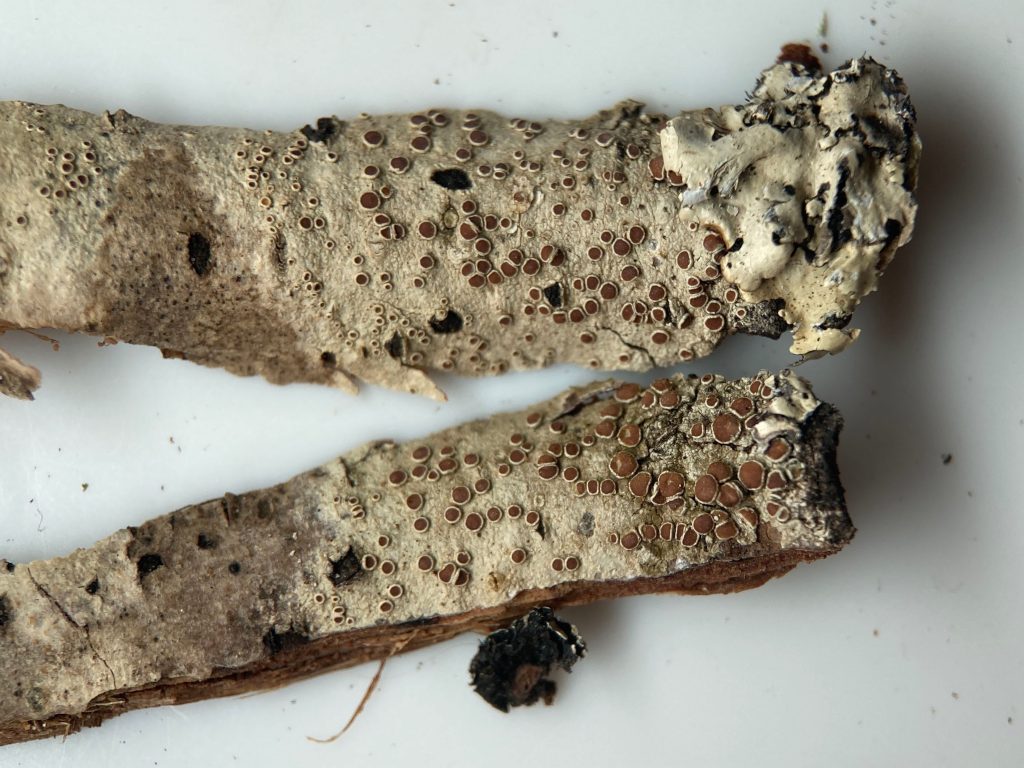
[attachment=6]2026-01-14-01.JPG[/attachment]
Specimen, from Oak twig on low on Oak in glade in Beech – Oak old growth pasture woodland
[attachment=5]2026-01-14-02.JPG[/attachment]
Closer view of older and younger apothecia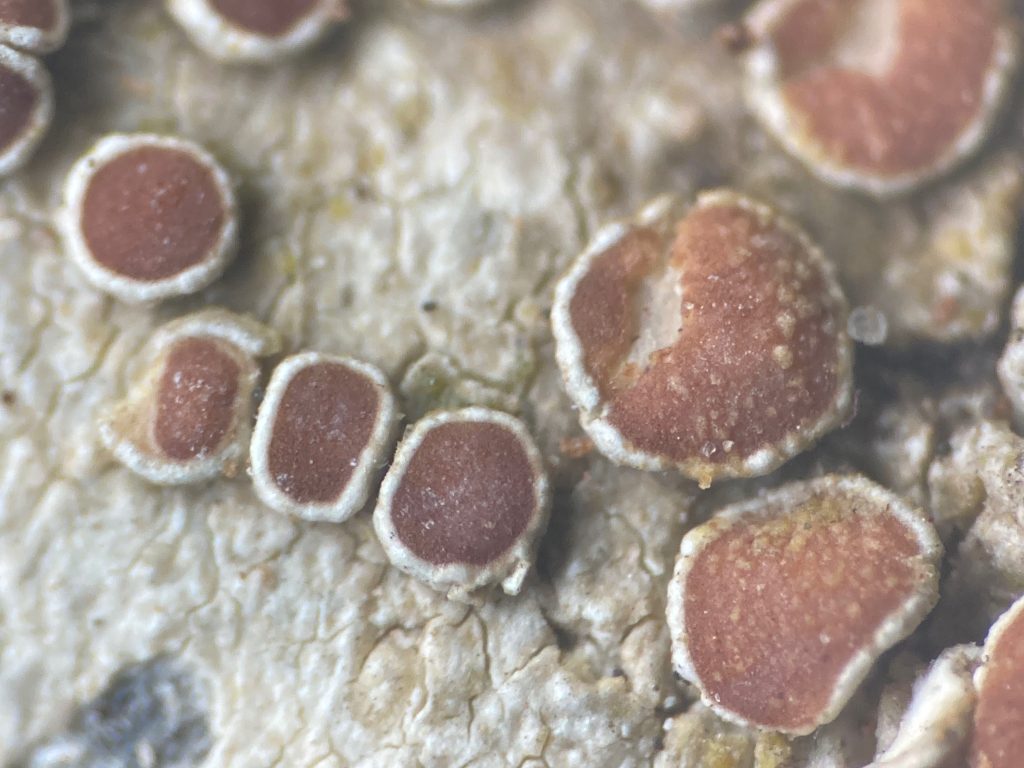
[attachment=4]2026-01-14-04.JPG[/attachment] 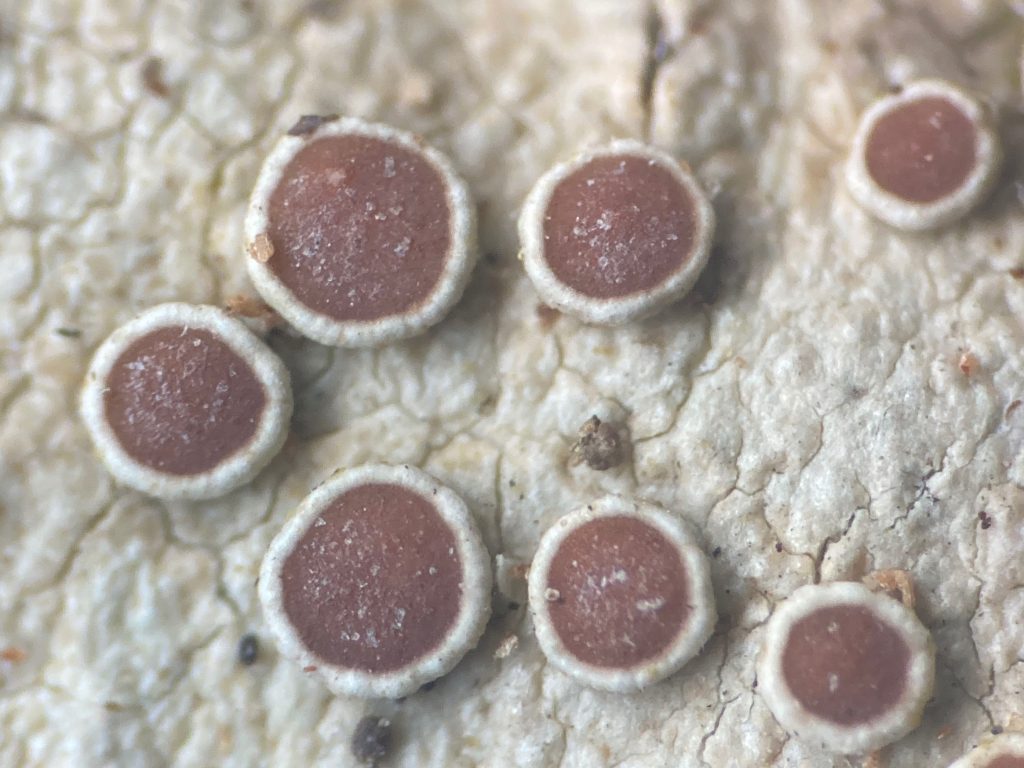
[attachment=3]2026-01-14-05.JPG[/attachment]
High magnification view of disks with pruina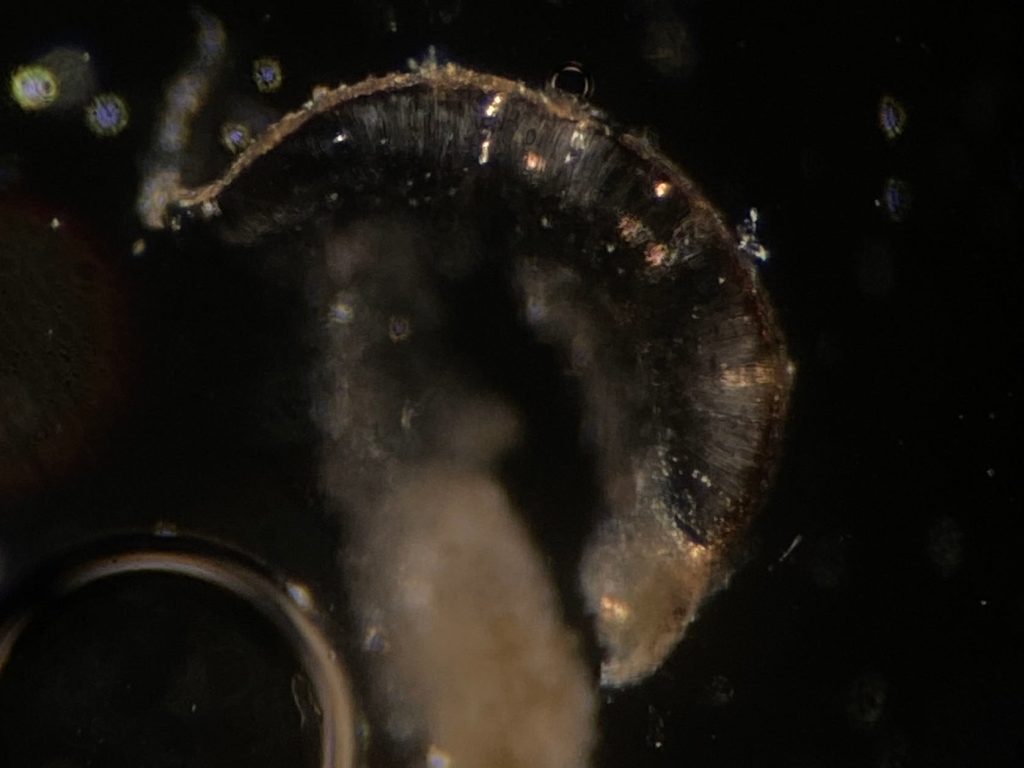
[attachment=2]2026-01-14-06.JPG[/attachment]
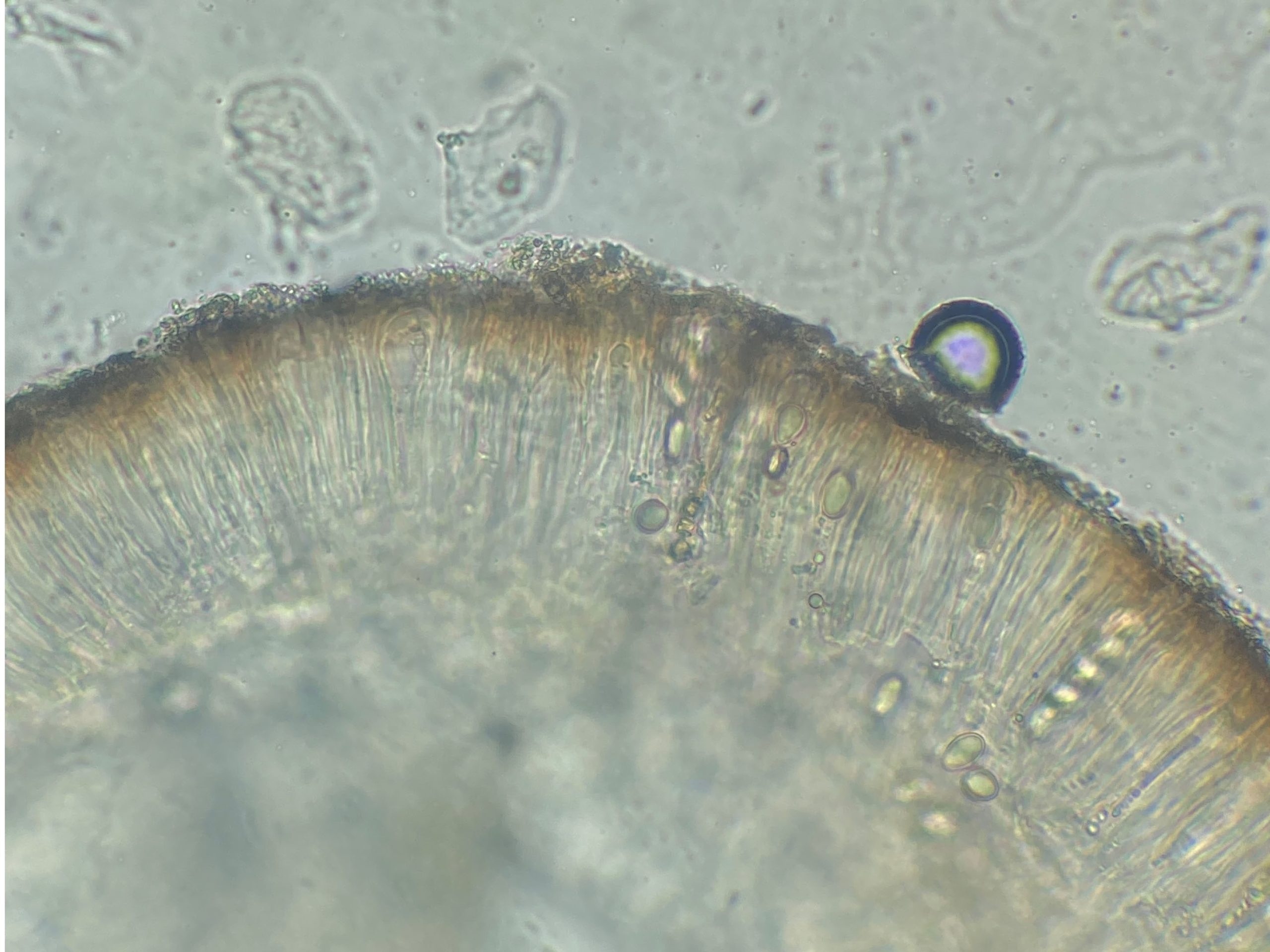
Apothecia cross-section in polarised light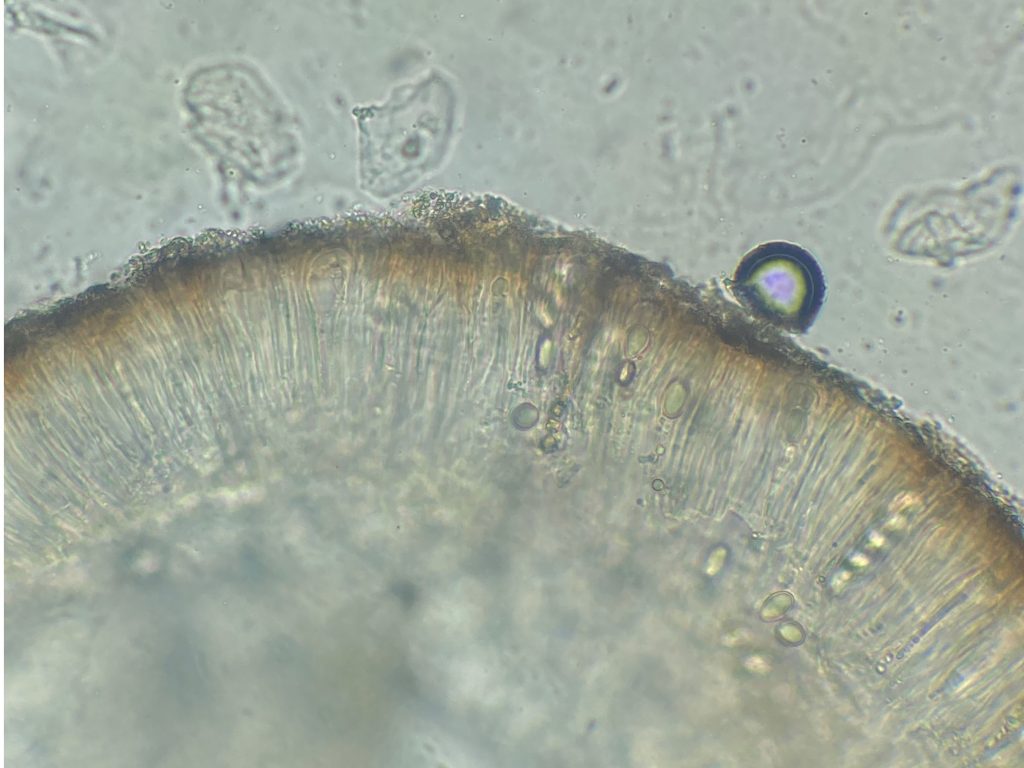
[attachment=1]2026-01-14-07.JPG[/attachment] 
[attachment=0]2026-01-14-08.JPG[/attachment]
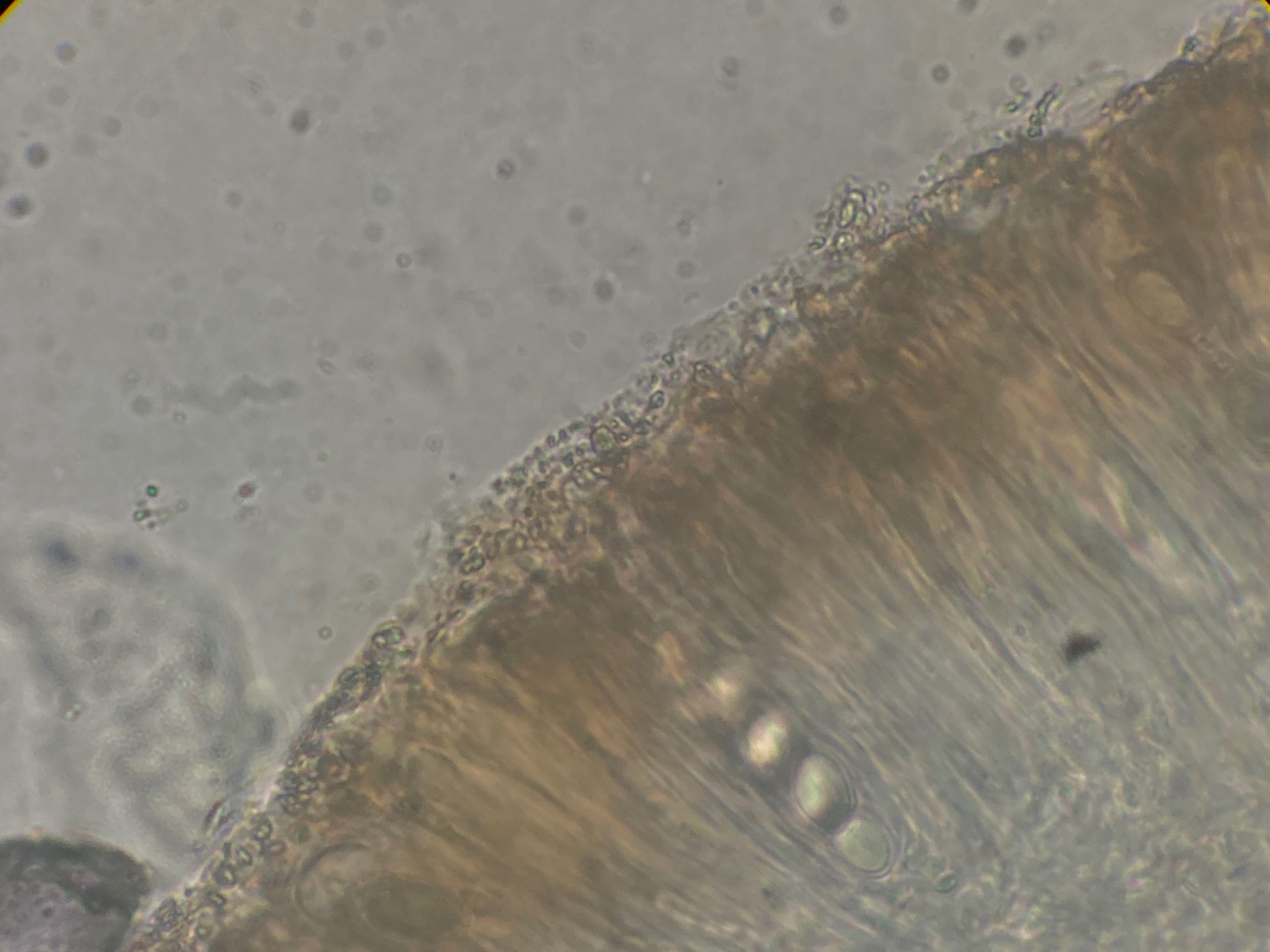
Epihymenium with a darker brown pigment and granualsNeil
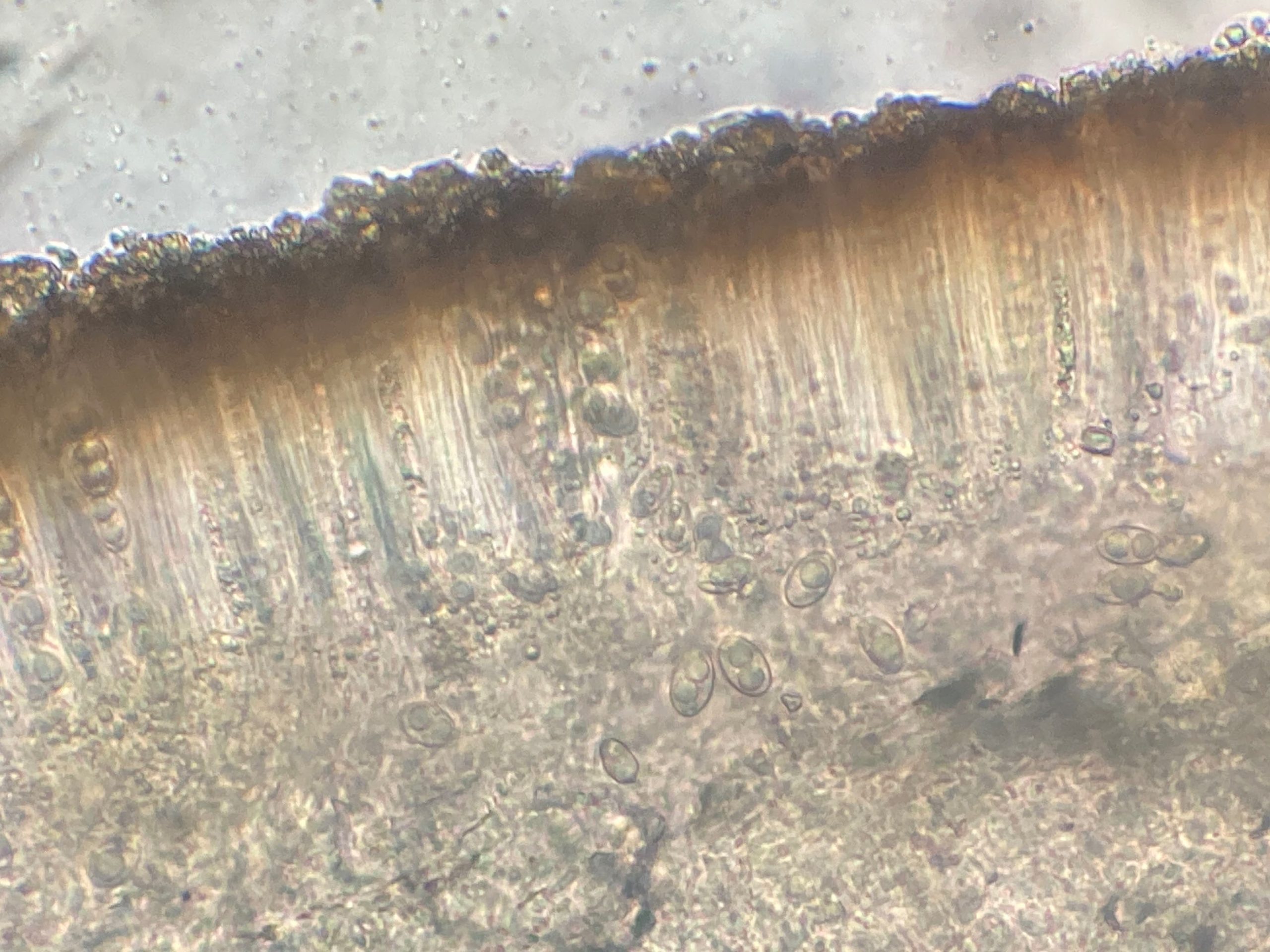
January 14, 2026 at 11:38 pm #46830And here is similar material collected today on a dog walk from a low Oak branch at the edge of bog in a glade in Sessile Oak – Beech old growth pasture woodland at Ocknell Inclosure: 
[attachment=3]2026-01-13-01.JPG[/attachment] 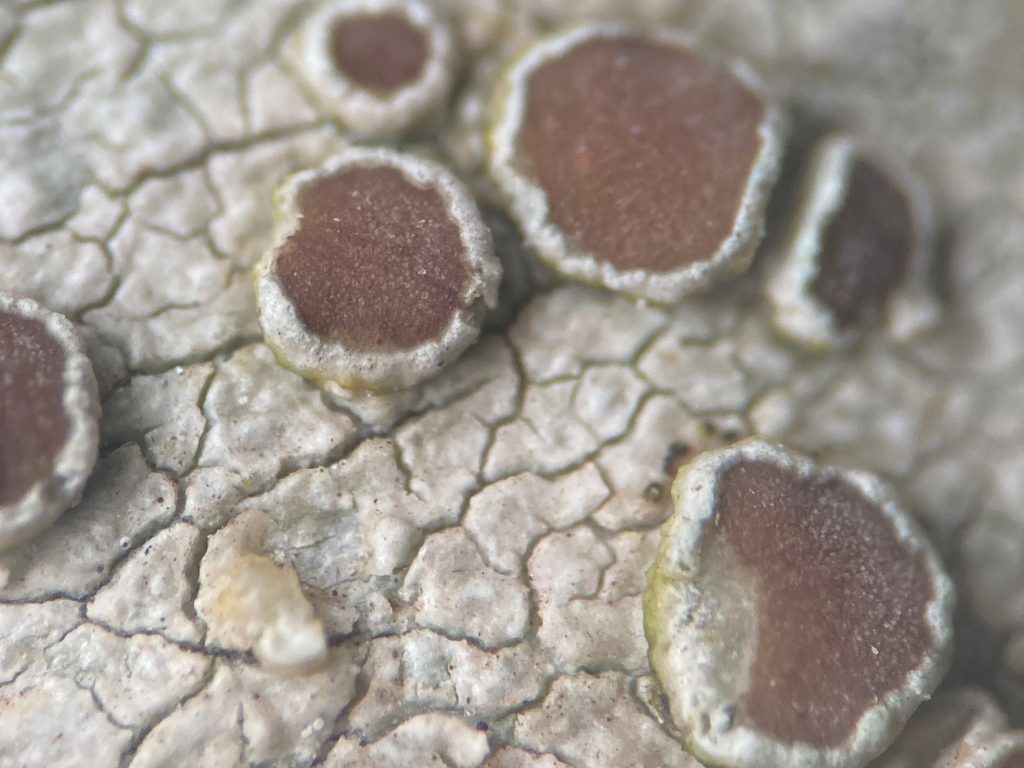
[attachment=2]2026-01-13-02.JPG[/attachment]
Chestnut brown disks with pruina
[attachment=1]2026-01-13-04.JPG[/attachment] 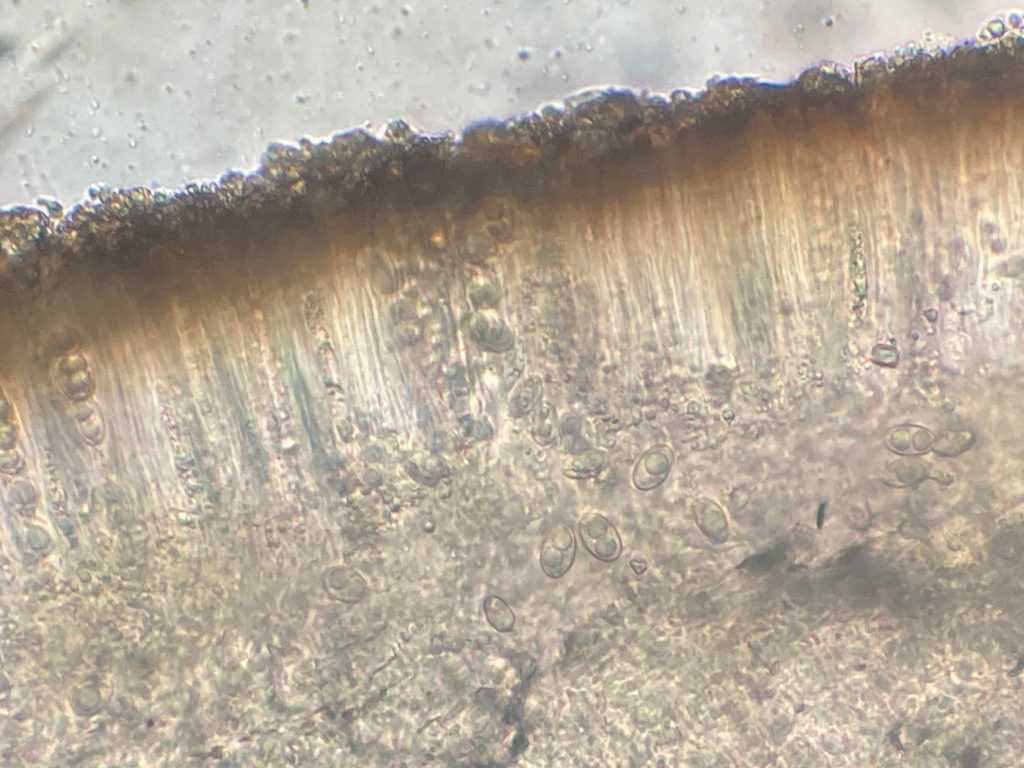
[attachment=0]2026-01-13-05.JPG[/attachment]
Epihymenium with a darker brown pigment, granuals and sporesNeil
January 15, 2026 at 11:58 am #46831I suppose we mustn’t be surprised that the real world is more complex than we previously thought… Just a minor comment for now, please note that the new GBI species is Lecanora pseudargentata, not pseudoargentata. These orthographic niggles are really annoying, but they cause all sorts of problems for databases etc.
A new version of LGBI3 Lecanoraceae will appear before too long, I’m sure you can’t wait!
Best wishes
Paul
January 15, 2026 at 12:29 pm #46832Paul Yes got that orthographic niggle, my mistake and corrected.
Quote:A new version of LGBI3 Lecanoraceae will appear before too long, I’m sure you can’t wait!
Yo Ho!
Neil
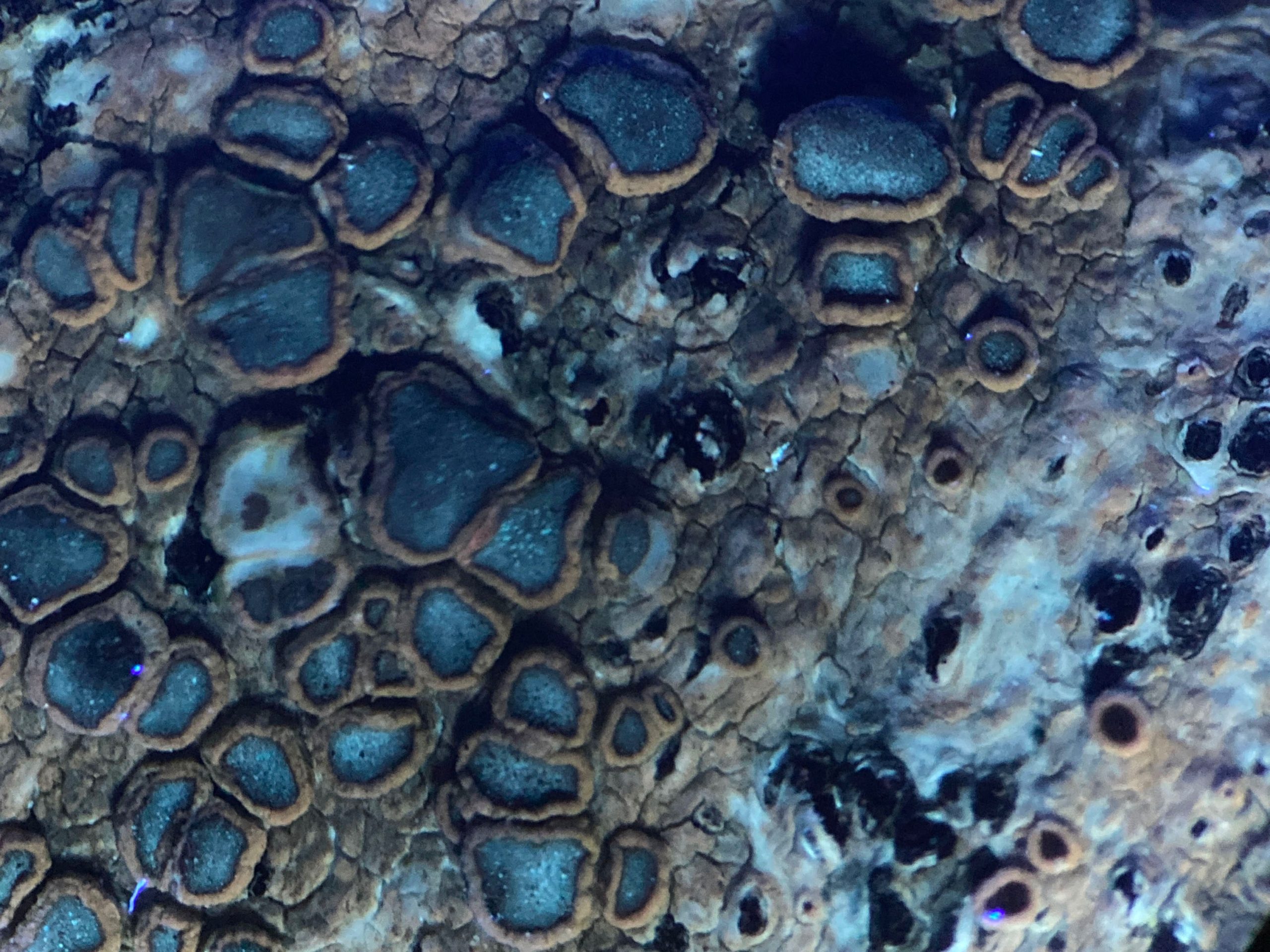
January 19, 2026 at 9:18 pm #46833Been working over the weekend on herbarium specimens and in the field on Lecanora pseudargentata. It seems to be widespread if local on the New Forest, so to be looked for elsewhere. One interesting development is I had noticed some UV+ fluorescence from the pruina on the disks previously and looked into this. This has been confirmed and seems very useful. The pruina (presumably actually the epihymenium crystals), fluoresce a distinct grey-blue: 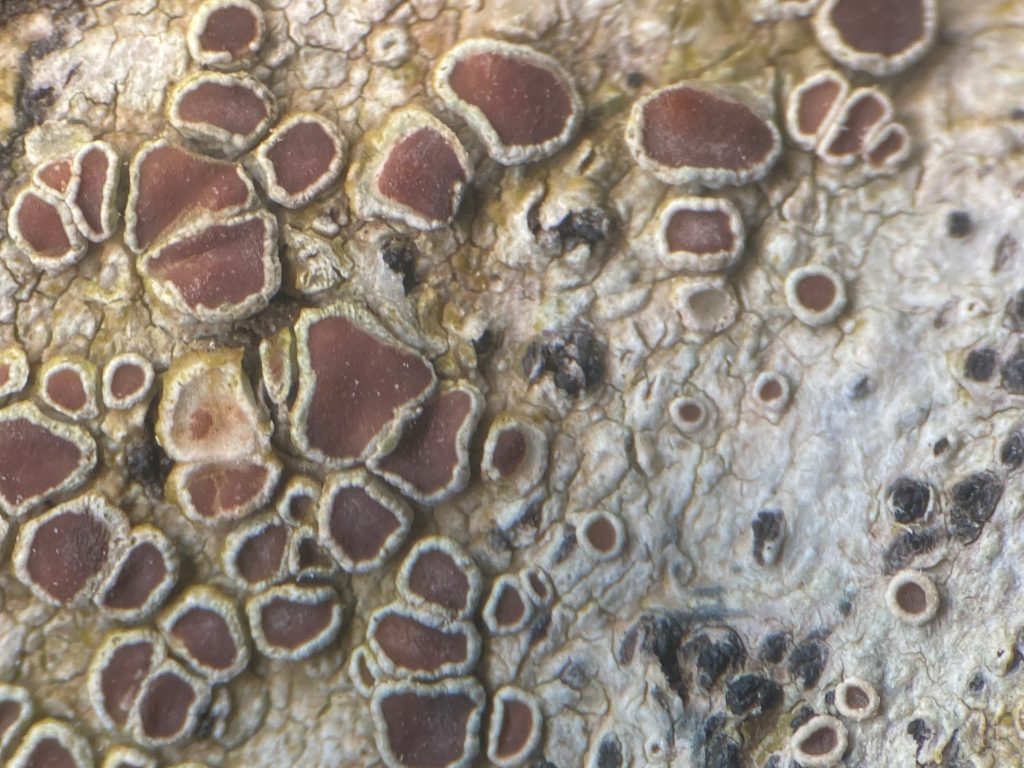
[attachment=3]2026-01-17-05.jpg[/attachment] 
[attachment=2]2026-01-17-06.jpg[/attachment]
Lecanora pseudargentata, on Beech twig on glade edge, Stubbs Wood, New Forest.There is also a week but distinct UV+ orange-brown fluorescence from the thallus, strongest on the margin (likely from gangaleoidin; see
Lecanora gangaleoides), but this is much less obvious.The disk UV fluorescence was strongest on disks with well developed pruina, but usefully was also visible on disks with little or no visible pruina and also chewed up and poorly developed thalli; so very useful. From other specimens the disk UV fluorescence is absent in Lecanora argentata(not surprising, as it has no crystals) and Lecanora chlaroteras. str. Some Lecanora hybocarpas. lat. specimens occasionally had a hint of this fluorescence but it was weaker and it was not always visible. The fluorescence is particularly good in separating Lecanora argentatafrom Lecanora pseudargentata, which is the only other Lecanorawhich would typically have dark chestnut brown disks. None of the others showed distinct UV+ orange-brown fluorescence from the thallus As
Lecanora argentataalso has gangaleoidin, so I also scanned my specimens of this species for gangaleoidin fluorescence. Yes there actually is some on the thalline margins but it is much weaker that in Lecanora pseudargentataand would not be field visible. Occasionally it was stronger in the medulla in cut specimen edges or on damaged thalline margins. One specimen was different, however, this had noticeable UV+ grey-blue fluorescence on the disk, but not as strong as some specimens, and the thallus was also distinctly UV+ orange-brown, especially on the thalline margins. I then checked an apothecia cross section and yes there was a thin and patchy crystal layer above the paraphyses tips I had missed before: so also Lecanora pseudargentata. This was from a parkland Oak in Ethy Park, East Cornwall, collected in 2013. Also just for interest a
Lecanora chlaroteras. str. collected from an Oak branch with Lecanora pseudargentatathis weekend: 
[attachment=0]2026-01-17-04.JPG[/attachment] 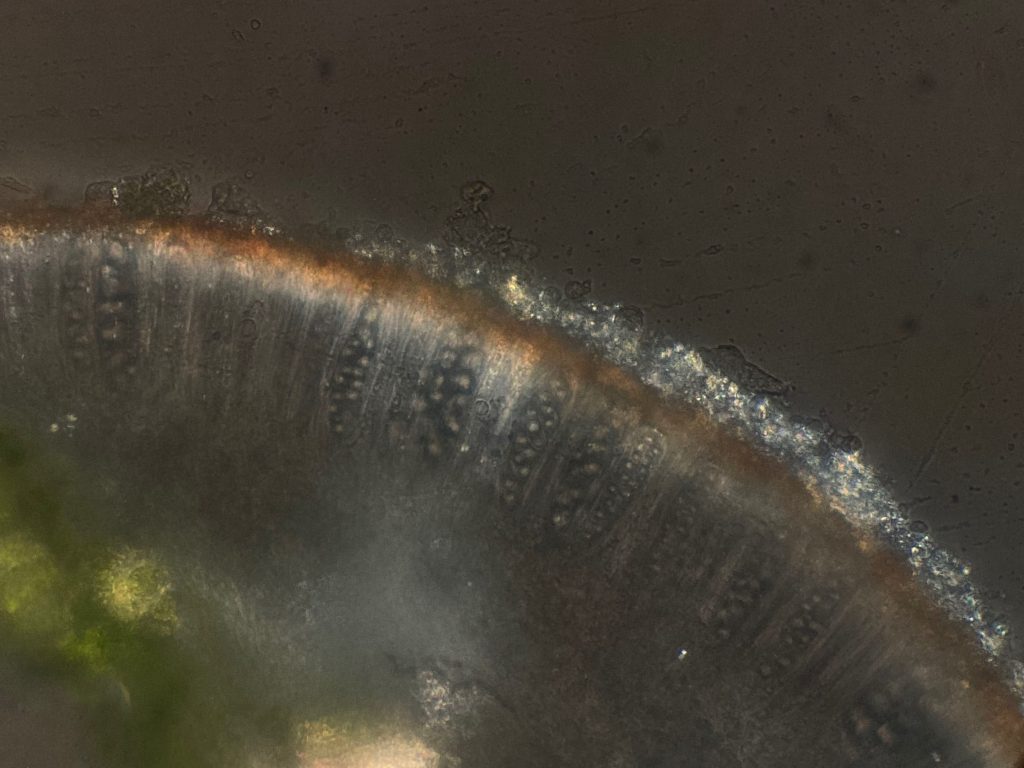
[attachment=1]2026-01-17-02.JPG[/attachment]
Lecanora chlaroteras. str., Oak Branch, on edge of pasture woodland Rans Woods by wet grassland. The glow below the epithecium is reflection from the asci or the paraphysis not from crystals. Neil
-
AuthorPosts










- You must be logged in to reply to this topic.