
The Clough House Mill Saga
Forums › Forums › Fungi on miscellaneous substrates (not soil or wood) › The Clough House Mill Saga
- This topic is empty.
-
AuthorPosts
-
June 12, 2018 at 1:55 pm #30952
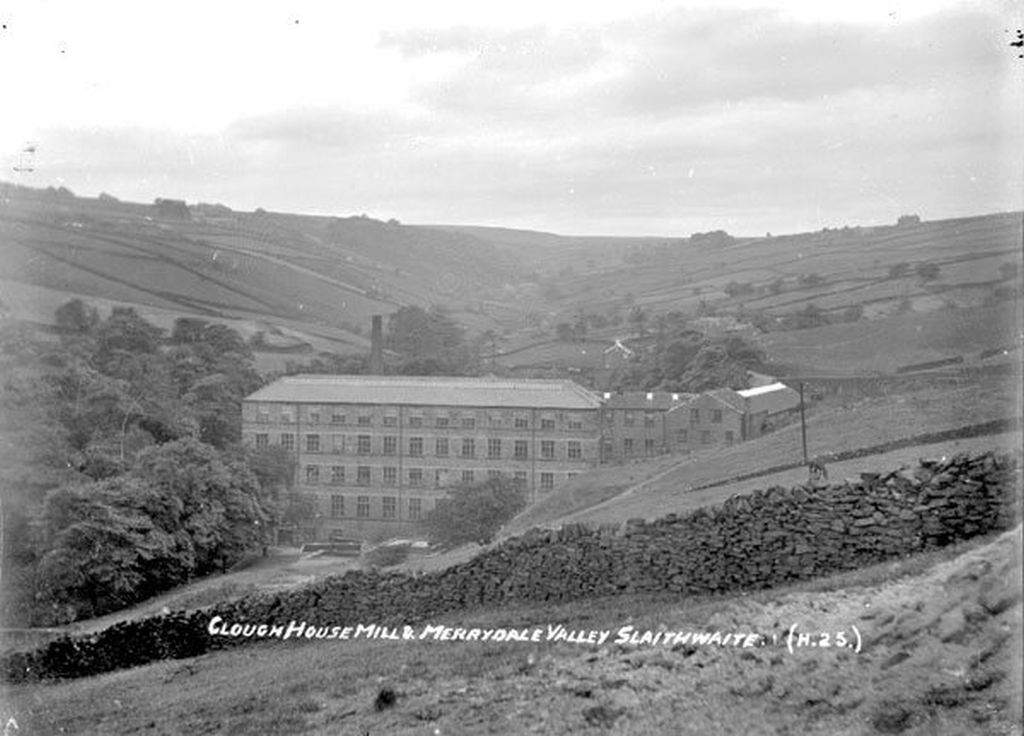
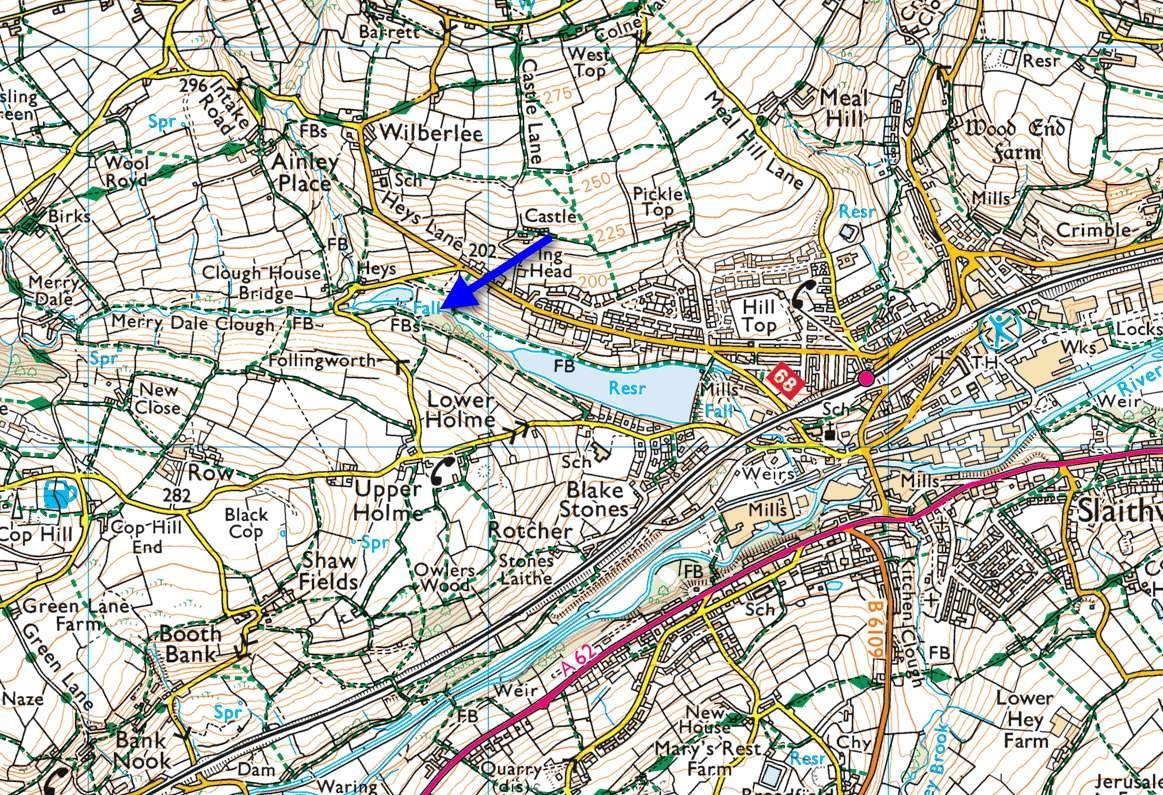
A recent collection of a foam sample from a Yorkshire stream has proved extremely interesting. This is Part Oneof the tale. The collection site lies in West Yorkshire above Slaithwaite. It is on the site of a former (19th century) woollen mill, now completely gone. Clough House Mill was owned by Edwin Shaw and Company; I don’t know when it was originally built, but it’s already on the 1850s 6″ to the mile OS survey map.
Here is an early 20th century (exact date unknown) photo of the mill © Kirklees Image Archive:
[attachment=4]00-Clough House-2.jpg[/attachment] Here is a map of the site in 1892:

[attachment=3]00-Clough House-2a 1892.jpg[/attachment] And in 1968 (the tenters have all gone of course, and there is now a sluice controlling the water level in the pond):

[attachment=2]00-Clough House-2b 1968.jpg[/attachment] By the 1980s all had gone. I haven’t looked closely yet, but there is now virtually no evidence left of the mill itself.
Water would of course have been a vital part of the steam required for the mill’s functioning. There is a mill pond, approximately 0.37 hectares in size, and an outflow channel which passes over a small stepped man-made “waterfall” immediately above the collection point. The mill pond is surrounded by trees and there is some emergent vegetation; it is fed by two streams both relatively fast flowing. So all in all the site is a potentially good one for Ingoldian fungi, especially when the oxgenation provided by some man-made “waterfalls” is added. The local geology is siliceous Carboniferous “Millstone Grit”, so the water will almost certainly be ≤5pH.
Here is the collection site:

[attachment=1]00-Clough House-1.jpg[/attachment] 
[attachment=0]00-Clough House-4.jpg[/attachment]
Part Twoin a day or so . . . . Cheers
Chris
June 15, 2018 at 9:29 pm #40983Part Two
[attachment=3]Combined 1.jpg[/attachment] A
Campylospora parvula. 3 records on FRDBI – I have an additional one from South Yorkshire. B
Classicula fluitans. An interesting species, as it is an anamorphic Basidiomycete – DNA studies place it close to the rust fungi (!) 
[attachment=2]B Classicula fluitans.jpg[/attachment]
CCulicidospora gravida. The scientific name means “the pregnant mosquito spore”. 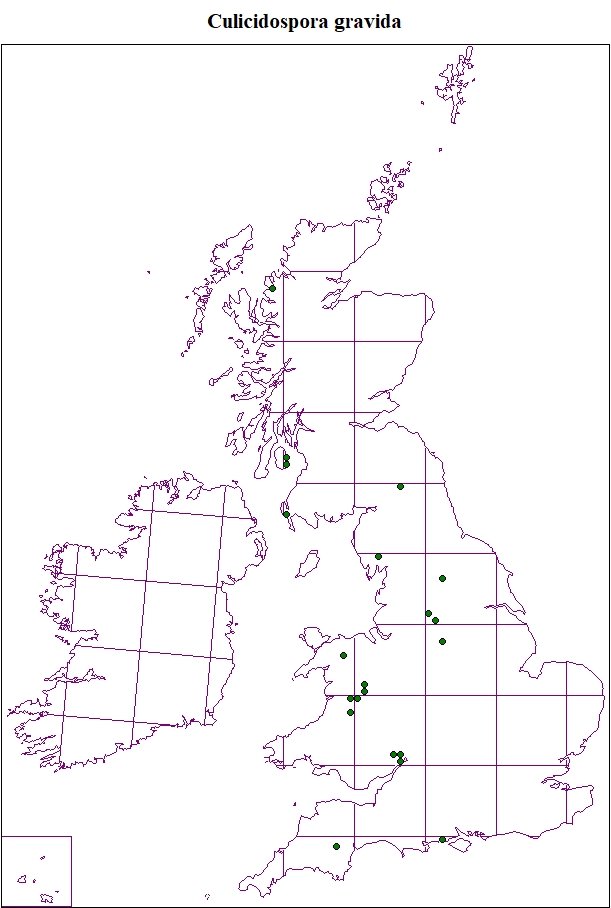
[attachment=1]C Culicidospora gravida.jpg[/attachment]
DLateriramulosa uni-inflata. 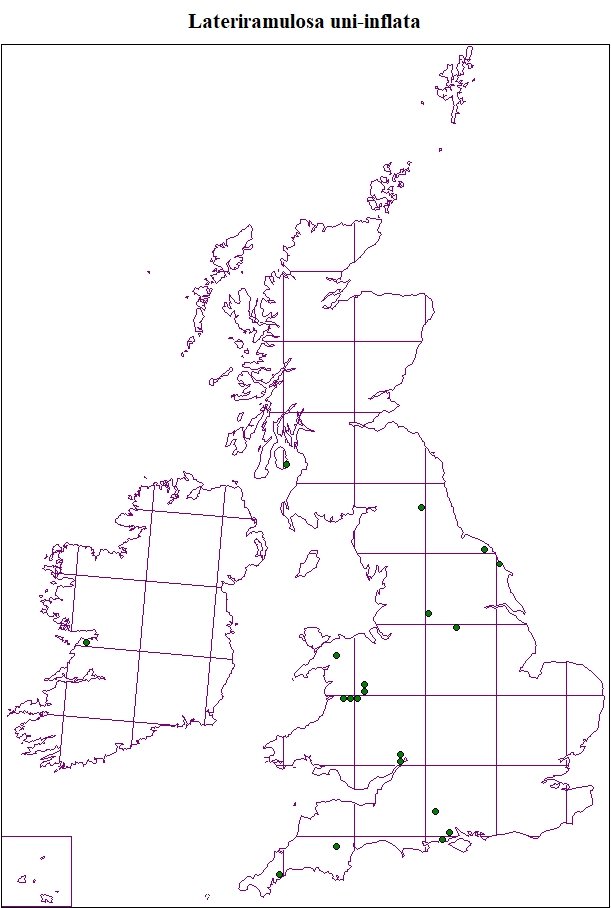
[attachment=0]D Lateriramulosa uni-inflata.jpg[/attachment]
EIsthmolongispora minima. Originally described by Matsushima from Papua New Guinea. Three previous GB records: one from Laurus litter on Arran, and two from aquatic environments in Rutland. F This is the
Actinosporellaanamorph of the aquatic discomycete Miladina lecithina. While the previous species are relatively small, this is a monster – the distance between top left and top right arms is over 100µm – and the arms can grow much longer. Chris
June 16, 2018 at 6:36 am #40984Great report, Chris. June 18, 2018 at 7:01 pm #40985Quick update before Part Three. I mentioned that the Actinosporellaanamorph of the aquatic discomycete Miladina lecithinacan get much bigger. Here is a more typical one with longer arms (the distance between the lowest one and the right hand one is almost 350µm.): 
[attachment=0]Miladina lecithina 04.jpg[/attachment] By a happy chance there is, in the same image, a conidium of one of the smallest Ingoldian species, which has proved to be frequent in this sample –
Heliscella stellata. Chris
August 13, 2018 at 1:24 am #40986Part three, again mainly to show the variety of these wonderful fungi ( at different scales): 
[attachment=0]Combined 2.jpg[/attachment]
GTetracladium marchalianum, a characteristic and easily identified species; seldom absent from a foam collection. HGyoerffyella rotula, few Yorkshire records, it appears to favour cleaner waters here. IYpsilina graminea, relatively frequent in this foam sample, and not uncommon in many others. JFlabellospora acuminata, one of the larger and striking species, occasional in this collection. KTripospermum myrti, smaller than it might appear here, and like other Ingoldian fungi, not always strictly “aquatic”. The final post on this thread will appear shortly, and is arguably the most interesting one.
Chris
August 16, 2018 at 11:22 am #40987I love the geometry of these, especially J August 23, 2018 at 4:03 pm #40988And on to what may be the end of the saga – or perhaps a mere hiatus, as I have only made one collection here, and not at the prime season for Ingoldian fungi. To date I have identified 45 species, almost all from conidia, and most primarily aquatic ones. There remains a ragbag of “possibles”/ “unidentified” fungi all photographed and filed away for later, this could be between 25-30 more species; I suspected there will be some undescribed ones in there. The ideal with these fungi is to culture them and – ideally – to sequence them in problematical cases. To date I have just been looking at fixed and therefore dead material and so have been very cautious to only put names to those about which I am confident.
One interesting species could well have gone down in the “ragbag”, but it was so distinctive that I persevered with it. Reduced to the ultimate mycological standby of “flicking through the pictures”, in this case in Seifert et al.’s monumental
The Genera of Hyphomycetes: https://www.nhbs.com/the-genera-of-hyphomycetes-bookhttps://www.nhbs.com/the-genera-of-hyphomycetes-book” class=”bbcode_url”> 
[attachment=1]Siefert-1.jpg[/attachment]
Illustrated from the type collection, made in Portugal, in 2001, and formally described in 2003:http://www.speciesfungorum.org/Names/SynSpecies.asp?RecordID=488769 ” class=”bbcode_url”> http://www.speciesfungorum.org/Names/SynSpecies.asp?RecordID=488769 I have been in touch with Prof. Ludmila Marvanová and she says she is unaware of any collection since the 2001 one. I have also chased up several other people who are “in the know” and they say the same. So this appears to be only the second ever collection, 1400 kilometres from the first. Clearly there will be other sites where it occurs and the paucity of workers and difficulty of naming these fungi is an issue. That said there has been a lot of study on these aquatic fungi in recent years and across the globe.
So, new to GB & I . . .

[attachment=0]Collembolispora barbata.jpg[/attachment] August 23, 2018 at 4:36 pm #40989Well done, Chris! :ugeek: January 18, 2023 at 6:57 pm #40990Worth resurrecting this thread now Chris has published his paper and it is public domain. Hope you don’t mind me linking it, Chris. PM me if you do. -
AuthorPosts




- You must be logged in to reply to this topic.