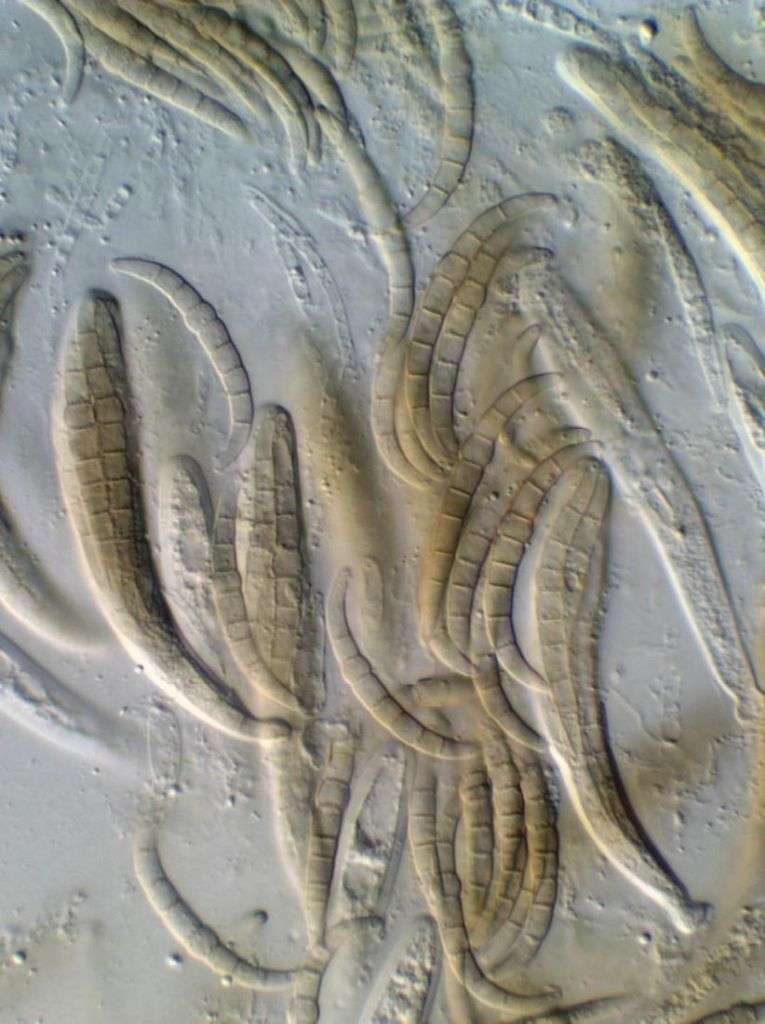
A relative of the previous species in this subforum (i.e. another member of the Phaeosphaeriaceae). I think this must be very common as I collected it yesterday on a dead stem of common ragwort,
I have found the mini version of the sort of misting water spray hairdressers use to be very useful to make material easier to deal with. Leave for a couple of minutes and then if the black dots are carefully extricated (v. fine forceps are best for this), mounted in water and with slight pressure applied to the coverslip, under the microscope you can quickly see if you have been successful. It might prove to be another fungus, but this is something of a http://www.ascofrance.com/base-de-donnees-fiche/4879” class=”bbcode_url”>http://www.ascofrance.com/base-de-donnees-fiche/4879 (click on thumbnail).

[attachment=1]2021-06-20-21.24.44 ZS.jpg[/attachment]
[attachment=0]2021-06-20-21.19.44 ZS.jpg[/attachment]
Chris


