
Fungus Of The Day (One identified fungus only please, with species name in attachment comment and in post)
Forums › Forums › General fungi discussion › Fungus Of The Day (One identified fungus only please, with species name in attachment comment and in post)
- This topic has 953 replies, 55 voices, and was last updated 2 weeks, 4 days ago by
admin.
-
AuthorPosts
-
November 3, 2024 at 3:49 pm #34212
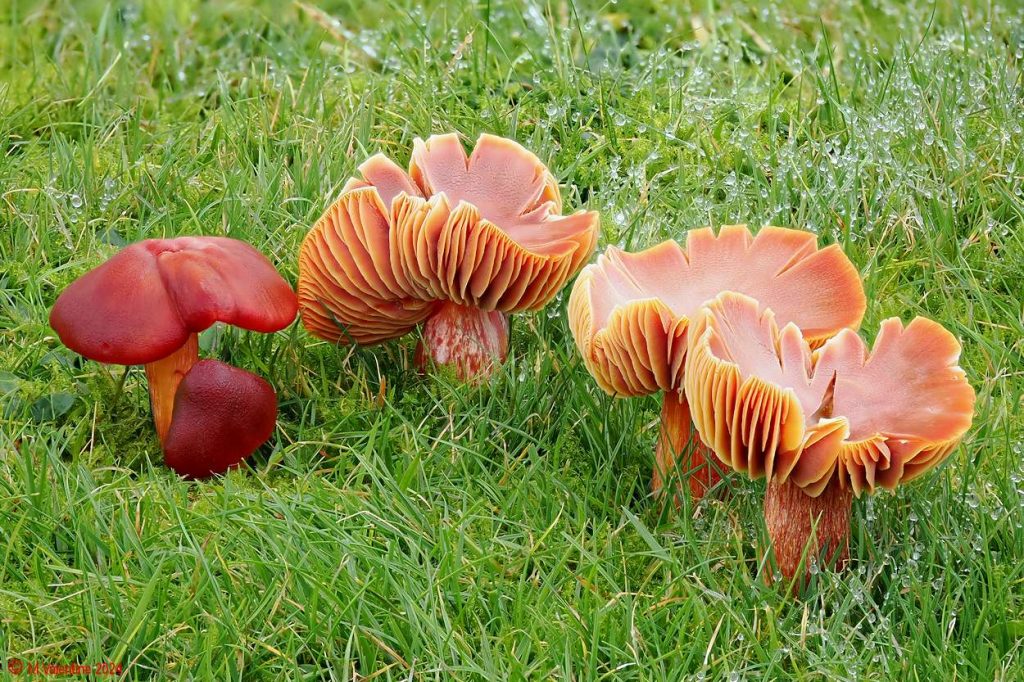
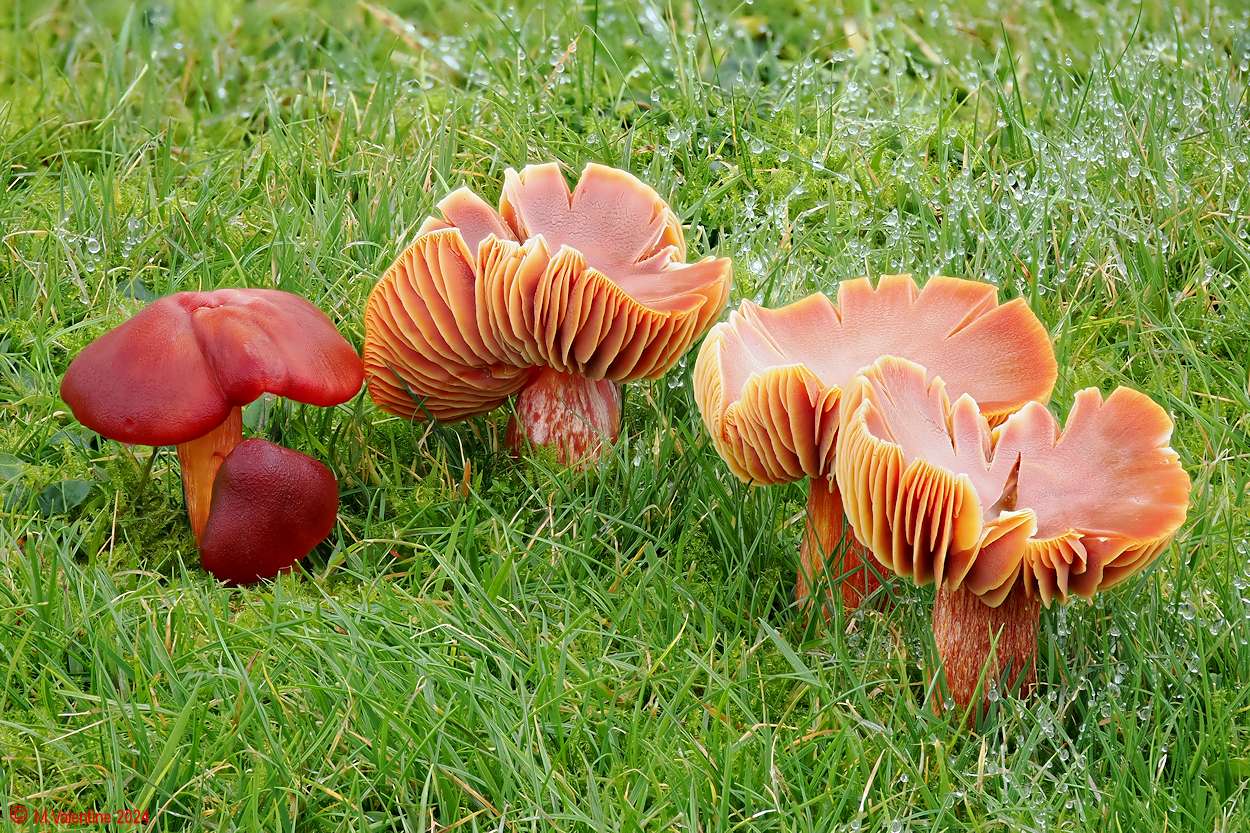
Hygrocybe punicea– Crimson Waxcap . Found 1st November 2024 in nutrient poor regularly mown mossy grass. (Cricket outfield – Private Site).
Spore print white. Spores ellipsoidal to cylindrical, smooth, 8-11µm x 4.5-5.5µm.
.
[attachment=0]Hygrocybe punicea – Crimson Waxcap 1.jpg[/attachment]
.Regards,
Mike
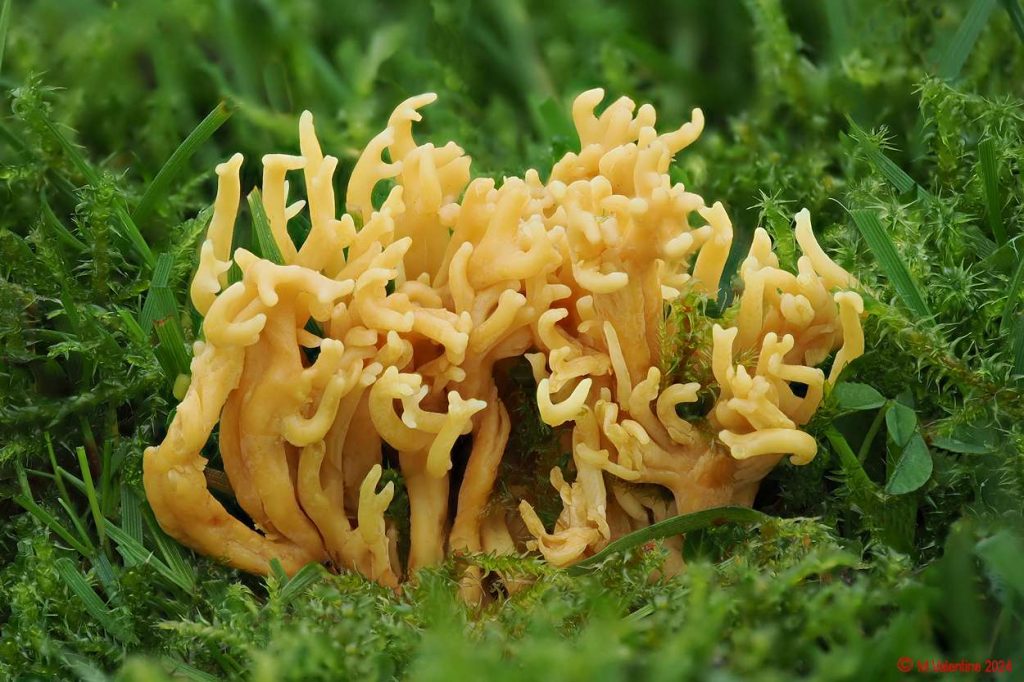
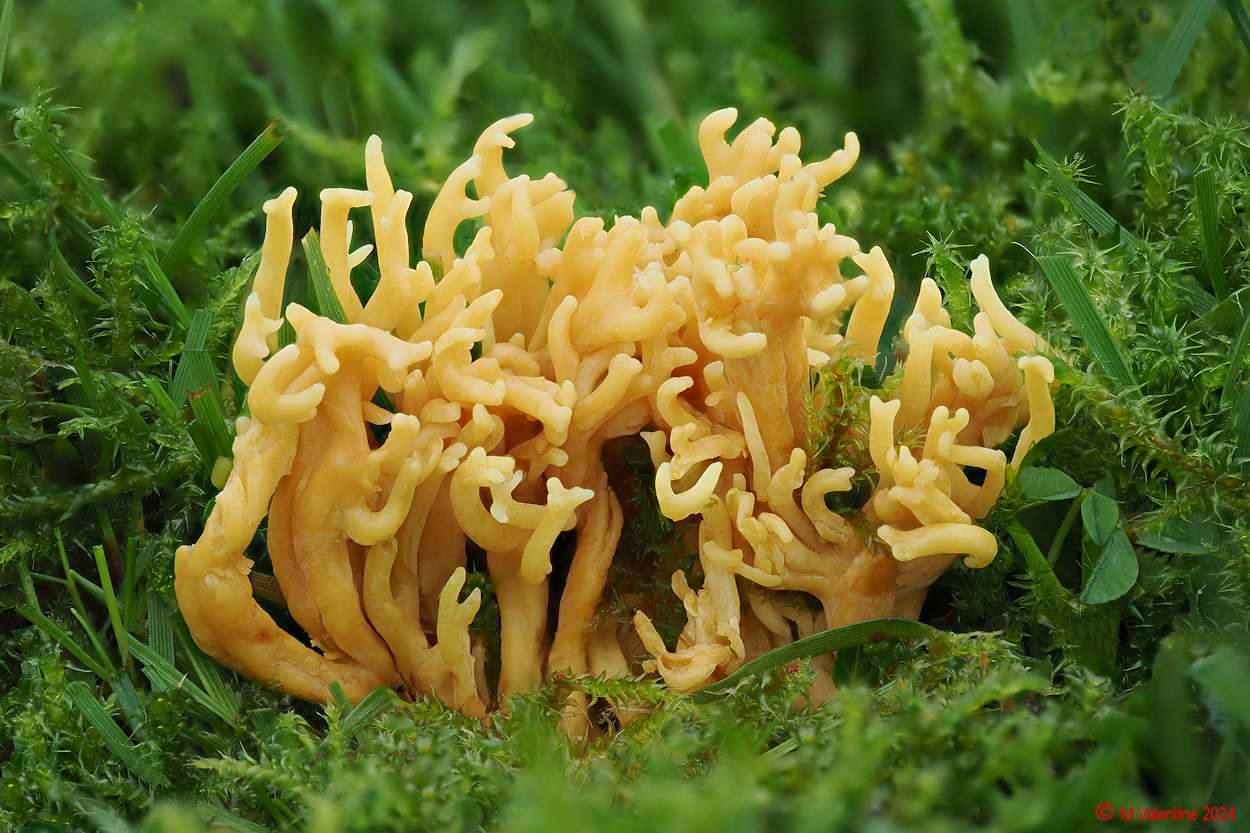
November 4, 2024 at 11:51 am #34213Clavulinopsis corniculata– Meadow Coral Found 1st November 2024 in nutrient poor regularly mown mossy grass. (Cricket outfield – Private Site).
Spore print white. – Spores sub-globose, smooth, 4-6µm x 4-5µm
.
[attachment=0]Clavulinopsis corniculata – Meadow Coral.jpg[/attachment]
.Regards,
Mike.
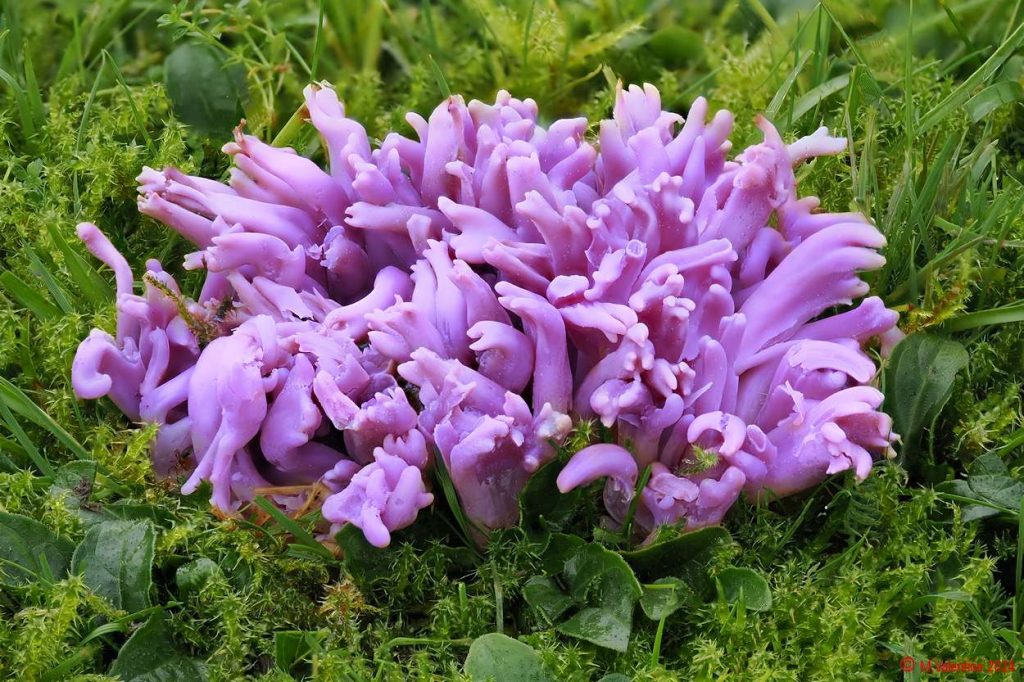
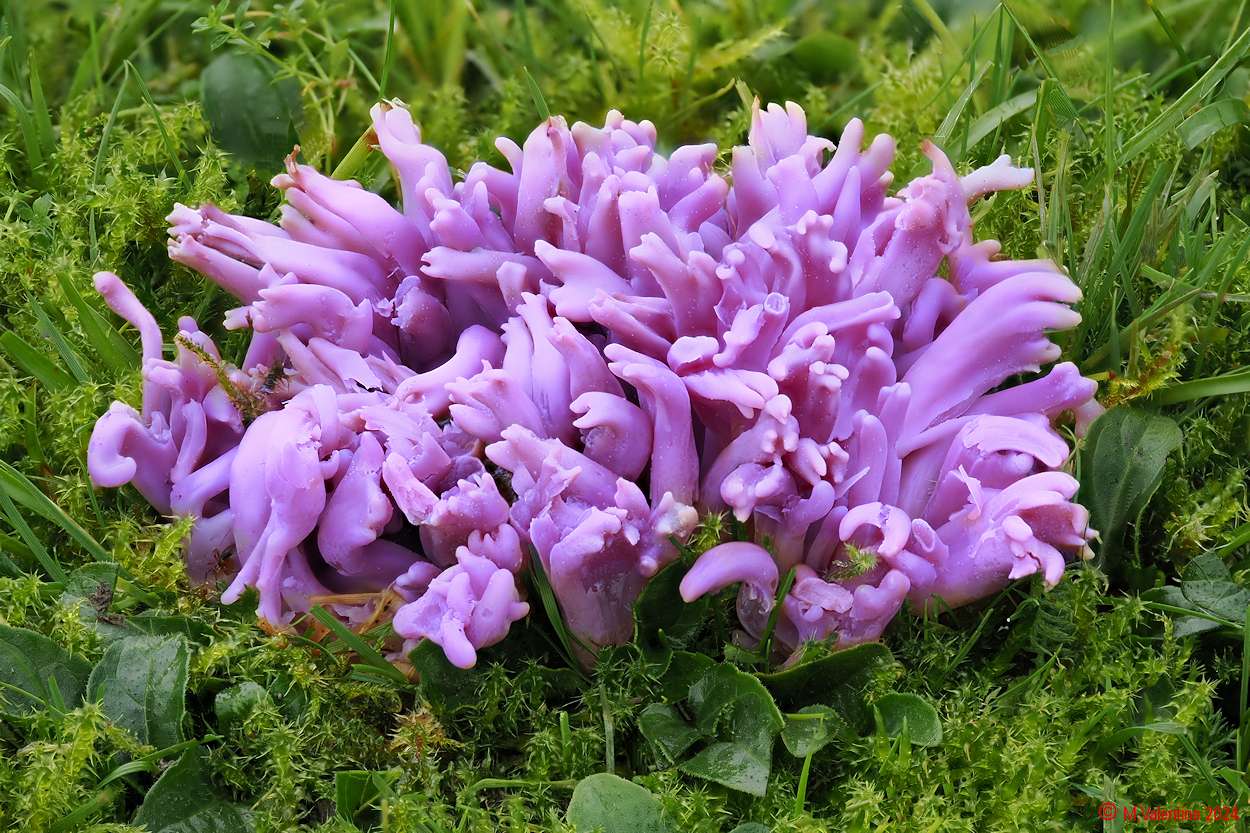
November 5, 2024 at 12:05 pm #34214Clavaria zollingeri– Violet Coral Found 1st November 2024 in nutrient poor regularly mown mossy grass. (Cricket outfield – Private Site).
Spore print white. – Spores ellipsoid (with apiculus), smooth, 4-7µm x 3-5.5µm
.
[attachment=0]Clavaria zollingeri – Violet Coral.jpg[/attachment]
.Regards,
Mike.
November 6, 2024 at 9:19 am #34215Lancashire Lad wrote:
Clavaria zollingeri– Violet Coral Found 1st November 2024 in nutrient poor regularly mown mossy grass. (Cricket outfield – Private Site).
Spore print white. – Spores ellipsoid (with apiculus), smooth, 4-7µm x 3-5.5µm
.
Clavaria zollingeri – Violet Coral.jpg
.
Regards,
Mike.
Amazing colour contrast!
November 6, 2024 at 12:20 pm #34216adampembs wrote:Amazing colour contrast!
Cheers Adam,
The diversity of species at the particular site is amazing, and includes several UK rarities. – C. zollingeri is definitely one that I’m always pleased to find.
Regards,
Mike.
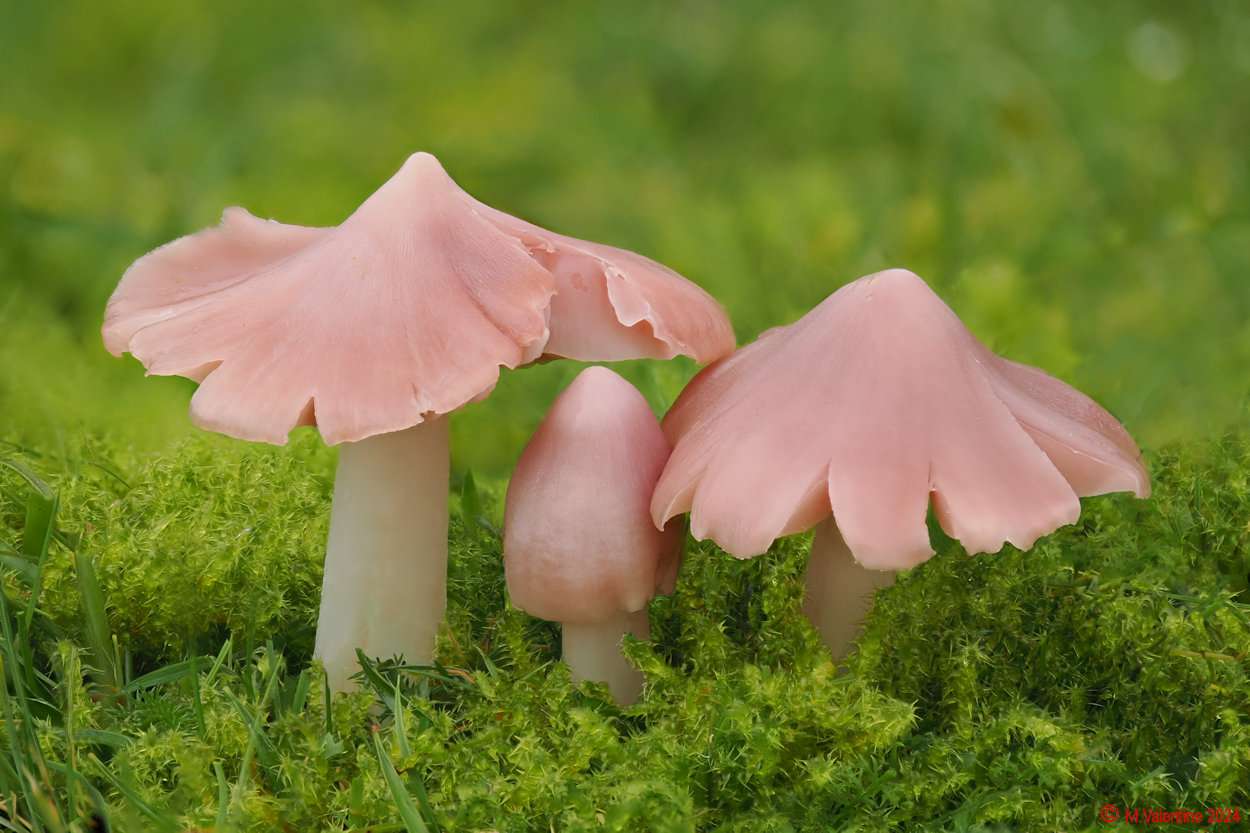
November 6, 2024 at 12:22 pm #34217Porpolomopsis calyptriformis– Pink Waxcap / Ballerina Waxcap. Found 1st November 2024 in nutrient poor regularly mown mossy grass. (Cricket outfield – Private Site).
Spore print white. – Spores broadly ellipsoidal to ellipsoid-oblong, smooth, 6-9μm x 4-7μm
.

[attachment=0]Porpolomopsis calyptriformis – Ballerina-Pink Waxcap.jpg[/attachment]
.Regards,
Mike.
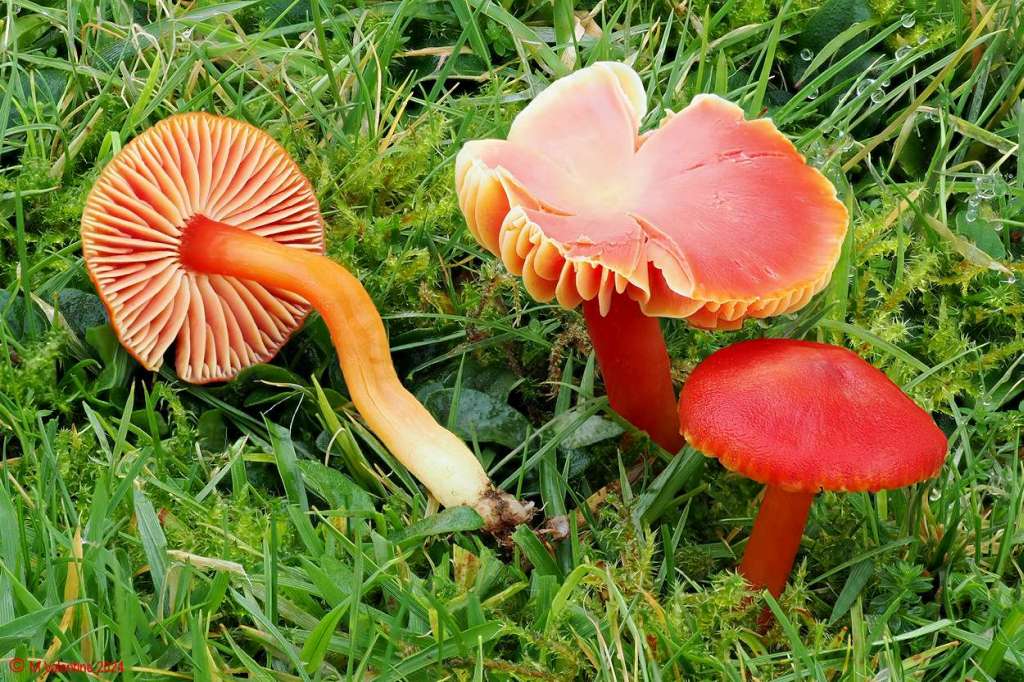
November 7, 2024 at 11:42 am #34218Hygrocybe coccinea– Scarlet Waxcap. Found 1st November 2024 in nutrient poor regularly mown mossy grass. (Cricket outfield – Private Site).
Spore print white. Spores ellipsoidal to slightly ovoid, smooth, 9-11µm x 5.5-7µm.
.
[attachment=0]Hygrocybe coccinea – Scarlet Waxcap.jpg[/attachment]
.Regards,
Mike.
November 11, 2024 at 9:36 am #34219Sorry they’re not particularly good photos but I found this Terana caerulea ,Cobalt crust growing on an old bamboo cane in my garden when tidying up. Gary
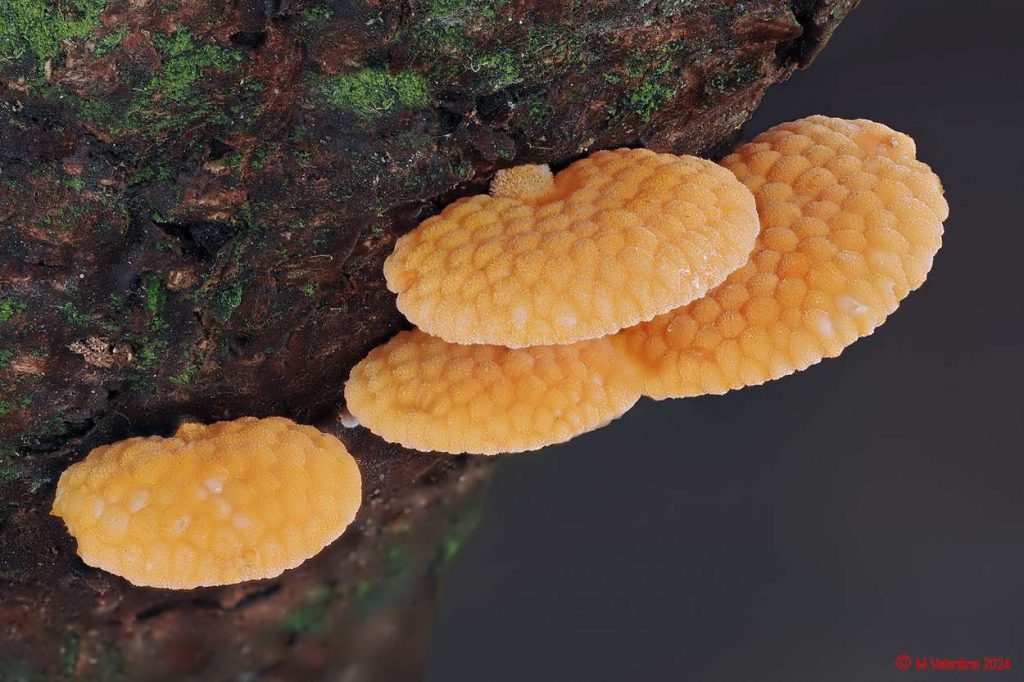
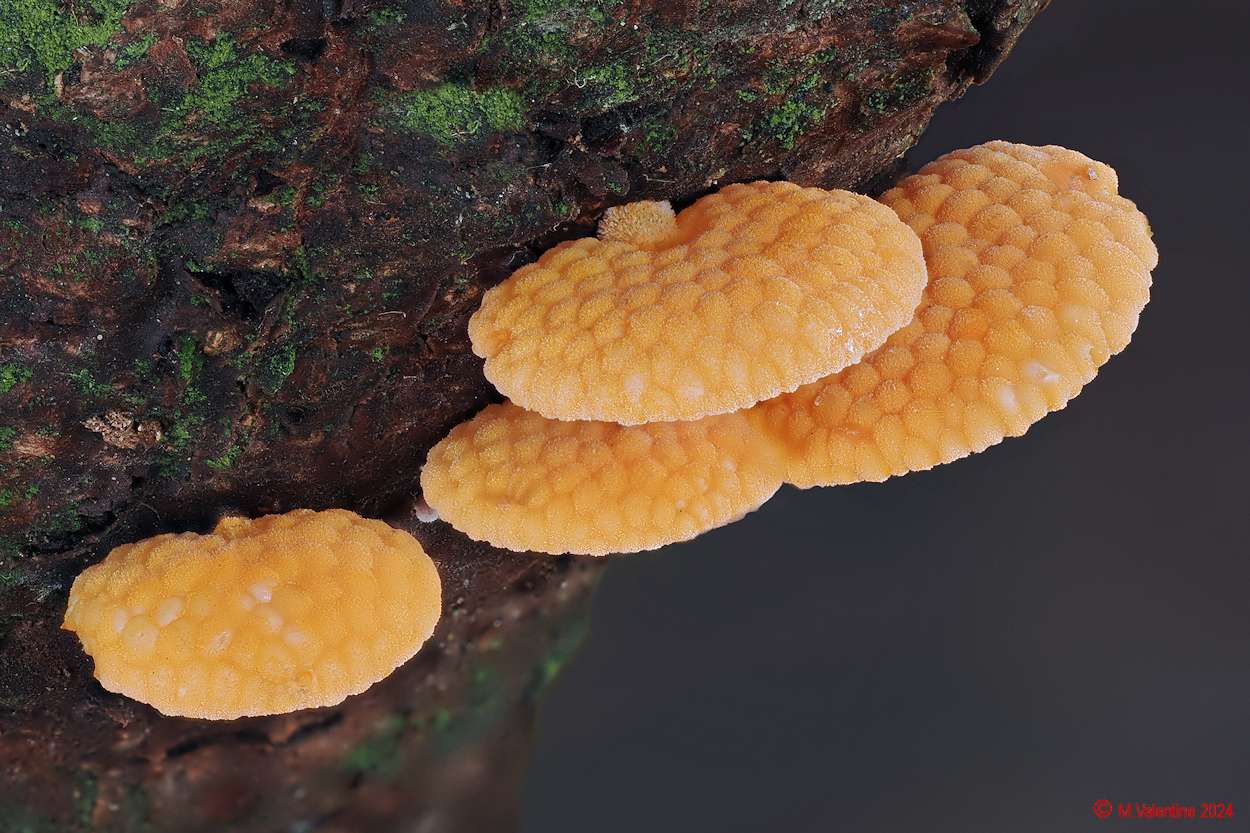
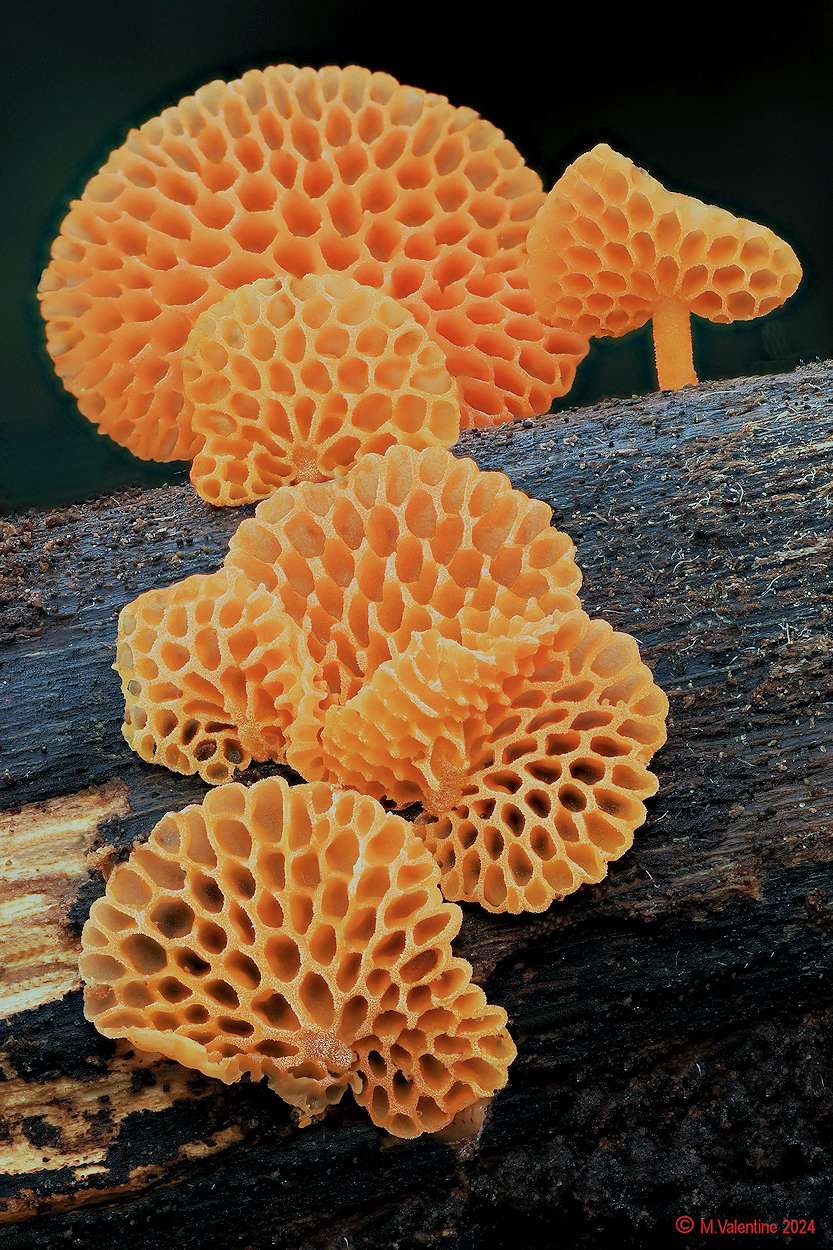
November 28, 2024 at 11:20 am #34220Favolaschia claudopus– (Unofficial Common Names: – Orange Porecap or Ping-Pong Bat Fungus)Found 27th November 2024 on small fallen branches & twigs in mixed but predominantly deciduous woodland in North Wales.
Spore print white. – Spores hyaline, ovoid to ellipsoidal, smooth, 9-12.5µm x 6.5-8.5µm.
.
[attachment=1]Favolaschia claudopus – Orange Porecap2.jpg[/attachment] 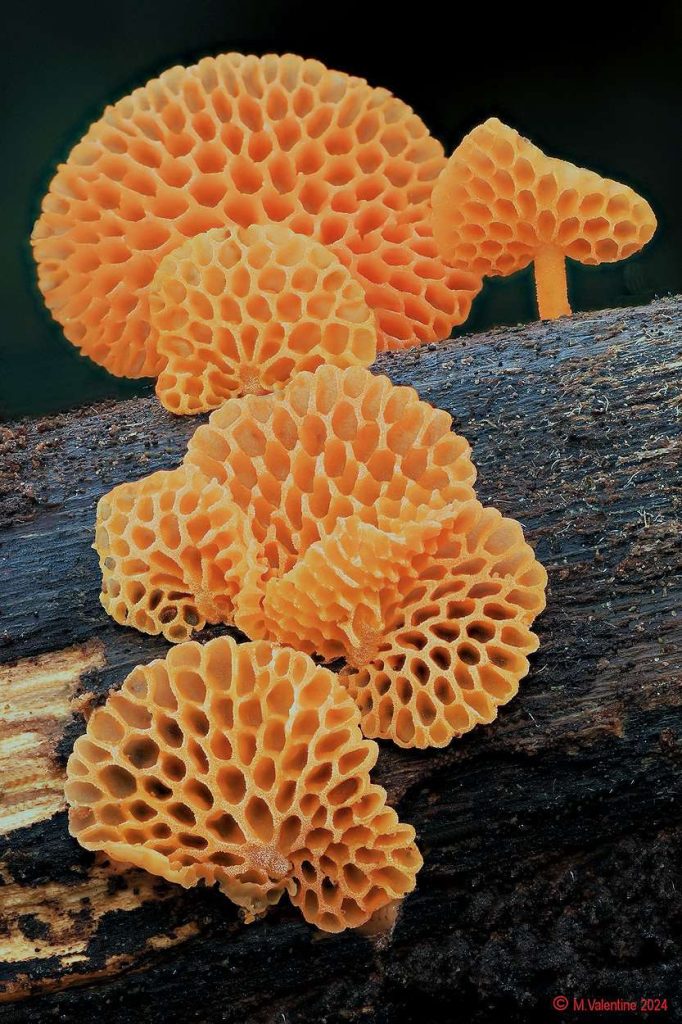
[attachment=0]Favolaschia c;audopus – Orange Porecap1.jpg[/attachment]
.Regards,
Mike.
November 29, 2024 at 11:02 am #34221An alien fungus from Madagascar? Moving north. Very common down here in the South West.
Should we be concerned ? Might it be out competing other native fungi.?
Would we think differently if it wasn’t orange and pretty?
Just a few thoughts.
Gary
November 29, 2024 at 2:41 pm #34222Whilst I accept that certain species have proven to be extremely detrimental when they get a foothold in “new areas”, I generally remain pragmatic about the spread of fungi species. Chamonixia caespitosa, a type of truffle normally found in the Alps and Scandinavia. Clathrus rubur, thought to have originated in Central Europe. Clathrus archeri, originally a southern hemisphere species. Calocera pallidospathulata, now quite common but not seen in Britain before 1969, and thought to originate from Central America. Amanita groenlandica, an Arctic species. Acrodontium Antarcticum, first recorded in Antarctica. Chalara fraxinea / Hymenoscyphus pseudoalbidus, thought to have originated in Asia, and introduced via horticultural trade. Some of the above innocuous, some much less so, and with origins all over the world. – They are just a few of the many hundreds of “new to UK” fungi species recorded here in recent years.
Obviously, larger and more colourful species, along with those considered “pretty”, will be noticed before smaller, inconspicuous species. – Just a statement of fact that larger and more colourful species are more easily seen.
Should we be concerned? – Short of the entire human race re-adopting lifestyles last seen back in the middle ages, – allied with no foreign travel or trade, (which just isn’t going to happen), anthropogenic influence on the spread of fungi will continue. All we can do on that front is try to limit, and where possible avoid altogether, importing any commodities which have high probability of introducing living fungi or spores.
But, that still leaves all of the natural vectors for spore travel – wind, birds, animals, etc. – and I would contend that far more of the several thousand fungi species now considered to be “native” to the UK initially got here by those methods rather than originating here or being introduced with anthropogenic assistance.
For me, and from a mycologist’s point of view, every fungus species is of equal interest, whatever its size, colour, perceived “prettiness”, etc. (Although I do appreciate that we all have our own particular genera and/or species “likes” and “dislikes”). – But when I’ve got my photographer’s hat on, I prefer to photograph the more colourful and aesthetically pleasing species. – Regardless of whether the subject itself might be considered “alien”, or a potential threat to the biome.

Regards,
Mike.
November 30, 2024 at 9:50 am #34223Good answer. Thanks Mike
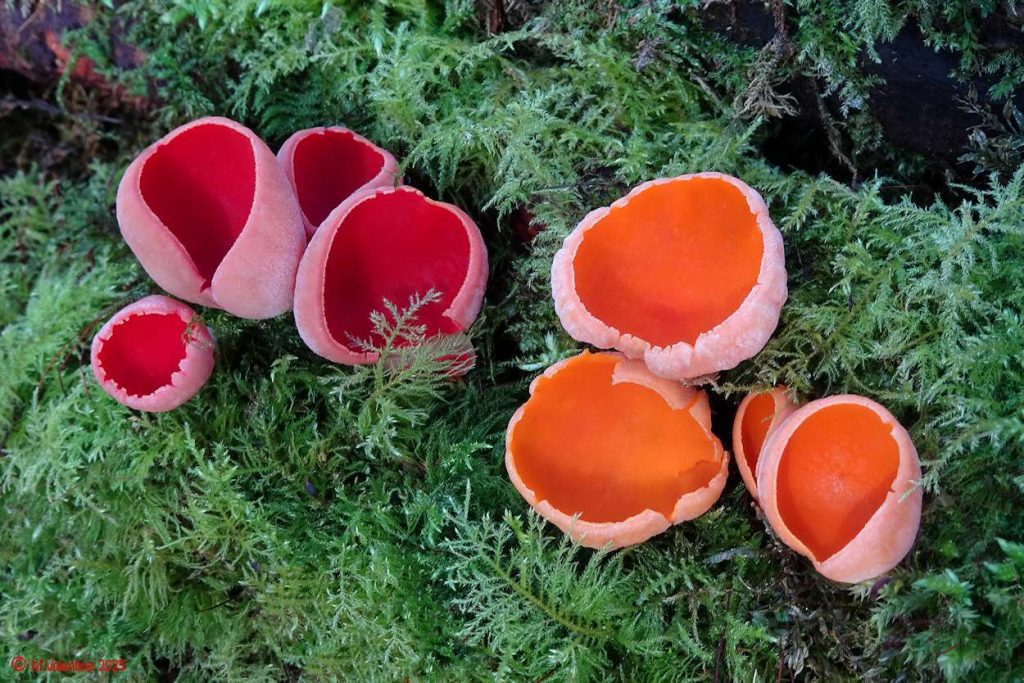
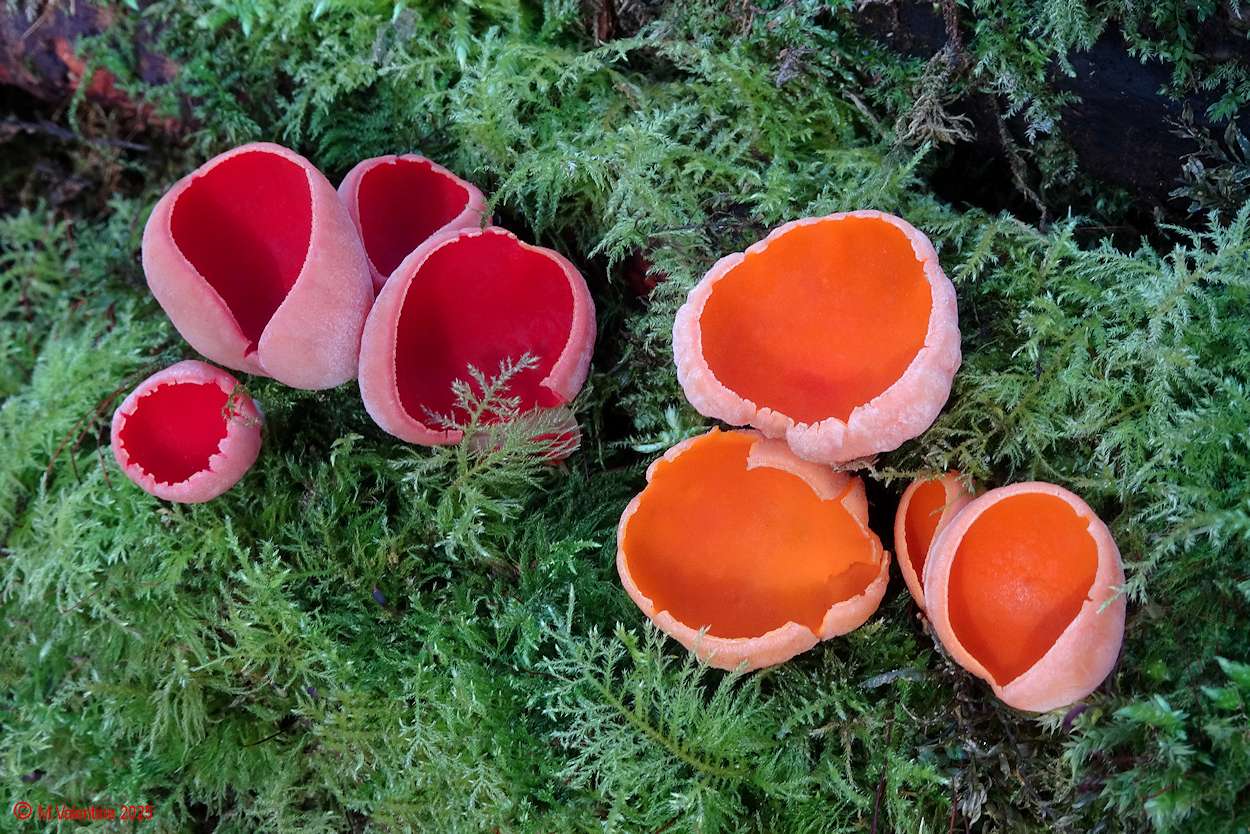
November 30, 2024 at 1:49 pm #34224My view is that we need to do more to limit the spread of the worst pathogens, Ash Dieback, Dutch Elm disease etc (too late for the them) but growing more plants and timber in the UK, better certification and better biological controls in general (quarantine etc) Some improvements have been made. Almost above all this is the deforestation of pristine jungle for our timber. Wood from Madagascar, why are we even participating in the deforestation of Madagascar? January 26, 2025 at 9:54 am #34225A rare occasion when I got a half decent image with my phone. Panellus stipticusFebruary 3, 2025 at 4:30 pm #34226Sarcoscypha austriaca– Scarlet Elfcup – with orange variant. Very pleased to confirm that along with the normal red ones, (which have been seen at this particular site for countless years), the orange variant of
Sarcoscypha austriacahas reappeared once again. As usual, many hundreds of normal red fruitbodies being seen all over the entire site, but the orange variants are still only found (amongst red ones) in the one, very small localised area where they have now appeared for 13 consecutive years since first being seen.
Once again, to clarify: – Over the years, microscopy has been carried out several times, (by myself), on both the red and the orange fruitbodies from this exact location.
Additionally, samples were sent to Kew, (several years back now), where Dr Paul Cannon confirmed them as variants of
S. austriaca. .
[attachment=0]001 – Sarcoscypha austriaca – Scarlet Elf Cup (With Orange Variety).jpg[/attachment]
.Regards,
Mike
-
AuthorPosts



- You must be logged in to reply to this topic.