Forums › Forums › Ascomycetes › Capronia pulcherrima
- This topic is empty.
-
AuthorPosts
-
April 6, 2021 at 2:31 pm #32075
A tricky genus, with the exception of C. nigerrima(once placed in Berlesiella) which generally grows in clusters on diatrypaceous fungi and with a bit of experience is identifiable in the field with a hand-lens. Fortunately Gernot Friebes has produced a workable key in Ascomycete.org:
https://ascomycete.org/Portals/0/Archives/AscomyceteOrg%2004-03%2055-64.pdf ” class=”bbcode_url”> https://ascomycete.org/Portals/0/Archives/AscomyceteOrg%2004-03%2055-64.pdf This is the first Yorkshire record, perhaps not surprising with a rather difficult group. As you can see this was collected in sunshine last week, when I realised I was over-dressed so warm was it – as I type it is snowing outside!
A bit of a milestone this, this is the 800th ‘plate’ I have now put together; though that still represents less than 15% of the fungi recorded for Yorkshire.
Best wishes to all
Chris
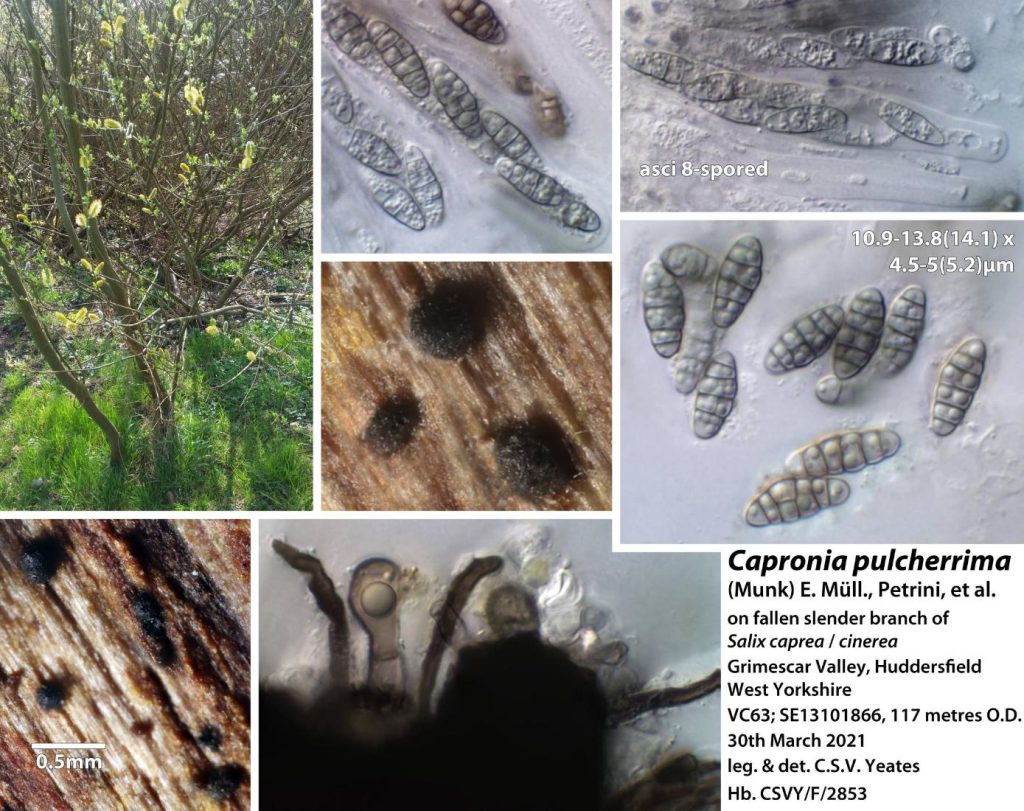
[attachment=0]Capronia pulcherrima 0a.jpg[/attachment] April 6, 2021 at 3:22 pm #44107Congratulations on the milestone. The question is, is the rate of discovery of new species for Yorkshire greater than your compilation rate? Looking forward to a book (or something)…
Paul
April 6, 2021 at 5:04 pm #44108Paul Cannon wrote:
Congratulations on the milestone. The question is, is the rate of discovery of new species for Yorkshire greater than your compilation rate?Looking forward to a book (or something)…
Paul
Thanks Paul, about keeping pace I would say. The Yorkshire list shrank a bit recently when I square-bracketed a lot of those “Phyllosticta” records based on one or a couple of old records of leaf spots, based on the “one new host = one new species” system – Aas’ monograph helped me bite the bullet.I am writing up sections, by order and/or family – approaching a third of the Yorkshire mycota done so far, incorporating the images. Just finished by far the trickiest – the Diaporthales (no surprise there!). Lots of name changes, updating records etc. thanks to the “one name” system, about which I have no problem, just involves quite a lot of work. Thankfully some relatively recent open-source papers, based on molecular studies, have helped clarify many areas.
Cheers
Chris
April 8, 2021 at 4:24 pm #44109Great work Chris. How many volumes are you going to need?! I love seeing your compilations. Wish I could do as well with my photography.
-
AuthorPosts


- You must be logged in to reply to this topic.