
New Suffolk record of Anaptychia ciliaris
- This topic is empty.
-
AuthorPosts
-
March 24, 2026 at 11:07 am #33159
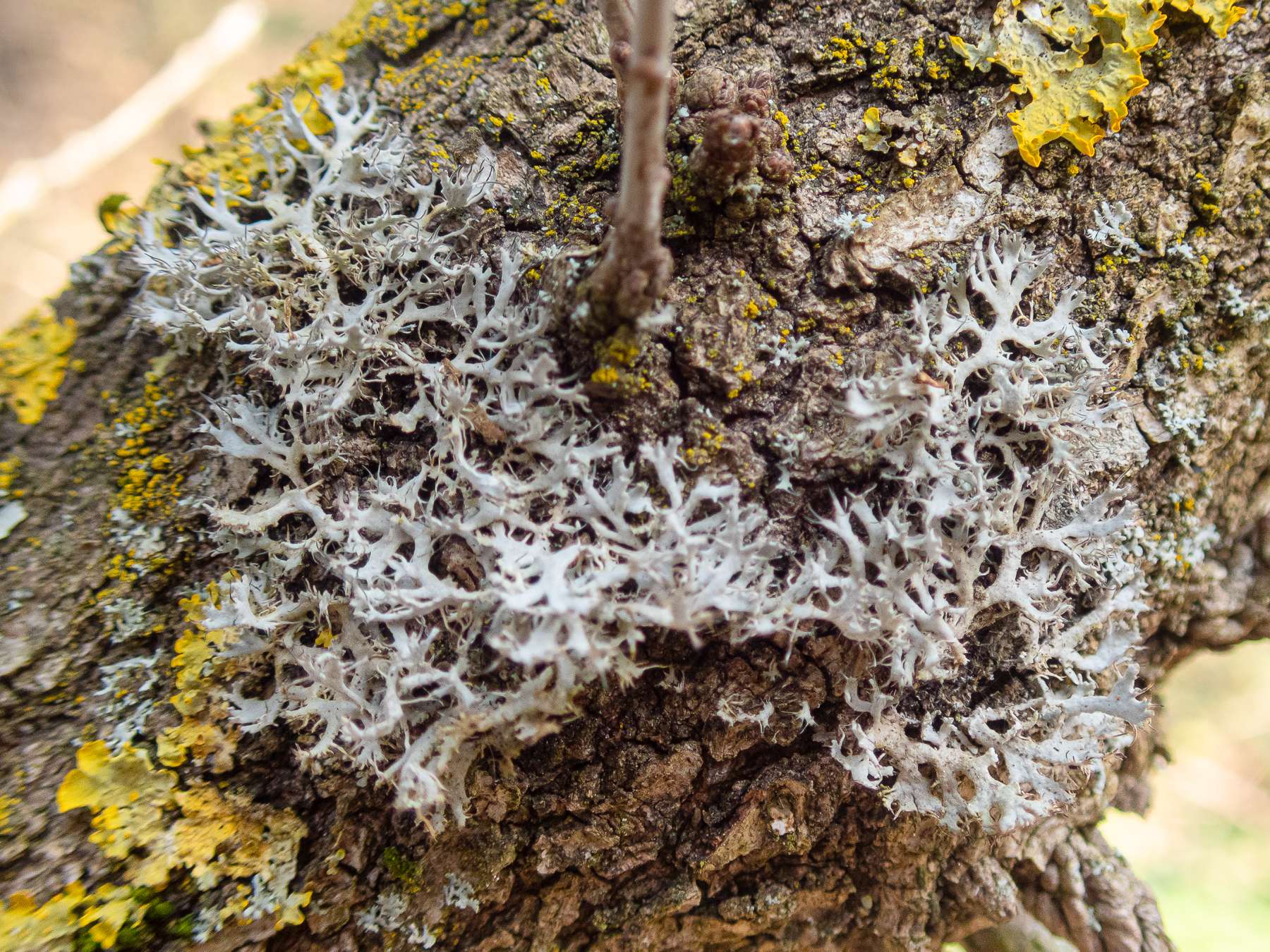
This past weekend I spent a half-day looking round an old sand-and-gravel quarry at Holton Pit SSSI in Suffolk (VC25/TM4077). It was an otherwise fairly unremarkable site for lichens, but I was very surprised to come across Anaptychia ciliarison a branch of a mature oak in a sunny position. Photos below. This appears to be the first record of
A. ciliarisfor Suffolk since 1985, as well as a new location. The few historical records in the BLS database are confined to the nationally significant epiphytic lichen site of Sotterley Park SSSI, as well as the locally significant parkland site of NT Ickworth Estate. Unfortunately, there are discrepancies between the BLS database and the BLS maps — and I’ve sent a query to Janet — but they seem to relate to tricky pre-1960 records.
A. ciliarismay have been recorded at Sotterley in 1993 and 2005, but the BLS database is a bit unclear. Chris Hitch, who preceded me as Suffolk lichen recorder, seems to have considered A. ciliarisextinct in the county. I’ve informed the Holton Pit SSSI landowners that they have an endangered lichen on their site, and I hope to meet with them soon. They’re a locally-based community trust that acquired the site in 2023 in order to save it from potential development when aggregates company CEMEX decided to sell. They manage the site exclusively for environmental and recreational purposes. But so far as I know, they haven’t previously considered lichens in their management plans.
Holton Pit SSSI is mostly surrounded by agricultural land, with the village of Holton to the immediate west. As a former quarry, it’s notified for geological rather than biological interest. Vegetation is cited as a negative site pressure where it obscures the notified geological features. I’m not sure that the oak hosting
A. ciliariswould be considered problematic in this regard, but it’s growing at at the base of the sand-cliffs marking the rim of the old quarry, and mistakes could be made. It’s also somewhat overshadowed by a tall pine. If anyone has any special conservation or management suggestions to help inform my meeting with the landowners, I’d certainly be grateful of advice. I’m also well acquainted with a member of Natural England’s local area team, and I’ll be bringing the find to his attention as well.
Many thanks!
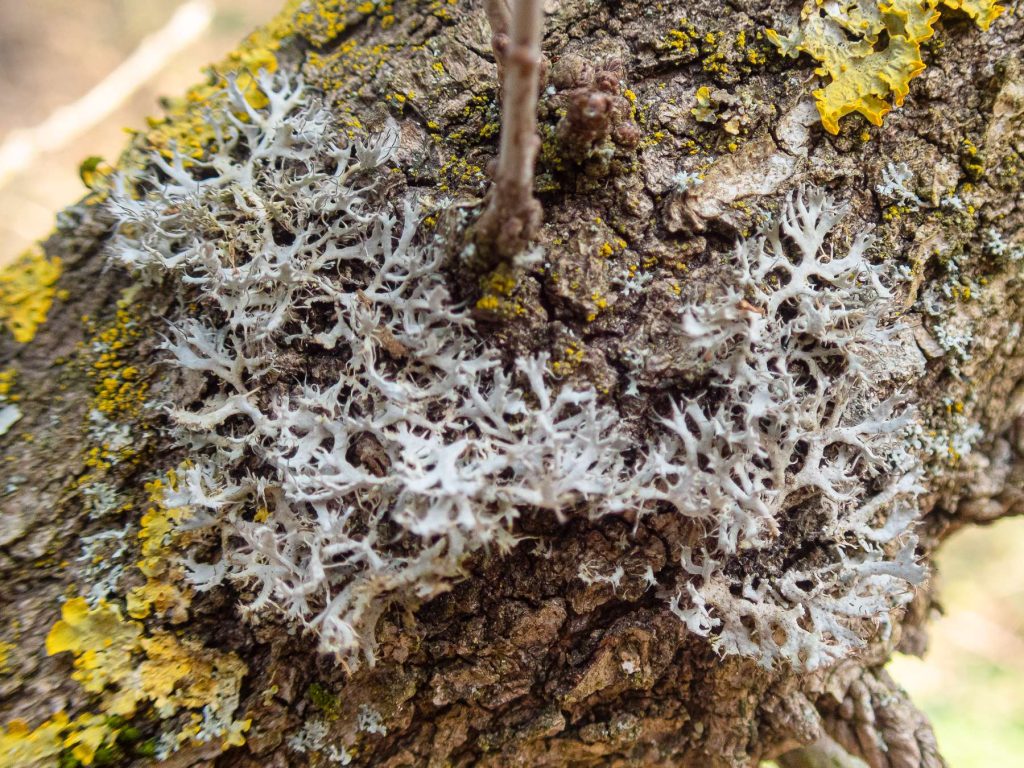
[attachment=4]Anaptychia ciliaris 20260322-A-1.jpg[/attachment] 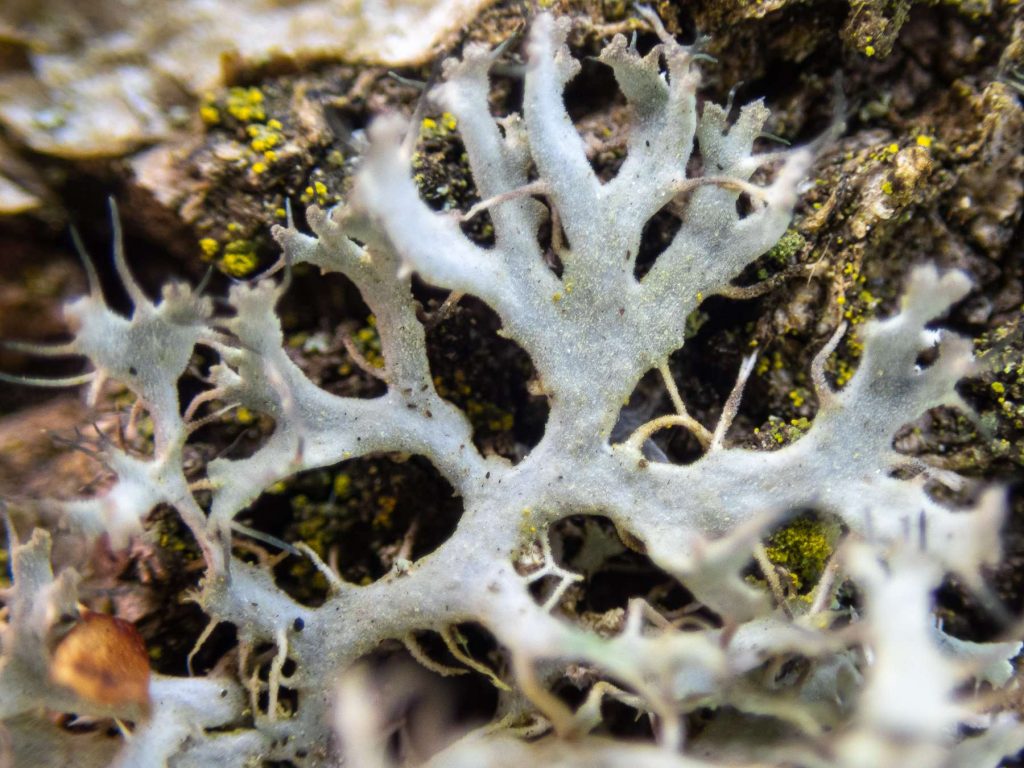
[attachment=3]Anaptychia ciliaris 20260322-A-2.jpg[/attachment] 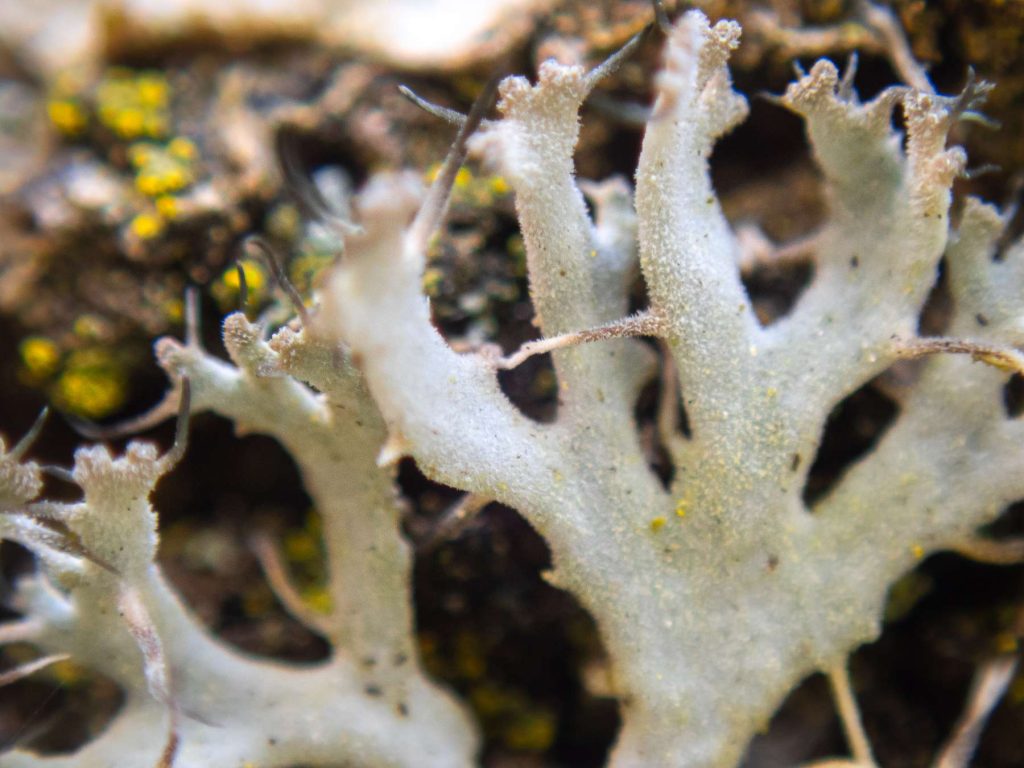
[attachment=2]Anaptychia ciliaris 20260322-A-3.jpg[/attachment] 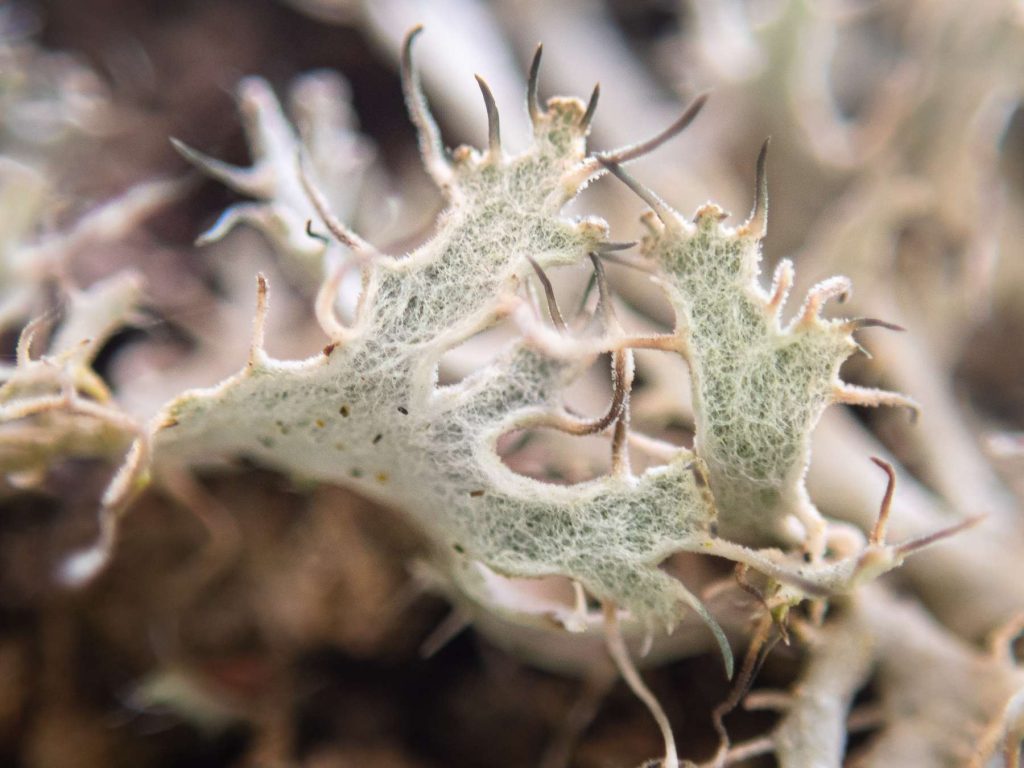
[attachment=1]Anaptychia ciliaris 20260322-A-5.jpg[/attachment] 
[attachment=0]Quercus 20260322-A-1.jpg[/attachment] March 25, 2026 at 10:59 pm #46909Anthony Such good news, this was a depressing species to do the new Red List assessment for as it still seems to be in free fall and a lot of surviving trees are Ash trees

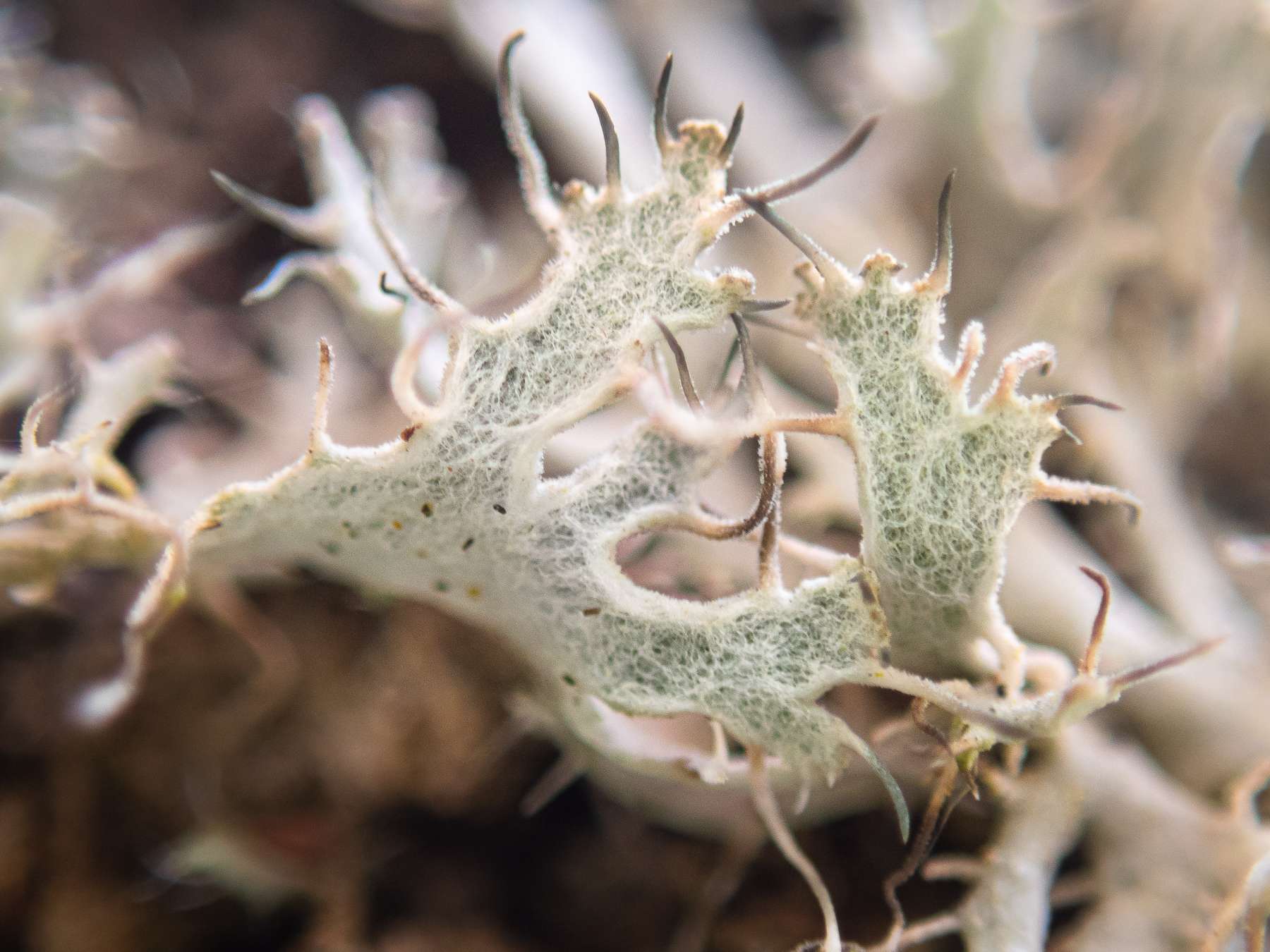
Great close up pictures, I had never looked at the underside, mainly as most finds I have made have been high up the trunk (it is always worth scanning high up trunks with binoculars in likely habitat). Can I please use these pictures on the BLS website?
Neil
March 26, 2026 at 1:23 pm #46910Dear Neil — Thanks for this. Sad to hear that
A. ciliarisis still in free fall. Will you continue to classify it as EN, or has it sadly become a candidate for the CR category? Janet has gone back over the historical Suffolk records, and she confirms that this is indeed the first sighting in the county since 1985. (The 1993 date in the comment of one of the Sotterley records referred to a publication, not an observation. And the 2005 date referred to the year an undated record was received by the recording scheme, which turned out to refer back to the 1985 observation.)
A quick question about ammonia pollution. The BLS website species description previously indicated that
A. ciliariswasn’t ammonia-sensitive per se, and indeed that it liked a bit of nutrient enrichment when on e.g.lime or oak. But it also warned that particulate matter from inorganic fertiliser dust would become trapped in the tomentum and encourage the growth of algae over the cortex, smothering the lichen. The BLS website species description now matches LGBI3, removing the reference to particulates and citing high ammonia levels in general. Has
A. ciliarisbeen found to be more ammonia-sensitive than previously thought, or are background ammonia levels simply so high now that they exceed the lichen’s tolerances? Or perhaps a bit of both? I’m meeting with the landowners tomorrow to discuss management. The local Natural England team is now also aware. I’d like to go back to the site for a more thorough search (with binoculars!) — this lichen was on a low branch, but the tree itself was elevated on a mound, which gave it some height. I wonder if there may be other thalli higher up in the same tree, or in other trees.
Please do feel free to use the photos — but ignore the ones here. I’ll send you a link to download full resolution versions, which will enlarge better for the BLS website.
Thanks again and best regards,
Anthony
March 26, 2026 at 2:32 pm #46911Anthony I did up date this to LGBI3. The particulates bit was not referenced to and just does not match what I have seen, but I probably beter put it back with qualifications (done). I have seen it lost from trees such as on an Ash in a sculpture park in a park surounded by intensive agriculture. The nitrogen levels were high but no one was spreading fertiliser around the tree, so it may be an issue, but it is unlikley to be the primary reason for loss. I do not think there is much doubt it is sensative to too much ammonia.
The decline rate is still in the EN level, so it will stay as EN
Photos: thanks, although the BLS website photo size is smaller than here, but I can usually get better results from cropping full sized photos myself.
Bryan Edwards did a useful report on this species for English Nature in 2007. I have added this as a download to the species account page, as it is probably not available anywhere else. One 19th C reference (Smith and Sowerby, 1810) suggests it was once as common as
Physcia tenellain the south! Neil
March 26, 2026 at 3:05 pm #46912Many thanks, Neil — that’s extremely helpful. I’ll let you know of any further developments from either the management meeting or a further site visit. This link should give you five full-sized high-resolution photos. Please feel free to use any of them that you like — all Creative Commons BY-SA 4.0.
https://aspenecology.com/wp-content/uploads/2026/03/Anaptychia-ciliaris.zip ” class=”bbcode_url”> https://aspenecology.com/wp-content/uploads/2026/03/Anaptychia-ciliaris.zip Best regards,
Anthony
March 27, 2026 at 10:54 am #46913I can’t offer any additional insights or advice but, from my limited observations, individual colonies of A. ciliarison gravestones are also experiencing some sort of decline. The BLS account states that scattered occurrences on limestone rock are surviving better than on trees, which I can’t contradict, but something seems to be causing decline on calcareous gravestones. Significant portions of the colonies seem to be disappearing and the remaining portions look rather unhealthy in their mature parts, a sort of brownish discolouration. The only slight hope for their future is that the growing tips and youngest parts of the lobes still look healthy and give the appearance of active growth. The first side-by-side below is from a Bedfordshire cemetery, the photos taken in 2012 and 2022. 
[attachment=1]Screenshot 2026-03-27 10.27.39 AM.png[/attachment] The next side-by-side is from a Northamptonshire churchyard, the photos taken in 2018 and 2022.

[attachment=0]Screenshot 2026-03-27 10.28.43 AM.png[/attachment] In both cases you can see where significant portions of the colonies have disappeared. It is possible that the missing portions were removed by some physical process, either human or animal activity, but my suspicion is that these are unhealthy portions which just fell away.
My observations which are from just two sites don’t really prove anything but I provide them for general interest.
March 27, 2026 at 11:44 am #46914Mark Thanks, yes I have already qualified the surviving better on limestone on the BLS species account as surviving better on limestone walls in upland low ammonia deposition areas (recent information from the Knights, see the concentration of red dots in North England on the dot map). Your grave stones confirm what I thought that there is a general sensitivity that it is succumbing to, most likely to too much ammonia. It certainly needs some ammonia, or other pH raising input; Francis Rose though dust was sigificant in the south of Europe where it enters in Lobarion communities. It was always absent from the central New Forest area where ammonia levels were always low but was in the enclosed farmed areas beyond on Elm and Oak, now gone from there, first the Elms now from Oak and a grave stone. While absolute ammonia haters, requiring low bark pH are rapdily lost to increasing ammonia and rising bark pH, there are also species, such as it appears
Anaptychia ciliaris, that depended on mild enrichement that are also seem vulnerable. Pleurosticta acetabulumseems to be another one, which will now be added to the Red List for decline alone, provisionally as EN A2ce Neil
-
AuthorPosts





- You must be logged in to reply to this topic.